Custom Logo Tiles for Brands: How Restaurants, Hotels, Retail Stores & Studios
What if your floor could do the marketing for you?
In an era where brand identity extends far beyond a logo on a business card, the most forward-thinking restaurants, boutique hotels, retail flagships, and creative studios are turning to one of the oldest design mediums in the world to make their mark — handmade cement tiles. Not just any tiles. Custom logo tiles. Tiles engineered to carry your brand’s colors, symbols, and personality into every square foot of your space.
This isn’t a trend reserved for luxury budgets or high-end architects. It’s an accessible, durable, and deeply impactful design strategy that savvy brands across the US are using to transform entryways, dining floors, hotel lobbies, and retail corridors into immersive branded experiences. And at the center of this movement? The timeless craftsmanship of Original Mission Tile, one of America’s premier handmade cement tile manufacturers, offering custom tile design, in-stock decorative cement tiles, and the ability to reproduce virtually any pattern, color, or logo.
If you’re a restaurateur, hotel designer, retail brand manager, interior designer, or architect looking to turn floors and walls into branded storytelling canvases — keep reading. This guide covers everything you need to know.

Why Custom Logo Tiles Are the New Brand Experience
Walk into any memorable restaurant, hotel, or flagship retail store and ask yourself: what made it unforgettable? Nine times out of ten, the answer involves the floor or the walls. The tactile, visual, and spatial experience of a well-designed interior leaves a psychological imprint that no digital ad can replicate.
Custom logo tiles take this a step further by embedding your brand directly into the architecture of your space. Whether it’s a geometric interpretation of your monogram inlaid into an entryway, your brand colors flowing across a dining room floor in a Moroccan-inspired pattern, or your studio’s logo immortalized in encaustic cement tiles at the reception desk — these installations create an immediate, unmistakable impression.
Brands investing in custom tile installations report higher social media shareability, stronger guest recall, and increased perception of quality. In hospitality and food service, where first impressions are revenue, that’s not a design decision — it’s a business strategy.
The Unmatched Benefits of Handmade Cement Tiles for Commercial Spaces
Before diving into brand applications, it’s worth understanding why handmade cement tiles are the preferred medium for custom logo work in commercial environments.
Durability That Performs at Scale
Commercial floor tiles endure foot traffic, spills, furniture drag, and cleaning chemicals daily. Cement tiles, when properly sealed and installed, are extraordinarily resilient. Unlike ceramic or porcelain, encaustic cement tiles are solid throughout — the color and pattern penetrate the full depth of the tile, meaning they won’t chip or reveal a blank underlayer over time.
Handmade Quality with Artisan Character
Each cement tile is poured and pressed by hand, giving them a natural variation and depth that machine-made tiles simply can’t replicate. For brands that want to project authenticity, craft, and care — this material is the perfect messenger. The slight imperfections are not flaws; they are proof of human artisanship.
Sustainability and Longevity
Handmade cement tiles are made from natural materials — cement, marble powder, and natural pigments — with no kiln firing required. This dramatically reduces the carbon footprint compared to ceramic tile production. In a market where guests and customers increasingly value sustainability, the story behind your tiles becomes part of your brand narrative.
Infinite Style Versatility
From Mediterranean tiles and Spanish-style tiles to modern geometric patterns, vintage Moroccan tiles, and terrazzo-inspired compositions, cement tiles adapt to any design language. When it comes to custom logo tiles, this versatility means your brand identity can be expressed in the exact visual vocabulary it deserves.

How Brands Are Using Custom Cement Tiles: Room-by-Room and Space-by-Space
Restaurant Tile Design: Floors That Work as Hard as Your Staff
Restaurants are perhaps the most powerful application for custom logo tiles. The floor is the largest uninterrupted canvas in any dining space, and it sets the emotional tone before a single dish is served.
Picture a fast-casual taco brand with bold, sun-yellow and terracotta tile patterns flowing through the dining room — colors pulled directly from their brand identity. Or a fine-dining Mediterranean restaurant whose entryway features an intricate Moroccan tile medallion with the restaurant’s monogram at its center.
Custom cement tiles for restaurants serve a dual purpose: function and brand reinforcement. They handle spills, daily cleaning, and heavy foot traffic, while simultaneously communicating the brand’s personality, cultural roots, and design ethos. Patterned floor tiles can also be used to define zones — separating bar areas, dining zones, and pass-throughs — adding a layer of spatial intelligence to the design.
For restaurant owners and hospitality designers, Original Mission Tile’s custom tile manufacturing makes it possible to reproduce virtually any logo, color, or pattern at scale.
Hotel Lobby Tiles: First Impressions That Last Forever
Hotel lobbies are the brand’s handshake. Guests form opinions within the first seven seconds of entering, and nothing anchors that impression like a beautifully tiled floor or feature wall.
Boutique hotels are increasingly using custom cement tiles to differentiate from chain competitors. A hand-pressed, logo-inlaid tile entry — perhaps inspired by the city’s heritage, the hotel’s architectural period, or the brand’s identity palette — signals craftsmanship, thoughtfulness, and quality that no amount of lobby furniture can convey.
Custom hotel lobby tiles can be extended throughout the property: bathroom tiles in guest rooms, outdoor patio tiles around pool areas, kitchen backsplash tiles in on-site restaurants, and shower wall tiles in premium suites. The effect is a cohesive, branded environment that feels intentional at every touchpoint.
Retail Stores and Studios: When the Floor Becomes the Brand
Retail brands and creative studios are embracing custom logo tiles as a form of environmental branding. A yoga studio with hand-painted tile motifs in their signature indigo and white color scheme. A hair salon with Spanish-style tiles in the reception area that mirror their Mediterranean-inspired aesthetic. A clothing boutique with terrazzo tile flooring incorporating subtle pattern elements from their seasonal campaigns.
These applications aren’t just beautiful — they’re strategic. They create a consistent, Instagrammable environment that reinforces brand identity and encourages organic social sharing, turning every guest who photographs their experience into a micro-influencer.
Style Ideas for Branded Tile Design
Great custom tile design starts with a clear visual direction. Here are the most popular style frameworks brands are using right now:
Moroccan & Mediterranean Patterns
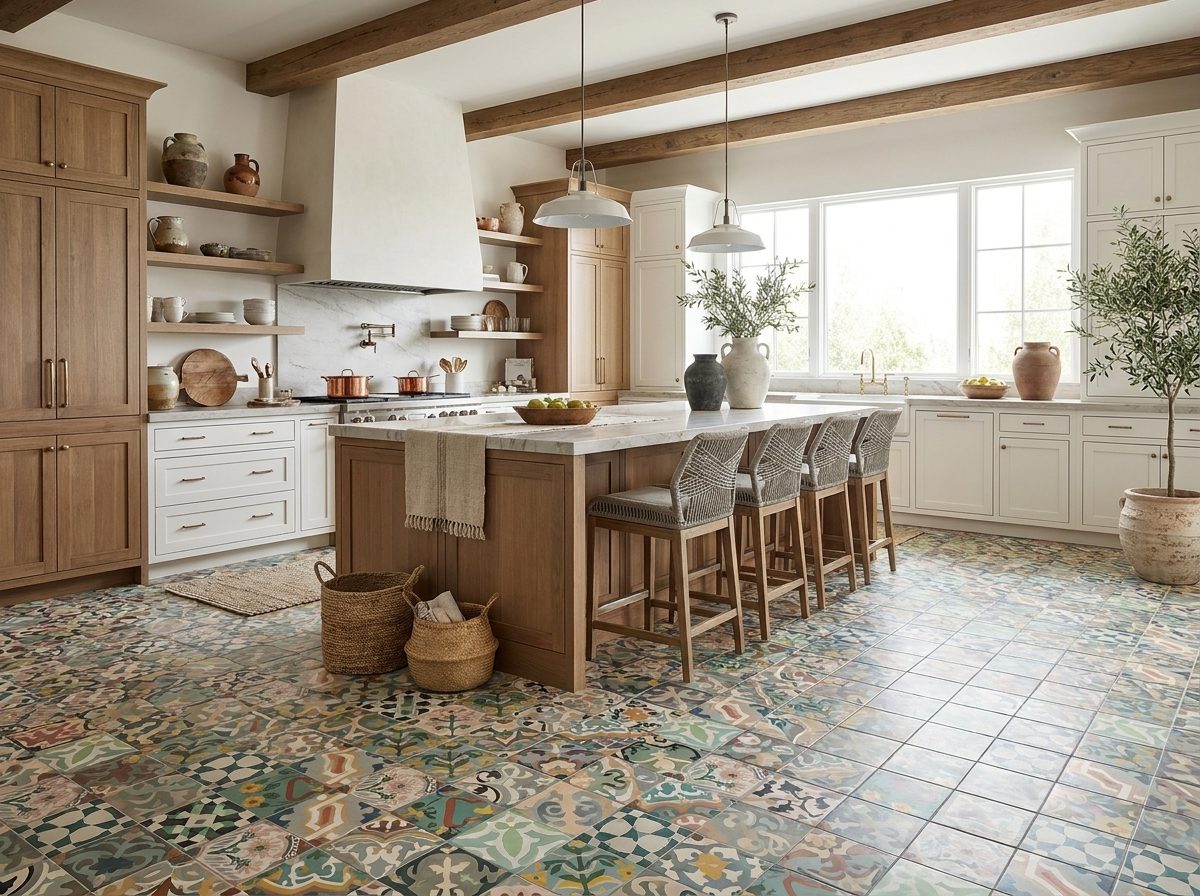
Intricate Moroccan tiles and Mediterranean tiles bring warmth, cultural richness, and visual complexity to any brand space. These styles work particularly well for restaurants, spas, wellness brands, and hospitality concepts with an artisanal or global identity.
Spanish-Style and Terracotta Tones
Spanish-style tiles — with their warm earthy tones, geometric borders, and handcrafted feel — are making a powerful comeback in residential and commercial design alike. Paired with terracotta tiles, they create an organic, grounded aesthetic that resonates with farm-to-table restaurants, wine bars, and heritage retail brands.
Modern Geometric and Minimalist
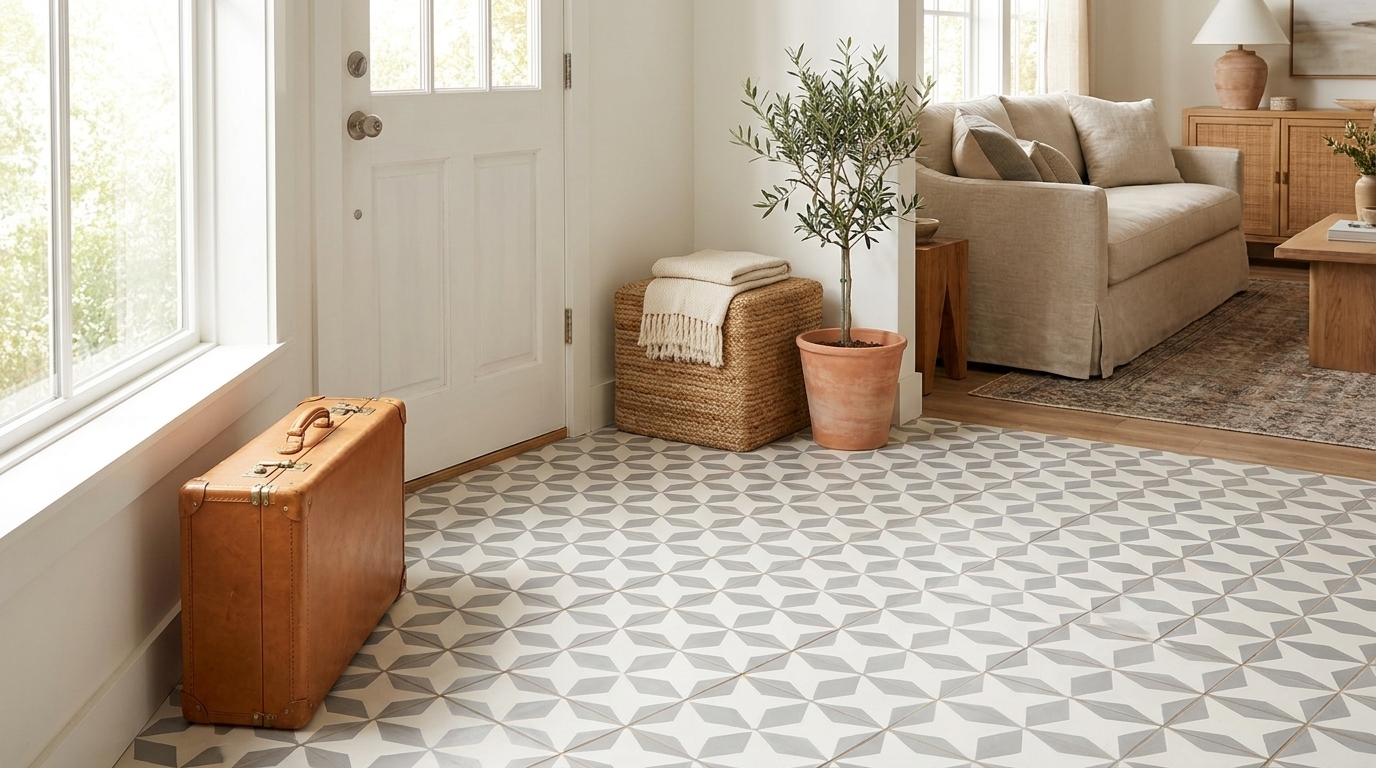
Not every brand needs intricate patterning. Many contemporary brands — architecture firms, tech company offices, luxury retail — prefer clean geometric patterned cement tiles that incorporate their logo through shape and color rather than complexity. Simple, bold, and unmistakably modern.
Vintage and Maximalist Encaustic
Encaustic cement tiles with maximalist patterns are having a serious design moment. Vintage-inspired, highly detailed, and deeply saturated, these tiles are ideal for brands leaning into nostalgia, eclecticism, or cultural storytelling.
Ready to explore what’s trending? See our trend tile collection and discover which styles align with your brand identity.

Installation and Maintenance: What Commercial Clients Need to Know
Custom cement tiles are a long-term investment, and proper installation and maintenance are essential to protect that investment.
Sealing is Non-Negotiable
Cement tiles are porous by nature. Before grouting and immediately after installation, tiles must be sealed with a penetrating sealer designed specifically for cement tile. In commercial environments, a topcoat sealer is also recommended for high-traffic areas. Unsealed tiles will absorb spills, oils, and cleaning agents, causing permanent staining.
Routine Cleaning
Sealed cement tiles clean easily with a pH-neutral cleaner and warm water. Avoid acidic cleaners, bleach, or abrasive scrubbing, which can break down the sealer and damage the surface over time. In restaurants and commercial kitchens, establish a regular cleaning protocol during and after service.
Acclimation and Layout Planning
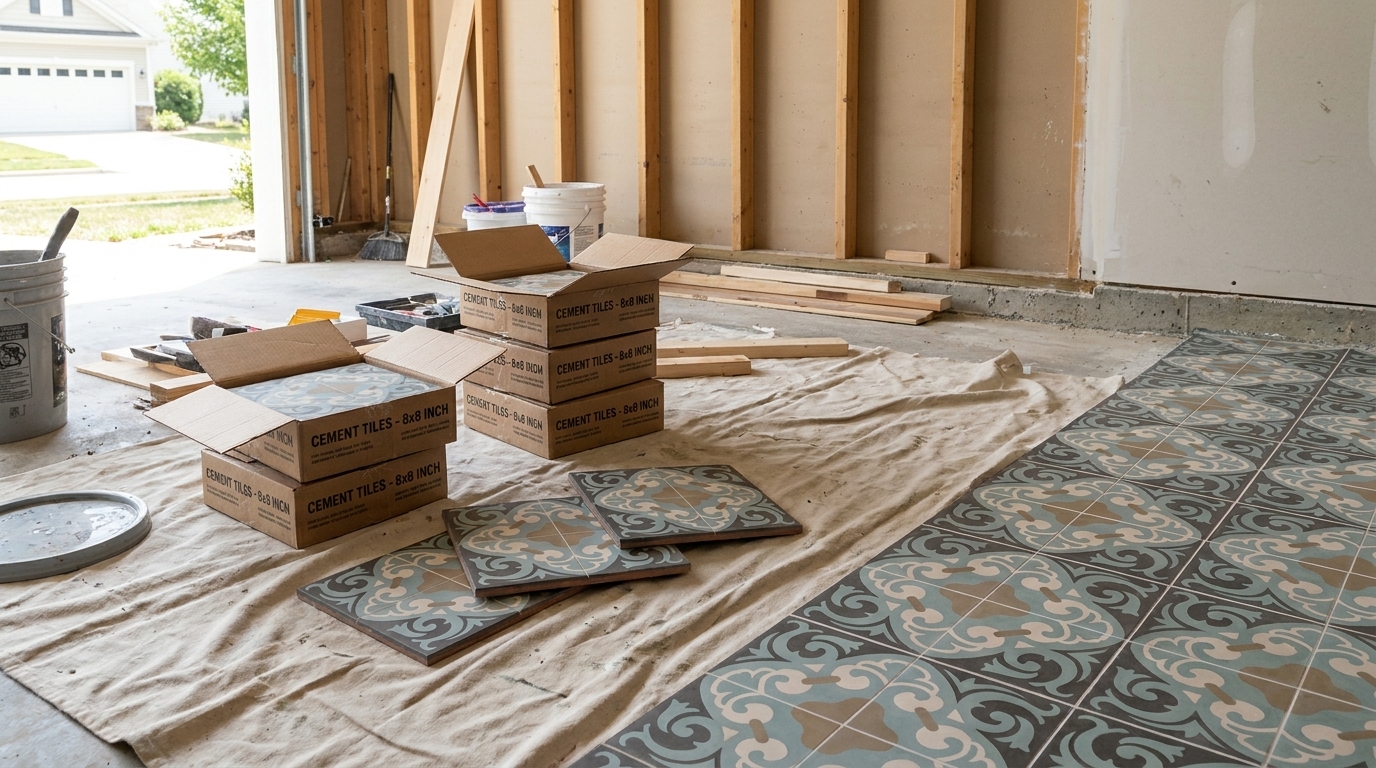
Like all natural materials, cement tiles should be allowed to acclimate to the installation environment for 24–48 hours before installation. Lay tiles out in a dry run before setting to ensure pattern alignment, particularly for custom logo tiles where symmetry and orientation are critical to the design intent.
Common Mistakes to Avoid with Custom Tile Projects
Even experienced contractors can stumble on cement tile projects. Here’s what to watch for:
Skipping the sealer — The most common and costly mistake. Always seal before grouting and again after.
Ignoring natural color variation — Handmade cement tiles have inherent color variation from batch to batch. For large commercial projects, order all tiles from the same production run and blend tiles from multiple boxes during installation.
Incorrect grout joint sizing — Cement tiles typically require a 1/16″ to 1/8″ grout joint. Too wide a joint overwhelms the pattern; too narrow risks cracking.
Using the wrong adhesive — Always use a white polymer-modified thin-set mortar. Gray mortars can bleed through lighter-colored tiles.
Poor subfloor preparation — Cement tiles require a flat, stable substrate. Flexing or uneven subfloors lead to cracked tiles, particularly in large commercial spaces.
Frequently Asked Questions About Custom Logo Tiles
1. Can you reproduce any logo or brand mark in cement tile? Yes. Original Mission Tile specializes in reproducing custom patterns, logos, and brand color palettes in handmade cement tile. The custom manufacturing process allows for precise color matching and pattern reproduction at any scale.
2. What’s the minimum order quantity for custom logo tiles? Minimum order quantities vary depending on the complexity of the design. Contact our team for a custom quote based on your project scope and square footage.
3. How does cement tile compare to ceramic tile for commercial use? In the cement tile vs ceramic tile comparison, cement tiles offer deeper, through-body color and pattern, greater design customization, and a handcrafted aesthetic that ceramic cannot replicate. Ceramic tiles are lower maintenance but lack the visual depth and artisan character of cement.
4. Are cement tiles suitable for outdoor use? Yes. Sealed cement tiles perform well as outdoor patio tiles in covered or semi-covered applications. They are not recommended for freeze-thaw climates without special treatment.
5. How long does custom tile manufacturing take? Custom production timelines typically range from 6 to 10 weeks depending on design complexity, order size, and current production schedules. Plan ahead for opening dates and renovation milestones.
6. Can cement tiles be used as shower wall tiles? Yes, when properly sealed and maintained, cement tiles work beautifully as shower wall tiles. Use a penetrating sealer and apply a topcoat sealer for added moisture protection.
7. Do you offer samples before placing a full custom order? Yes. Order samples to evaluate color, texture, and finish before committing to a full commercial order.
8. What industries use custom logo tiles most frequently? The most common industries include food and beverage (restaurants, cafés, bars), hospitality (boutique hotels, resorts, spas), wellness (yoga studios, spas, salons), and retail (flagship stores, showrooms, creative studios).

Make Your Brand Unforgettable — One Tile at a Time
In a world where brand experiences are increasingly digital and disposable, there is something profoundly powerful about embedding your identity into the physical world — into the very floor your customers walk across, the walls they photograph, the spaces they remember.
Custom logo tiles are not a luxury add-on. They are a brand investment that compounds over time, building recognition, reinforcing identity, and creating environments worth returning to, worth photographing, worth talking about.
Whether you’re designing a new restaurant concept, renovating a hotel lobby, outfitting a flagship retail space, or reimagining a creative studio, Original Mission Tile has the craftsmanship, the catalog, and the custom manufacturing capability to bring your brand to life underfoot.
See Trend Tiles — explore hundreds of in-stock decorative patterns and find your direction.
Order Samples — feel the quality before you commit.
Talk to a Tile Specialist — get expert guidance on custom logo tile design, color matching, and commercial installation.
Your brand has a story. Let’s put it on the floor.