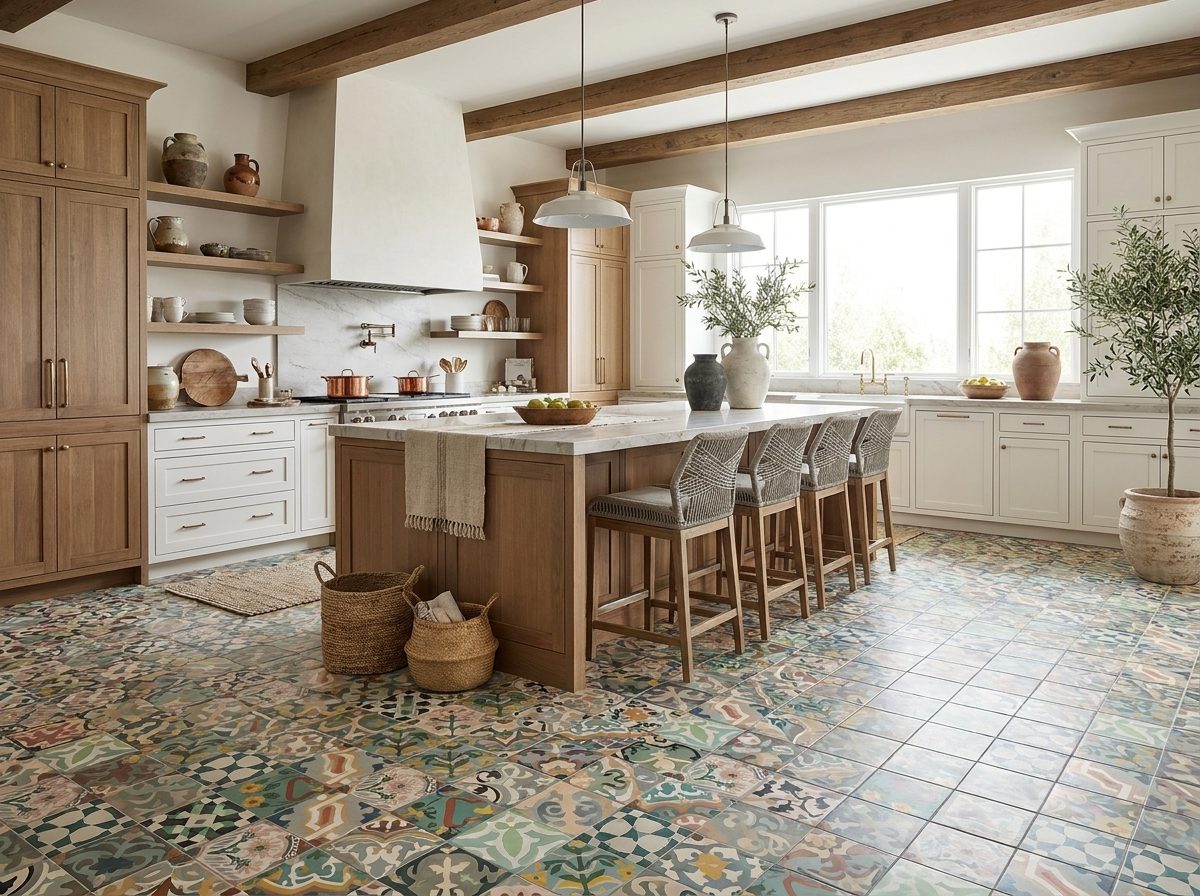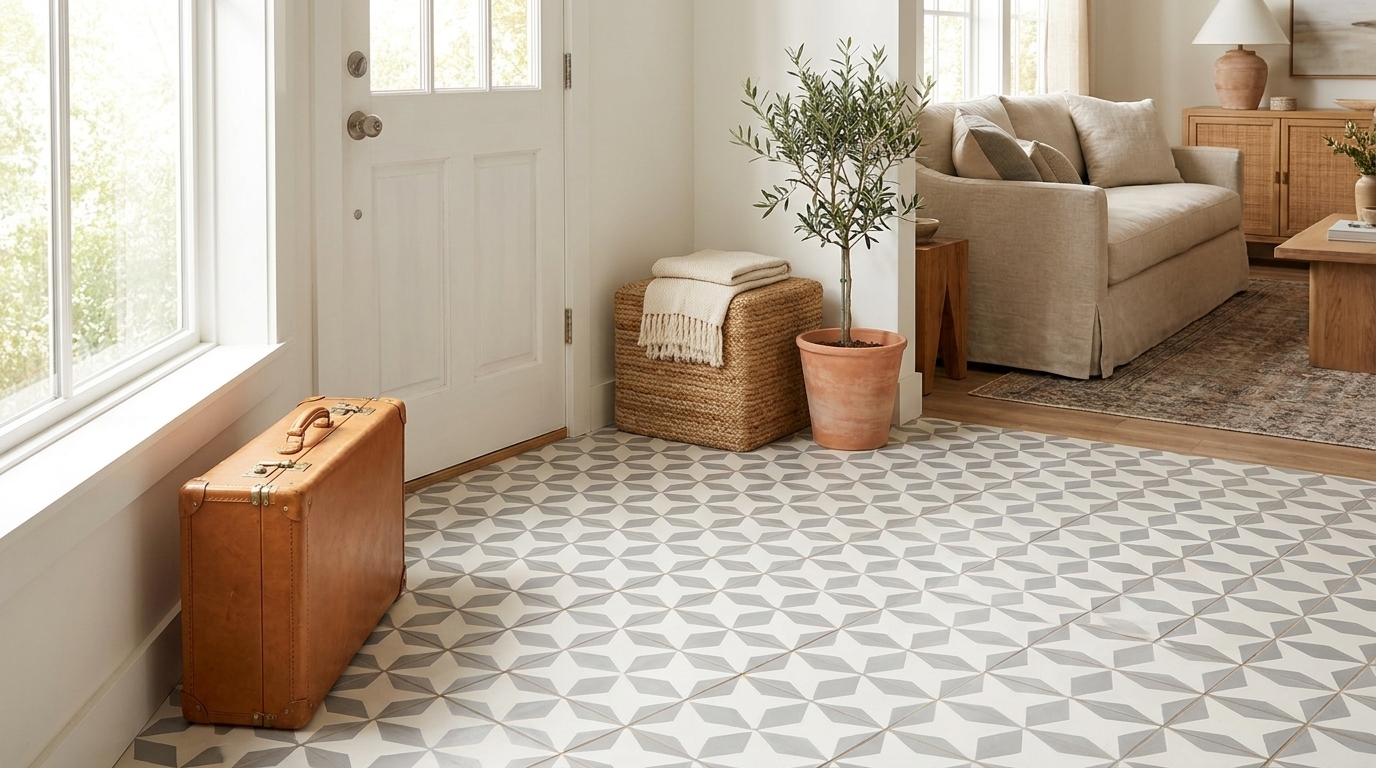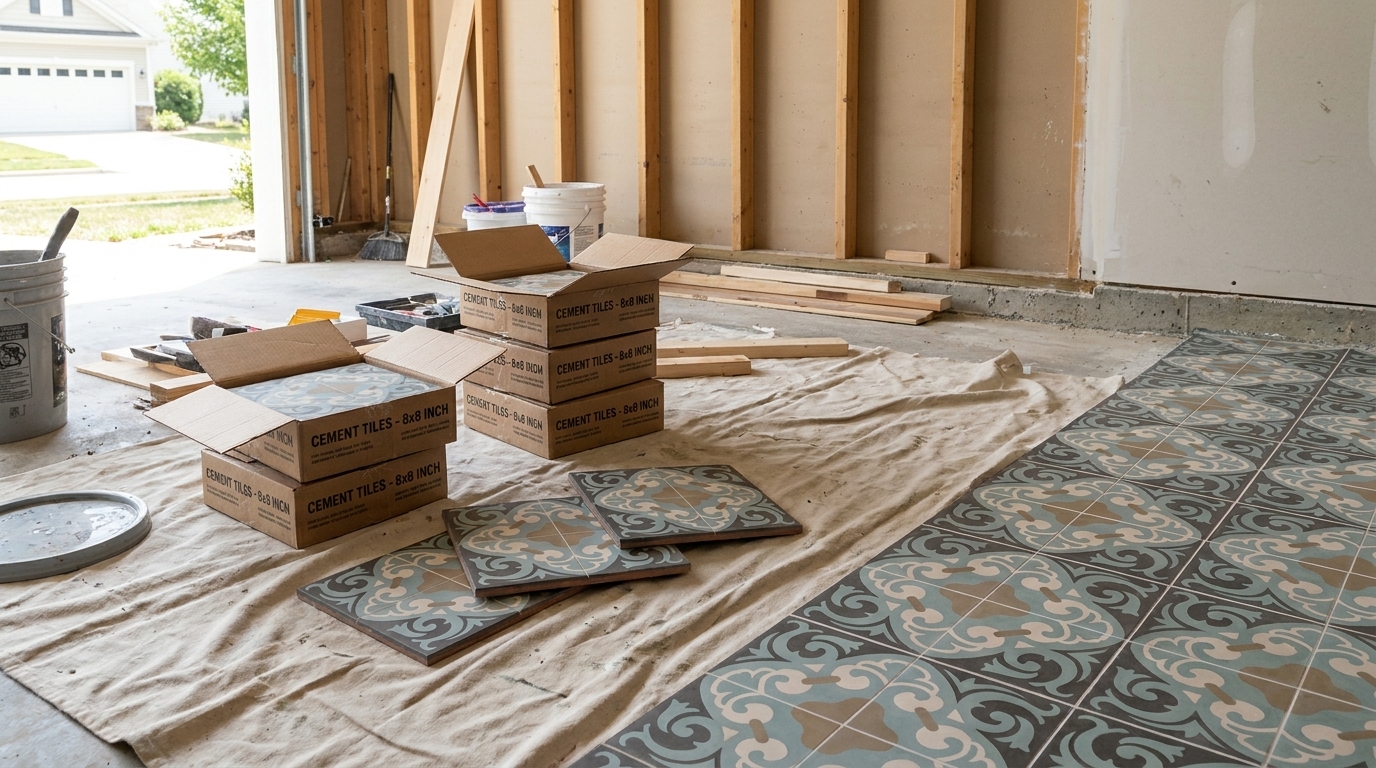
You've got a cement tile specification on the table, the pattern is doing heavy design work, and now the grout choice suddenly matters more than often realized. In these scenarios, MAPEI Flexcolor CQ grout usually enters the conversation. It promises cleaner color, no sealing, and a faster install rhythm than a traditional site-mixed grout.
That pitch is appealing. It's also incomplete if the surface is a handmade cement tile.
On porcelain, ceramic, and many predictable tile bodies, Flexcolor CQ can be a practical, installer-friendly product. On cement tile, the conversation has to get more careful. The grout itself may not need sealing. The tile often does. If you skip that distinction, you can end up fighting haze, pigment drag, or surface staining on a material that was selected precisely because it has a soft, matte, handcrafted face.
What Is Flexcolor CQ Grout
Flexcolor CQ is a ready-to-use specialty grout. In plain jobsite terms, that means it comes out of the pail prepared for use, rather than asking the installer to measure water, mix powder, and manage batch consistency from one bucket to the next. MAPEI also states that it uses color-coated quartz aggregate to improve color consistency, cleanability, and workability, while offering stain- and chemical-resistant performance with no sealing required after installation according to the manufacturer's product page on MAPEI Flexcolor CQ.

Why installers treat it differently
Traditional Portland-cement grout behaves like a recipe. The final result depends on how accurately someone mixes it, how long they slake it, how much water gets added, and whether the next batch matches the last one. That's where color variation, blotching, and cleanup headaches often start.
Flexcolor CQ behaves more like a factory-calibrated finish material. The aggregate and color are already dispersed in the pail. For a designer, that matters because the joint color is less dependent on who mixed it and how they mixed it. For an installer, it cuts out one of the common failure points in grouting.
A useful analogy is paint versus site-tinted mortar. One is controlled before it gets to the job. The other can drift depending on handling.
Practical rule: Flexcolor CQ is best understood as a workflow product as much as a grout. It aims to reduce variability on the floor, not just fill joints.
What the quartz part actually means
The “CQ” stands for color-coated quartz. That sounds like marketing language until you think about what grout joints look like across a large field of tile. If the aggregate and pigment don't stay visually consistent, the joint can read lighter in one area, darker in another, or cloudy after cleanup.
That's the core promise of this product category. The quartz helps support a more uniform visual result and a smoother cleanup process than many site-mixed grouts. On a high-end design installation, that consistency is often the primary value, not just convenience.
Still, a designer specifying cement tile should separate two ideas:
- Grout performance in the joint
- Grout behavior on a porous tile face
Flexcolor CQ may perform very well in the joint. That doesn't automatically make it carefree on handmade cement tile, where the surface can absorb residue before the installer finishes cleanup.
Where it fits
MAPEI positions it for precision residential and commercial tile work, especially where appearance matters and the crew wants a product with a controlled application profile. That includes the kind of spaces where grout color is part of the design language, not just a technical afterthought.
For cement tile projects, that's exactly why it deserves a more critical review. The product's strengths are real. The surface you're applying it next to is the wildcard.
Understanding Key Technical Specs
Flexcolor CQ rewards a controlled install. It also punishes loose timing.

Joint width and tile compatibility
Before I approve this grout for a cement tile job, I check the joint layout first. Flexcolor CQ is specified for joints from 1/16 inch to 1/2 inch (about 1.5 to 12 mm), with drying affected by temperature, humidity, tile porosity, and joint depth or width, according to MAPEI Home product guidance.
That range fits a lot of design work. It covers many patterned cement tile floors, most wall applications, and typical residential field tile. It gets less forgiving on projects with inconsistent handmade spacing, exaggerated rustic joints, or layouts where the installer has to force a uniform grout line out of irregular tile. In those cases, the drawing may say one thing and the floor may give you another.
MAPEI also lists the product for interior and exterior floors, walls, countertops, and backsplashes, with use across materials such as glass tile and mosaics, porcelain, ceramic, natural stone, quarry tile, and cement-based terrazzo. That broad compatibility is useful, but cement tile specifiers should read it carefully. A product can be suitable for the assembly and still demand extra surface protection and stricter cleanup on a porous decorative tile face.
For handmade installations, the prep standard matters as much as the grout spec. A solid cement tile installation process helps keep joint width, lippage, and surface condition predictable before grout ever hits the floor.
What the timing means on site
The cleanup window is short. That changes how the crew has to work.
On porcelain, a fast wash schedule is usually just a workflow issue. On cement tile, it becomes a finish issue. If residue sits too long, the tile can hold onto haze, pigment, or quartz fines in a way that is much harder to correct after cure.
That is why I treat Flexcolor CQ as a small-area grout on porous tile. Spread less. Wash sooner. Change rinse water often. Keep the person packing joints and the person cleaning them in sync. Good crews handle that without trouble, but the product does not give much room for hesitation.
Here is the practical read:
| Spec area | What it means on site |
|---|---|
| 1/16 inch to 1/2 inch joints | Fits most standard layouts, but irregular handmade spacing should be checked before specification |
| Fast initial cleanup | Favors small work areas, tight sequencing, and an installer who knows the tile face |
| Cure before full service | Turnover needs to be scheduled with realistic drying and protection time |
| Drying varies by conditions | Porous tile, deep joints, room climate, and humidity all change working pace |
Why designers should care
These numbers affect appearance, labor, and risk.
A designer may choose Flexcolor CQ for color consistency and because the grout itself does not need sealing. Those are real advantages, especially on design-led floors where joint color is part of the composition. The trade-off is that handmade cement tile can narrow the margin for error during grouting. If the specification ignores that, the installer inherits all the risk at cleanup.
On a high-end cement tile project, the best specification is the one that accounts for both sides of the material. Stable grout color in the joint, and disciplined handling on the tile face.
Using Flexcolor CQ with Handmade Cement Tiles
The usual “no-seal” message needs to be handled carefully. The grout may not require sealing after installation. Handmade cement tile is another story. The tile face is often the most vulnerable part of the assembly, especially before grouting.

On a dense glazed surface, excess grout usually stays near the top long enough to be removed cleanly. On cement tile, residue can lodge in the surface, dull the face, or tint lighter colors. That risk is under-discussed because many product pages speak to grout performance, not tile absorption.
The real trade-off on porous tile
Flexcolor CQ's selling points are easy to like on paper:
- Color consistency helps on design-led floors where every joint is visible.
- No sealing for the grout itself removes a maintenance step.
- Ready-to-use handling avoids mix inconsistency from bucket to bucket.
The problem is that porous handmade cement tile can absorb what the grout leaves behind. If the installer treats the tile like porcelain, the grout can bond to the face faster than expected or leave a stubborn film that changes the look of the tile.
That's why the safest protocol is not “use it freely because it says no seal.” The safer protocol is “protect the tile first, then test, then grout.”
For a broader primer on the substrate itself, this guide to installing cement tile is worth reviewing before grout is even selected.
What outside caution looks like
An independent TCNA study reported that 34% of installers experienced post-cleaning staining issues on porous natural stone when using polymer-modified grouts without a secondary sealant, according to the product page at Floor & Decor's Flexcolor CQ listing. Cement tile is not the same material as natural stone, but the warning is relevant because the common factor is porosity.
That doesn't mean Flexcolor CQ is a bad choice for cement tile. It means porous surfaces deserve a different prep standard than glossy ceramic.
If the tile can darken quickly with water, treat grout cleanup as a surface-protection exercise, not just a finishing step.
A short manufacturer demo can help teams understand the product's handling before they commit it to a sensitive surface:
A safe specification protocol
For handmade cement tile, this is the protocol that avoids most avoidable problems:
- Test on actual tile. Use a spare piece or mockup board with the exact tile color and grout color.
- Pre-seal the tile face with a suitable penetrating sealer if the tile manufacturer allows it before grouting.
- Verify cleanup behavior early. Don't wait until the grout firms up across a full room.
- Use a trained crew. This product rewards disciplined technique and punishes casual timing.
- Get signoff on the mockup. Designers, owners, and installers should all look at the same sample under project lighting.
The mistake isn't choosing a modern grout for a traditional tile. The mistake is assuming the tile won't react like a porous, handmade material.
Step-by-Step Grouting Application Best Practices
On a high-end cement tile job, grouting is the point where a clean installation can still go sideways. Flexcolor CQ helps on color consistency and it removes the sealing step for the grout itself, but those advantages do not protect a porous tile face from careless wash water or late cleanup.

Before the pail is opened
Start with a tile surface that is dry, clean, and fully bonded. Joints need to be uniform and free of thinset squeeze-up, dust, and loose grit. If thinset is left high in the joint, the grout will bridge over it and leave weak, shallow spots that show up later.
Handmade cement tile needs tighter control than porcelain. I treat the setup as a finish-protection exercise from the first minute, especially in kitchens and other visible spaces where owners expect a refined surface and easy maintenance. If the project team is still comparing materials and service conditions, Templeton Built's guide to types and installation of kitchen tile gives useful context.
A mockup earns its keep here.
The application sequence that works
Use a quality rubber float and keep the spread area small enough that cleanup stays under control. On porous cement tile, that usually means working a few square feet at a time, not half the room.
Confirm the surface protection plan
If the tile manufacturer allows a pre-grout sealer, apply it exactly as specified and let it cure fully. Rushing that step creates its own problems, because partially cured sealer can interfere with cleanup and leave blotchy areas.Pack the joints completely
Force the grout into the joint from multiple directions. Full joints matter on cement tile because any low area catches light and dirt, and it cheapens the look fast on a premium installation.Remove excess immediately with the float
Hold the float at a diagonal and shave the surface clean while keeping the joints full. The less residue left on the tile face, the less risk during sponge work.Clean early, not late
As noted earlier, Flexcolor CQ has a limited cleanup window. On cement tile, stay on the early side unless your mockup showed the surface can tolerate a slightly longer wait. Waiting for a larger area to “set up” usually ends with haze, pigment drag, or darkened tile edges.Wash with disciplined water control
Use two buckets. One for the first rinse, one for cleaner follow-up water. The sponge should be damp, not loaded. Excess water is one of the main ways grout residue gets spread into the pores of a cement tile face.
Cleanup and cure discipline
The first wash should shape the joint and lift film without scrubbing hard. I want clean passes, frequent rinsing, and fresh water before the sponge starts smearing residue around. On handmade tile, aggressive washing often does more harm than the grout itself.
Check the surface from different angles as it starts to dry. Cement tile can look clean while damp and then show a light film once the moisture flashes off. A microfiber cloth is useful at this stage for picking up residual haze before it hardens.
Cure time still matters, even with a ready-to-use grout. For scheduling foot traffic, final cleaning, and owner turnover, use this guide on how long grout takes to dry so expectations match the actual cure process.
What doesn't work
A short list of habits causes most callback issues with Flexcolor CQ on cement tile:
- Spreading too large an area and missing the cleanup window
- Using a wet sponge that pushes slurry across the tile face
- Waiting to inspect haze until the whole room is finished
- Treating cement tile like porcelain because the same crew has used this grout elsewhere
- Trying to scrub out mistakes instead of preventing them with smaller spreads and faster cleanup
Flexcolor CQ can produce a very clean, consistent result on handmade cement tile. It just demands a method that respects the tile's porosity. On this material, disciplined timing and controlled cleanup matter as much as the grout selection itself.
Selecting the Perfect Grout Color
Grout color changes how cement tile reads from across the room. With a patterned floor, it can either frame every tile edge or let the pattern blend into a more continuous field. Since Flexcolor CQ is offered in 36 designer colors according to MAPEI's comparison literature at The Home Depot product PDF, you have enough range to make that choice deliberately.
Contrast sharpens the pattern
A contrasting grout makes the layout more graphic. On a repeating geometric cement tile, darker joints around a lighter tile body can make each unit read more distinctly. That can be excellent in an entry, powder room, or café floor where the pattern is meant to be assertive.
The downside is that every alignment issue also becomes more visible. If the tile has handcrafted edge variation, contrast tends to underline it.
Matching tones quiet the grid
A near-match creates a more monolithic look. The eye reads the surface first and the joint second. That usually suits larger rooms, refined hospitality spaces, and installations where the pattern should feel woven into the architecture rather than outlined.
For handmade cement tile, this is often the safer direction. The tile already has natural movement. A grout that stays close in value usually supports that handmade character instead of boxing it in.
Grout color isn't a finishing detail. It's part of the pattern design.
A simple decision filter
Use this quick filter when narrowing color:
- Choose contrast if the tile geometry is the main visual feature.
- Choose a close match if the color blend or surface texture is doing the work.
- Choose warmer neutrals when the cement tile carries earthy mineral tones.
- Stay cautious with very light grout on high-use floors where visual maintenance matters.
Most important, don't approve grout from a printed card alone. View the selected grout against the actual tile under the project lighting. Handmade cement tile can pull color differently than dense, factory-made materials. What reads soft on a sample chip can read harsh once it sits in every joint.
Troubleshooting Common Issues and Maintenance
Even a careful install can leave you with questions the next day. Most of the service calls around Flexcolor CQ on cement tile come down to three symptoms: haze, uneven appearance, and staining concerns. The right response depends on identifying which one you're seeing.
Grout haze on the tile face
Symptom: The tile looks cloudy, streaked, or slightly dulled after grouting.
Cause: Residual grout film stayed on the surface too long, wash water was dirty, or the tile absorbed fine residue into its open face.
Solution: Start with the gentlest correction. Use a dry or slightly damp microfiber cloth and buff the surface first. If residue remains, use a cleaner appropriate for cement tile and test in an inconspicuous area before treating the full installation. Don't reach for acidic removers. On cement tile, they can alter the finish and create a bigger problem than the haze itself.
For routine care and safe cleaning methods, this guide to cleaning cement tiles is a practical reference.
Blotchy or uneven joint appearance
Symptom: Some joints look slightly different from others, or the finish looks inconsistent across the room.
Cause: With a ready-to-use grout, the issue is less often mix inconsistency and more often installation inconsistency. Common causes include variable cleanup timing, over-washing some sections, or leaving more residue on one area than another.
Solution: First determine whether the difference is in the grout itself or on the tile surface around it. Surface residue can make a joint look different even when the grout color is fine. If the variation is mild, allow the installation to finish curing and then reassess under dry, even lighting. If the issue is tied to surface film, address the film before assuming the grout color failed.
A mockup helps here because it creates a visual standard. Without one, people often confuse normal handcrafted variation with a grouting defect.
Most “grout color problems” on cement tile are actually cleanup problems viewed from standing height.
Staining after installation
Symptom: The tile darkens in spots, picks up discoloration near the joints, or shows marks after use.
Cause: There are two possible culprits. One is leftover grouting residue that wasn't fully removed. The other is an unprotected porous tile surface taking in contaminants during service.
Solution: Separate post-install stain management from grout specification. Even though Flexcolor CQ is marketed as a no-seal grout, many porous tile installations still need a tile-focused protection plan. If the owner or client needs a better overview of that maintenance logic, Domicile Construction's homeowner's guide for grout sealing is a useful companion read because it explains how sealing decisions fit into long-term upkeep.
Maintenance that protects the finish
Long-term care should be simple and conservative.
- Use pH-neutral cleaners suited to cement tile and matte surfaces.
- Wipe spills promptly on kitchen and hospitality floors.
- Avoid abrasive pads that can alter the surface sheen.
- Keep acidic cleaners off cement tile unless the tile manufacturer explicitly permits them.
- Revisit the protection plan if the tile begins absorbing water or staining more readily over time.
A well-executed Flexcolor CQ installation can look sharp for a long time. But with cement tile, maintenance success depends less on the grout label and more on respecting the tile's porosity from day one.
If you're specifying or installing handmade cement tile and want material guidance grounded in real-world use, Original Mission Tile offers technical resources, pattern expertise, and support for both custom and in-stock cement tile projects. It's a strong place to start when the design is ambitious and the installation details need to be right.