Few design elements carry as much instant magic as Moroccan tile patterns. One glance at those interlocking stars, arabesques, and saturated blues and you’re transported — to a riad courtyard in Marrakech, a fountain in Fez, a sun-washed terrace overlooking the Atlas Mountains. For centuries, these patterns have decorated palaces and homes across North Africa and the Mediterranean; today, they’re among the most requested styles in high-end interiors from Los Angeles to Mexico City.
But here’s what many people don’t know: you don’t need to import antique zellige to get the look. Authentic, handmade cement tiles carry the same geometric tradition — hand-pressed, deeply pigmented, and ready for modern kitchens, bathrooms, and patios.
In this guide, we’ll walk through the essential Moroccan pattern families, the color palettes that define the style, and room-by-room ideas for using these designs with confidence — whether you want a full Moroccan fantasy or just a well-placed accent of exotic pattern.
The Pattern Families of Moroccan Design
Moroccan tilework grows from Islamic geometric art — a tradition where pattern represents infinity and order. These are the families you’ll encounter:
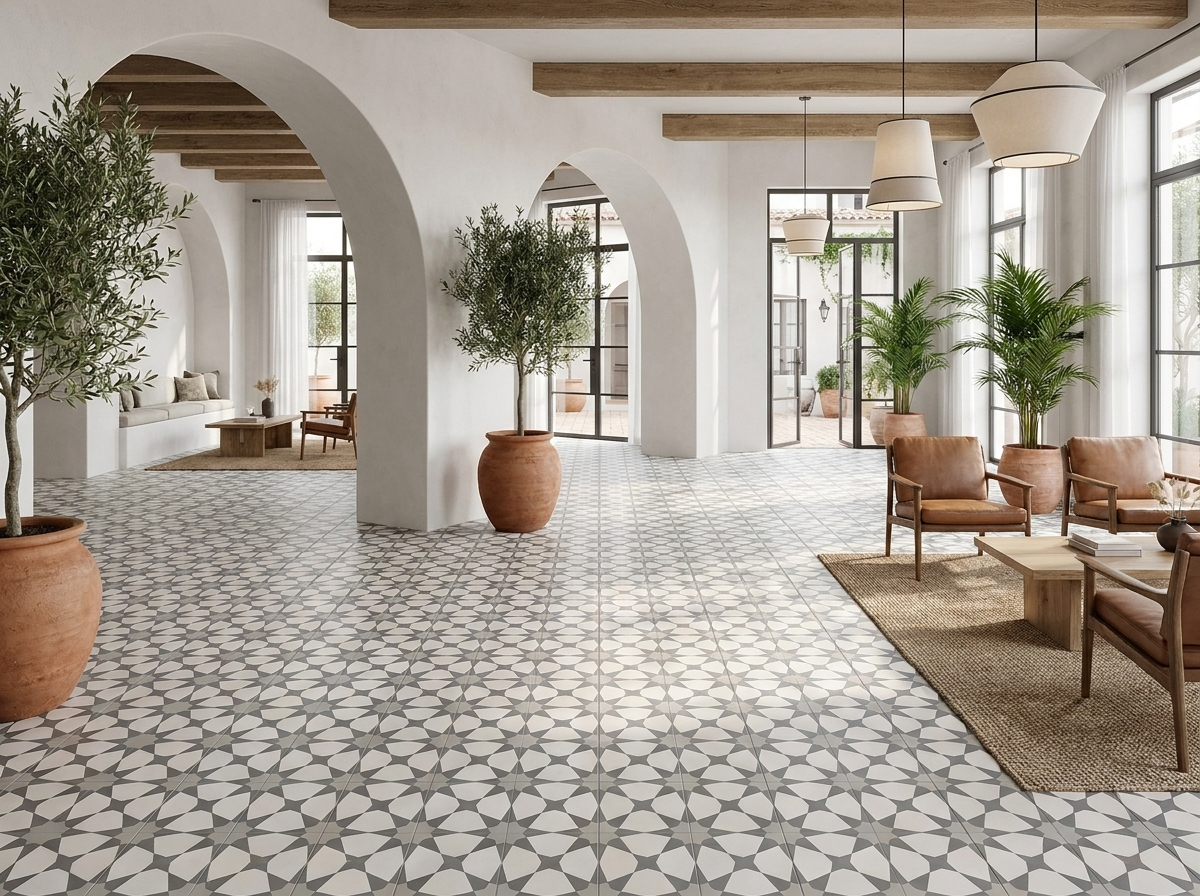
- Eight-pointed stars (khatim). The signature motif. Stars interlock with crosses and polygons to create fields of continuous geometry that seem to expand forever.
- Arabesques and quatrefoils. Curved, petal-like forms — the classic “Moroccan fish scales” and lantern shapes — that soften geometry with organic rhythm.
- Zellige-inspired mosaics. Small geometric tesserae arranged in radiating compositions; in cement tile, these appear as intricate multi-color patterns within each pressed tile.
- Borders and medallions. Traditional Moroccan rooms frame their floors like carpets — a patterned field surrounded by a contrasting border.

Because each cement tile is hand-pressed from mineral pigments, these patterns arrive with the same soft, matte depth that makes historic Moroccan interiors feel alive rather than printed.
The Moroccan Color Palette (and How to Use It)
Moroccan style is as much about color as geometry. The traditional palette draws from landscape and craft:
- Majorelle and cobalt blue — the iconic blues of Chefchaouen and the Majorelle Garden
- Turquoise and teal — the color of glazed fountains and courtyard pools
- Terracotta and ochre — earthen walls, desert light
- Emerald green — the color of oasis gardens and glazed roof tiles
- Crisp white — the canvas that makes every other color sing
Our designers’ rule of thumb: choose one dominant color plus white for the pattern, and let the room’s textiles and accessories carry the supporting hues. An all-blue-and-white patterned floor with terracotta pots and brass lanterns reads authentically Moroccan without overwhelming the space.

Room-by-Room: Where Moroccan Patterns Shine
Kitchens
A Moroccan-pattern backsplash behind the range brings the souk’s energy to the heart of the home. Pair with warm wood, open shelving, and brass hardware. For bolder kitchens, run the pattern across the floor and keep cabinetry simple.
Bathrooms
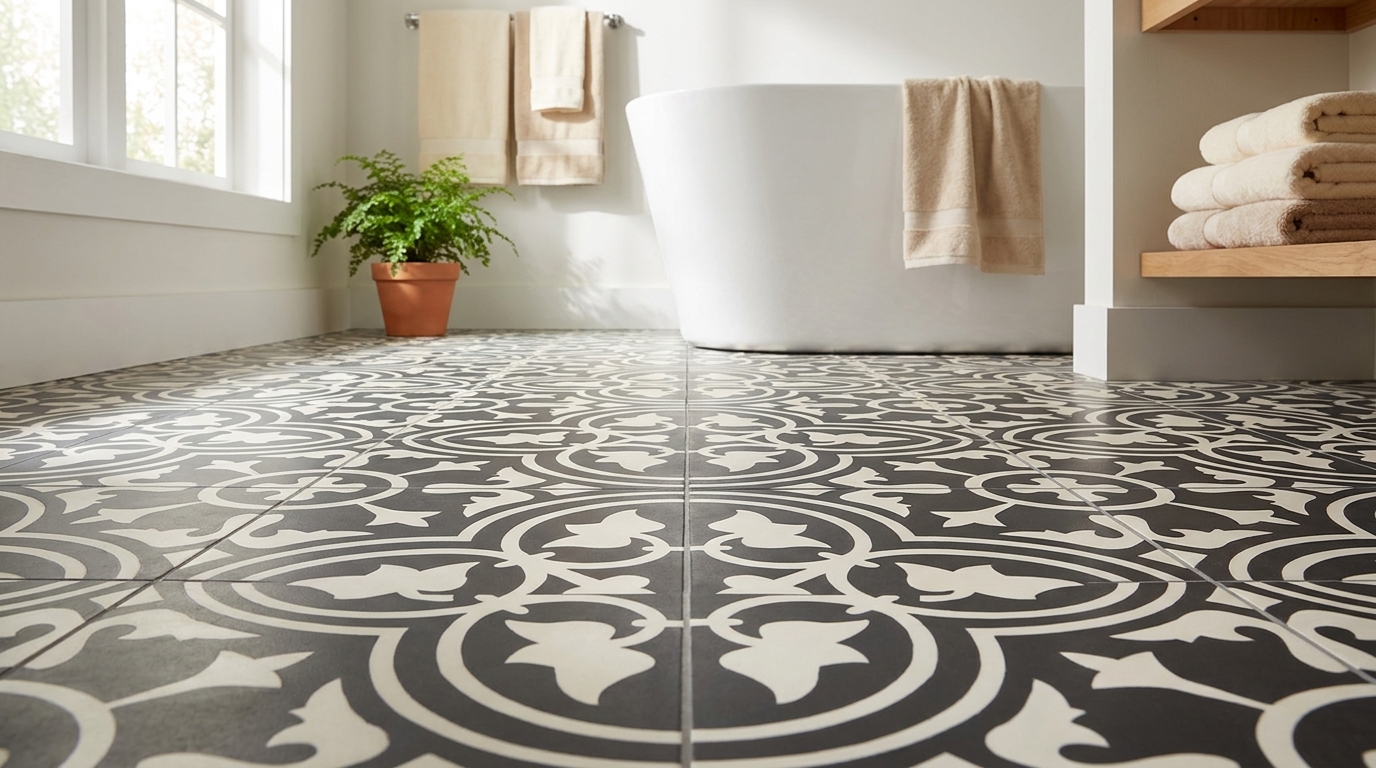
The most popular Moroccan application — and for good reason. Blues and aquas belong near water, and the matte surface of cement tile offers better slip resistance than glossy glazed tile. A patterned floor with white walls creates a spa-hammam feeling in even a small powder room.
Entryways
Moroccan homes greet visitors with pattern, and yours can too. A star-pattern “rug” of tile in the entry — bordered like a traditional carpet — makes a first impression no doormat ever could.
Patios and Courtyards
This is where the style was born: the interior courtyard. Moroccan patterns on a patio, around a pool, or up an outdoor stair riser turn any backyard into a riad. Sealed properly, cement tile handles outdoor life beautifully in moderate climates.
Stair Risers
A favorite designer trick: pattern on the risers only. Every step displays a band of geometry — maximum charm, minimal square footage.
Mixing Moroccan Patterns Like a Designer
Afraid of “too much”? These guidelines keep pattern exuberance under control:
- Anchor with one hero pattern. Choose your statement design first; every other surface supports it.
- Vary the scale. Pair a large-scale star floor with a small-scale border, not two patterns of equal weight.
- Repeat your colors. Different patterns feel unified when they share the same two or three hues.
- Give pattern room to breathe. White walls, natural wood, and plain textiles let a Moroccan floor be the star.
- Order samples first. Colors shift with light throughout the day — see the actual tile in your actual space before committing.
At Original Mission Tile, our Design Studio can also adjust any pattern’s colors to your palette — the traditional geometry, in exactly the hues your project needs.
Moroccan Tile Patterns FAQ
What’s the difference between zellige and Moroccan cement tile?
Zellige is hand-cut glazed terracotta with a glossy, irregular surface. Moroccan-pattern cement tiles are hand-pressed with pigmented cement — matte, precise, and patterned. Both are authentic crafts; cement tile offers more pattern detail and easier installation.
Are Moroccan patterns too bold for small rooms?
Quite the opposite — a single confident pattern can make a small room feel intentional and larger. Small bathrooms and entryways are among the most successful Moroccan applications.
Do these tiles work in contemporary homes?
Beautifully. A geometric Moroccan floor against minimalist architecture is one of today’s strongest design pairings — the pattern provides warmth and history that clean-lined spaces crave.
Can I use Moroccan cement tiles outdoors?
Yes, with an exterior-rated penetrating sealer. Patios, covered terraces, and pool surrounds are classic applications in moderate climates.
Where can I buy Moroccan cement tiles?
Right here — browse our in-stock collection of handmade patterns ready to ship, or contact us for samples and custom colorways.
The Takeaway
Moroccan tile patterns have survived a thousand years of changing tastes for one simple reason: geometry, craft, and color never go out of style. Whether you commit to a full courtyard fantasy or a single band of stars on a stair riser, these patterns bring a depth and soul to a space that no plain surface can.
Handmade cement tile is the most livable way to bring that tradition home — authentic pattern, saturated mineral color, and a surface made to be walked on for generations.
Ready to find your pattern? Browse our handmade Moroccan and geometric designs, explore the project gallery for inspiration, or contact our design team for samples and expert advice.