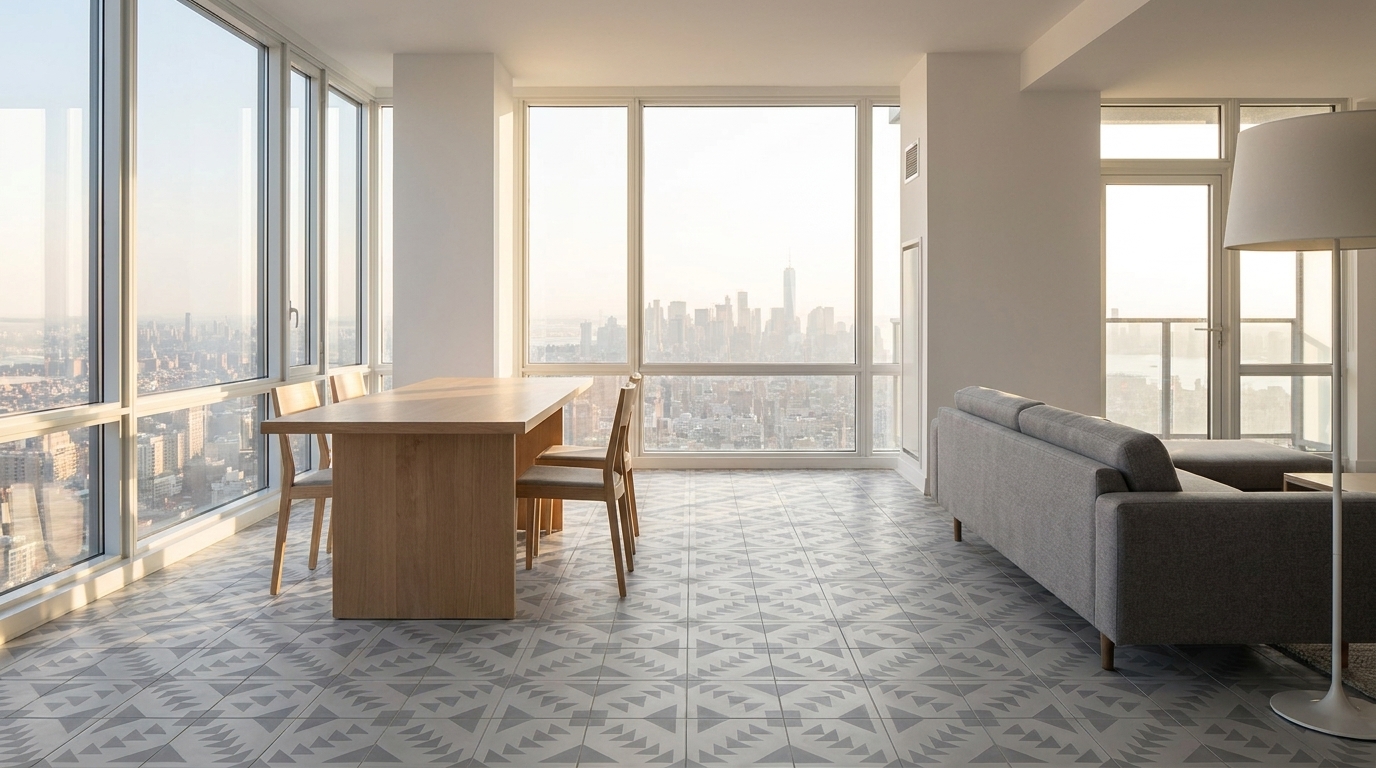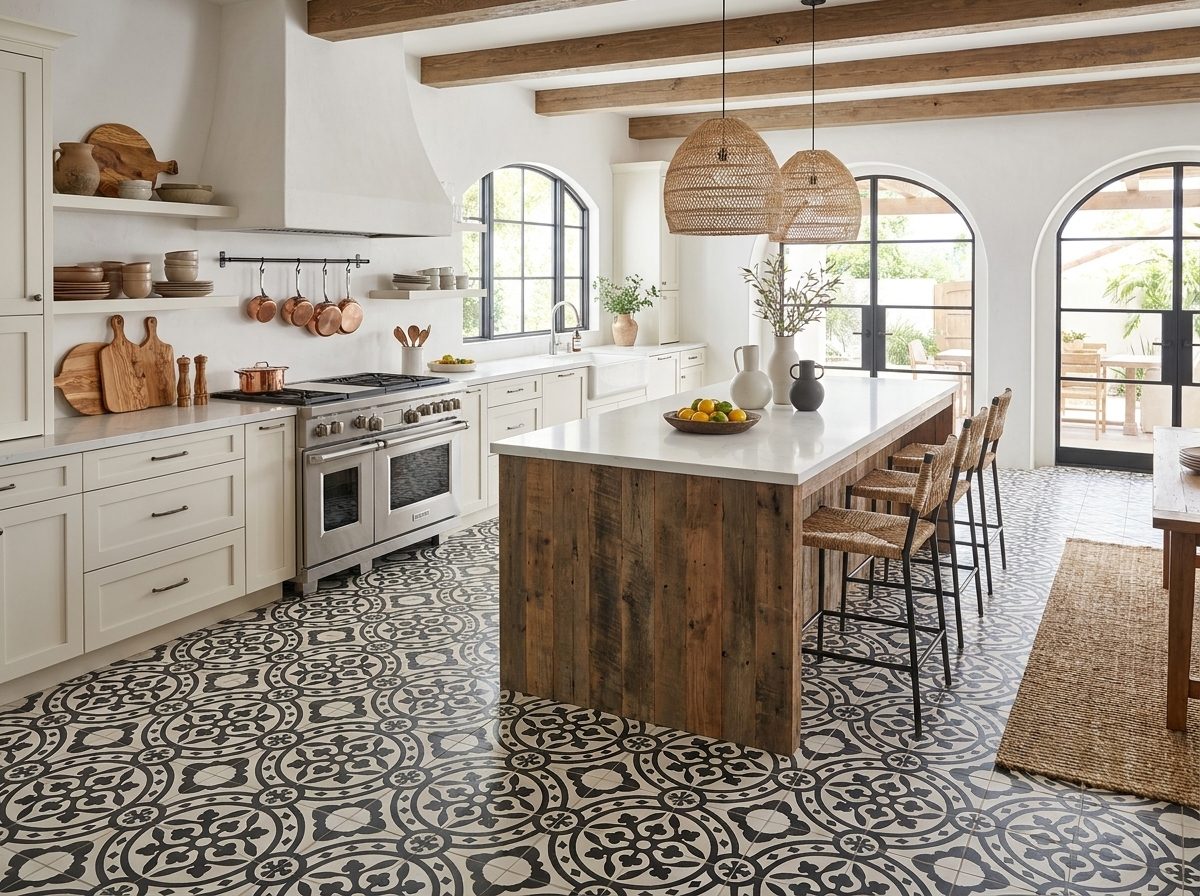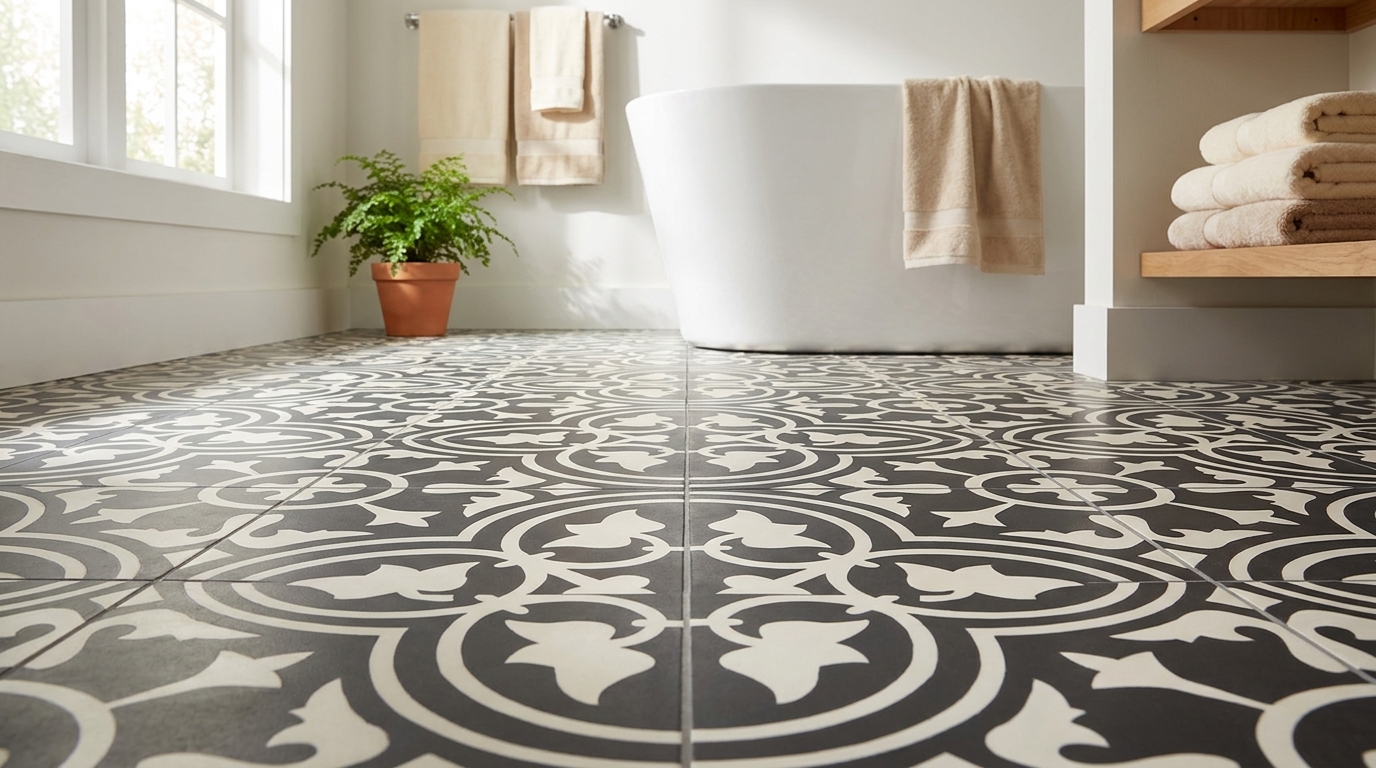
You have finally picked your cement tile. Now you are staring at forty grout chips, wondering how one gray-ish swatch can wreak so much havoc. Choosing the right grout color for cement tile is not a footnote decision. It is the line work that either sharpens your pattern or muddies it. Because handmade cement tile comes in such different pattern families, one grout rule does not fit them all. A floral medallion, a two-tone hex, and a solid field tile each want something different from the joint between them. This guide walks through the major cement tile pattern types and tells you, pattern by pattern, what grout color actually works.
Why Cement Tile Patterns Change the Grout Math
Grout is the cement-based (or resin-based) filler that sits in the joint between tiles. On a plain porcelain floor, grout color is mostly about maintenance and mood. On patterned cement tile, grout does something extra: it acts as the outline of every shape in the design.
Cement tile is made from pigmented cement pressed into molds, so the color sits in a thin top layer rather than running through the whole body. That means the edges of each tile are slightly more porous than the face. Grout color choices interact with those edges more visibly than they do on glazed tile, especially with multi-color patterns where several pigments meet at one joint.
Because of that, the safest starting point is always to test. Order a couple of in-stock cement tile samples, lay them next to two or three grout chips, and look at the pairing in your actual room light before you commit. Morning light and evening light can shift a “greige” grout from warm to cool in the same afternoon.
Two-Tone Geometric Patterns: Let One Color Lead
Two-tone patterns like Harlequin, Monaco stripes, or a checkerboard such as Amalia II Gris rely on a crisp, repeating shape. The grout line here is a third color whether you plan for it or not, so treat it that way on purpose.
For high-contrast pairs, such as the black-and-white diamonds in Harlequin Blue, a mid-gray grout usually reads best. It keeps the geometry sharp without adding a fourth line color to compete with the two you already have. White grout on a bold two-tone pattern can look chalky fast, because it shows dirt and traps foot traffic marks. Charcoal or black grout, on the other hand, can make the joints disappear into the darker of your two tile colors, which flattens the pattern instead of framing it.
If your two-tone tile leans moody, like Monaco Oxford or S-108 Navy, a warm gray or soft charcoal grout keeps the joints quiet instead of drawing a bright white grid across a deep color field. That grid effect is the single most common regret we hear about after installation, so it is worth avoiding upfront.
Floral and Medallion Patterns: Pull From the Palette, Don’t Fight It
Busy, multi-color patterns are where grout choice matters the most and where people most often overthink it. Patterns like Liz Flower Blue, Kenitra Sage, or a classic medallion like Roseton BW already carry three or four colors per tile. Adding a bold, contrasting grout on top gives your eye a fifth thing to process, and the pattern can start to look busy instead of intentional.
Instead, pull the most muted or neutral tone already present in the pattern and use that as your grout color. For example, a warm gray grout works with almost any floral pattern because most cement tile backgrounds use a soft cream, gray, or sand base. That way the grout reads as a quiet frame, not a new color layer. This is the same logic professional colorists use: neutral grout on multi-color tile almost always wins over a “creative” contrast choice.
If you do want the pattern to feel a little more defined from across the room, go one shade darker than the tile’s background color rather than reaching for black or white. A soft taupe or warm gray grout with something like La Espanola Sage will still separate the shapes clearly, just without shouting.
Hex, Fishscale and Small-Format Shapes: Watch the Joint Width

Small-format tile, like our hexagon and fishscale shapes, behaves differently because of grout joint width, not just color. Smaller tiles like Hex-100 White or FS-100 White typically use narrower joints than an 8×8 field tile, so grout color has less total surface area to influence the look.
That said, narrower joints on a repeating shape multiply fast. A hexagon floor has three grout lines meeting at every point, so even a subtle color shift becomes a visible honeycomb grid once you step back. For a soft, blended look on hex and fishscale shapes, choose a grout close in value to the tile itself. For a graphic, tiled-ceiling look, go a shade or two darker so the honeycomb pattern pops on purpose instead of by accident.
Dark hex patterns, such as Hex Bakery Black or Hex Clip Oxford, actually forgive grout choice more than white ones do. Dark grout hides dirt well, and light grout on a dark hex floor can create a striking, almost stained-glass effect if that is the look you want.
Solid and Near-Solid Colors: Where Contrast Actually Works

Not every cement tile pattern is busy. Solid or nearly solid colors, like Liverpool Black, S-293 Azul Caribe, or S-111 D’Hanis Red, are the one category where contrast grout is genuinely low-risk. There is no busy pattern to overwhelm, so a crisp white or light gray joint on a saturated field color can look clean and modern instead of chaotic.
This is also where a lot of designers use grout to define a grid, like a checkerboard laid diagonally or a border detail. Because you are only managing one tile color, the math is simpler: light grout on dark tile reads bold and graphic, while a matching or near-matching grout on the same tile reads calm and monolithic. Neither is wrong; it depends on whether you want the floor to be the statement or the backdrop.
Sanded, Unsanded and Sealing: The Technical Side of the Decision
Color is only half the decision. Grout type matters just as much with cement tile, because cement tile is more porous than ceramic or porcelain. Unsanded grout is generally recommended for cement tile joints under 1/8 inch, which covers most of our patterns. Sanded grout can scratch the soft, hand-pressed face of a cement tile during installation, so many installers avoid it unless the joint is wider than that.
Sealing order matters too. Cement tile should be sealed before grouting, not just after, because raw cement will pull pigment out of the grout and stain permanently. That is especially true for light-colored tiles like Hex-100 White or FS-100 White, where any grout haze or pigment bleed shows immediately. Follow our full installation guidelines for the exact sealing sequence, and once the floor is in, keep it looking sharp with the steps in our maintenance and cleaning guide.
One more practical note: cementitious grout can vary slightly in color from batch to batch depending on how much water goes into the mix. If your installer needs to mix a second batch mid-project, ask them to blend it consistently rather than eyeballing it, so you do not end up with a visible seam between grouting sessions.
How to Test Before You Commit
Because grout is nearly impossible to change once it cures, testing beforehand is worth the extra day. Order tile samples from any in-stock product page and lay them against three grout chips in the actual room, not the showroom. Then check them again after dark under your real light fixtures, because warm bulbs shift grays warmer than daylight does.
If you are working from a photo in our installation gallery, remember that screen colors are never exact. Use the photo for pattern inspiration and layout ideas, then confirm the actual grout color against a physical sample before your installer opens a bag. And if you are torn between two options, our team can walk through your specific pattern with you, so reach out through our contact page before the crew starts mixing.
Frequently Asked Questions
Should grout match or contrast with cement tile?
It depends on the pattern. Busy, multi-color patterns like florals and medallions almost always look better with a neutral, matching-ish grout pulled from the tile’s background tone. Solid-color or simple two-tone patterns can handle contrast grout, because there is no competing detail for the eye to sort through.
What grout color works best with white cement tile?
Light gray or off-white grout is the safer default for white cement tile, such as Hex-100 White or FS-100 White. Pure white grout shows dirt fastest, and dark grout on white tile can bleed pigment into the porous edges if the tile was not sealed before grouting.
Should I use sanded or unsanded grout on cement tile?
Unsanded grout is the standard choice for most cement tile installations, because typical joints run narrower than 1/8 inch and sanded grout can scratch the tile’s soft finished surface. Always confirm joint width with your installer before choosing.
Can I change my grout color after installation?
Not easily. Cementitious grout can sometimes be color-sealed or stained over, but true grout color changes usually mean removing and replacing the joints. That is why testing samples in your own light, before installation day, is the cheapest insurance you can buy.
See the tile in person before you commit
Photos only tell you half the story. Colors, texture and the handmade character of cement tile are best judged in your own light. Order a sample of any in-stock pattern for $20 (additional samples $10, free shipping) — or tell us about your project and we’ll help you narrow it down.
Browse in-stock cement tiles →
Talk to us about your project →