Most bathroom falls happen on the floor, not in the tub. If you’re planning a bathroom that will serve you or a family member for the next 20 years, aging-in-place bathroom tile deserves more thought than color and pattern alone. The floor has to grip wet feet, transition without a lip to trip over, and still look like a room you chose on purpose, not a hospital installed it. Cement tile can do all three, but only if you spec it correctly.
This guide skips the generic “install grab bars” advice you’ve read a dozen times. Instead, it walks through the specific decisions that matter when the floor itself is cement tile: slip ratings, curbless shower details, pattern choices for aging eyes, and the maintenance habits that keep traction from fading over time.
What “Aging in Place” Actually Means for a Bathroom Floor
Aging in place means designing a home so someone can stay in it safely as their mobility, balance, or vision changes. It’s different from strict ADA compliance, which governs public buildings and rental housing. A residential bathroom doesn’t have to meet ADA’s exact clearances. However, borrowing its numbers is smart practice anyway.
The National Association of Home Builders certifies contractors as Certified Aging-in-Place Specialists (CAPS) for exactly this reason. Their approach blends universal design, which benefits everyone regardless of age, with targeted safety features for reduced mobility. A wide doorway helps a parent pushing a stroller just as much as it helps a walker or wheelchair. That overlap is the whole point of universal design: nothing has to look “special needs.”
For a floor specifically, three things matter most. First, traction when wet. Second, a level, threshold-free transition into the shower. Third, enough visual contrast that a person with reduced vision can read where the floor ends and a wall or fixture begins. Cement tile addresses all three, and we’ll cover each one in turn.
Slip Resistance: The One Number That Actually Matters
Skip the marketing language and look for one number: DCOF, or Dynamic Coefficient of Friction. It measures how much grip a tile provides while someone is walking on it wet. The industry standard, ANSI A137.1, sets a 0.42 minimum for any floor that gets walked on wet. That’s a floor, not a shower pan.
For an aging-in-place bathroom, aim higher. Most accessibility designers recommend 0.50 or above for the main floor and 0.60 or above inside the shower itself, where bare, wet feet meet the tile directly. Ask any supplier for the tested DCOF before you buy, not just a general “non-slip” claim.
Here’s where handmade cement tile has a natural advantage. Unlike glazed ceramic or polished porcelain, cement tile has a matte, slightly textured face straight out of the mold. It was never designed to be shiny. That inherent texture, combined with a matte sealer instead of a high-gloss topcoat, keeps traction high without looking industrial. Because the tiles are also hand-poured in small batches, the surface has a subtle, consistent grain rather than the glassy finish you’d get from a factory glaze line.
One caution: sealer choice matters as much as the tile itself. A wax-based sealer can build up a slick film over years of reapplication. Instead, follow a maintenance routine built around a breathable, matte sealer designed for cement tile, and avoid anything marketed as “high-shine.”
Curbless Showers and Zero-Threshold Transitions
A raised shower curb is one of the most common tripping hazards in an older home. For an aging-in-place bathroom, a curbless (zero-threshold) shower lets someone walk, wheel, or shuffle straight in without stepping over anything. That said, a curbless design takes more planning than a standard pan.
The floor needs a slope built into the subfloor, usually toward a linear drain along one wall rather than a center drain. That slope has to be engineered before a single tile goes down, so bring your installer in during the framing stage, not after.
Cement tile works well in this setup because the field tile and the shower floor can share one continuous, uninterrupted surface. That visual continuity is exactly what makes a curbless shower feel intentional instead of clinical. If your chosen in-stock pattern needs custom cutting for a linear drain or a non-standard shower footprint, our custom made tiles program can produce matching pieces to your dimensions.
Whichever pattern you choose, keep the transition between shower and dry floor completely flush. Even a quarter-inch lip becomes a real hazard for a shuffling gait or a walker wheel. Ask your installer to dry-lay the transition zone before setting anything permanently, so you can check it by hand.
Pattern and Color Choices That Help, Not Hinder, Vision

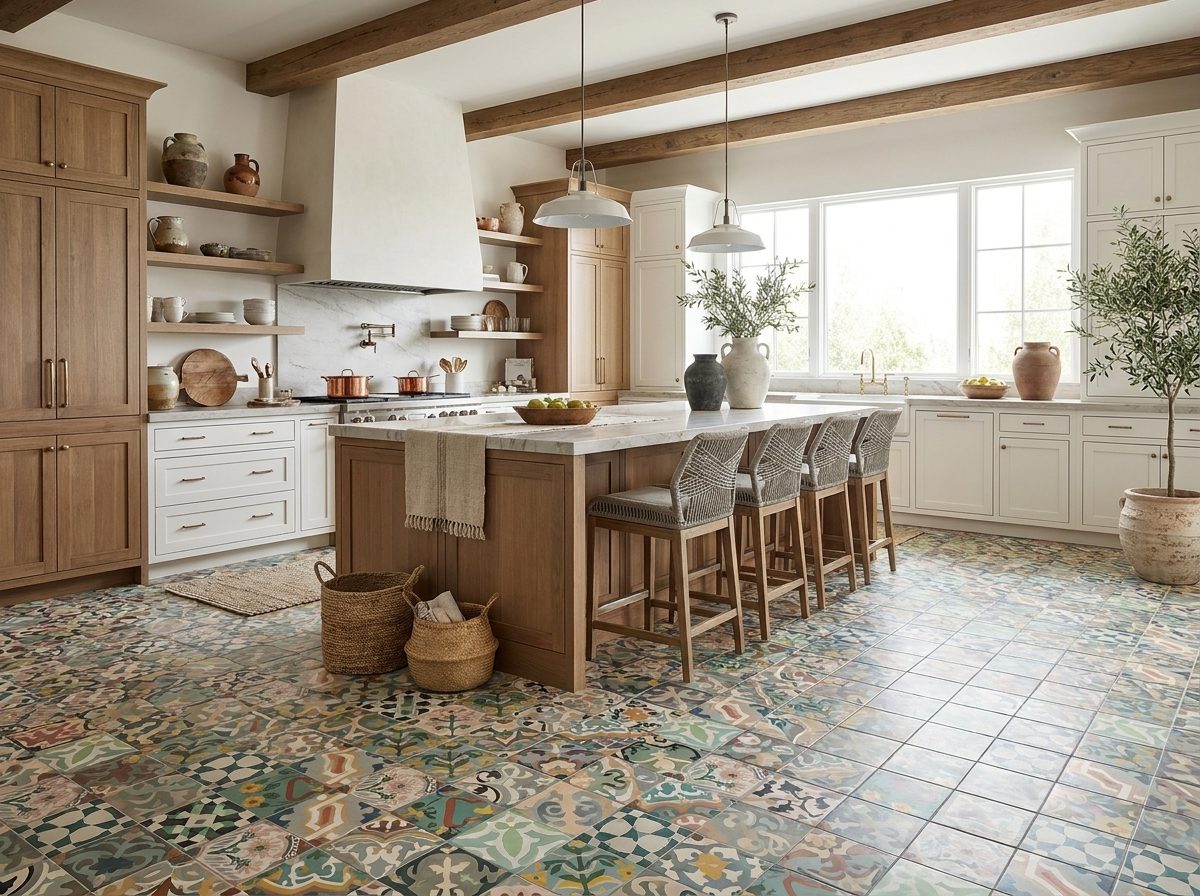
This is the part most aging-in-place guides skip entirely, and it’s where cement tile choices genuinely matter. High-contrast, busy patterns can be beautiful. However, for someone with low vision, cataracts, or early cognitive decline, strong contrast on a flat floor can read as a change in depth. A checkerboard or a bold geometric pattern might look like actual steps or holes to an aging eye. That misreading is a documented cause of hesitation and falls.
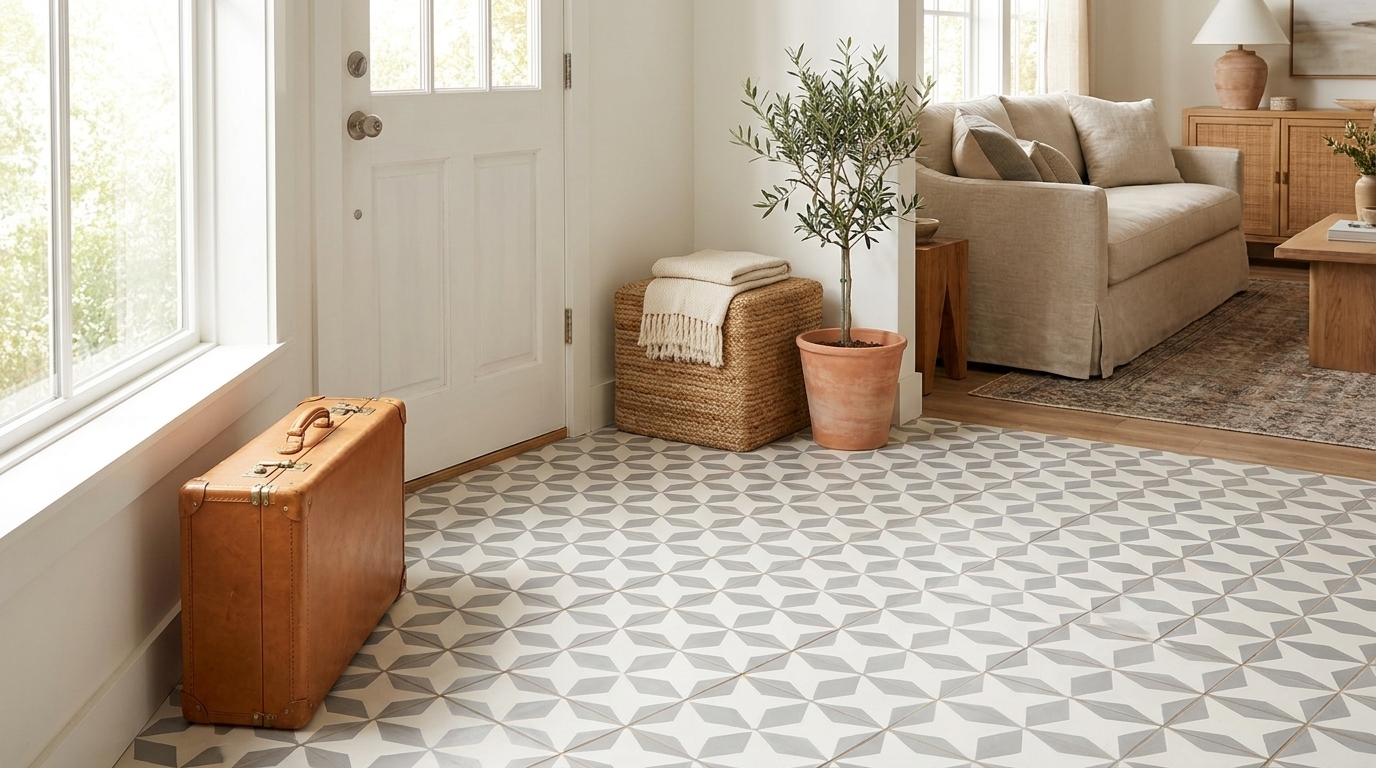
None of this means you must choose plain white tile. Instead, favor patterns with a grounded, low-contrast field, such as a soft two-tone design or a solid, calm color that reads as one continuous plane rather than a series of shapes. If you love a more graphic pattern, save it for a backsplash or an accent wall instead of the walking surface.
Contrast still matters, just in the right place. A visibly different color where the floor meets the wall, or where the floor meets the shower threshold, helps someone judge distance and depth accurately. That’s a design cue, not a hazard, because it marks a boundary instead of creating a false one in the middle of open floor. A field-and-border pairing in complementary but calm tones reads clearly without looking sterile.
Grab Bars, Blocking, and Planning Ahead During Installation

Grab bars only work if they’re anchored into solid framing, called blocking, behind the wall. Adding blocking after the tile is set means tearing out finished work, so this decision has to happen before a single tile ships. Talk to your contractor about blocking at the toilet, inside the shower, and beside the tub, even if you don’t install the bars on day one.
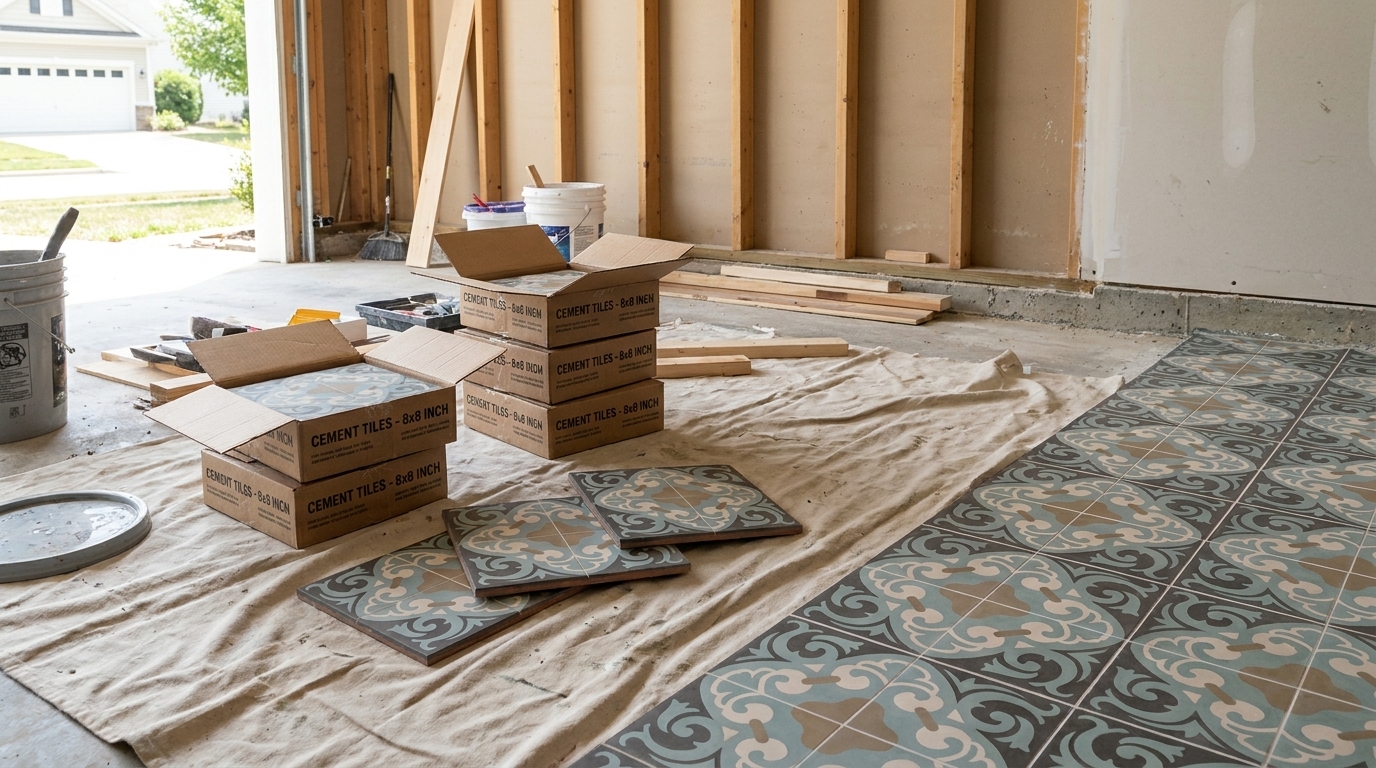
Standard placement runs 33 to 36 inches above the finished floor, though you should confirm exact heights against the user’s own reach. Because cement tile sets on a mortar bed, your installer can coordinate blocking height with the finished tile surface during the same planning conversation. That’s one advantage of working from clear installation guidelines from the start rather than improvising mid-project.
A built-in shower bench or fold-down seat is worth the same forethought. If you’re adding one, decide now, because the bench substrate and the tile that wraps it need to be planned together, not patched in later.
Layout Details That Reduce Fall Risk
Beyond the tile itself, layout choices affect how safely someone can move through the room. A 60-inch turning circle, the space needed for a wheelchair to rotate fully, is a good baseline even if no one in the house currently uses one. Clear floor space in front of the toilet, sink, and shower entry lets a walker or wheelchair approach straight on instead of at an awkward angle.
Smaller-format tiles can help traction in wet zones because more grout lines mean more texture underfoot. A small hexagon like Hex-100 White 8×9 gives a shower floor extra grip from the grout pattern alone, on top of the tile’s matte surface. That’s a genuine functional benefit, not just a style choice.
Finally, think about glare. A north-facing bathroom with soft, even light is far easier to navigate than one with a single bright fixture that throws hard shadows across the floor. Shadows can look like edges or steps to an aging eye, the same problem as high-contrast pattern. If you’re unsure how a layout will read in person, request a sample and view it under your own bathroom’s lighting before you commit to a full order.
Maintenance That Keeps Traction Over Time
A slip-resistant floor on installation day won’t stay that way without upkeep. Cement tile needs periodic resealing, typically every one to three years depending on traffic, because the sealer is what protects the porous cement surface and helps maintain a consistent, matte texture. Skipping resealing lets the surface wear unevenly, which can create slicker patches in high-traffic paths.
Use a pH-neutral cleaner instead of anything acidic or heavily degreasing. Acidic cleaners etch the cement surface over time, and etched cement can develop a rougher, then eventually a polished, worn patina that changes its grip unpredictably. Our full maintenance and cleaning guide walks through the exact products and schedule we recommend for cement tile floors.
Set a simple reminder to check the shower floor and threshold area twice a year. Look for wear patterns, standing water after a shower, or any sealer that’s gone dull in one spot. Catching those issues early is far easier than fixing a slip hazard after the fact.
How do I know if a tile is safe enough for an aging-in-place bathroom?
Ask for the tile’s tested DCOF rating. Look for 0.50 or higher for the main floor and 0.60 or higher for the shower floor itself. If a supplier can’t provide a number, treat that as a red flag rather than a reassurance.
Is cement tile a good choice for a curbless shower?
Yes, because the same pattern can run continuously from the dry floor into the shower without an interrupting curb. Just make sure your installer engineers proper slope to a linear drain before setting any tile, and consider our custom made program if your shower footprint needs non-standard cuts.
Should I avoid patterned cement tile entirely in a bathroom for older adults?
Not entirely. Instead, keep bold, high-contrast pattern off the walking surface and save it for a backsplash, a niche, or an accent wall. A calmer, low-contrast field underfoot reduces the risk of a pattern being misread as a change in depth.
How much does it cost to make an existing bathroom aging-in-place ready?
Costs vary widely depending on whether you’re replacing flooring only or also reworking the shower for a curbless entry and adding blocking for grab bars. Because every home’s framing and layout differ, it’s worth getting a specific quote. Reach out through our contact page for guidance on tile selection and quantities for your project.
See the tile in person before you commit
Photos only tell you half the story. Colors, texture and the handmade character of cement tile are best judged in your own light. Order a sample of any in-stock pattern for $20 (additional samples $10, free shipping) — or tell us about your project and we’ll help you narrow it down.
Browse in-stock cement tiles →
Talk to us about your project →