Guests book a stay before they ever walk through your door. They decide from a grid of thumbnail photos on a phone screen. That means cement tile for vacation rentals isn’t just a flooring choice anymore — it’s a booking strategy. A patterned floor that photographs beautifully, survives suitcase wheels and sandy feet, and still looks sharp after the two-hundredth checkout is one of the highest-leverage upgrades a host can make.
Most flooring advice online is written for homeowners who live in the space every day. A vacation rental is different. There’s no “move-in grace period” where a floor gets gentle treatment. Every guest is essentially a stress test, and your floor has to perform in photos and in person, on day one and on day one thousand. This guide covers what actually matters for short-term rental hosts and property managers: the photo impact, the durability math, the turnover-day cleaning routine, and how to budget tile across a growing portfolio of units.
Why Flooring Decisions Are Different for Short-Term Rentals
In a primary residence, a floor just needs to look good and hold up to a family’s routine. In a rental, the floor does double duty. First, it has to sell the space in photos, because that’s the only impression a potential guest gets before booking. Second, it has to withstand constant, anonymous traffic from people who have no stake in how the place looks next year.
Think about what actually touches your floors in a typical month. Rolling suitcases get dragged in from the car. Sandy feet track in from the beach or pool. Wine gets poured a little too generously on vacation. Pets that aren’t yours walk across the kitchen. A floor that can’t take that volume of abrasion and spills will show it fast, and a tired-looking floor in year two photographs worse than it did on day one.
That’s why many experienced hosts are moving away from soft or printed flooring and toward materials with real substance. Cement tile is one of the few flooring types that was built for exactly this kind of heavy-use, high-visibility environment, because the pattern isn’t a surface print. It’s pigment packed into the top layer of the tile itself, so wear doesn’t expose a different-colored layer underneath the way it can with laminate or printed vinyl.
Why Cement Tile for Vacation Rentals Photographs So Well

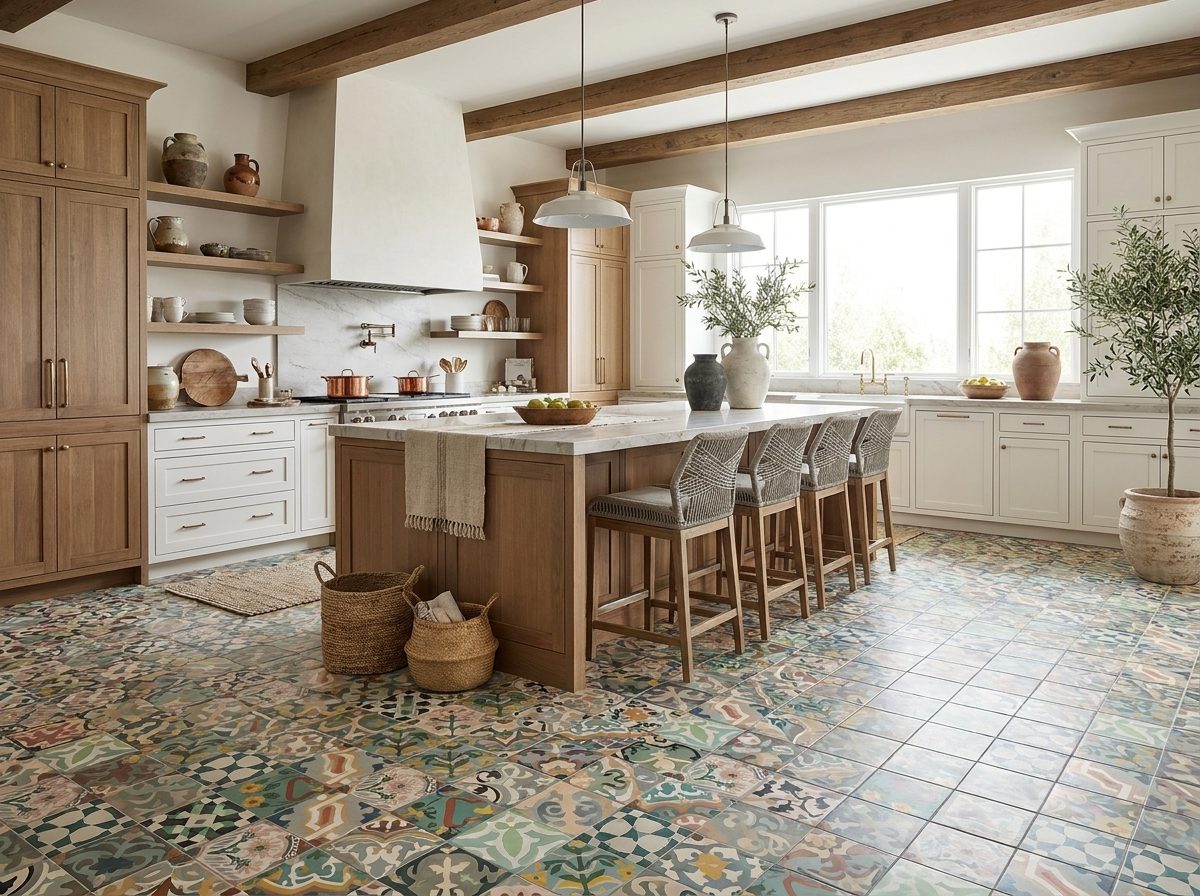
Listing photos live or die on first impressions, and a plain floor doesn’t give a photographer anything to work with. A patterned cement tile floor does the opposite. It adds depth, color, and a sense of craftsmanship to a wide shot, even in a small room, because the eye has something to land on besides furniture.
The matte, unglazed finish helps too. Unglazed means the tile isn’t coated with a shiny, reflective glass layer, so it doesn’t throw back harsh camera flash or create hot spots in a photo the way polished porcelain can. That matters more than most hosts realize, since so many listing photos are shot quickly, with a phone, in less-than-ideal light.
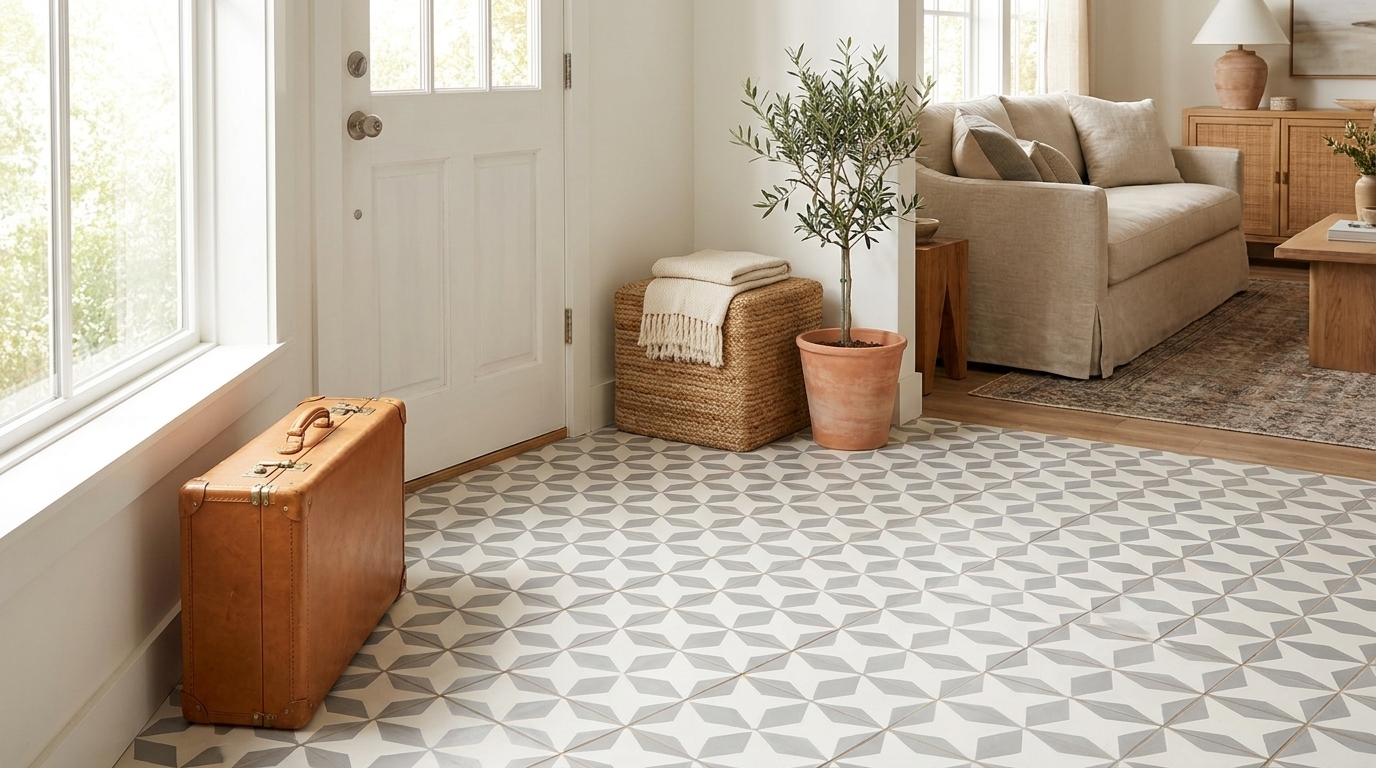
Pattern also creates what designers call the “rug effect”: a tiled floor reads as a finished design element on its own, so you can furnish more simply and still get a styled-looking photo. For an entry or kitchen floor with real visual punch, a geometric field like Rombos Gris 02 or a bold two-tone pattern like Hex Harlequin Black 01 gives a listing an instant visual signature. Browse the full installation gallery for more ideas on how patterned floors read in real rooms, not just product shots.
Durability That Holds Up to Constant Turnover
“Turnover” is the industry term for everything that happens between one guest’s checkout and the next guest’s check-in: cleaning, inspection, and restocking. A high-performing rental might turn over dozens of times a year, and each turnover is a small opportunity for damage. Floors take the brunt of it.
Cement tile holds up because the color runs through the body of the tile, not just the surface. A scuff from a suitcase wheel or a dropped pan doesn’t reveal a white substrate underneath, the way it can with many printed floor coverings. The material is also dense and heavy, so it resists the kind of denting and gouging that vinyl plank can show after a few years of rolling luggage.
Two tradeoffs are worth knowing up front. First, cement tile needs a sealer, and that sealer needs reapplying periodically to keep stains from setting in, which we cover in the maintenance section below. Second, it’s a hard surface, so it’s not the softest thing to stand on for hours of cooking. Most hosts solve that with a washable runner in the kitchen work zone, which also adds a textile layer back into the photo.
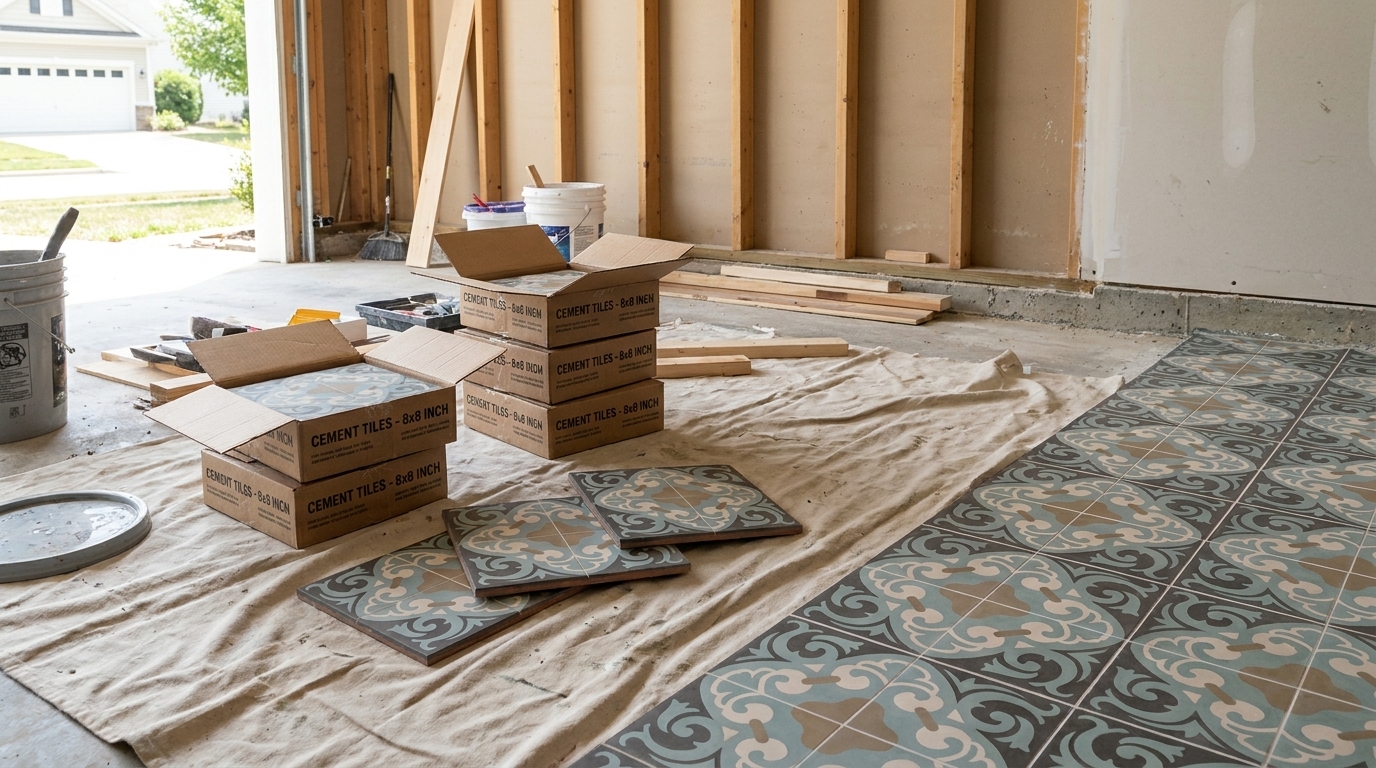
For high-traffic zones like entries, mudrooms, and kitchens, an 8×8 layout is the industry workhorse because it balances pattern visibility with straightforward installation and repair. If a few tiles ever need replacing after years of wear, having spares from the same dye lot matters, which is one more reason to order enough extra material up front instead of trying to source a perfect match later.
A Turnover-Day Cleaning Routine That Actually Works
The best flooring for a rental is the one your cleaning team can service fast without specialized products. Cement tile fits that brief once it’s properly sealed. A sealed floor resists the kind of spill that would otherwise need scrubbing: coffee, wine, sunscreen, and cooking oil all wipe up instead of soaking in.
For a standard turnover, a simple routine works:
- Dry sweep or vacuum first to lift sand, pet hair, and grit before it gets ground into the grout lines.
- Damp mop with a pH-neutral cleaner. Avoid vinegar, bleach, and other acidic or highly alkaline products, because they can strip the sealer over time.
- Spot-treat any fresh stains immediately instead of letting them sit through a cleaning cycle, since fresh spills lift far more easily than dried ones.
- Check grout lines monthly for a few minutes of extra attention, because grout is more porous than the tile and shows grime first.
Our full maintenance and cleaning guide covers resealing frequency and product recommendations in more detail, and it’s worth printing a copy for your cleaning team so the routine stays consistent across staff changes. That consistency matters more in a rental than almost anywhere else, because the floor gets touched by different hands every week.
One more practical note for wet-prone spaces like pool bathrooms or beach-access mudrooms: the honed, matte surface of cement tile has more texture than polished stone, which gives bare and wet feet better traction. That’s a real safety benefit when your guests are walking in straight from a pool or the ocean.
Building a Recognizable Look Across Multiple Units
If you manage more than one property, flooring can become part of your brand instead of just a maintenance line item. Guests who book with a management company across different units start to recognize a signature look, the same way a boutique hotel chain uses a consistent design language property to property.
A simple strategy: pick one or two signature patterns and reuse them across your portfolio, reserving them for the highest-visibility rooms, entry, kitchen, and primary bathroom. That keeps the per-unit budget reasonable while still giving every listing a recognizable, photo-ready moment. A cool, neutral pattern like Palace Gris 02 works well as a flexible “house style,” while coastal properties might lean into something like Pescadero Blue 04 to match the location.
For hosts who want a specific color story by region, destination, or season, browsing tile designs by color is faster than scrolling every pattern individually. If your portfolio has grown enough to justify a fully custom pattern or a brand-specific colorway, the custom made tile program can produce it, though plan for a longer lead time since custom work is made to order rather than shipped from stock.
Budgeting and Ordering Across a Growing Portfolio
Tile math gets more important once you’re ordering for multiple units instead of one house. An 8×8 box covers 5.17 square feet and holds 12 tiles, so a quick room measurement tells you roughly how many boxes a floor needs. Always add 15% on top of the raw square footage for cuts, breakage, and future repairs, because running short mid-project costs far more in delay than the extra material would have cost up front.
Timing matters too. In-stock patterns, which make up the bulk of our catalog, typically ship within days, which is useful if you’re renovating during a short off-season window between bookings. Custom made tiles, by contrast, take about four to six weeks to produce, so they need to be ordered well ahead of a launch date, not decided on last-minute.
Before committing to a pattern for an entire portfolio, order samples. A first sample is $20 and each additional sample is $10, with free shipping, and you can request them from any in-stock product page. That’s a small cost compared to discovering a color reads differently under your actual lighting after a full order has already arrived. When you’re ready to move forward, our installation guidelines walk your contractor through sealing, setting, and grouting correctly the first time, and the in-stock collection is the fastest starting point for most renovation timelines.
Where to Use Patterned Tile in a Rental

You don’t need to tile every room to get the photo and durability benefits. A few strategic zones do most of the work. The entry is the highest-value spot, because it’s often the first interior shot in a listing and it takes the heaviest abrasion from shoes and luggage. A bold design like Ellis Navy 03B makes a strong first photo without needing extra staging.
Kitchens are the second priority, since they appear in almost every listing and take heavy daily traffic during a stay. Bathrooms come third, especially primary baths, where a patterned floor can make a small, builder-grade room feel custom. For properties with outdoor living space, a patio or pool-deck application extends the design outside, where a terracotta-toned option like Shadow Diagonal Terracotta 8×8 reads warm in golden-hour photos, which tend to perform well in listing searches.
Resist the urge to tile every surface in every room just because the material looks good. A few well-placed, photogenic floors read as intentional design. Tile in every room reads as “we had extra material,” and it also raises your budget and installation time without adding proportional booking impact.
Frequently Asked Questions
Is cement tile slippery for guests coming straight from a pool or beach?
No, unglazed cement tile has a matte, slightly textured surface that grips better than polished stone or glossy porcelain, even when wet. That makes it a practical choice for pool bathrooms, outdoor showers, and beach-access mudrooms.
How long before a newly tiled floor is ready for guests?
Installation, sealing, and grout curing take longer than a same-day refresh, so plan a tile project during an off-season gap rather than between back-to-back bookings. Your contractor can confirm exact cure times based on the sealer used, but building in a buffer week before your next check-in is a safe habit.
Can I match the pattern later if I add another unit in the same building?
Because cement tile patterns are part of our standard catalog, a pattern you order today will typically still be available when you expand. Slight shade variation between production runs is normal with handmade tile, so order a little extra up front if you know you’ll want an exact match down the road.
Does cement tile work with radiant floor heating in colder climate cabins?
Cement tile conducts and holds heat well, which makes it a strong pairing with radiant systems in mountain or lake cabins that see cold-weather bookings. Confirm compatibility with your specific heating system installer before finalizing the layout, since thinset and underlayment choices can vary by system.
See the tile in person before you commit
Photos only tell you half the story. Colors, texture and the handmade character of cement tile are best judged in your own light. Order a sample of any in-stock pattern for $20 (additional samples $10, free shipping) — or tell us about your project and we’ll help you narrow it down.
Browse in-stock cement tiles →
Talk to us about your project →