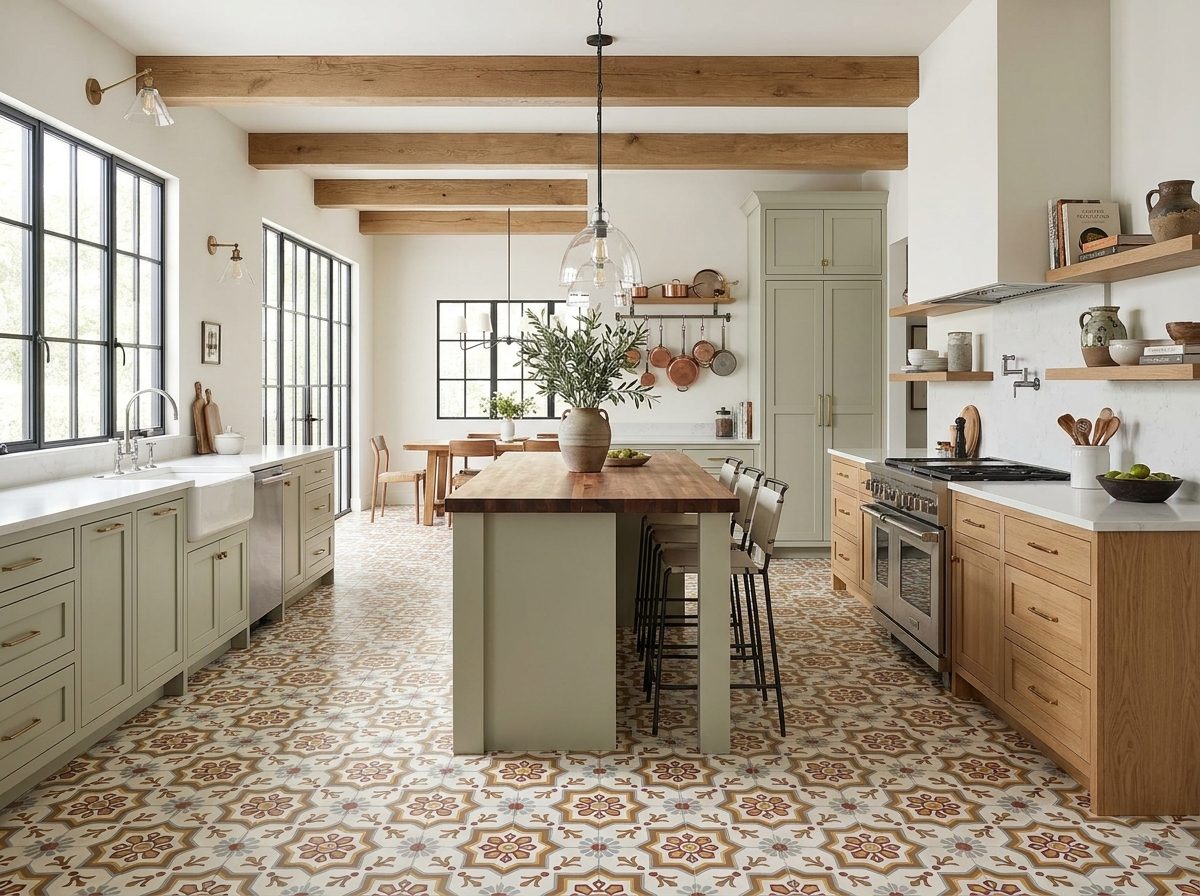
Let’s be honest, most of us think of basements as dark, maybe a little damp, and definitely not the most inspiring part of the house. But what if you saw it differently? Picture a stylish, inviting extension of your home—a cozy family room, a chic home theater, or a vibrant game room.
That whole transformation starts from the ground up. The right basement tile ideas aren’t just a practical choice; they’re the first brushstroke in turning that forgotten space into your home’s hidden gem.
Your Basement Is a Blank Canvas Waiting for Tile

Turning a basement from a storage zone into a living space is one of the smartest ways to add real value and square footage to your home. But being below-grade comes with its own set of rules, mainly dealing with moisture and a lack of natural light. This makes your flooring choice the single most important decision you’ll make.
Sure, carpet or wood might seem appealing at first, but they often can’t handle the potential for dampness. Sooner or later, you’re looking at mildew, warping, and the headache of a total replacement.
Tile, on the other hand, was practically made for this job. It’s the clear winner thanks to its unbeatable mix of toughness, moisture-proof nature, and endless design potential.
Unlike other flooring materials that just tolerate basement conditions, tile thrives in them. It gives you a permanent, worry-free foundation that’s built to resist the very issues that plague lower-level spaces.
Choosing tile isn’t just about being practical—it’s your chance to make a real design statement. This is especially true with handmade cement tile, which lets you bring in personality, color, and warmth that other materials just can’t match.
Why Tile Is the Ultimate Basement Flooring Solution
Think of your basement floor as the foundation for the entire room’s design. A beautiful, durable tile floor sets the stage for everything else. We’ve summarized the key advantages in this table to show why tile is simply the best choice for any below-grade project.
| Feature | Benefit for Basements | Why It Matters |
|---|---|---|
| Moisture Resistance | Won’t warp, buckle, or grow mold from humidity or minor leaks. | Provides a permanent, worry-free floor that protects your investment and indoor air quality. |
| Unmatched Durability | Resists scratches, dents, and heavy foot traffic with ease. | Your floor will look great for decades, even in a high-use space like a game room or gym. |
| Easy Maintenance | Simple to clean with regular sweeping and mopping. | Spend more time enjoying your new space and less time on upkeep. Spills are no big deal. |
| Design Flexibility | Limitless colors, patterns, and sizes to fit any style. | You can create a bright, airy feel or a cozy, dramatic vibe—whatever your vision demands. |
| Radiant Heat Ready | An excellent conductor for in-floor radiant heating systems. | Turns a typically cool space into a warm and inviting retreat from the ground up. |
| Healthy & Non-Allergenic | An inert surface that doesn’t trap dust, pollen, or pet dander. | Improves air quality, making it a smarter choice for families, especially those with allergies. |
As you can see, the benefits go far beyond just looking good. Tile offers a truly comprehensive solution that addresses the unique challenges of a basement head-on.
Why Tile Is the Smartest Basement Investment
So, what makes it the best choice for your project? Here’s a quick breakdown:
- Moisture and Water Resistance: Tile is either non-porous or can be sealed to be, meaning it won’t absorb moisture from spills, high humidity, or minor seepage. For total peace of mind, it’s always a good idea to look into proper concrete wall waterproofing to create a completely protected envelope.
- Incredible Durability: Tile is built to handle life. From heavy foot traffic and dropped weights in a home gym to the general chaos of a playroom, a well-installed tile floor is a one-and-done investment that will pay for itself over and over.
- Design Versatility: This is where the fun begins. You can go with clean, minimalist large-format tiles to make the space feel huge, or you can lean into intricate, colorful patterns to create a cozy and dramatic destination. The possibilities are truly endless.
Choosing the Right Tile Material for Below-Grade Spaces
Picking the right tile for your basement isn’t just a style choice—it’s a technical one. Basements live by a different set of rules. They’re naturally cooler, more humid, and the first line of defense against ground moisture. Choosing a material that can’t handle that environment is a recipe for a remodel you’ll have to do twice.
This is all about finding a floor that’s not just beautiful, but tough enough for life below ground. When you’re weighing the best basement flooring options, moisture resistance isn’t a feature; it’s the price of entry. Let’s look at the materials that make the cut.
The Top Contenders for Basement Floors
Not every tile can thrive in a basement. We’re focusing on the ones that can, with a close look at handmade cement tile and a few other industry workhorses.
-
Handmade Cement Tile: This is where durability meets design. Made from cement, sand, and mineral pigments, these tiles are incredibly dense and strong. When sealed correctly, they are a fantastic barrier against moisture—a must-have quality for any below-grade space. They bring an authentic, handcrafted warmth that other materials can’t replicate.
-
Porcelain Tile: If you need something nearly bulletproof, porcelain is it. It’s fired at intense temperatures, which makes it denser and far less porous than standard ceramic. With a water absorption rate under 0.5%, it’s virtually waterproof, making it a go-to for basements that might see some dampness.
-
Ceramic Tile: A classic for a reason, ceramic offers endless variety in color and pattern. While it’s naturally more porous than porcelain, a quality glaze on top gives it a solid, water-resistant surface. For basements with decent moisture control, it’s a stylish and often budget-friendly pick.
-
Natural Stone (With a Big Caveat): Materials like slate, travertine, or marble bring an undeniable organic luxury. But they are porous by nature and demand meticulous, repeated sealing to keep water and stains out. These are best reserved for basements where you have guaranteed moisture control, not just wishful thinking.
Basement Tile Material Comparison
To see how these materials perform where it counts, this table breaks it down. Your best fit will balance the look you want with the performance you need and the maintenance you’re willing to do.
| Material | Moisture Resistance | Durability | Design Options | Best For |
|---|---|---|---|---|
| Handmade Cement | Excellent (when sealed) | Exceptional; very strong and wear-resistant | Limitless custom colors and intricate, handcrafted patterns | Creating a unique, statement floor with artisanal character and warmth. |
| Porcelain | Highest; virtually waterproof | Excellent; resists scratches, stains, and impact | Wide range, including realistic wood and stone looks | High-moisture areas and achieving the look of other materials worry-free. |
| Ceramic | Good (with proper glaze) | Good; suitable for residential foot traffic | Extensive colors, shapes, and affordable decorative options | Budget-conscious projects that still require style and water resistance. |
| Natural Stone | Low to Moderate (requires diligent, repeat sealing) | Varies; can be prone to scratching and staining | Unique, one-of-a-kind natural veining and texture | Basements with guaranteed low humidity and for a luxury, organic feel. |
Why Sealing Is a Non-Negotiable Step
Think of sealer as an invisible raincoat for your tile. For porous materials like handmade cement and natural stone, this isn’t an upgrade—it’s a critical part of the installation.
The sealer sinks into the tile’s surface, filling the microscopic pores that would otherwise trap dirt, spills, and—most importantly—moisture. This is the step that turns a beautiful tile into a high-performance basement floor.
Without a proper seal, moisture can creep into the tile, leading to staining or long-term damage. For our cement tiles, this simple step is what locks in the rich, deep colors and ensures they look just as vibrant years from now as they did on day one. While porcelain gets a lot of credit for being low-maintenance, it’s worth seeing how it really stacks up against cement tile. Check out our guide on cement tile vs. porcelain tile for a deeper look at which material truly fits your project and lifestyle.
Design Patterns That Make Your Basement Feel Bigger and Brighter
The floor pattern you choose is more than a decorative touch—it’s a powerful tool for visual problem-solving. In a basement, where ceilings can feel low and natural light is often scarce, the right pattern can completely reshape the room’s feel. It tricks the eye, creates a sense of flow, and turns a simple floor into a stunning focal point.
Think of it this way: a solid-color floor is functional, but a floor with a strategic pattern directs how you experience the space. The right basement tile ideas focused on patterns will make a tight room feel expansive and a dim room feel energized.
Go Big to Create Space
One of the most effective tricks for any basement is using large-format tiles. We’re talking tiles in sizes like 12×24, 24×24 inches, or even larger. The logic here is simple but incredibly powerful.
Fewer grout lines create less visual noise. Your brain reads the floor as a cleaner, more continuous surface, which creates an illusion of a bigger, more open area. This is a game-changer in smaller basements or rooms packed with furniture, as the uncluttered backdrop stops the space from feeling busy.
Dynamic Patterns for Personality and Flow
While large tiles make a room feel bigger, dynamic patterns give it life. They can guide your path, define different zones, and turn your floor into a true work of art. The desire for durable, beautiful home finishes is a major reason the global ceramic tiles market was valued at a massive USD 226.41 billion in 2022 and keeps growing. You can read the full research on flooring market trends to learn more.
Here are a few patterns that work wonders in basements:
- Herringbone: This classic V-shaped pattern creates movement that can make a narrow room feel much wider. The diagonal lines draw the eye outward, visually stretching the space.
- Chevron: Similar to herringbone but with a crisp, uniform “arrow” effect, chevron patterns deliver a clean, modern look while still giving you that space-enhancing directional flow.
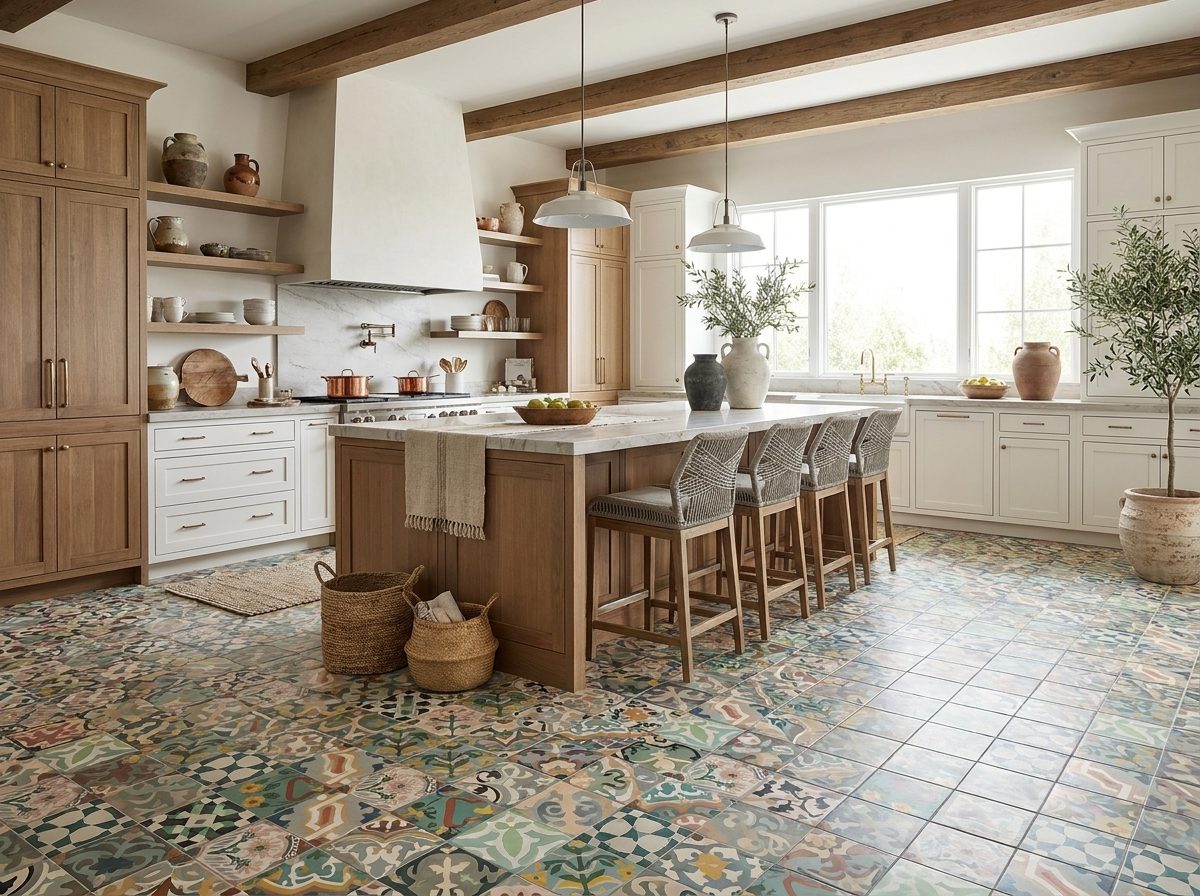
- Patchwork: For a shot of bold, eclectic personality, nothing beats a patchwork of different patterns from a coordinated collection. Our in-stock patchwork sets can make a basement playroom or lounge feel instantly vibrant and fun.
This decision tree can help you sort through your initial choices based on budget, moisture levels, and the style you’re aiming for.

The flowchart shows how your design priorities directly connect to the tile patterns and materials that will work best for your project’s practical needs.
Using Tile Shapes to Define Your Style
Beyond simple rectangles, unique shapes can set a specific aesthetic all on their own. They work beautifully as an all-over pattern or as a special accent to define an area, like the floor around a home bar or entryway.
Think of the tile shape itself as a primary design element. Hexagons feel modern and full of energy. A star-and-cross pattern brings in a touch of timeless, old-world elegance. The shape is the first thing the eye registers, setting the tone for the entire room.
Let’s look at how a few specific shapes can transform your basement:
- Hexagon Tiles: These six-sided tiles create a honeycomb effect that feels both modern and organic. They add just the right amount of visual interest without overwhelming a space, looking just as good in a home gym as they do in a stylish basement bathroom.
- Star and Cross Tiles: This two-tile pattern creates a captivating, repeating motif that feels both classic and totally sophisticated. Our star and cross collections can turn a plain basement floor into a masterpiece, perfect for a luxe lounge or a grand entertainment space.
- Arabesque and Fish Scale Tiles: The soft, curved lines of these shapes add an elegant flow that breaks up the hard angles common in basements. They make the space feel more fluid, graceful, and inviting.
By thoughtfully picking not just the color but also the pattern and shape of your tiles, you can solve common basement design challenges. The right choices will make your lower level feel bigger, brighter, and more intentionally designed than you ever thought possible.
Using Color to Manipulate Light and Define Your Space

In a basement, color isn’t just decoration—it’s your most powerful tool. When natural light is scarce, your floor tile can either bounce light around the room or swallow it whole. Get it right, and you can completely transform the space, making it feel brighter, bigger, and infinitely more inviting.
Thinking about color this way is one of the most effective basement tile ideas for turning a lower level from an afterthought into a destination. You’re not fighting the room’s limits; you’re working with them to create something special.
Light Colors to Maximize Brightness
Light-colored tiles are the undisputed champs for brightening a dim basement. Think of them as mirrors for your floor. Hues like white, cream, light gray, and soft beige are brilliant at grabbing light—whether from a small egress window or your overhead fixtures—and reflecting it back into the room.
This simple reflection creates an immediate sense of openness. A light-colored floor can make a cramped, dark basement feel significantly larger and cleaner, pushing back the shadows and creating an airy, expansive mood.
When you use light-colored tile, you’re not just picking a style; you are actively managing the light in your space. This single choice can often do more work than adding extra lamps, because it amplifies every lumen you already have.
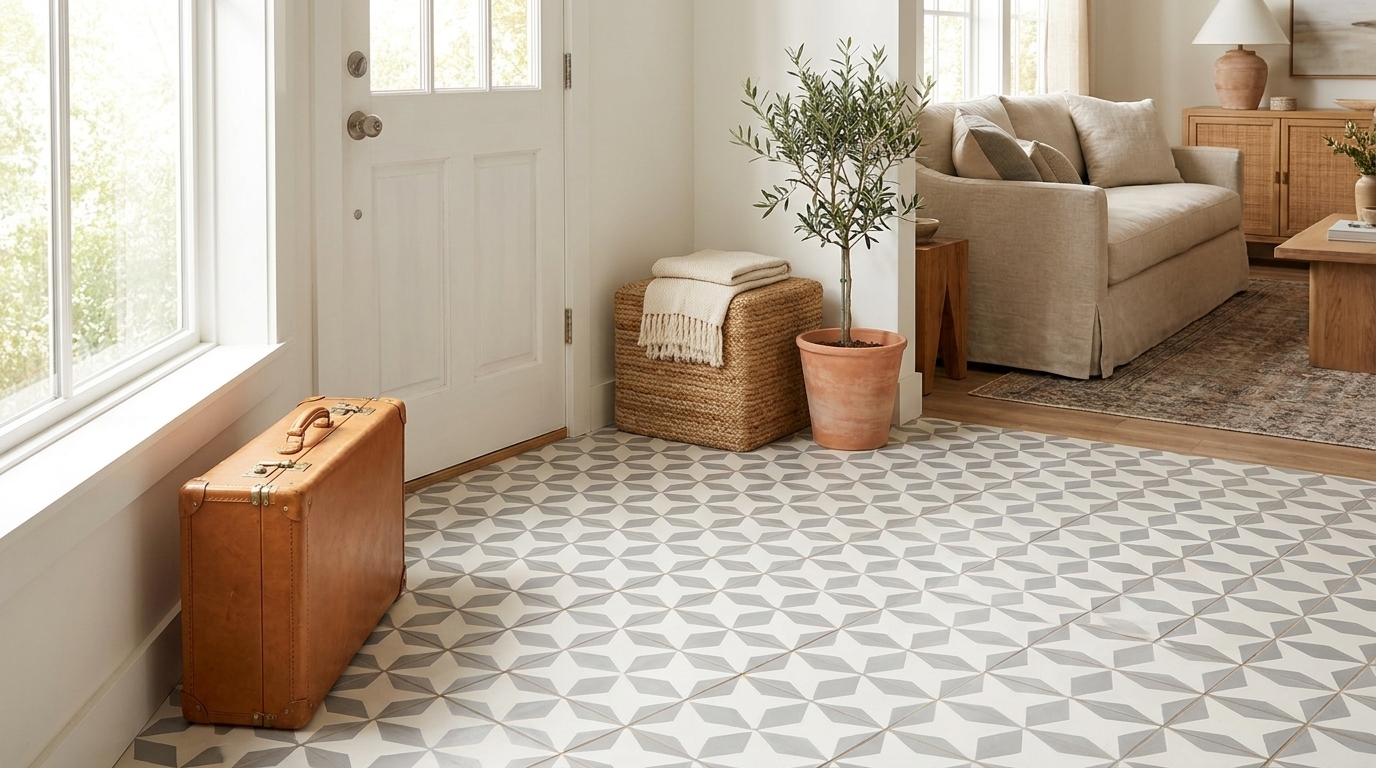
Imagine a floor laid with creamy white or pale gray cement tiles. It creates a bright, neutral canvas that lets you use darker furniture or bold art without the room feeling heavy or closed-in. It’s the foundational trick for a welcoming basement.
Dark Colors to Create Drama and Intention
While light colors open up a space, dark colors create intimacy and drama. Don’t be afraid to go bold. A floor of deep charcoal, rich navy, or even classic black tile can establish a sophisticated, cozy atmosphere that feels deliberate and high-end.
This approach is perfect for spaces with a specific purpose:
- Home Theaters: Dark floors and walls absorb stray light, which makes the on-screen action the true star.
- Bars and Lounges: A moody, dark floor instantly creates a chic, speakeasy vibe that feels like an escape.
- Wine Cellars: Deep, earthy tones feel right at home, complementing the traditional, rustic feel of a proper cellar.
Using dark colors is about being intentional. Instead of fighting the lack of light, you lean into it. You’re creating a space that feels purposely enclosed and comfortable. Pair a dark floor with well-placed accent lighting, and the result is a stunning, premium look.
The Critical Role of Tile Finish
Color is only half the story. The tile’s finish—how it reflects or diffuses light—plays a huge part in the final feel of the room. It’s a detail many people overlook, but it makes a massive difference. A high-gloss finish bounces light in sharp, defined ways, while a matte finish scatters it softly.
This is where the soft, velvety surface of handmade cement tile offers a unique advantage.
A matte finish diffuses light gently and evenly across the surface. This prevents the harsh glare you can get from a high-gloss tile, which often creates sterile-feeling hot spots under direct lighting.
This gentle light diffusion creates a calmer, more comfortable atmosphere. It adds an understated elegance, giving the color a rich depth without being visually noisy. It’s an ideal choice for a relaxed family room, a quiet home office, or any basement space where comfort is the goal.
By combining the right color with a matte finish, you can craft a basement floor that isn’t just beautiful and tough, but is also perfectly tuned to the light and mood you want to create.
An Essential Guide to Basement Tile Installation
Your beautiful new tile is only as strong as the surface it’s installed on, and nowhere is that more true than in a basement. While this isn’t a step-by-step DIY guide, knowing what a proper installation looks like is your best tool. It helps you ask the right questions, hire a great contractor, and ensure your new floor lasts a lifetime.
A successful tile project is all about the prep work. In a below-grade space, skipping a single step can lead to cracked tiles, moisture damage, and major headaches down the road. Think of it as painting a car—if you don’t prep the surface, the most beautiful paint job will eventually peel and fail.
Preparing the Concrete Subfloor
The most critical part of any basement tile job is the concrete subfloor. Concrete is a fantastic partner for tile, but it has to be prepared perfectly first. Before your contractor even thinks about mixing thinset, they need to check for a few non-negotiables.
The subfloor must be:
- Perfectly Flat: An uneven floor creates invisible stress points that can easily crack large-format tiles. Your installer will use a self-leveling compound to create a surface that’s as smooth as glass.
- Completely Dry: Basements are naturally prone to moisture creeping up through the concrete slab. A simple moisture test is essential. In almost all cases, a waterproofing membrane or a vapor barrier is the best insurance policy against future problems.
- Structurally Sound: The slab has to be solid, with no large, active cracks or crumbling spots. Any major issues need to be repaired by a professional to create a stable foundation for your new tile.
This focus on quality installation is reflected across the industry. New construction continues to dominate the ceramic tile market, projected to hold 58.12% of the market size in 2025. These large-scale projects succeed by planning for high-performance flooring from the very beginning—a lesson worth applying to any renovation. You can explore detailed ceramic tile market dynamics to see how pros approach it.
The Special Case of Sealing Handmade Cement Tile
When you choose handmade cement tile, there’s one extra step that’s absolutely crucial: sealing. Because cement tile is naturally porous, it needs to be sealed to protect its rich, inlaid colors from stains and moisture.
Think of sealing as creating an invisible shield for your tile. A high-quality penetrating sealer soaks into the tile’s pores, blocking water and dirt from getting in without changing the beautiful matte finish.
This is especially vital in a basement, where spills or higher humidity are common. Sealing makes sure your floor is not just gorgeous but also tough enough for real life. A good installer will seal the tile after it’s laid and cleaned but before grouting, and then apply a final coat after the grout has fully cured.
Why Professional Installation Is a Smart Investment
While the temptation to DIY a tile floor is real, a basement adds layers of complexity that often demand a professional’s touch. An experienced tile setter knows how to diagnose and prep a concrete subfloor, which adhesives work best in cool, potentially damp environments, and how to apply waterproofing membranes correctly.
Understanding what goes into a great installation helps you spot a great contractor. To get even more prepared for those conversations, you can learn more about the importance of floor underlayment for tile. It’s the key to turning a good tile into a great floor.
Your Questions About Basement Tile Answered
Tackling a basement remodel brings up a lot of questions. When you’re dealing with a space that’s below ground, getting the flooring right is about more than just looks—it’s about durability, moisture, and creating a room you actually want to spend time in.
Let’s clear up some of the most common questions we hear. These answers will give you the confidence to move forward, knowing you’re choosing a floor that’s not just beautiful, but also smart for the long haul.
Common Questions on Basement Tile
What is the most durable type of tile for a basement?
Hands down, your two best bets are porcelain and handmade cement tile. Porcelain is a workhorse—it’s incredibly dense and practically non-porous, so it laughs at water and heavy foot traffic.
Handmade cement tile offers that same incredible strength, but with a unique, artisanal character. Once it’s properly sealed, it stands up beautifully to moisture and wear, giving you a floor with a story to tell.
Can I install tile over a concrete basement floor?
Absolutely. In fact, concrete is an ideal base for tile, but only if you prep it correctly. The slab must be perfectly clean, level, and—most importantly—sealed off from any potential moisture.
This means filling any cracks and applying a quality waterproofing membrane. It’s a step you can’t skip; it prevents moisture from the concrete slab from wicking up and compromising your beautiful new floor.
Expert Insight: Sealing is a critical, non-negotiable step for cement tile, especially in a basement. Because it’s a porous material, a high-quality penetrating sealer protects the tile from stains and moisture, ensuring its beauty and longevity. It should be sealed upon installation and then periodically resealed.
Will light-colored tiles really make my basement look bigger?
Yes, it’s one of the oldest and most effective tricks in the design book. Lighter colors—think soft whites, creamy beiges, and pale grays—bounce light around the room instead of absorbing it.
This reflection creates a genuine feeling of openness, making the entire space feel brighter and more expansive. It’s the perfect way to counteract the low ceilings and limited natural light typical of most basements.
Ready to bring your vision to life with a floor that’s as durable as it is beautiful? Explore the in-stock and custom collections at Original Mission Tile and find the perfect handmade cement tile for your project.