Choose two identical boxes of tile, hand them to two different installers, and you can end up with two completely different rooms. That’s the quiet power of tile layout patterns: the same square tile reads calm in a straight grid, dynamic on the diagonal, and playful in checkerboard. Layout is the one design decision that costs nothing extra in material — and changes everything.
This guide covers the classic layouts for square and hexagonal cement tiles, when to use each, how layout changes the feel of a room’s size, and the planning rules our team shares with installers before a single tile is set.
The Core Layouts for Square Tile
Straight grid (stack bond)
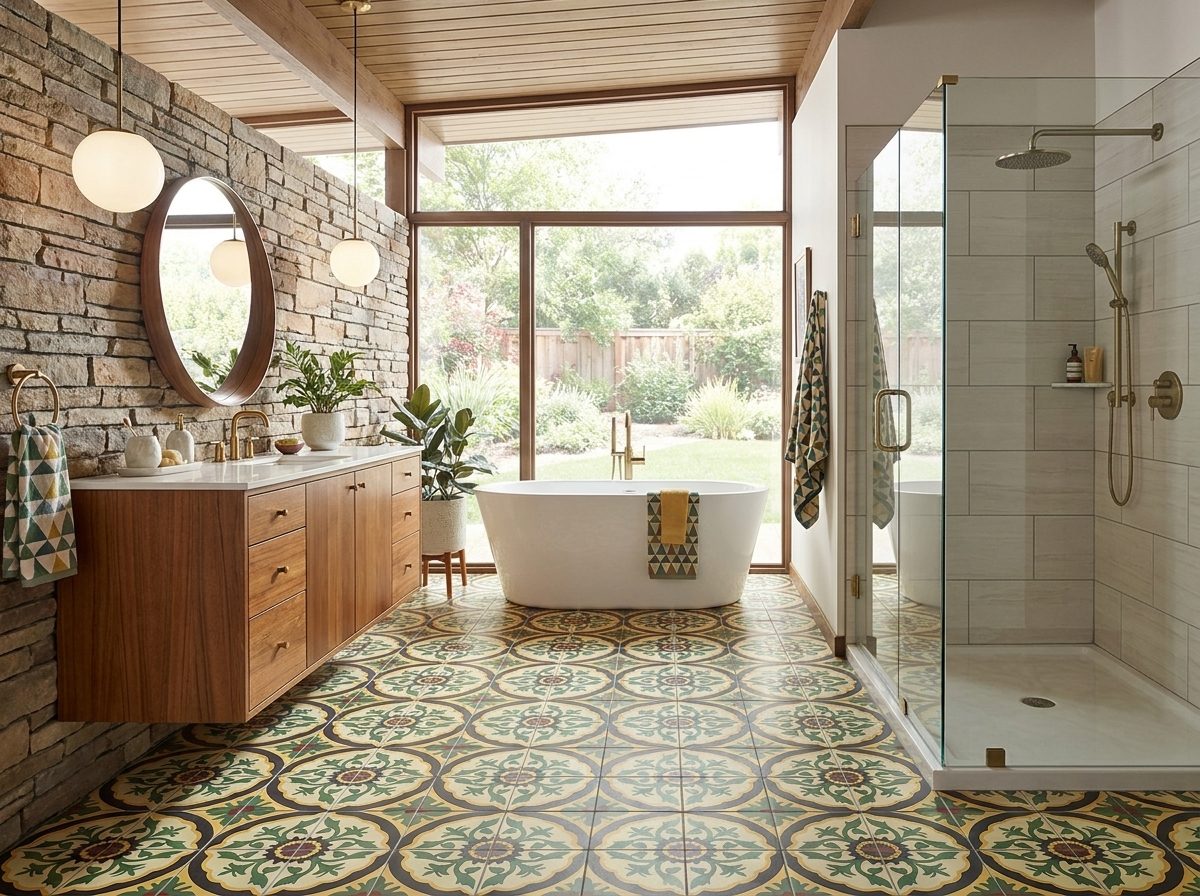
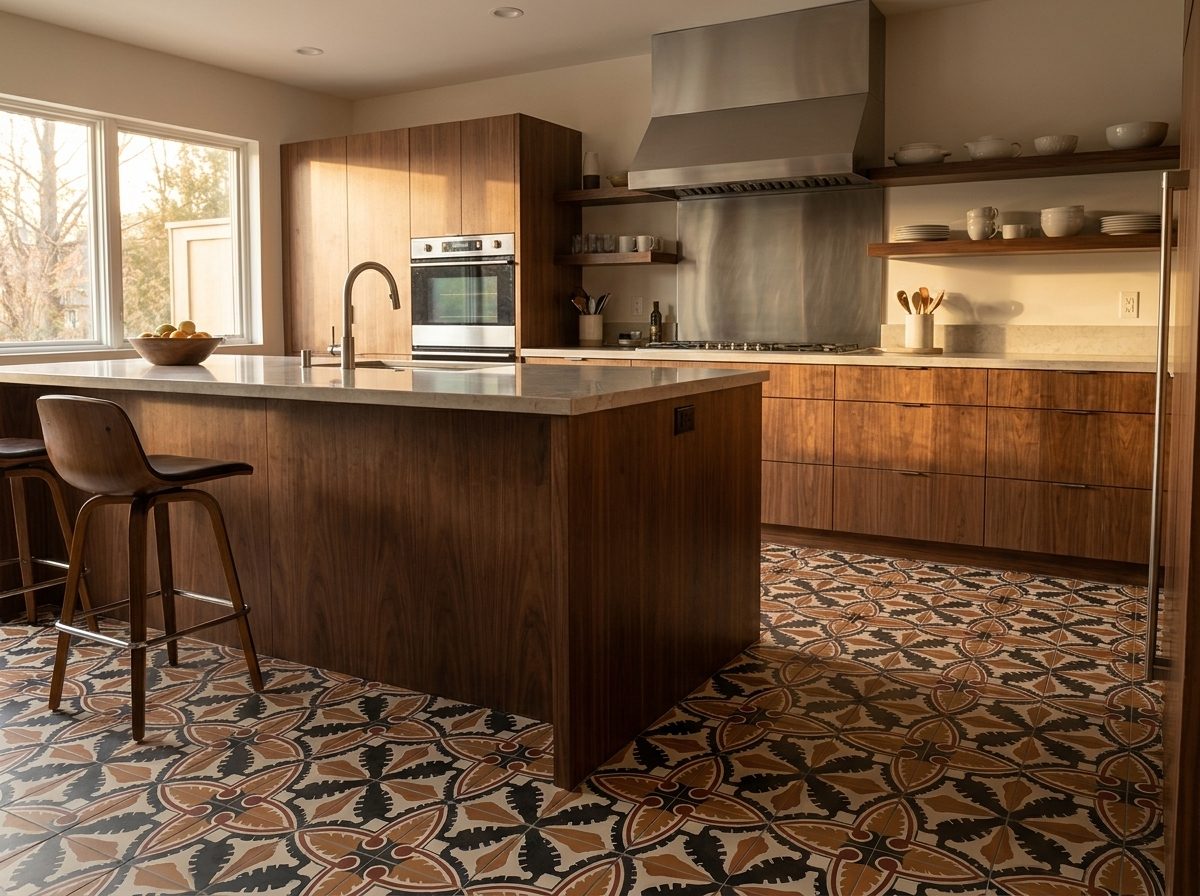
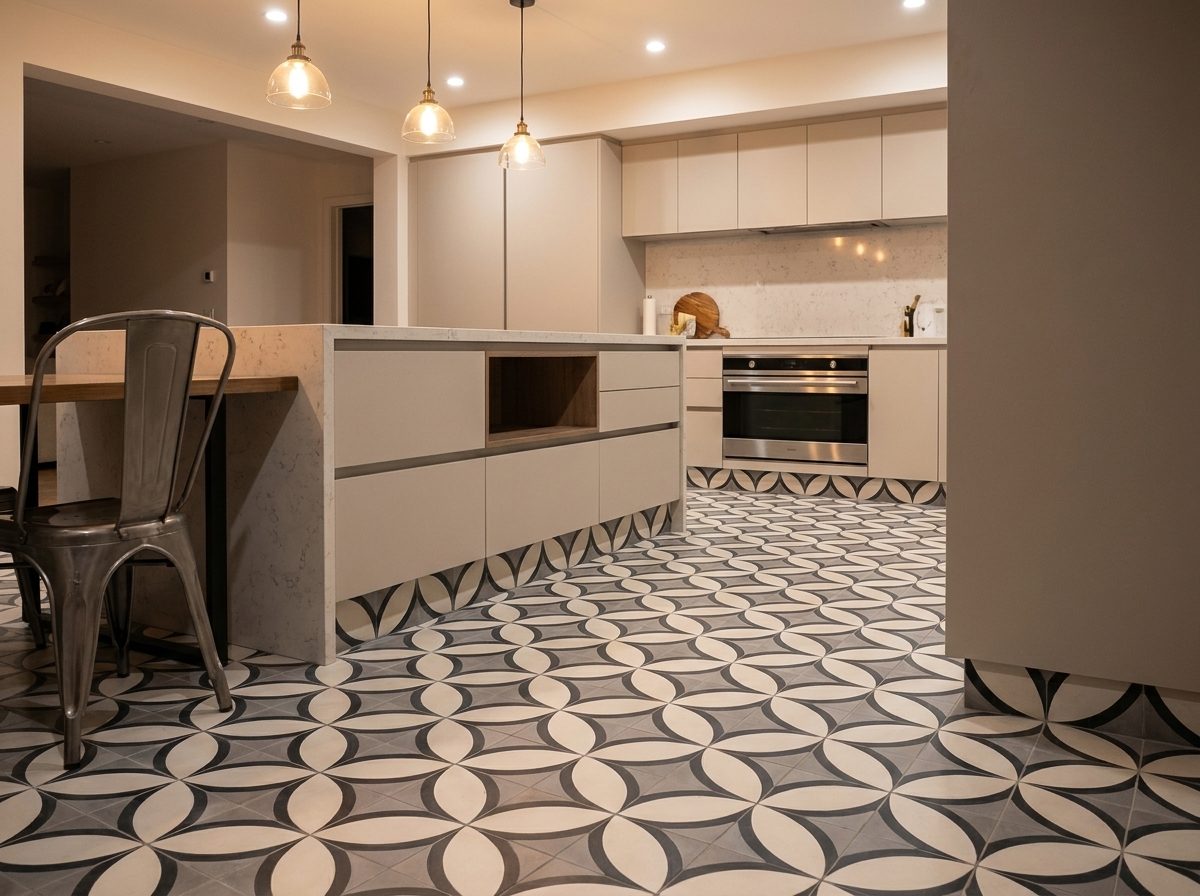
Tiles aligned in neat rows — the classic for patterned cement tile, because it lets multi-tile motifs connect seamlessly into that continuous “carpet” effect. Calm, orderly, timeless.
Diagonal (45°)
The same grid rotated. Diagonals visually widen narrow rooms and add energy to solid-color floors — at the cost of more cutting at the walls (plan 15% waste instead of 10%).
Checkerboard
Two alternating solid colors — the bistro classic. High contrast (black/white) is bold and traditional; low contrast (cream/gray) gives the rhythm without the drama.
The “rug effect”
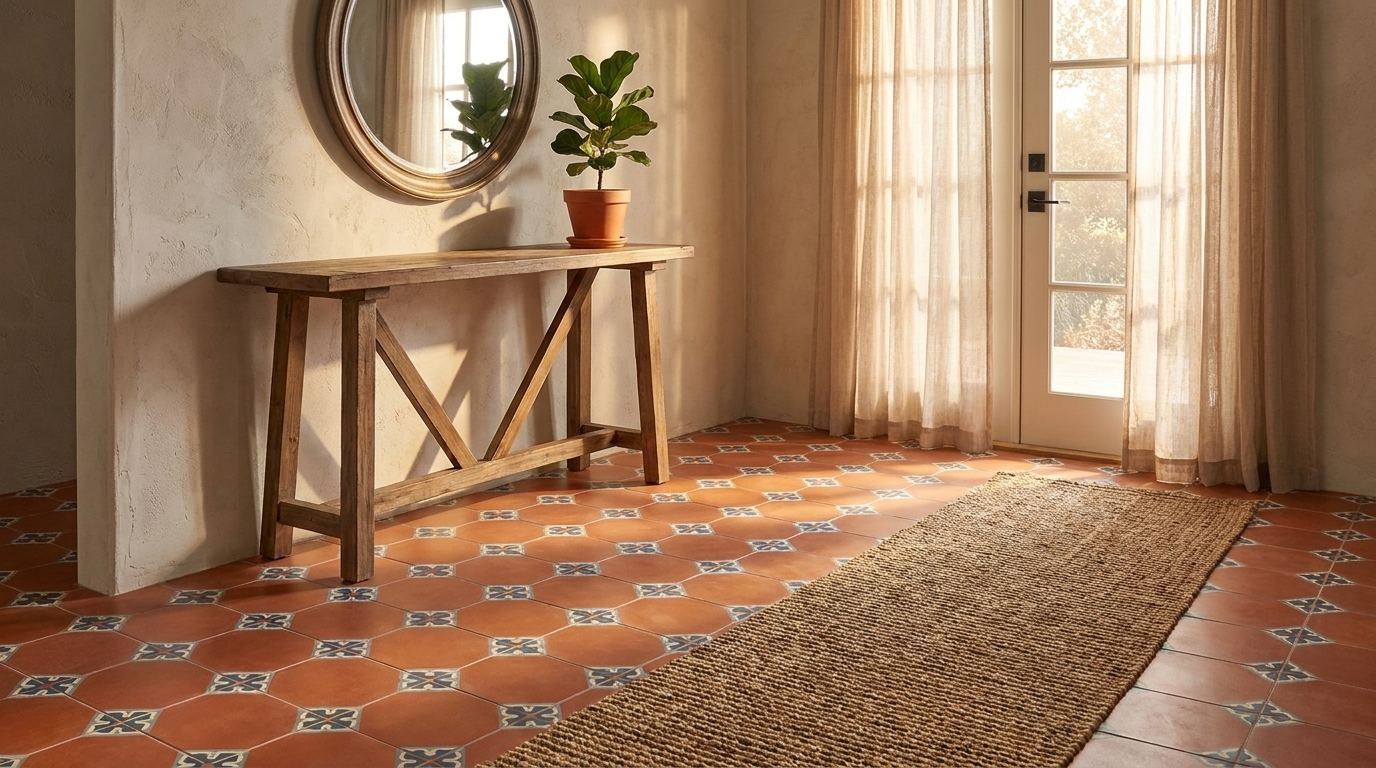
A field of patterned tile framed by a border and surrounded by solid tile — the signature of historic homes and the smartest way to feature a bold pattern without committing the whole floor. It also lets a smaller quantity of decorated tile go a long way.

Hexagon Layouts
- Solid honeycomb: one color, pure geometry — the layout IS the pattern.
- Scatter accents: a neutral hex field with 10–15% patterned or colored pieces sprinkled through.
- Ombre fades: hexagons transitioning color across the room — richest in hand-pigmented cement.
- The hex-to-wood edge: ending the tile field in its natural zig-zag against wood flooring — no trim strip, maximum character.
How Layout Changes the Room
- Small rooms: diagonal layouts and continuous patterns stretch the eye; tiny formats with busy grout lines shrink it.
- Narrow spaces: run rectangular tiles across the width, or use a diagonal — both visually widen.
- Large open plans: use the rug effect to zone dining, kitchen, and living areas without a single wall.
- Busy rooms: if the furniture and walls carry pattern, let the floor go solid or subtle — and vice versa.
Planning Rules Before Anyone Mixes Thin-Set
- Start from the room’s focal point — the doorway sightline, the range, the tub — and center the pattern there. Cut tiles belong at the least visible walls.
- Dry-lay the first section. An hour on the floor without adhesive catches what sketches miss.
- Respect the repeat. Multi-tile motifs need whole pattern sets; order by complete repeats, not raw squares. Our guide on grout quantities pairs well with this step.
- Mind the borders. Rug-effect layouts need corner pieces planned — order borders and corners together.
- Add the right waste factor: 10% straight layouts, 15% diagonals and hexagons.

Tile Layout FAQ
Which tile layout makes a room look bigger?
Diagonal layouts and continuous connecting patterns both stretch the perceived space. Light grout that matches the tile also helps the floor read as one surface.
What is the rug effect in tile?
A patterned tile “carpet” framed by a border and surrounded by solid field tile — the classic way historic homes featured bold patterns, and a budget-smart layout today.
Do patterned cement tiles have to line up?
Connecting patterns do — each tile joins its neighbors to complete the motif, so layout planning and whole repeats matter. Single-tile motifs are more forgiving and can even be rotated deliberately.
How much extra tile does a diagonal layout need?
Plan 15% waste instead of the usual 10% — every wall edge gets an angled cut.
The Takeaway
Before you fall in love with a pattern, decide how it will meet the room: grid or diagonal, wall-to-wall or rug, honeycomb or scatter. Layout is free design — the same box of handmade tile, arranged with intention, becomes a completely different floor.
Planning a layout? Browse our patterns, get inspired in the project gallery, or ask our design team — we’ll help you plan repeats, borders, and quantities free of charge.