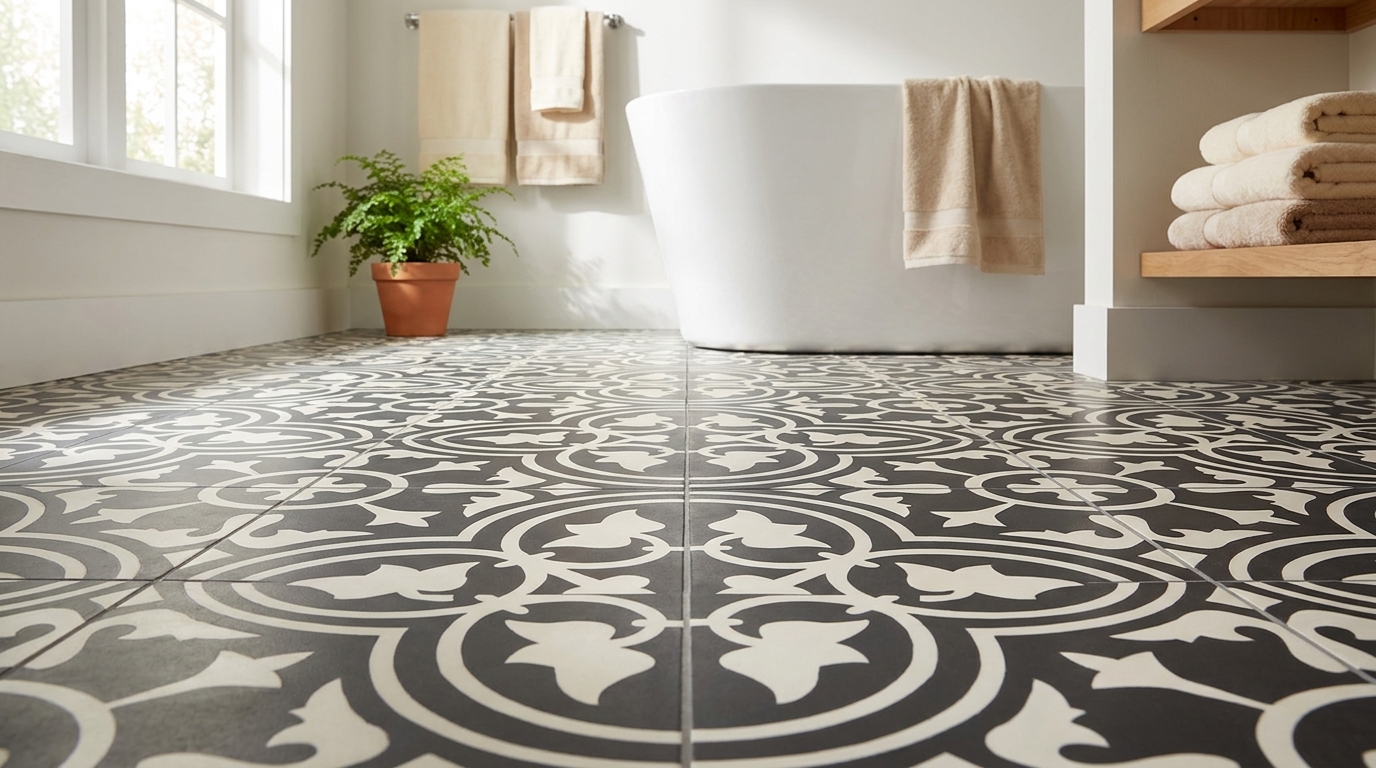
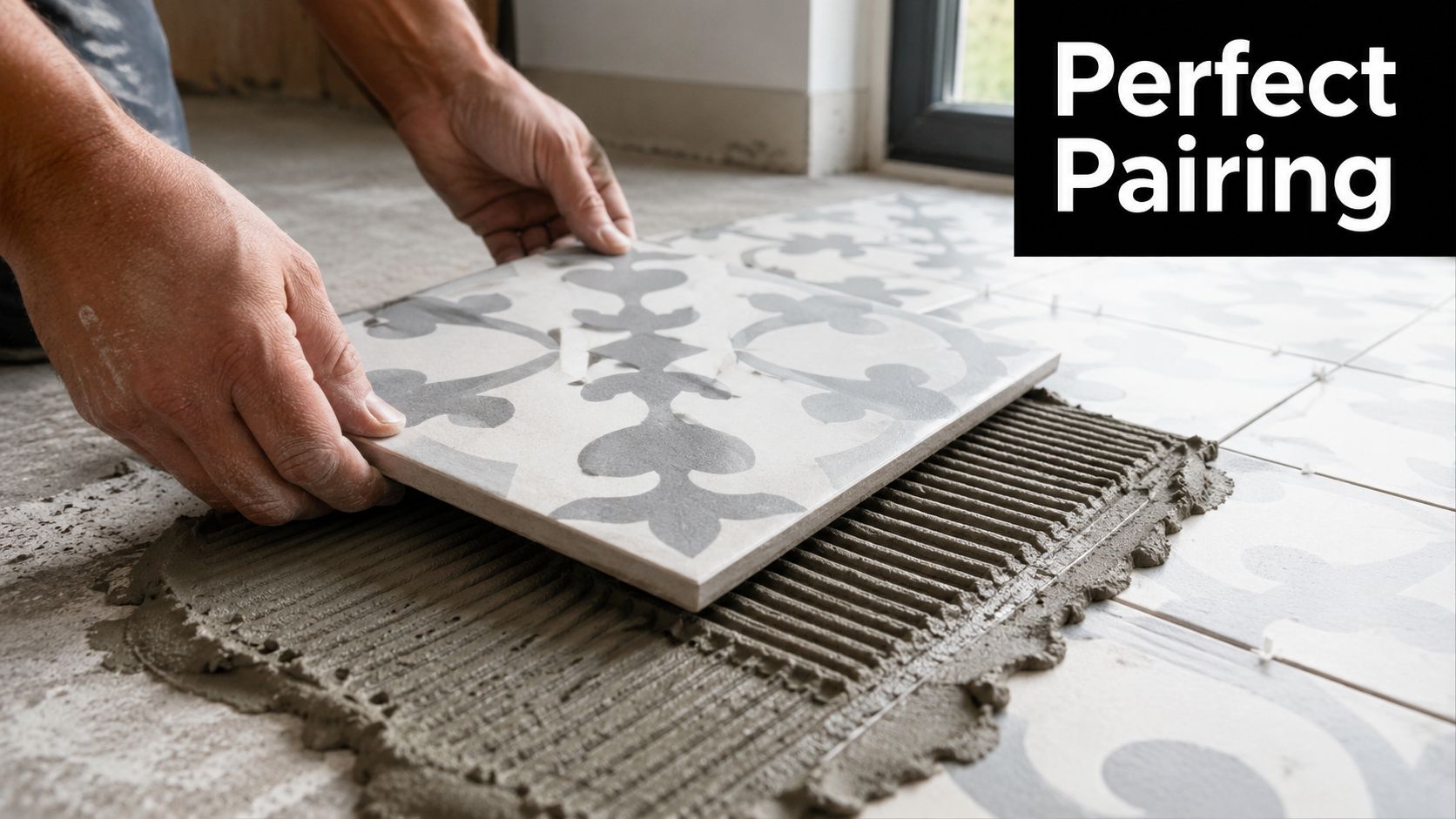
Dog nails click across the kitchen floor every morning. Muddy paw prints trail from the back door to the couch after every rainstorm. And somewhere, at some point, there will be an accident. If you’re picking flooring for a house with pets, you already know the stakes are different than for a childless, petless household. Cement tile for pet owners is worth a close look, but not every pattern, finish, or installation approach works equally well once claws and mud enter the picture.
We’ve been making cement tile by hand in San Luis Potosí, Mexico since 1900, and we ship it from our warehouse in Laredo, TX. Over the years we’ve heard from plenty of dog owners, cat owners, and even a few goat owners about what actually survives daily life with animals. This guide skips the marketing gloss and gets into what holds up, what to seal, and which patterns hide the mess between cleanings.
Why Cement Tile Stands Up to Claws Better Than Wood or Vinyl
Cement tile is made by pouring pigmented cement into a mold and pressing it under thousands of pounds of hydraulic force. The result is a dense, hard-wearing surface, not a soft finish coat sitting on top of a plank. That matters for pet owners because most flooring damage from claws happens at the surface layer.
Hardwood and luxury vinyl plank (LVP) both rely on a thin finish or wear layer for protection. Once a dog’s nails, or a cat sprinting for the window, scuff through that layer, the damage is visible and permanent. Cement tile has no thin finish to wear through. The color and hardness run through the tile itself, so light surface scuffing from claws rarely shows the way it does on a factory finish.
That said, cement tile is not scratch-proof. Dragging heavy furniture or crate feet across it can leave marks, and long, untrimmed nails on a very active dog can dull the surface sheen over years. The difference is that this wear is gradual and even, instead of the sudden gouges you get on wood or vinyl.
Muddy Paws: Traction and Cleanup at the Entry Point
Every pet household has a chokepoint: the back door, the mudroom, the spot by the dog crate. That’s where mud, water, and grit concentrate, and it’s the area that takes the most abuse. Cement tile works well here for two reasons.
First, its slightly textured, matte surface gives paws more grip than glossy porcelain or sealed hardwood. Wet paws on a slick glazed tile can send a dog sliding into a wall, especially older dogs or big breeds with less control. A honed cement tile surface, by contrast, offers steady footing even when damp.
Second, mud and grit clean off cement tile without much fuss. Because the surface is dense and (when properly sealed) resists staining, a quick sweep and a damp mop usually clear a muddy entryway in minutes. For daily upkeep, our maintenance and cleaning guide walks through the right products so you don’t strip the sealer while chasing paw prints.
If you’re designing a mudroom or back entry from scratch, consider a durable, low-maintenance pattern in a mid-to-dark tone. It’s a small choice that saves you a lot of mopping later.
Handling Accidents: Sealing, Staining, and Odor Control
This is the part every pet owner actually worries about. Cement tile is porous by nature, more like natural stone than glazed ceramic. Left unsealed, it can absorb liquid, and pet urine is acidic enough to leave a stain and hold onto odor if it sits too long.
The fix is straightforward: seal the tile with a quality penetrating sealer before it ever meets daily life, and reseal on the schedule your installer recommends. A penetrating sealer soaks into the tile’s pores and blocks liquid from getting in, instead of just sitting on top like a topical coating. That means accidents stay on the surface long enough for you to wipe them up.
When an accident does happen, speed matters more than any product. Blot it up right away, then clean the area with a pH-neutral cleaner rather than ammonia-based products, which can actually mimic the smell of urine and confuse a pet into remembering the spot. Our full cement tile maintenance guide covers safe cleaners in detail.
Vinegar and water works as a gentler alternative for quick cleanup, but skip anything acidic for regular mopping since it can wear down the sealer over time. If you’re installing tile specifically for a high-accident zone, like a puppy’s first months at home or a senior dog with incontinence, ask about a second coat of sealer for extra protection.
Grout Lines: The Real Weak Point in a Pet-Friendly Floor

The tile itself usually isn’t the problem. Grout is. Grout lines are narrower and more porous than the tile field, so they’re where odor, bacteria, and staining tend to settle first in a pet household.
A few adjustments make a real difference. First, choose a grout color a shade or two darker than your default choice. Light grout shows every muddy paw print and urine stain, while a mid-tone or dark grout hides the everyday grime between cleanings. Second, seal your grout separately from the tile, since grout and tile can have different absorption rates. Third, keep grout lines as tight as your pattern allows. Thinner lines mean less porous surface area for accidents to find.
For homes with multiple pets, or a dog that isn’t fully house-trained yet, ask your installer about epoxy grout. It costs more upfront but resists staining and odor absorption far better than standard cement grout. Our installation guidelines cover grout selection and sealing steps in more depth.
Patterns and Colors That Hide Pet Hair and Everyday Mess

Even a perfectly sealed floor shows dust, hair, and dirt if the color works against you. Solid white or pale tile looks beautiful in photos, but it broadcasts every strand of shed fur and every muddy print between cleanings. Pattern and mid-to-dark tone both do heavy lifting here.
Busy, high-contrast patterns break up the eye’s ability to spot small debris. A geometric design like Zebra Charcoal 03 or a bold checker like Harlequin Blue 01 hides light-colored pet hair much better than a plain solid tile would.
For a darker, low-maintenance solid option, Liverpool Black 01 and Amalia Black 10 both wear well in busy households because dark tones simply show less. If you’d rather narrow things down by shade instead of pattern, our browse by color collection makes it easy to compare dark, mid, and light options side by side.
Hexagon and honeycomb shapes, like the pieces in Hex Bakery Black 04, are worth a look for mudrooms too. The smaller format creates more grout lines overall, but the visual texture does a good job camouflaging tracked-in debris between sweeps.
Where Cement Tile Makes the Most Sense in a Pet-Friendly Home
Not every room needs the same level of pet-proofing. Prioritize cement tile in the spaces where pets spend the most time or cause the most wear.
- Entryways and mudrooms: the highest-traffic, highest-mess zone in most pet households, and the best return on a durable, sealed tile floor.
- Kitchens: water bowls spill, food gets dropped, and dogs tend to camp out here, so easy cleanup matters as much as looks.
- Laundry rooms: a natural spot for a dog bed or crate, and often already plumbed for the occasional bath.
- Sunrooms and back porches: if your pet has an indoor-outdoor routine, a durable tile here bridges the gap between yard and living space.
Bedrooms and low-traffic formal rooms are lower priority for pet-specific durability, so that’s where you can lean into a lighter pattern or a more delicate design if you want one. Before committing tile to a high-traffic pet zone, order a sample first. It’s a $20 charge for the first sample and $10 for each additional one, with free shipping, so you can see how a pattern actually looks with real dust and hair on it before you commit to a full order.
If your household includes a large or heavy dog, it’s also worth thinking about how tile handles impact, not just scratches. Cement tile resists chipping well under normal conditions, but a dropped bowl or a dog jumping off furniture onto a hard floor can chip any tile at the edge. Keeping 15% overage on hand for cuts and replacements, our standard recommendation for any project, means you’ll have a matching tile ready if that ever happens.
Getting Started: In-Stock Options and What to Ask Your Installer
Because most pet-related tile decisions come down to sealing and grout choice rather than the tile itself, almost any pattern in our in-stock cement tile collection can work in a pet household with the right prep. In-stock patterns ship within days, which is handy if you’re dealing with an active repair or a new puppy that’s already testing your patience.
If you want something more specific to your space, whether that’s a custom color to match your cabinetry or a pattern sized just right for a small mudroom, our custom-made tile option takes about four to six weeks. That’s worth planning around if you’re timing a renovation before bringing home a new pet.
Before you install anything, walk through the plan with your installer. Ask specifically about penetrating sealer brand and reapplication schedule, grout color and type, and whether they recommend tighter grout lines for your chosen pattern. You can browse full room examples, including several mudroom and kitchen layouts, in our installation gallery, or reach out through our contact page if you want tile and sealing recommendations specific to your pet’s habits.
FAQ: Cement Tile for Pet Owners
Will my dog’s nails scratch cement tile?
Normal nail contact from walking and running won’t scratch cement tile the way it scratches wood or vinyl, because the color and hardness run through the whole tile instead of sitting in a thin finish coat. Long, untrimmed nails on a very active dog can dull the surface sheen over years, but that’s gradual wear, not the sudden gouges you’d see on other flooring.
Is cement tile slippery for pets?
A honed, matte cement tile surface offers more grip than glossy porcelain or polished stone, which helps pets keep their footing, especially with wet paws. Older dogs and larger breeds with joint issues still do best with rugs or runners layered over high-traffic paths for extra traction.
How do I get pet urine smell out of cement tile?
Prevention works better than cure, so seal the tile and grout well before daily use begins. If an accident does happen, blot it up immediately and clean with a pH-neutral cleaner instead of ammonia-based products, which can mimic the scent of urine and encourage repeat accidents in the same spot.
Can cement tile go in an outdoor kennel run or covered porch?
Cement tile can work in a covered, well-drained outdoor space, but it needs the right sealer and installation approach for exposure to weather. Talk to your installer about outdoor-rated sealing before installing tile in any space that isn’t fully protected from rain and freeze-thaw cycles.
See the tile in person before you commit
Photos only tell you half the story. Colors, texture and the handmade character of cement tile are best judged in your own light. Order a sample of any in-stock pattern for $20 (additional samples $10, free shipping) — or tell us about your project and we’ll help you narrow it down.
Browse in-stock cement tiles →
Talk to us about your project →