Encaustic Handmade Cement Tile Shop
If you want your space to feel truly designed—not just decorated—start with the one surface that changes everything: the floor.
That’s why designers, architects, and homeowners keep coming back to cement tiles. They deliver the “boutique hotel” look with authentic, matte depth. They make kitchens and bathrooms feel curated. And they create that instant, high-end character that can take a remodel from “nice” to wow.
In this guide, you’ll learn what makes encaustic cement tiles different, why a true handmade cement tile shop matters, how to choose the right patterns for every room, and how to plan installation and maintenance so your tile stays beautiful for years. You’ll also see the biggest style directions designers are using right now—Moroccan, Mediterranean, Spanish-style, modern, vintage, and contemporary—plus commercial insights for restaurants and hotels.

What Is an Encaustic Handmade Cement Tile?
Encaustic cement tiles are not ceramic or porcelain. Instead of a printed or glazed surface, cement tiles use a pigmented cement layer that creates the pattern and color. That’s why they have a unique look:
- a matte, soft finish (not shiny)
- richer color depth than many printed lookalikes
- subtle handmade character that feels custom
When you buy from a true handmade cement tile shop, you’re choosing a surface that looks architectural—especially for remodeling projects where you want the space to feel intentional and elevated.
See Trend Tiles: Browse Cement Tiles In Stock
Benefits of Cement Tiles
Durability (when installed and sealed correctly)
Cement tiles can perform beautifully in real homes and many commercial spaces when installed properly and protected with the right sealing plan. That’s why they’re often chosen for:
- entryways and hallways
- kitchens and dining areas
- bathrooms and powder rooms
- boutique commercial interiors
Handmade quality that instantly upgrades a space
Handmade cement tiles bring subtle variation and depth that makes rooms feel designed—even if the rest of the finishes are simple. That “premium” look is one reason designers use cement tile to elevate remodeling projects without needing a full renovation.
Sustainability and long-life value
Many homeowners and design teams want finishes that last and can be maintained over time. Cement tiles support long-life design thinking when paired with the right care routine.
Style versatility for any interior direction
Cement tiles aren’t one style—they adapt to many:
- Moroccan tiles geometry and bold repeats
- Mediterranean tiles calm, sun-washed palettes
- Spanish-style tiles warm heritage patterns
- modern monochrome and checker looks
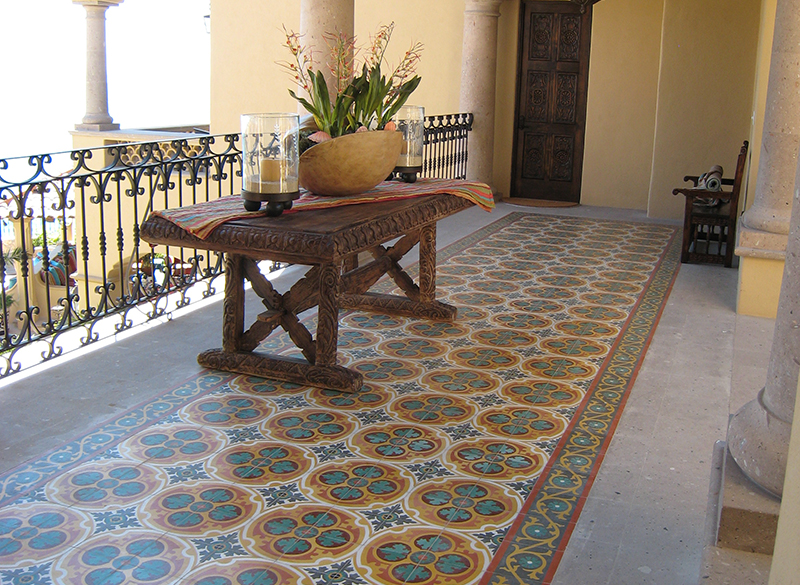
- vintage “tile rug” layouts with borders
- contemporary tonal patterns
To plan your palette, use the Cement Tile Color Palette.
Order Samples: Choose a few favorites from Cement Tiles In Stock

How to Choose a Cement Tile Shop for Remodeling Projects
Not all tile shops are the same. If your project is on a timeline—or you want a guaranteed design outcome—look for three things:
1) In-stock selection for real timelines
Remodeling schedules are real. If you need tile quickly, start with Cement Tiles In Stock so your design choices match your timeline.
2) Custom tile capability for one-of-one design
If you’re matching an inspiration photo, reproducing a vintage pattern, or building a signature brand look, custom matters. Start here: Custom Tiles.
3) Project support that prevents expensive mistakes
Cement tile is straightforward when installed correctly—but it must be handled differently than ceramic. Before installation begins, review:
Applications by Room: Where Cement Tiles Make the Biggest Impact
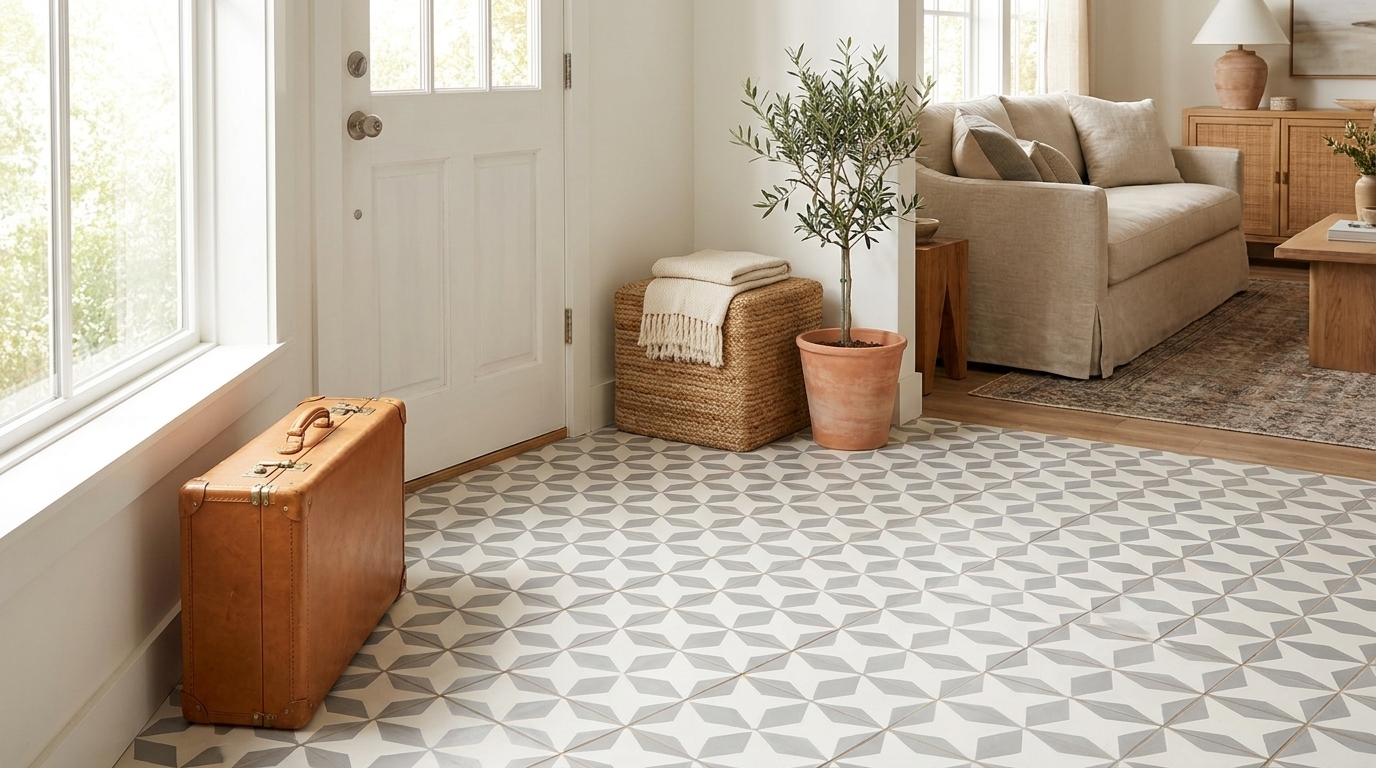
Entryways: The “tile rug” effect
If you want the fastest upgrade in a remodel, start in the entry. A patterned floor turns the whole home into a designed experience.
Best practices:
- frame the space with a border (instant high-end look)
- choose mid-tone patterns to hide daily grit
- plan the transition to wood or stone intentionally
See Trend Tiles: Cement Tiles In Stock
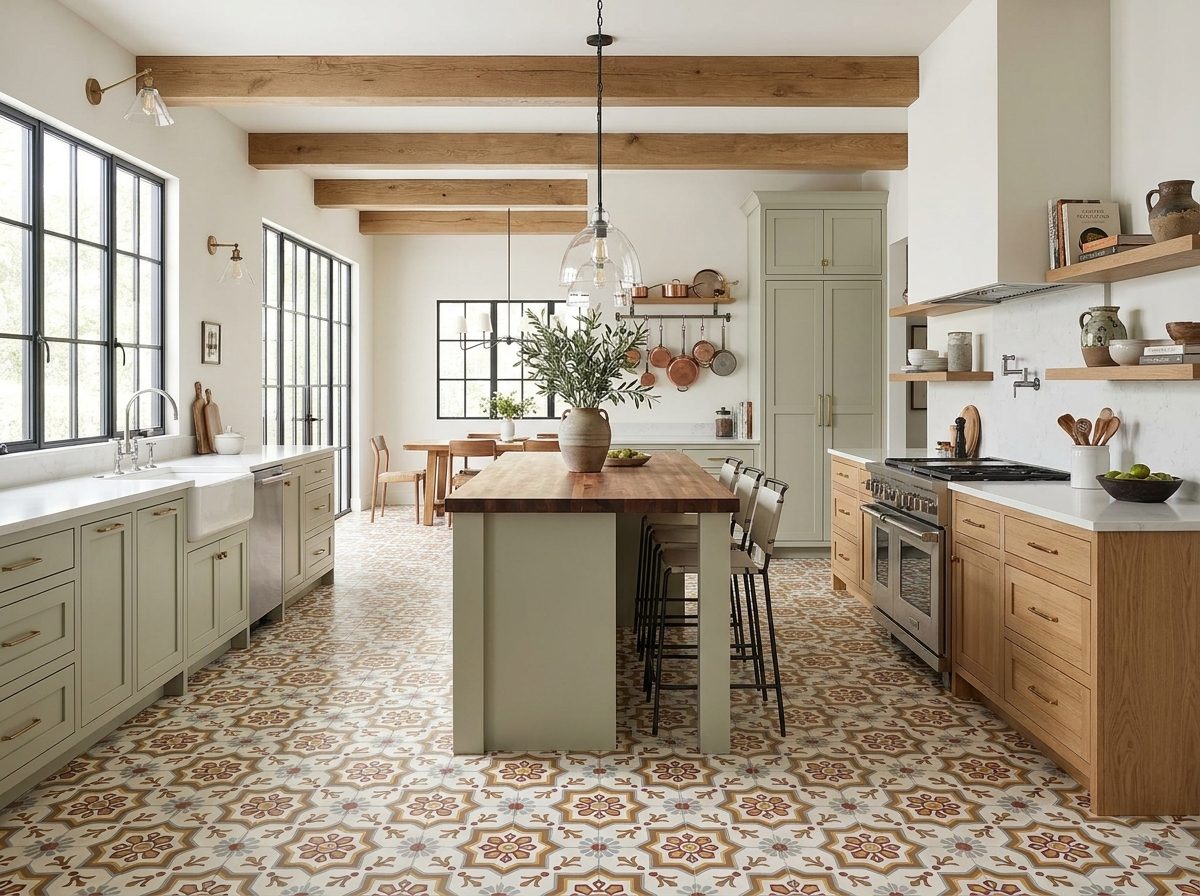
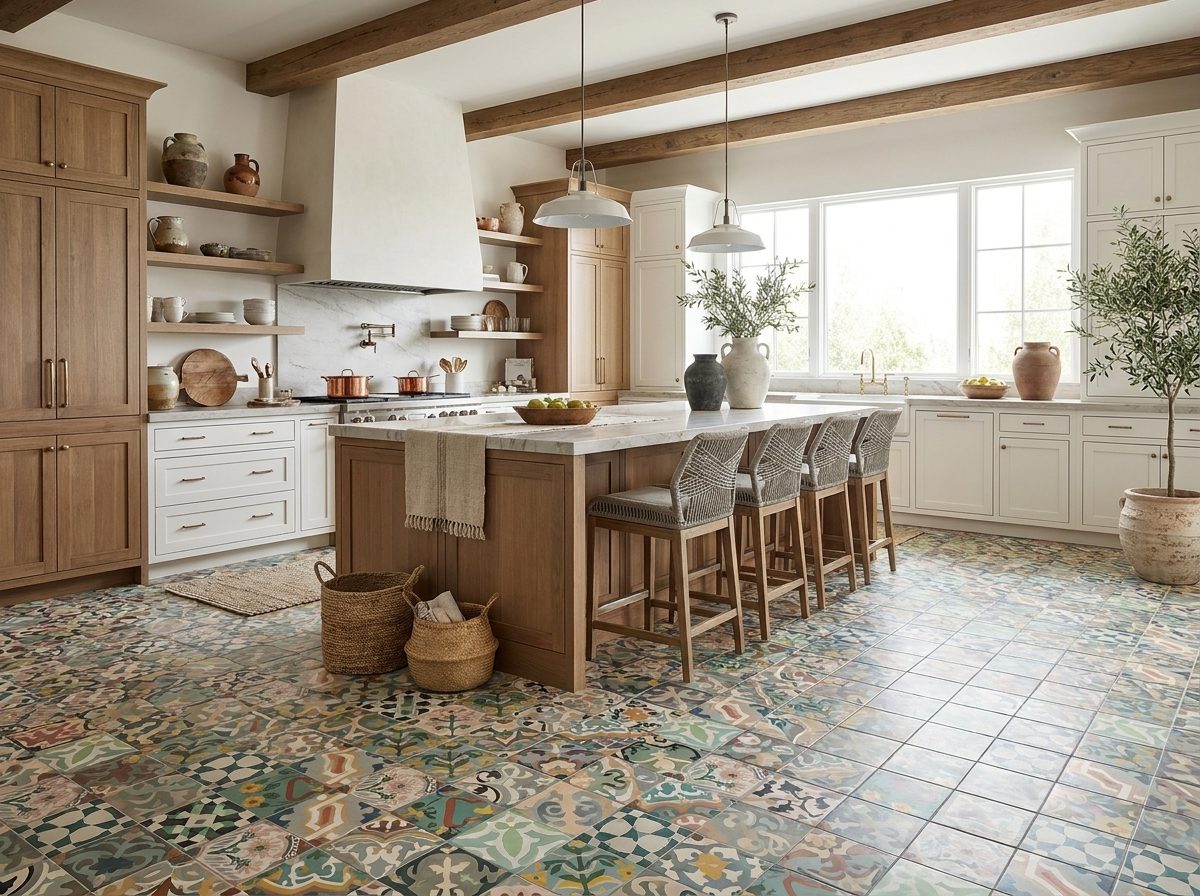
Kitchens: Floors + kitchen backsplash tiles that feel custom
Kitchens are full of big solids—cabinets, counters, appliances. Cement tile adds movement and personality.
Two strong options:
- patterned cement tile floor + calm backsplash
- calm floor + bold kitchen backsplash tiles behind the range or coffee bar
For cohesive color planning, reference the Cement Tile Color Palette.
Order Samples: Start with Cement Tiles In Stock
Bathrooms: Boutique feel in a small footprint
Bathrooms are perfect for cement tiles because you get maximum design payoff in a smaller area.
Great uses:
- patterned bathroom tiles on floors
- vanity wall accents
- niche backdrops
- powder rooms with high-impact pattern
Designer tip: if the floor is bold, keep walls calmer so the room feels curated, not busy.
Showers: Shower wall tiles with character (specified correctly)
Cement tiles can be used as shower wall tiles in design-forward projects, but success depends on correct waterproofing, sealing, and a realistic maintenance plan.
Before specifying cement tile in showers, review:
Outdoor patios: Outdoor patio tiles that extend the interior story
Patios are becoming “rooms,” especially in warm climates. Cement tiles can create indoor-outdoor continuity when specified correctly.
For outdoor patio tiles, choose patterns that:
- hide dust (mid-tone is best)
- echo interior palette
- feel timeless (Mediterranean and Spanish-style motifs work beautifully)
See Trend Tiles: Explore Cement Tiles In Stock

Style Ideas & Trends: What Designers Are Choosing Right Now
Moroccan tiles
Bold geometry that creates instant atmosphere:
- entry floors
- powder rooms
- bar zones
- boutique hospitality corridors
Mediterranean tiles
Soft palettes that feel relaxed and timeless:
- kitchens and breakfast nooks
- patios and courtyards
- spa-like bathrooms
Spanish-style tiles
Heritage warmth and courtyard romance:
- entryways and dining rooms
- patios and outdoor kitchens
- remodels in Spanish-style or Mediterranean architecture
Pairing tip: Spanish-style patterns look stunning next to terracotta tiles tones for layered warmth.
Modern
Minimal pattern, maximum intent:
- tonal geometry
- black-and-white statements
- framed border layouts
This is also where cement tile can pair beautifully with terrazzo tile in adjacent zones for a refined mix of texture.
Vintage + contemporary
A top remodeling strategy is mixing vintage pattern with modern finishes:
- patterned floor + clean cabinetry
- bold entry “tile rug” + minimalist furniture
- vintage motif + contemporary lighting
If you want a custom pattern to match a vintage reference, start with Custom Tiles.
Commercial Design Section: Cement Tiles for Restaurants and Hotels
Cement tiles aren’t just for homes. They’re a commercial design tool—especially in hospitality.
Restaurant tile design
For restaurant tile design, floors must handle traffic, chairs, spills, and constant cleaning while still looking premium. Patterned cement floors help:
- define zones (bar vs dining)
- hide wear better than flat, uniform surfaces
- create a signature “brand moment” guests photograph
If you’re working on a restaurant remodel or new build, start with Cement Tiles In Stock and coordinate custom branding through Custom Tiles.
Hotel lobby tiles
In boutique hotels, hotel lobby tiles set the tone instantly. Patterned cement tile can:
- create a premium first impression
- guide traffic through zoning
- become a signature photo-ready detail
For branded moments and repeatable identity, custom patterns (and logo concepts) can be developed through Custom Tiles.
Contact Us for Custom Tile Designs: Custom Tiles

Cement Tile vs Ceramic Tile: What’s the Difference?
Many clients compare cement tile to ceramic/porcelain because they see “cement tile look” options online.
Cement tiles
Best when you want:
- authentic handmade depth
- richer pigment and matte finish
- stronger pattern presence
- custom pattern and color control
Ceramic/porcelain
Best when you want:
- ultra-low absorption
- simplified maintenance in certain extreme wet or back-of-house zones
- large-format minimal looks
Many projects combine both: cement in identity zones (entry, kitchen, lobby, dining) and porcelain where operational simplicity is critical.
If you want guidance for your remodel, start with Cement Tiles In Stock and reach out via Contact Us.
Installation & Maintenance: How to Protect the Look
Installation essentials
Cement tile should not be installed like standard ceramic without planning. Before install day, align your installer with:
Key best practices include:
- flat, stable substrate
- dry layout planning for borders and focal points
- blending tiles from multiple boxes
- correct sealing steps coordinated with grout
Cleaning and care
A strong routine keeps cement tiles looking premium:
- sweep/vacuum regularly (grit control)
- use pH-neutral cleaners
- clean spills quickly, especially in kitchens and restaurants
- avoid harsh acids that degrade sealers
Set expectations using:
Mistakes to Avoid (So Your Remodel Looks Premium)
- Choosing pattern without sampling under your lighting
- Picking a pattern scale that doesn’t fit the room
- Skipping borders and transitions (it looks unfinished)
- Installing box-by-box without blending
- Sealing errors (skipping steps or using harsh cleaners)
- Over-patterning every surface (one hero per room is best)
Order Samples: Start with Cement Tiles In Stock

FAQs: Cement Tiles
1) What are encaustic cement tiles?
Encaustic cement tiles are patterned cement tiles made with a pigmented cement layer that creates the design and color, producing a matte, rich look (not a printed glaze).
2) Are cement tiles durable?
Yes, when installed and sealed correctly. They’re commonly used in entryways, kitchens, bathrooms, and many hospitality spaces.
3) Do cement tiles need sealing?
Yes. Sealing improves stain resistance and long-term maintenance. Use Installation Guidelines and follow care steps in Cement Tile Maintenance.
4) Can cement tiles be used in showers?
Cement tiles can be used as shower wall tiles in design-forward projects when waterproofing, sealing, and maintenance plans are correct. Review Installation Guidelines.
5) Are cement tiles good for kitchen floors?
Yes. Cement tiles can elevate kitchens quickly and pair beautifully with simple cabinetry—especially when sealed and maintained properly.
6) Can cement tiles be used outdoors?
They can be used as outdoor patio tiles in many designs, especially covered patios and courtyards, when installation and sealing are planned correctly.
7) Can I order custom cement tiles?
Yes. You can match colors, reproduce patterns, and create signature looks through Custom Tiles.
8) Do you have in-stock cement tiles?
Yes. Browse Cement Tiles In Stock and select designs for faster timelines.