Ordering cement tile is the easy part. Getting an 8×8, half-inch-thick, hand-poured tile from a factory in Mexico to your kitchen floor without a single cracked corner is the part nobody explains well. If you’ve never dealt with freight shipping before, the terms alone can feel like a foreign language: LTL, liftgate, bill of lading, concealed damage. This guide walks through exactly how cement tile ships, what happens on delivery day, and how to inspect your order so a shipping problem never becomes an installation problem.
We’ll cover this from the buyer’s side, whether you’re a homeowner expecting your first pallet or a contractor scheduling a job around a delivery window. Because cement tile is heavy, handmade, and unforgiving of rough handling, the freight process matters more here than it does for lightweight materials like vinyl plank or peel-and-stick.
Why Cement Tile Ships Differently Than Ceramic or Porcelain
Cement tile is dense. A single 8×8 tile weighs noticeably more than a machine-pressed ceramic tile of the same size, because it’s a solid slab of pigmented cement and marble dust pressed and cured under hydraulic pressure, not fired in a kiln. That weight adds up fast. A pallet of a few hundred square feet can weigh well over a thousand pounds.
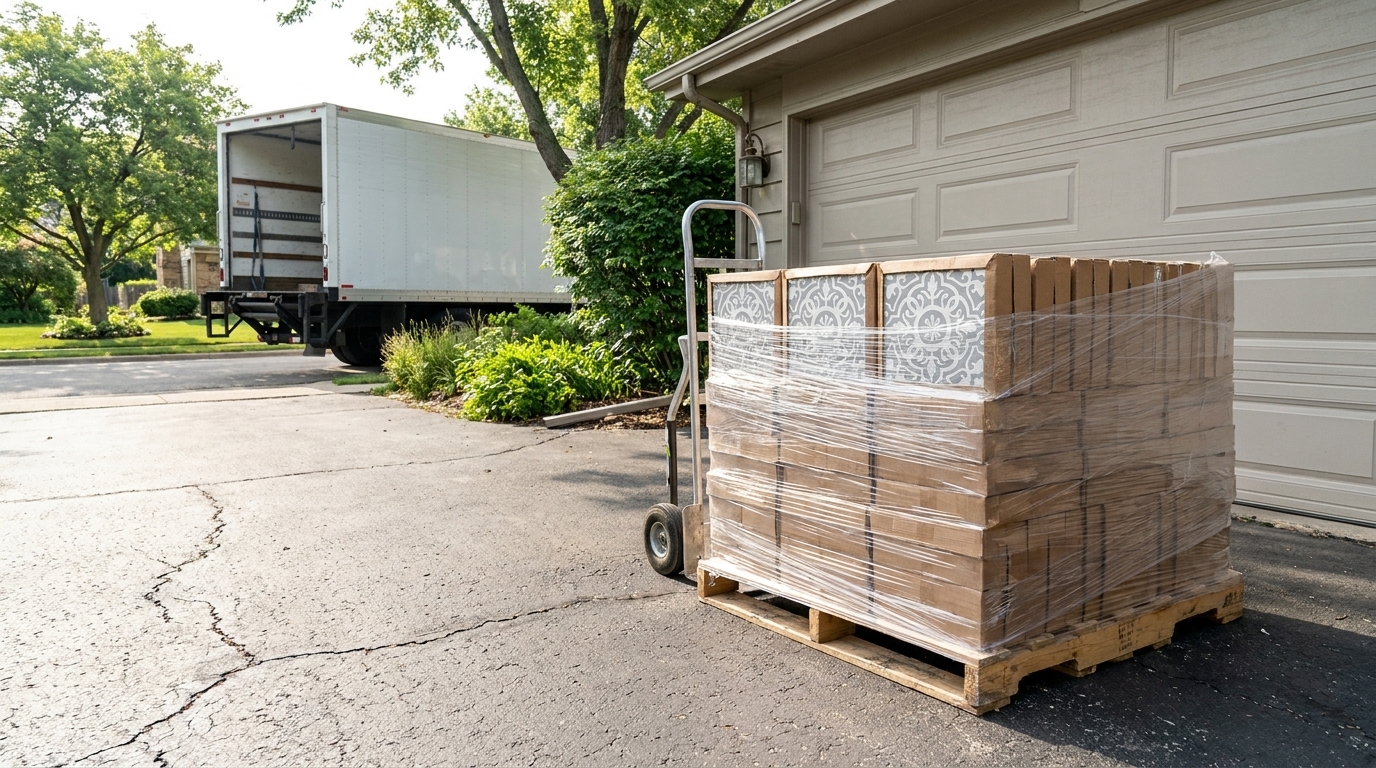
That weight is exactly why cement tile almost never ships by standard parcel carrier once an order gets past a sample or two. Instead, it travels by freight, strapped to a wooden pallet, in a box truck or semi-trailer. Parcel carriers like UPS or FedEx are built around small, light packages moving through conveyor sorting systems. A 45-pound tile box gets crushed in that system. Freight carriers, by contrast, load pallets once and move them as a single unit, which protects the tile far better.
There’s also the handmade factor. Because our tiles are made the same way our factory in San Luis Potosí has made them since 1900, each tile has slight, natural variation instead of machine-perfect uniformity. That’s part of the appeal, but it also means the boxes get handled with a bit more care in packing than a mass-produced product would need.
From Our Warehouse in Laredo to Your Door: How Freight Shipping Works
Every order we ship, whether it’s an in-stock pattern or a custom design, goes out from our warehouse in Laredo, Texas. In-stock tiles typically leave within days of your order because they’re already sitting on the shelf. Custom made tiles take longer, because they’re produced to order, usually in four to six weeks, before they ever reach the warehouse floor.
Once your order is ready, we hand it off to an LTL freight carrier. LTL stands for “less than truckload,” which just means your pallet shares trailer space with other shipments instead of filling the whole truck. That keeps freight costs reasonable for a residential order, though it also means your delivery window is an estimate, not a guaranteed hour.
A few things happen behind the scenes that are worth knowing:
- Freight class: Cement tile is classified based on density and packaging. This class, combined with weight and distance, sets the freight rate.
- Bill of lading (BOL): This is the shipping document that lists exactly what’s on the pallet, how many boxes, and their weight. You’ll sign a version of this at delivery, so it’s worth understanding before the truck shows up.
- Pallet count: Larger orders may ship on multiple pallets, sometimes arriving on the same truck and sometimes staggered a day or two apart if the carrier consolidates loads differently.
If you’re planning a large project, it helps to order with a 15% overage built in for cuts and breakage, and to review our measuring and ordering approach before freight ever gets booked. Fewer, larger shipments are almost always cheaper and safer than splitting an order into multiple small freight runs.
What to Expect on Delivery Day: Curbside, Liftgate & Appointments
Most residential cement tile orders ship as “curbside delivery with liftgate.” That phrase describes exactly what happens: the truck pulls up to your curb or driveway, and a hydraulic liftgate lowers the pallet to ground level. The driver is not required to carry boxes into your house, garage, or job site. Getting the tile from the curb to its final resting spot is on you or your crew. For that reason, plan for extra hands on delivery day. A pallet with several hundred square feet of tile is not a one-person job to move indoors.
Because LTL carriers route multiple stops per truck, most freight deliveries come with a delivery window rather than a fixed time, sometimes a four-hour range, sometimes just “sometime this week.” Many carriers will call ahead to schedule an appointment, especially for residential addresses, so make sure the phone number on your order is one you’ll actually answer. A missed appointment can push delivery back several days and, in some cases, triggers a redelivery fee.
Before delivery day arrives, clear a path from the curb to wherever the pallet will sit. A driveway is usually easier for the liftgate than a narrow street, and a flat, dry surface matters, since a loaded pallet on a pallet jack does not roll well over grass, gravel, or slush.
The Inspection Checklist: What to Check Before You Sign
This is the single most important part of the entire shipping process, and it’s the step most homeowners skip because they’re excited to see their tile or in a hurry to let the driver go. Don’t skip it. The delivery receipt you sign is a legal document, and what you write on it determines whether a damage claim gets paid.
Work through this checklist before the driver leaves:
- Count the boxes. Match the number on the pallet against the count on the bill of lading. A shortage needs to be noted immediately, not discovered later.
- Look at the pallet itself. Crushed corners, torn shrink wrap, or a pallet that’s clearly been re-stacked are all warning signs of rough handling in transit.
- Check for water damage. Water stains on boxes can mean the shipment sat exposed at some point. Cement tile that gets wet in transit can develop staining before it ever reaches your floor.
- Open at least one box from different spots on the pallet. You don’t need to unwrap the entire order, but pulling a box from the top, middle, and bottom gives you a real sense of condition throughout the shipment.
- Write specific notes, not vague ones. “2 boxes crushed, corner damage visible” holds up. “Possible damage” does not. If the delivery is clean, note that too, so there’s no ambiguity later.
If you find damage, take photos immediately, from multiple angles, before you move or restack anything. Photograph the pallet as a whole and then close-ups of individual damaged tiles. Then contact us through our contact page the same day so we can start the claims process while the documentation is fresh.
Concealed Damage: What Happens If You Find Problems After the Truck Leaves
Sometimes damage isn’t visible until you actually open every box, which might not happen until a few days before installation. This is called concealed damage, and it’s handled differently than damage noted at delivery, but it isn’t hopeless. The key is speed. Report concealed damage as soon as you find it, ideally within a few days of delivery, not weeks later once installation is already underway.
Keep the original packaging until the claim is resolved. Freight carriers may want to inspect the damaged boxes and pallet before approving a claim, and that’s much harder to prove once the packaging is in the trash. Take clear photos of the damaged tiles still in their box, along with the shipping label and any carrier stickers still attached.
Because concealed damage claims carry a higher burden of proof than visible damage noted on the delivery receipt, this is exactly why the inspection step at delivery matters so much. A driver who watches you note “corner crushed, box 4 of 12” on the BOL has already validated part of your claim before you even open that box.
Unpacking, Storing & Prepping Tile Before Installation
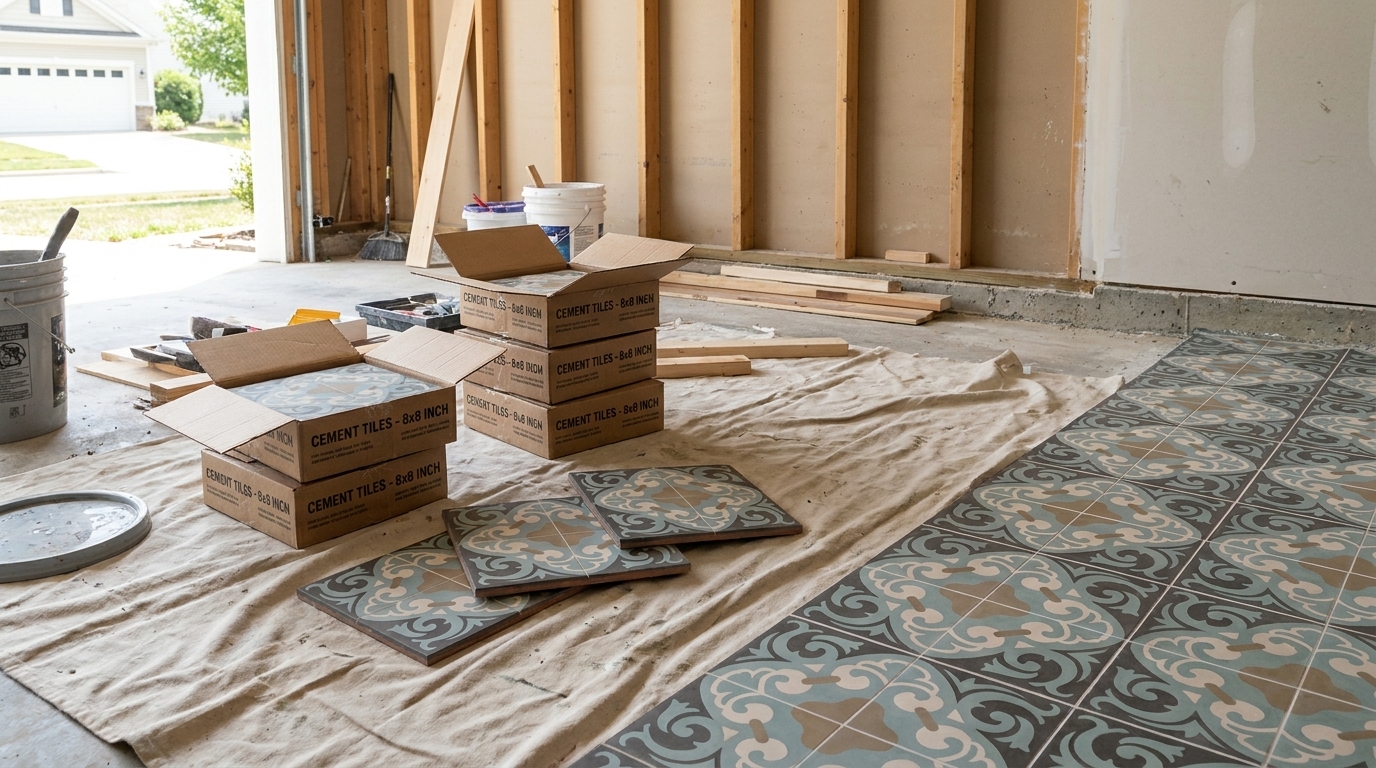
Once the pallet is safely inside, resist the urge to leave it sitting in its shrink wrap for weeks. Cement tile should be stored flat, indoors, and out of direct exposure to moisture or extreme temperature swings until your installer is ready for it. A garage is fine. A damp basement or an uncovered patio is not.
Before installation day, open every box and do a quick visual sort. Because these are handmade tiles, you’ll see natural, subtle variation in shade from tile to tile and sometimes from box to box, especially across a large order. That’s normal and expected with a cement product, not a defect. Good installers blend tiles from multiple boxes as they lay the floor so any variation reads as texture rather than a mismatched patch. For example, if you ordered several boxes of a pattern like Amalia II Gris 01, mixing tiles from different boxes as you lay them out gives a more even, intentional look than installing box by box in sequence.
This is also the moment to flag any tiles that arrived cracked or chipped, separate from freight damage. Handmade tile can occasionally have a small percentage of unusable pieces even in a well-packed box, which is exactly why we recommend ordering 15% over your measured square footage. That overage covers both cutting waste and the rare damaged tile without derailing your project or triggering a rush reorder.
Finally, review our installation guidelines before your crew starts, since cement tile has specific requirements around sealing and setting materials that differ from ceramic or porcelain. Getting the freight and inspection right only pays off if the installation is handled correctly too.
Choosing Between In-Stock and Custom Orders When Timing Matters
Shipping logistics should factor into which product line you choose, especially if you’re working against a renovation deadline. Our in-stock cement tiles ship within days because the boxes are already sitting in the Laredo warehouse, ready to palletize and hand off to freight. Custom made patterns, browsed through our custom made tile collection, need four to six weeks of production time before that same freight process even begins. Build that lead time into your project schedule from the start, especially if you’re coordinating contractors, appliances, and cabinetry around a single install date.
If you’re unsure how a pattern will look once it’s actually in your space, order a sample first. Samples ship by parcel, not freight, so they arrive much faster and give you a real, in-hand look at color and texture before you commit to a full pallet order. You can also browse our installation gallery for real project photos while you plan.
How much does freight shipping cost for cement tile?
Freight cost depends on total weight, pallet count, and distance from our Laredo warehouse to your delivery address. Because larger orders ship more efficiently per square foot than small ones, consolidating your purchase into one order instead of several smaller reorders usually keeps freight costs down.
What if I’m not home when the freight truck arrives?
Most residential deliveries require someone available during the scheduled window, since the driver needs a signature on the bill of lading. If nobody is available, the carrier will typically reschedule, and repeated missed appointments can add redelivery fees.
Can I have cement tile delivered directly into my garage or house?
Standard curbside delivery with liftgate gets your pallet to the ground at your curb or driveway. Moving boxes further, into a garage or upstairs, is your responsibility unless you’ve arranged special white-glove delivery separately.
What should I do if only a few tiles in a box are damaged, not the whole shipment?
Note the damage on your delivery receipt if you catch it during inspection, or report it promptly if you discover it while unpacking. Because we recommend ordering 15% extra for cuts and breakage, a handful of damaged tiles usually won’t stall your project while a claim is processed.
See the tile in person before you commit
Photos only tell you half the story. Colors, texture and the handmade character of cement tile are best judged in your own light. Order a sample of any in-stock pattern for $20 (additional samples $10, free shipping) — or tell us about your project and we’ll help you narrow it down.
Browse in-stock cement tiles →
Talk to us about your project →