In-Stock Cement Tiles
The secret to a high-end look on a real-world timeline? Availability.
If you’ve ever been on a design project with a real deadline—client move-in date, restaurant opening, hotel soft launch, contractor schedule—you already know the truth: the best design in the world doesn’t matter if the material doesn’t arrive on time.
This is where most beautiful moodboards break down. A pattern gets approved, a layout is set, the installer is booked… and then the tile is backordered for 6–12 weeks. Suddenly the “dream floor” becomes a rushed compromise: a generic porcelain lookalike, a last-minute substitute, or an expensive schedule change that upsets everyone.
That’s why smart designers and builders lean on in-stock cement tiles—not as a backup plan, but as a strategic advantage. With the right inventory partner, you can achieve a handcrafted, high-end look and stay on schedule.
In this guide, we’ll explain how designers use in-stock cement tiles to hit deadlines without sacrificing style, what to look for when specifying cement tile on a timeline, how to plan room-by-room applications (bathrooms, kitchens, showers, entryways, patios), and how to avoid common mistakes during installation and maintenance. We’ll also cover commercial strategies for restaurants and hotels, plus current style directions (Moroccan, Mediterranean, Spanish-style, modern, vintage, contemporary).

Why In-Stock Cement Tiles Are a Design Strategy (Not a Compromise)
The difference between a smooth project and a stressful one often comes down to one factor: material availability.
What in-stock availability protects you from
- Backorders that delay installs
- Last-minute substitutions that downgrade the design
- Contractor rescheduling fees and timeline chaos
- Client frustration and project fatigue
- Cost creep (storage, labor rework, change orders)
When a pattern is available, designers can:
- finalize specs earlier
- lock the installation calendar
- order samples quickly
- keep the design consistent from concept to completion
That’s the real “luxury” in modern design: a high-end finish that shows up when it’s supposed to.
See Trend Tiles now → Cement Tiles In Stock
Benefits of Cement Tiles (Why They Still Feel High-End, Even on a Fast Timeline)
Choosing in-stock cement tiles doesn’t mean choosing a lesser material. It means choosing a premium finish that’s ready.
Durability (when installed and sealed correctly)
Cement tiles can perform beautifully in high-traffic residential and many commercial environments when the system is specified correctly—stable substrate, correct installation, and proper sealing.
Handmade quality that reads “custom”
Handmade cement tiles have natural depth and subtle variation that printed products can’t replicate. That handcrafted quality is why they instantly elevate:
- entryways
- kitchens
- powder rooms
- boutique commercial spaces
Sustainability and long-life value
Many projects now prioritize long-life materials that can be maintained rather than replaced. Cement tiles fit that “buy better, keep longer” design mindset when paired with the right care plan.
Style versatility across major aesthetics
Even within in-stock collections, cement tile can deliver:
- Moroccan tiles geometry and rhythm
- Mediterranean tiles coastal calm
- Spanish-style tiles heritage warmth
- modern monochrome
- vintage European-inspired layouts
- contemporary tonal patterns
If you need to coordinate colors quickly, plan your palette using the Cement Tile Color Palette.
Order Samples → Start with your shortlist from In-Stock Cement Tiles
How Designers Use In-Stock Cement Tiles to Stay On Schedule
Here’s a real-world workflow that keeps tile projects moving without compromising the design.
Step 1: Choose “available-first” patterns early
The smartest timeline strategy is picking patterns from an in-stock catalog at the start. That keeps your design choices aligned with what can ship now.
Start here:
Step 2: Order samples before finalizing layout
Sampling is how designers prevent costly mistakes. With in-stock collections, you can sample quickly, confirm:
- pattern scale
- color under your lighting (day/night)
- grout color effect
- sealer impact
Step 3: Build a layout that minimizes delays
If you’re working with a pattern, plan:
- borders and transitions (entry rugs, dining zones)
- directionality (hallways, long patios)
- focal points (kitchen island zones, vanity walls)
If your design includes a custom element later—like a brand border or logo tile—you can plan it via Custom Tiles while keeping most of the field in-stock for speed.
Step 4: Align installer expectations early
Cement tile installs differently than ceramic/porcelain in key ways (sealing, handling, blending, cleaning). Before install day, share:
Step 5: Protect your schedule with correct maintenance planning
A lot of “tile problems” happen after install because nobody sets care expectations. For long-term performance, align your homeowner or operations team with:
Talk to a Tile Specialist → Contact Us

Style Ideas & Trends You Can Achieve With In-Stock Cement Tiles
“In-stock” doesn’t mean limited style—it means curated.
Moroccan tiles: high-impact pattern that photographs beautifully
Moroccan-inspired geometry is a favorite for:
- statement entries
- powder rooms
- bar zones
- boutique hotel corridors
If you want maximum impact fast, this is often the easiest win: one bold patterned floor + calm walls.
Mediterranean tiles: soft palettes, timeless calm
Mediterranean-inspired patterns work beautifully when paired with:
- warm whites and sand tones
- dusty blues and olive greens
- natural wood and plaster textures
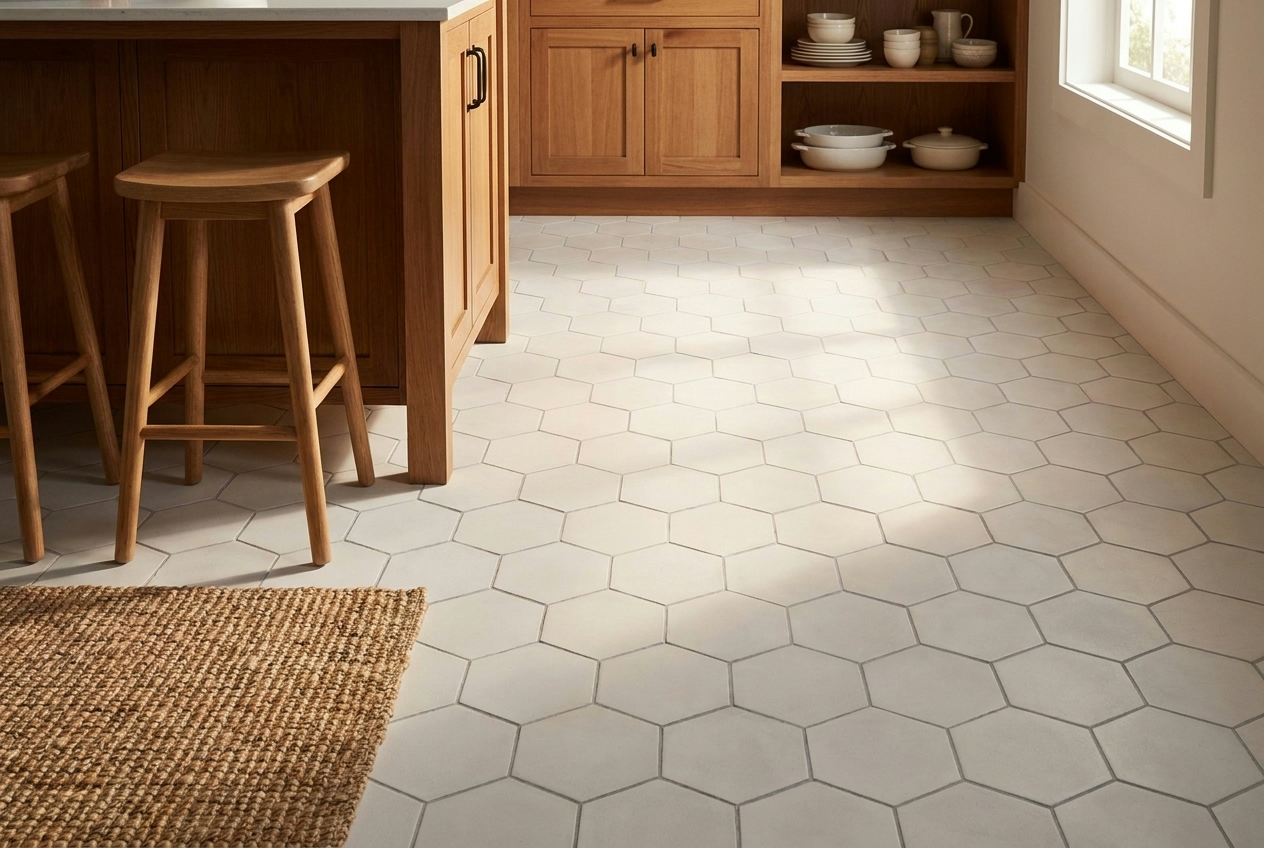
Perfect for kitchens, patios, and airy living spaces.
Spanish-style tiles: heritage warmth
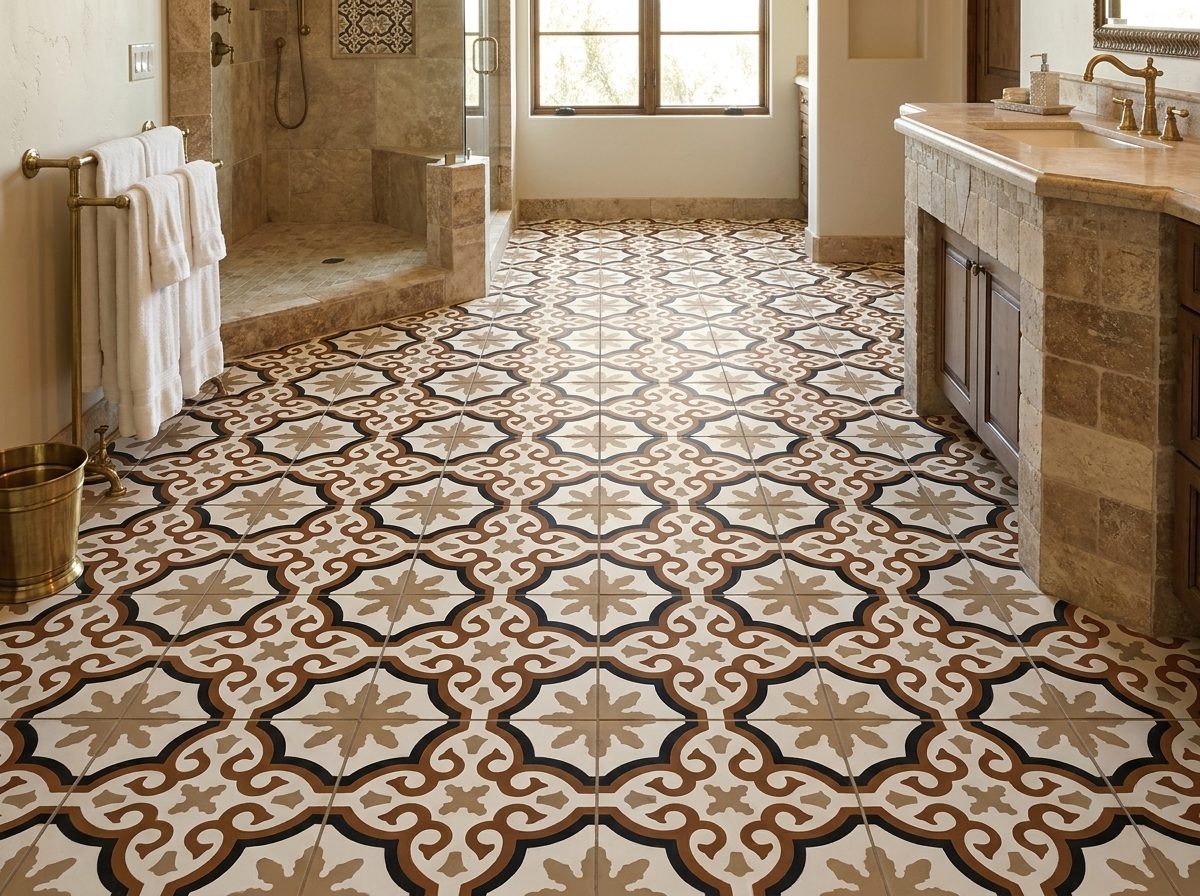
Spanish-style motifs (medallions, florals, classic repeats) are ideal for:
- courtyards and patios
- arched entryways
- restaurants that want destination energy
These patterns also pair beautifully with terracotta tiles tones (or terracotta-adjacent palettes).
Modern: tonal geometry, checkerboards, clean borders
Modern projects are using in-stock cement tile for:
- tonal patterns that feel quiet and premium
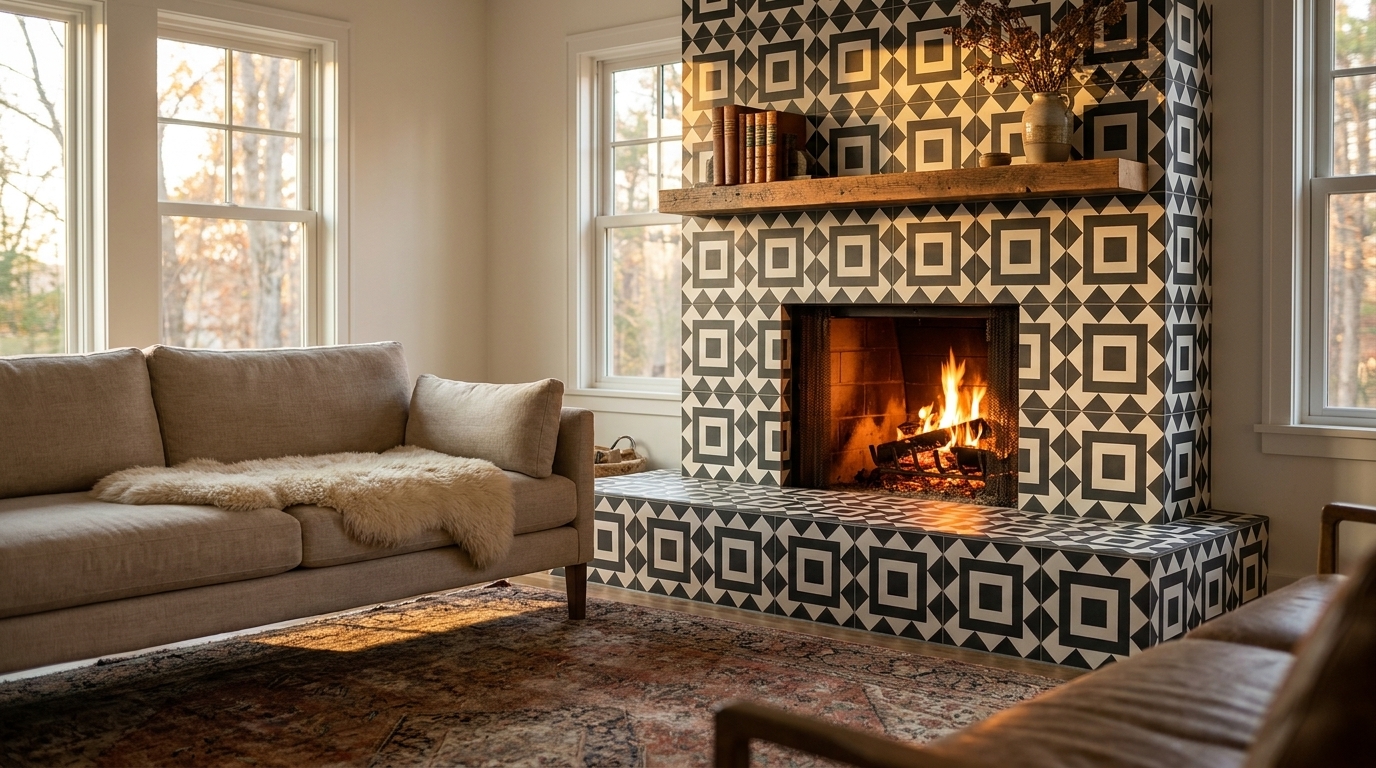
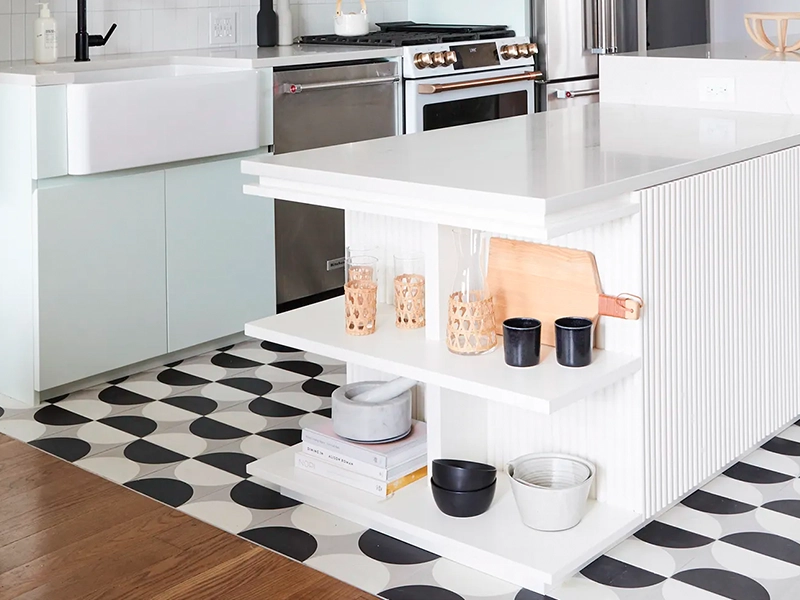
- crisp black-and-white geometry
- framed border layouts that define zones
Modern cement tile also complements terrazzo tile in adjacent zones for a refined, contemporary mix.
Vintage: “looks original to the architecture”
Vintage pattern is trending because it feels timeless. The key is layout:
- borders
- framed fields (“tile rugs”)
- symmetry at thresholds
If you need a specific reproduction, you can start custom planning through Custom Tiles, but many projects find a close match in-stock and still achieve the vintage vibe fast.
See Trend Tiles → Cement Tiles In Stock
Applications by Room: Where In-Stock Cement Tiles Make the Biggest Impact Fast
Entryways: the “instant upgrade” zone
A patterned entry floor makes the entire home feel designed.
Best practices:
- use a framed “tile rug” layout with a border
- choose mid-tone patterns that hide daily grit
- plan transitions to wood or stone intentionally
Start browsing entry-ready patterns in Cement Tiles In Stock.
Kitchens: floors + backsplash moments that look custom
Kitchens get expensive fast—so the smartest “upgrade” is a floor that elevates the room without replacing cabinets.
Two fast wins:
- patterned cement floor + calm walls
- calm floor + statement kitchen backsplash tiles behind range or coffee bar
Coordinate colors quickly using the Cement Tile Color Palette.
Bathrooms: boutique impact with minimal square footage
Bathrooms are perfect for in-stock cement tile because you can achieve a luxury look without huge quantities.
Use bathroom tiles for:
- patterned floors
- vanity wall accents
- niche backdrops
Showers: statement walls (when specified correctly)
Cement can be used as shower wall tiles in design-forward projects if waterproofing, sealing, and maintenance expectations are planned properly.
Before specifying, review:
Patios: outdoor patio tiles that extend the interior story
Patios are becoming “real rooms.” In-stock cement tile patterns can create indoor-outdoor continuity fast.
For outdoor patio tiles, choose patterns that:
- hide dust (mid-tone works best)
- echo interior palette for cohesion
- feel timeless (Mediterranean and Spanish-style motifs are great)
Order Samples → In-Stock Cement Tiles

Commercial Design Section: In-Stock Cement Tiles for Restaurants and Hotels
When you’re working with an opening date, in-stock isn’t optional—it’s essential.
Restaurant tile design: meet opening dates without downgrading the look
Restaurants need floors that:
- create atmosphere instantly
- handle spills and traffic
- hide daily wear
- support easy cleaning routines
In-stock cement tile is ideal for:
- dining floors
- bar zones
- entry thresholds
- restrooms (high-impact zones)
For multi-location brands, you can also build consistency through custom later with Custom Tiles.
Hotel lobby tiles: first impressions on a schedule
Hotels run on deadlines: soft openings, press shoots, and guest-ready dates.
In-stock cement tiles help boutique hotels:
- create signature hotel lobby tiles without long lead times
- define zones (reception vs lounge) with pattern shifts
- build a photo-ready identity fast
If branding is important, custom logo tiles can be planned through Custom Tiles while you keep the main field in-stock for speed.
Talk to a Tile Specialist for hospitality specs → Contact Us
Cement Tile vs Ceramic Tile: What to Choose When Time Matters
The cement tile vs ceramic tile question often comes up when deadlines are tight.
Cement tiles
Best when you want:
- authentic handmade character
- higher design impact
- custom look without custom lead time (if in-stock)
Ceramic/porcelain
Best when you want:
- ultra-low absorption
- simplified maintenance in certain extreme wet zones
- large-format minimal looks
Many designers choose cement tile for identity zones (entry, kitchen, lobby, dining) and porcelain for extreme wet or BOH zones. The smart choice is the one that matches your space and your maintenance reality.
If you want guidance by room, use Contact Us.
Installation & Maintenance: The Fastest Way to Protect Your Deadline and Your Finish
Installation essentials (don’t treat cement like ceramic)
The biggest “timeline killers” happen when installation isn’t planned correctly.
Before install day, share:
Key best practices:
- flat, stable substrate
- dry layout planning (borders, focal points)
- blend tiles from multiple boxes (avoid patchiness)
- sealing steps coordinated with grout
Maintenance essentials (keep it looking high-end)
Cement tiles should be sealed and cleaned with the right products.
Set expectations using:
Most success comes from:
- frequent grit removal
- pH-neutral cleaners
- quick spill response
- avoiding harsh acids that degrade sealers
Mistakes to Avoid When Ordering In-Stock Cement Tiles
- Waiting too long to sample: order samples early so decisions don’t stall.
- Choosing pattern without checking scale: always view samples at distance.
- Under-ordering: projects need waste allowance—especially with patterns.
- Not planning transitions: borders and thresholds make installs look premium.
- Installing box-by-box: blend tiles from multiple boxes for balanced variation.
- Skipping sealing steps: sealing errors cause haze and staining.
- Assuming “in-stock” means “no planning”: you still need layout, grout, and sealer strategy.
Order Samples now → In-Stock Cement Tiles

FAQs: In-Stock Cement Tiles
1) What does “in-stock cement tiles” mean?
In-stock cement tiles are cement tile designs available to ship without waiting for custom production lead times. They help designers meet deadlines while still achieving a handcrafted, high-end look.
2) Are in-stock cement tiles still handmade?
Yes. Many in-stock cement tiles are handmade and retain the depth and character that makes cement tile feel custom.
3) How fast can in-stock cement tiles ship?
Shipping time depends on location, quantity, and freight method, but in-stock collections are designed to avoid the long production waits common with made-to-order materials. For timeline planning, contact a specialist via Contact Us.
4) Do cement tiles need to be sealed?
Yes. Sealing improves stain resistance and maintenance. Review Installation Guidelines and follow care steps in Cement Tile Maintenance.
5) Where are in-stock cement tiles best used?
They’re commonly used for entryways, kitchens, bathrooms, patios, and commercial spaces like restaurants and boutique hotels—especially where pattern creates instant design value.
6) Are cement tiles good for restaurants and hotels?
Yes. Cement tiles are frequently used as commercial floor tiles for restaurant tile design and hotel lobby tiles because they create identity and perform well when installed and maintained correctly.
7) Cement tile vs ceramic tile—what’s better for deadlines?
In-stock cement tile can deliver a higher-end, more custom look without custom lead times. Ceramic/porcelain can be simpler in some wet or BOH zones. Many projects use both strategically.
8) Can I start with in-stock tile and add custom later?
Yes. Many designers use in-stock patterns for the main field to meet deadlines, then add custom borders or custom logo tiles through Custom Tiles to personalize the space.