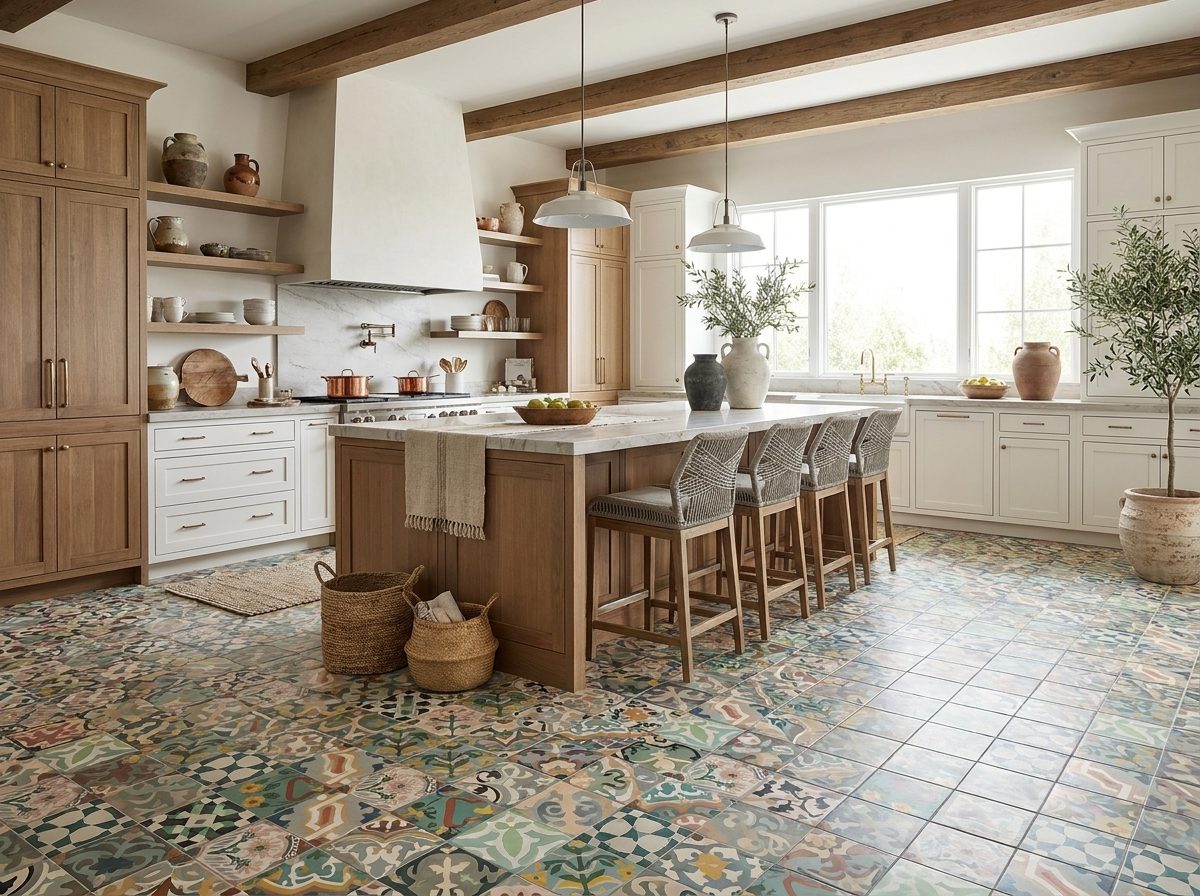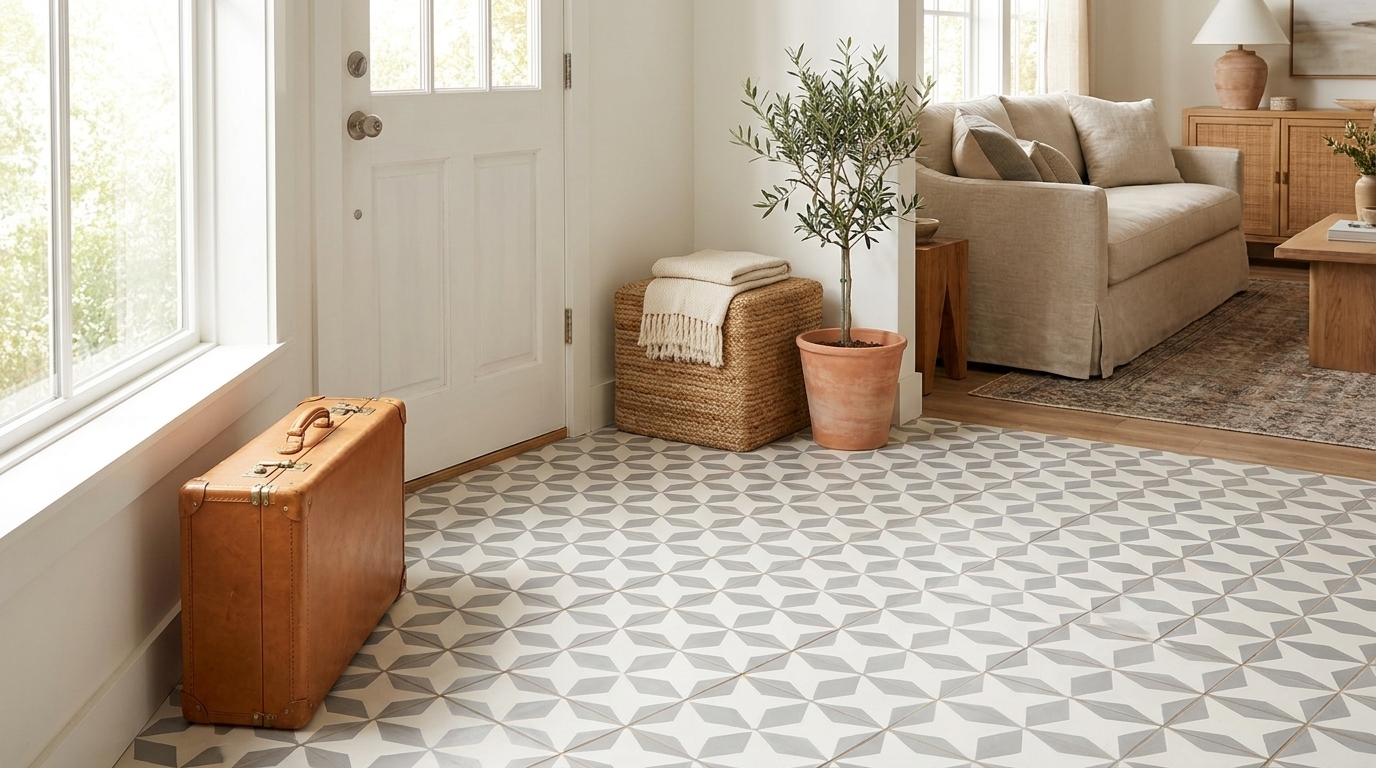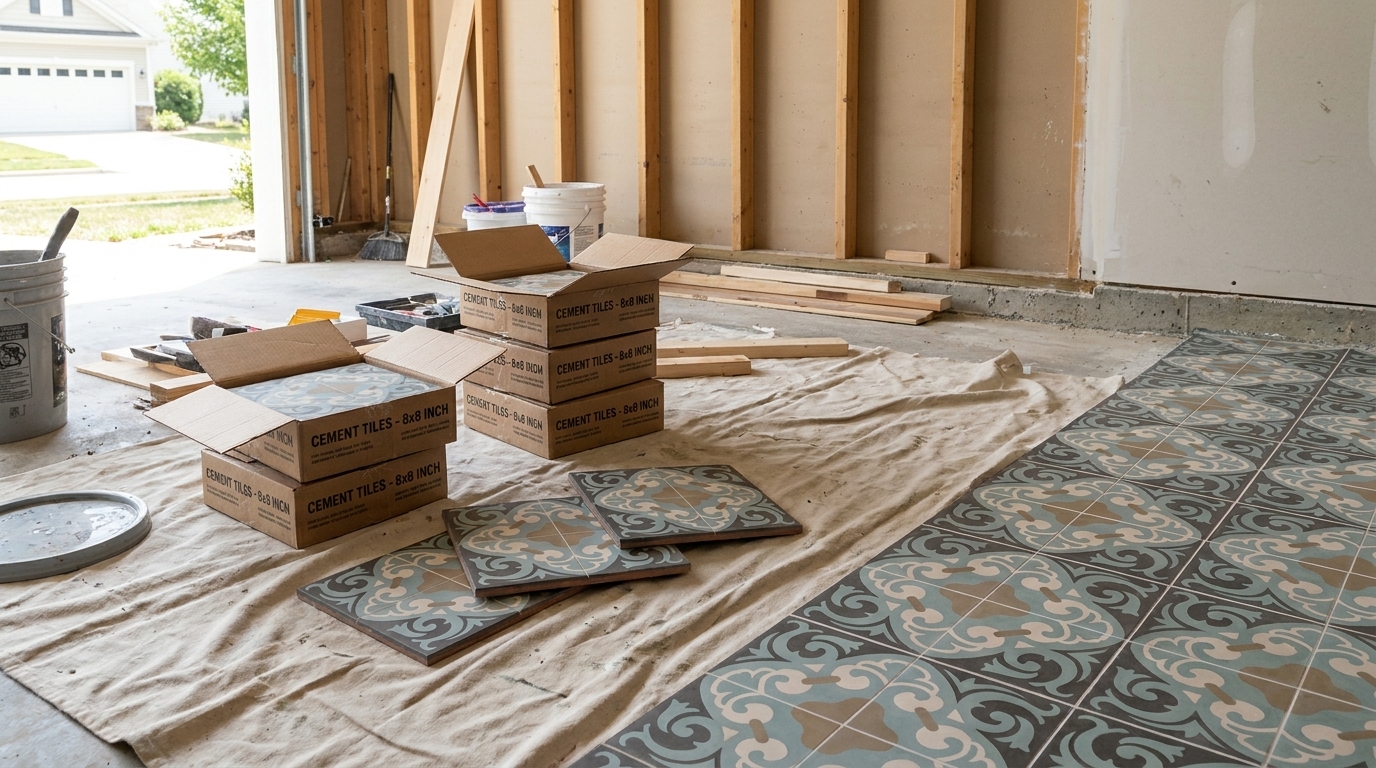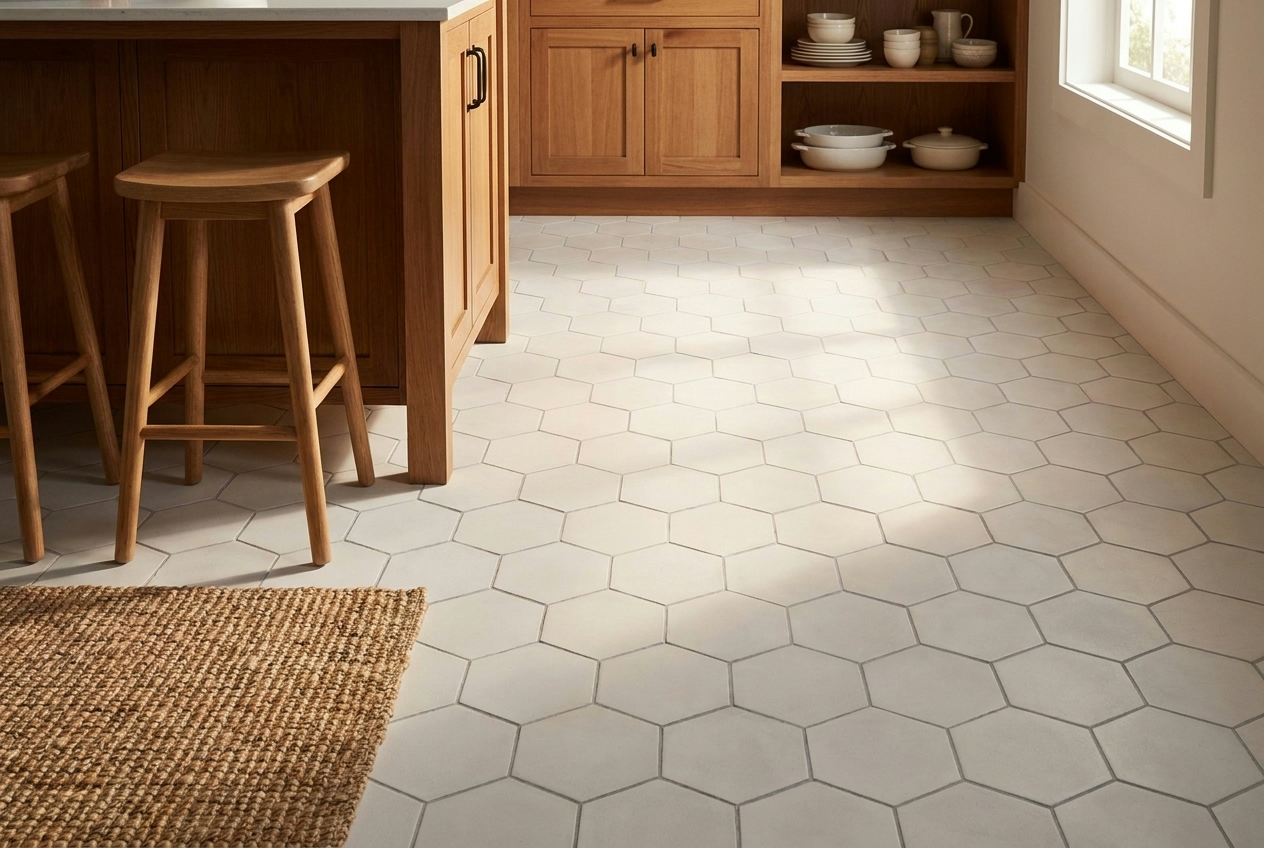
After decades of making tile and thousands of customer conversations, we’ve learned something useful: everyone asks the same twenty questions. So here they are — the complete cement tile FAQ, answered straight, by the people who press the tiles. Bookmark it, send it to your contractor, and start your project with every answer already in hand.
The Material
1. What are cement tiles, exactly?
Hand-pressed tiles made of mineral pigment, cement, and sand — hydraulically pressed and water-cured, never fired. The color layer is millimeters of solid pigment, not paint or glaze.
2. Are cement tiles the same as encaustic tiles?
In everyday use, yes — “encaustic” is the historic name that stuck. Purists reserve encaustic for fired clay with inlaid pigment; the modern handmade tile world uses both names for cement tile.
3. How long do they last?
Generations. Century-old cement tile floors still serve across Mexico, Europe, and New Orleans — wear reads as patina because the color runs deep.
4. Why do tiles from the same order vary slightly?
Because human hands pressed each one. Subtle tone variation is the signature of the process — and why a handmade floor has life that printed tile can’t fake.
Choosing & Buying
5. How much do cement tiles cost?
Ranges vary by pattern and quantity; the honest math includes lifespan — a floor you never replace beats a cheap one bought three times. Full numbers in our cost guide.
6. How many tiles do I need?
Measure in rectangles, add 10–20% waste by layout complexity, convert by tile size. Our measuring guide does the math with you.
7. Should I order everything at once?
Always — one production lot means perfect color consistency, and leftover spares make future repairs invisible.
8. Can I get custom colors or patterns?
Yes — any pattern in your palette, or your own design, through the Design Studio.

Where They Work
9. Can cement tiles go in showers and bathrooms?
Yes, with thorough sealing and ventilation — floors, walls, and even shower zones. Many designers pair a cement tile bathroom floor with simpler shower interiors for the easiest care.
10. Do they work outdoors?
A century of courtyards says yes — sealed for exterior, in moderate climates. Hard freeze-thaw regions keep them under cover.
11. Kitchens and high traffic?
Their home turf: restaurants and busy family kitchens are where solid pigment proves itself daily.
12. Over radiant heating?
Beautifully compatible — cement conducts and holds warmth like the mineral it is.
Installation
13. Is installation different from ceramic?
Same craft, extra discipline: flat substrate, quality thin-set, narrow joints, and sealing before grouting. Any experienced setter succeeds with our installation guidelines.
14. What grout should I use?
Unsanded or fine grout in narrow joints, in a color close to the tile’s background — and never grout an unsealed tile. Full logic in our grout color guide.
15. Can I install over existing tile or concrete?
Often yes, on sound flat surfaces — your installer confirms. Concrete slabs are the ideal base.
16. Why must tiles be sealed before grouting?
The pre-seal blocks grout pigment from lodging in the tile surface — skipping it is the #1 install error on any job site.
Living With Them
17. How do I clean cement tiles?
pH-neutral cleaner and a mop. No vinegar, no bleach, no acids — ever. That’s the entire daily routine; details in our cleaning guide.
18. How often do I re-seal?
Every 2–3 years in normal areas, 1–2 in wet or outdoor zones. The water-drop test tells you: if drops soak in instead of beading, it’s time.
19. What if a tile stains or gets damaged?
Most stains lift with neutral cleaning or gentle buffing; a truly damaged tile swaps invisibly with a same-lot spare — reason #2 you ordered extra. Troubleshooting guide covers the rest.
20. Do cement tiles add resale value?
Distinctive, durable, handmade surfaces photograph better in listings and read as upgrades to buyers and appraisers alike — the opposite of commodity flooring.

The Takeaway
Twenty questions, one theme: cement tile rewards a little knowledge with a lifetime of floor. Measure right, order one lot, seal on schedule, mop neutral — and the handmade surface handles everything else for a generation or three. Whatever question number twenty-one is, we’re easy to find.
Question we didn’t cover? Ask our team directly — or start browsing hundreds of patterns in stock.