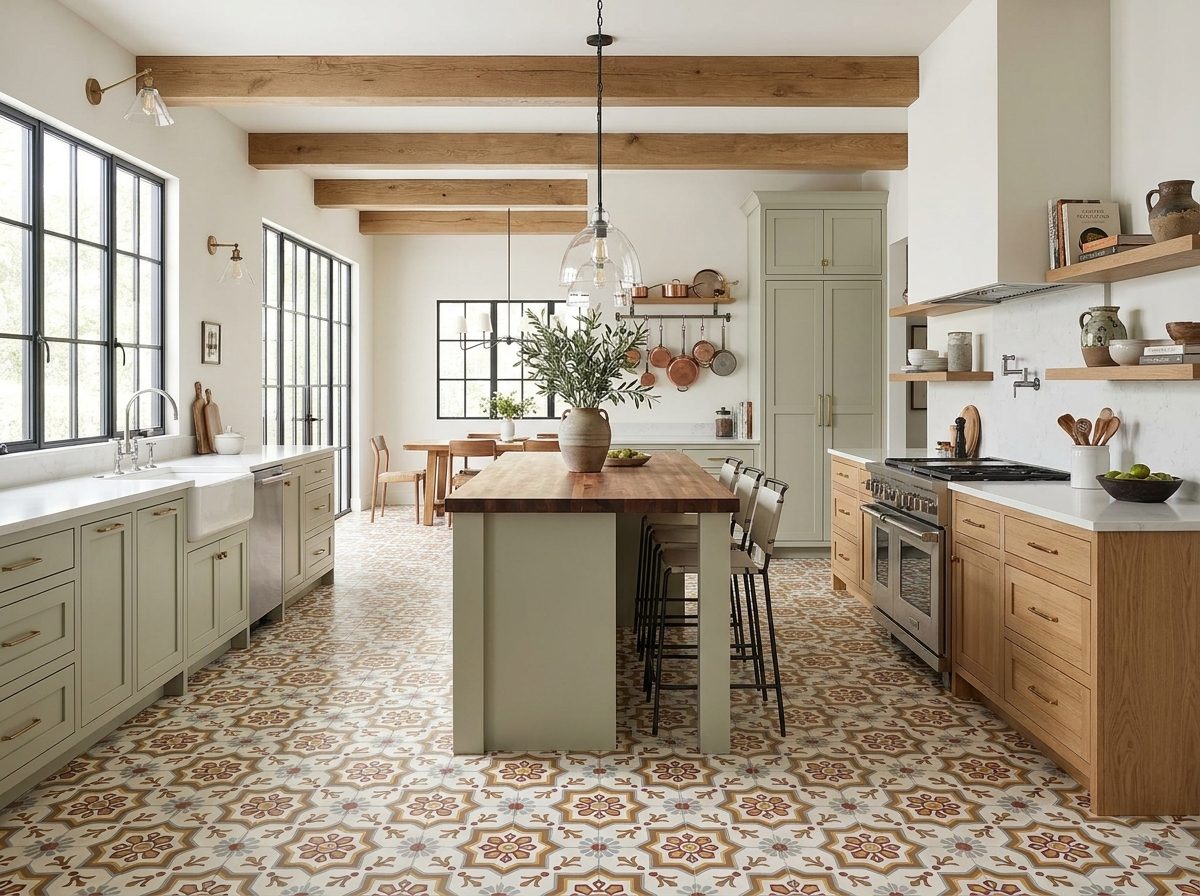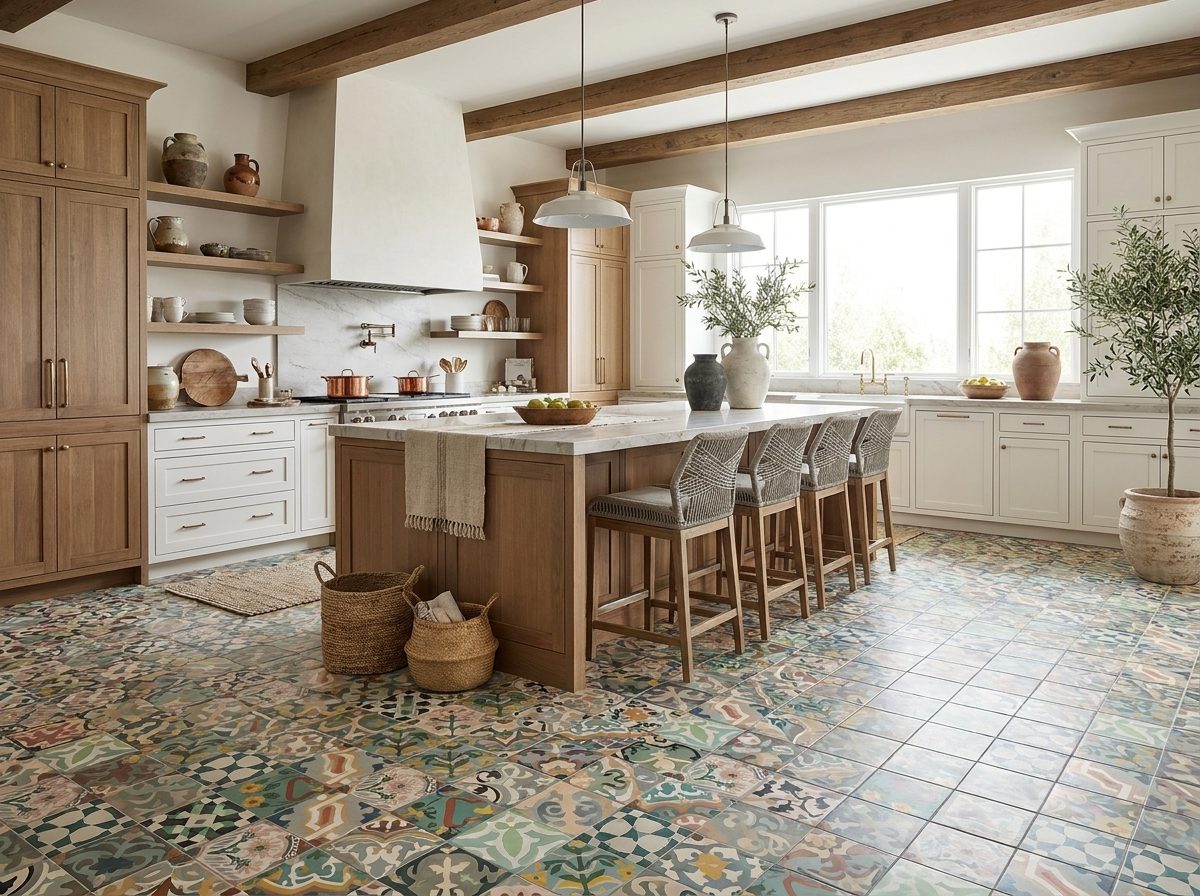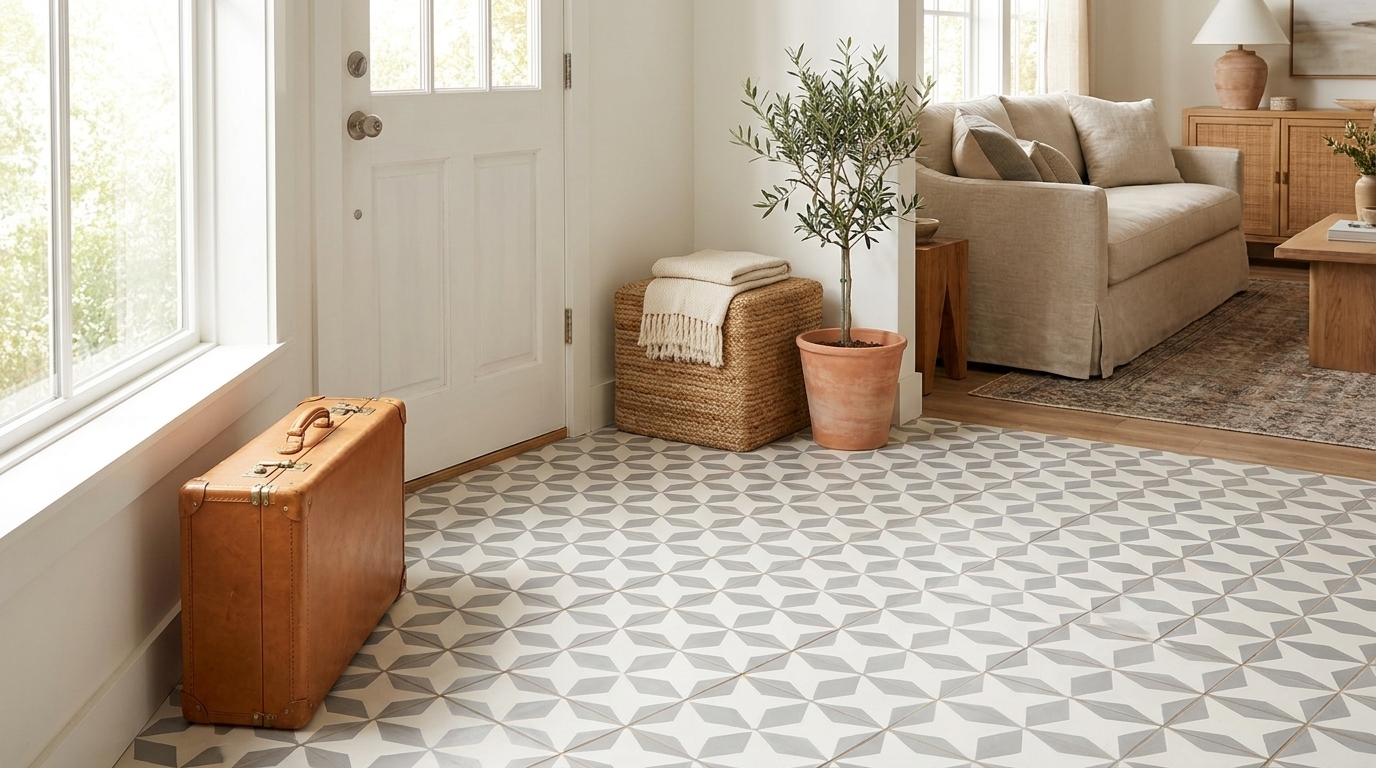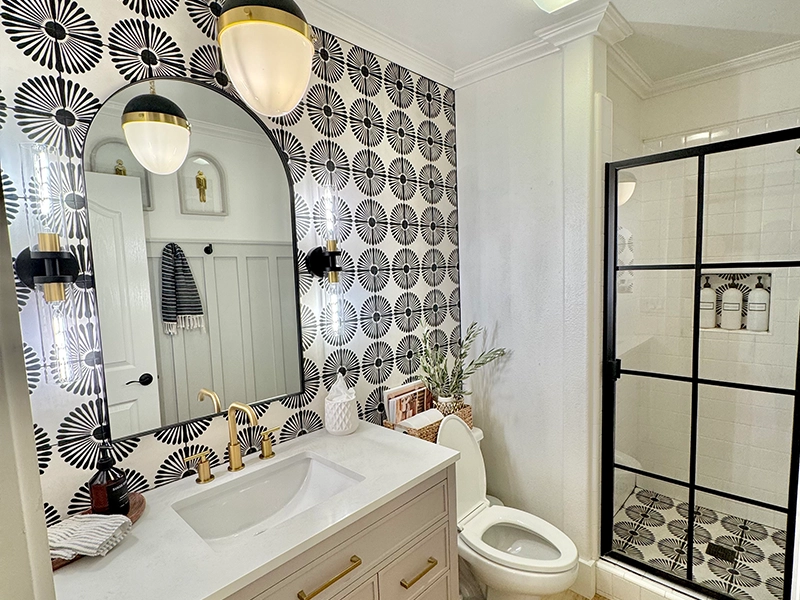
What if one material could ground open-plan living rooms, add soul to kitchens, turn a simple shower into a sanctuary, and deliver brand-ready style for restaurants and hotels—without feeling trendy or temporary? Moroccan cement tiles do exactly that. In this strategic guide, you’ll learn how to specify, design, and install Moroccan-inspired handmade cement tiles for homes and commercial spaces in the US—plus pro tips on color, layout, maintenance, and custom branding with Original Mission Tile.
• See Trend Tiles: In-Stock Cement Tiles
• Order Samples / Talk to a Tile Specialist: Contact Us
• Custom Tile Designs: Custom Cement Tiles
• Inspiration: Cement Tiles Gallery

Why Moroccan Cement Tiles Belong in Modern US Homes
Moroccan design blends geometry, rhythm, and color—think stars, interlacing lines, and bold borders that feel both ancient and fresh. When that vocabulary is crafted as handmade cement tiles, you get:
- The authentic matte finish designers love for editorial-ready rooms.
- Mineral pigment depth—color that isn’t just printed; it’s part of the wear layer.
- Endless variation via custom recolors, scale changes, and borders.
- Durability for real life: kitchens, hallways, hotel lobbies, and restaurant floors.
Explore real-world applications in our Cement Tiles Gallery and shop fast-ship designs in Cement Tiles In Stock.
What Makes Cement Tiles Different?
Cement tiles (often called encaustic cement tiles) are not fired like ceramic or porcelain. Each tile is hand-made by pouring a colored slurry of mineral pigments into a metal mold (the pattern), backing it with a cement–sand layer, and hydraulically pressing it. The color layer becomes a thick, durable wear surface—not a printed image.
Quick compare: cement tile vs ceramic tile
- Look & Feel: Cement = velvety matte, artisan variation. Ceramic = glazed surface (matte or glossy), often printed.
- Customization: Cement = high (colors, patterns, borders). Ceramic = limited.
- Use Case: Cement = statement floors/walls, boutique commercial; Ceramic = great value for walls/light floors.
- Care: Cement = seal + pH-neutral cleaning; Ceramic = generally lower maintenance.
Ready to tailor a pattern? Start here: Custom Cement Tiles.

Benefits of Cement Tiles (Designer & Builder POV)
1) Durability & Longevity
Thick pigment wear layer + compression = a long service life with proper sealing and care.
2) Handmade Character
No two tiles are exactly the same—subtle tonal shifts create warmth and depth that cameras love. See the effect in the Gallery.
3) Sustainability
Cement tiles are made without kilns, reducing energy usage versus many fired tiles.
4) Style Versatility
From Moroccan and Mediterranean to Spanish-style and mid-century modern, recolor and scale to fit any aesthetic.
5) Customization & Branding
Recolor any motif to match cabinet paint, stone veining, or brand palettes. Add borders, scale the repeat, or create custom logo tiles—start your brief via Contact Us.
Core Moroccan Patterns & How to Use Them
1) Moroccan Stars & Crosses
- Best for: Feature floors, entry “rugs,” fireplace surrounds.
- Palette tips: Bone + charcoal (modern); indigo + sand (coastal); clay + sage (rustic).
- Pro layout: Add a slim brass liner or contrasting border to frame the field tile.
Browse options: In-Stock Cement Tiles.
2) Interlaced Geometrics
- Best for: Kitchen floors, long hallways, hotel corridors.
- Palette tips: Tone-on-tone grays feel architectural; a third accent hue can highlight intersections.
See installations: Gallery.
3) Mediterranean Florals & Arabesques
- Best for: Powder rooms, dining walls, restaurant feature zones.
- Palette tips: Warm neutrals + one saturated color (oxblood, teal, emerald) = timeless.
Customize colors: Custom Cement Tiles.
4) Checkerboards (Moroccan-adjacent classic)
- Best for: Kitchens and baths that need calm patterning.
- Palette tips: Soft contrast (e.g., bone + fog) reads elevated and hides dust.
Order Samples / Ask a Specialist → Contact Us

Applications by Room (Residential)
Bathrooms (Floors, Walls, & Niches)
- Floor: Tone-on-tone Moroccan geometric for grip and easy maintenance.
- Walls: Use handmade cement tiles on the main shower wall; pair with plain field tiles elsewhere.
- Niche: Pull an accent color from the floor pattern into the shampoo niche for cohesion.
See real bathrooms in our Gallery.
Pro tip: For shower floors, many installers prefer porcelain mosaics for extra traction, then echo cement tile on shower walls or the bath floor.
Kitchens (Backsplashes & Floors)
Backsplashes
- Full-height Moroccan stars behind the range = editorial hero.
- For subtlety, run a border band at counter height with zellige-style field tiles above.
Floors
- Frame the island with a patterned “rug.”
- Use a border + field layout to zone open plans.
Shop quick-ship patterns: In-Stock Cement Tiles.
Showers
- Feature Wall: One patterned wall plus two solid walls keeps balance and budget in check.
- Ceiling: Continue the field onto the shower lid for immersion.
Need spec help? Contact Us.
Entryways & Hallways
- Entry “Rug”: Border + field in Moroccan motif creates a crisp welcome and traps grit.
- Hall Flow: Interlaced geometrics visually elongate corridors.
Inspiration: Gallery.
Outdoor Patios (Covered/Protected)
- Covered patios and sunrooms love the matte, tactile quality of cement tile.
- Choose mid-tone palettes (clay, tobacco, charcoal, sage) for lower visual maintenance.
See references: Gallery.

Commercial Design: Restaurants, Hotels & Retail
Why commercial teams specify Moroccan cement tiles:
- Instant brand identity—guests photograph and share the space.
- Flexible zoning—pattern “rugs” define bar, host stand, and lounge areas.
- Custom logo tiles—raise perceived value and brand recall.
Restaurants & Cafés
- Front-of-house floors: Medium-contrast geometrics combine style + scuff camouflage.
- Bar faces & host stands: Moroccan repeats become a backdrop for signage.
- Restrooms: Bold powder-room moments drive social shares.
Start a trade brief: Contact Us.
Hotels & Hospitality
- Lobby floors: Border + field layouts nod to classic Mediterranean hotels.
- Elevator lobbies & corridors: Rhythmic geometrics direct movement and photograph cleanly.
- Pool bars & rooftop lounges: Use pattern as a brand signature.
Customize branding: Custom Cement Tiles.
Retail
- Cash wraps & product plinths: Cement tile wraps elevate perceived value.
- Fitting-room corridors: Soft neutrals with a micro-border read high-touch.
Browse palettes: In-Stock Cement Tiles.

Style Ideas & Trends (Moroccan to Modern)
1) Warm Mediterranean Neutrals
Chalk, sand, bone, and tobacco anchored by charcoal—timeless and resale-friendly.
2) Blue & White Coastal
Indigo stars with white grounds; add brass and bleached oak.
3) Desert Modern
Clay, terracotta, saddle, and sage for ranch houses and sunrooms.
4) Contemporary Monochrome
Bone + ink in crisp geometrics pairs with micro-texture walls.
5) Vintage Revival
Spanish-style florals in olive/oxblood/cream for historic bungalows.
See real installs: Gallery.
How to Build a Cohesive Palette
- Choose your anchor: cabinets, stone, or the main pattern.
- Limit the palette: 2–3 neutrals + 1 accent hue.
- Balance contrast: shoot a phone photo in grayscale to test value.
- Map transitions: where tile meets wood, carpet, or concrete—plan trims.
- Sample in place: always review samples under real project lighting.
Order samples or request advice: Contact Us.
Layouts That Work (and Why)
- Checkerboard for calm rhythm in kitchens and baths.
- Border + Field for formal entries, dining rooms, lobbies.
- Patterned Rug to define zones in open plans.
- Stair Risers for maximum charm with minimal footage.
- Wainscot Bands to tie furniture into architecture.
Explore patterns by layout in the Gallery or shop ready-to-ship options in In-Stock Cement Tiles.
Installation & Maintenance (What Pros Expect)
Before You Begin
- Flat, clean substrate, cured per spec.
- Dry-lay and blend tiles from all boxes to distribute natural variation.
- Confirm final layout, centering, and cuts before thinset.
Sealing & Grouting
- Seal cement tiles before grouting.
- Test grout on a spare tile; avoid highly staining grouts.
- After grout cure, apply final sealer per manufacturer’s schedule.
Cleaning & Care
- pH-neutral cleaners only (no acids/bleach).
- Felt pads under furniture; mats at entries.
- Reseal on a traffic-based cycle (commercial cycles are shorter).
Questions? Contact Us.
Mistakes to Avoid (Save Time, Budget, and Headaches)
- Skipping the pre-grout seal → pigment haze or grout staining.
- Using harsh cleaners → etching and dullness.
- Under-ordering → always include 10% overage (12–20% for borders/diagonals/stairs).
- High-contrast grout by accident → test and adjust to keep pattern crisp.
- Ignoring lighting → colors shift under warm vs. cool LEDs; sample in place.
- Assuming cement = porcelain → cement is hand-crafted; embrace variation and seal it right.

Custom Cement Tiles: Recolors, Borders, Logos
With Original Mission Tile, custom is straightforward:
- Pick a pattern (Moroccan stars, interlaced geometrics, florals).
- Choose colors—our palette or custom matches to paint, textiles, or stone.
- Refine layout—scale the motif, add a border, plan transitions.
- Prototype sample—approve under site lighting.
- Produce & ship—we coordinate timelines and freight.
Kick off your custom brief here: Custom Cement Tiles or reach us directly via Contact Us.
Budgeting & Spec Tips (Residential & Commercial)
- Concentrate pattern in focal zones (entries, backsplashes, feature walls) to stretch budget.
- Use solids from the same palette for adjacent surfaces.
- Mix materials (zellige/terrazzo/terracotta) to add depth while controlling costs.
- Freight: consolidate shipments; we’ll help optimize packing and timing.
- Timeline: in-stock tiles ship fast—browse In-Stock Cement Tiles; custom lead times vary—start early via Contact Us.
FAQs
Q1: Are Moroccan cement tiles durable enough for kitchens and high-traffic areas?
Yes. Properly sealed cement tiles hold up beautifully in kitchens, entries, and commercial lobbies. See examples in our Gallery.
Q2: What’s the difference between cement tiles and ceramic tiles?
Cement tiles are hand-pressed with a thick pigment wear layer; ceramic tiles are kiln-fired with a printed/glazed surface. If you need custom color or borders, go cement—start at Custom Cement Tiles.
Q3: Do cement tiles need sealing?
Yes—seal before grouting and again after grout cures. If you need product recommendations, Contact Us.
Q4: Can I use Moroccan cement tiles in a shower?
They’re excellent on shower walls. For shower floors, many pros prefer porcelain mosaics for added traction, then coordinate colors with cement wall or bath floor tiles.
Q5: Can I customize colors to match my cabinets or brand?
Absolutely—send your palette and we’ll prototype a sample. Start here: Custom Cement Tiles.
Q6: How much overage should I order?
Plan +10% for straightforward layouts; 12–20% for borders, diagonals, complex cuts, or stairs. Need a takeoff? Contact Us.
Q7: Can cement tiles go outdoors?
Yes in covered or protected applications (porches, sunrooms) with proper detailing and sealing. See outdoor looks in the Gallery.
Q8: Where can I get tiles quickly?
Shop our Cement Tiles In Stock collection for fast shipping.

Your Moroccan Cement Tile Roadmap (Step-by-Step)
- Define the vibe: Moroccan, Mediterranean, Spanish-style, modern, vintage, or mixed.
- Collect references: save 3–5 patterns that fit the mood and palette from the Gallery.
- Request samples: two value contrasts (soft vs. bold) via Contact Us.
- Plan layout: border + field, checkerboard, or patterned rug.
- Confirm quantities: include overage, trims, and transitions.
- Schedule install: align sealing, grout tests, and final clean.
- Celebrate & share: your project can be featured—submit photos through Contact Us.
See Trend Tiles → In-Stock Cement Tiles
Order Samples / Talk to a Tile Specialist → Contact Us
Custom Tile Designs → Custom Cement Tiles
Inspiration → Cement Tiles Gallery