Retail Stores Tile Design
If your store looks amazing online but “tired” in person, it’s usually not the lighting, the fixtures, or the product mix—it’s the floor.
Your floor is the only surface every customer touches. If it looks generic or worn, your brand instantly looks cheaper—no matter what you’re selling.
In today’s Interior Design, retail spaces don’t compete on square footage. They compete on experience: how the store feels when customers walk in, how easily they move through the space, and how “premium” the environment looks on camera (because every customer is also a content creator).
That’s why retail flooring is no longer a background choice. The right tile pattern can:
- elevate perceived product value
- guide traffic flow without signage
- hide daily wear between deep cleans
- create a recognizable signature look for your brand
- support remodeling timelines without sacrificing style
In this guide, you’ll learn how to design retail floors that handle heavy traffic and still look premium—especially with cement tiles and encaustic cement tiles—plus the pattern strategies designers use in luxury boutiques, lifestyle stores, showrooms, and modern retail. We’ll cover styles (Moroccan, Mediterranean, Spanish-style, modern, vintage, contemporary), room-by-room uses (so your store’s restroom, entry, and patio feel consistent), installation and maintenance, mistakes to avoid, and FAQs.

Why Retail Store Tile Design Is a Brand Decision (Not Just a Finish)
Retail floors face more visual pressure than almost any other commercial environment because they must perform in three ways at once:
1) They must handle heavy traffic
- constant footfall
- strollers, carts, and rolling racks
- product delivery and restocking
- frequent sweeping and mopping
2) They must support merchandising
Your floor either:
- makes products feel more premium
or - competes with them visually
The best retail floors create a designed background that enhances product, not distracts from it.
3) They must photograph well
A good floor shows up in:
- social content
- product reels and photos
- brand campaigns
- influencer posts
- review photos
This is why the “tile choice” is really an Interior Design + marketing choice.
Benefits of Cement Tiles for Retail Stores
Durability (when specified correctly)
With a stable substrate, correct installation, and a proper sealing plan, cement tiles can perform beautifully in guest-facing commercial spaces. They are especially effective for retail floors that need to maintain visual quality between deep cleans.
Handmade quality that feels premium
Handmade cement tiles have matte depth and subtle variation that reads high-end. In retail, that matters because the store environment affects how customers perceive:
- product quality
- pricing legitimacy
- brand credibility
Sustainability and long-life value
Retail remodels are expensive. Cement tiles support a long-life approach when you specify a maintenance plan early and train staff on appropriate cleaning routines.
Style versatility for any retail concept
Cement tiles can flex across aesthetics:
- Moroccan tiles geometry for boutique impact
- Mediterranean tiles warmth for lifestyle brands
- Spanish-style tiles for heritage-forward concepts
- modern monochrome and tonal geometry
- vintage “tile rug” layouts
- contemporary soft-contrast patterns
If you need a unique brand signature, custom cement tiles make it possible through Custom Tiles.

Patterns That Handle Traffic and Still Look Premium
The best retail patterns have one core job: stay visually clean and intentional in real life.
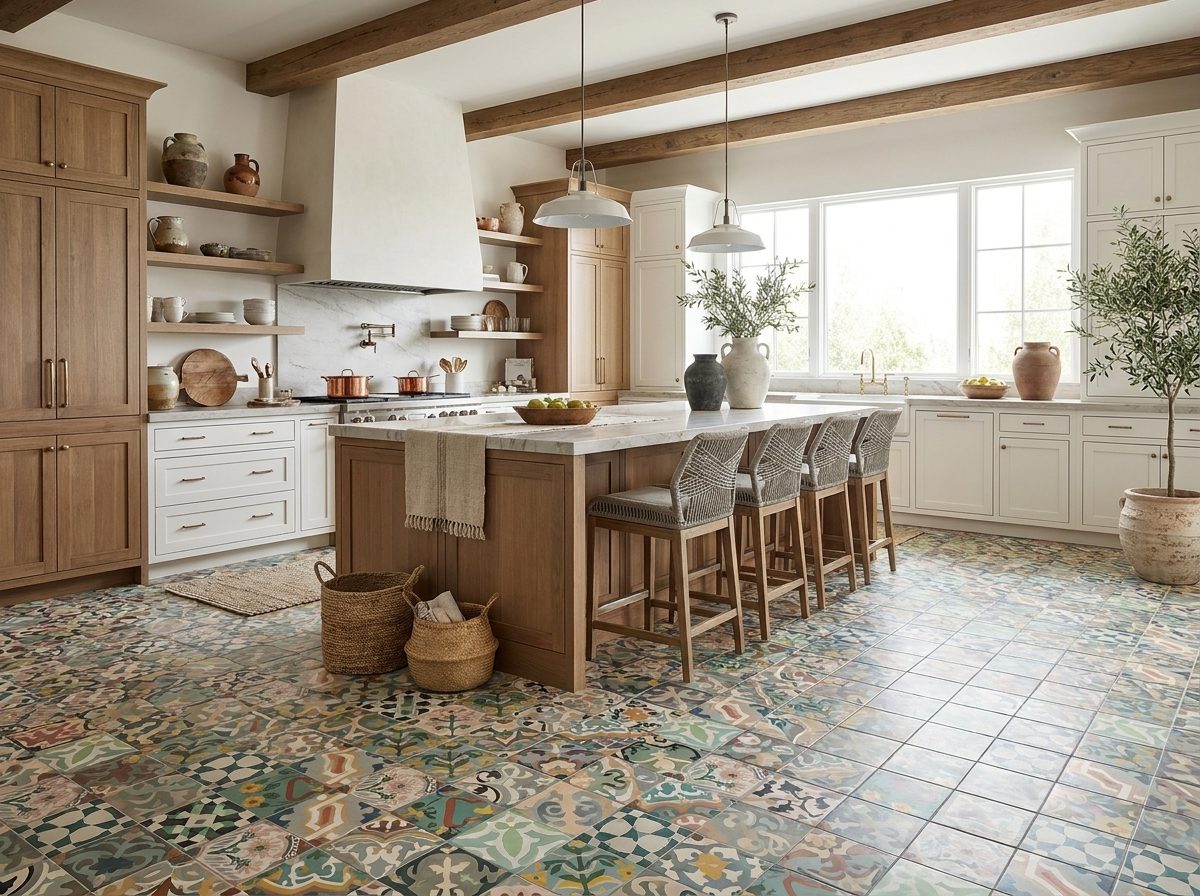
1) Mid-tone, multi-color patterns (the most forgiving)
Avoid very light solids and very dark solids—both show mess instantly. Mid-tone patterns camouflage:
- dust
- scuffs
- small debris
- day-to-day wear
Best for:
- main sales floor
- entry zone
- aisle paths
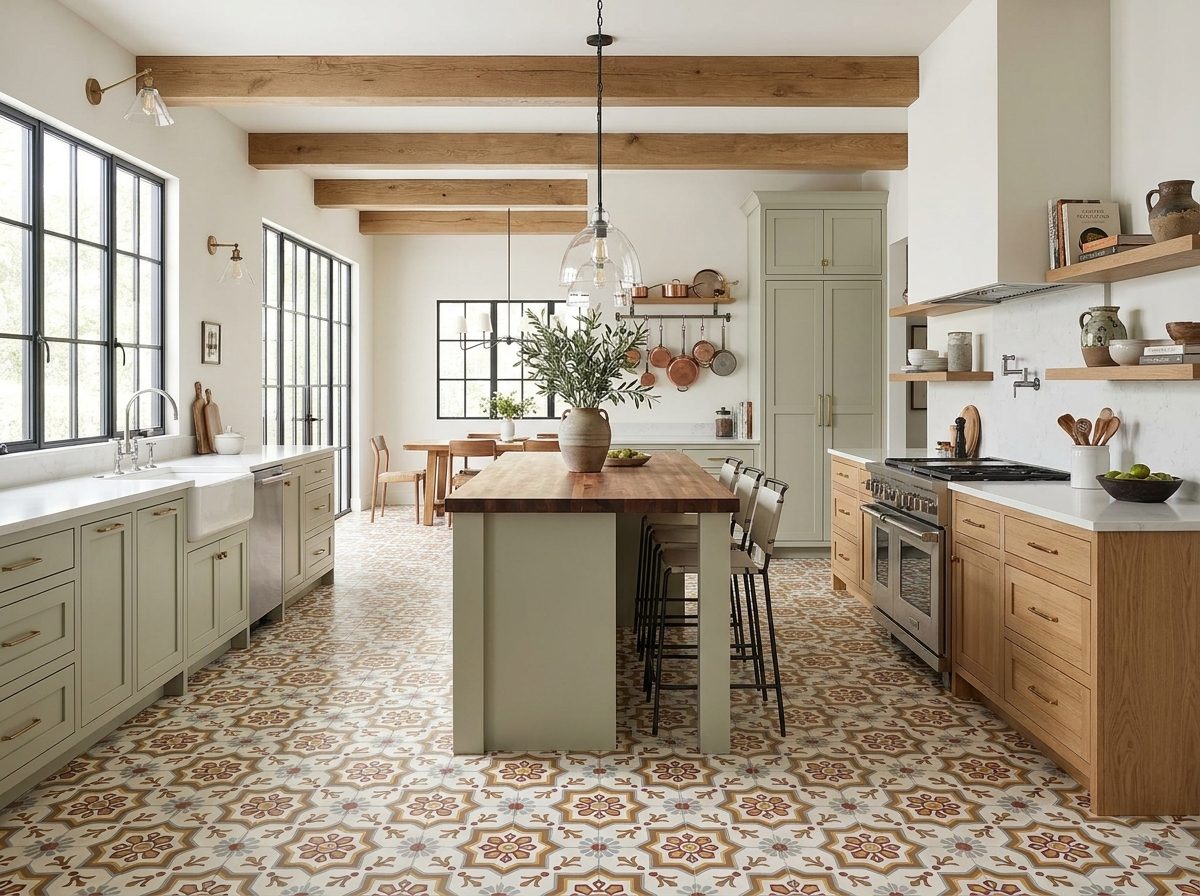
2) Geometric repeats (luxury, modern, and photogenic)
Geometry reads architectural, not decorative. It’s a strong choice for modern retail because it:
- looks premium
- supports clean merchandising
- photographs well
Best for:
- fashion boutiques
- skincare and beauty brands
- curated lifestyle stores
3) Border + field layouts (tile rugs that guide traffic)
This is a high-end commercial trick: use borders to create “zones” without walls.
- frame a feature display zone
- define a checkout area
- create a runway-style path to the hero product wall
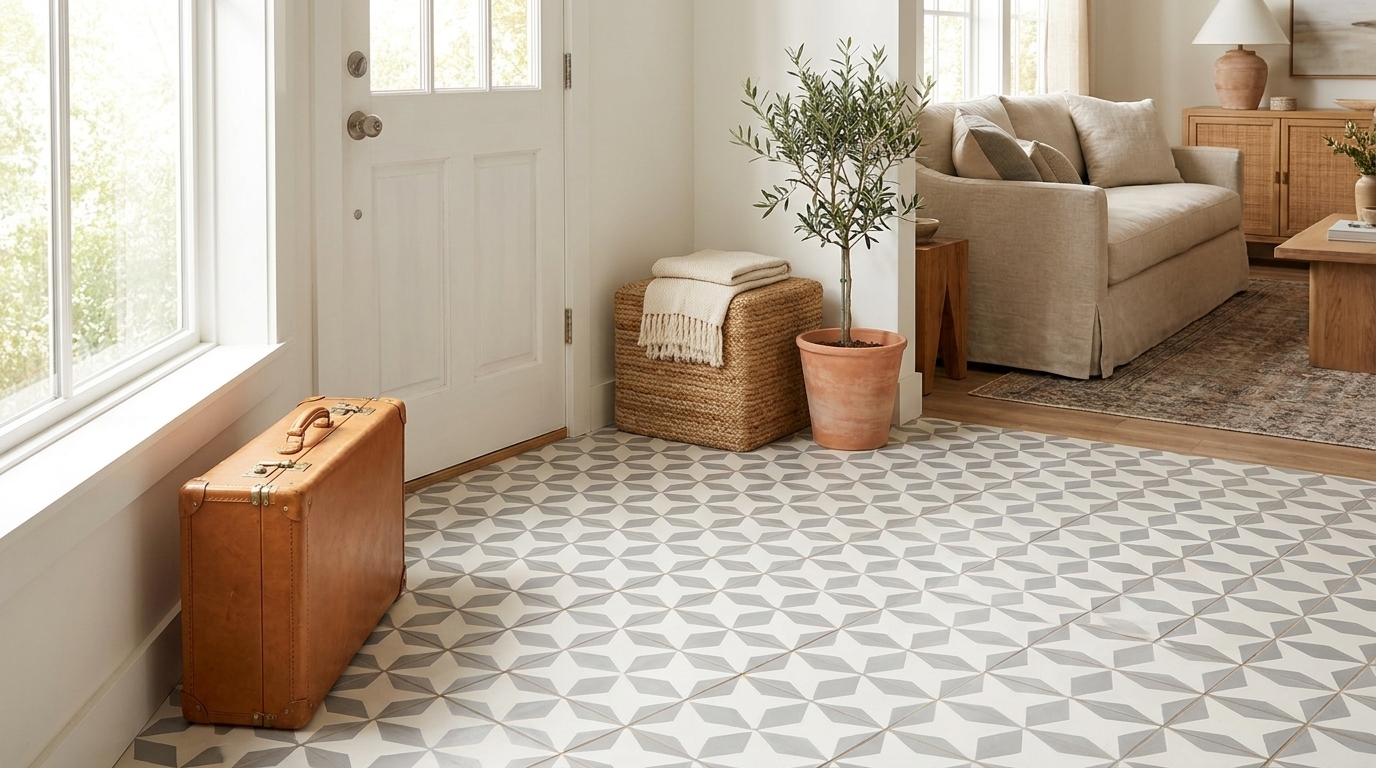
4) Tonal patterns (quiet luxury that hides wear)
Tonal patterns are ideal for premium stores because they don’t compete with product.
- subtle linework
- soft contrast
- texture-forward designs
Best for:
- jewelry
- premium apparel
- gallery-style retail
5) Vintage-inspired patterns (timeless and established)
Vintage patterns make a retail space feel “collected” and credible—especially when paired with modern lighting and minimal fixtures.
Best for:
- home goods
- artisanal brands
- heritage-inspired retail

Style Ideas & Trends for Retail Interior Design
Moroccan tiles: boutique energy that stops people at the door
Moroccan-inspired patterns create instant identity.
Use them in:
- entry zones
- feature walls behind hero product
- checkout “moment” floors
Design tip: keep most fixtures calm so the pattern reads curated, not chaotic.
Mediterranean tiles: relaxed luxury and warmth
Mediterranean-inspired palettes feel approachable and premium.
Perfect for:
- lifestyle and home brands
- coastal concepts
- natural skincare and wellness retail
Spanish-style tiles: heritage warmth that feels expensive
Spanish-style patterns add romance and depth.
Ideal for:
- artisanal brands
- fragrance and apothecary concepts
- stores in historic buildings
Pairing tip: Spanish-style motifs pair beautifully with terracotta tiles tones for warmth without visual noise.
Modern: minimal pattern, maximum intent
Modern retail floors often feature:
- tonal geometry
- black-and-white statements
- framed zones with borders
This also pairs well with terrazzo tile in adjacent areas if your store is part of a larger mixed-use space.
Contemporary: soft contrast and merchandising-first design
Contemporary retail floors aim to:
- support product photography
- keep the environment clean and bright
- add texture without visual clutter

Applications by Zone: Where Tile Matters Most in Retail
Entry (first impression + dirt control)
The entry is where grit hits first and where customers decide if the store feels premium.
Best strategies:
- mid-tone patterned entry zone
- framed “tile rug” layout
- mat system planned from day one
Main Sales Floor (the merchandising background)
Your main floor should:
- hide wear
- support product visibility
- feel consistent across the whole space
Mid-tone geometry or tonal patterns are ideal here.
Feature Wall / Hero Display Zone (the “photo moment”)
Design a zone where people naturally take photos.
Tile can frame this like a stage:
- border layouts
- pattern shift
- aligned geometry under the hero wall
Checkout Area (the “trust” zone)
Checkout is where customers decide the brand is legitimate.
A clean, premium floor under checkout reinforces quality.
Restrooms (brand detail, small footprint)
Restrooms are the perfect place to go bolder because it’s a smaller area.
Use patterned bathroom tiles to create a memorable “moment.”
Back-of-house transitions
Operational zones may require different materials, but you can still keep visual continuity using:
- related tones
- matching borders at thresholds
- coordinated patterns

Commercial Design Section: Retail + Restaurants + Hotels (The New Hybrid Spaces)
Many retail spaces now include hospitality:
- cafés inside stores
- tasting rooms
- hotel retail pop-ups
- brand showrooms connected to lounges
This is where tile strategy becomes powerful:
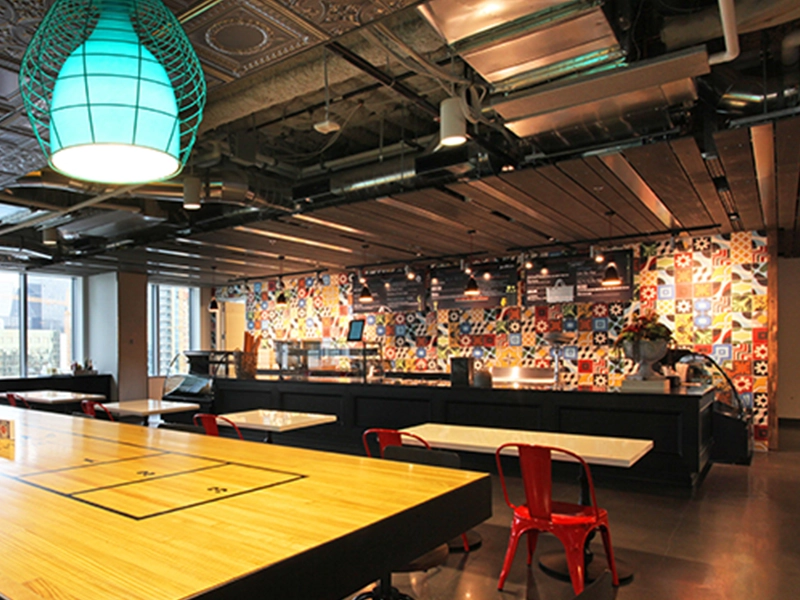
Retail + restaurant tile design
For a café or tasting counter, use pattern zoning:
- define the café footprint with a border
- use a mid-tone pattern to hide daily spills and traffic
- keep merchandising zones calmer
Retail + hotel lobby tiles
In boutique hotels, retail is often adjacent to the lobby.
Coordinated patterns can unify the experience:
- repeat one color from lobby to retail
- echo border logic
- keep pattern language consistent
If your brand wants signature flooring across multiple locations, custom work can be developed through Custom Tiles.
Cement Tile vs Ceramic Tile for Retail Stores
The cement tile vs ceramic tile decision is usually about brand identity vs operational simplicity.
Cement tile advantages (brand + premium feel)
Choose cement tile when you want:
- handmade depth and authenticity
- stronger pattern presence
- a boutique, custom look
- the ability to create signature designs
Ceramic/porcelain advantages (operations and extreme zones)
Choose ceramic/porcelain when you want:
- very low absorption
- simplified maintenance in extreme conditions
- certain BOH requirements
Many premium retail stores use both:
- cement tile in customer-facing identity zones
- porcelain in BOH or extreme wet areas

Installation & Maintenance: How to Keep Retail Floors Looking Premium
Installation essentials
Most long-term floor problems come from substrate prep and sealing mistakes—not the tile itself. Before installation starts, align your installer with cement-tile best practices.
Sealing and cleaning strategy (the reality plan)
For a retail store, the maintenance plan must be realistic:
- frequent grit removal (sweep/vacuum)
- pH-neutral cleaners
- quick cleanup for spills in café zones
- avoid harsh acids that degrade sealers
- train staff on approved cleaning habits
Mistakes to Avoid in Retail Tile Design
- Choosing very light solid floors in busy stores (shows every scuff)
- Choosing very dark solid floors (shows dust instantly)
- Using patterns that are too small in large spaces (visual noise)
- Not planning grout color (it changes the entire look)
- Skipping zoning and borders (store feels generic)
- Installing cement tiles box-by-box without blending (patchy appearance)
- Sealing errors (skipping steps, inconsistent sealing, wrong cleaning products)
- Ignoring entry mat strategy (grit destroys finishes over time)
Order Samples: Start with Cement Tiles In Stock
FAQs: Retail Stores Tile Design
1) What is the best tile for retail store floors?
The best retail store flooring tile balances durability, maintenance, and brand impact. Mid-tone patterned cement tiles are popular because they hide wear and elevate perceived product value.
2) Are cement tiles durable enough for retail stores?
Yes, when installed and sealed correctly. Cement tile is often used in guest-facing commercial environments because it combines premium aesthetics with long-term performance.
3) What tile patterns hide scuffs and dirt best in stores?
Mid-tone multi-color patterns, geometric repeats, tonal patterns, and terrazzo-inspired movement hide daily wear better than flat solid floors.
4) Do cement tiles need sealing in retail spaces?
Yes. Sealing improves stain resistance and long-term maintenance, especially in high-traffic zones and stores with frequent cleaning routines.
5) Can patterned cement tiles work in small boutiques?
Yes. Patterned floors can make small boutiques feel designed and premium—especially when you keep walls and fixtures calm.
6) Cement tile vs ceramic tile: what’s better for retail?
Cement tile often wins for brand identity and boutique character, while ceramic/porcelain often wins for simplified maintenance in BOH or extreme wet zones. Many stores use both strategically.
7) Can retail brands create custom tile designs?
Yes. Brands can create signature patterns and repeatable looks through Custom Tiles.
8) Do you have in-stock cement tile options for fast retail remodels?
Yes. Browse Cement Tiles In Stock and order samples to confirm color and pattern scale.