Most advice treats unglazed porcelain tiles like a cheaper version of porcelain, a plain surface you choose when you can't justify anything more refined. That framing misses the point. Unglazed porcelain is a performance choice, built for durability, density, and low porosity, and the question isn't whether it looks plain, it's whether your project needs a tile body that can take abuse without depending on a decorative glaze.
That shift matters because buyers often make the wrong comparison. They weigh it against glossy showroom tile instead of asking how the floor will behave under grit, moisture, and cleaning. If you're a designer, contractor, or homeowner trying to sort through product sheets, the useful questions are simpler, and much sharper. What is the tile body doing. Does it need sealing. Where does it outperform glazed tile, and where is it the wrong call.
Why Unglazed Porcelain Deserves a Second Look
Unglazed porcelain is easy to underestimate because it does not try to sell itself with surface decoration. There is no printed image layer, no glossy coating, and no visual trick meant to do the work for it. That restraint is the point. The category was developed as an engineered surface for wear, built to handle repeated use with the body of the tile doing the work, so the design conversation starts with performance and only then moves to appearance.
The right way to think about it
A lobby, a wet room, a terrace, or a commercial back-of-house space asks more from a tile than a showroom sample does. The surface has to resist staining, moisture, and abrasion, while still behaving predictably under traffic and cleaning. Unglazed porcelain earns its place in those settings because the body itself is doing the heavy lifting. In that sense, it is closer to a tool than a finish, a material chosen because it can take abuse without depending on a decorative layer to stay intact.
The history supports that reading. Unglazed porcelain emerged in Europe as a distinct industrial ceramic category at the start of the 20th century, with precursors in mid-19th-century low-porosity vitrified ceramics from northern Europe and pressed clay tiles produced in Stoke-on-Trent by the middle of the 19th century. A conservation guide also notes that it was produced in abundance in Europe from the beginning of the 20th century until the 1980s, and it still shows up regularly in public and private buildings, especially as interior floor covering (Opalis).
Practical rule: if a space needs a tile body that does the work rather than a surface treatment that masks the work, unglazed porcelain belongs on the shortlist.
That is the mindset this guide uses from here on. The next sections define the material, compare it with glazed porcelain, ceramic, and cement, then walk through installation and maintenance decisions so the product sheet makes sense in real project terms.
What Unglazed Porcelain Is

Unglazed porcelain is a dense, vitrified ceramic body pressed from fine powders and fired into a hard, low-porosity tile. The visible surface is the body itself, so the tile is not relying on a glass coating for its appearance or wear resistance. That difference matters in real projects, because scratches, traffic, and cleaning affect the body directly instead of a separate decorative layer.
For designers, this is a performance-first material with a plainspoken logic. The surface you see is the same material that gives the tile its strength, which is why unglazed porcelain can read more like a working surface than a cosmetic finish. A 12 x 12 porcelain tile with no glaze is still porcelain through and through, just without the added layer on top.
The number that tells you you're in porcelain territory
Modern porcelain tile is typically defined by water absorption below 0.5% under ISO 10545-3, and unglazed porcelain is classified as BIa fully vitrified porcelain with very low surface absorption and low body absorption. That low absorption is the reason the material performs well where moisture and staining are constant concerns. Less absorbed water means less room for stains to sink in, and less risk when the tile is used in exposed conditions.
A simple way to read the category is this. Glazed tile combines a body with a separate finish. Unglazed porcelain puts the visual and technical job into the body itself. Color, texture, and density are integral to the tile, so a chip or edge wear does not expose a different decorative layer underneath.
That is why the material shows up in demanding settings. A hotel lobby transition zone needs a tile that can take rolling luggage, grit, and repeated cleaning without going patchy. A frost-prone terrace needs a body that resists water entry. A commercial kitchen needs a surface that can handle moisture, scrubbing, and routine cleanup without depending on a fragile top layer.
What the body tells you in practice
The phrase fully vitrified is the clue specifiers look for. It means the body has been fired to a dense state where water has very little space to enter, so the tile behaves like a high-performance floor rather than a decorative surface with a separate skin. That is also why unglazed porcelain is often chosen for places where the tile itself has to carry the load.
If you want the shortest working definition, use this: unglazed porcelain is a dense, low-absorption tile with no glaze to wear off. Once that is clear, the spec sheet becomes easier to read and the trade-offs are easier to judge.
Unglazed vs Glazed vs Ceramic vs Cement
The faster way to sort these materials is to ask what job each one is built to do. Surface appearance matters, but the body, finish, and maintenance profile matter more once the tile is on a floor or wall that gets real use.
One comparison table worth keeping
| Tile Material Comparison at a Glance | Water Absorption | Slip Resistance | Best For |
|---|---|---|---|
| Unglazed porcelain | Very low, typically under 0.5% for porcelain overall, with BIa unglazed products below 0.1% on the surface and ≤0.3% in the body | Often strong when texture is built into the body | Heavy traffic, wet areas, exterior-adjacent spaces |
| Glazed porcelain | Low, but the visual layer is the glaze | Depends on surface finish | Pattern variety, controlled aesthetics, general interiors |
| Ceramic | Higher than porcelain in general use | Depends on glaze and texture | Light residential applications |
| Cement tile | Not a porcelain body, different care profile | Depends on finish and treatment | Handmade look, heritage interiors, decorative projects |
Unglazed porcelain came out of a technical need to make a dense, low-porosity tile body that could handle wear without relying on a surface coating. That lineage goes back to the development of low-porosity vitrified ceramics in northern Europe, as discussed in the Qualicer paper on the subject. The category was engineered to solve a wear problem rather than imitate another material.
Glazed porcelain is the better fit when the design needs printed pattern, a stone look, a wood look, or a tightly controlled surface appearance. Ceramic usually makes sense where loads are lighter and the project can prioritize appearance and cost over harder technical performance. Cement gives a matte, handmade character that works well in heritage or expressive interiors, but it belongs to a different care and installation family altogether.
Unglazed porcelain is strongest when the brief values through-body consistency, low porosity, and a surface that can take abrasion without revealing a different layer underneath. That is why it turns up so often in public interiors and floors that are meant to be used, not just looked at.
For a compact product example, see this 12 x 12 porcelain tile format from Original Mission Tile, used in a direct, practical way. The point is not that one size wins, it is that the format and the material should match the traffic and the visual goal.
Unglazed porcelain is often chosen when a floor needs to read calm rather than precious. That calmness comes from the body itself, not from a decorative layer on top.
How to Specify Unglazed Porcelain
A strong specification starts with the facts that affect performance, not the language printed on the front of the data sheet. With unglazed porcelain, the key questions are wear, water, edge treatment, and finish. Get those four right and the rest of the decision becomes much easier.

Read the sheet in this order
Start with water absorption. If the product is in porcelain territory, you are looking for the low-absorption behavior that supports wet areas and exterior-adjacent use. That reading is the first clue that the body is dense enough for harder service.
Then move to the mechanical data. One technical product sheet for unglazed porcelain reports modulus of rupture ≥35 N/mm², breaking strength ≥1,300 N, deep abrasion <175 mm³, and passing ASTM C1026 freeze-thaw resistance (Belletto spec sheet).
Those values matter because they tell you how the tile handles point loads, grit, and seasonal stress. A dining room floor in a restaurant needs different priorities than a bathroom floor in a residence. The body has to survive chairs, carts, sand, or repeated cleaning without looking tired too soon.
The terms that cause confusion
Full-body, color-body, and through-bodied all try to describe how the color runs through the tile. In practice, the more consistent the body color, the less a chip stands out. That does not make the tile chip-proof, but it does make wear less visually distracting.
Finish matters too. A matte or textured unglazed surface usually behaves differently from a smoother one, especially in wet zones. If you are evaluating a master bath, a spa shower, or a pool deck, do not look only at the catalog image. Ask how the surface feels underfoot, how it sheds dirt, and what the grout lines will do to maintenance.
Specifier's habit: read mechanical strength before you fall in love with a color. The color can persuade you, the test data should decide you.
For substrate coordination, pair the tile with the right prep material and underlayment. This guide to choosing floor underlayment for tile is a useful companion when you are checking whether the base is ready for a fully vitrified floor.
If you are trying to separate a suitable product from a risky one, keep the decision frame simple. Absorption tells you moisture behavior. Strength tells you how the tile will take abuse. Finish tells you how it will live in the room. Everything else is secondary.
Installation and Substrate Preparation
Unglazed porcelain rewards careful prep. The tile can be excellent, then fail in service because the base is out of plane, the mortar choice does not match the product, or the movement plan was never coordinated. The blame often lands on the tile, but the weak point is usually the layer beneath it.
A clean install starts with the substrate. Flatness matters because large-format pieces will telegraph any dip or hump, and poor mortar coverage shows up as a hollow sound or a stressed edge later on. Lippage is easier to see on matte, low-sheen surfaces because the light catches the shadow line between tiles, which is why minor height variation can look worse here than it does on glossy tile.
Movement joints need equal attention. Fully vitrified porcelain is hard-wearing, but the assembly around it still moves, and the floor has to be detailed for that movement. If the base flexes, or if expansion points are ignored, grout cracking and edge failure can follow even when the tile itself is sound.
Moisture checks belong in the prep stage too. When you are working over wood or drywall in adjacent construction conditions, a practical reference like this moisture meter reading for wood and drywall from Eagle Restoration can help a team confirm the substrate is ready before tile work begins. For substrate coordination, pair the tile with the right prep material and underlayment. This guide to floor underlayment for tile is a useful companion when you are checking whether the base is ready for a fully vitrified floor.
What a good install looks like
Use the adhesive the manufacturer specifies for fully vitrified porcelain, not a generic product chosen by habit. Comb the mortar so the ridges collapse properly, back-butter when the format calls for it, and verify coverage instead of trusting the look of the finished surface alone. Then set the grout width to suit the edge condition, because rectified edges and tight joints behave differently from softer pressed edges.
Batching from multiple boxes also matters. Unglazed porcelain can show slight variation in tone or texture from piece to piece, so installers should mix cartons before setting rather than clustering similar pieces in one area. That keeps the field visually calm and avoids accidental banding.
On a jobsite, the tile rarely fails first. The prep does.
A practical checklist starts with flatness, movement joints, adhesive compatibility, coverage, and moisture status. Get those right, and the tile has a fair chance to perform the way it was engineered to.
Cleaning, Sealing, and Long-Term Care
The sealing debate around unglazed porcelain gets messier than it should because people use the word unglazed to mean two different things. Some product bodies are so dense that they behave well without sealing, and some installations still benefit from a penetrating sealer because of grout haze risk, matte finish texture, or exposure to staining food and drink. The correct answer depends on the specific product and the way it's installed, not on the label alone.

The maintenance routine that actually works
For daily care, use a neutral pH cleaner and a microfiber mop or pad. Clean spills promptly, especially oils, dyes, and sticky residues, because the grout lines and surface texture are usually more vulnerable than the porcelain body itself. Avoid abrasive pads and harsh cleaners that can dull the surface over time.
If you decide to seal, use a penetrating sealer suited to the tile and to the grout, then follow the manufacturer's maintenance guidance rather than guessing. Some buyers expect sealing to transform the tile into a no-care surface. It doesn't. It just gives you another layer of defense in specific conditions.
The cost conversation is often overblown. One industry estimate puts the 20-year maintenance cost gap between glazed porcelain and sealed unglazed porcelain at under $200 for a 200-square-foot floor, though that figure depends heavily on body composition, installation, and exact product type (Cletile). Read that as a directional comparison, not a universal promise.
Where sealing earns its keep
- Grout haze zones: light, matte floors can show residue more clearly than glossy surfaces.
- Food and beverage areas: kitchens and hospitality service zones see more staining risk.
- Exterior-adjacent entries: tracked-in grit and moisture make stain control more important.
- Questionable product bodies: if the exact tile has higher absorption behavior than expected, sealing can be useful.
For a broader cleaning protocol, this guide to cleaning porcelain floor tiles is a useful companion when you're setting up a routine for staff or homeowners.
Best-Fit Projects and Use Cases
Unglazed porcelain makes the most sense when the brief asks for a floor that is direct, durable, and visually quiet. It is a deliberate performance choice, not a fallback, and it fits projects where the surface has to keep earning its place after years of use.

Where it fits naturally
Hospitality lobbies are a natural match because the floor has to handle constant traffic, carts, and repeated cleaning without looking fragile. Restaurant kitchens also fit well, provided the tile selection and installation details match the conditions. Spa showers, wet corridors, and pool-adjacent floors can work too, as long as slip behavior and low absorption are both part of the specification.
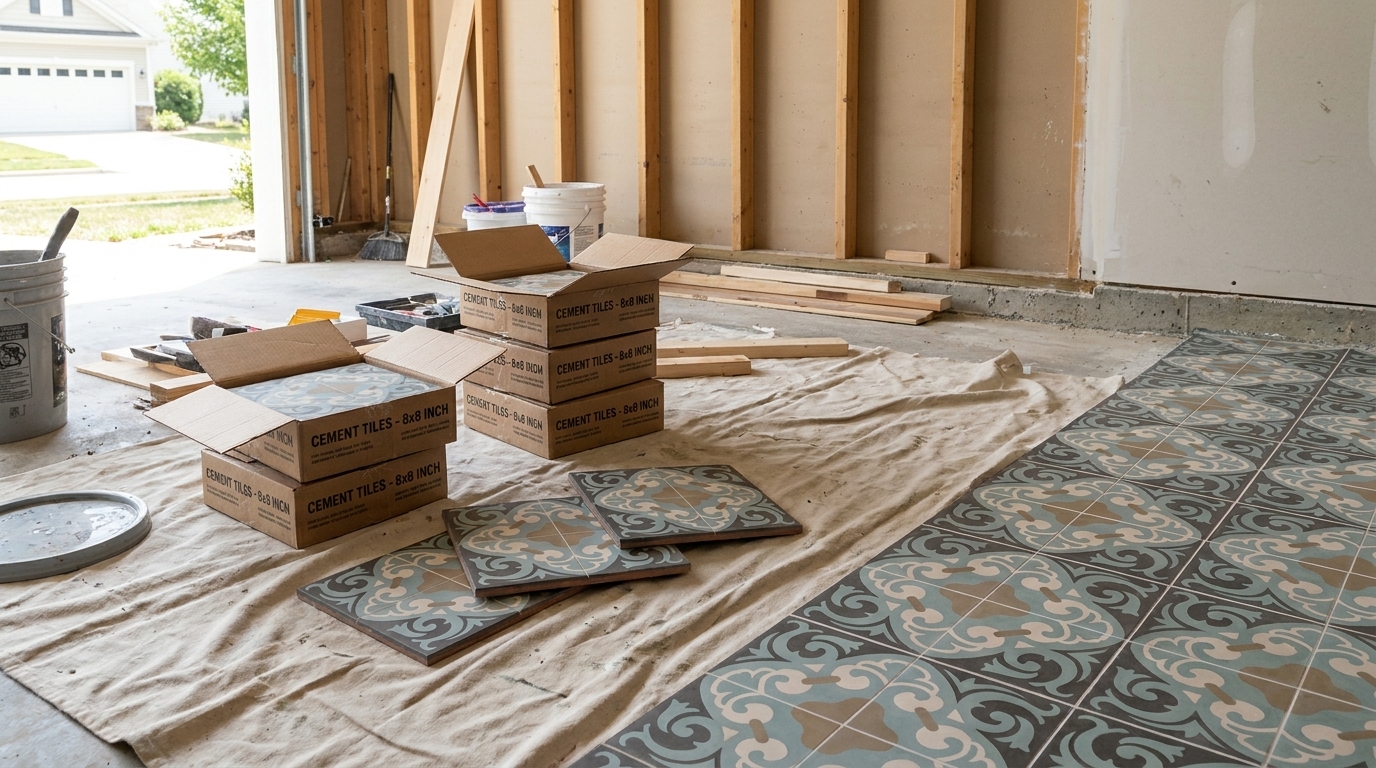
Garage and basement floors are more conditional. The tile body may be suitable, but the substrate, moisture, and drainage conditions need to be checked before anyone commits. Light residential interiors are also viable, especially when the homeowner wants a calm, material-first floor instead of a busy visual statement.
A conservation guide notes that unglazed porcelain was produced in abundance in Europe from the beginning of the 20th century until the 1980s and is still frequently found in private and public buildings, especially as interior floor covering (Opalis). That history matters because it shows the material has already spent decades under real use, not just in showroom conditions.
Where to be cautious
Projects that depend on bold print, strong stone mimicry, or a highly decorative surface usually suit glazed porcelain better. If the design is chasing the soft, handmade character of cement tile, unglazed porcelain will not supply that look. It can be honed or polished in some product lines, but the material still reads as a performance surface first.
For one-off custom floors, designers sometimes use a practical field tile in one area and a decorative accent elsewhere. Original Mission Tile also works with handmade cement tile for floors, walls, showers, and backsplashes, which can help when another part of the project needs a different visual language. That is a different category, and it helps clarify why unglazed porcelain is chosen where durability and restraint matter most.
For a broader budget context, the 2026 bathroom renovation price guide can help frame where tile spend sits relative to the rest of the room, even though tile selection itself should still be judged on performance first.
Decision Checklist and Common Questions
Before you approve a quote, ask seven things. Traffic level. Water exposure. Finish texture. Slip needs. Edge condition. Body color consistency. Maintenance plan. If any one of those is vague, the decision isn't finished yet.
For a renovation budget conversation, this 2026 bathroom renovation price guide can help frame where tile spend sits relative to the rest of the room, even though tile selection itself should still be judged on performance, not only cost.
The questions people ask last
Does unglazed porcelain need sealing? Sometimes, but not always. The right answer depends on the exact product body, the grout, and the room conditions.
Can it be polished? Some products can be honed or finished differently, but you need to check the specific line. Don't assume every unglazed tile behaves the same way.
Is it suitable outdoors? It can be, especially where low absorption and freeze-thaw behavior matter, but the setting and installation still have to be right.
Is it good for commercial kitchens? Often yes, if the surface texture, slip behavior, and maintenance plan match the job.
If you're comparing quotes today, ask for the test data, the edge profile, the maintenance instructions, and the substrate requirements in writing. That's how you keep a tile selection from becoming guesswork.
If you're weighing unglazed porcelain against other tile options, Original Mission Tile can help you think through the material side of the project with practical installation and maintenance guidance, plus design support for surfaces that need to work in the real world. Visit Original Mission Tile to explore tile options and talk through the right fit for your floor, wall, or feature surface.