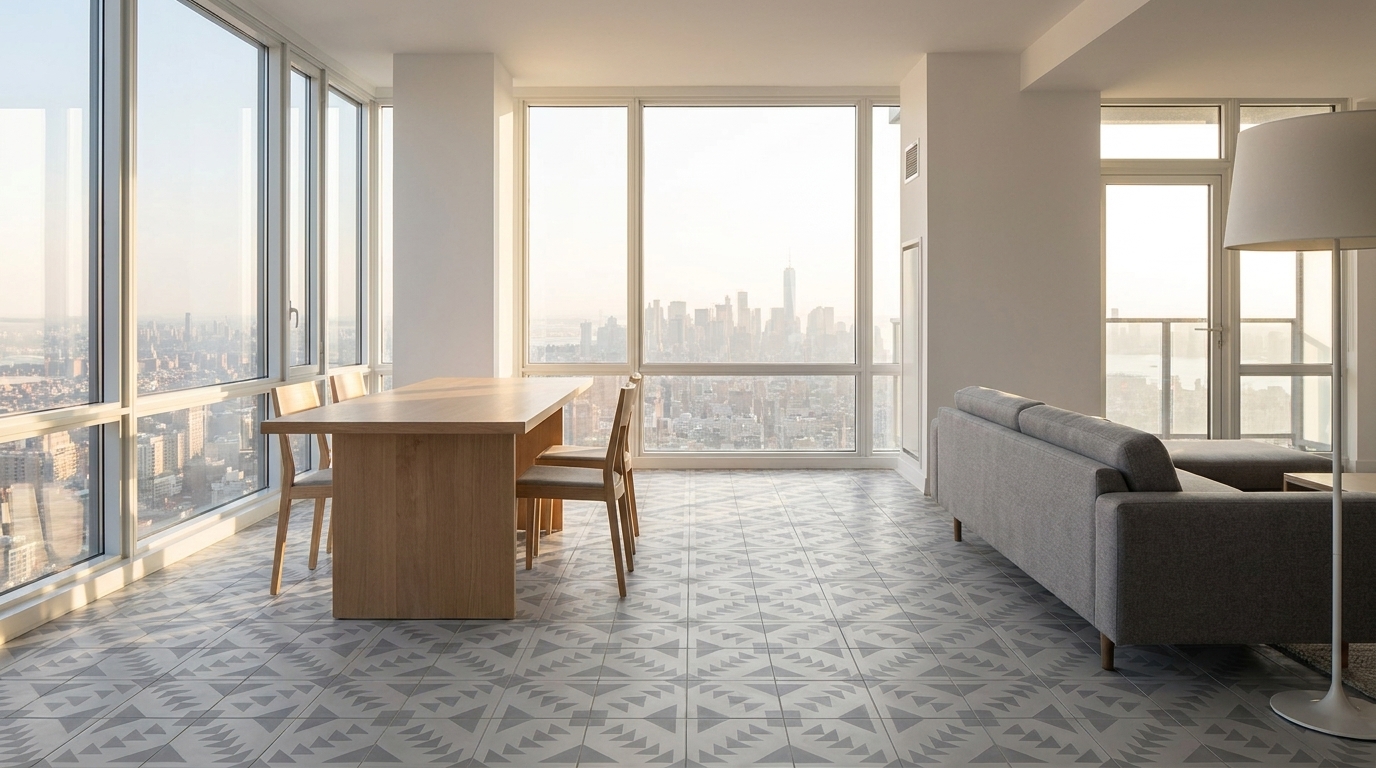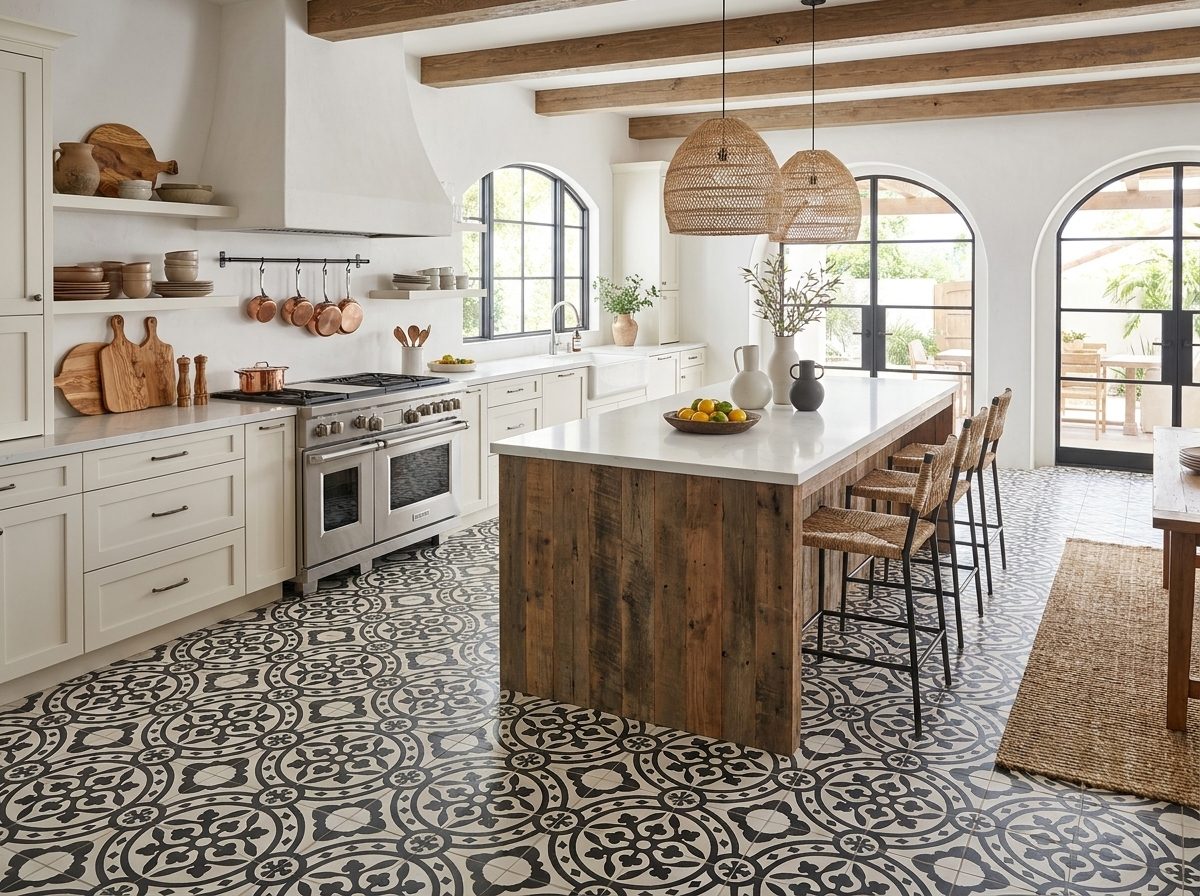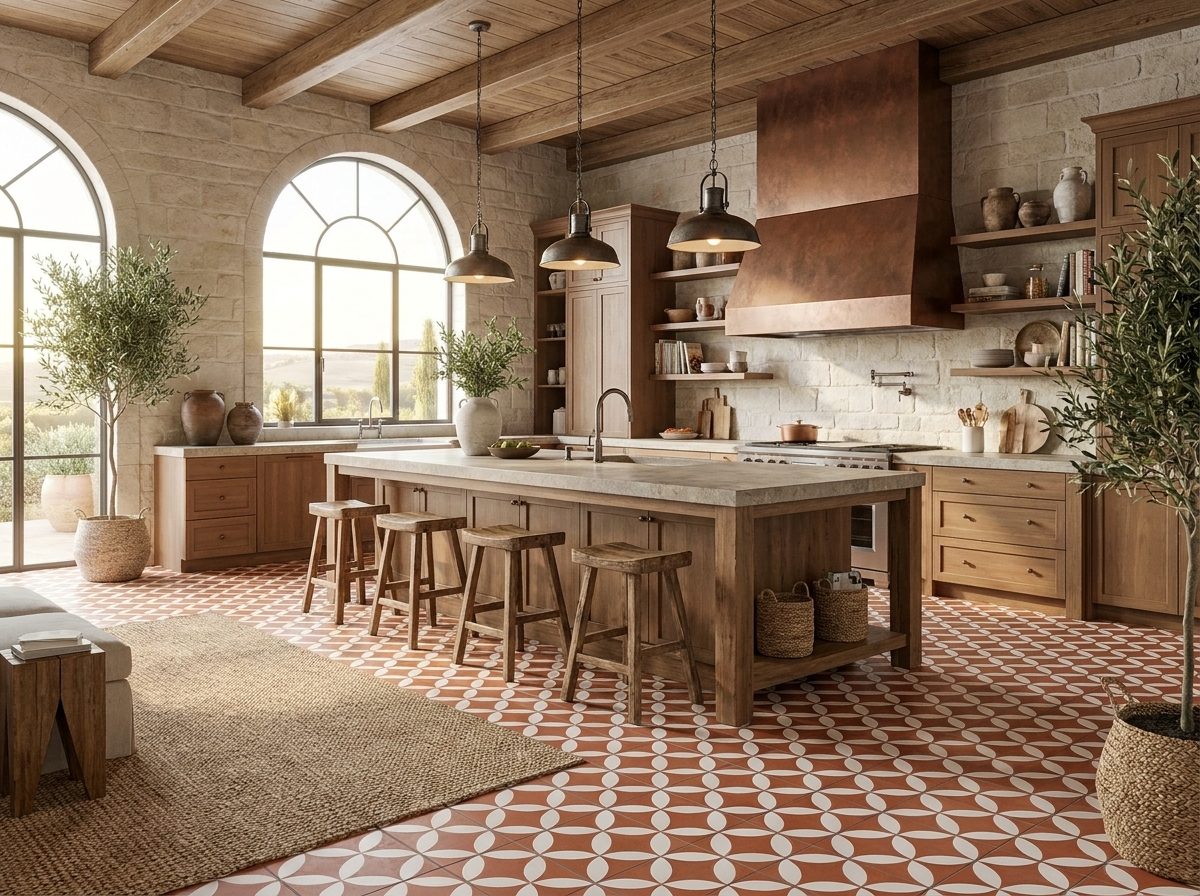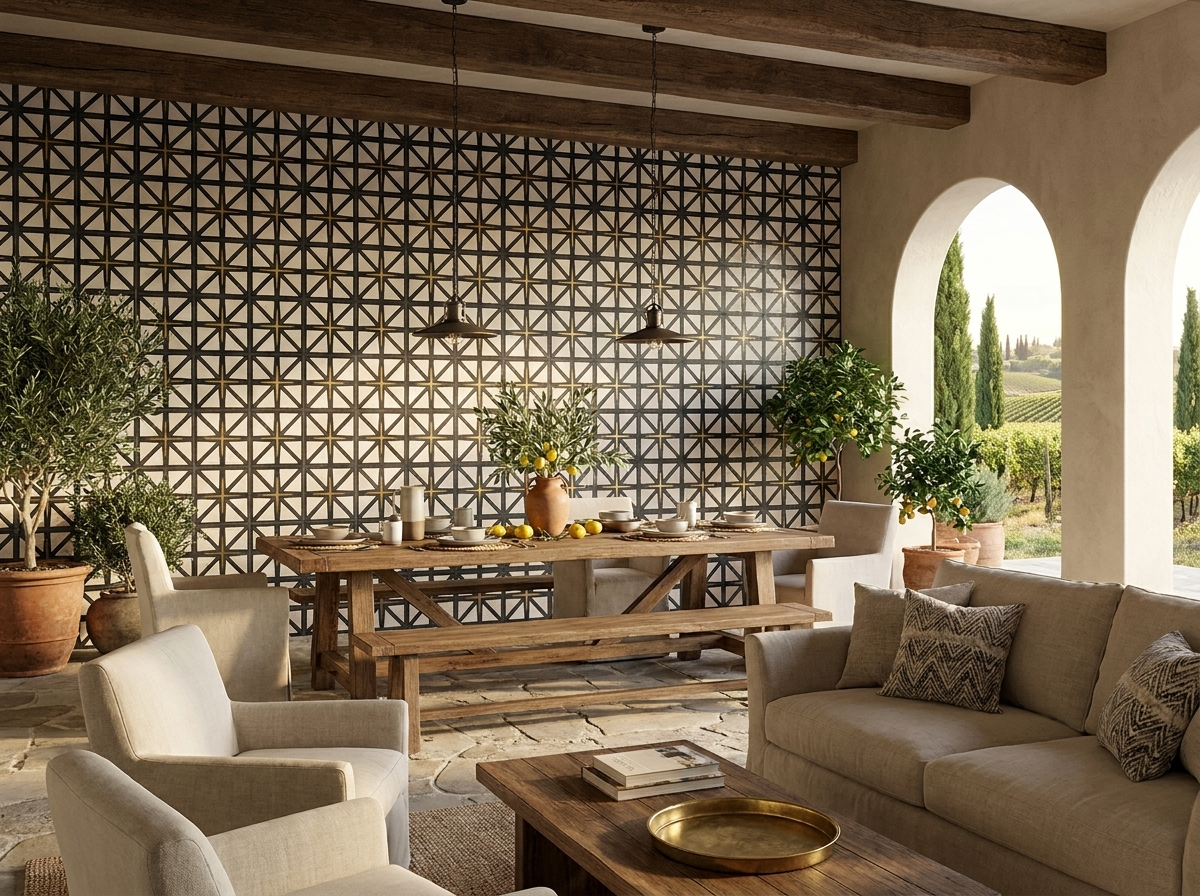
For years, walls played a supporting role in tile design. Floors carried the pattern. Walls simply provided a clean backdrop, usually in plain white or a single neutral tone. In 2026, that hierarchy is reversing.
Designers, contractors, and homeowners are increasingly treating walls as a primary design surface, not an afterthought. A patterned wall now does what a patterned floor has always done: it sets the mood of a room, signals craft and intention, and gives a space a personality that flat, neutral surfaces simply cannot achieve.
This shift matters because walls offer something floors don’t. They sit at eye level, where pattern, texture, and color are experienced up close and constantly. They’re also lower-traffic, which means more design freedom and fewer durability compromises. This guide explores why walls are having their moment in 2026, plus the specific kitchen, bathroom, and outdoor applications driving the trend.

Why Wall Tile Is Having a Breakthrough Year
Several forces are converging to push walls into the design spotlight this year.
First, homeowners are spending more time at home than they did a decade ago, and that shift has made eye-level surfaces feel more important. A wall you see every day, at close range, deserves the same consideration as a floor you walk across.
Second, walls interact with light differently than floors. Specifically, when lit from the side, a textured or patterned wall tile creates shadow and depth that shifts throughout the day. As a result, a single wall can feel like a living, changing surface rather than a static backdrop.
Third, walls carry lower maintenance demands than floors. Because foot traffic and spills aren’t a concern, designers have more freedom to specify bold patterns, intricate geometry, or dimensional textures without worrying about wear.
Kitchen Wall Tile Trends: The Backsplash Becomes Art

From Splash Guard to Focal Point
The kitchen backsplash has fully shed its purely functional identity. Instead, it’s become one of the most photographed and shared design elements in kitchen renovations this year. Bold Moroccan geometric patterns in deep navy or terracotta are appearing behind simple white cabinetry, allowing the tile to function almost like a piece of art mounted on the wall.
Moreover, under-cabinet lighting plays a critical role here. When light rakes directly across a patterned cement tile backsplash, it amplifies the natural texture and variation of the handmade surface in a way flat, printed tile simply cannot replicate.
Full Wall Treatments Beyond the Backsplash
Some of the most striking 2026 kitchens extend pattern beyond the standard backsplash zone entirely. For example, a patterned cement tile wall might run from countertop to ceiling on a single feature wall, rather than stopping at the typical 18-inch backsplash height. Consequently, the kitchen gains a dramatic focal point that anchors the entire room’s design.
Explore kitchen-ready wall patterns in the In-Stock Collection.
Bathroom Wall Tile Trends: Creating Sanctuary at Eye Level

Feature Walls Behind Tubs and Showers
Bathroom walls are seeing some of the boldest design moves of any room category in 2026. Specifically, designers are tiling the wall directly behind a freestanding tub in a pattern that extends from the floor, creating an immersive, enveloping effect. This technique transforms a functional bathing area into a genuine design destination within the home.
Similarly, shower walls are receiving the same treatment. A patterned cement tile shower wall, paired with proper waterproofing and a wet-area sealer, delivers both durability and visual richness in a space that’s traditionally been treated as purely functional.
Powder Rooms: The Ultimate Wall Tile Canvas
Powder rooms offer homeowners one of the lowest-risk, highest-impact opportunities to experiment with bold wall tile. Because the space is small, a fully tiled wall — floor to ceiling, in a striking encaustic pattern — creates a memorable jewel-box effect without requiring a large material investment.
Additionally, guests experience powder room walls up close, which means the handmade quality and natural variation of cement tile becomes immediately apparent. This close-range visibility is part of why powder rooms have become such popular testing grounds for adventurous tile choices.
Patio and Outdoor Wall Tile Trends

Breeze Blocks as the New Outdoor Wall Statement
Outdoor walls are experiencing their own pattern renaissance in 2026, largely driven by cement breeze blocks. Unlike flat patterned tile, breeze blocks introduce dimensional depth and filtered light, casting shifting shadow patterns across a patio throughout the day.
The 8×8 Breeze Block Collection is particularly well-suited to covered terraces and outdoor screen walls. Furthermore, these blocks provide privacy and ventilation simultaneously, making them both a design statement and a functional architectural element.
Patterned Cement Tile Accent Walls Outdoors
Beyond breeze blocks, flat patterned cement tile is also appearing on covered outdoor walls — behind an outdoor kitchen, along a courtyard wall, or as a backdrop to an outdoor dining area. Moroccan and Mediterranean geometric patterns, in particular, hold up beautifully outdoors because they’ve historically lived in courtyards and terraces for centuries.
For outdoor wall applications, always confirm the tile and adhesive are rated for the specific climate and exposure conditions involved. Browse outdoor wall applications in the Projects Gallery.
Living Spaces and Beyond: Walls as Architecture

Feature Walls in Living Rooms and Bedrooms
Beyond kitchens, bathrooms, and patios, patterned cement tile walls are appearing in living rooms and primary bedrooms as standalone feature elements. Often positioned behind a sofa, bed, or fireplace, these walls function similarly to a piece of furniture or artwork — they anchor the room’s design without requiring any additional decoration.
In contrast to busier rooms like kitchens, living spaces tend to favor more restrained pattern choices. A tonal geometric design, where pattern and background share a similar color family, creates depth and texture without overwhelming the room.
Combining Wall Tile With Cement Floor Tile
One of the most sophisticated trends in 2026 design pairs a patterned wall with a complementary patterned floor — using the same material family throughout a room. Because both surfaces share the same handmade cement quality, the combination feels intentional rather than mismatched.
Use the Design Studio to test wall and floor pattern combinations together before finalizing a specification. This step helps homeowners and designers visualize the full effect before ordering physical samples.
Practical Guidance for Specifying Wall Tile in 2026
Successfully specifying patterned wall tile requires a few additional considerations beyond standard floor tile installation.
Plan your lighting alongside your tile. Because raking light dramatically amplifies texture and pattern depth, the lighting design and tile specification should happen together, not sequentially. A wall washed in flat, frontal light loses much of its dimensional impact.
Confirm substrate weight capacity. Cement tiles are heavier than standard ceramic, so any wall application — particularly floor-to-ceiling installations — requires confirmation that the substrate can support the additional weight.
Use a high-bond, non-slip adhesive. Wall applications require a different adhesive specification than floor installations. Therefore, always confirm the adhesive is rated specifically for vertical use before beginning installation.
Waterproof wet-area walls properly. For shower walls and other wet applications, proper waterproofing behind the substrate is non-negotiable. Additionally, specify a penetrating sealer formulated for continuous moisture exposure.
For wall tile projects requiring a specific pattern or colorway not available in the standard range, the Custom Made Collection supports bespoke development with the Original Mission Tile design team.
FAQ: 2026 Wall Tile Trends

Can the same cement tile pattern work on both floors and walls? Yes, and this combination is increasingly popular in 2026. Using the same pattern on both surfaces creates a cohesive, immersive effect, particularly in bathrooms where the floor pattern extends up a feature wall. However, always confirm the wall installation uses an appropriate vertical adhesive.
Is patterned wall tile more expensive than patterned floor tile? The material cost is typically similar. However, wall installations may require additional labor for substrate preparation and waterproofing, particularly in wet areas like showers. For dry applications like kitchen backsplashes or living room feature walls, installation costs are comparable to floor tile.
What’s the best room to start with for a first wall tile project? Powder rooms and kitchen backsplashes are the most accessible starting points. Both involve a smaller surface area, lower material cost, and immediate visual impact, making them ideal introductions to bold pattern for homeowners or clients who are new to handmade tile.
Do breeze blocks count as wall tile? Breeze blocks are a related but distinct product category. While standard cement tile is flat and typically used for backsplashes or feature walls, breeze blocks are three-dimensional masonry units that allow light and air to pass through. They’re particularly popular for outdoor screens, partitions, and patio walls.
Conclusion: The Wall Is No Longer an Afterthought
The biggest shift in tile design for 2026 isn’t a specific color or pattern. It’s a change in where designers are choosing to spend their creative energy. Walls, once treated as simple backdrops, are now receiving the same level of intention and craft that floors have always commanded.
Handmade cement tiles are particularly well-suited to this shift. Their mineral pigments create depth that’s visible up close, their patterns draw from design traditions with genuine staying power, and their range of applications — from kitchen backsplashes to outdoor breeze block screens — gives homeowners and designers room to experiment across nearly every part of a home.
If your next project still treats walls as an afterthought, 2026 is the year to reconsider. Furthermore, the wall might just become the most memorable part of the room.
Ready to bring bold wall tile into your next project?
Explore wall-ready patterns in the In-Stock Collection, discover outdoor screen options in the 8×8 Breeze Block Collection, or develop a custom design through the Custom Made Collection.
Contact the Original Mission Tile design team for samples and expert guidance →