Bathroom, Kitchen & Floor Tile Trends
Here’s the uncomfortable truth about your renovation plan: the tile choices that felt fresh three years ago are already dating your space — and the choices that will define 2026 are nothing like what you’re probably considering.
Interior design in 2026 is not a subtle evolution. It is a full-throated rejection of the safe, the sterile, and the interchangeable. The all-white kitchen that once felt crisp and modern? It now reads as risk-averse. The beige bathroom that was supposed to be timeless? It’s become the definition of forgettable. The plain floor tile that was meant to let everything else shine? It’s doing exactly that — by disappearing entirely.
What’s replacing it is something far more exciting, and far more enduring. The tile trends shaping bathrooms, kitchens, and floors in 2026 are rooted in centuries of global craft tradition — in the intricate geometry of Moroccan tiles, the sun-drenched warmth of Mediterranean tiles, the earthy depth of terracotta, and the unmatched character of handmade cement tiles pressed by artisan hands from natural materials. These are not trends that will feel dated in three years. They are design decisions that appreciate over time, like all things made well and made to last.
Whether you’re a homeowner planning a kitchen remodel, an interior designer sourcing materials for a residential project, an architect specifying tile for a boutique hotel lobby, or a contractor looking for durable commercial floor tiles for a restaurant build-out — this is the 2026 tile trend guide that covers every room, every application, and every design direction you need to know.

The Design Forces Driving 2026 Tile Trends
Before diving into the specific trends room by room, it’s worth understanding the broader design forces shaping the 2026 tile landscape. Three major currents are converging to produce this moment.
The craft revival. After years of mass-produced, digitally printed surfaces, designers and consumers are craving the irreplaceable quality of handmade materials. Encaustic cement tiles — made by hand from natural pigments, marble powder, and cement — represent the highest expression of this revival. Their slight variations, their depth of color, and the visible evidence of human making are not imperfections but the very qualities that make them desirable.
The warmth imperative. Cool, gray, minimalist interiors have given way to a collective hunger for warmth. Earthy tones, saturated colors, and materials that reference the natural world — terracotta, ochre, deep indigo, aged cream — are dominating every room in the home and every category of commercial design.
The personalization premium. In 2026, the most design-forward spaces are the ones that look like no one else’s. Custom tiles — reproduced patterns, brand-specific designs, personally curated color palettes — are no longer a luxury reserved for high-end projects. They are an accessible and increasingly expected dimension of serious design work.
All three of these forces find their fullest expression in handmade cement tiles — which is why they are at the center of 2026’s most compelling interior design projects.
Bathroom Tile Trends 2026: From Functional to Extraordinary
The Pattern-Forward Bathroom
If there is one room where 2026’s design maximalism is playing out most completely, it’s the bathroom. After years of white subway tile, frameless glass, and relentless minimalism, bathroom tile trends in 2026 are demanding pattern — rich, complex, globally inspired pattern that transforms a functional space into an experience.
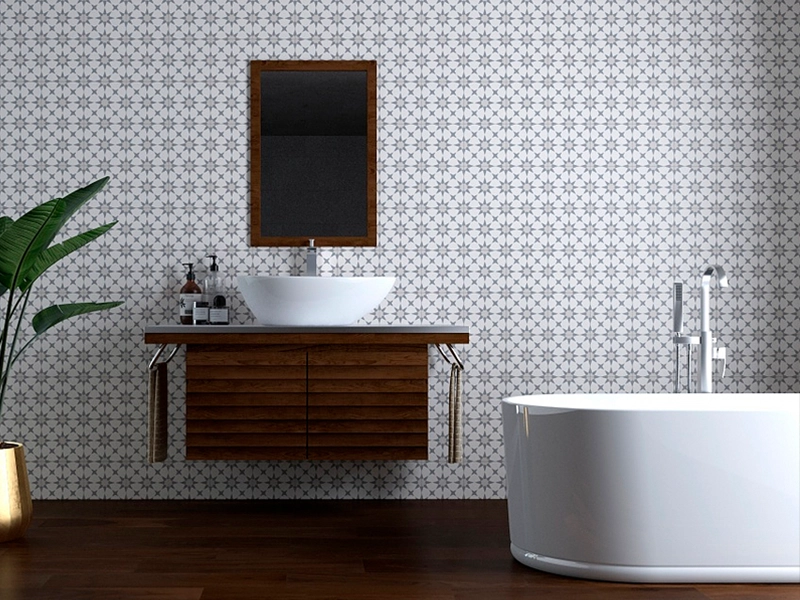
Moroccan tiles are leading this shift. The intricate star-and-cross geometry of traditional Moroccan encaustic tiles, rendered in contemporary color palettes — deep navy and chalk white, warm terracotta and dusty rose, forest green and aged gold — is appearing on bathroom floors, feature walls, and full shower enclosures with a confidence that signals a genuine, long-cycle trend.
Mediterranean tiles are the warmer counterpart, bringing coastal blues, sandy neutrals, and geometric floral patterns into bathrooms that feel as though they’ve been lifted from a sun-drenched villa on the Amalfi Coast. Spanish-style tiles with bold geometric borders and terracotta-family color palettes are defining bathrooms that balance pattern richness with natural material warmth.
Shower Wall Tiles: The New Feature Wall
The shower has replaced the accent wall as the primary design statement in the contemporary bathroom. Shower wall tiles in handmade cement tile — fully patterned from floor to ceiling, properly sealed for moisture environments — create immersive, spa-quality experiences in residential bathrooms that were previously only possible in luxury hospitality settings.
The key to making cement shower wall tiles work is proper sealing (a penetrating sealer plus a topcoat, reapplied as directed) and careful grout joint management. Done correctly, a fully patterned cement tile shower is one of the most visually powerful, materially authentic design moves available to any bathroom designer.
Color Direction for 2026 Bathrooms
The dominant bathroom tile color story for 2026 is warm, deep, and saturated. Rich terracotta, aged sage, warm charcoal, deep indigo, dusty mauve, and sun-bleached sienna are replacing the cool grays and sterile whites of recent years. These colors, rendered in the natural pigments of handmade cement tiles, have a depth and warmth that no ceramic or porcelain equivalent can replicate.
Looking for the patterns driving this shift? Browse our full decorative cement tile collection and find your 2026 bathroom direction.

Kitchen Tile Trends 2026: Backsplash, Floor, and Beyond
Kitchen Backsplash Tiles: Finally, Something Worth Looking At
The kitchen backsplash is the most visible and most frequently renovated tile surface in the home, and in 2026 it is finally getting the design attention it deserves. Kitchen backsplash tiles are moving definitively away from the subway tile default and toward handmade, patterned, and deeply characterful surfaces that make the kitchen feel like the heart of the home rather than a high-function utility space.
The most compelling kitchen backsplash directions for 2026 include Moroccan geometric patterns in warm earth tones behind a range, Mediterranean floral tiles framing a farmhouse sink, and Spanish-style terracotta-palette encaustic tiles running full-height from counter to ceiling. Each of these choices transforms the kitchen from a backdrop into a design destination.
For open-plan living spaces where the kitchen is visible from living and dining areas, the backsplash tile carries significant visual weight across the entire floor plan. A pattern-forward cement tile backsplash that anchors the kitchen visually and introduces the home’s color story is one of the highest-return design investments a homeowner can make.
Kitchen Floor Tiles: Patterned, Warm, and Built to Last
Kitchen floors in 2026 are pattern-forward and material-honest. Patterned floor tiles in encaustic cement — geometric compositions in warm earth tones, intricate Moroccan-inspired repeat patterns, or simple bold geometrics in high-contrast palettes — are replacing the neutral large-format tiles that dominated the last decade.
Cement tiles are particularly well-suited to kitchen floors because their through-body color and pattern means that years of kitchen use — chair scraping, spills, foot traffic — do not reveal a featureless ceramic body but instead develop the natural patina that makes the floor more beautiful over time. In kitchens designed to feel lived-in, gathered-around, and genuinely warm, that material truth matters enormously.
Terrazzo in the Kitchen
Terrazzo tile continues its evolution in 2026 kitchen design, with warmer, more organic palettes replacing the cool speckled iterations of recent years. Warm cream grounds with amber and terracotta aggregate, deep charcoal fields with warm fleck inclusions, and sage grounds with rose and ivory specks are the color directions driving terrazzo’s kitchen moment. As a kitchen floor or countertop-to-floor material story, warm terrazzo creates a cohesive, sophisticated aesthetic that bridges modern and artisan influences.
Floor Tile Trends 2026: Every Room, Every Style
Entryways: The Statement That Sets the Tone
The entry floor is the first material impression a space makes, and in 2026 the most memorable entries are making that impression with bold, pattern-rich patterned floor tiles. A handmade cement tile floor in a Spanish-style geometric pattern, a Moroccan medallion design, or a bold encaustic repeat announces — from the first step — that this is a space with design intelligence and material integrity.
Entryway tile choices in cement also offer a practical advantage: patterned surfaces hide dirt, dust, and the evidence of daily traffic far more effectively than plain or lightly textured tiles, making them as functional as they are beautiful.
Living Spaces and Open-Plan Floors
In open-plan homes, the floor tile runs across the visual expanse of the entire main level, making it the most impactful single material choice in the design. The 2026 direction for living space floor tiles is toward warmth, texture, and subtle pattern — encaustic cement tiles in a tone-on-tone geometric, a simple herringbone in warm terracotta tones, or a soft Mediterranean pattern in muted, natural palettes that anchor the space without demanding constant attention.
Outdoor Patio Tiles: Extending the Interior Design Story Outdoors
One of the most significant tile trends of 2026 is the intentional design continuity between indoor floors and outdoor patio tiles. Designers are specifying coordinating or matching cement tile families for interior and exterior surfaces, creating a material flow that makes spaces feel larger, more architecturally resolved, and genuinely seamless.
Properly sealed for outdoor use, cement tiles perform beautifully on covered patios, loggias, courtyards, and outdoor dining areas, developing a natural weathered patina over time that enhances rather than diminishes their beauty.

Commercial Tile Trends 2026: Hospitality, Restaurants & Hotels
Restaurant Tile Design
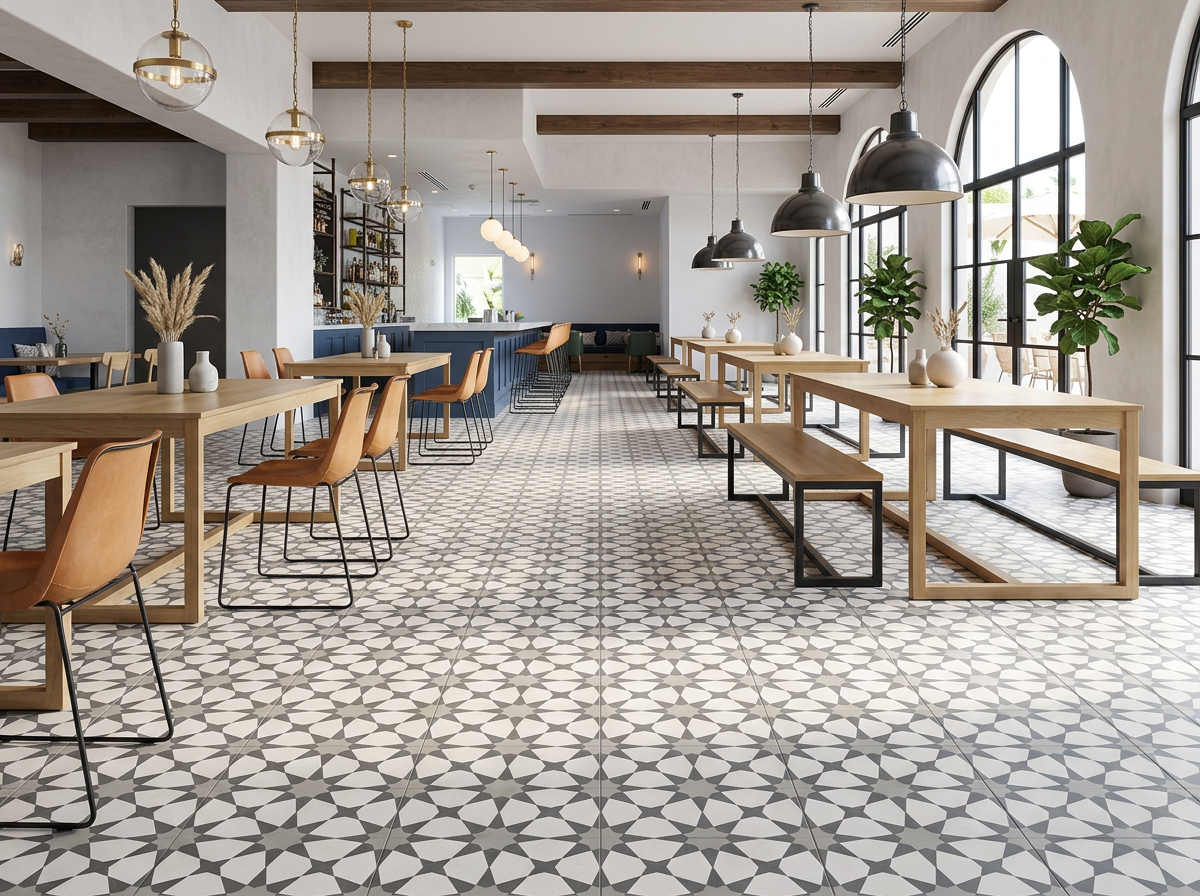
Restaurants in 2026 are using tile as a primary brand and experiential communication tool. Restaurant tile design is decisively pattern-forward, with handmade cement tile floors, backsplashes, and wall treatments creating the kind of immersive, Instagram-worthy environments that drive both in-person visits and organic social sharing.
Commercial floor tiles in cement are the material of choice for serious restaurant designers because they handle high daily foot traffic while aging with a patina that signals authenticity and craft — values that resonate deeply with contemporary dining guests. Custom logo tiles and brand-color floor patterns are increasingly specified for new openings as restaurateurs recognize that the floor is their most permanent and most visible brand statement.
Hotel Lobby Tiles
Boutique hotels continue to lead the commercial design conversation in 2026, and hotel lobby tiles are their most expressive design tool. Grand-scale Moroccan pattern installations, custom encaustic medallions referencing the hotel’s location and heritage, and seamless indoor-to-outdoor cement tile flows define the most celebrated hotel lobby designs of the year.
The move toward materiality and craft in hospitality design reflects a broader guest expectation shift: travelers are choosing boutique properties specifically for the quality and authenticity of their designed environments, and tile is one of the most powerful levers available to hospitality designers.
Spas, Wellness, and Fitness Spaces
Wellness-focused commercial environments are embracing the meditative quality of patterned encaustic cement tiles. The visual rhythm of a repeating geometric pattern — particularly in the Moroccan and Mediterranean traditions — creates a genuinely calming, grounding sensory environment that purpose-built wellness spaces require. Deep blues, warm neutrals, and sage greens dominate this commercial category in 2026.
For custom commercial tile projects, Original Mission Tile’s custom manufacturing capability allows designers and architects to reproduce any pattern, color, or logo at commercial scale.
Cement Tile vs Ceramic Tile: Why the Choice Matters in 2026
The cement tile vs ceramic tile conversation has shifted significantly in 2026. For design-forward projects — residential or commercial — the advantages of handmade cement tiles are increasingly recognized and specified.
Ceramic and porcelain tiles offer consistent manufacturing, low maintenance, and broad accessibility. But decorative cement tiles offer what ceramic fundamentally cannot: through-body color and pattern that ages with grace, a handmade character that communicates craft and quality, natural material composition that aligns with sustainability values, and infinite customization that allows every installation to be genuinely unique.
In a design moment defined by authenticity, warmth, and the rejection of the interchangeable, the case for cement tile over ceramic tile has never been stronger or more widely understood.
Installation and Maintenance: What Every Project Needs to Know
Sealing: The Foundation of Every Successful Installation
Proper sealing is the single most important factor in the long-term performance of any cement tile installation. Apply a penetrating sealer before grouting — without exception — and a topcoat sealer in kitchens, bathrooms, and commercial high-traffic areas. In commercial environments, establish a sealer reapplication schedule based on traffic intensity.
Never allow cement tiles to be grouted without a penetrating sealer applied first. Grout color absorbed into unsealed cement tile is permanent and cannot be corrected without replacing the tile.
Cleaning Protocols for Every Environment
Sealed cement tiles clean easily with pH-neutral cleaners and warm water. In kitchens, food acids and oils require prompt cleanup on the sealer surface rather than on the tile itself. In commercial environments, establish service protocols that avoid acidic, bleach-based, or abrasive cleaning products that degrade the sealer over time.
Professional Installation Standards
Cement tile installation requires an experienced installer. Use white polymer-modified thin-set mortar, maintain grout joints of 1/16″ to 1/8″, prepare a flat and stable subfloor, and always conduct a full dry-lay before setting any patterned or custom tile. Pattern alignment and orientation errors discovered after setting are expensive to correct.
Common Mistakes to Avoid
Not ordering from a single production run. Natural color variation between batches is a characteristic of handmade tile. For projects of any size, order the full quantity at once and blend boxes during installation for a naturally balanced result.
Skipping the dry layout for patterned tiles. Patterned cement tiles — Moroccan, Mediterranean, Spanish-style — require visual confirmation of pattern flow and symmetry before any adhesive is applied. Always dry-lay before setting.
Underestimating square footage. Order 10–15% above calculated square footage for cuts, breakage, pattern matching, and future repairs. For custom tiles, this buffer is especially critical.
Using gray thin-set mortar. Gray adhesive mortars can bleed through lighter-colored cement tiles and permanently alter their appearance. Always use white polymer-modified thin-set.
Ignoring subfloor flatness. Cement tiles require a flat, stable substrate. Any flex or unevenness in the subfloor leads to cracked tiles over time, particularly in large commercial installations.

Frequently Asked Questions About 2026 Tile Trends
1. What are the top bathroom tile trends for 2026? Pattern-forward Moroccan and Mediterranean encaustic cement tiles, warm and saturated color palettes in terracotta and indigo, and fully patterned cement shower wall tiles are the defining bathroom tile trends of 2026.
2. What kitchen backsplash tile styles are trending in 2026? Handmade cement tiles in Moroccan geometric, Mediterranean floral, and Spanish-style terracotta patterns are replacing subway tile as the dominant kitchen backsplash choice for design-forward projects in 2026.
3. Are patterned cement tiles difficult to maintain in kitchens? No. Properly sealed cement tiles are highly durable and easy to clean in kitchen environments. A pH-neutral cleaner and regular sealer maintenance keep patterned cement tiles performing and looking beautiful for decades.
4. What’s the difference between encaustic cement tiles and regular cement tiles? Encaustic cement tiles are the patterned, pigmented variety of cement tile — the pattern is cast into the body of the tile using colored cement layers. All of Original Mission Tile’s decorative cement tiles are encaustic by nature.
5. Can cement tiles be used for shower walls and wet areas? Yes. With a proper penetrating sealer and topcoat application, cement tiles perform well as shower wall tiles and in other wet areas. Reapply sealer as directed by the manufacturer for ongoing moisture protection.
6. How do I choose between Moroccan tiles, Mediterranean tiles, and Spanish-style tiles for my project? The choice depends on your overall design direction: Moroccan tiles suit maximalist, pattern-rich interiors; Mediterranean tiles bring coastal warmth and color; Spanish-style tiles offer terracotta warmth with bold geometric tradition. Talk to a tile specialist for project-specific guidance.
7. What are the best tile options for outdoor patios in 2026? Sealed cement tiles in terracotta tones, Mediterranean patterns, and Spanish-style designs are among the best outdoor patio tile choices for covered and semi-covered exterior applications, offering both beauty and durability.
8. How do I start a custom tile project for a commercial space? Begin with a consultation with our team — bring your color references, square footage, timeline, and design inspiration. Order samples to evaluate color and texture, then move to custom production. Our team can reproduce virtually any pattern, color, or design at commercial scale.
2026 Is Your Year to Get It Right
The tile decisions you make in 2026 will still be defining your space in 2046. That’s the nature of a material as durable and as deeply embedded in the architecture of a home or commercial space as tile. Which means that the only real design mistake you can make this year is choosing something that prioritizes what’s safe over what’s true — true to your aesthetic, true to your space, and true to the craft traditions that have been producing extraordinary tile for centuries.
Handmade cement tiles — Moroccan, Mediterranean, terracotta, geometric, custom, commercial — are the material through which 2026’s best interiors are being built. Warm, patterned, artisan-made, and built to last a lifetime.