Walk past any thriving restaurant, boutique hotel, or concept store and notice what the best ones have in common: a space you remember. In an economy where customers photograph their brunch and review their hotel lobby, interiors have become marketing — and flooring is the largest canvas in the room. That’s why designers keep turning to cement tiles for commercial spaces: no other material delivers custom pattern, artisan character, and generational durability in one spec.
At Original Mission Tile, our handmade tiles have appeared in restaurants, hospitality projects, and retail environments across the U.S. and Mexico. The pattern we see repeat is simple: businesses that invest in a signature floor get photographed more, remembered longer, and talked about — for free.
This guide covers what commercial designers, architects, and owners need to know: where cement tile performs best in hospitality and retail, design strategies that build brand identity, durability and maintenance in high-traffic reality, and how to spec and order for a commercial timeline.
Why Commercial Designers Specify Cement Tile
- Brand identity you can walk on. Custom colors and patterns — even a logo — pressed permanently into the floor. No printed vinyl or commodity porcelain can carry a brand this way.
- The “Instagram floor” effect. Patterned floors are among the most photographed design elements in hospitality. Every customer photo is organic marketing with your space as the backdrop.
- Proven commercial durability. Cement tile’s pigment layer is millimeters thick; a century of cafés, cantinas, and hotel lobbies across Mexico and the Mediterranean is the longest field test in flooring.
- Patina, not decay. Where glazed tile chips and vinyl peels, sealed cement tile develops a soft patina that makes a space feel established — exactly the character hospitality brands pay designers to fake.

Restaurants & Cafés: Designing for Appetite and Atmosphere
Food spaces are where cement tile earns its reputation. Strategic placements our design team recommends:
- The entry statement. A patterned threshold sets the tone before the host says a word.
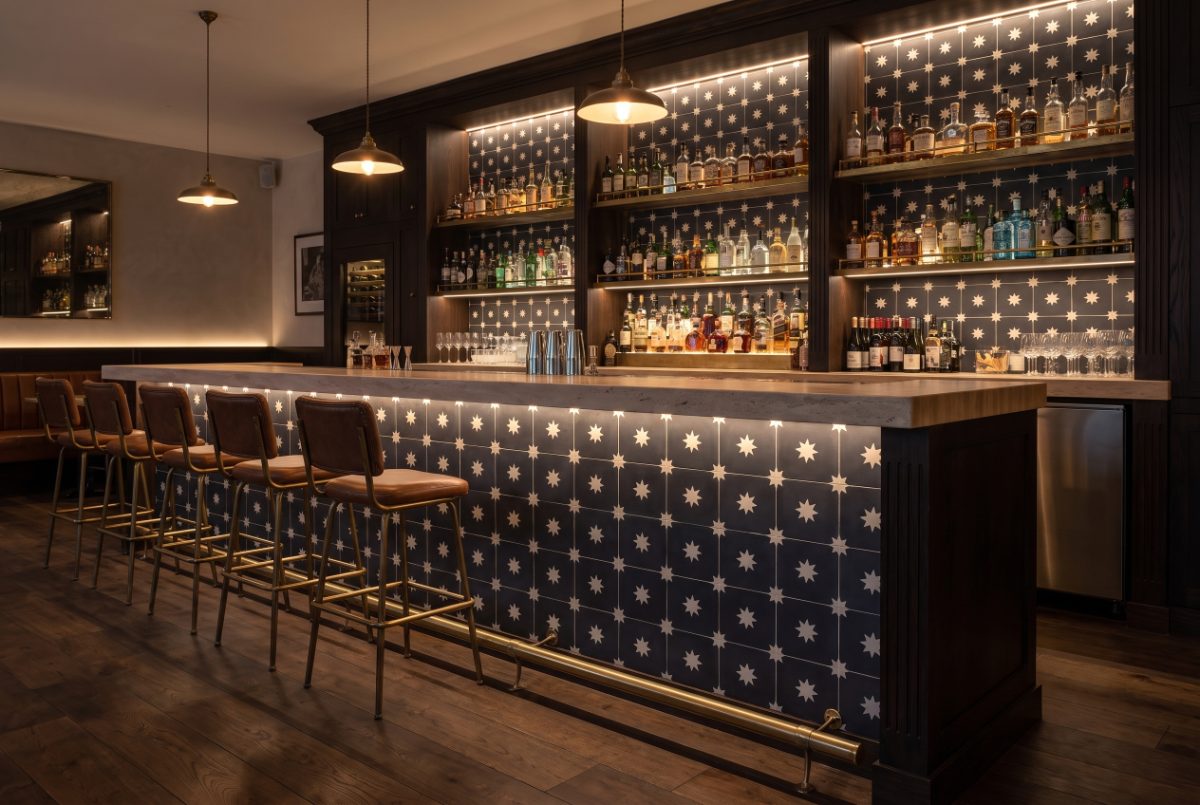
- Bar fronts and coffee stations. Vertical pattern at the busiest visual anchor in the room — the shot every customer takes.
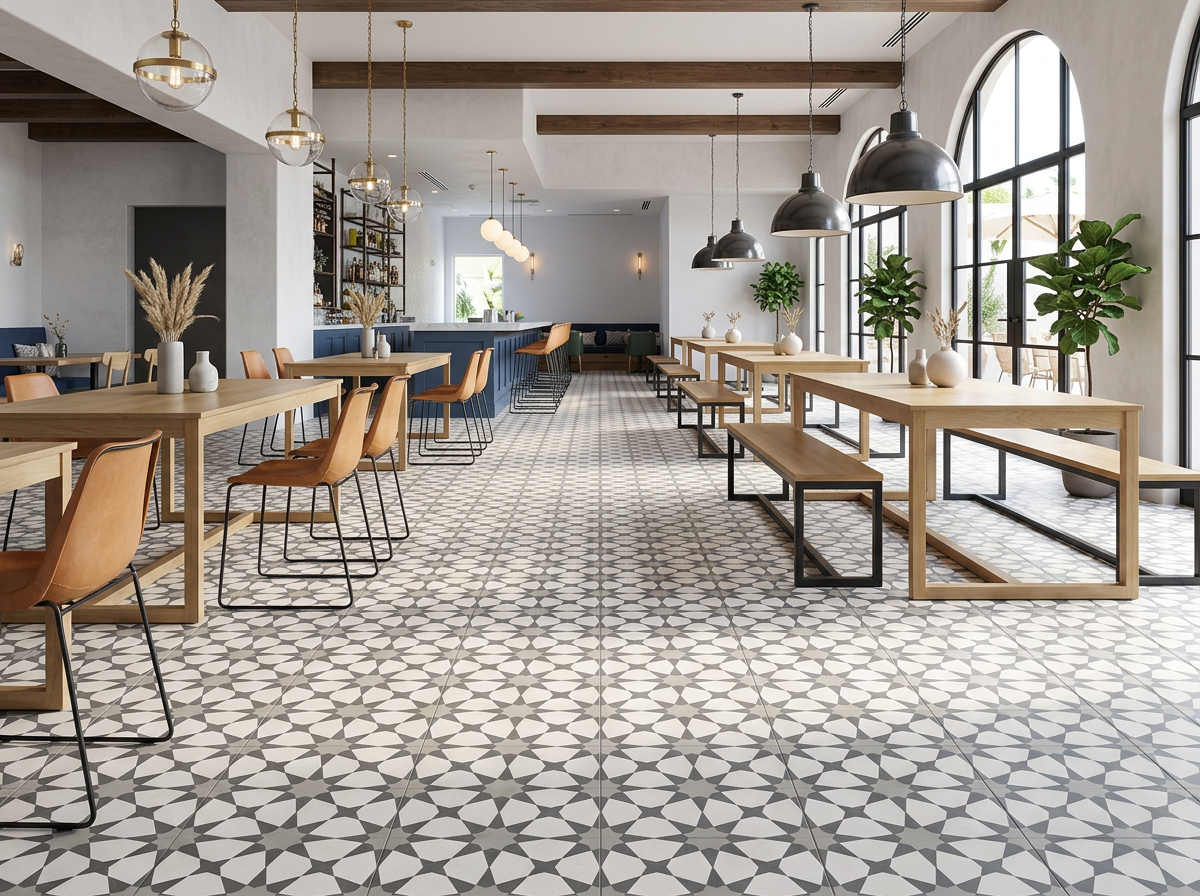
- The tile “rug.” Define dining zones with a bordered field of pattern instead of walls; the room stays open while each area feels intentional.
- Restrooms worth mentioning. Hospitality insiders know restrooms make or break reviews. A patterned floor turns the smallest room into a talking point.
For back-of-house and kitchen line areas, we recommend keeping cement tile front-of-house and using utility flooring where grease and heavy equipment live — the right material in the right zone.
Hotels & Hospitality: Continuity Builds Brand
Boutique hotels use pattern the way they use scent and music: as identity that guests carry home.
- Lobby to corridor continuity. Extending one signature pattern from reception through key transitions creates a visual thread guests recognize throughout their stay.
- Guest bathrooms. Sealed cement tile floors bring spa character to guest baths — with better slip resistance than glossy glazed alternatives.
- Terraces, courtyards, and pool surrounds. With exterior-rated sealing, cement tile turns outdoor amenities into the property’s most photographed corners.
- Custom colorways. Our Design Studio matches patterns to a property’s brand palette — the same geometry, in exactly your colors.

Retail & Showrooms: The Floor as Merchandising
In retail, flooring guides the eye and the feet:
- Pattern paths. A patterned walkway steers customers through the store’s intended route.
- Feature zones. A tile “island” under a key display gives the merchandise a stage.
- Fitting rooms and counters. Small-format pattern in high-dwell areas rewards the customer’s closest attention.
- Storefront thresholds. Pattern at the door literally stops foot traffic — the oldest trick in retail design, executed in the oldest material.
Commercial Practicalities: Durability, Maintenance, Spec
What owners and facility managers ask us most:
- Traffic rating. Properly installed and sealed, cement tile handles heavy commercial foot traffic for decades. Historic commercial floors 80–100 years old remain in daily service.
- Maintenance program. Daily dust mop, damp mop with pH-neutral cleaner, and re-sealing every 1–2 years in high-traffic zones. Train the cleaning crew: no acids, ever.
- Slip resistance. The natural matte, unglazed surface offers better traction than polished or glazed flooring — a real consideration for hospitality liability.
- Attic stock. Order 10–15% overage. Handmade lots vary subtly, so same-lot spares guarantee seamless repairs years later.
- Timeline. Our in-stock collection ships without custom lead times; custom colorways and patterns are quoted with clear production schedules.
For installation specifics, share our installation guidelines with your contractor before bidding.
Commercial Cement Tile FAQ
Is cement tile suitable for high-traffic commercial floors?
Yes — with proper installation and sealing, it’s one of the longest-lived commercial flooring materials available. The pigment runs millimeters deep, so wear develops character instead of erasing the design.
Can we get tiles in our brand colors?
That’s our specialty. Existing patterns can be recolored to your palette, or we can develop a fully custom design — including logos — through our Design Studio.
How does cement tile compare to porcelain for commercial use?
Porcelain is harder day to day but chips permanently and looks like every other commercial space. Cement tile requires a sealing program but delivers authentic, custom pattern no printed tile matches. Many projects use both: cement tile front-of-house, porcelain in utility zones.
What about health-department and cleaning requirements?
Sealed cement tile cleans easily with pH-neutral products. For kitchens and food-prep zones with harsh chemical protocols, we recommend utility flooring there and cement tile in guest-facing areas.
Do you work with trade professionals?
Yes — designers, architects, and contractors get dedicated support, samples, and volume pricing through our Trade Program.
The Bottom Line
Commercial interiors have one job beyond function: being remembered. A handmade cement tile floor works that job every hour you’re open — anchoring the brand, feeding the camera roll, and outlasting every renovation trend that passes over it. Restaurants get a dining room with soul, hotels get an identity guests photograph, and retailers get a floor that sells.
Planning a commercial project? Browse hundreds of handmade patterns, see real installations in our gallery, or contact our design team for samples, custom colorways, and volume quotes.