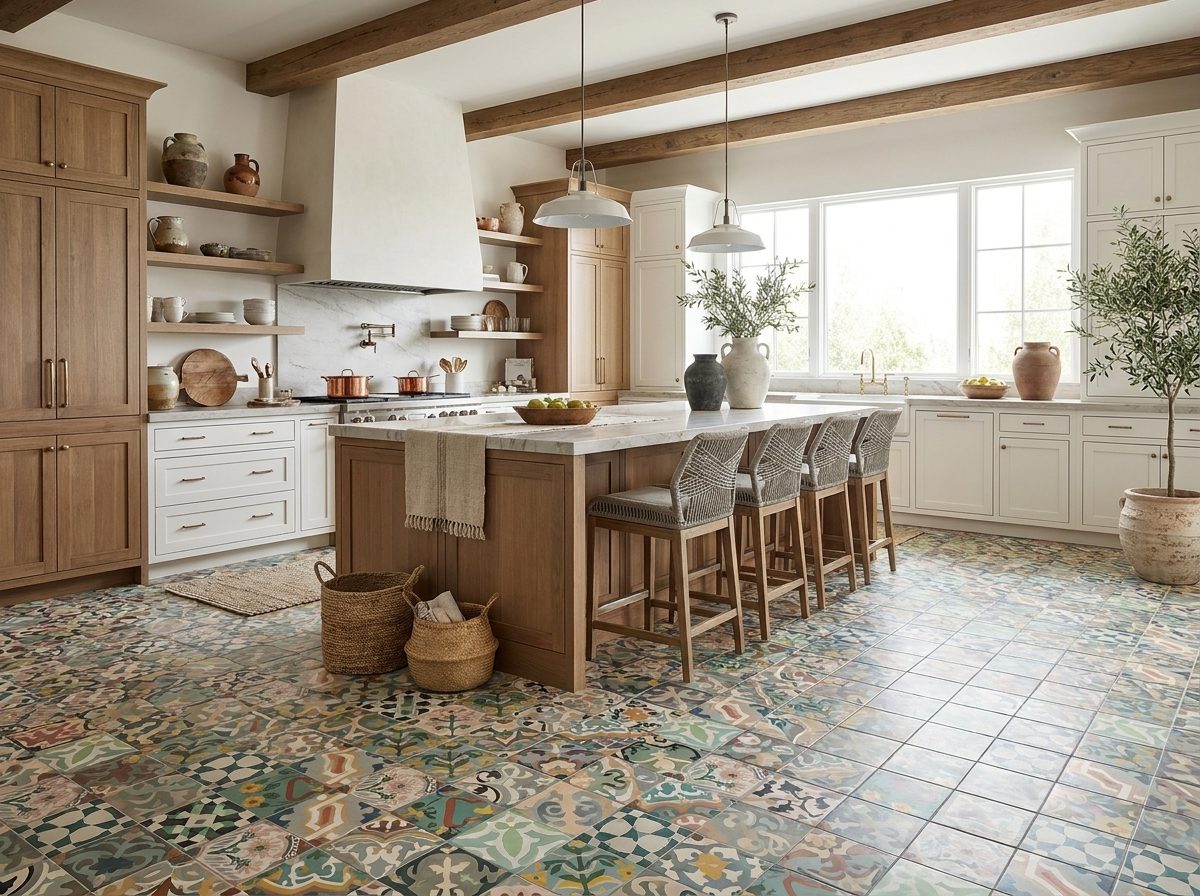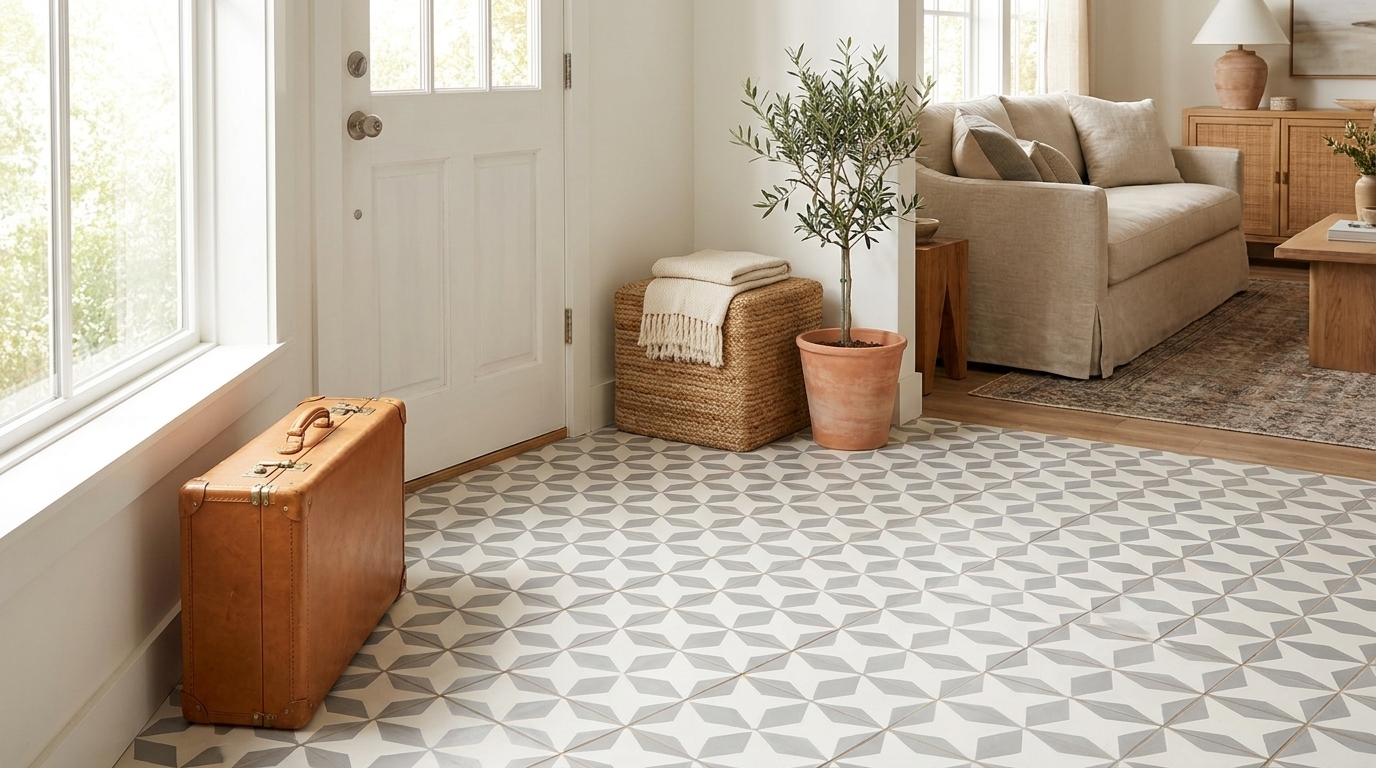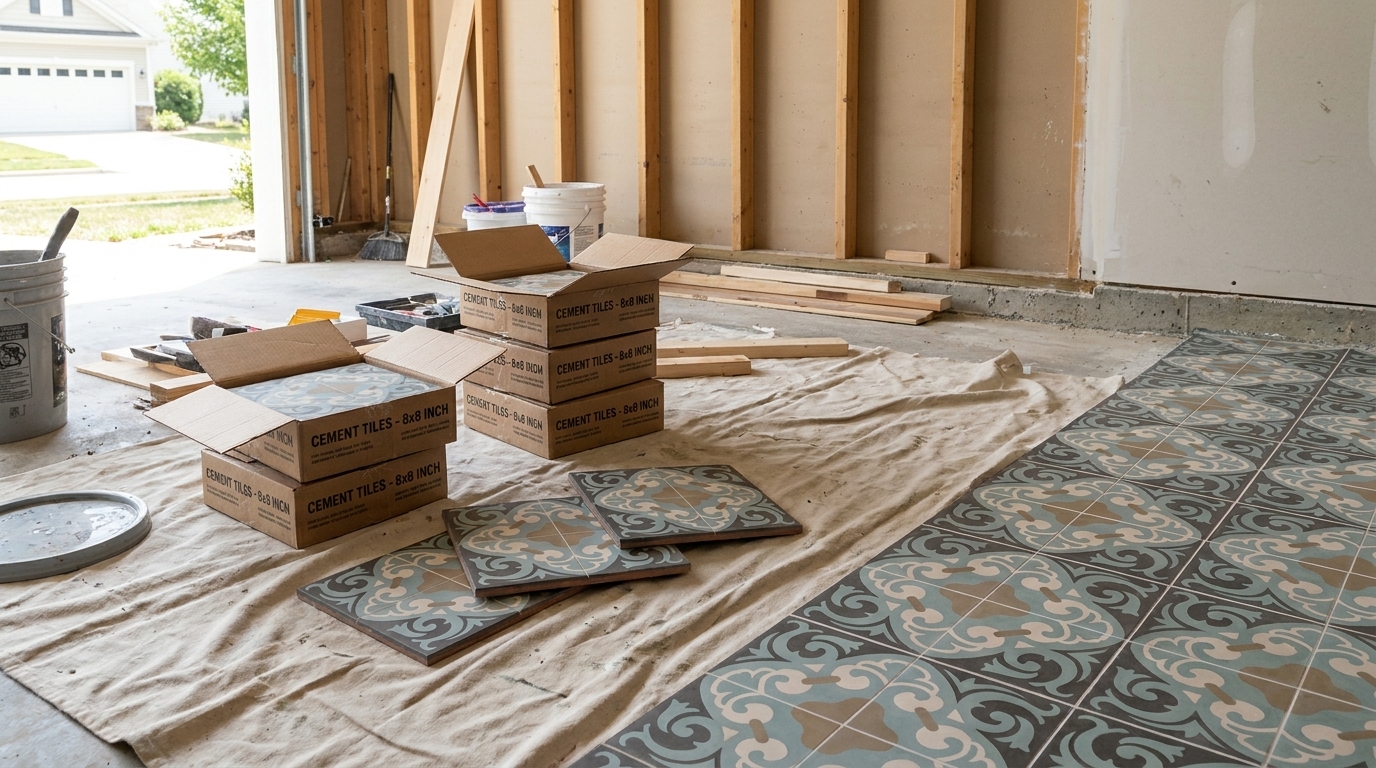
A blank wall can stop a project cold.
You may already have the paint colors, cabinet finish, plumbing fixtures, and even the hardware selected. Then you reach the wall surface and the choices explode. Glossy or matte. Handmade or machine-made. Quiet field tile or a full statement pattern. Smooth, ribbed, fluted, geometric, organic. What looked simple at first becomes the decision that sets the character of the room.
That's why wall tile deserves more respect than it usually gets. It isn't just a finish. It controls how light moves, how joints read, how a room feels at arm's length, and how much maintenance the space asks of you after installation. A backsplash that photographs beautifully can become annoying to clean. A dramatic relief tile can either make a room sing or turn every shadow into visual clutter. A handmade surface can feel soulful in one setting and unresolved in another.
I see this moment often with kitchen remodels and bath renovations. The client starts by asking for the best wall tiles design and usually means one of two things. They either want the wall to become the room's focal point, or they want something timeless that won't feel dated once the rest of the room settles in. Those are different goals, and the right answer changes with the space, the lighting, and the way the room is used.
The wider design conversation has also shifted. Wall tile is no longer limited to utilitarian backsplash duty. It now sits in the same design category as paneling, plaster, millwork, and other architectural surfaces. If you're also looking at other ways of adding depth to your home's walls, that broader mindset is useful. It helps you judge tile not just as a protective skin, but as a sculptural plane with rhythm, shadow, and presence.
Good wall design starts when you stop asking, “What tile is trending?” and start asking sharper questions. What does this wall need to endure? What should it do with light? Should the grout disappear or become part of the pattern? Do you want calm, texture, sheen, geometry, or contrast?
Those are the questions professionals use. They're also the questions that keep a beautiful tile choice from becoming an expensive compromise.
From Blank Wall to Statement Surface
A wall usually becomes important at the moment the room still feels unfinished.
The cabinetry is in, or the vanity has been set, and something still feels flat. The proportions may be right, but the room lacks tension, depth, or a focal point. That's when wall tile enters the conversation as more than a practical surface. It becomes the element that can organize the whole composition.
The moment most people get stuck
A homeowner planning a backsplash often starts with a familiar instinct. Subway tile feels safe. Marble feels elegant. A bold pattern feels exciting. Then samples arrive and the uncertainty starts. One tile is beautiful on its own but competes with the stone counter. Another looks perfect under showroom lights and dull in the actual room. A textured surface feels rich until someone asks how it will clean behind a range.
The same thing happens in bathrooms. A vertical stack in soft green can make a shower wall feel taller and calmer. A high-contrast mosaic can sharpen the room, but it can also make a compact bath feel busier than intended. The issue isn't taste. It's that wall tile design lives at the intersection of architecture, maintenance, and visual rhythm.
A strong tile wall doesn't happen because the sample looked good in your hand. It happens because the material, scale, light, and layout all agree with the room.
What a successful wall tile choice actually does
The best wall tiles design solves more than one problem at once. It should:
- Support the room's use so the surface suits moisture, splashes, or frequent cleaning
- Clarify the architecture by reinforcing height, width, symmetry, or focal points
- Hold visual interest without fighting the surrounding finishes
- Age well so the wall still feels intentional after the novelty wears off
That last point matters more than people expect. Trend-driven walls often lean hard on contrast, texture, or unusual shapes, but the most satisfying work usually comes from restraint combined with one clear idea.
A better way to choose
When I evaluate a wall, I don't begin with color boards or trend lists. I start with the room's behavior. Where does water land? Where does grease collect? What angle does the natural light hit from? Is the wall seen from across the room or from eighteen inches away at a vanity?
Those answers narrow the field quickly. Once function is defined, design becomes easier. The decisions stop feeling random. You can tell whether the wall wants a quiet field tile, a shaped module, a relief surface, or a custom pattern that carries the room.
That's how a blank wall turns into a statement surface without becoming a design regret.
The Five Pillars of Wall Tile Design
The best wall tiles design almost always rests on five pillars. Material, color, pattern, scale, and texture. Miss one, and even an expensive tile can feel unresolved. Balance all five, and a simple wall can look composed, expensive, and lasting.
Material sets the rules
Material is the first decision because it tells you what the wall can realistically do. Ceramic remains the most established baseline for wall use because it's widely described as water-, stain-, heat-, and scratch-resistant, and because wall tile guidance places it at the center of both backsplash and broader wall applications where durability and visual impact matter at the same time, as noted by Daltile's wall tile guidance.
That practical foundation matters. The same guidance also notes that simple square and rectangular modules remain dominant, while hexagons and specialty shapes such as chevrons and lanterns connect traditional geometry to more expressive modern compositions. In other words, the material and the shape start speaking to each other immediately.
Color controls distance and mood
Color is never just a swatch decision. It changes how near or far a wall feels.
A low-contrast tile wall tends to read as surface and volume. It lets fixtures, millwork, or art carry the emphasis. A stronger color contrast pushes the tile itself forward and makes the wall more graphic. Neither is automatically better. The point is to decide whether the wall should recede, anchor, or command attention.
A useful rule in practice is simple. If the room already has active stone, figured wood, or bold hardware, calmer tile color often gives the eye a place to rest.
Pattern creates rhythm
Pattern isn't only decoration. It's sequencing.
A stacked layout feels orderly and architectural. Running bond feels familiar and forgiving. Herringbone introduces movement. A repeating decorative pattern can make a wall feel crafted, but if the rest of the room is already busy, the same pattern can collapse the hierarchy.
Use pattern with intent:
- Field-first rooms benefit from quiet tile with one strong gesture, such as a niche, border, or framed feature
- Statement walls can carry more visual complexity if the adjacent materials stay disciplined
- Historic interiors often respond better to repeat motifs than to oversized graphic effects
Practical rule: If you notice the pattern before you notice the room, the wall may be overworking.
Scale changes architecture
Scale is where many projects go wrong.
A tile can be attractive on a sample board and still feel wrong once repeated across a wall. Small modules produce more joints, more visual frequency, and more texture through the grid itself. Larger modules calm the field and often make a room feel more expansive. Shaped tiles sit somewhere else entirely. They call attention to edge conditions, cuts, and grout spacing.
Think about viewing distance. A powder room vanity wall allows finer detail because you stand close. A double-height feature wall needs a pattern or format that reads from farther away.
Texture gives the wall life
Texture is the last pillar, but it often becomes the emotional one. Smooth tile reflects light differently than matte tile. Ribbed and fluted surfaces create shadow lines. Handcrafted variation softens a room that might otherwise feel hard or over-resolved.
Texture works best when it serves the room's architecture instead of competing with it. If the cabinetry has heavy grain and the stone is expressive, a heavily reliefed tile may be too much. If the room is clean-lined and quiet, textured tile can be the one element that keeps it from feeling sterile.
Put together, these five pillars create a decision framework that's much more useful than trend chasing. They let you judge whether a wall is merely fashionable or well designed.
Choosing Your Wall Tile Material
Material choice is where inspiration meets consequences. Two tiles can look similar in a photo and behave very differently once they're installed, cleaned, lit from the side, and lived with for years.

Ceramic and porcelain
Ceramic is still the workhorse for many wall applications. It's versatile, approachable, and available in an enormous range of finishes and formats. If the goal is a dependable backsplash, shower wall, or simple decorative field, ceramic often gets you there without drama.
Porcelain usually steps in when you want a denser body, sharper technical performance, or a look that needs to bridge indoor and more demanding environments. On walls, porcelain can also deliver very controlled visuals, including stone looks, concrete looks, and highly refined relief surfaces.
A practical distinction is visual personality. Ceramic often feels friendlier and more varied in smaller-scale wall applications. Porcelain often feels more precise and architectural.
Glass and natural stone
Glass tile reflects light beautifully. In a dark powder room or compact kitchen, that luminosity can be exactly what the room needs. But glass is unforgiving of sloppy setting, uneven adhesive coverage, and inconsistent substrate conditions. The cleaner the installation, the better the result.
Natural stone brings depth that manufactured surfaces still struggle to imitate fully. Marble, limestone, slate, and travertine each carry their own visual tempo. Stone can look magnificent on walls, but it asks for informed specification and care. Some stones etch, some darken with moisture, and some require sealing strategies that clients should understand before the job begins.
Handmade cement and artisanal surfaces
Handmade cement tile belongs in a different conversation from glazed tile. It offers matte depth, inlaid color, and a more tactile, grounded presence. Because the color is part of the tile body rather than a surface glaze, the visual effect feels less shiny and more architectural. That makes cement especially compelling when you want a wall to feel crafted rather than slick.
For designers exploring patterned or bespoke surfaces, custom cement tile options can help solve very specific problems, such as matching a palette, controlling motif scale, or carrying a historical reference into a new build. The key is to specify it with full awareness of the room conditions and maintenance expectations.
Where trend and maintenance collide
One of the strongest current directions in wall tile is the move away from flat, uniform surfaces toward layered, tactile finishes. Coverings' 2025 trend review notes the rise of 3D technologies, including striped, ribbed, and fluted relief effects, and also points to renewed interest in mosaics and handcrafted-looking textures that create depth, warmth, and light-and-shadow contrast in residential and hospitality interiors, as described in the Coverings 2025 tile trends review.
That trend is real, and often beautiful. It also comes with trade-offs.
Here's how I usually frame the material decision:
| Material | What it does well | What to watch |
|---|---|---|
| Ceramic | Flexible for common wall applications, easy to coordinate across styles | Some collections can feel generic if the layout lacks intention |
| Porcelain | Crisp visuals, strong technical reliability, broad design range | Can read cold if the room needs warmth or hand character |
| Glass | Brightens walls, adds reflectivity and color depth | Demands very clean installation and careful detailing |
| Natural stone | Brings natural variation and timeless presence | Requires informed maintenance and thoughtful sealing decisions |
| Handmade cement | Delivers matte richness, pattern depth, and artisanal character | Needs proper specification, sealing approach, and realistic maintenance planning |
Relief and handcrafted texture can transform a wall, but they also make dust, soap residue, grout lines, and side lighting more visible. A tactile surface should be chosen with the cleaning routine in mind, not only the sample board.
The best material is rarely the one that sounds most luxurious in conversation. It's the one whose appearance, maintenance profile, and installation demands all fit the space you're designing.
Designing by Room A Practical Application Guide
A wall tile scheme that feels right in a powder room can fail badly behind a range or inside a hard-working shower. Each room puts different stress on the surface. Steam, oil, cleaning chemicals, impact, and viewing distance all change what should be specified.

Kitchen backsplashes
Kitchen walls need restraint and cleanability. The counter already carries visual weight from stone movement, appliances, utensils, and daily clutter, so the tile should either organize that activity or stand apart from it with clear intent.
Glossy ceramic and porcelain often earn their place here because they wipe down easily and bounce light back into the room. Matte finishes can be beautiful, especially in quieter kitchens, but they show cooking residue differently and deserve an honest conversation before they go on the wall. I usually caution clients against heavily pillowed edges, deep relief, or very porous surfaces behind active cooktops unless they are committed to regular maintenance.
Three decisions matter early:
- How much visual activity the room already has, so the backsplash supports the kitchen instead of competing with it
- How often the household cooks extensively, because a decorative sample can behave very differently after months of oil, steam, and splatter
- How the tile meets outlets, shelves, and cabinet lines, since interruptions can make small-format or shaped tile look fussy if the layout is not resolved in advance
A good backsplash often feels quieter than expected on the sample board. On the finished wall, that discipline reads as confidence.
Bathroom walls and shower enclosures
Bathrooms reward order. Strong tile design here is usually less about novelty and more about proportion, moisture management, and how the room reads at close range.
Vertical stack patterns can make a shower feel taller. A tonal field tile can calm a compact bath. Mosaics still have a place on curves, benches, niches, and floors, but on large wall expanses they increase grout lines, cleaning time, and visual busyness. That trade-off should be deliberate.
Ventilation matters as much as appearance. In a bathroom with weak air movement or inconsistent cleaning, simpler surfaces age better than highly textured ones. Large-format porcelain can reduce grout maintenance, while smaller ceramic modules can add charm where the scale of the room supports them.
For walls that are mostly about atmosphere rather than splash protection, living spaces open up a different design vocabulary. Projects centered on wall tile designs for living rooms show how tile can act as architecture, adding depth, rhythm, and material character even when the wall does not face daily moisture.
Feature walls and hospitality spaces
A feature wall needs a job. It might anchor a fireplace, frame a bed wall, define a reception desk, or give a dining room a focal plane with real material presence. Without that role, it can read like an afterthought.
This is also where custom work starts to make sense. Cement tile, in particular, gives designers more authorship than many off-the-shelf wall products. Pattern, scale, color balance, border conditions, and field repetition can all be specified with the room in mind. At Original Mission Tile, that part of the process often begins long before production, with scale studies, color review, and layout drawings that test how the pattern will turn corners, meet trim, and hold up across an entire elevation. Consumers rarely see that workflow explained, yet it is the difference between a tile wall that feels bespoke and one that feels merely expensive.
Commercial and hospitality projects require even tighter discipline. MSI's commercial tile specification guidance outlines the right starting point. Match the tile system to the service environment, then document the assembly, standards, and installation method for that exact use.
That means these walls should never be treated as interchangeable:
| Space | Prioritize | Usually works well |
|---|---|---|
| Kitchen backsplash | Easy cleaning, visual control, tidy terminations | Ceramic, porcelain, glass in measured formats |
| Bathroom wall | Moisture tolerance, grout planning, calm proportion | Ceramic, porcelain, selected mosaics, some stone with informed care |
| Statement wall | Focal clarity, light interaction, edge detail | Handmade tile, textured porcelain, shaped modules, patterned cement |
| Commercial wall | Documented specification, service-zone fit, repair strategy | Precisely specified systems tied to actual site conditions |
Room-by-room thinking is what gives wall tile its staying power. The best-looking surface usually starts with a practical brief.
Mastering Layout Grout and Installation
A surprising number of disappointing tile projects began with good tile.
The design was sound. The sample was strong. The palette worked. Then the layout drifted, the grout color fought the field, cuts landed in the wrong places, or the substrate wasn't prepared well enough to support a clean install. The result is a wall that looks almost right, which is often worse than obviously wrong.

Layout is design, not paperwork
Layout determines where the eye settles. On a vanity wall, the centerline matters. In a shower, the relationship between niches, plumbing trim, corners, and grout joints matters. At a backsplash, the termination at cabinets, hood lines, and outlets matters.
A good installer can often rescue a modest tile through excellent planning. A careless layout can flatten an exceptional tile into visual noise.
Before setting begins, resolve these points:
- Establish the visual center rather than starting blindly from one edge
- Study cut locations so slivers don't collect at corners or terminations
- Align with fixed elements such as mirrors, niches, sconces, and plumbing trim
- Mock up shaped or patterned layouts because repetition looks different at full scale
Grout changes the reading of the wall
Grout is not an afterthought. It can quiet a tile, outline a tile, sharpen a pattern, or muddy one.
Use close grout color when you want the wall to read as a more continuous plane. Use contrast only when you're sure the tile grid should remain visible. Contrast can be striking with precise modules, but it also magnifies variation, spacing errors, and lippage.
For textured or relief tile, grout behavior becomes even more important. Joint depth, edge definition, and cleanup all influence how the surface will look once side-lit.
A tile wall is only as refined as its joints. People notice the tile first from a distance, but they judge the work by the grout when they get close.
Substrate and execution decide longevity
There's a contrarian truth in tile work. The most elaborate pattern is not always the smartest choice. Industry guidance consistently ties success to substrate preparation, joint planning, and installation quality, and notes that a more restrained pattern with better dimensional consistency can outperform a more visually complex option in real-world durability and repairability, as discussed in this industry installation guidance video.
That idea is worth taking seriously. Walls move, corners vary, substrates wave, and not every tile series has the same tolerance. A disciplined pattern installed on a properly prepared wall often outlasts a more theatrical design that was pushed onto an imperfect surface.
If you're coordinating trades or reviewing scope, detailed wall tile installation guidance is useful because it keeps the conversation grounded in sequence, substrate condition, spacing, curing, and finish work rather than just aesthetics.
What works and what often doesn't
Usually works
- Centered layouts with intentional edge conditions
- Grout chosen with the tile body and finish in mind
- Pattern scaled to the room and the installer's tolerance
- Full substrate prep before anyone opens thin-set
Often fails
- Starting from a corner without checking visual balance
- Choosing contrast grout because it looked sharp online
- Using highly irregular handmade tile with rigid, machine-perfect expectations
- Treating installation as a commodity step instead of a design phase
If you want a wall to look expensive, focus on execution before you focus on novelty. That's where most of the difference lives.
How to Design Your Own Custom Cement Tiles
A custom cement tile wall usually starts the same way. Someone sees a pattern they love, then tries to force it onto a wall that wants something else.
The better process runs in the opposite direction. Read the architecture first, decide what the wall needs to do, then build a tile design that fits the room, the light, and the installation conditions. That is how custom work gets past the inspiration stage and turns into a wall that feels resolved.

Start with the wall, not the motif
Custom cement tile is a specification process as much as a design exercise. A powder room accent wall can carry a tighter, more graphic repeat because the viewing distance is short and the surface area is contained. A full kitchen wall often needs more restraint, or the pattern starts to compete with shelving, hardware, stone, and appliances.
Start by defining four things:
- The wall's job. Background, focal point, frame, or full field.
- The pattern intensity. Quiet, moderate, or graphic.
- The palette family. It should relate to the room's fixed finishes, especially stone, wood, paint, and metal.
- The maintenance reality. Moisture, splash exposure, soap residue, cooking film, and cleaning habits all affect what will still look good a few years from now.
That last point matters with cement tile. Matte surfaces have depth and softness, but they also ask for honest planning around sealing, cleaning, and use conditions.
Build the repeat before you finalize color
A single custom tile can be beautiful and still fail on the wall. Cement patterns are judged in repeat, at room scale, under real light.
For that reason, I review custom work in stages. First the single tile. Then a four-tile repeat. Then a larger field, with corners, edges, and terminations considered at the same time. A motif that looks balanced in the middle can fall apart at an outside corner or die awkwardly under a cabinet unless those conditions are drawn early.
Color should come after the repeat is behaving properly. Cement pigments read differently than glaze. The finish is dry and velvety, so tones often appear softer, chalkier, and more integrated with the architecture. That subtlety is one of the material's strengths, but it also means samples need to be viewed where they will live, morning and evening, with the room's actual bulbs and daylight.
A short visual walkthrough helps make that process concrete:
Refine the specification like a professional
The part consumers rarely see is the part that determines whether custom tile work looks expensive or improvised. Once the design direction is approved, the specification has to get precise.
At Original Mission Tile, that usually means resolving the custom order as a full set of decisions rather than a loose idea. Pattern orientation, color placement, field dimensions, border conditions, outlet locations, trim strategy, and cut zones should all be clarified before production is approved. Cement tile is forgiving in character, but it is not forgiving of vague instructions.
Use a working checklist:
- Confirm the application so the tile body, finish, and sealer suit the wall location
- Review the substrate early because custom tile should not be ordered around an unverified surface
- Map the repeat across the actual wall dimensions so focal points and edge cuts feel intentional
- Document orientation clearly for installers, especially with directional or multi-part patterns
- Resolve trims and terminations before fabrication, not on installation day
- Set cleaning and resealing expectations with the owner before handoff
Good custom work comes from coordination. Design, fabrication, and installation all have to agree.
Keep the custom work disciplined
The strongest custom cement walls are usually edited hard. One motif often performs better than three. A controlled palette ages better than a novelty mix. Repeats tied to the room's proportions usually feel calmer and more convincing than patterns chosen in isolation.
That restraint is what gives custom tile its authority. The wall feels specific to the house, not borrowed from a mood board.
Creating a Timeless Wall That Tells Your Story
The best wall tiles design isn't a single material, shape, or trend. It's the result of good judgment repeated through every stage of the project.
First, the wall has to suit the room. Then the material has to suit the wall. Then color, scale, pattern, and texture have to support the architecture instead of fighting it. Finally, the layout, grout, and installation have to be resolved with enough care that the design survives contact with reality. That's why some simple walls feel thoroughly finished, while some ambitious walls never quite land.
Timelessness doesn't mean playing it safe. It means choosing what will still make sense once the novelty fades. A fluted surface can be timeless in the right room. A geometric repeat can be timeless if the scale is disciplined. A custom cement wall can be timeless when its palette belongs to the house and its installation respects the craft.
Two qualities usually separate lasting work from short-lived work:
- Clarity of intent so the wall knows whether it is background or focal point
- Technical honesty so the tile, grout, substrate, and maintenance plan all align
The walls people remember are rarely the ones with the most decoration. They're the ones where material, light, and proportion feel inseparable.
That's also why heritage tile work still holds its ground in modern interiors. Craft matters. So does material intelligence. A wall with tactile depth, balanced geometry, and clean execution doesn't need to shout. It settles into the architecture and gives the room a point of view.
If you're selecting tile now, trust the slower questions. Ask what the wall must endure. Ask how it will read in morning light and evening light. Ask whether the grout should disappear. Ask whether the texture will still please you after months of real use. Those questions lead to better walls than trend boards do.
And when a project calls for something more specific than off-the-shelf choices can offer, custom design becomes less of a luxury and more of a practical design tool. It lets the wall become personal without becoming arbitrary.
If you're planning a wall surface that needs more than a generic catalog choice, Original Mission Tile offers handmade cement tile collections along with custom design options that can help you develop a wall around your room's scale, palette, and installation needs.