There’s a particular quality of light that only a breeze block can create — a shifting, geometric lattice of sun and shadow that moves across a floor as the day passes, turning an ordinary room into something that feels deliberately, beautifully designed.
Breeze blocks — also called screen blocks, decorative concrete blocks, or ventilation blocks — have been a quiet constant in architecture since the mid-twentieth century. They defined the breezy courtyards of Californian modernism, the shaded terraces of Caribbean resorts, and the perforated facades of Brazilian Brutalist apartment buildings. Then came decades of neglect, as architecture moved toward glass curtain walls and seamless surfaces. Now, in 2026, breeze blocks are back — and not as nostalgia. As a genuine interior and exterior design tool that contemporary designers are deploying with fresh confidence and creative range.
This guide covers everything interior designers and renovators need to know about breeze blocks in 2026: the design logic behind their return, where and how to use them, how to specify them with confidence, and how handmade cement breeze blocks from Original Mission Tile bring craft and pattern depth to this resurgent architectural element.
Why Breeze Blocks Are Having Their Moment in 2026

Every material that experiences a genuine revival does so because it solves a problem the present moment is facing. Breeze blocks are solving several simultaneously.
The light problem. Contemporary architecture has prioritized transparency — floor-to-ceiling glass, open plans, maximum daylight. The result is spaces that are often overlit, thermally inefficient, and visually exposed. Breeze blocks offer a third option between opaque wall and transparent glass: filtered light. Dappled. Geometric. Variable across the day. It’s a quality of illumination that no artificial lighting system can replicate, and that clients respond to with immediate, visceral recognition.
The privacy problem. As urban density increases and homes are built closer together, the demand for surfaces that provide privacy without eliminating natural light or ventilation has grown significantly. Breeze blocks are the original solution to this problem — and in 2026, designers are rediscovering that the original solution remains the best one.
The texture problem. A decade of smooth, seamless surfaces has created genuine appetite for materials with physical presence — walls and partitions that cast their own shadows, that read differently from different angles, that reward attention. Breeze blocks are, almost by definition, the most texturally dynamic building element available. Each block is a small sculpture; a wall of them is a composition.
The sustainability logic. Handmade cement breeze blocks require no kiln firing, use natural mineral materials, and contribute to passive ventilation — reducing mechanical cooling loads in warm climates. As sustainability becomes a more embedded consideration in residential and commercial design, breeze blocks’ environmental credentials are increasingly part of the specification conversation.
Where to Use Breeze Blocks in 2026 Interiors
Interior Partitions and Room Dividers

The most transformative residential application of breeze blocks in 2026 is the interior partition. In open-plan homes — where the brief is to create definition between living zones without closing them off — a breeze block partition is an architectural solution that simultaneously defines space, filters light, provides partial visual privacy, and introduces a material statement that no piece of furniture or decorative element can match.
A living room separated from a dining area by a breeze block half-wall. A primary bedroom shielded from a sitting area by a full-height breeze block screen. A home office enclosed in perforated cement that feels connected to the larger space without being distracted by it. These are applications that make a floor plan more livable and a home more beautiful at the same time.
Designer tip: Interior breeze block partitions work best when they’re backlit — positioned so that natural light from a window or skylight passes through the pattern. In rooms without that positioning advantage, specify warm-toned directional lighting on the lit side of the partition to create the shadow play that makes breeze blocks extraordinary.
Exterior Walls, Screens, and Fences
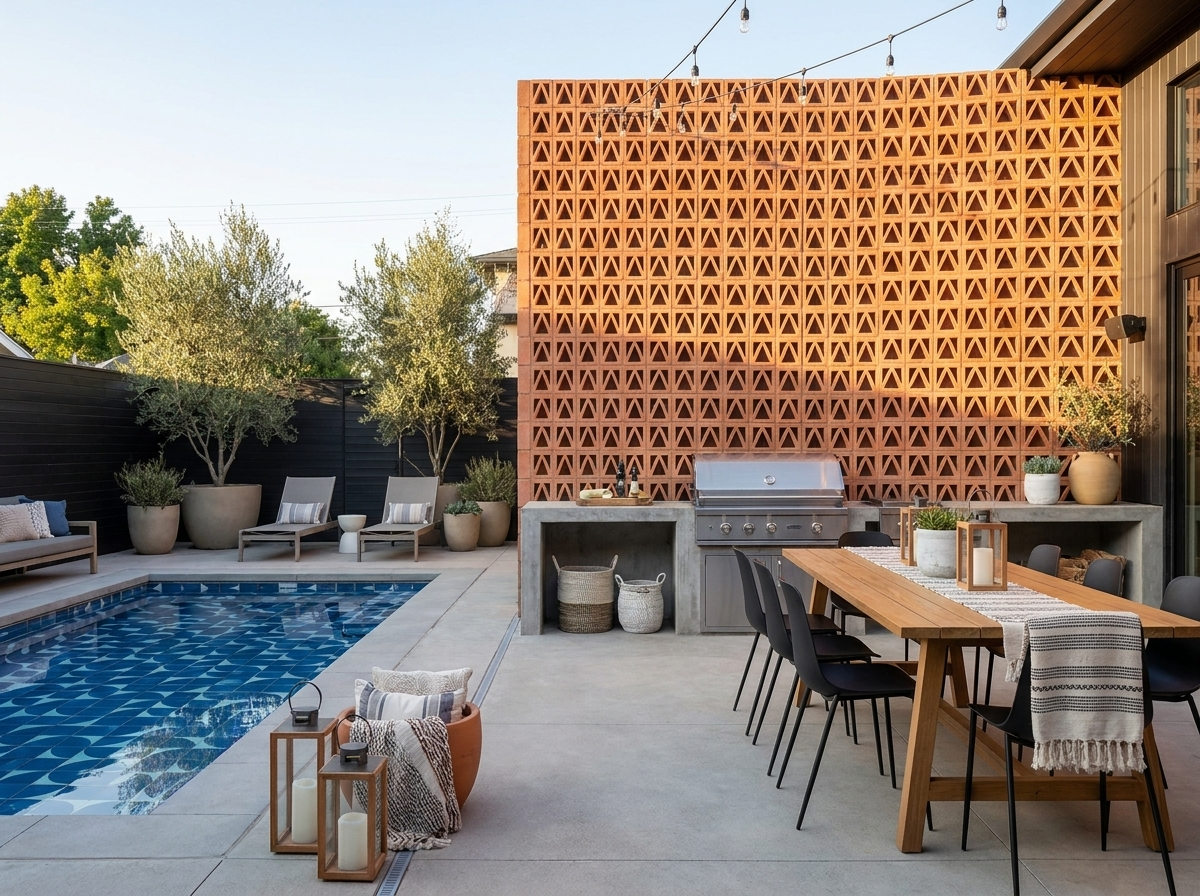
Breeze blocks’ natural habitat is the exterior — and in 2026, residential exterior applications are driving significant demand. Garden walls that filter rather than block the view. Courtyard screens that create dappled shade for outdoor dining. Pool enclosure walls that provide privacy while allowing coastal breezes through. Driveway fences that mark a property boundary without creating the fortress feeling of a solid wall.
For outdoor applications, properly specified cement breeze blocks perform exceptionally well. The hydraulically pressed cement construction handles weather exposure and temperature variation; the open pattern eliminates the wind load issues that solid fences face. For climates with freeze-thaw cycles, consult with the Original Mission Tile team on appropriate installation and finishing specifications.
Covered Terraces and Outdoor Living Spaces

The covered terrace has become one of the primary sites of residential investment in U.S. home design — a space that extends the living area into the outdoors and justifies significant design budget. Breeze block screens on covered terraces serve multiple purposes simultaneously: they provide afternoon shade, create privacy from neighboring properties, reduce wind exposure, and give the terrace a visual anchor that turns a functional overhang into a designed room.
In warm-climate markets — Florida, Texas, California, the Southwest — breeze block terrace screens are one of the fastest-growing exterior design elements, driven by the same indoor-outdoor design sensibility that has reshaped residential architecture since 2020.
Feature Walls and Architectural Accents
Within interiors, breeze blocks are being used as feature wall elements — positioned behind a fireplace, across the back wall of a living room, or as a headboard wall in a primary bedroom — where the pattern and the play of light across it become the room’s central design act.
This application doesn’t require the breeze blocks to perform any structural or ventilation function. Their value is entirely visual: the geometric pattern, the shadow depth, the sense of weight and permanence that comes from a wall built from individual masonry units rather than applied as a surface treatment.
Handmade Cement Breeze Blocks from Original Mission Tile

Original Mission Tile’s 8×8 Breeze Block Collection brings the same hydraulic press craft tradition behind the brand’s encaustic tile collection to a format designed specifically for screen, partition, and feature wall applications.
Each block is handmade — pressed from Portland cement and natural aggregates in the same production tradition the company has maintained for over a century. The result is a breeze block with the material honesty and variation of a handcrafted object rather than the machine uniformity of a mass-produced concrete unit. Individual blocks carry subtle surface variation, slight tonal shifts, and the barely perceptible marks of the making process that give a completed wall its character.
The geometric patterns available in the breeze block collection draw from the same Moorish and Mediterranean design vocabulary as Original Mission Tile’s encaustic tile range — which means a project can specify complementary breeze block and floor tile designs from a single material family, creating a visual and material cohesion across the built surfaces of a space that would be difficult to achieve any other way.
For projects requiring a specific pattern, opening dimension, or colorway not available in the standard range, the Custom Made Collection supports bespoke breeze block development in collaboration with the design team.
Combining Breeze Blocks With Other Materials
Part of what makes breeze blocks such a versatile design tool is how naturally they work alongside other materials. In 2026, the most compelling applications are combining breeze block screens and partitions with:
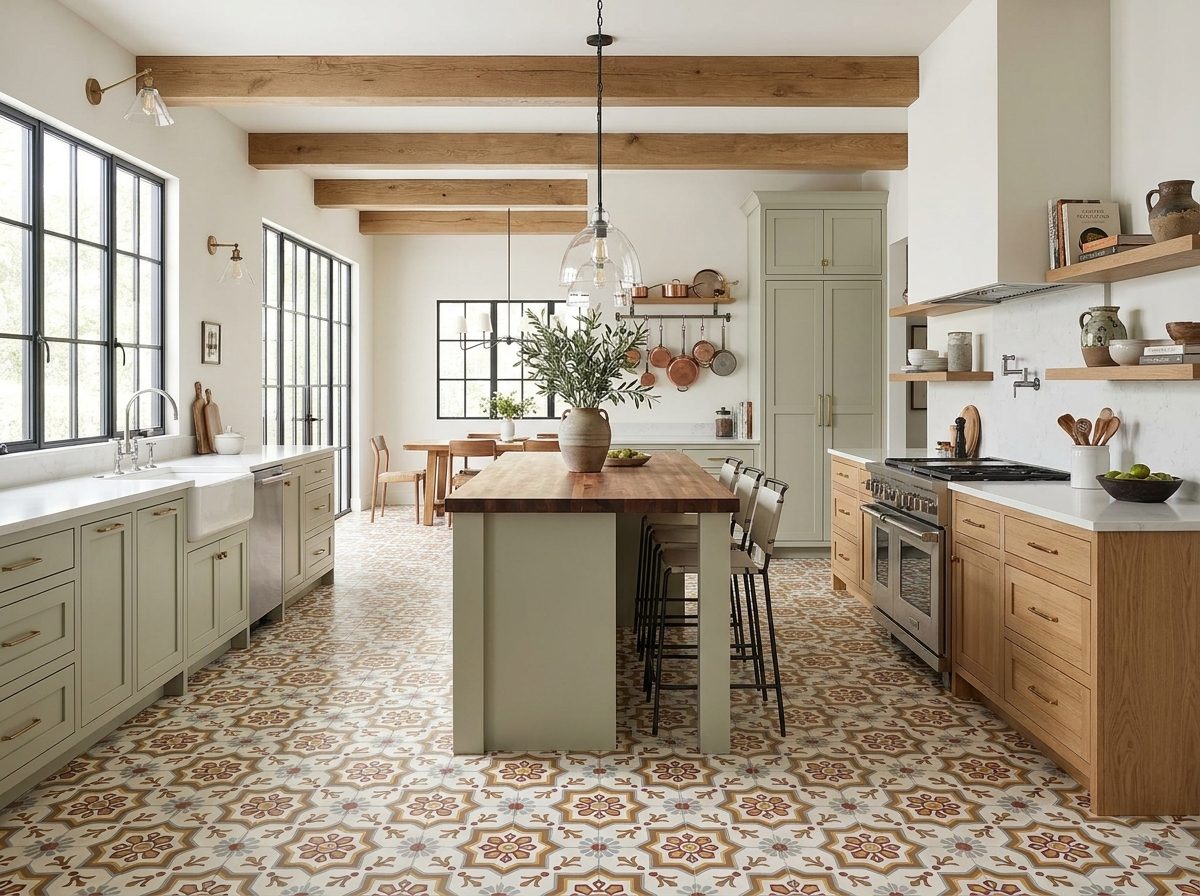
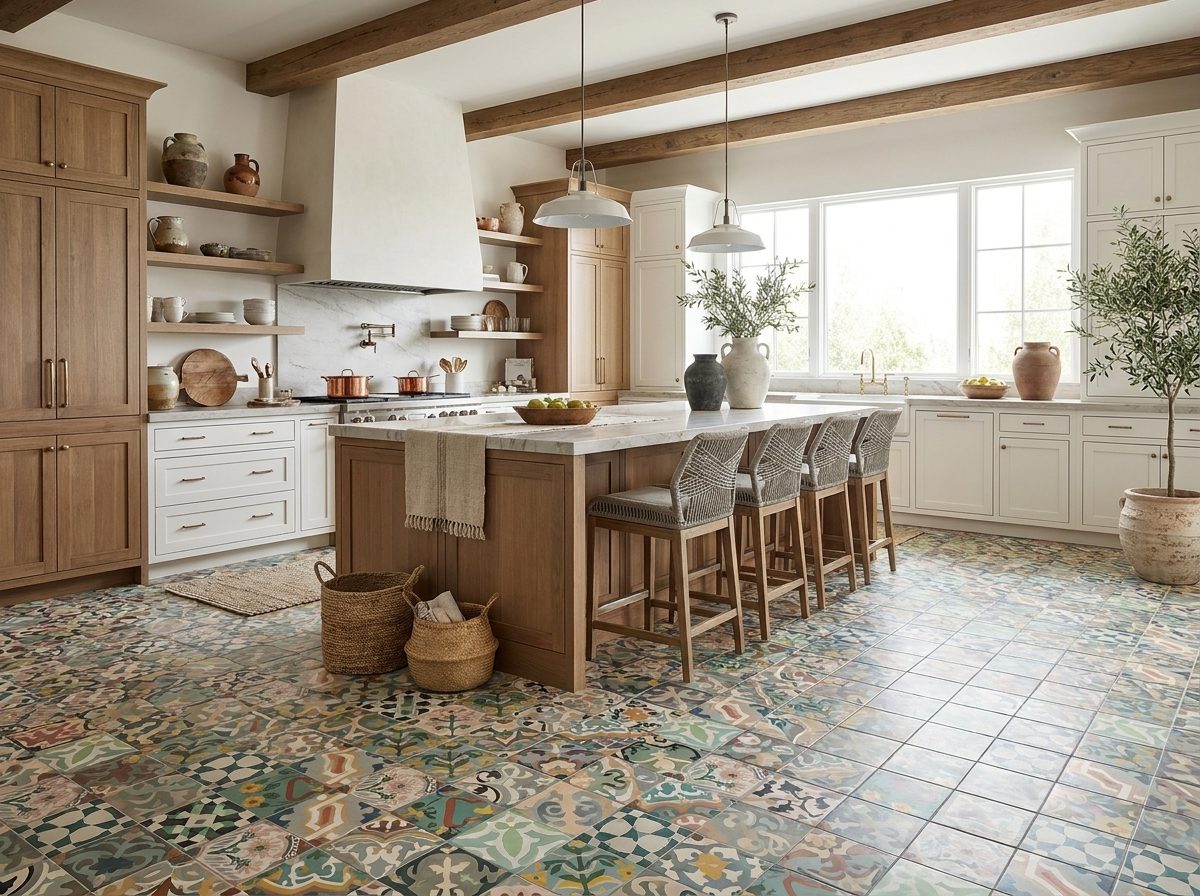
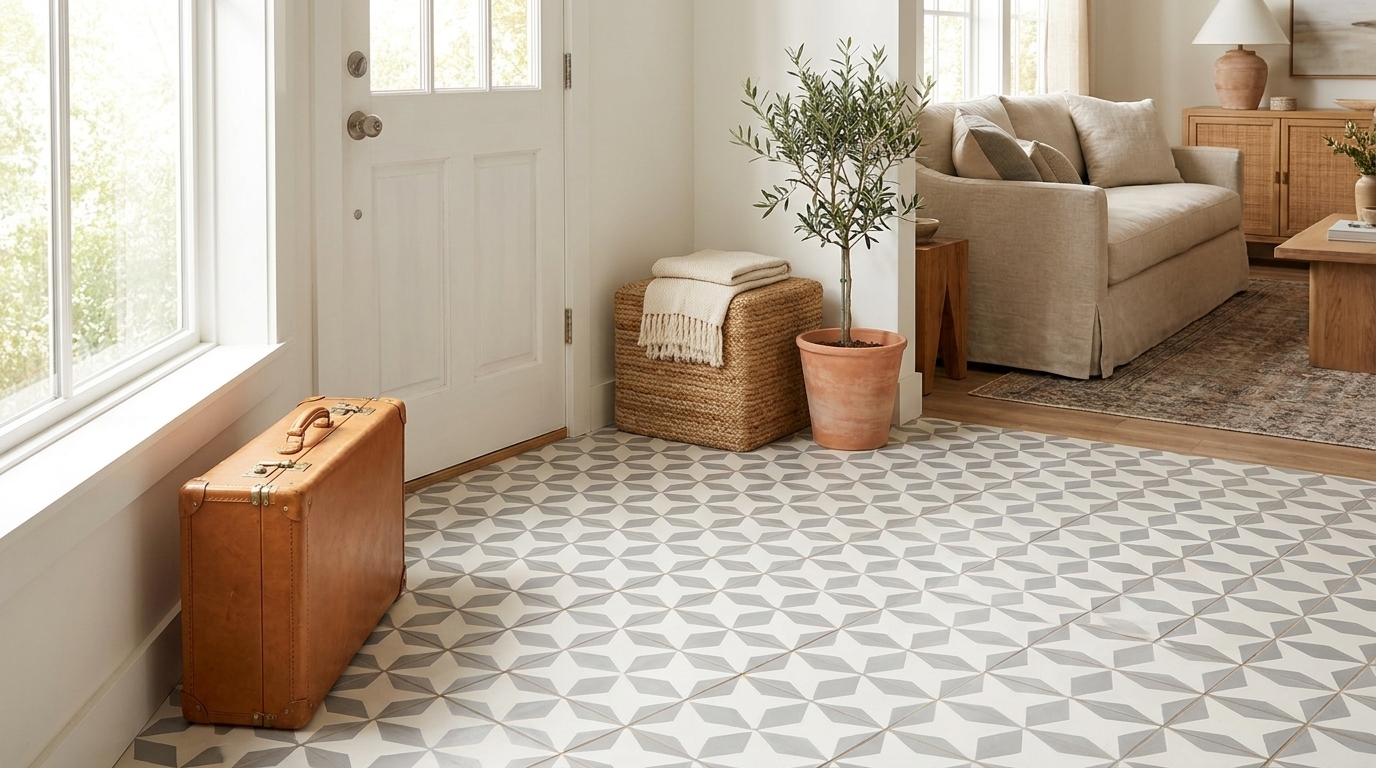
Cement tile floors: A cement tile floor in a complementary Moroccan or geometric pattern beneath a breeze block partition creates a unified material language across horizontal and vertical surfaces. Since both are hydraulically pressed from the same cement tradition, they share a material depth and warmth that manufactured tiles can’t replicate. Explore complementary floor tile patterns in the In-Stock Collection.
Warm plaster and limewash walls: The raw, slightly rough surface of cement breeze blocks pairs naturally with warm plaster or limewash wall finishes — both materials share an earthy, mineral quality that creates a cohesive tactile palette throughout a space.
Natural wood: Wood ceilings, timber screens, and wood furniture alongside cement breeze blocks create the combination of natural materials — warm and cool, fibrous and mineral — that defines the most grounded and livable contemporary interiors.
Lush planting: In outdoor applications particularly, climbing plants and dense tropical or Mediterranean planting alongside breeze block screens creates a biophilic quality — green against gray, organic form against geometric order — that has become one of the signature visual motifs of the best outdoor living design in 2026.

Specifying Breeze Blocks: What Designers Need to Know
Structural vs. non-structural applications: Cement breeze blocks used as non-load-bearing partitions, screens, and feature walls have different substrate and support requirements than structural applications. Confirm the structural specification with your engineer for any partition that will be floor-to-ceiling or will carry any load above it.
Mortar and joint specification: Standard masonry mortar is appropriate for most breeze block applications. For interior partitions and feature walls, a colored mortar or a mortar tinted to complement the block’s cement tone can enhance the finished appearance of the installation.
Finishing: Cement breeze blocks can be left in their natural state for exterior and rough-industrial interior applications, or finished with a penetrating sealer for interior installations where a more refined surface quality is desired. The sealer protects the surface from marking without altering the matte, mineral quality of the cement.
Scale and pattern: The 8×8 format of Original Mission Tile’s breeze block collection works well at human scale — a partition wall of these blocks reads as composed and textural without overwhelming a room. For larger exterior screen applications, consider the overall wall area and the viewing distance; a pattern that reads beautifully at arm’s length may need to be assessed differently at the scale of a full garden wall.
Use the Design Studio to visualize how breeze block patterns will work within your project’s specific proportions and alongside other material selections before presenting to clients.
FAQ: Breeze Blocks in Interior Design 2026
Are breeze blocks structural? Traditional concrete masonry units (CMUs) can be used structurally, but the handmade cement breeze blocks from Original Mission Tile are designed for non-structural applications — partitions, screens, feature walls, garden fences, and exterior screens. Always confirm structural requirements with your engineer before specifying.
Can cement breeze blocks be used outdoors? Yes. For covered outdoor applications and garden walls in most climates, cement breeze blocks perform well. For climates with significant freeze-thaw cycling or prolonged direct weather exposure, consult with the Original Mission Tile team on appropriate installation and finishing specifications before specifying.
Do breeze blocks require special installation? Breeze block installation follows standard masonry principles — mortar-set in running or stacked bond, with appropriate coursing and expansion joints for the scale of the installation. Specify a mason with experience in decorative masonry work for interior and feature wall applications where the visual finish of the installation is as important as its structural integrity.
How do breeze blocks interact with privacy and light? The opening-to-solid ratio of each breeze block pattern determines the balance between privacy and light transmission. Patterns with larger openings allow more light and less privacy; patterns with smaller openings provide more privacy with less light transmission. Original Mission Tile’s design team can advise on pattern selection for specific privacy and light filtering requirements.
Can I mix breeze block patterns with cement tile in the same project? Absolutely — and it’s one of the most cohesive material combinations available. Both products share the same cement base, mineral material family, and hydraulic press tradition, which means they work together naturally across horizontal and vertical surfaces. Browse completed projects that combine both materials in the Projects Gallery.
Conclusion: Architecture You Can Feel
The best architectural details share a quality that’s difficult to define precisely but immediately recognizable when you experience it: they make a space feel alive. They respond to the light. They cast shadows. They change across the day and across the seasons. They reward attention from across the room and from close up.
Breeze blocks have always had this quality. The reason they’re back in the design conversation in 2026 isn’t nostalgia — it’s recognition. Recognition that filtered light is more beautiful than direct light. That perforated surfaces are more interesting than solid ones. That materials which carry the evidence of their making create spaces that feel more human than materials which don’t.
For interior designers and renovators ready to bring that quality into their work — whether in a residential partition, a covered terrace, a garden screen, or a feature wall — handmade cement breeze blocks are one of the most distinctive and enduring specifications available.
The light comes through. And what it does on the other side is worth designing for.
Ready to explore breeze blocks for your next project?
Browse the 8×8 Breeze Block Collection and complementary floor tile patterns in the In-Stock Collection. For custom patterns and dimensions, begin a conversation through the Custom Made Collection.
Contact the Original Mission Tile design team for samples and expert project guidance →