A lot of people start shopping for kitchen tile after one bad moment. A stockpot slips out of the sink. Pasta water hits the floor. Someone walks through it in socks. Then the real question arrives fast. What will still look good, stay safe, and hold up after years of mess, movement, and impact?
That's why durability in a kitchen matters more than it does in most other rooms. A kitchen floor doesn't just need to match the cabinets. It has to deal with spills, chair legs, pet claws, dropped utensils, and the daily rhythm of people turning, pivoting, and standing in the same work zones over and over. Good tile handles all of that without asking for constant worry.
Why Choosing Durable Kitchen Tile Feels So Important
Most clients don't ask for “hard tile” in the abstract. They ask for a floor that can survive real life. They want something that won't feel ruined after the first holiday dinner, the first broken olive oil bottle, or the first time a pan lands corner-first instead of flat.
That pressure is justified. The kitchen is one of the few surfaces in the house that has to perform every day while still looking intentional. It's a design decision, but it's also a work-surface decision underfoot. If the tile is too soft, too slick, too porous, or poorly installed, you feel it quickly.
A good remodel plan helps before tile even arrives. If you're still early in the process, these practical kitchen remodel tips are useful because they deal with the lived reality of timing, disruption, and sequencing, which often affects flooring choices more than people expect.
The kitchen test is simple
A durable kitchen tile needs to answer yes to a short list of questions:
- Can it handle moisture without staining, swelling, or becoming a maintenance headache?
- Can it stand up to traffic in front of the sink, range, and refrigerator?
- Can it tolerate impact when something heavy gets dropped?
- Can it stay attractive after repeated cleaning and ordinary abuse?
Those standards are why tile remains a mainstream kitchen choice. In a 2026 Statista survey on remodeled kitchen flooring in the U.S., 22% of respondents said they used hardwood flooring or ceramic/porcelain tile. That grouping matters because it shows tile remains part of a top material category in one of the most scrutinized rooms in the house.
Practical rule: In kitchens, “durable” never means one trait. It means a material performs well across water, wear, impact, and cleaning.
Beauty still matters
No one wants a floor that behaves like commercial back-of-house tile if it makes the kitchen feel cold or flat. That's where the choice gets harder. The strongest spec sheet isn't always the right visual fit, and the prettiest tile isn't always right for the floor.
The smart approach is to judge tile the way a designer and installer would judge it together. Start with performance. Then weigh finish, comfort, upkeep, and style.
The Anatomy of Durability What Makes a Tile Tough
When people compare tile options, they often focus on one word: porcelain. That's understandable, but it's not enough. A tile's real durability comes from a combination of material, density, water absorption, surface hardness, and the conditions underneath it.

Start with the body of the tile
Think of tile body the way you'd think about wood species in cabinetry. Some materials are built for harder use.
Porcelain sits at the top of most kitchen-floor conversations because it's dense and water-resistant. According to this guide on porcelain tile for homeowners, the category is often chosen when buyers want strength with relatively straightforward upkeep.
Ceramic can also work well in kitchens, but it's usually a step down in toughness from porcelain. For many walls and lighter-duty uses, that's perfectly fine. For active floors, I'm more selective.
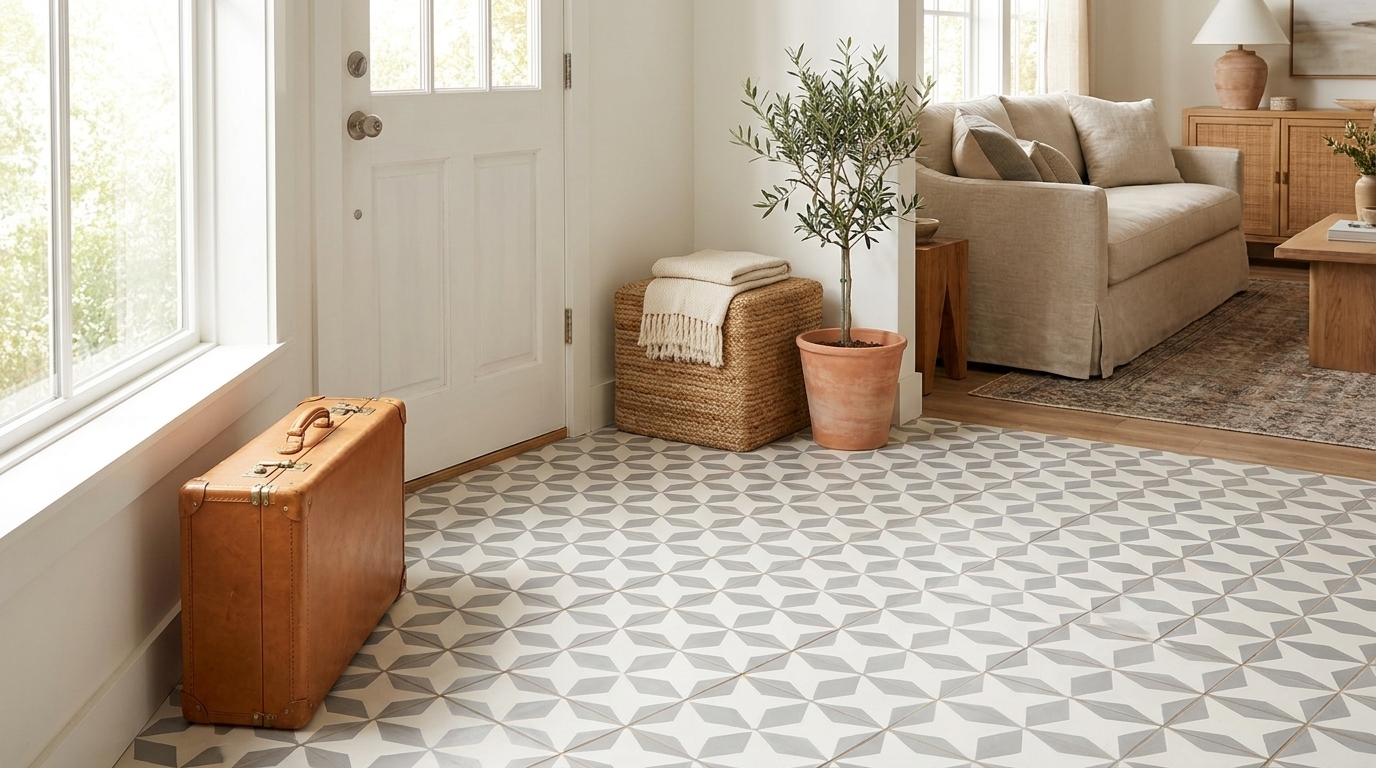
Cement tile is a different conversation. It isn't fired like ceramic or porcelain, and it isn't relying on a glaze layer for all of its visual character. Its durability shows up differently. It has mass, a matte feel, and through-body patterning that can age beautifully if it's specified and maintained correctly.
Natural stone can be durable too, but it introduces more variables. Porosity, acid sensitivity, and sealing needs all become part of the decision.
If you want a broader side-by-side material overview, this comparison of floor tile material options is useful when narrowing the field.
Water absorption tells you a lot
Water absorption is one of the most practical specs on any tile sheet. It tells you how much moisture the tile body takes in. In kitchen terms, that affects staining risk, moisture tolerance, and long-term stability.
The easiest analogy is this. A lower-absorption tile behaves more like a rock. A higher-absorption tile behaves more like a sponge.
A source on kitchen floor tile buying notes that porcelain's superior durability is tied to a water absorption rate below 0.5%, while ceramic is listed at 3–7% absorption. The same source also notes that for high-traffic kitchens, a PEI IV or V rating is the target, and that many failures come from subfloor movement rather than the tile body itself in this kitchen tile buying guide.
Lower absorption usually means fewer moisture-related problems. It doesn't make a floor indestructible, but it gives you a stronger starting point.
PEI is wear resistance, not a magic score
Clients often see PEI and assume it rates every aspect of toughness. It doesn't. It mainly helps you understand resistance to surface wear on glazed tile.
A simple way to think about PEI is like tire rating. It doesn't tell you how the car handles on ice, how comfortable the ride feels, or how well the suspension was installed. It tells you something important, but only one important thing.
For kitchen floors, PEI matters because traffic wears finish over time. If the tile is going under a breakfast table, around an island, or across a tight galley path, that rating deserves attention.
The finish changes the experience
Two tiles can have similar strength on paper and feel completely different in use. Finish affects cleaning, traction, reflected light, and how obvious crumbs or smudges look at noon.
That's why durable kitchen tile shouldn't be chosen from a sample board alone. Specs matter. So does how the surface behaves when it's wet, greasy, or covered with flour.
Matching Tile to its Job Floor Wall or Countertop
The biggest specification mistake I see is using one idea of “durable” for every surface. Floors, walls, and countertops don't fail the same way, so they shouldn't be judged by the same standards.
A glossy decorative wall tile may be perfectly durable where it belongs. Put that same tile on the kitchen floor and it can become a maintenance problem or a slipping hazard. Countertops raise another issue altogether because they deal with food prep, staining, and direct contact with cookware.
Tile Durability Requirements by Application
| Application | Primary Concern | Key Metric |
|---|---|---|
| Floor | Wear, impact, traction, moisture | PEI rating, water absorption, finish texture |
| Wall | Cleanability, stain resistance, splash tolerance | Surface finish, porosity, ease of wiping |
| Countertop | Stain resistance, heat tolerance, scratch resistance | Density, porosity, sealing needs |
What works where
For floors, I usually sort options this way:
- Good: Ceramic in lower-demand kitchens where traffic is moderate and the tile is rated appropriately for floor use.
- Better: Porcelain with the right wear rating and a matte or lightly textured finish.
- Best fit for character-driven spaces: Cement tile or selected natural stone when the client understands sealing, maintenance, and patina.
For walls and backsplashes, the bar is different. You can use more decorative surfaces because they don't absorb constant foot traffic. That opens the door to glossier finishes, more delicate handmade variation, and more dramatic pattern.
For countertops, I'm stricter. Non-porous or tightly managed porous materials are easier to live with. Kitchens punish surfaces with oil, acids, sauces, and hot cookware. A material that looks durable on a mood board can become fussy once lemons, wine, and tomato sauce show up.
Don't copy bathroom logic into kitchens
A lot of tile selection advice crosses over between rooms, but not all of it should. This renovator's guide to tiles is useful because it helps show how application changes the specification. The same mindset matters in kitchens. Surface location should drive the choice.
A tile can be durable on a wall and wrong on a floor. Always ask, “Durable against what?”
That single question prevents expensive mistakes.
Beyond Hardness Slip Resistance and Daily Safety
Hardness gets most of the attention, but daily safety decides whether a kitchen floor feels good to live with. A floor can be technically strong and still be a poor choice if it gets slick every time water, oil, or condensation hits it.

Houzz makes that trade-off clear in its discussion of kitchen flooring. Tile is durable, but it can still crack or chip from a heavy dropped object, and smooth finishes can become very slippery when wet in its overview of popular kitchen flooring materials.
Smooth isn't always practical
Polished tile photographs beautifully. It reflects light, sharpens a room, and can make a compact kitchen feel more open. But kitchens are working rooms. If you cook often, a highly smooth finish can become the detail you regret.
In daily use, these finish tendencies usually matter more than people expect:
- Matte finishes often balance traction and cleanability well.
- Lightly textured surfaces help with grip, especially near sinks and exterior doors.
- Highly polished surfaces can show smears, feel slick when wet, and make every crumb visible.
- Heavily textured tile can improve traction but may hold dirt in the low spots if the pattern is aggressive.
If traction is a top concern, this guide to anti-slip tile options gives a helpful framework for thinking about finish and application together.
Durability has to include comfort
A safe kitchen floor also needs to feel predictable underfoot. That matters more in homes with kids, older adults, or anyone who spends a lot of time cooking in one place.
A tile with a slight tooth to the finish often feels more grounded than one with a glassy face. That doesn't mean rough. It means enough grip to stay stable when a few drops of water hit the surface.
If your kitchen routinely sees spills, skip the finish that looks best in a showroom spotlight and choose the one that behaves best on a Tuesday night.
This short video gives a useful visual reference for how surface choice affects real-world use.
What doesn't work
The weak approach is choosing solely by hardness, then assuming rugs will solve everything. Rugs help, but they don't fix a fundamentally slippery field tile. In many kitchens, the better move is a floor with built-in traction and fewer rescue measures.
Installation and Maintenance The Keys to Longevity
The tile isn't the whole system. A strong tile over a bad substrate is still a bad floor.
Most long-term problems don't begin with the color or pattern. They begin below the surface. If the floor has movement, deflection, voids, poor prep, or uneven transitions, even a durable material can chip, crack, or develop lippage. Here, good product selection and good installation have to meet.
The subfloor decides a lot
The floor has to be clean, flat, and stable before tile goes down. Not “close enough.” Flat enough that the tile sits fully supported and the installer isn't fighting peaks and dips with mortar thickness.

A few installation realities matter in every kitchen:
- Subfloor prep matters first: Movement underneath tile is one of the most common paths to failure.
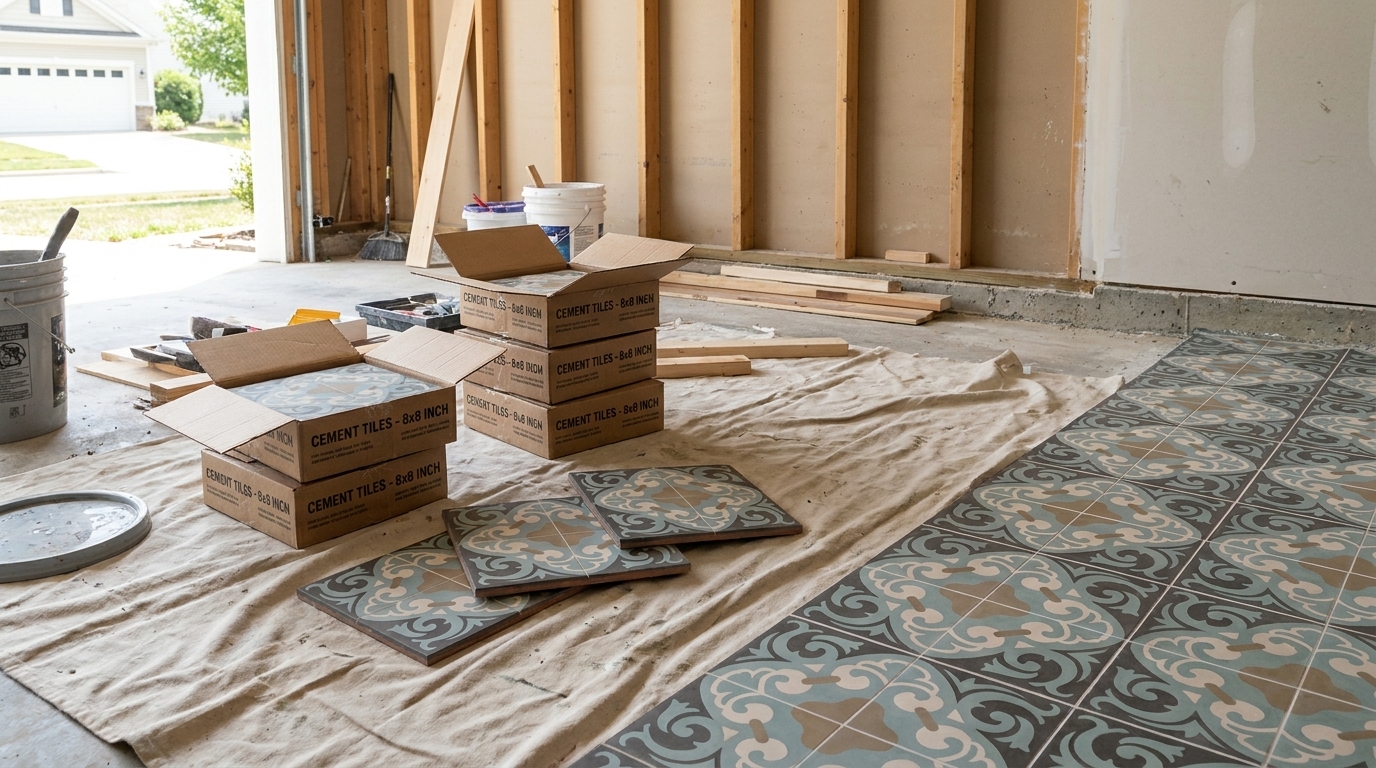
- Mortar choice should match the tile: Large-format porcelain, handmade tile, and porous materials don't all want the same treatment.
- Layout affects durability too: Awkward slivers at edges and poor transition planning can create weak-looking, vulnerable details.
Grout and sealer are performance choices
People often treat grout like a color decision. It's more than that. In kitchens, grout affects stain resistance, water resistance, and cleaning effort.
Epoxy grout is often the tougher option where stain resistance is a priority. It's especially useful when the kitchen sees frequent spills and the owner wants less anxiety around joints.
Cementitious grout can still work, but it usually asks for more care and may be more vulnerable to staining if left unprotected.
Sealing is another dividing line. Some tile bodies need it. Some don't. Some grouts need it even when the tile does not. Cement tile and many natural stones usually require an owner who's willing to maintain them properly. That's not a flaw. It's just part of the contract.
Installer's note: Ask what needs sealing, how often it should be checked, and which cleaner is safe before the project closes out.
Maintenance that actually preserves the floor
The best maintenance plan is simple enough that people will follow it.
- Sweep grit regularly: Fine dirt works like sandpaper over time.
- Clean with appropriate products: Harsh or acidic cleaners can damage some surfaces and some sealers.
- Address chips and loose tiles early: Small failures spread when water and movement get underneath.
- Revisit sealer when required: Porous materials don't stay protected forever without upkeep.
What doesn't work is assuming durability means zero maintenance. Durable kitchen tile should be resilient, not neglected.
Handcrafted Durability The Case for Cement Tile
If you only read mainstream buying guides, you'd think the answer always ends at porcelain. Porcelain deserves its reputation, but it isn't the only durable kitchen tile worth specifying.
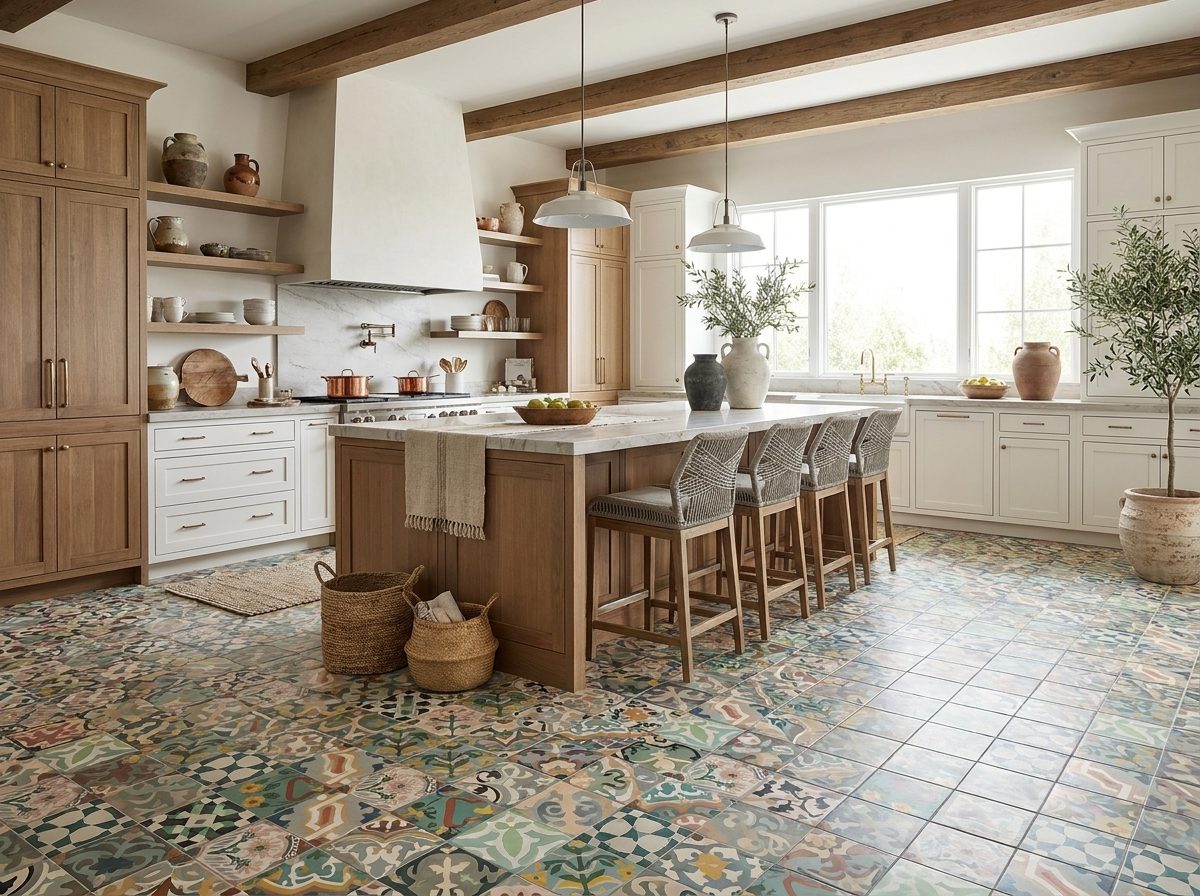
Handcrafted cement tile belongs in the conversation when the project calls for depth, pattern, and a surface that gains character over time instead of trying to look factory-perfect forever.

Why cement tile wears differently
Cement tile doesn't rely on a thin printed image or a standard glaze look to create visual impact. Its pattern is part of the tile itself, with color carried into the body rather than sitting only on the surface. That changes the aging story.
Instead of chasing a pristine, untouched look, cement tile often develops a softer lived-in finish. In the right kitchen, that's a feature. It suits homes where texture, variation, and patina feel more honest than a perfectly uniform floor.
One option in this category is handmade cement tile for kitchens and other applications, which shows how the material is used across floors and walls when clients want more visual character than standard porcelain usually offers.
The trade-off is maintenance, not weakness
Cement tile isn't the choice for someone who wants a fully carefree surface and never wants to think about sealing. It is the choice for someone who values artistry and is willing to protect it properly.
That means specifying it carefully:
- Seal it correctly: Cement tile is porous and needs protection against kitchen spills.
- Use the right installer: Handmade tile rewards crews who understand variation, layout, and edge handling.
- Expect natural change: The surface may mellow with use. In many interiors, that makes it look better, not worse.
Where cement tile shines
I like cement tile in kitchens where the floor is meant to anchor the room rather than disappear into it. It works especially well in classic, Mediterranean, Spanish revival, eclectic, and hospitality-inspired spaces where pattern belongs in the architecture.
It also makes sense in kitchens where the owner wants a matte, grounded feel underfoot instead of a glossy, slick finish. That tactile quality is one reason many designers keep returning to it.
Cement tile asks a little more from the owner, but it gives back a surface with presence, depth, and a kind of durability that looks better once people have actually lived on it.
Conclusion Your Framework for Choosing the Right Tile
The right durable kitchen tile isn't the one with the loudest marketing claim. It's the one that matches the way your kitchen is used.
A simple framework keeps the decision clear:
Use this checklist when you shop
- Start with the application: Floor, wall, and countertop surfaces need different kinds of durability.
- Read the technical basics: For floors, pay attention to wear rating, water absorption, and whether the material is suited to heavy kitchen use.
- Check the finish in real conditions: Ask how it behaves when wet, how it feels underfoot, and how easily it shows residue.
- Ask about installation requirements: A strong tile still needs a flat, stable substrate, suitable mortar, and the right grout.
- Be honest about maintenance: If you want lower upkeep, choose accordingly. If you want handcrafted character, accept the care that comes with it.
- Choose the look last: Once performance is right, select the color, scale, and pattern that fit the room.
That's the balance clients are usually after. They want a kitchen that works hard, cleans up well, and still feels like part of the home they wanted to build.
If you're comparing options for a kitchen project and want a surface with lasting character, Original Mission Tile is a useful place to explore handmade cement tile, application guidance, and design possibilities for floors, walls, and custom work.