There’s a shift happening in how the world’s most intentional interiors are being finished — and it starts at the floor.
After years of minimalism pushing materials toward sameness — large-format slabs, monochrome neutrals, surfaces that whisper rather than speak — interior design in 2026 is ready to make noise again. Pattern is back. Texture is back. The handmade is back. And cement tiles, with their century-old craft tradition and infinite visual range, are sitting at the center of that conversation.
This isn’t a trend report built on speculation. It’s a distillation of what leading designers and architects are actually specifying right now: in bathrooms that feel like retreats, kitchens that feel like the heart of a home, terraces that blur the boundary between inside and out, and patios that demand to be noticed. Whether you’re mid-project or building your material library for the year ahead, what follows is a room-by-room guide to the floor tile movements defining 2026 — and how handmade cement tiles fit within each of them.
The Big Picture: What’s Driving Interior Design Tile Trends in 2026

Before diving room by room, it’s worth naming the forces shaping these trends. Understanding the why behind a trend is what allows a designer to use it with authority rather than simply react to it.
Craft as counterculture. The mass-production aesthetic has reached a saturation point. Clients — especially the design-conscious clients who hire architects and interior designers — are seeking materials that carry the evidence of their making. A surface that looks like it could have come from a factory isn’t aspirational anymore. Cement tiles, with their natural pigment variation and hydraulic press process unchanged since the 1870s, are a direct response to this hunger.
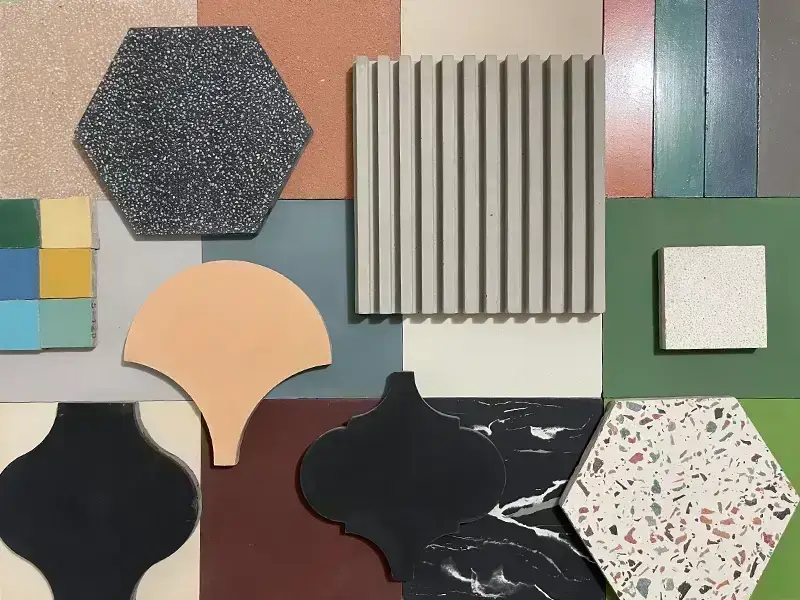
The return of color and pattern. After a decade in which “timeless” became synonymous with “neutral,” 2026 interiors are embracing color with new confidence. Deep terracottas, smoky blues, warm ochres, botanical greens — these are the palettes showing up in the best residential and hospitality work right now. Pattern — geometric, Moorish, botanical — follows naturally.
Sustainability as specification. Cement tiles are inherently low-impact: no kiln firing, no synthetic glazes, mineral pigments, and a lifespan measured in decades rather than years. For designers fielding increasing client questions about sustainable material choices, this is a meaningful advantage.
Indoor-outdoor continuity. The post-pandemic reshaping of residential and hospitality spaces has cemented (forgive the pun) the importance of terrace and patio design. These aren’t afterthoughts anymore — they’re primary living spaces, and they’re being finished accordingly.
Bathroom Floor Tile Trends 2026: The Return of the Considered Space

The bathroom has completed its transformation from utility room to sanctuary — and in 2026, the floor is where that story is being told most powerfully.
Trend 1: Jewel Tones on the Floor
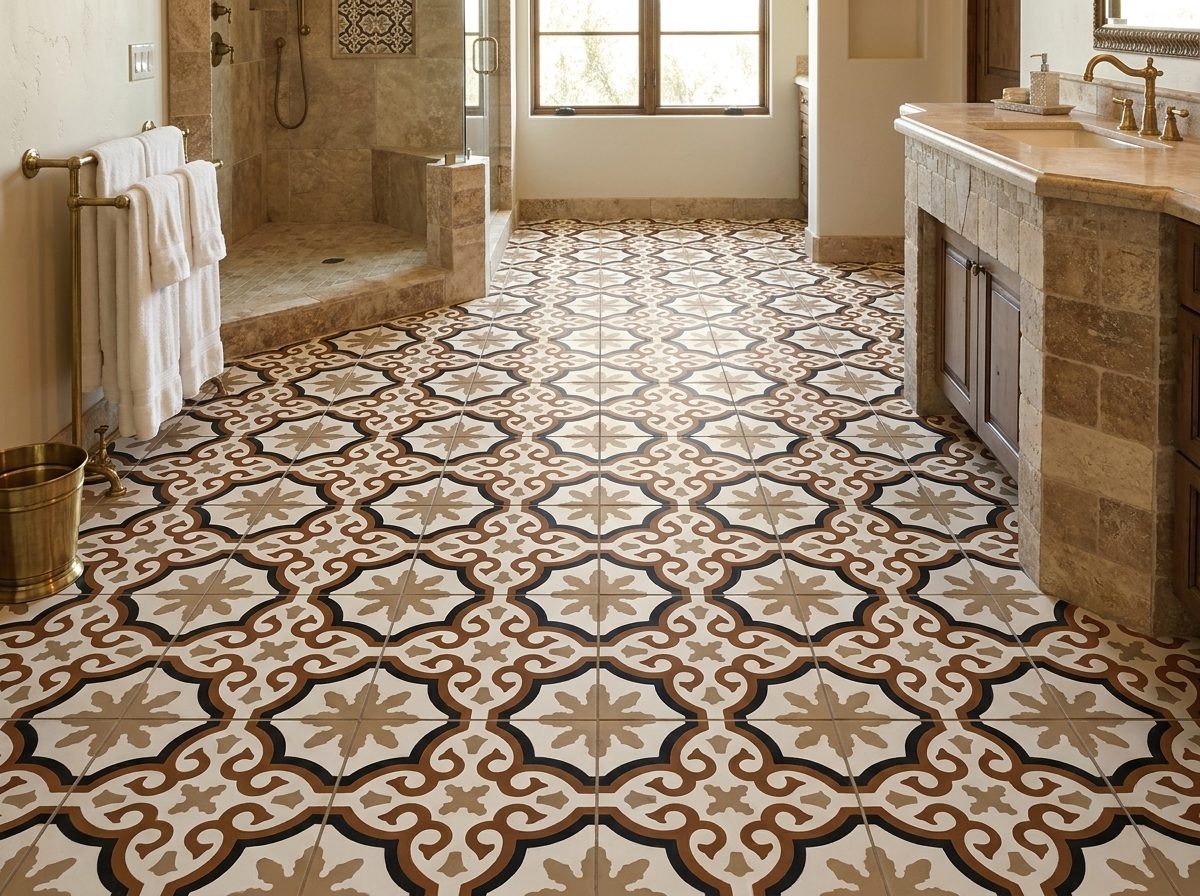
The all-white bathroom — crisp, clean, undeniably safe — is quietly stepping aside. What’s replacing it is more interesting: deep sapphire blues, forest greens, plum, and burnt amber appearing on bathroom floors in confident, unapologetic patterns. Cement tiles are uniquely suited to this trend because their mineral pigments produce color with a depth and richness that printed surfaces simply can’t replicate. A cobalt blue geometric on a cement tile floor glows differently than the same color on a digital-print ceramic — warmer, more alive, more dimensional.
At Original Mission Tile, our designers love pairing a jewel-toned geometric floor with unlacquered brass fixtures and a simple white wall — three elements that each do their job and let the floor anchor everything.
Trend 2: Pattern as Feature Wall Extension
Designers are increasingly running the same tile from the bathroom floor up onto a feature wall — particularly the wall behind a freestanding tub or the back wall of a walk-in shower. This creates an enveloping, immersive quality that feels more like a room has been designed than decorated. Cement tiles handle this beautifully because the same pattern and colorway reads consistently across both planes, creating visual continuity that more reflective or glazed tiles often can’t achieve.
Trend 3: The “Imperfect Grid” Look
One of the quieter but most sophisticated tile trends of 2026 is a renewed appreciation for the natural variation inherent in handmade materials. Rather than compensating for slight color shifts between tiles, designers are leaning into them — choosing installation methods that celebrate rather than hide the handmade quality. Mixed-lot intentional variation, subtle bleeding at grout joints, slightly warmer tones in one corner of a room — these “imperfections” are the point. They’re what distinguishes a room that was lived in from one that was staged.
Explore bathroom project inspiration → Projects Gallery
Specification Notes for 2026 Bathroom Floors
- Slip resistance: Cement tiles’ natural matte surface is a specification advantage — particularly relevant as more designers work with wet-area shower floors
- Sealing in wet areas: Specify a penetrating sealer formulated for wet environments; reapply annually in shower applications
- Grout color decisions: A grout color that blends with the tile’s dominant tone creates an immersive effect; contrasting grout emphasizes the grid and creates a more graphic, editorial look — both are valid, and both are trending in 2026
Kitchen Floor & Backsplash Tile Trends 2026: Pattern as the Design Decision

The kitchen in 2026 is more than a functional space — it’s the room where aesthetic ambition lives. And increasingly, it’s the floor or the backsplash where that ambition is expressed.
Trend 4: Terracotta-Adjacent Palettes
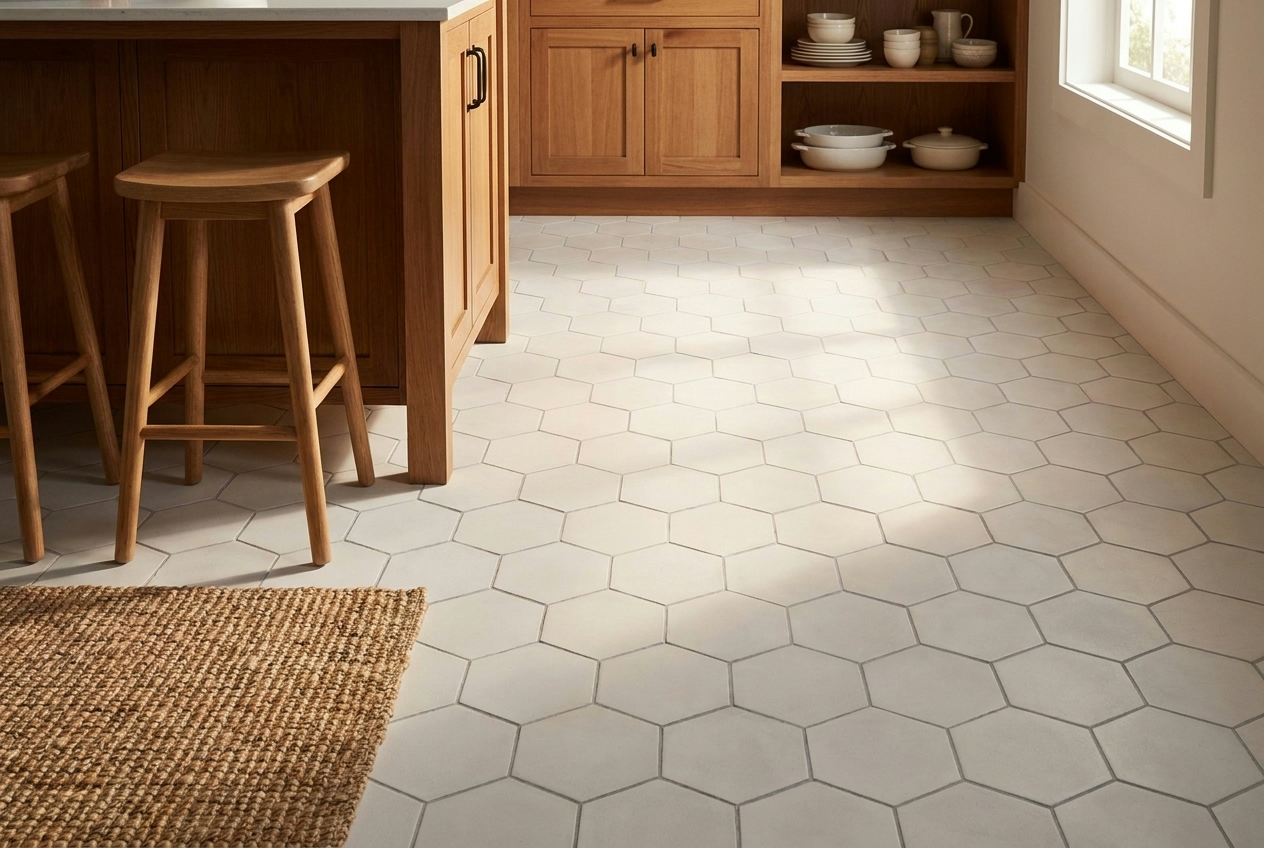
Warm, earthy tones — terracotta, clay, rust, sun-bleached cream — are dominating kitchen tile specifications this year. This isn’t the terracotta of the 1990s; it’s more refined, more considered, and almost always paired with unexpected contrasting elements: deep green cabinetry, matte black hardware, cool stone countertops. Cement tiles in these palettes bring the warmth that polished surfaces can’t — a tactile, earthy quality that makes a kitchen feel genuinely inviting rather than merely impressive.
Trend 5: The Statement Kitchen Floor
For years, the dominant kitchen floor trend was neutral: large-format stone-look porcelain, wide-plank wood-look LVT, materials that receded to let other elements lead. In 2026, the floor is stepping up. Bold geometric patterns — Moroccan stars, interlocking diamonds, classic encaustic grid combinations — are being used on kitchen floors in a way that would have felt risky five years ago and feels absolutely right today.
The key insight for designers: the bolder the floor, the simpler everything else should be. Flat-front white cabinetry, a single-slab stone countertop, simple hardware — and then an extraordinary cement tile floor that makes the whole room.
Trend 6: The Backsplash as Gallery Wall
The kitchen backsplash has found a new identity in 2026: not as a utilitarian splash guard but as the room’s focal artwork. Small-format cement tiles in intricate Moroccan patterns, or a bold two-color geometric that reads almost like an abstract composition — these are backsplash treatments that clients photograph and share, that anchor design concepts, and that elevate the perceived value of an entire renovation.
Browse kitchen and backsplash patterns → In-Stock Collection
Kitchen Specification Notes for 2026
- Scale matters: A large geometric on a kitchen floor should be proportionate to the room; in compact kitchens, smaller-format patterns (or a single strong color with a simple border) create impact without overwhelming
- Backsplash to countertop relationship: Pull one color from the tile into the countertop selection — even a subtle echo creates cohesion that elevates both materials
- Practical sealing for kitchens: Penetrating sealer before grouting, topcoat after installation; specify a sealer appropriate for food-area floors
Terrace & Patio Floor Tile Trends 2026: The Outdoor Room Grows Up

If there’s one space that has undergone the most dramatic design re-evaluation over the past few years, it’s the terrace and the patio. These are no longer transition zones between inside and outside — they’re primary living rooms, entertaining spaces, and in hospitality projects, revenue-generating destinations. And the floor is where that transformation begins.
Trend 7: Bringing Interior Design Language Outdoors
The most exciting development in terrace and patio design in 2026 is the dissolution of the interior/exterior visual boundary. Designers are taking the same patterns, palettes, and material language from inside the home and extending them outdoors — creating a seamless visual flow that makes both spaces feel larger and more intentional.
Cement tiles are exceptionally well-suited to this approach. When the same or complementary pattern is used on a kitchen floor and the adjacent terrace, the transition between the two spaces becomes fluid rather than abrupt. The eye moves naturally from one to the other, and the entire footprint of the home feels designed as a whole.
Trend 8: Moroccan and Mediterranean Revival
2026 is seeing a strong return of Moroccan and Mediterranean-influenced pattern on outdoor surfaces. The geometry of traditional Zellige-adjacent patterns, the eight-pointed stars of Andalusian tile work, the interlocking arabesque — these patterns carry a warmth and a cultural richness that resonates particularly strongly in outdoor spaces, where they’ve lived for centuries in the courtyards and terraces of the Mediterranean world.
These patterns work beautifully in both contemporary outdoor settings (clean lines, minimal furniture, architectural planting) and more layered, maximalist terraces (mixed textiles, abundant greenery, mixed lighting). Their visual depth means they read well at any scale.
Trend 9: Monochromatic Outdoor Floors
A more restrained but equally compelling outdoor trend: monochromatic or near-monochromatic cement tile floors in sophisticated single tones — deep slate gray, warm sand, faded olive green. These aren’t the absence of a design decision; they’re a very specific one. A single-color cement tile terrace floor, properly sealed and installed, creates a surface with extraordinary textural presence — particularly when the natural variation of the handmade tile is allowed to show.
Explore outdoor and terrace project applications → Projects Gallery
Outdoor Specification Notes for 2026
- Covered vs. uncovered applications: Cement tiles perform best on covered terraces and patios where they’re protected from prolonged direct weather exposure and freeze-thaw cycles; always consult with the Original Mission Tile team for specific outdoor project requirements
- Outdoor-rated sealer: Specify a penetrating sealer rated for outdoor use; reapplication schedule depends on climate and exposure
- Drainage consideration: Ensure substrate design accounts for drainage — standing water is the primary risk factor in outdoor cement tile installations
Entryways, Hallways & Living Spaces: Trend 10 — Pattern as Architecture

Not every trend lives in a specific room. One of the strongest overarching movements in 2026 interior design is the use of floor pattern as an architectural element — a way of defining space, directing movement, and creating hierarchy within an open plan.
Using Cement Tile to Define Zones
In open-plan residential and commercial spaces, cement tile is increasingly being used as a spatial tool rather than simply a surface treatment. A dining area defined by a medallion pattern. A reading nook marked by a band of contrasting border tile. A hotel corridor where the pattern changes subtly at every third bay to create a sense of rhythm and progression.
This approach works because cement tile’s visual density — the depth of its pattern and color — is strong enough to read as architecture without requiring a raised threshold or a physical partition. The pattern does the organizing work.
Stair Risers: The Detail That Makes a Home
One of the most searched and shared cement tile applications of the past two years — and one that continues to grow in 2026 — is the patterned stair riser. A flight of stairs with plain treads and cement tile risers (each one patterned, or alternating with blank risers for a more measured effect) transforms a functional architectural element into a moment of genuine delight. It’s the kind of detail that makes a home feel authored.
Design your own pattern combination → Design Studio
Custom Cement Tiles in 2026: When the Trend Is Yours Alone

The most sophisticated design move in 2026 isn’t following a trend — it’s creating something that transcends them. For designers and architects whose projects demand a material that belongs entirely to that space and no other, custom cement tiles offer a level of creative specificity that no catalog can provide.
At Original Mission Tile, the Custom Made Collection is built for exactly this kind of collaboration. Designers bring a direction — an architectural detail to be abstracted into a repeat pattern, a brand color system to be translated into tile, a historical reference to be reinterpreted for a contemporary space — and the team works to make it real.
Custom work requires planning: minimum order quantities apply, and lead times should be built into the project schedule early. But the result is a specification that no other project in the world will share — which, in 2026, might be the most valuable design asset of all.
How to Use the Original Mission Tile Design Studio for Trend-Led Projects
For designers who want to explore how 2026’s trending palettes and patterns might work in a specific project context, the Design Studio is an indispensable tool.
Visualize pattern combinations and colorways in real time, before samples arrive. Export layouts for client presentations. Compare the same pattern in multiple colorways side by side. It’s the fastest way to move from a trend reference image to a client-approved specification — and it’s available right now, for any project.
FAQ: Cement Tile Trends for 2026
Are cement tiles still trending in 2026, or have they peaked? Cement tiles have moved beyond trend into something more durable: a design standard. The specific patterns and colorways that are popular change from year to year, but the appeal of handmade, artisan surface materials is only deepening as the broader design world moves away from mass-produced uniformity. The question for 2026 isn’t whether to use cement tiles — it’s which pattern fits this particular space.
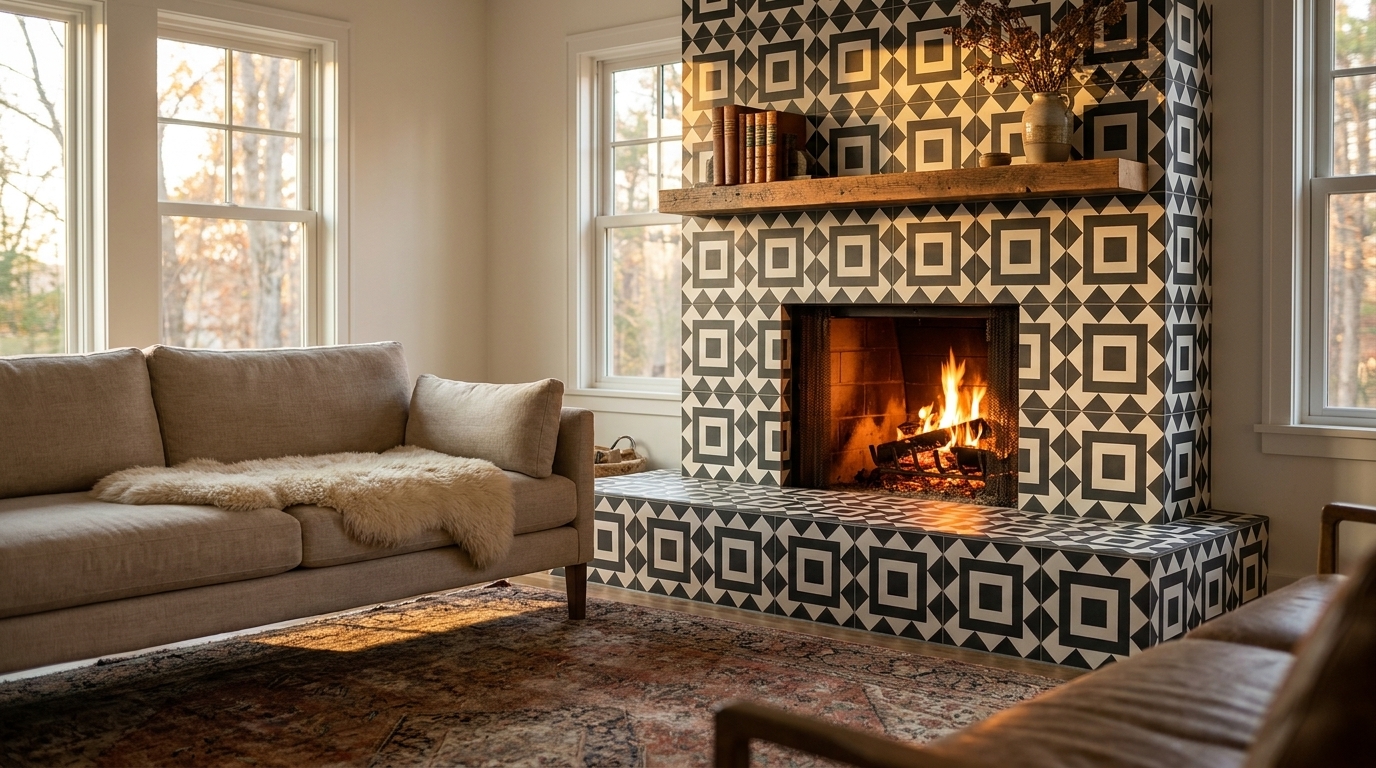
What are the most popular cement tile patterns for 2026? Moroccan star and eight-pointed geometric patterns are having a strong moment, particularly in deeper, richer colorways. Classic encaustic combinations (black/white/cream) remain perennially relevant. Terracotta-adjacent palettes — clay, rust, warm ochre — are dominating kitchen and terrace applications. And monochromatic single-color fields are finding favor in more restrained, contemporary contexts.
How do I specify cement tiles for a project with both indoor and outdoor spaces? The key is establishing a shared design language — a color palette or pattern family that can be expressed on both surfaces — and then selecting the appropriate sealer and installation method for each context. Original Mission Tile’s design team can guide outdoor application requirements for specific patterns and climates.
Can cement tiles work in contemporary or minimalist interiors, or are they only for maximalist spaces? They work beautifully in both. In a minimalist space, a single cement tile in a quiet geometric pattern or a monochromatic tone adds texture and materiality without visual noise. In a maximalist context, bold Moroccan patterns and jewel-tone combinations hold their own against rich furnishings and layered textiles. The design vocabulary of cement tiles is broad enough to belong almost anywhere.
How early in the design process should I order samples? As early as possible — ideally at the concept stage. Seeing cement tile samples in the actual project light, against actual material selections, is essential for confident specification. Color perception in cement tiles is meaningfully affected by lighting conditions, and the natural variation of the handmade surface reads differently in person than on screen.
Conclusion: The Floor Is the Foundation of Every Great Interior
In 2026, the most compelling interiors are the ones that feel like they were made — not assembled. The ones where every surface carries intention, where the material choices reflect a point of view, and where the floor is as considered as the furniture above it.
Cement tiles, with their handmade heritage and their extraordinary visual range, are one of the most powerful tools available for creating that quality of interior. Whether the brief calls for a jewel-toned bathroom sanctuary, a terracotta kitchen that feels like southern Spain, a terrace that extends the home’s design language into the open air, or a custom pattern that belongs to this project and no other — the craft and the possibility are there.
The trends of 2026 are, at their core, a return to the things that have always made great design great: materiality, intention, and beauty that deepens with time.
Working on a 2026 project that deserves an extraordinary floor?
Explore the In-Stock Collection for proven patterns ready to ship, begin a custom design conversation for something entirely singular, or use the Design Studio to visualize your concept today. Browse the Projects Gallery for real-world inspiration across every application.
Our design team is here to support your project from first concept through final installation. Contact us for samples, technical specifications, and expert guidance →