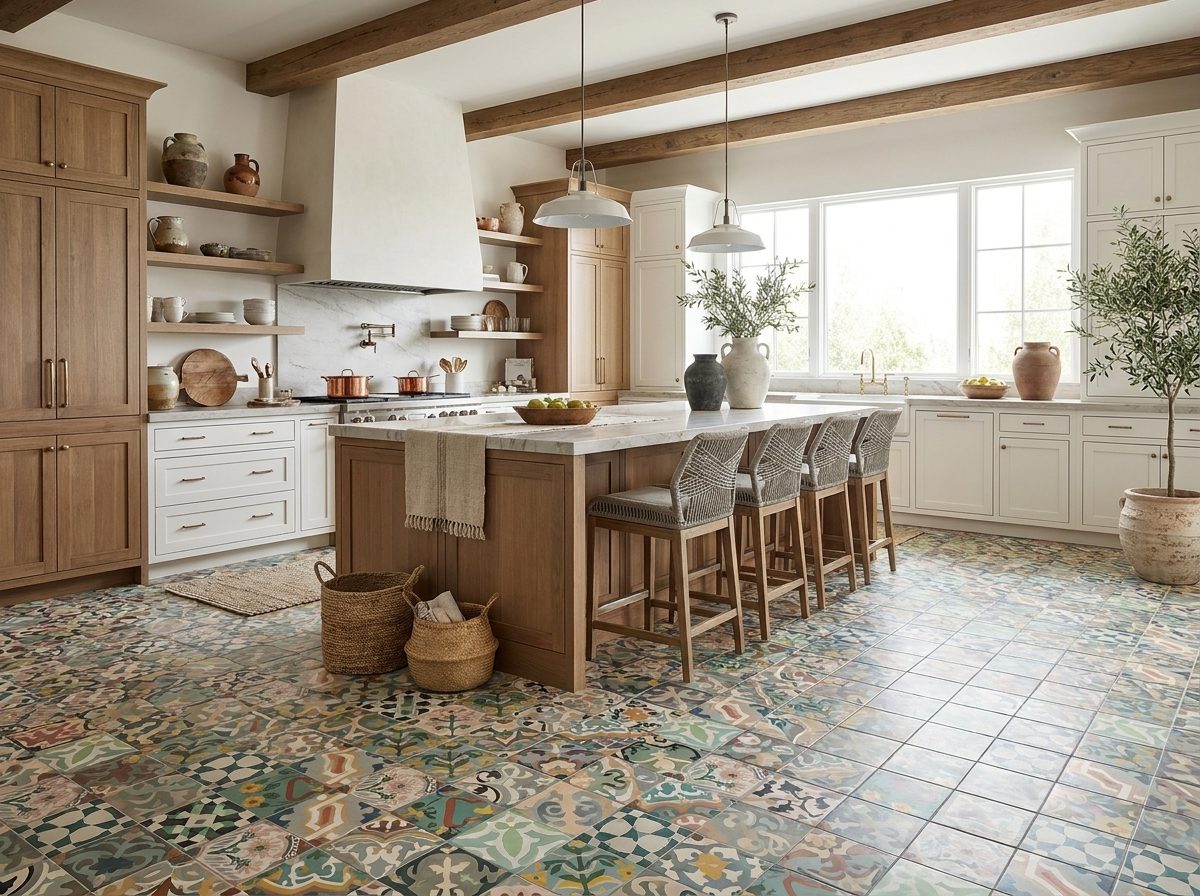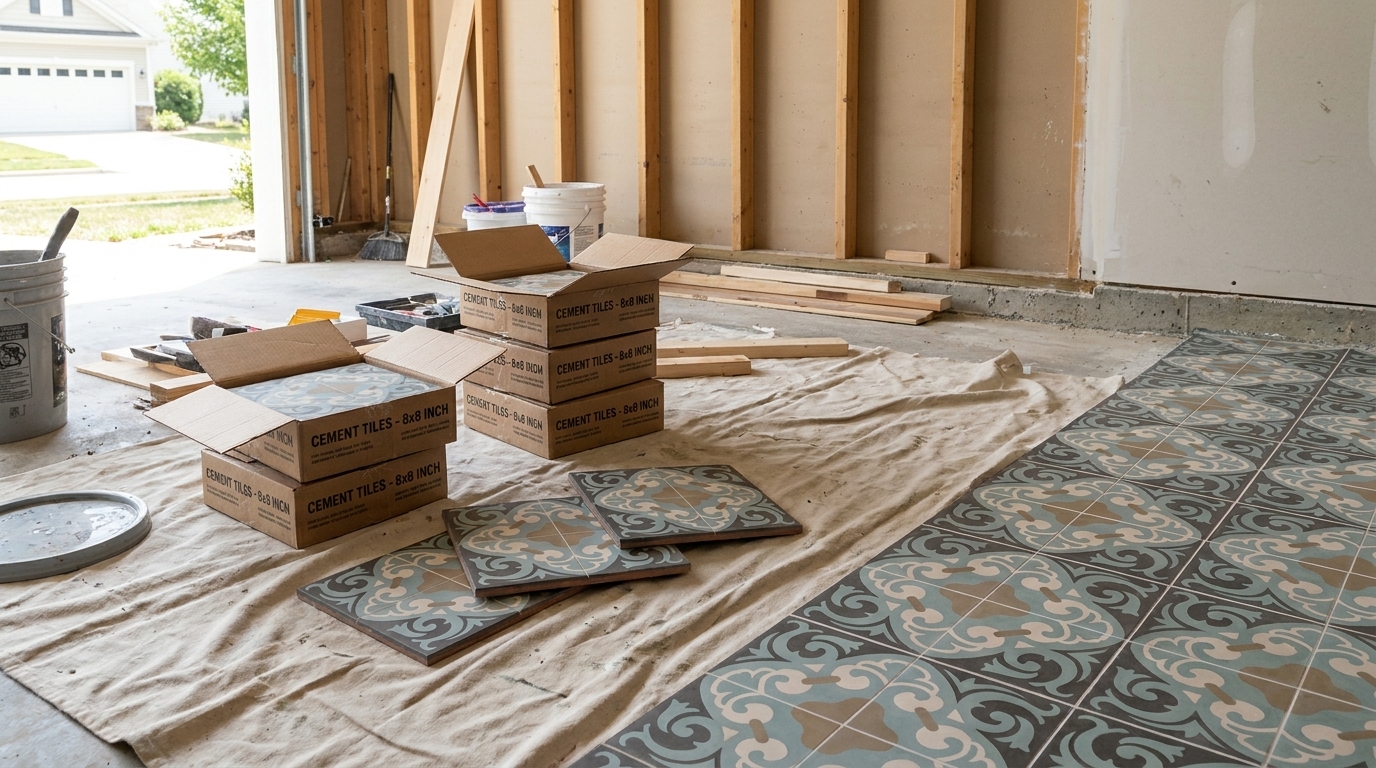
You know the scene. A stack of tile samples leans against the studio wall. Two pieces are almost the same blue, except one reads green in afternoon light. A client texts that they love Option B, then emails later asking to see Option D again. The contractor wants a decision by Friday. Someone can't find the sample with the right finish, and nobody is fully sure which version the client approved.
That kind of chaos feels normal in materials selection because tile is visual, tactile, and emotional. People don't choose handmade cement tile the way they approve an invoice. They want to touch it, move it under light, compare it to cabinetry, and imagine living with it every day. That's exactly why the process needs structure.
A good sample approval workflow doesn't remove the design judgment. It protects it. It gives the client a clear path to decide, gives the designer a record of what happened, and gives the builder confidence that the specified material is the material everyone saw and approved.
The High Cost of Sample Chaos
When a tile selection process goes sideways, it rarely starts with a dramatic mistake. It starts with small gaps. A sample arrives and sits unlabeled on a desk. A junior team member forwards a photo without noting scale or finish. A client comments in a text thread instead of the project file. Then the team spends days sorting out what should have been obvious.
For architectural materials, those delays hit harder because selections affect everything around them. Cabinet colors, grout direction, trim details, lead times, and installation sequencing all depend on one clean decision. If the sample approval workflow is loose, the whole project starts wobbling.
The business impact is real. Industry data shows win rates can drop from 73% to 44% when approval cycles stretch beyond 10 days, a 40% attrition rate driven by stakeholder non-response and rework loops, according to Cacheflow's SaaS Proposal Study reference in industry analysis. The context may come from proposal approvals, but the operational lesson applies directly to design work. When decisions drag, people disengage, priorities shift, and momentum disappears.
Practical rule: If a tile decision is important enough to order a physical sample, it's important enough to track like a formal approval.
The fix isn't more reminders. It's a repeatable system built for how material selections happen. Tile needs to be reviewed in person when possible. It needs to be seen in morning and evening light. It needs a documented decision maker. And if the project is moving fast, the team needs a plan for using in-stock cement tile options for deadline-driven projects instead of treating schedule pressure as an afterthought.
What sample chaos usually looks like
A disorganized review process usually shows up in a few familiar ways:
- Unclear ownership means everyone comments, but nobody decides.
- Mixed communication channels scatter feedback across email, text, jobsite conversations, and marked-up screenshots.
- Physical sample drift happens when pieces move between conference rooms, client homes, and site visits without a check-in system.
- Late-stage reversals show up after procurement starts, when someone says, “I thought we approved the other one.”
What a working system does instead
A solid sample approval workflow creates one path from request to sign-off:
| Stage | What should happen |
|---|---|
| Request | Team confirms the sample is worth ordering |
| Intake | Sample is labeled and logged immediately |
| Review | Feedback is gathered in a structured format |
| Decision | One person gives the final approval |
| Record | Signed or written approval is stored with the spec |
That structure is what turns sample selection from an exhausting scramble into a professional process.
Establish Your Project Ground Rules
The most important sample decisions happen before the first box ships. If you skip this part, you end up ordering beautiful options that were never viable to begin with. That wastes budget, burns time, and tires out the client before the actual decision even starts.
A selection process is often believed to be present. What is frequently found, however, is a conversation. These are not equivalent.

Define who decides and who only advises
Many projects frequently become stalled. A client wants input from a spouse, a contractor, a business partner, and sometimes a friend with strong opinions. Input is useful. Too much input slows the process down.
A common pitfall is stakeholder overload, where including non-essential approvers introduces a 25% increase in decision latency due to conflicting opinions and unstructured feedback. That benchmark appears in the verified industry data provided for this topic.
I use three roles for tile approvals:
- Decision Maker. This person has final authority. One name only.
- Influencer. This person can react to the options and raise concerns.
- Implementer. This is the contractor, installer, or procurement lead who checks practicality, quantity, and schedule impact.
If more than one person believes they are the final approver, the workflow is already broken.
Don't invite everyone into every review stage. Invite the right person at the right moment.
Set filters before samples are ordered
Tile creates emotion fast. A handmade surface can stop a client in their tracks. That's part of the appeal. It's also why you need hard filters in place before anyone falls in love with the wrong option.
Use a short pre-sample criteria sheet that covers:
- Budget guardrails so luxury reactions don't outrun the actual allowance
- Lead-time tolerance based on construction sequence
- Application needs such as shower wall, kitchen floor, fireplace surround, or exterior accent
- Maintenance expectations including sealing, cleaning habits, and wear tolerance
- Aesthetic boundaries like color family, contrast level, pattern density, and historic or contemporary character
A tile sample should enter the project only after it passes those filters.
Create one communication rule everyone follows
Material reviews break down when feedback arrives in different formats. One person texts “too busy,” another circles a screenshot, and someone else mentions in passing that the pattern feels dark. None of that is wrong. It's just impossible to compare cleanly.
Use one shared review method. It can be a project management tool, a shared form, or a simple standardized email template. The method matters less than consistency.
A practical review prompt asks each person to answer:
- What exactly are you responding to?
- Is your concern aesthetic, functional, or budget-related?
- Is this a preference or a requirement?
- What alternative would solve the issue?
That one habit cuts out a huge amount of vague commentary.
Managing Sample Orders and Intake
Once the ground rules are clear, the next failure point is physical handling. Samples arrive from different vendors, at different times, in different formats. Some come with clear labels. Some don't. Some are full-size pieces, and some are clipped corners that tell you almost nothing about scale.
That's why the administrative side of a sample approval workflow matters just as much as the review meeting.

Order samples with context, not just product names
When the team requests tile, include the details the supplier and your internal team will both need later. A rushed sample request often creates confusion before the package even arrives.
At minimum, log:
| Field | Why it matters |
|---|---|
| Project name | Prevents cross-project mix-ups |
| Client name or ID | Helps when a studio manages multiple active jobs |
| Intended application | Wall, floor, wet area, feature panel, and so on |
| Desired quantity | Clarifies whether you need one chip or a presentation set |
| Deadline for review | Helps sequence urgent selections |
| Contact owner | Identifies who will receive and process the sample |
If you manage a large pipeline, it helps to think like inventory operations, even in a design studio. The same discipline that keeps product movement visible in commerce systems can help with material samples. Teams that want a useful mental model for intake, tracking, and handoff can borrow ideas from this ultimate guide to Shopify OMS, especially around state changes and item visibility.
Build an intake routine the sample touches once
The intake moment is where most confusion can still be prevented. Don't let a sample float around the office waiting to be identified later.
As soon as it arrives:
- Assign a unique sample ID that ties back to the project file.
- Label the physical piece with the project, supplier, date received, and proposed location.
- Photograph the sample before it leaves the intake area.
- Log its status as received, pending review, approved, rejected, or archived.
- Store it in a designated review location instead of someone's desk.
This doesn't require fancy software. A shared spreadsheet works. So does Airtable, Asana, Jira, Pipefy, or a well-run shared drive. The point is that every sample has a visible status and a single owner.
For tile-specific work, supplier resources can also support cleaner intake. For example, a manufacturer catalog like Original Mission Tile's collection overview gives the team a stable reference point for product naming, format, and style family before review notes start drifting into shorthand.
Track custody like the sample can disappear, because it can
Physical samples move. They go to client presentations, site visits, contractor trailers, and back seats of cars. If your system doesn't record where the piece is, someone will eventually approve from a photo because the actual sample can't be found.
A simple custody log should note:
- Current holder
- Date checked out
- Expected return date
- Condition on return
That one discipline saves more time than teams generally expect.
How to Conduct a Structured Sample Review
A tile review meeting shouldn't sound like, “Do we like this one better?” That question invites vague reactions, and vague reactions produce expensive indecision.
The best reviews I've run feel slower at the start and faster at the end. Everyone looks at the same piece, in the same order, with the same criteria. That doesn't make the conversation rigid. It makes it useful.

Review the sample as a material, not a thumbnail
A handmade tile needs a physical review whenever possible. A phone photo flattens color, softens surface variation, and hides scale. For cement tile in particular, you need to see edge definition, pigment character, and how the matte surface reacts to shifting light.
A strong review sequence looks like this:
Start with first impression
Lay out only the shortlisted options. Ask for the immediate reaction before anyone starts explaining.Move the samples through real light
Review near a window, then under interior lighting. Morning, midday, and evening can change how warm or cool a tile reads.Pair with the actual finish palette
Put the sample next to cabinetry, paint, stone, hardware, flooring, and grout candidates.Handle the surface
Ask the client to touch it. Texture often resolves a decision that color alone can't.Evaluate application fit
A tile that feels rich on a vanity wall may feel too active across a large floor.
When a client says, “I'm not sure,” they often mean, “I haven't seen it in context yet.”
Use a feedback checklist instead of open-ended discussion
Unstructured feedback causes the worst kind of delay because it creates rework without clarity. The team keeps adjusting the shortlist, but nobody knows what problem they're solving.
A practical review form asks each stakeholder to respond to specific prompts:
Color reaction
Does the tile read warmer, cooler, darker, or more saturated than expected?Pattern scale
Does the motif feel balanced for the room size?Surface character
Does the finish support the intended mood of the space?Compatibility
What happens when it sits next to the other approved materials?Concern level
Is the comment a deal-breaker, a caution, or just a preference?
That kind of structure matters. In verified data for this topic, structured feedback methods are associated with reducing the average revision cycle from 4.5 days to 1.2 days in benchmark data from Atlassian and Pipefy.
Show clients what confidence feels like
One of the most useful habits in a sample approval workflow is helping clients distinguish between normal hesitation and a real problem. Handmade materials aren't supposed to look machine-perfect. Slight variation is part of the value. The review meeting should teach the client what they're approving.
If the project includes many material decisions, a visual presentation system can also reduce fatigue. A clear display board, tray sequence, or mockup wall gives people fewer mental jumps to make. Teams building stronger in-office presentations can borrow ideas from tile showroom display planning, especially when comparing patterned and plain surfaces side by side.
Finalizing Selections and Documenting Approval
A verbal yes is not approval. Neither is a heart emoji on a text message, and neither is “Looks good” buried in an email thread three weeks later.
The decision becomes real only when the approved selection is documented in a way that procurement, installation, and future project conversations can all rely on. That record protects everyone involved. It also prevents the strange but common problem of decision amnesia, where a client believes they approved a different option than the one in the file.

What the approval record must include
If you want a bulletproof sign-off, keep it plain and specific. The approval record should contain:
- A photo of the exact approved sample
- Tile name and SKU or product identifier
- Project name and room or application
- Date of approval
- Approver name
- Written acceptance or signature
- Notes on finish, grout, orientation, or special conditions
If there were alternates under consideration, archive those too. That way the team can see what was rejected and won't accidentally revive an old option during purchasing.
Why audit trails matter in design work
A clear audit trail sounds like corporate language until a dispute happens. Then it becomes your most useful project asset.
Automated systems that create a clear audit trail reduce manual errors by up to 90% and shorten approval cycles by 50% to 70% by ensuring the correct sequence is maintained without human intervention, according to verified industry data for automated approval workflows. For a design team, that means fewer wrong-order moments, fewer missing decisions, and less time reconstructing what happened from inbox fragments.
The approved tile isn't the one everyone remembers liking. It's the one the project record can prove was accepted.
A simple documentation stack that works
You don't need enterprise software to formalize this. A dependable setup can be as simple as:
| Layer | Practical use |
|---|---|
| Shared folder | Stores sample photos and final approval PDF |
| Project tracker | Shows current status and responsible person |
| Approval form | Captures the decision in one standardized format |
| Procurement handoff | Confirms purchasing is based on the approved record |
The handoff matters. Once approval is documented, purchasing should reference only the approval record. Not the meeting notes. Not the chat thread. Not memory.
That discipline keeps the sample approval workflow connected to the actual order, which is where many otherwise good processes still fall apart.
Troubleshooting Common Sample Workflow Problems
A workflow that breaks the moment something unusual happens isn't a workflow. It's a script. Real projects need room for exceptions, especially in tile selection where supply, client preference, and site conditions can all shift quickly.
That's why I don't treat troubleshooting as cleanup. I treat it as part of the design of the system.
A useful benchmark comes from workflow automation more broadly. A 2025 analysis found that 42% of businesses attempting to automate workflows fail during rollout because they don't define exception paths and manual review triggers for non-standard scenarios, according to Kissflow's no-code approval workflow analysis. The lesson for design teams is simple. Your sample approval workflow has to account for edge cases before they happen.
When a sample is delayed or backordered
Don't let the entire finish schedule freeze around one missing piece. Build a predefined exception path.
Use a rule like this:
- If the exact sample is delayed, approve whether the team waits, substitutes, or advances with alternates.
- If alternates are acceptable, review them in the same meeting format, not as rushed text-message stand-ins.
- If schedule outweighs customization, escalate the decision to the named Decision Maker instead of reopening it to the whole group.
When the client can't choose between two options
Decision fatigue is common with tactile materials because both options may work. That doesn't mean the team should keep hunting for a third.
Use contrast-based questions:
- Which one supports the architecture better?
- Which one looks better next to the fixed finishes?
- Which one will age better in daily use?
- Which one would you regret removing from the shortlist?
If the client still stalls, assign a deadline and convert the issue into a binary approval. Endless comparison usually means the criteria weren't weighted clearly enough.
When stakeholders disagree
The contractor may prefer ease of install. The client may prefer the more expressive surface. The designer may care most about composition and historic fit. All three perspectives matter, but they don't carry equal authority at every step.
A conflict rule helps:
| Problem | Response |
|---|---|
| Aesthetic disagreement | Decision Maker resolves |
| Technical concern | Implementer documents the specific risk |
| Budget issue | Team reviews whether the option still fits the approved criteria |
| Scope change | Pause and trigger manual review |
That final line matters most. Some exceptions should stop automation. If the application changes, the quantity changes, or the approved tile is no longer available, the workflow should route the decision back to human review instead of pretending the old approval still applies.
A resilient sample approval workflow isn't rigid. It knows when to keep moving and when to pause.
If you're refining your tile selection process and need a manufacturer that supports formal sample review, documented approvals, and both custom and ready-to-ship handmade cement tile options, explore Original Mission Tile. Their catalog, design resources, and sample-centered workflow are useful for designers, architects, and builders who want fewer surprises between concept and installation.