You've chosen the tile. The color is right, the surface has depth, and the pattern works with the room. Then the installation starts, and a detail that looked minor on the supply list suddenly controls everything: the grout joint. If the spacing drifts, even beautiful tile looks unsettled. If the spacing suits the tile, the whole job reads as intentional.
That's why the size of tile spacers matters more than commonly anticipated. Spacers don't just separate tile. They set the rhythm of the field, affect how straight the layout reads from across the room, and help the installer manage real-world conditions like edge variation, thickness differences, and movement in the substrate.
With factory-made porcelain, the answer is often straightforward. With handmade cement, terracotta, and zellige, it isn't. Those materials ask for judgment, not just a chart. The best grout line is the one that respects the tile's character and still gives the installer enough room to produce a clean, durable result.
Why the Size of Tile Spacers Defines Your Project
A wall can look wrong before a single tile loosens. The usual culprit is the grout joint. If spacing shifts even slightly, the eye catches it at inside corners, across long horizontal runs, and anywhere raking light skims the surface.
Spacer size sets the visual order of the installation, but it also determines how much room the setter has to accommodate the tile effectively. That matters on every job. It matters even more with handmade material.
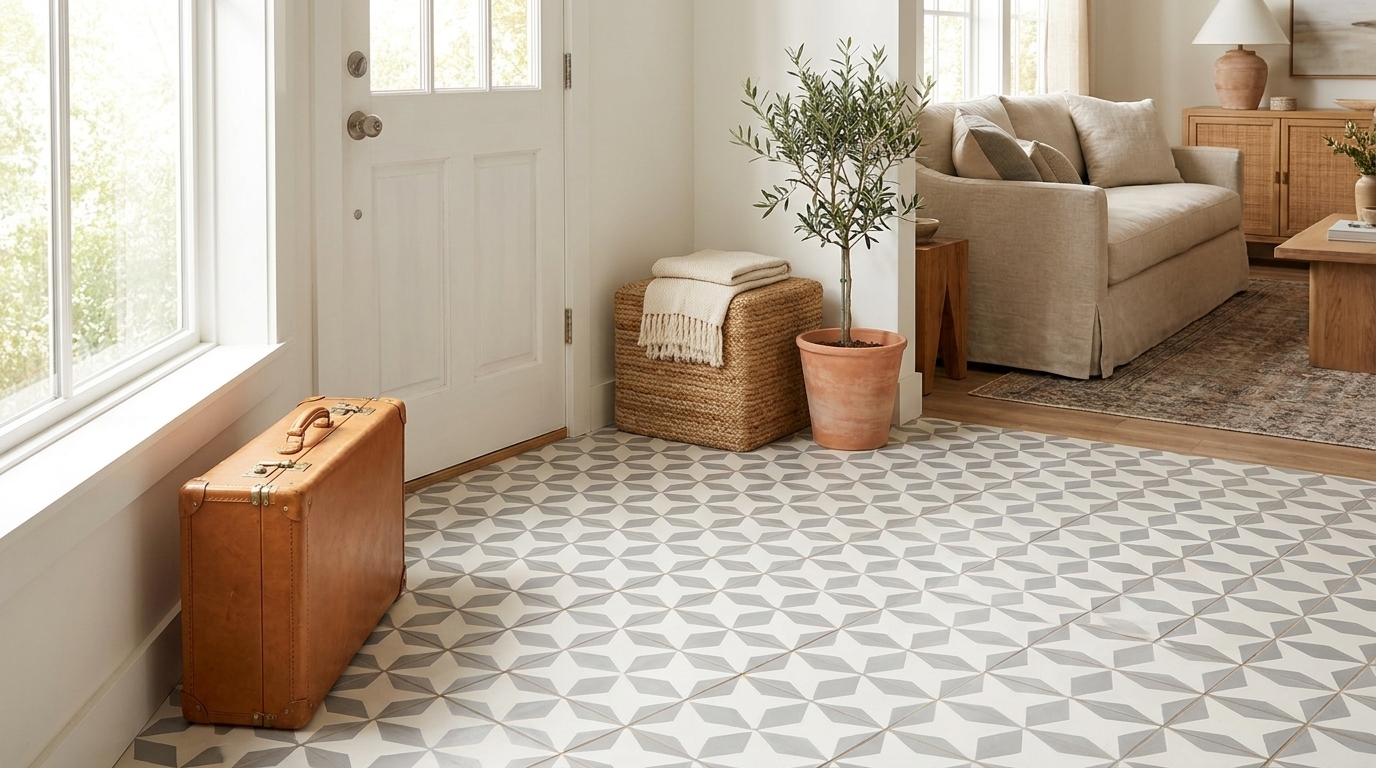
A narrow joint on calibrated porcelain can read clean and sharp. Try to force that same joint on handmade cement, terracotta, or zellige, and the installation starts fighting back. Slight size variation, softened edges, and surface irregularity have nowhere to go. The result is pinched corners, wandering lines, and cuts that look fussier than they should.
Grout lines are part of the design
On site, spacers are not just a way to keep tiles apart. They establish three parts of the job at once:
- Appearance. Tight joints read crisp and restrained. Wider joints feel rooted, traditional, and often better suited to heritage materials.
- Workability. Some tile will hold a narrow, repeatable joint. Some tile needs more room, even in careful hands.
- Tolerance. The grout joint absorbs minor variation so the field stays balanced instead of drifting course by course.
That is why spacer choice belongs in the design conversation, not just in the installer's bucket.
A common request on residential projects is the smallest possible joint. The reference is usually a photograph of a nearly continuous surface. That look can be appropriate with rectified tile and a very flat substrate. It is rarely the best choice for hand-crafted products, where the beauty comes from variation, shadow, and edge character.
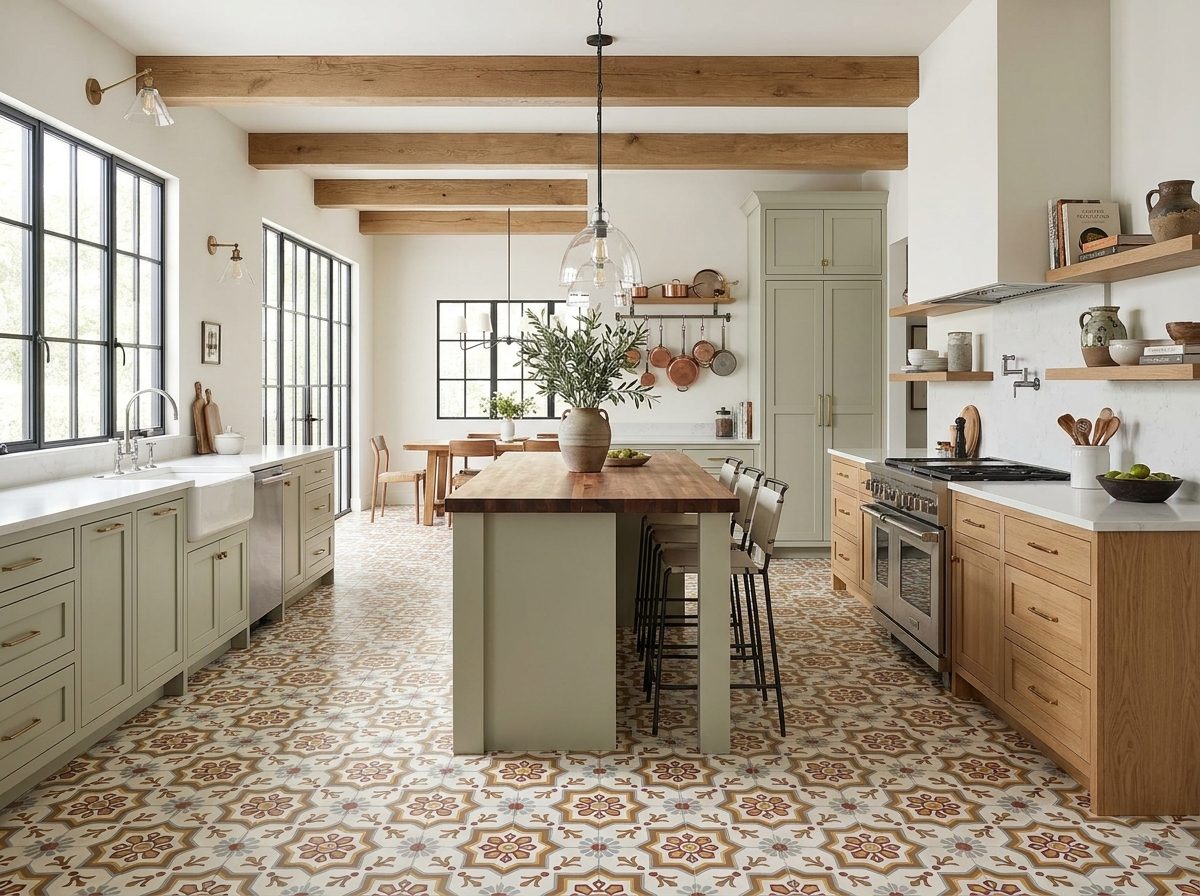
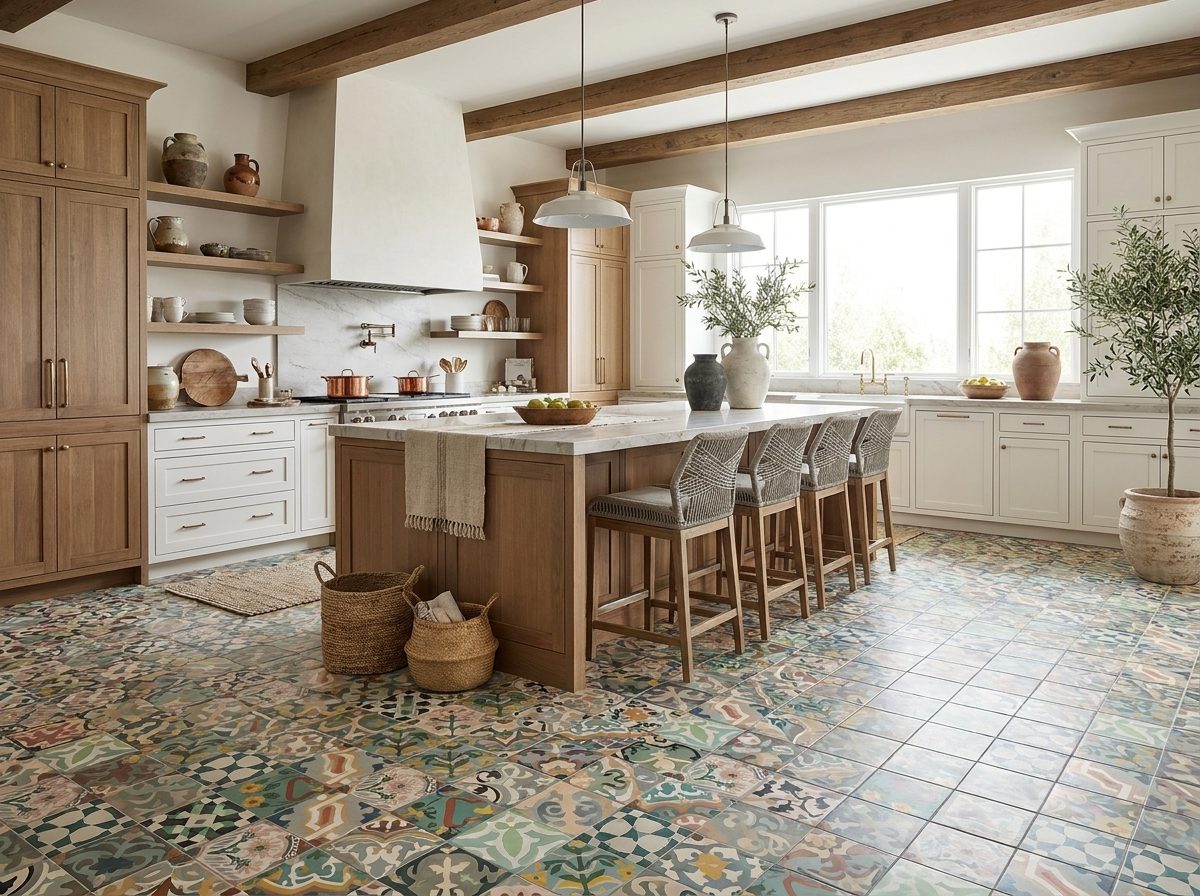
For Original Mission Tile's core lines, that trade-off is especially important. Handmade cement tile benefits from a joint wide enough to keep pattern alignments looking deliberate. Zellige needs enough space to accommodate its chipped, irregular edges without turning the layout chaotic. Terracotta usually looks strongest with a more generous joint that matches its rustic face and natural movement.
Small tool, large consequence
Spacer sizing may look like a minor setup decision, but it affects the whole installation. It influences how straight the field reads, how gracefully the layout absorbs variation, and how convincing the finished surface feels in the room.
Good installers do not choose the smallest spacer by habit. They choose the joint that suits the material, the room, and the level of variation in the tile. That is the difference between an installation that merely fits and one that looks settled, intentional, and true to the character of the product.
Understanding Common Tile Spacer Sizes and Types
Spacer sizes are standardized, but the right choice is still job-specific. On a clean rectified porcelain install, the decision is mostly about the look you want and how true the substrate is. On handmade cement, zellige, and terracotta, the spacer becomes part of how you manage variation across the whole field.

Common sizes you'll use
Installers move between imperial and metric constantly, depending on the tile source, spec sheet, and architect's drawings. These are the sizes that show up on real jobs, from tight contemporary walls to more forgiving layouts for irregular material.
| Imperial Size (Inches) | Metric Size (mm) | Common Application |
|---|---|---|
| 1/16" | 1.5 mm | Tight joints on very uniform tile |
| 1/8" | 3 mm | Standard wall tile and many general-purpose layouts |
| 3/16" | 5 mm | Floors, less uniform tile, and bolder joint lines |
| 1/4" | 6 mm | Rustic looks and tiles needing more tolerance |
| 3/8" | 9 mm | Wide joints for textured or irregular-edge tile |
That range covers nearly every residential project. The mistake is treating all five sizes as equally suitable for every tile.
For machine-made ceramic and porcelain, 1/16 inch or 1/8 inch often gives a clean, disciplined result if the tile is consistent. For Original Mission Tile's handmade lines, those narrower joints can make edge variation look like layout error. A 3/16 inch, 1/4 inch, or even wider joint often reads better because it gives the installation room to absorb small differences without losing order. Before settling on a size, it helps to measure for tile accurately and mock up the layout so the joint works with the module, cuts, and room proportions.
Spacer shapes affect how the installer controls the field
Shape matters as much as thickness once the setting starts.
- Cross spacers suit straight grid layouts where four corners meet cleanly.
- T-spacers fit running bond and offset patterns, where three tile edges meet at one intersection.
- Wedges allow small corrections and are often the better tool for handmade tile, uneven edges, vertical work, and surfaces that need constant visual adjustment.
- Peg-style spacers work well in narrower joints because they take up less space at the corner.
In practice, handmade tile jobs rarely rely on one spacer style alone. A cement tile floor may start with hard spacers for the main joint, then switch to wedges around a feature band or border where pattern alignment needs small corrections. Zellige often calls for even more judgment, because the installer is balancing chipped edges, face variation, and the visual rhythm of the wall at the same time.
Leveling systems and spacers do different jobs
Leveling clips help keep tile faces flush. Spacers define the grout joint. Good installers often use both on the same job, especially with larger formats or tile that varies slightly in thickness.
That distinction matters with artisanal material. A floor can be physically flat and still have grout lines that wander if the spacing is not controlled carefully. On handmade installations, the best results usually come from combining fixed reference points with adjustable wedges, then correcting course as the layout develops rather than forcing every tile into an overly tight joint.
Working with hex or brick tiles? Browse our hex cement tiles in stock, ready to ship from Texas, and order a sample of your favorite.
How Tile Type and Layout Influence Spacer Choice
Tile category tells you a lot before the first box is opened. Material, edge finish, and format all push the grout joint in one direction or another. If you ignore those cues and choose spacer size by taste alone, the layout usually suffers.

Material changes the starting point
Professional guidance ties spacer choice directly to tile type. TAL's installation guidance recommends 2 to 3 mm spacers for ceramic wall tiles, 5 mm for ceramic floor tiles, and about 3 mm for porcelain, granite, and marble. That's a practical reminder that floor conditions, load, and material behavior aren't the same from one tile category to the next.
Porcelain usually tolerates a tighter visual because it tends to be more consistent. Standard ceramic often benefits from a slightly more forgiving joint. Stone and stone-look products depend heavily on edge finish and calibration.
Edge quality decides whether a narrow joint will look straight
Many installations go wrong when people see a sample board and ask for the thinnest grout line possible. But a narrow joint only works when the tile edges are consistent enough to keep that line reading straight over distance.
A good way to judge it is to dry-lay several pieces and look down the run, not just at one intersection. If the line already waves before adhesive is involved, the joint is too tight for that tile.
- Rectified edges usually support a tighter, cleaner look.
- Pressed or cushioned edges often need more room so the field reads evenly.
- Mixed shade or handmade-looking factory tile can still require a more relaxed joint, even when the nominal size seems precise.
For planning the layout itself, accurate field dimensions matter as much as spacer choice. If you're still working out module size and coverage, this guide on how to measure for tile helps frame the layout before you commit to a joint width.
Large format makes every imperfection louder
As tile gets larger, the substrate has less room to hide. Small discrepancies in floor flatness, mortar coverage, or tile warpage become visible across long edges. That's why large-format work often needs a slightly wider joint and, in many cases, a leveling system as well.
When tile gets bigger, the room gets less forgiving.
Layout matters too. A straight grid asks for consistency at four-corner intersections. An offset pattern shifts the eye along the horizontal run, so any cumulative drift becomes easier to see. Herringbone and diagonal patterns can disguise some minor variation, but they punish inaccurate cuts and sloppy perimeter planning.
The best spacer choice is the one that fits both the tile and the pattern. A beautiful joint on paper that can't survive the actual layout is the wrong joint.
Spacing Handmade Cement and Zellige Tiles
Handmade tile changes the conversation. The goal is no longer to make every piece behave like machine-cut porcelain. The goal is to install the material in a way that respects its variation while still producing control, rhythm, and durability.
Most online advice falls short here. Tile This notes that a major gap in tile spacer guidance is how to handle handmade tiles where size variation is intentional. That's exactly the issue with cement, terracotta, zellige, and other artisanal surfaces. Generic charts usually tell you what to do with standard ceramic and porcelain, then stop.

Handmade tile needs a different mindset
Slight variation in face, edge, and thickness is not a manufacturing failure in these materials. It's part of the look. If you force a hyper-tight joint onto a tile with natural edge movement, you don't create refinement. You create stress in the layout.
That's why wider grout lines often look better on heritage materials. The joint gives the field room to breathe. It also lets the installer make small corrections without introducing obvious visual jumps from piece to piece.
For many handmade applications, I'd treat 1/8" or about 3 mm as a practical minimum starting point, especially for cement tile. That aligns with the broader trade guidance that commonly clusters standard joint widths around 1/16" to 3/8" and often places 3/16" to 3/8" or more with rustic, textured, or natural-edge tile. The exact answer depends on the degree of variation in the batch, not just the nominal tile size.
Cement tile rewards consistency, not tightness
Handmade cement tile usually has enough character that a joint that's too small feels tense. The field starts to look overcontrolled, and slight differences in edge definition become more obvious instead of less.
A better approach is to aim for a joint that reads even from normal viewing distance. On many cement tile floors and walls, that means selecting a spacer that gives you room to hold straight courses and make minor hand adjustments as you go.
- Dry-lay a representative group. Don't test only the nicest few pieces from the top box.
- Check corner-to-corner alignment across several rows. Handmade tile can stack variation.
- Let the tile set the joint, within reason. If the field wants a touch more room, give it to the field.
Handmade tile should look composed, not mechanically flattened.
Zellige often needs flexibility more than a fixed rule
Zellige brings a different challenge. Its beauty often comes from irregular edges, hand-cut faces, and a lively surface that catches light unevenly. Some installers use very small, organic joints. Others open the joint slightly to keep the field balanced. Both approaches can work when they're driven by the actual tile in hand.
What doesn't work is insisting on one rigid spacer everywhere regardless of the pieces. With zellige, wedges are often more useful than a bucket full of identical cross spacers because they let the installer respond to each tile without losing the overall layout.
If you're specifying or planning with this material, it helps to review actual zellige tile options and think in terms of surface character, not just nominal dimensions. The joint is part of that character.
Terracotta and rustic edges need breathing room
Terracotta and similarly rustic products usually benefit from a wider visual cadence. A little more grout joint suits their texture and softens the transition between one piece and the next. Trying to squeeze them into a sleek, nearly unbroken look usually feels wrong for the material.
A useful way to think about artisanal tile is this:
| Tile style | Spacer mindset | What usually works |
|---|---|---|
| Handmade cement | Consistent but forgiving | Start around 1/8" and adjust from the dry layout |
| Zellige | Flexible and responsive | Use wedges and expect organic variation |
| Terracotta | Wider, heritage-appropriate | Give rustic edges enough room to read naturally |
The right joint on handmade tile never looks accidental. It looks settled.
Installer Techniques for Flawless Grout Lines
Choosing the spacer is only half the job. The rest comes from how the installer handles layout, setting, and correction while the material is still movable. That's where good jobs separate themselves from hurried ones.

Start with a dry layout
Before adhesive goes down, lay out enough tile to see the joint behave across several rows. This is especially important with patterned cement, handmade material, or any tile with edge variation.
A dry layout tells you things the box label won't:
- Whether the chosen spacer produces a straight visual line
- Where the batch has more variation
- If the pattern needs balancing before the first permanent set
- How cuts will land at the perimeter
For cement tile in particular, detailed prep matters as much as setting technique. This guide on installing cement tile is worth reviewing before you begin.
Match the tool to the tile format
Tile size directly affects spacer strategy. NIUYUAN's sizing guidance suggests 1 mm spacers for small mosaics, 2 to 3 mm for standard 12×12 in. tile, and 3 to 5 mm for large-format 24×24 in. tile. That's a useful field rule because larger formats amplify both alignment issues and lippage.
On those bigger tiles, don't rely on spacers alone. Use a leveling system where needed to hold the faces flush while the mortar cures. The spacer controls the gap. The leveling clip helps control height difference.
Remove spacers at the right time
Leave spacers in too long and they can become a nuisance to remove cleanly. Pull them too early and the tile can drift before the setting bed firms up. The right timing depends on the adhesive, the tile weight, and the site conditions, but the principle is simple: remove them while you still have control, not after everything has locked around them.
Set a few rows, check the lines, clean the joints, and remove what should not be trapped under grout.
For maintenance after installation, grout joints also benefit from proper cleaning methods. Homeowners dealing with built-up residue or soiling after years of use can learn from services like professional tile cleaning by Extreme Carpet, especially in kitchens, baths, and high-traffic floors where grout appearance changes the whole room.
Shop the look: hex and brick cement tiles in stock
Handmade cement tiles, made in Mexico and ready to ship from our Texas warehouse. Each tile is pressed, never fired, and the pattern is a thick layer of pigmented cement, not a surface print. Order a sample to see the colors in your own space before you decide.



Common Questions About Tile Spacer Sizes
Can you install tile without spacers
You can, but that doesn't mean you should. Some highly skilled installers working with certain handmade materials may use wedges, visual alignment, or custom shims instead of standard cross spacers in every joint. That's different from installing without any spacing control.
For most projects, skipping spacers leads to wandering grout lines, uneven corners, and joints that are too tight in one area and too open in another. Grout lines need consistency to look deliberate.
Are tile spacers and leveling systems the same thing
No. They solve different problems. A spacer sets the width of the joint. A leveling system helps keep adjacent tile faces flush so one edge doesn't sit higher than the next.
People often assume a leveling clip will automatically define the ideal grout line. It won't. On many jobs, especially with large tile, the best result comes from using both tools together.
What size of tile spacers should I use for walls
For many standard wall applications, the practical range is modest. Professional guidance commonly places ceramic wall tile in the narrower end of the spectrum, while the final choice still depends on edge quality and visual style. If the wall tile is very uniform, a tighter joint may work. If the edges are softer or handmade-looking, a bit more width usually produces a straighter-looking field.
What size works best for floors
Floors usually need a little more tolerance than walls because they deal with traffic, substrate variation, and wider sightlines across the surface. That doesn't mean every floor needs a wide grout joint. It means floors punish false precision. If the tile and substrate can't support a very tight joint, the smarter move is to open it slightly and protect the overall appearance.
Can handmade tile use standard plastic cross spacers
Sometimes, but not always successfully. Cement tile may work well with a fixed spacer if the batch is fairly consistent and the installer has dry-laid the field first. Zellige and rustic terracotta often benefit from wedges or mixed methods because the joint may need micro-adjustments from tile to tile.
Do smaller spacers always look better
No. Smaller spacers look better only when the tile can support them. On rectified porcelain, a narrow joint can look elegant. On irregular handmade tile, that same joint can make every variation look like an error.
The best-looking grout line is the one that matches the material. Good installers know when to tighten the joint and when to let the tile breathe.
Should shower walls use very tight joints
A very tight joint isn't automatically better in a shower. The right width depends on tile type, grout choice, and how easy the assembly will be to clean and maintain. Showers reward consistency and full, properly finished joints. If the tile has variation, don't force a joint so small that the finished work becomes harder to grout neatly.
Is there one universal chart for every tile
No, and that's where many buying guides oversimplify the subject. Charts are useful starting points. They are not a substitute for seeing the actual tile, checking edge consistency, and testing the layout on site.
That matters most with artisanal tile. The box might tell you the nominal size. The field tells you what joint the tile requires.
If you're selecting handmade cement tile, zellige, terracotta, or another heritage surface, Original Mission Tile offers both the material and the installation guidance needed to get the grout lines right. Their collections and technical resources are especially useful when your project calls for artisanal character rather than a one-size-fits-all spacer chart.