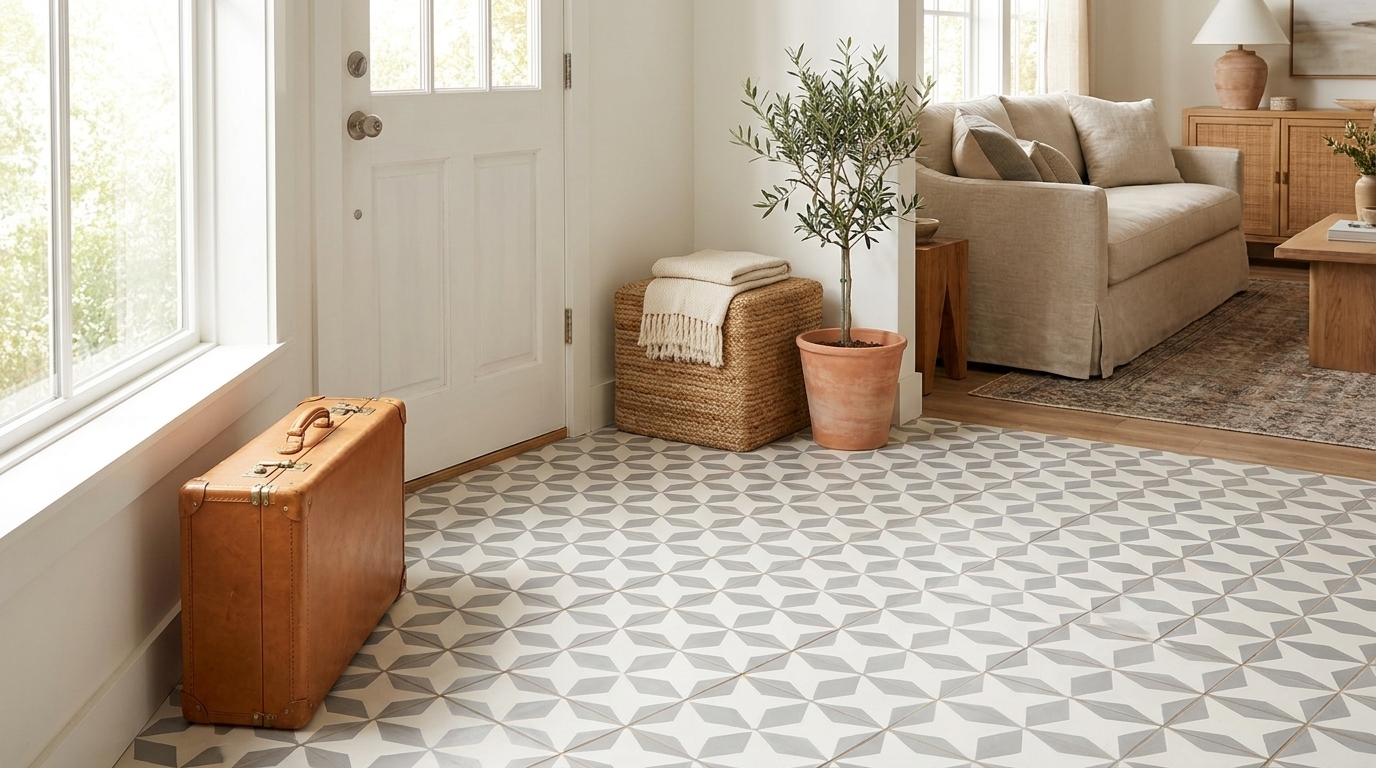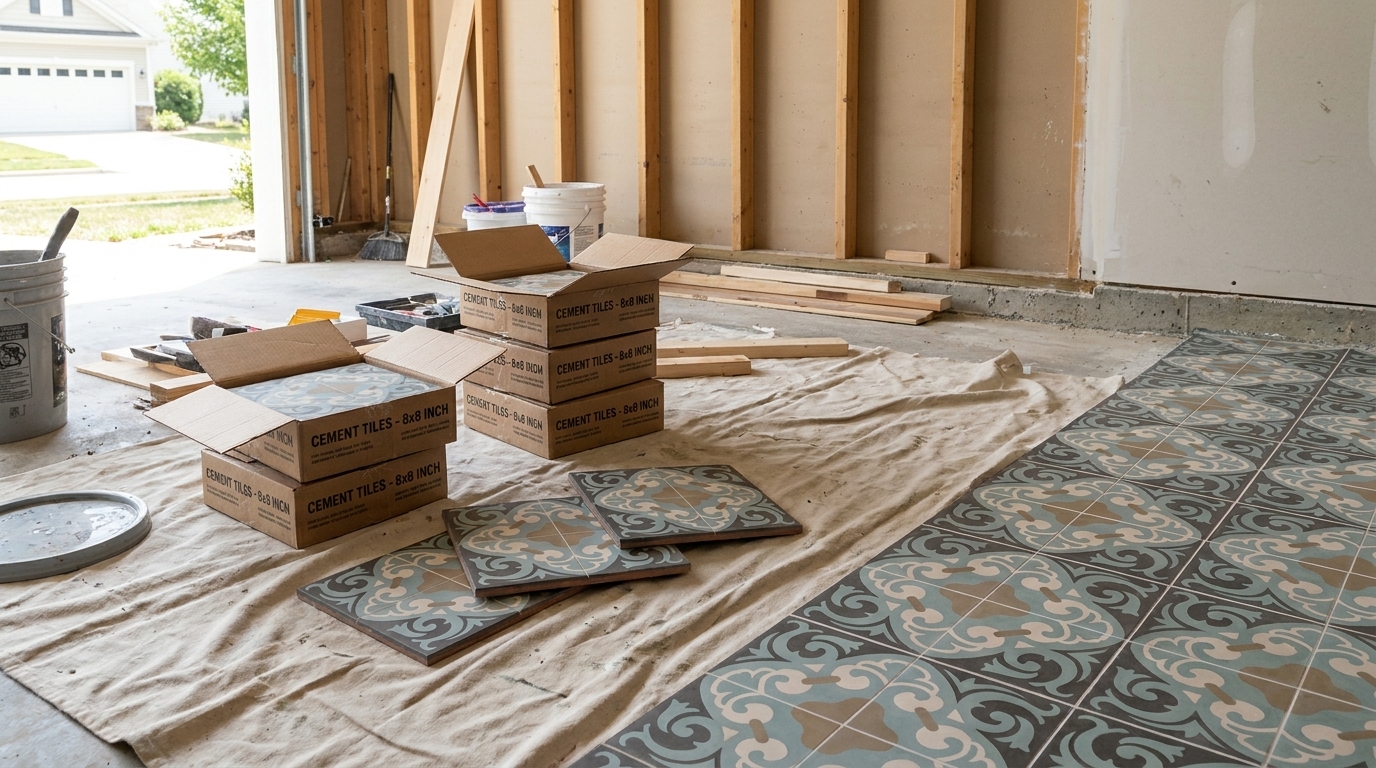
You chose handmade cement tile for its depth, softness, and character. Then cleaning day arrives, and the bottle under the sink starts making decisions for you.
That's where many beautiful floors get into trouble. A cleaner that behaves perfectly well on glazed ceramic can leave a porous, matte cement tile looking washed out, hazy, or uneven. The damage often doesn't happen with one dramatic mistake. It happens through ordinary habits repeated over time.
Handmade cement tile rewards gentle, informed care. If you understand what the surface is made of and why certain tile cleaning products react badly with it, you can keep the color rich and the finish calm for years.
The Hidden Dangers in Your Cleaning Cabinet
A homeowner spills coffee in the kitchen, grabs an all-purpose spray, and wipes it up fast. The floor looks clean at first. A few weeks later, the same area seems lighter, flatter, and slightly chalky. What changed wasn't the tile's style. It was the chemistry.
Handmade cement tile doesn't have a glassy top coat like many ceramic products. Its beauty sits close to the surface. That makes it tactile and authentic, but it also means the wrong cleaner can alter what you see and feel. Acids can bite into the face. Harsh degreasers can stress the sealer. Leftover soap can build a film that traps dirt and dulls the finish.
That risk is easy to underestimate because the cleaning aisle is crowded with products that sound interchangeable. The global floor cleaner market was valued at USD 5.8 billion in 2025 and is forecast to reach USD 10.6 billion by 2035, according to Grand View Research's floor cleaner market report. There are countless options on the shelf, but only a small slice of those tile cleaning products are suited to porous, unglazed surfaces like handmade cement tile.
Why good intentions still cause damage
Consumers aren't careless. They're trying to be responsible. They choose products labeled “powerful,” “sanitizing,” “natural,” or “multi-surface,” assuming one of those words must mean safe.
That's the trap. “Natural” doesn't automatically mean gentle for cement. Citrus acids are still acids. “Strong” often means unnecessary for weekly care. Even some readers trying to reduce harsh ingredients by switching to sustainable all-purpose cleaners still need to check whether a formula is appropriate for porous mineral surfaces.
Practical rule: Don't judge a cleaner by its marketing language. Judge it by how it interacts with a porous, sealed cement surface.
A cement tile floor is an investment in craft. Cleaning it safely starts with one shift in thinking. You're not just removing dirt. You're managing a material.
Understanding Cleaner Chemistry The pH Scale
A cleaner is not just soap in a bottle. It is chemistry, and cement tile reacts to that chemistry more like stone or brick than like glazed ceramic.
pH is the quickest way to predict that reaction. The scale runs from 0 to 14. Low numbers are acidic, 7 is neutral, and high numbers are alkaline. That number does not tell you everything about a formula, but it gives you a reliable first warning about how aggressively it may interact with a porous mineral surface.

Acidic cleaners
Acidic tile cleaning products dissolve mineral-based buildup. That includes grout haze, limescale, hard-water crust, and some post-construction residue. On dense, acid-tolerant surfaces, they have a specific job.
On handmade cement tile, the same dissolving action can start attacking the surface itself. The risk is not abstract. Acids react with cement-based materials, which can leave etching, dull spots, patchy color, or a roughened face that catches more dirt later. The caution described in preventing brick damage with muriatic acid applies here too. Brick, mortar, and cement tile share a mineral chemistry that does not forgive casual acid use.
That is why an acid cleaner should never be your default floor wash for cement tile.
Neutral cleaners
A pH-neutral cleaner works like a gentle daily cleanser in skincare. It removes ordinary grime without stripping the surface you are trying to preserve.
For sealed cement tile, this is usually the right zone for routine care. Neutral formulas are less likely to disturb the sealer, haze the finish, or leave the tile looking tired after repeated washing. “Neutral” does not mean ineffective. It means the product is designed to clean common household soil without forcing a strong chemical reaction.
For weekly maintenance, boring is good.
Alkaline cleaners
Alkaline products are better suited to organic messes such as grease, cooking oil, food residue, and body soil. In a kitchen or mudroom, that can make them useful as an occasional problem-solver.
They still need restraint. If the formula is too strong, mixed too heavily, or left to dry on the surface, it can leave a film that makes the floor look flat or feel slightly sticky. On cement tile, that residue can also interfere with how the sealer performs, which is one reason a floor may seem to get dirty again too quickly after cleaning.
A simple way to read the label
Ask one question before you pour the cleaner into a bucket: What kind of soil am I trying to remove?
If the problem is mineral crust, an acid may remove it, but cement tile is often the wrong place to use that chemistry. If the problem is everyday dust and tracked-in grime, neutral is usually the safe match. If the problem is grease, an alkaline cleaner may help, used carefully and rinsed well.
| Cleaner type | Best suited for | Main risk on cement tile |
|---|---|---|
| Acidic | Mineral buildup, grout haze, limescale | Etching, dulling, surface loss |
| Neutral | Everyday soil and regular maintenance | Lowest risk when diluted and rinsed properly |
| Alkaline | Grease and organic stains | Residue, sealer stress, surface film |
The label matters less than the match between the cleaner and the soil. For handmade cement tile, choosing the mildest chemistry that will do the job is usually the safer instinct.
What Makes Handmade Cement Tile Different
Ceramic and porcelain often teach people bad habits. Those surfaces are usually denser, less absorbent, and more forgiving. Handmade cement tile is different in structure, not just appearance.
Its surface isn't a printed coating or a glaze baked over the top. The color layer is part of the tile itself, formed from cement, marble dust, sand, and mineral pigments. That gives the floor its velvety, old-world look. It also means the face has a mineral character that reacts to chemistry more like masonry than like glass.

Why porous matters
Porous doesn't mean fragile. It means absorbent and reactive. A handmade cement tile can take daily life, foot traffic, and time beautifully. But because its structure is open enough to interact with moisture and residues, what you put on it matters.
The primary risk with porous, handmade cement tiles is chemical damage. Independent maintenance guidance warns that acid cleaners can etch vulnerable surfaces and that porous materials should be cleaned with pH-neutral solutions and rinsed thoroughly to avoid residue that can dull the finish or damage the sealer, as explained in this guide to cleaning solutions for different tile flooring types.
That one sentence explains most cleaning failures I see in practice. People focus on stain removal strength. They ignore finish preservation.
What commonly goes wrong
Some problems show up fast. Others creep in slowly.
- Acid cleaners can etch the tile face, soften contrast, and leave the surface looking tired.
- Bleach-heavy products can alter color or create uneven fading.
- Abrasive powders can scratch a matte finish and roughen the surface.
- No-rinse formulas may leave surfactant film behind, especially on textured or porous faces.
- Overly strong degreasers can wear on the sealer and make the tile more vulnerable to future staining.
The sealer changes the story, but not the chemistry
A sealed cement tile has some protection. It does not become invincible. Sealer helps resist staining and slows absorption, but it doesn't turn a porous mineral tile into glazed porcelain.
That's why pH-neutral cleaners are the default, not a suggestion. They respect both the tile and the protective layer sitting on top of it. If you need stronger chemistry for a specific stain, use it as a targeted treatment, not as your weekly habit.
Cement tile should be cleaned like a finished wood table, not like a restaurant fryer hood.
A simple test before you use any new cleaner
Before a full-floor clean, try this decision filter:
- Is the tile porous or handmade? If yes, avoid assuming generic tile products are safe.
- Is the mess ordinary dirt? If yes, choose neutral.
- Is the stain greasy or food-based? Consider a mild alkaline treatment in a limited area.
- Is the residue mineral-based? Stop before reaching for acid unless you've confirmed compatibility.
- Will the product rinse fully clean? If you can't answer confidently, don't use it yet.
People often ask for a master list of “safe tile cleaning products.” I'd rather give you a better habit. Don't shop by category name. Shop by material compatibility and residue behavior.
Your Weekly Cement Tile Cleaning Protocol
Saturday morning, the floor looks dull in the traffic path near the sink. Many homeowners assume the tile needs a stronger cleaner. In practice, that haze is often a simple mix of tracked-in grit, detergent film, and a mop that left dirty water behind. Handmade cement tile responds best to a routine that is gentle, controlled, and consistent.

Step one starts dry
Always begin by removing loose debris. Dust, sand, and crumbs may look harmless, but under a shoe or mop they act like fine abrasive powder. On glazed ceramic, that may be less noticeable. On cement tile, which has a softer, more porous face, that abrasion can slowly wear the finish and mute the pattern.
Use a soft broom, a microfiber dust mop, or a vacuum with the beater bar turned off. The goal is simple. Get the grit off the surface before moisture turns it into slurry.
The weekly method that protects the finish
A good weekly cleaning routine works like proper skincare. First remove what sits on the surface. Then wash gently. Then rinse away anything you would not want left behind.
- Clear the floor of dry soil. Pay extra attention to entries, kitchens, and the space in front of sinks.
- Mix a light solution. Warm water and a pH-neutral cleaner are enough for normal weekly care. Follow the dilution on the label.
- Mop with a damp, not saturated, tool. Excess water can collect at joints, edges, and low spots.
- Use two buckets if possible. One holds fresh cleaning solution. The other is for rinsing the mop, so you are not washing the floor with yesterday's dirt.
- Refresh the water as it clouds. Gray water leaves gray residue.
- Rinse the surface with clean water. This is the step that keeps a matte cement tile floor from developing a tired, soapy cast.
- Dry with microfiber or towels. Drying helps prevent water marks and lets you inspect whether residue remains.
For readers comparing tools, this guide on the best mop for tile is useful because mop design affects how much dirty water stays on the surface.
Here's a practical video demonstration to pair with the written steps:
Which products make sense for weekly care
For weekly cleaning, choose a pH-neutral product intended for sealed porous surfaces, natural stone, or cement tile. That wording matters. Many general floor cleaners are built to cut grease fast, add gloss, or leave a fresh scent on dense factory-made surfaces. Those features often come from ingredients that leave film behind or slowly wear on the sealer.
If the floor is only lightly soiled, keep the mix weak. More soap does not create a cleaner floor. It creates more residue to rinse away. Cement tile rewards restraint.
Avoid products that promise shine enhancement, wax buildup, or one-step polishing. Handmade cement tile should look clean and matte, not coated. If a cleaner changes the visual character of the surface after every use, it is usually leaving something behind.
Common mistakes in a weekly routine
Several habits cause trouble even when the cleaner itself is appropriate.
- Using a sponge mop that holds too much water. This can push moisture into grout lines and edges instead of lifting soil away.
- Cleaning the whole floor with one bucket of dirty water. Soil gets redistributed in a thin film.
- Skipping the rinse because the floor “looks fine.” Residue often appears only after it dries.
- Using kitchen spray or disinfecting wipes on the full floor. These products are designed for spot cleaning counters, not for broad use on porous mineral surfaces.
- Scrubbing textured areas aggressively. The pattern layer on handmade cement tile deserves a lighter hand than generic ceramic usually needs.
If you want another practical comparison of routine methods, Calibre Cleaning shares tile cleaning knowledge that's helpful for understanding how tool choice changes the result.
One manufacturer option worth knowing is Original Mission Tile's maintenance guidance, which advises warm water, mild soap or detergent, and a soft-bristled brush for cement tile care. That recommendation fits the larger principle here. Weekly cleaning should remove soil without asking the tile or the sealer to defend themselves from the cleaner.
A Guide to Removing Tough Stains
Stains trigger panic, and panic leads people to harsh cleaners. That's usually when a small problem becomes a permanent one.
The better approach is to diagnose the stain first. Cement tile doesn't need random force. It needs the right response, applied patiently.

Organic stains
Coffee, tea, wine, food splashes, plant matter, and some pet accidents fall into this group. These are often better handled with a mild alkaline cleaner than with acid.
Apply the cleaner only to the affected area. Let it sit briefly so it can work. Technical maintenance guidance for porcelain and ceramic tile recommends allowing roughly 3 to 10 minutes of dwell time before gentle agitation and complete removal, with care not to let the solution dry on the surface, according to Floor Expert's maintenance guidance. The material differs, but the process lesson is sound. Controlled dwell time and complete rinsing matter more than brute strength.
Use a soft nylon brush or white pad, not an abrasive scrubber. Then rinse thoroughly and dry.
Oil-based stains
Cooking oil, grease, cosmetics, and some body products sink into porous surfaces differently. Water alone often beads over them because oil and water don't mix well.
For these, start with a cleaner intended to break down oily residue, but keep it mild and localized. Work from the outside of the stain inward so you don't spread it. If the mark has become embedded, repeated gentle treatments are safer than one aggressive attack.
Don't chase an oil stain with acid. It solves the wrong problem and may create a new one.
Mineral marks and rust-like discoloration
Many generic guides go wrong for cement tile. They recommend vinegar or another acid because mineral deposits respond to acid on harder, less sensitive surfaces.
For handmade cement tile, pause before using any acidic solution. Mineral-rich, porous surfaces can react badly. If a crusty deposit sits on top of the surface, try mechanical gentleness first: soften it with water, lift it carefully, and clean with a neutral product. If discoloration persists, test any specialized treatment in an inconspicuous spot before broad use.
A deeper walkthrough on spot treatment and safe routines for handmade surfaces is available in this guide to cleaning cement tiles.
A troubleshooting chart you can actually use
| Stain type | Start with | Tool | Biggest caution |
|---|---|---|---|
| Coffee, wine, food | Mild alkaline cleaner | Soft nylon brush or microfiber cloth | Don't let cleaner dry on tile |
| Grease, oil, cosmetics | Mild degreasing cleaner used locally | Soft cloth or nylon brush | Avoid over-concentrated products |
| Mineral residue | Water softening and neutral cleaning first | Non-abrasive pad | Avoid casual acid use on cement |
The sequence matters more than the label
For stubborn spots, use this order:
- Identify first. Don't treat every dark mark as grease and every pale mark as mineral scale.
- Test discreetly. Use a closet corner, under furniture, or a spare tile if available.
- Allow brief dwell time. Give the cleaner time to work instead of scrubbing harder.
- Agitate gently. Nylon is safer than metal, and soft pressure is safer than speed.
- Remove completely. Lift dirty solution off the floor. Don't just spread it thinner.
- Rinse until clean. The stain may be gone, but residue can still leave haze.
The floor often tells you what happened. If the stain lightened but the finish looks flatter, the chemistry may have been too harsh. If the stain remains but the surface still looks intact, that's a better place to be. You can try a second careful treatment. You can't easily reverse etching.
Cleaning Without Damaging Your Tile Sealer
A sealer is the quiet partner in cement tile care. It doesn't make the tile waterproof or invulnerable, but it does provide the first line of resistance against spills, absorption, and everyday grime.
People sometimes blame the tile when the underlying issue is a worn or compromised sealer. If water no longer beads and instead darkens the surface quickly, the protective layer may be thinning. If the floor starts staining from ordinary splashes that used to wipe away, the same conclusion often follows.
How cleaners shorten sealer life
Harsh acidity can attack vulnerable surfaces. Overly aggressive alkalinity can also stress protective layers over time. Even a product that doesn't visibly etch the tile may gradually wear down the sealer if it's too strong, too concentrated, or used too often.
Residue is another hidden problem. A film from soap or no-rinse tile cleaning products can make the floor look dull, and many people respond by cleaning more aggressively. That starts a loop of buildup, over-cleaning, and reduced protection.
Signs your sealer needs attention
- Water darkens the tile quickly
- Stains grab faster than before
- The finish looks uneven after proper cleaning
- Traffic paths appear more absorbent than surrounding areas
If you're evaluating products or planning maintenance, this resource on ceramic tile sealers helps explain how protective systems function and what to watch for as surfaces age.
A sealer should support your cleaning routine, not force you into stronger cleaners.
The healthiest habit is simple. Clean gently, rinse well, and pay attention to changes in water behavior. That's often the earliest visible clue that protection is fading.
When to Call a Professional Restorer
A floor gets scrubbed harder because a stain will not lift. The stain stays, but the color around it lightens, the sheen turns uneven, and now the problem is larger than the original spot. That is usually the moment to stop cleaning and call someone who restores tile for a living.
Some issues are still reasonable for a careful homeowner or designer to handle. A dull film after cleaning often comes from residue, not permanent damage. On cement tile, that distinction matters. Residue sits on the surface like a cloudy lotion left on skin. Etching, pigment loss, and sealer failure change the surface itself. A rinse-focused cleaning with a mild product can often clear the first problem. It will not reverse the second.
Problems you can usually address yourself
Small isolated stains, light haze, and minor soil buildup in low-risk areas often improve once the cleaning routine is corrected. If the tile has not changed color, the finish has not turned patchy, and the problem stays near the surface, gentle cleaning is still a reasonable first step.
Problems that deserve a specialist
Call a restorer if the issue affects the tile body, not just the dirt on top of it. Widespread etching, broad color loss, deep uneven staining, or sealer failure across a large area usually require testing, controlled stripping, poulticing, or refinishing. Handmade cement tile is not like dense glazed ceramic. Its color and texture are part of the material itself, so aggressive trial and error can remove character that cannot be put back.
A professional restorer is also the right call when:
- The floor has several problems at once, such as haze, stains, and failing sealer
- Previous cleaning changed the color, sheen, or texture
- The tile is historic, custom, or difficult to replace
- One area was treated with an unknown product and now looks different
- You are planning to reseal or refinish a large installation
Restraint protects handmade tile. Persistence does not always do that.
Original Mission Tile offers handmade cement tile along with maintenance guidance for cleaning, sealing, and long-term care. If you're specifying a new installation or trying to protect an existing one, the team's resources at Original Mission Tile can help you choose methods that fit the material instead of fighting it.