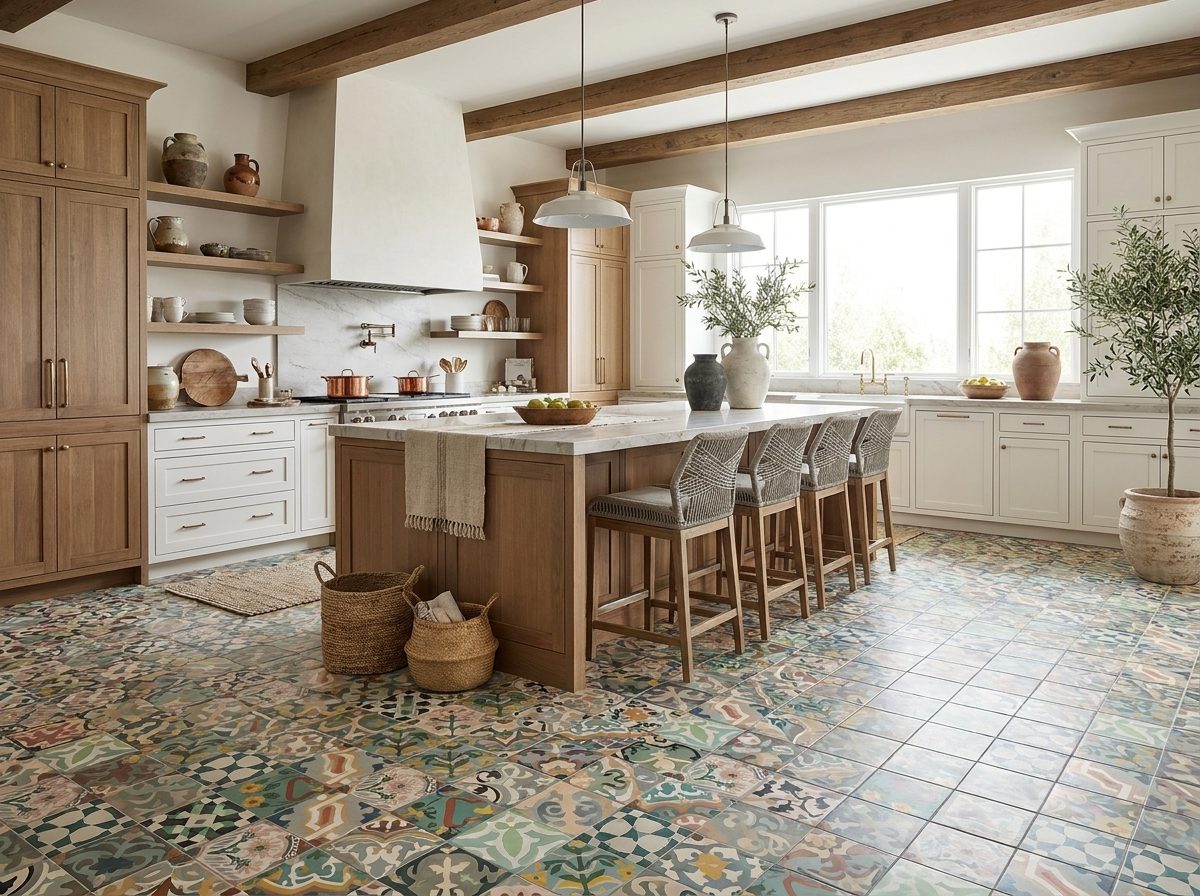
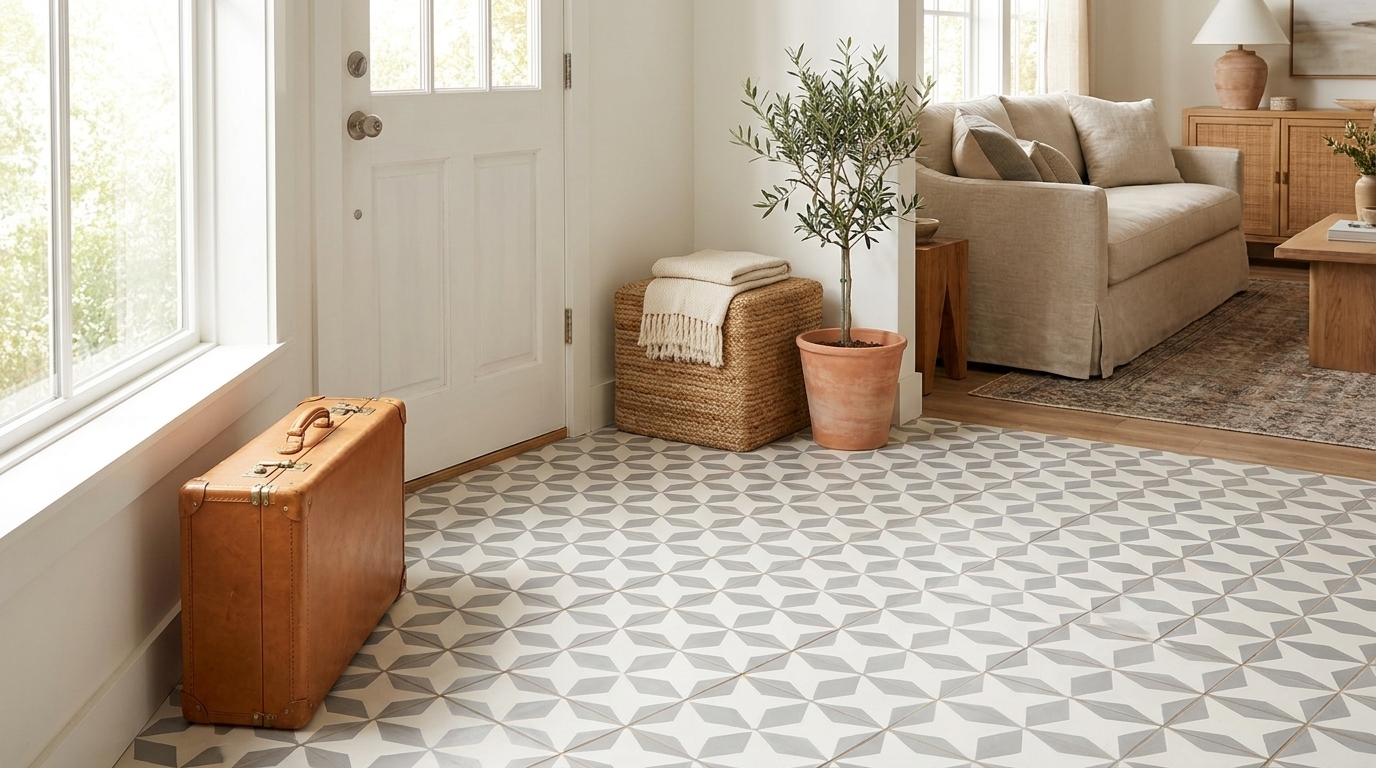
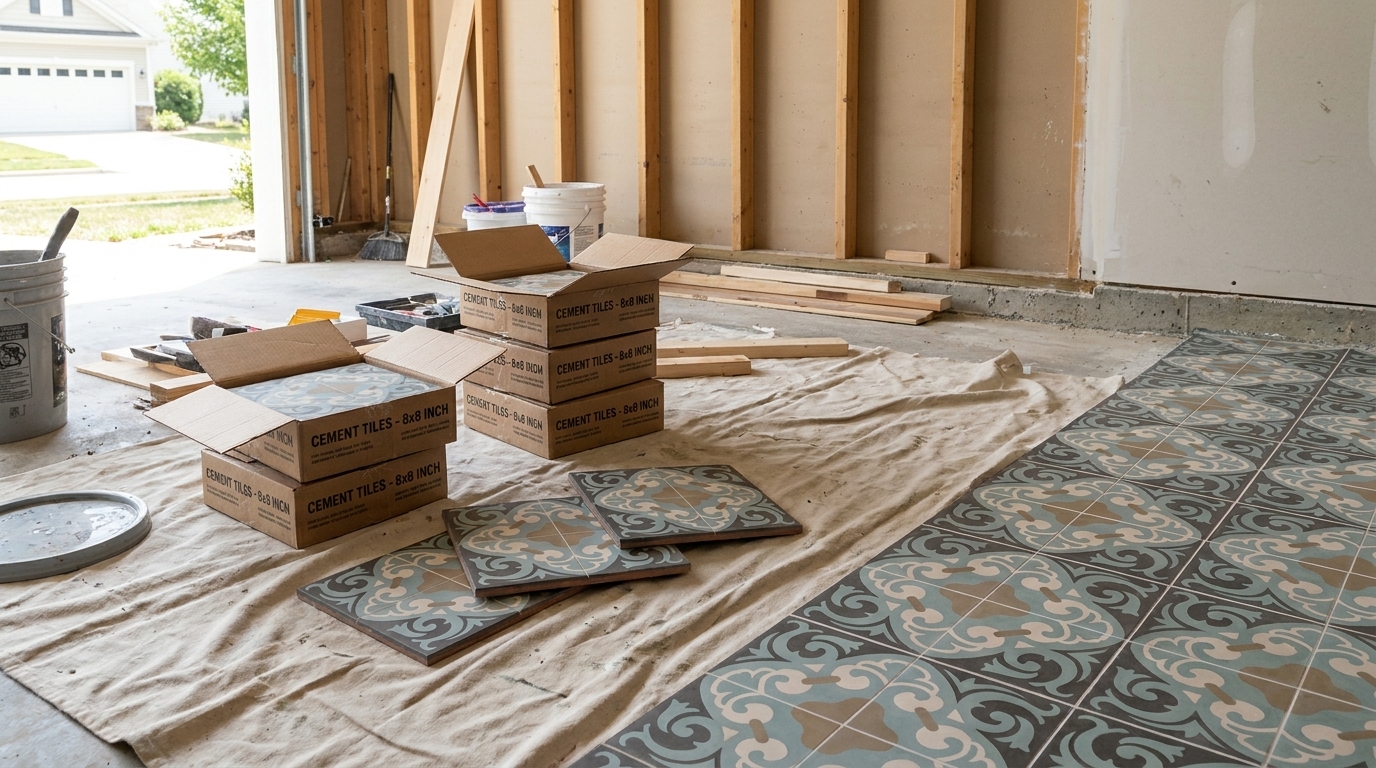
Scroll through any interior design feed and one trend refuses to fade: geometry underfoot. Stars, lattices, broken lines, interlocking blocks — geometric tile patterns have moved from accent to protagonist, defining kitchens, restaurants, and lobbies that a plain floor could never carry. And while porcelain printers race to imitate the look, the originals were born in hand-pressed cement — where they still look best.
At Original Mission Tile, geometric designs are the backbone of our collection, and our newest releases were photographed in the commercial spaces where bold geometry works hardest. In this guide: why geometry endures, the pattern families to know, room-by-room guidance, and the newest geometric designs ready to ship from our collection.
Why Geometry Never Leaves
- Order reads as intention. A geometric floor makes any room — from a taquería to a boutique hotel — feel architected rather than assembled.
- It bridges eras. The same eight-pointed star works in an 1890s renovation and a glass-walled new build; geometry is design’s universal passport.
- Scale flexibility. Tight small-scale patterns energize; large-scale repeats calm. Same language, adjustable volume.
- Pattern with camouflage benefits. Busy floors hide real life — traffic, crumbs, paw prints — better than any solid surface.

The Geometric Families to Know
Stars & Crosses
The heritage classics — interlocking eight-pointed stars that have floored Mediterranean and Mexican architecture for over a century. Timeless in black and white, fresh in updated colorways.
Broken Lines & Modern Grids
Contemporary patterns like offset lines and asymmetric grids bring geometry into minimalist and modern spaces — movement without ornament.
Interlocking Blocks & Trellis
Three-dimensional illusions — cubes, weaves, lattices — that give flat floors astonishing depth. Powder rooms and entries love them.
Arabesques & Curved Geometry
Moroccan-rooted curves soften the ruler’s edge: fish scales, quatrefoils, and lantern shapes that read graphic and organic at once.

Where Geometry Works Hardest
- Restaurants & cafés: a geometric floor is the dining room’s architecture — and its most photographed feature.
- Entries & lobbies: first impressions are geometry’s specialty; a patterned threshold announces the space.
- Kitchens: pattern anchors open plans and gives simple cabinetry a designed backbone.
- Bathrooms: small rooms + confident pattern = the most successful formula in tile design.
- Commercial spaces: geometry scales — from a powder room to a hotel corridor, the repeat keeps its rhythm.
Using Bold Geometry With Confidence
- One hero pattern per view. Let a single geometric design own each sightline; support it with solids and texture.
- Match scale to room size. Small rooms handle small-to-medium repeats beautifully; oversized repeats want room to breathe.
- Two colors go furthest. High-contrast two-tone geometry stays legible; save multicolor for heritage patterns meant to be busy.
- Quiet the neighbors. Geometric floors pair best with simple walls and cabinetry — the pattern is the ornament.
- Sample in place. Geometry shifts with light and viewing angle; audition samples in your actual space before committing.
Geometric Tile FAQ
Will a bold geometric floor feel dated in ten years?
Geometry is the longest-running pattern language in tile — the same designs have stayed current for over a century. Trends cycle around it; the geometry stays.
Is geometric cement tile only for large spaces?
Quite the opposite: small rooms gain the most. One confident pattern makes a powder room or entry feel intentional and larger.
Can I get a geometric pattern in custom colors?
Yes — any design in our collection can be recolored to your palette through our Design Studio.
Are the newest geometric designs in stock?
TYLER II Black, AGADIR Gris, and the rest of our geometric collection ship ready from stock — browse what’s available now.
The Takeaway
Geometric tile patterns endure because they solve design’s oldest problem: making a space feel deliberate. Hand-pressed in pigmented cement, they add what the printed imitations can’t — depth, texture, and the quiet variation of human craft. Whether it’s TYLER II’s graphic confidence or AGADIR’s soft Moroccan geometry, the pattern that defines your space is already pressed and ready to ship.
Find your geometry — browse hundreds of handmade patterns, explore the project gallery, or contact our design team for samples.