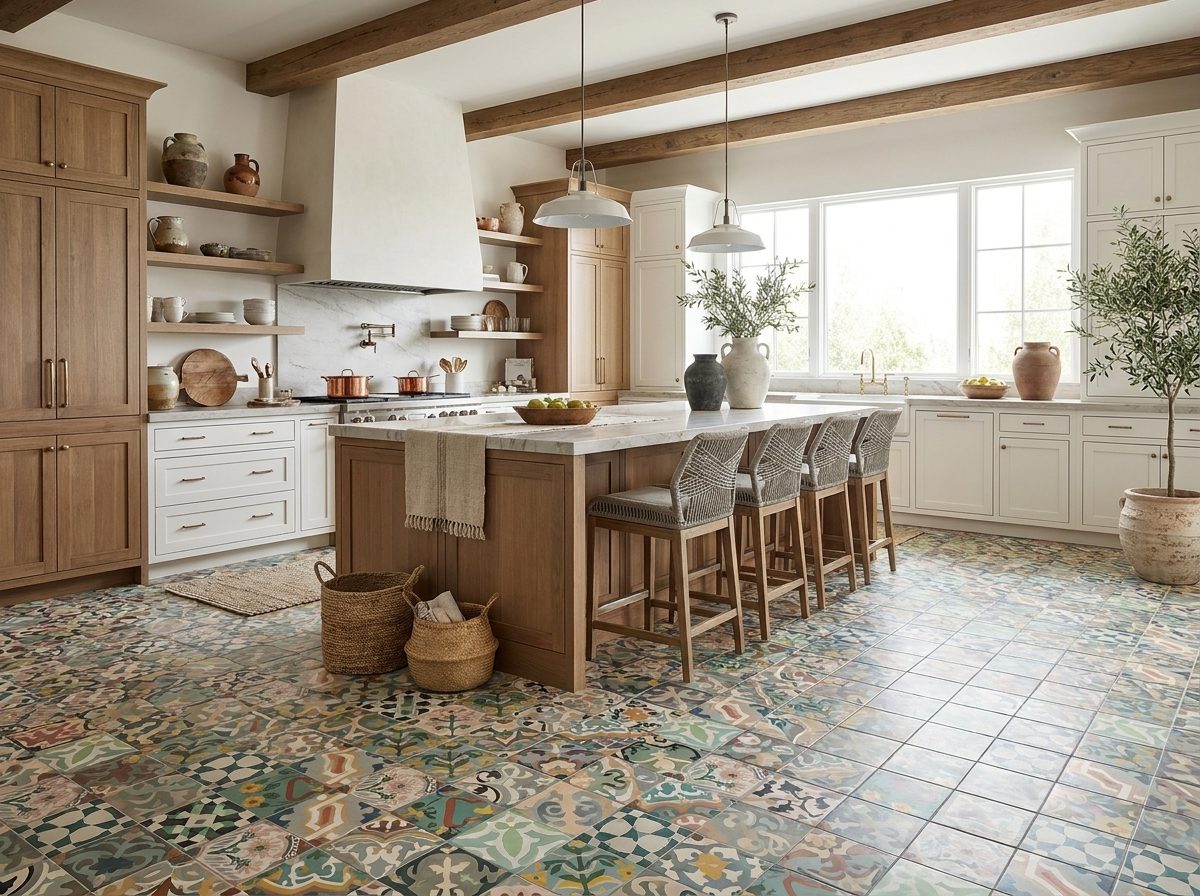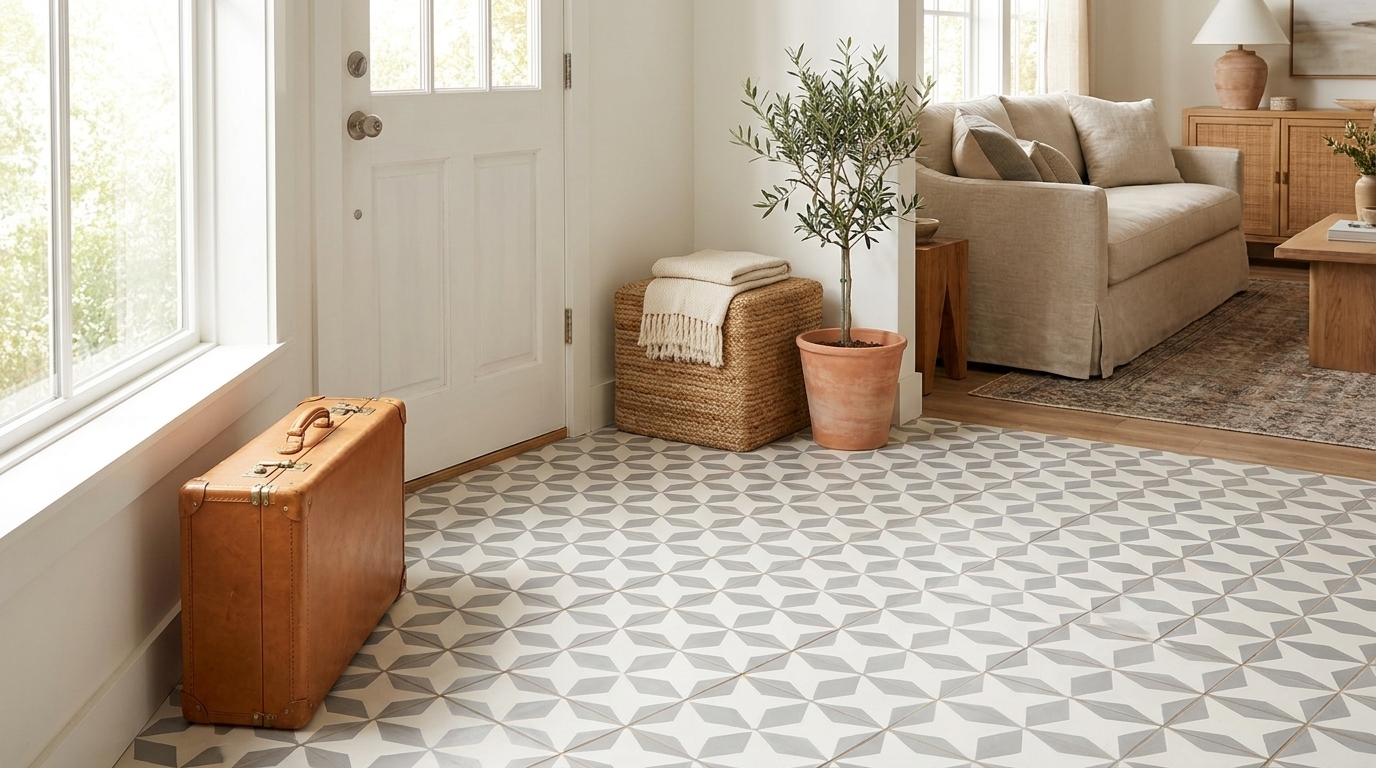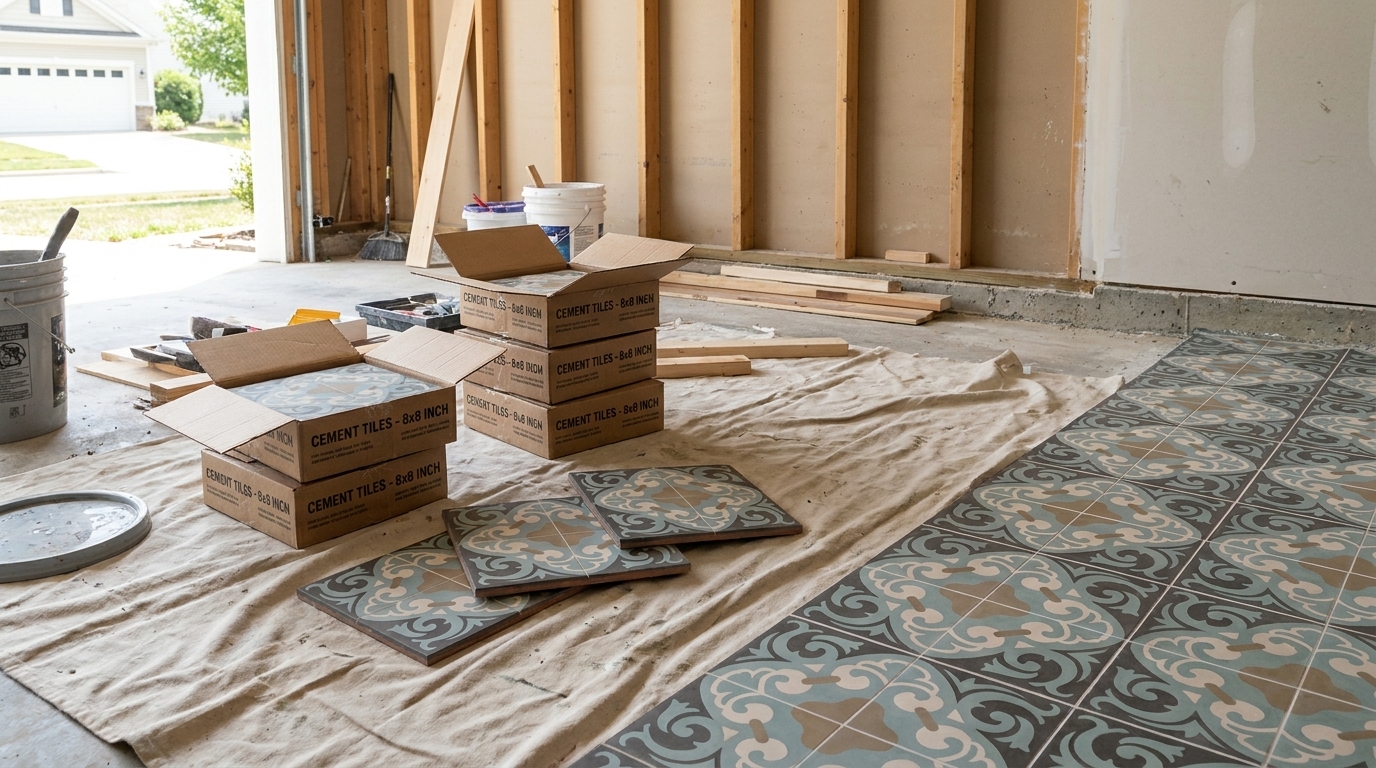
You're usually in one of two situations when you start looking for a custom tile. You've either spent hours searching for a pattern that matches the room in your head and found nothing close, or you've found something close and realized “close” isn't good enough for the project.
That's where a custom design studio matters. In tile, especially handmade cement tile, custom work isn't just about getting a different color or tweaking a stock pattern. It's about turning a visual idea into a material surface that has to look right, wear well, install cleanly, and still feel worth choosing years after the invoice is paid.
As a tile artisan and designer, I've seen the same mistake from both homeowners and professionals. They evaluate custom tile only as an upfront premium. The better question is whether the surface will still feel specific, grounded, and defensible years from now. A generic tile can be cheaper at the start and expensive later, especially when the whole room starts to feel dated or interchangeable.
What Is a Custom Design Studio
A custom design studio is the meeting point between a design idea and a buildable tile. It's where a sketch, brand motif, historic reference, or color story gets translated into something artisans can produce with consistency.
For cement tile, that translation matters. Handmade tile isn't a digital print applied at the end. The pattern, color separations, and geometry have to be resolved before production starts. If the design isn't properly prepared, the finished tile won't match the intent, no matter how skilled the craftsperson is.

Where vision becomes manufacturable
Most clients arrive with one of these starting points:
- A reference image from a vintage floor, textile, or architectural detail
- A brand element such as a logo, monogram, or signature motif
- A gap in the market where standard tiles don't match the palette, scale, or mood of the space
- A restoration need where an existing historic surface has to be interpreted rather than copied loosely
A good studio doesn't just say yes to the idea. It tests whether the idea can survive the practicalities of material, mold, color, grout joint, and installation layout.
Practical rule: If a design only works on a screen, it isn't ready for handmade tile.
That's one reason demand for bespoke surfaces keeps rising. The USA cement tiles market is projected to grow from USD 4.8 billion in 2025 to USD 8.1 billion by 2031, at a CAGR of 8.6%. That projection reflects growing demand for artisanal, durable surfaces in both residential and commercial work.
Why studios matter more now
Digital tools have made it easier to mock up ideas, but they've also made it easier to approve designs that don't translate well into real materials. A custom design studio should slow that down in the right places. It should help you test proportion, simplify where needed, and decide what deserves precision.
That's true in interiors just as much as it is in branding. Teams that care about visual consistency often borrow thinking from adjacent disciplines like creative website design, where every color, line, and interaction has to support a clear identity. Tile works the same way. If the motif is weak or generic, the whole environment feels less resolved.
For clients comparing tools, galleries, and handmade options, Original Mission Tile's design studio and custom tile collection is one example of how a heritage manufacturer presents both stock and fully custom possibilities in one place.
Why Go Custom Key Benefits for Your Project
The strongest reason to go custom isn't novelty. It's fit. A custom tile earns its place when it solves a visual or practical problem that an off the shelf product can't solve cleanly.

Better alignment with the room
A stock pattern asks your room to adapt to it. A custom pattern lets the tile respond to the architecture.
That can mean softening the scale for a small powder room, adjusting geometry for a long corridor, or building a palette around existing stone, millwork, or painted cabinetry. In hospitality work, it can mean carrying a recognizable visual language from entry to bar to restroom without repeating a logo everywhere.
Three benefits show up again and again:
- Design harmony: The tile can match unusual architectural styles, preserved details, or a tightly controlled palette.
- Signature identity: A restaurant, hotel, or retail space can create a recognizable floor or wall without relying on signage alone.
- Practical problem solving: Custom work can address border conditions, medallions, focal zones, or restoration needs that standard formats miss.
Authenticity has financial value
This is the part many buyers skip. They compare custom tile to a commodity product as if both create the same long term value. They don't.
A 2024 report noted that brands using hand-drawn, authentic visuals saw 22% higher loyalty scores than those using generic stock imagery, and that stronger authenticity can reduce rebranding costs by 30 to 40% over 5 years. That finding comes from brand design, but the lesson carries into physical environments. A space that feels specific tends to age better than one built from generic surface decisions.
The cheapest visual choice often becomes the most expensive one when the space needs to be refreshed too soon.
For a homeowner, that can mean a kitchen or bath that still feels personal after trends shift. For a hospitality client, it can mean a surface that supports recall and loyalty because guests can remember it.
What works and what doesn't
Custom tile works best when the design has a reason to exist beyond decoration.
What tends to work:
- Motifs tied to context: Historic references, local patterns, family iconography, or a brand language with clear roots.
- Palettes chosen for the full room: Not just the tile sample in isolation.
- Restraint: One strong custom surface usually has more impact than custom everything.
What usually disappoints:
- Trend chasing: A pattern chosen because it looks current online can feel old quickly.
- Overloaded artwork: Too many tiny details often weaken the final tile.
- Weak narrative: If no one can explain why the pattern belongs there, it rarely gets stronger after installation.
From Concept to Concrete The Custom Tile Design Process
Clients often expect custom tile to work like ordering printed material. It doesn't. It's closer to a bespoke suit. You don't jump from sketch to final delivery without fittings, corrections, and a point where the design proves itself in real material.

The first conversation
The process starts with intent, not software. The studio needs to know where the tile is going, what the room is doing, how large the field is, and whether the design is decorative, branded, historic, or architectural.
At this stage, the most useful inputs are usually simple:
- Reference images: Floors, textiles, logos, sketches, or existing room materials.
- Application details: Floor, wall, wet area, backsplash, patio, stair riser.
- Project constraints: Budget range, schedule pressure, installation conditions.
- Design priorities: Color match, pattern fidelity, durability, or historical character.
Digital proofing and revision
Once the idea is clear, the design gets translated into a layout that can be produced. During this process, proportion, repeat, line weight, corners, and color separations get tested.
A lot of clients think this phase is about aesthetics alone. It isn't. It's also where the studio removes avoidable failures. A line that looks elegant on screen may clog the composition in tile. A repeat that feels balanced in a digital square may drift once it spans a full room.
A short visual overview helps most clients understand the sequence before approvals begin.
Strike off and approval
The strike off is the turning point. It's the sample that tells you whether the design survives contact with real material.
It is here that many good projects become excellent ones, because the sample answers questions a rendering can't:
- Does the color read correctly in matte cement rather than on a backlit screen?
- Are the transitions crisp enough?
- Does the scale feel right from standing height?
- Will grout and layout strengthen the pattern or interrupt it?
Don't approve a custom tile sample because it looks “basically right.” Approve it when you can explain why it will still look right across the full installation.
Full production and curing
After approval, production begins. Handmade cement tile requires repetition with discipline. Color consistency, layer integrity, pressing, curing, and packing all depend on process control.
Clients often focus on the moment the tile is pressed, but the full cycle matters just as much as the visible craft. The pattern has to hold, the body has to cure correctly, and the order has to be prepared for the actual conditions of jobsite delivery and installation.
That's why the best custom projects run on clear decisions. Every unresolved choice gets expensive once production starts.
Preparing Your Vision Artwork and Technical Specs
Most delays in custom tile happen before production, not during it. The issue is usually preventable. The artwork arrives incomplete, the color direction is vague, or the design hasn't been adjusted for the practicalities of handmade cement.

What to submit
If you want a custom design studio to move efficiently, send material that answers three questions. What should the tile look like, how should it repeat, and what absolutely cannot change?
The cleanest submissions usually include:
- Vector artwork when available: AI, EPS, or another editable format is easier to scale and separate than a flattened image.
- Reference images: These help when the final file is still being refined.
- Color direction: Named paint references, material samples, or clearly labeled swatches.
- Layout intent: Full field, border, inset, rug pattern, feature wall, or logo tile.
- Site context: Room photos, plans, elevations, or cabinet and finish selections.
If your file prep is still rough, resources on streamlining content creation for visuals can help you organize references before sending them to a studio. That doesn't replace production review, but it does improve the starting point.
Why technical clarity matters
Handmade cement tile has physical limits. Fine artwork can be adapted, but not every tiny notch, hairline, or soft gradient belongs in this medium.
A common mistake is submitting art that was designed for print or screen and expecting it to transfer directly. Tile needs structure. Shapes need enough mass to read cleanly, and repeated units need to stay coherent once they run across a floor or wall.
For branded environments, custom logo tiles for brands, restaurants, hotels, and retail studios show the kind of project where clean artwork and disciplined specification make the difference between a crisp result and a muddy one.
Studio note: If your motif depends on microscopic detail, simplify the drawing before you ask the material to carry it.
Custom Tile Artwork Submission Checklist
| Requirement | Specification | Why It Matters |
|---|---|---|
| Artwork file | Vector file preferred, or the highest quality editable artwork available | Clean geometry is easier to refine for molds and repeat layouts |
| Pattern repeat | Show whether the design is a single tile, multi tile repeat, border, or rug layout | The studio needs to test how the pattern reads across the full installation |
| Color references | Provide clearly labeled color targets or physical finish references | Cement color reads differently than screen color, so direction must be explicit |
| Application | State floor, wall, wet area, outdoor, or decorative use | Use conditions affect design choices, sealing, and installation planning |
| Scale information | Include tile size intent and any critical dimensions in the motif | Proportion can change dramatically when a pattern is resized |
| Non negotiables | Identify what must stay fixed and where the studio can adapt | This prevents unnecessary revisions and protects the core concept |
| Site context | Share room photos, drawings, or nearby materials | A tile never lives alone. It has to relate to the whole space |
Understanding Pricing and Lead Time Considerations
The two questions every client asks are fair. What drives the cost, and why does the timeline feel longer than expected?
For handmade cement tile, both answers come back to labor, complexity, and approvals. You aren't buying a stock box pulled from a warehouse shelf. You're commissioning a surface that has to be resolved, sampled, produced, cured, and prepared for installation.
What affects pricing
Price usually shifts based on how much interpretation and setup the project requires.
A few variables matter more than others:
- Design complexity: More intricate separations and finer geometry usually create more work in development and production.
- New pattern creation: A fully original motif may require new setup rather than adaptation of an existing structure.
- Color discipline: Tight color expectations can require more review and sample attention.
- Order volume: The relationship between setup effort and total quantity changes the economics of the order.
The mistake is to ask only, “What's the tile cost per piece?” A better question is, “What am I paying to avoid compromise?” If custom work resolves a key focal surface correctly, it can protect the value of the whole room.
Why lead time is real
Handmade production moves at the pace of craftsmanship and curing, not at the pace of software.
According to Architessa's cement tile guidance, an average artisan can produce 80 tiles daily, and each tile requires a manufacturing cycle of 7 to 10 days to complete. That fact alone changes how you should schedule. Lead time isn't just factory queue. It includes real hands, real sequence, and real material development.
Here's the practical breakdown:
- Approval time often adds more delay than production itself. Clients sit on samples, then need rush delivery later.
- Production capacity is finite because handmade output is finite.
- Curing time can't be skipped without risking the integrity of the tile.
- Shipping coordination matters because custom orders need careful packing and site timing.
If you need a clearer sense of how decisions affect schedule, sample approval workflow guidance is useful because it frames the approval stage as part of the lead time, not separate from it.
What works in real projects
The clients who stay on schedule usually do three things well. They approve artwork quickly, they gather internal sign off before the sample arrives, and they treat the strike off as a decision point rather than another brainstorming round.
The clients who run into trouble tend to revise late, compare samples under inconsistent lighting, or leave installer questions until the tile is already on site.
Best Practices for Collaboration and Installation
A custom tile project succeeds when the studio and installer are working from the same logic. The artisan needs a clear design target. The installer needs a clear plan for layout, blending, cuts, sealing, and protection after installation.
If either side is guessing, the tile pays for it.
Working well with the studio
Good feedback is specific. “I don't love it” doesn't help much. “The green reads too cool against the walnut millwork” does. The strongest clients review a sample against actual finishes, in real light, and with enough distance to judge the pattern as part of a room.
Useful feedback usually has these qualities:
- It separates color from pattern issues: Don't combine five concerns into one vague comment.
- It ranks priorities: Say what matters most if not every request can move equally.
- It comes from a small decision group: Too many reviewers create circular revisions.
- It respects the material: Ask whether the change supports the tile, not just the drawing.
A sample isn't there to confirm your first idea was perfect. It's there to make the final result more durable, more legible, and more convincing.
Choosing the right installer
Custom cement tile needs an installer who understands variation and composition. Handmade tile isn't meant to be treated like a perfectly uniform printed surface. Pieces should be blended thoughtfully, dry laid when necessary, and viewed as a field before they're locked into mortar.
An installer should also understand that sealing is part of the system, not an afterthought. Cement tile has a distinct surface character, and preserving that character depends on proper prep, sealing, and protection during the remaining trades.
Ask practical questions before installation starts:
- Have they installed handmade cement tile before?
- Will they dry lay and blend material before setting?
- Do they understand focal alignment and border balance?
- Who is responsible for sealing and post install protection?
Designing with inclusivity in mind
There's one advanced consideration that deserves more attention in custom work. A motif can be beautifully drawn and still be culturally tone deaf, exclusionary, or too narrow for the audience using the space.
A 2024 Clutch.co study found that 68% of small businesses struggle to create visuals that reflect real diversity. In custom tile, that's a reminder to check whether patterns, symbols, and references are culturally neutral and accessible when they need to be, especially in hospitality, retail, and public facing projects.
That doesn't mean every design must be generic. It means custom work should be intentional. If you're borrowing from a regional tradition, know what you're referencing. If you're designing for a broad audience, test whether the motif welcomes that audience rather than narrowing it unintentionally.
The best custom tile projects feel personal without becoming careless.
If you're weighing a bespoke tile concept and want a practical review of artwork, pattern feasibility, or production fit, Original Mission Tile is a solid place to start. Their handmade cement tile focus, custom design capabilities, and project guidance can help you move from idea to manufacturable surface with fewer surprises.