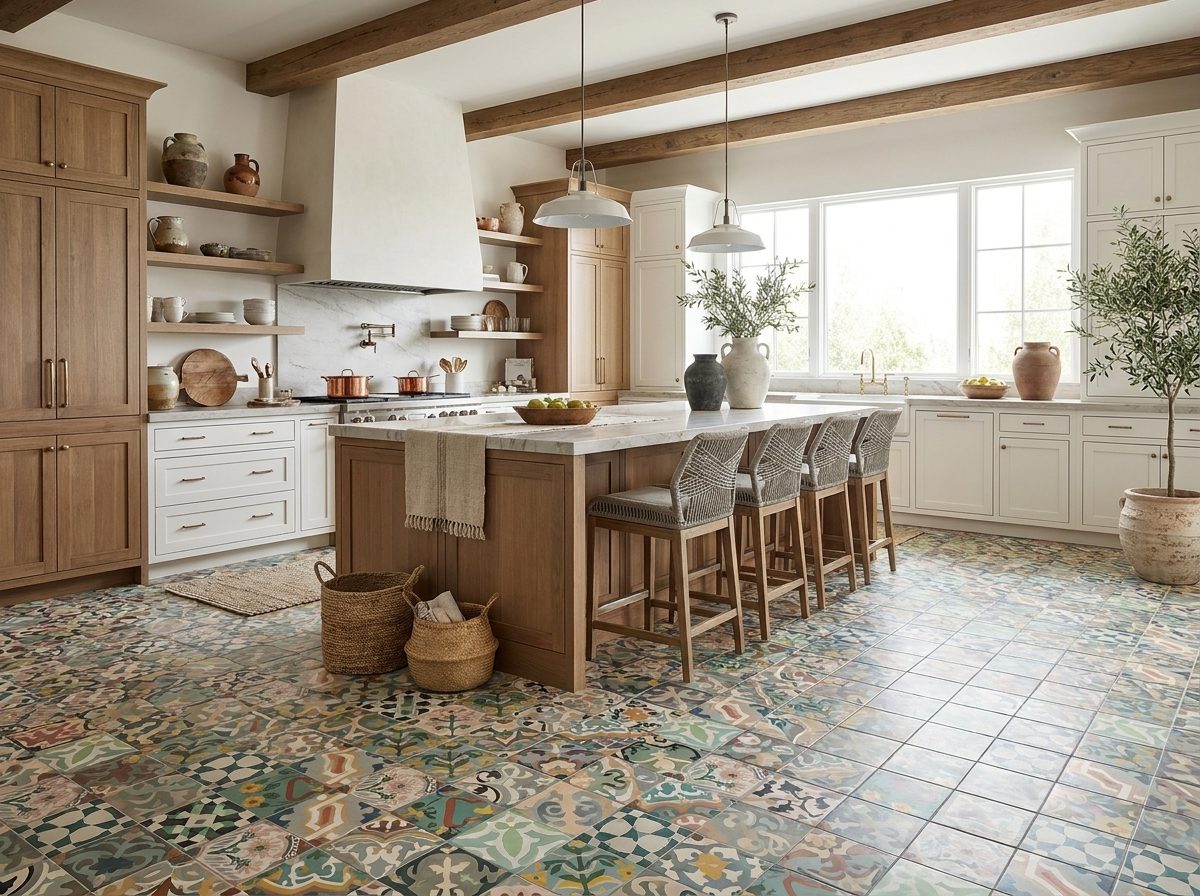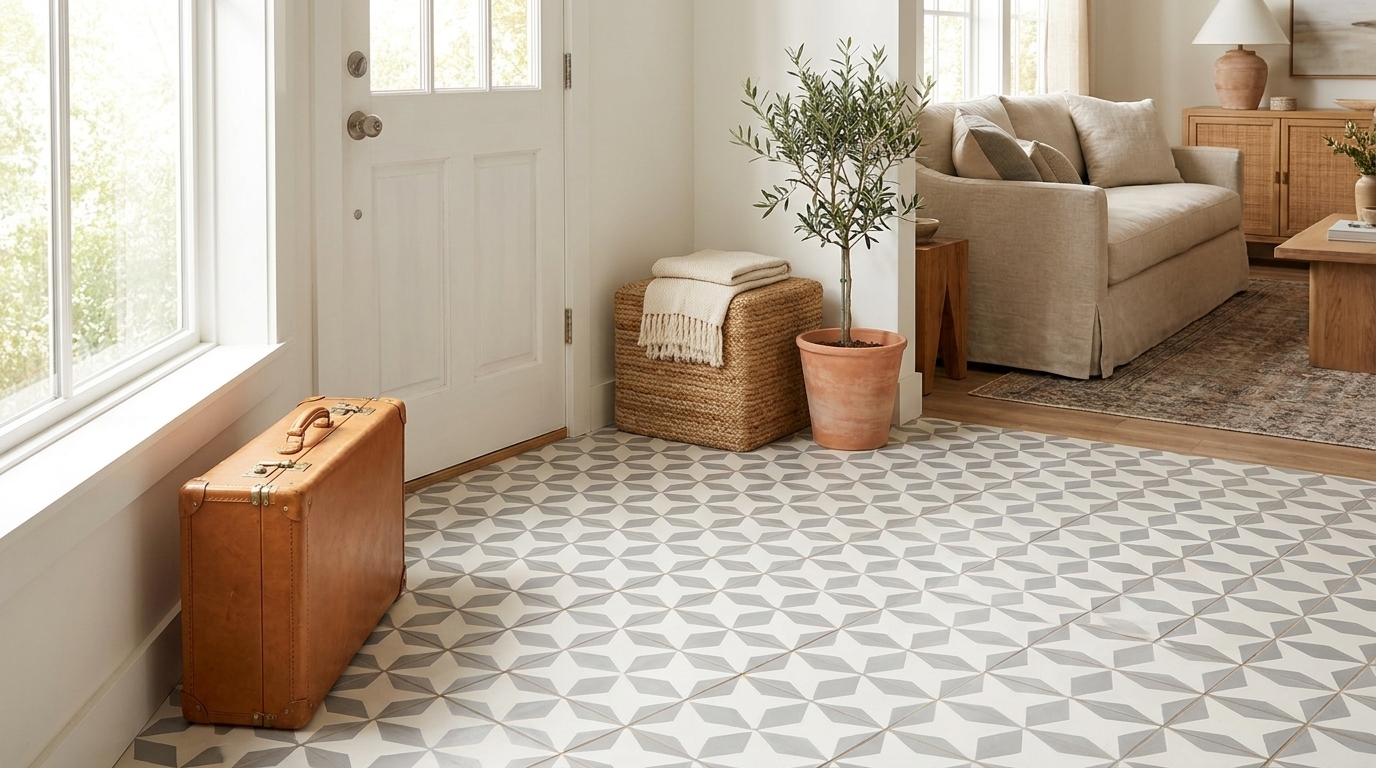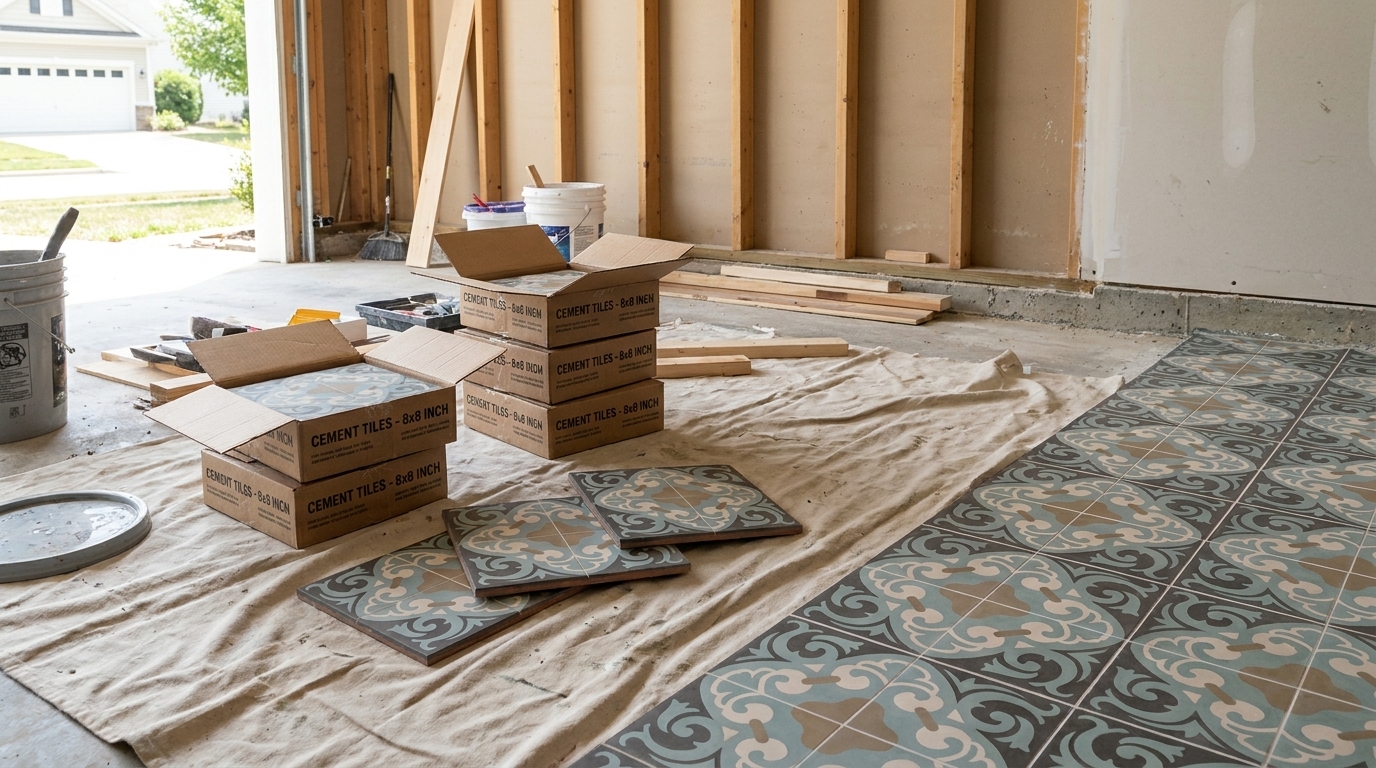
You're probably looking at a floor finish that has to do several jobs at once. It needs to feel clean and bright, work with the age of the house, hold up to daily traffic, and still look good after the renovation dust is gone. That's exactly why hexagonal white floor tiles keep coming up in serious design conversations.
They're familiar for a reason. In the right room, they make a bathroom feel sharper, an entry feel more intentional, and a kitchen feel rooted without looking old-fashioned. The mistake is assuming they're a simple choice. They aren't. Material, tile size, grout color, surface finish, and installation method all change how this floor performs.
Good results come from treating white hex tile as both a design decision and a maintenance system. That's where most trend-driven guides fall short. The floor can be beautiful and practical, but only if the trade-offs are handled upfront.
The Enduring Appeal of Hexagonal White Floors
A white hex floor has a way of making a room feel settled. In a small bath, it can brighten the space without looking flat. In a mudroom or vestibule, it reads as crisp and architectural. In older homes, it often looks as if it belongs there, even when the room around it has been updated.

That familiarity isn't accidental. White hex tile had its defining rise in the 1920s, when the push for sanitary, easy-to-clean interiors intensified after the 1918 Spanish Flu pandemic, as noted in Apartment Therapy's history of hex tile. It became a signature of the modern American home, especially in bathrooms and entryways, and it has remained in circulation for over a century.
Why it still works today
The appeal now is broader than nostalgia. Hexagons have a long design lineage, from ancient geometric floors to Victorian foyers and early modern architecture. White makes that geometry feel lighter and more flexible. It can support a traditional black border, a restrained Scandinavian palette, or a warm contemporary room with oak, plaster, and unlacquered brass.
White hex tile succeeds because it doesn't demand attention all the time. It gives the room pattern, but it still lets the vanity, millwork, or stone countertop speak.
There's also a practical reason designers keep returning to it. The pattern adds visual texture without requiring a loud color story. If you want flooring that feels detailed but not busy, hexagonal white floor tiles sit in a sweet spot.
What the classic look doesn't tell you
A white hex floor can look effortless. It never is. The final result depends on choices that aren't obvious in showroom photos: cement versus porcelain, mosaic versus large format, bright white grout versus soft gray, matte versus smoother finishes. Each one changes cleaning, slip resistance, and the overall mood of the room.
That's where the smart version of this floor begins.
Choosing Your Tile Material A Practical Comparison
The material drives almost everything. It affects how the tile feels underfoot, how it wears, how much variation you see from piece to piece, and how much care the floor will need after installation. For most projects, the primary choice comes down to handmade cement, porcelain, or ceramic.

Side by side material comparison
| Material | Best for | What it looks like | What to watch |
|---|---|---|---|
| Handmade cement | Character-rich interiors, custom work, heritage homes, boutique hospitality | Matte, soft, artisan-made, subtle variation | Porous surface, sealing is required, more care in wet and stain-prone areas |
| Porcelain | Busy bathrooms, family kitchens, commercial-grade wear, low-maintenance projects | Can be very clean and consistent, available in matte or textured finishes | Can feel more manufactured if the selection is too uniform or too glossy |
| Ceramic | Light-traffic floors, budget-sensitive remodels, decorative secondary spaces | Broad style range, easy to coordinate | Usually not my first choice where the floor will take constant abuse |
Cement for depth and character
If you want the floor to feel handmade, cement is the standout. Hexagonal cement tiles are made from cement, sand, marble dust, and mineral pigments, then pressed under high hydraulic pressure to achieve compressive strength exceeding 35 MPa, according to Tango Tile's guide to hexagon cement tiles. Because the color is inlaid rather than glazed, the surface keeps its matte, grounded look and resists the scratched-off appearance that can happen with some factory finishes.
Cement tile has a living surface. It doesn't look printed on. It looks made.
That matters when you want a white floor with warmth instead of glare. Cement white isn't always a cold, stark white. It often carries a softer, chalkier character that pairs especially well with natural wood, limewash, aged brass, and marble with quiet veining.
If you're comparing categories and applications, this overview of different types of tile for floors and walls is useful before you narrow the field.
Porcelain for low-drama ownership
If your priority is easy ownership, porcelain is usually the safer call. It works well in family bathrooms, laundry rooms, and kitchens where the floor has to deal with water, grit, and routine mess without demanding much from the homeowner. A good matte porcelain hex can still look refined, especially if the grout color is chosen carefully.
Porcelain is also the material I'd steer toward when the client wants the white hex look but doesn't want sealing schedules, pH-neutral cleaning habits, or the possibility of surface patina. It's less romantic, but it's less demanding.
Ceramic for simpler projects
Ceramic can be a good fit in lighter-use spaces or when the budget needs more flexibility. It offers a wide spread of styles and white tones, and for powder rooms or guest baths it can perform perfectly well. The limitation is usually long-term toughness compared with a stronger porcelain or a properly installed cement tile floor.
The practical way to choose
Use your lifestyle, not just your inspiration photos.
- Choose cement if you want an artisanal finish, visual depth, and a floor that feels rooted in craft.
- Choose porcelain if you want the look with the least maintenance burden.
- Choose ceramic if the space sees lighter use and value is part of the brief.
The best floor isn't the most beautiful sample in isolation. It's the one that still feels right after years of traffic, cleaning, and real life.
Size and Grout The Details That Define Your Look
Size changes the personality of a hex floor more than one might anticipate. A small mosaic reads as textured, traditional, and detailed. A large hex feels calmer, bolder, and more architectural. Neither is better. They solve different problems.

Small hex versus large hex
Small hexagonal white floor tiles are the closest link to early bathroom floors. They create more visual texture, more rhythm, and more slip-friendly interruption underfoot because the grout is a bigger part of the surface. They also make curves, shower pans, and older room proportions easier to handle gracefully.
Large hex tiles reduce visual busyness. They can make a room feel more open and contemporary, especially in bathrooms with frameless glass and minimal trim. But the performance trade-off matters. A 2025 industry report noted that 41% of designers were increasingly choosing large hex formats of 6+ inches because they cut installation time by 22%, yet those same choices were associated with an 18% increase in slip risk on wet surfaces due to fewer grout traction points, according to this industry report on hex tile shower floor pros and cons.
Practical rule: In wet rooms, don't choose size on appearance alone. Fewer grout joints may look cleaner, but they can change how the floor behaves when water is involved.
Grout is part of the design
Grout color can sharpen the honeycomb pattern or nearly erase it.
- Bright or matching grout creates a quieter field. This works well when the room already has strong materials like veined stone or statement lighting.
- Mid-tone gray grout is often the most forgiving choice for daily use. It keeps the pattern visible without pushing the floor into a graphic black-and-white look.
- Dark contrast grout highlights geometry. It can be striking, but it also turns every spacing inconsistency into part of the design.
If you're reviewing layouts with an installer, this guide to floor tile spacing and grout joint planning helps frame the conversation in practical terms.
Installation rhythm matters too
Hex layouts are less forgiving than a simple square grid. If the pattern drifts, the eye catches it. The same goes for timing. Homeowners often underestimate how long the floor needs before grouting, sealing, and regular foot traffic. This breakdown of how long tile takes to set is a useful reality check when you're building a renovation schedule.
A good white hex floor looks easy. A good one is precise.
Designing with White Hexagonal Tiles
White hex tile is versatile because it can stay quiet or become decorative, depending on what surrounds it. That range is why it keeps showing up across old-house restorations, minimalist baths, cafés, mudrooms, and boutique hotel projects. Its popularity has also been reinforced by design media and social platforms. As noted in Solid Shape's review of hexagon tile trends, the style has surged in recent years, with a large community of designers and homeowners sharing the look under #hexagontiles on Instagram.

Three design directions that work
The simplest approach is a plain white field. This suits bathrooms where you want the floor to support, not dominate. Pair it with painted millwork, a marble or quartz top, and warm metal finishes, and the room feels pulled together without trying too hard.
The second option is a bordered floor. A black or charcoal outline around white hex tile gives the room instant structure. In entryways and kitchens, that border can act like a built-in rug. It frames the room and makes the floor feel intentional rather than a basic installation.
The third is a pattern built from one or two colors. Small hex pieces can form florals, stars, linear bands, or repeating geometric motifs, transforming the floor into a blend of architecture and graphic design.
What to pair with it
White hex flooring performs best when the adjacent materials don't fight it.
- Wood vanities and cabinetry soften the geometry and keep the room from feeling clinical.
- Marble countertops work when the veining is controlled. Too much movement above and below can make the space feel restless.
- Colored wall tile pairs beautifully with white hex floors because the neutral floor grounds the room.
- Plaster, painted brick, or beadboard all benefit from the crisp outline of the hex pattern.
If you want white floors that still feel warm, bring that warmth in through millwork, wood, and metal. Don't ask the tile to do every job.
Custom pattern thinking
One of the strengths of hex tile is that a standard shape can still produce a custom floor. A border changes the room. A flower motif changes the mood. Even a shift in grout tone can push the installation from vintage to modern.
For pattern planning, room balance matters more than novelty. Use decorative elements where they support the architecture: inside an entry outline, at the perimeter of a bath, or as a central field inside a larger room. Don't scatter motifs randomly and expect coherence.
For readers exploring custom layouts, this visual reference can help spark ideas before finalizing a drawing or sample board:
The best white hex floors don't just copy a trend image. They respond to the room's age, scale, and light.
Installation and Layout Essentials
Hex tile rewards careful prep and punishes rushed layout. Because the pattern doesn't run in a simple square grid, small alignment errors can ripple across the room. The floor should be dry-laid or mapped before thinset goes down, especially in visible spaces like powder rooms, vestibules, and open bathrooms.
Start with the room, not the wall
Walls are often out of square, especially in older homes. If the installer starts from a crooked perimeter, the layout can look off even when every tile is technically set correctly. The better approach is to establish control lines through the room and judge where the cuts will land at key edges, under cabinetry, and at thresholds.
Good layout questions include:
- Where will the eye land first when someone enters the room?
- Are perimeter cuts balanced, or does one side end in slivers?
- Does the pattern align cleanly at doorways and transitions?
- Will plumbing penetrations interrupt the geometry in an awkward way?
For planning quantities and room dimensions before ordering, this guide on how to measure for tile is worth reviewing with the installer or contractor.
Cement tile requires a stricter process
Unglazed white cement hex tile is not forgiving if it's treated like porcelain. Because it's porous, sealing isn't optional. According to technical guidance for white hex cement tiles, unglazed white cement tile should be sealed with a penetrating impregnator within 72 hours of installation, creating a hydrophobic barrier that reduces water absorption by over 90% and helps prevent staining from acidic substances.
This is not a finish detail. It's part of the installation system.
That requirement changes sequencing. The installer needs a plan for handling, setting, grouting, sealing, and protecting the floor during the rest of construction. If other trades walk across unprotected white cement tile, the floor can pick up stains and marks before the room is even complete.
Details that separate clean work from average work
A strong hex installation usually includes careful mockups, checked spacing, and attention to transitions. It also means using the right underlayment and making sure the substrate is flat enough for the chosen tile size. Hex tile won't hide a sloppy substrate.
In showers, entries, and other wet zones, slope and drainage matter just as much as pattern. A beautiful layout won't rescue a floor that holds water.
Maintenance and Long-Term Care
The fear with white floors is understandable. People assume they'll show everything and stay attractive only with constant scrubbing. That isn't the full story. Instead, the primary maintenance issue with hex tile is usually grout, not the white tile surface itself.
The part most homeowners underestimate
Hex geometry creates more joints than square formats. According to Mineral Tiles' comparison of hexagon and square tiles, hex tiles can create 1.5x more grout lines per square foot than square tiles, and a 2025 study cited there found that 34% of homeowners reported grout discoloration within 18 months on white hex floors.
That doesn't make white hex a bad idea. It means maintenance should be planned before the tile is ordered.
White hex floors aren't high-drama. Neglected grout is.
What works better than reactive cleaning
A good care plan starts with material choice, grout selection, and sealing strategy.
- Use the right grout for the room. In splash-prone spaces, many installers prefer grout systems that resist staining better than basic cementitious options.
- Seal porous tile when required. Cement tile especially needs protection built into the installation plan.
- Choose a grout color with foresight. Pure white grout looks crisp on day one. A soft gray or warm light gray often ages more gracefully in family spaces.
- Clean with compatible products. Harsh acidic cleaners are a bad fit for cement tile and can create surface problems that routine pH-neutral care avoids.
Daily care should be boring
That's a compliment. The best routine is simple: remove grit, wipe spills quickly, and don't let soap residue or dirty mop water sit on the floor. In showers, grout haze and mineral buildup become harder to remove when they're allowed to accumulate.
If your project includes shower flooring or wet bath areas, this practical guide with expert advice on cleaning shower grout is a solid supplement to the care instructions you get from the tile supplier and installer.
Expect patina or prevent it
This is where owners need honesty. Some people want a floor that stays visually crisp with minimal effort. Others are comfortable with a surface that develops character. Cement tile, especially in white, can be beautiful with age, but it asks for informed care. Porcelain asks for less.
The right floor isn't the one with no maintenance. It's the one whose maintenance style matches the way you live.
Buying Tiles and Working with Professionals
By the time you're ready to order, the important decisions should already be made. Not just white hex or not, but which material, which size, which grout direction, and how much variation you want in the final room. That clarity saves money and prevents rushed substitutions later.
A short buying checklist
Order samples and review them in the actual room. White can lean cool, warm, chalky, or crisp depending on light and surrounding finishes. What looks perfect in a showroom can shift once it sits next to oak flooring, painted cabinetry, or natural stone.
Ask the installer to review the layout before ordering is finalized. Hex tile needs thoughtful centering and perimeter planning, and handmade materials may have natural variation that should be expected rather than treated as a defect. If the project uses cement tile, confirm who is responsible for sealing, at what stage, and how the surface will be protected after installation.
Why specialist support matters
This is one of those categories where knowledgeable guidance pays for itself. A tile specialist can help homeowners avoid mismatched expectations, and it gives architects, designers, and builders a clearer path through specification, lead times, custom pattern development, and installation requirements.
For professionals, that support is even more valuable on hospitality, restaurant, and restoration projects where pattern accuracy and material performance matter just as much as the look. A good supplier isn't just shipping boxes. They're helping the team make a floor that will still look right years from now.
If you're planning a project with hexagonal white floor tiles, Original Mission Tile is worth considering for both design guidance and material depth. Their handmade cement tile heritage, custom capabilities, and support for homeowners and trade professionals make them a strong partner when you want a floor that feels timeless, intentional, and built to last.