You're probably looking at two tile samples that seem almost identical from a few feet away. One says ceramic. One says porcelain. The color is right, the finish works, and both look like they'd do the job.
That's where most flooring decisions go sideways.
On a floor, the right choice isn't the tile that looks better under showroom lighting. It's the one that fits the room, the traffic, the moisture level, the subfloor, and the installer's skill. A powder room floor, a laundry room, a busy kitchen, and a mudroom all ask different things from tile. If you skip that part, you can end up paying for performance you don't need, or choosing an easy material that doesn't hold up where it matters.
Choosing the Right Floor Tile Beyond the Showroom
Floor tile gets judged too often by surface appearance alone. Clients hold two samples next to a cabinet door, compare color tone, and assume the rest is a style decision. For walls, that's often close enough. For floors, it isn't.
The better question isn't is ceramic or porcelain tile better for floors. The better question is, better for which floor?
A laundry room with occasional moisture and appliance vibration isn't the same as a guest bath. A kitchen with daily traffic, chair movement, spills, and dropped utensils puts stress on tile in a different way than a quiet bedroom. If you're comparing options for utility spaces, this overview of top ceramic and vinyl laundry floors is useful because it frames flooring as a room-specific decision instead of a generic material contest.
What usually decides the winner
Three practical issues tend to settle the ceramic-versus-porcelain question fast:
- Moisture exposure: Bathrooms, kitchens, entries, and laundry rooms punish the wrong tile choice.
- Traffic and wear: Light-use rooms can tolerate compromises that busy family spaces can't.
- Installation reality: A strong tile installed over a weak subfloor still fails.
That last point gets ignored most. Tile doesn't forgive movement. If the subfloor deflects, if the underlayment is wrong, or if the cuts are rough and stressed, the material's advertised strength won't save the job.
For a broader look at how different floor tile materials perform, best floor tile material is a helpful reference point before you commit to one category.
A floor succeeds when the material, the room, and the installation method all match. If one of those is off, the project can look good on day one and disappoint soon after.
The Core Difference Clay Composition and Firing
Ceramic and porcelain belong to the same general family, but they don't behave the same way underfoot. The difference starts inside the tile body, not on the glaze.
Porcelain is made from a finer, denser clay mix and fired hotter. Ceramic uses a coarser clay body and lower firing temperatures. That manufacturing difference is why one tile is tighter, harder, and more moisture-resistant, while the other is easier to cut and often easier on the budget.
Why density changes everything
Imagine baked bread versus a hard cracker. Both start from similar ingredients, but the finished structure is different. One has more open space in it. The other is compact and tight.
That's the useful mental model for floor tile.
According to this porcelain and ceramic tile breakdown, porcelain tile has a water absorption rate of less than 0.5%, as defined by ASTM C373, and reaches a density of approximately 2.3 g/cm³ because it's fired at temperatures exceeding 1,200°C. By contrast, ceramic tile absorbs between 0.5% and 20% of its weight in water, is fired at 1,000°C to 1,150°C, and has a density of 1.8 to 2.0 g/cm³.
Those numbers explain most of the actual performance gap.
What that means on an actual floor
A denser tile body gives porcelain a more vitrified structure. In practical terms, it's less likely to take on moisture and better suited to rooms where wet shoes, mopping, splashes, or humidity are part of normal use.
Ceramic can still be an excellent floor tile in the right setting. But it depends more heavily on where it's going and how much stress that floor sees.
Here's the short version:
| Flooring factor | Ceramic tile | Porcelain tile |
|---|---|---|
| Tile body | More porous | Denser and more vitrified |
| Water behavior | Better for drier interiors | Better for wet or demanding spaces |
| Cutting and shaping | Easier to work with | Harder to cut cleanly |
| Typical use case | Decorative and lighter-duty floors | High-demand residential floors |
Once you understand the body of the tile, the rest stops feeling like marketing language. Wear resistance, stain behavior, moisture performance, and installation difficulty all flow from that one distinction.
Head-to-Head Performance on Floors
For flooring, performance matters more than category labels. A beautiful tile that chips at the edges, stains easily, or struggles in a wet room wasn't the right specification no matter how good it looked in the box.
This visual summary helps frame the differences quickly.

Water exposure and wet-room use
On floors, water isn't limited to puddles. It comes from steam, tracked-in rain, pet bowls, sink splashes, mopping, and routine cleaning. That's why low absorption matters so much more on a floor than many shoppers expect.
Practical rule: If the floor will get wet often, lean toward porcelain unless there's a very specific design reason not to.
Porcelain's low porosity makes it the stronger choice for bathrooms, kitchens, laundry rooms, and many covered outdoor applications in mild climates. Ceramic works better where the floor stays relatively dry and the use is gentler.
If you want a technical primer on how absorption affects tile selection, tile water absorption is worth reviewing before you order.
Durability under daily foot traffic
Durability has to be separated into two parts: surface wear and body strength.
Porcelain is generally stronger for demanding floors because of its denser body and higher abrasion resistance. The verified data also notes that porcelain typically carries PEI 3 to 5, which puts it in the range commonly selected for heavier residential wear and more demanding settings. Ceramic can perform well, but it's more dependent on glaze quality and room conditions.
That's why I usually steer busy family kitchens, main entries, and hallways toward porcelain. Chairs scrape. Grit gets tracked in. People pivot on their heels. Dogs skid through corners. Those are floor-specific stresses, not showroom stresses.
A quick comparison:
| Performance area | Better choice for demanding floors | Why |
|---|---|---|
| Moisture resistance | Porcelain | Denser body and very low absorption |
| Abrasion resistance | Porcelain | Better suited to repeated wear |
| Decorative flexibility | Ceramic | Often easier to glaze in vivid or detailed styles |
| Forgiveness in low-demand rooms | Ceramic | Often sufficient where traffic is lighter |
To see the material discussed in a hands-on format, this walkthrough is useful:
Longevity and maintenance
A floor isn't just a finish. It's a long-term assembly. The verified data shows porcelain floor tile in a properly installed, low-moisture indoor setting can last 75 to 100 years, while glazed ceramic floor tile typically lasts 50 to 75 years before visible glaze wear becomes more likely.
That doesn't mean every ceramic floor is short-lived. It means porcelain usually gives you a wider safety margin when the space is busy and the wear is constant.
Porcelain wins most performance comparisons for floors. Ceramic still makes sense when the room is dry, the traffic is modest, and the project benefits from easier cutting or a lower material cost.
Aesthetics Finishes Sizes and Design Options
Performance settles the technical side. Design settles the emotional side. Most clients don't ask for “dense vitrified tile.” They ask for warm, calm, handmade, stone-like, clean-lined, or classic.
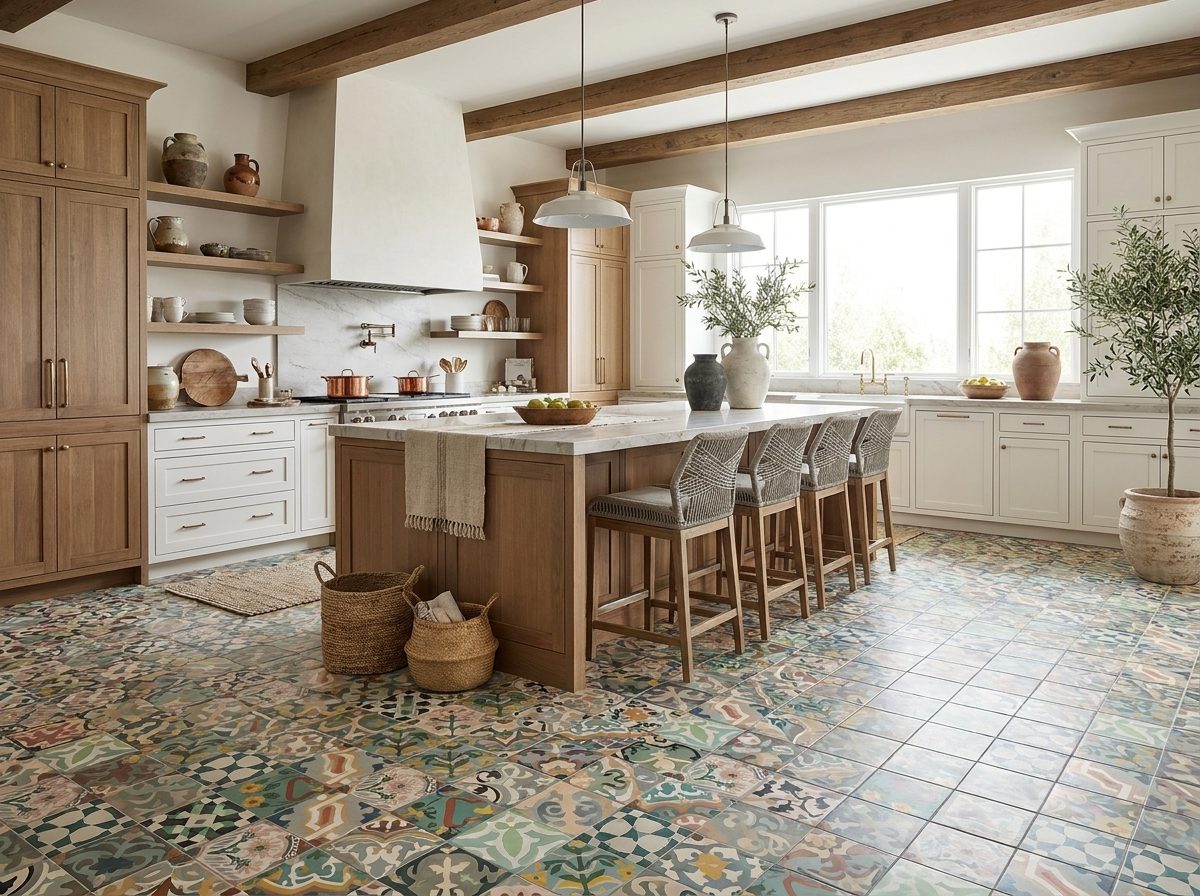
Ceramic has long been favored for decorative range. It takes glaze beautifully, which is why it's so common in colorful patterns, detailed wall tiles, and traditional formats. If the project needs visual character more than brute performance, ceramic often gives you more stylistic freedom without forcing the budget upward.
Where ceramic still shines visually
Ceramic is especially strong when you want:
- Color-rich glazing: Useful for vintage, cottage, or Mediterranean-inspired interiors.
- Detailed pattern work: Good for backsplashes, powder rooms, and lower-stress floors.
- Smaller format flexibility: Easier for borders, inset details, and mosaic-like layouts.
For inspiration on layout and composition, discover timeless tile layouts offers helpful examples of how pattern, orientation, and scale change the feel of a room.
How porcelain changed the design conversation
Porcelain used to be chosen mainly for performance. Now it's often selected because it can convincingly mimic stone, wood, and concrete while holding up to harder use. Large-format porcelain also reduces grout lines, which can make a floor feel cleaner and more contemporary.
That doesn't mean the finish choice is purely aesthetic. A polished tile may look elegant, but on a floor it can change maintenance habits and slip behavior. A matte or lightly textured finish is often the safer and more practical move in bathrooms, entries, and family kitchens.
Consider the finish through three lenses:
Look in natural light
Showroom spotlights flatter glossy surfaces. Daylight at home is less forgiving.Feel underfoot
A floor has to be walked on daily, often in socks or with wet shoes.Cleaning pattern
Some finishes hide dust and footprints better than others.
A tile's finish is part of its function. The right floor doesn't just match the cabinetry. It behaves well on a Tuesday morning when the room is in use.
If your goal is old-world character, ceramic and handmade materials often feel more natural than highly uniform porcelain. If your goal is a clean architectural surface with fewer visual interruptions, porcelain's larger formats tend to fit better.
Installation Realities The Pro vs DIY Divide
Many “porcelain is better” articles often cease to be helpful at this juncture. Yes, porcelain is tougher in service. But that doesn't automatically make it the smarter flooring choice for every project.
The same density that helps porcelain perform can make it harder to install cleanly.

Harder doesn't mean easier to live with during install
The verified data notes that porcelain, while prized for durability, is also more brittle and prone to cracking during installation if it isn't handled correctly. Ceramic is easier to cut and install without shattering, while porcelain often calls for a wet saw and diamond blades rather than casual DIY tools.
That distinction matters a lot on floors because cuts usually collect around the hardest parts of the room:
- Door jambs
- Toilet flanges
- Heat registers
- Cabinet toe kicks
- Stair edges
- Transitions to wood or carpet
These are exactly the spots where brittle material punishes rushed work.
Subfloor truth matters more than the sample board
I've seen average ceramic outlast expensive porcelain when the prep was done properly. I've also seen strong porcelain fail because the subfloor moved, the layout was forced, or the installer tried to fight the material instead of working with it.
Check these before choosing the tile:
- Subfloor stiffness: Tile needs a stable base. Flex creates cracks, loose grout, and edge stress.
- Flatness: Large-format porcelain is less forgiving of humps and dips.
- Tool access: If the installer only has a snap cutter, porcelain may become an expensive frustration.
- Room geometry: Tight cuts and many penetrations increase breakage risk.
If your project includes more complex detailing like treads and nosings, this installation guide for ceramic stairs gives a practical look at how material choice affects cutting, alignment, and finish quality.
For a capable DIY homeowner in a dry, low-traffic room, ceramic can be the smarter floor tile simply because the installation is more forgiving.
That isn't a knock on porcelain. It's a reminder that floor success depends on the whole system, not just the spec sheet.
The Cement Tile Alternative A Third Path
Some floors don't want ceramic's glazed versatility or porcelain's factory precision. They want depth, softness, and pattern with a more handmade feel. That's where cement tile enters the conversation as a distinct category, not a substitute dressed up as one.
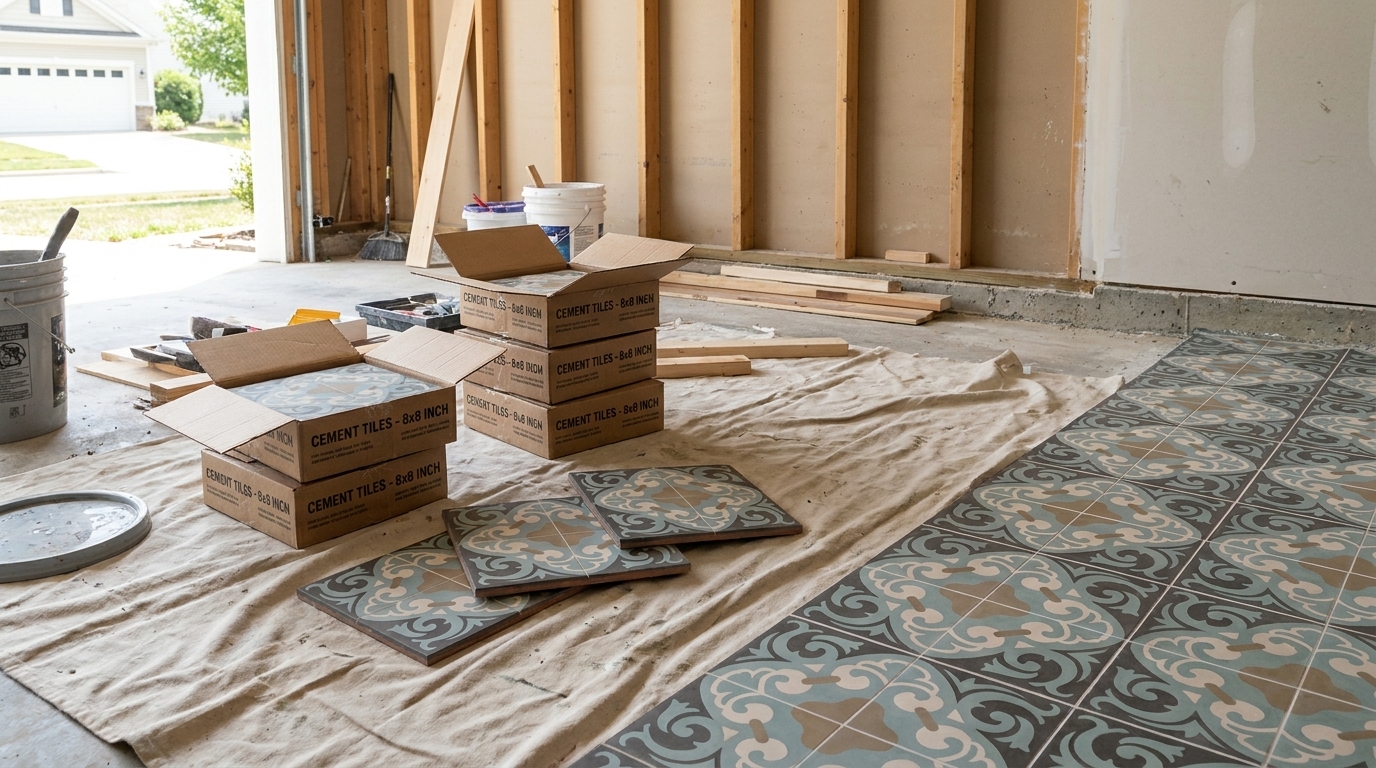
Cement tile isn't clay-based and it isn't fired. It's made from cement, sand, marble dust, and mineral pigments, then formed through a hydraulic press process. That gives it a different character from both ceramic and porcelain.

Where cement tile fits best
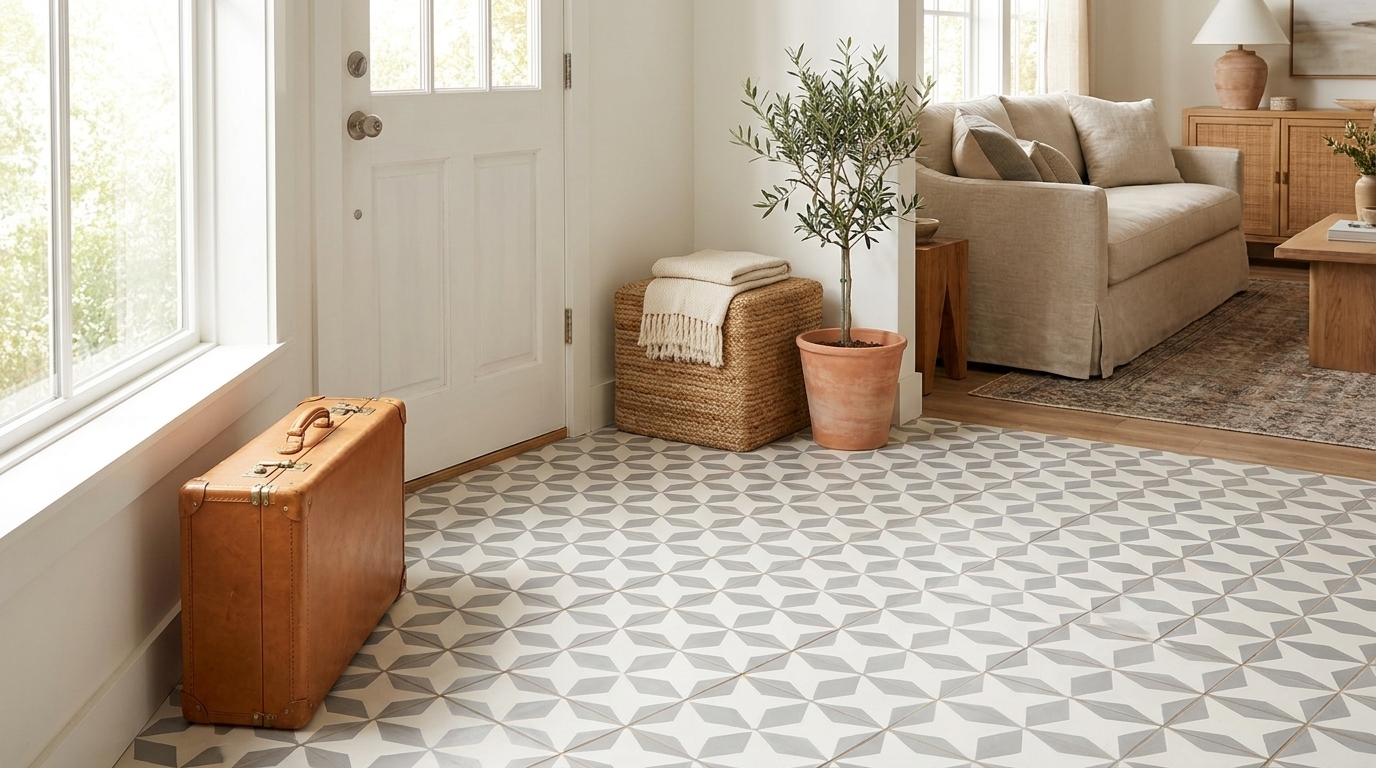
Cement tile makes sense when the floor itself is part of the design story. You see it in entryways, powder rooms, boutique hospitality spaces, kitchens with strong pattern identity, and historic renovations where a printed porcelain imitation would feel too flat.
The appeal is different from glazed tile. Cement tile offers:
- Through-body color: Wear doesn't expose a different body beneath a surface glaze.
- Matte texture: The finish feels quieter and more natural underfoot.
- Pattern flexibility: Repeating motifs and custom colorways can shape the whole room.
For homeowners and designers exploring that route, cement tile is one example of a handmade category built around inlaid color and pattern rather than kiln-fired clay.
Choosing the third path room by room
A practical way to think about the three options:
| Room condition | Best fit in many projects | Reason |
|---|---|---|
| Busy wet floor | Porcelain | Best margin for moisture and wear |
| Dry low-stress room | Ceramic | Easier install and strong value |
| Statement floor with heritage character | Cement tile | Design-led choice with handmade presence |
Cement tile isn't the answer to every floor question. It asks for proper installation and maintenance habits, and it should be chosen for the right reasons. But if your project is driven by pattern, patina, and material character, it belongs in the discussion.
Your Final Decision Checklist and Buying Tips
By the time you're ready to order, the smartest choice usually feels narrower than it did at the start. That's good. Flooring decisions should narrow quickly once the room conditions are honest.
This checklist is a useful final filter.

The questions that prevent expensive mistakes
Ask these before you buy:
How wet will this floor get?
Daily splash zones and steam-heavy rooms need a more moisture-resistant specification.What kind of traffic does it see?
A guest room floor and a kitchen work zone don't belong in the same category.Who is installing it?
A professional tile setter can manage material that would frustrate most DIYers.How good is the subfloor?
If the floor structure or surface prep is marginal, fix that first.What do you want the floor to feel like?
Crisp and modern, decorative and glazed, or handmade and matte are different material conversations.
Read the specification sheet, not just the label
If you want fewer surprises, verify these items on the product data sheet or with your supplier:
- Water absorption classification
- PEI wear rating
- Recommended application
- Tile body type
- Finish suitability for floors
- Installation requirements
The cost discussion should be handled the same way. Verified data shows porcelain can cost about 60% more than ceramic, with a typical market range of $4 to $8 per square foot for porcelain versus ceramic's lower average, and some residential estimates place porcelain at 50+ years compared with 20 to 30 years for ceramic in certain uses. The trade-off is simple: ceramic is usually cheaper and easier upfront, while porcelain often makes better long-term sense on demanding floors.
The cheapest tile in the showroom can become the expensive choice if it lands in the wrong room or breaks the budget in labor and waste.
If a client asks me, “Is ceramic or porcelain tile better for floors?” my answer is usually this: porcelain is better for more floors, but ceramic is still the right call for some floors. The room decides. The subfloor confirms it. The installer makes it real.
If you want a floor with more character than standard factory tile provides, Original Mission Tile offers handmade cement tile along with educational resources that help compare material types by use case, installation needs, and design intent.