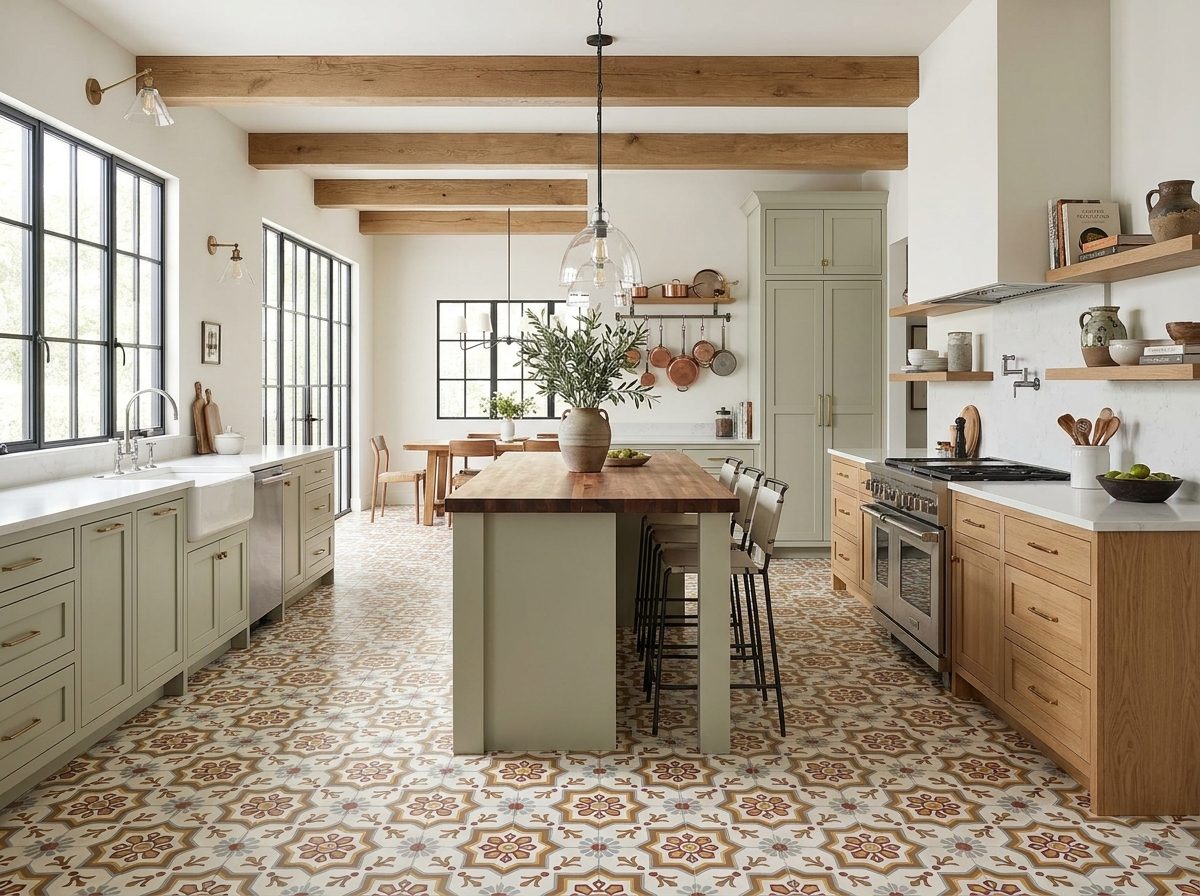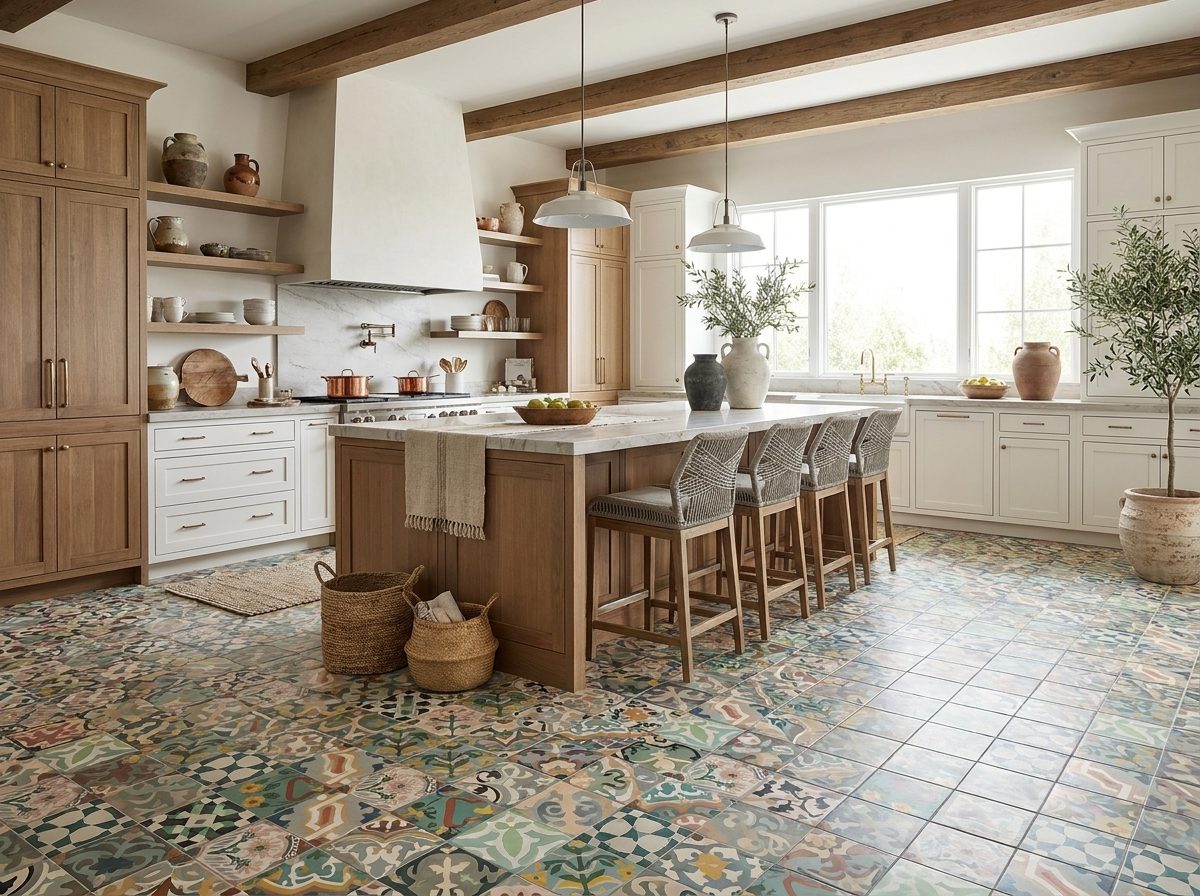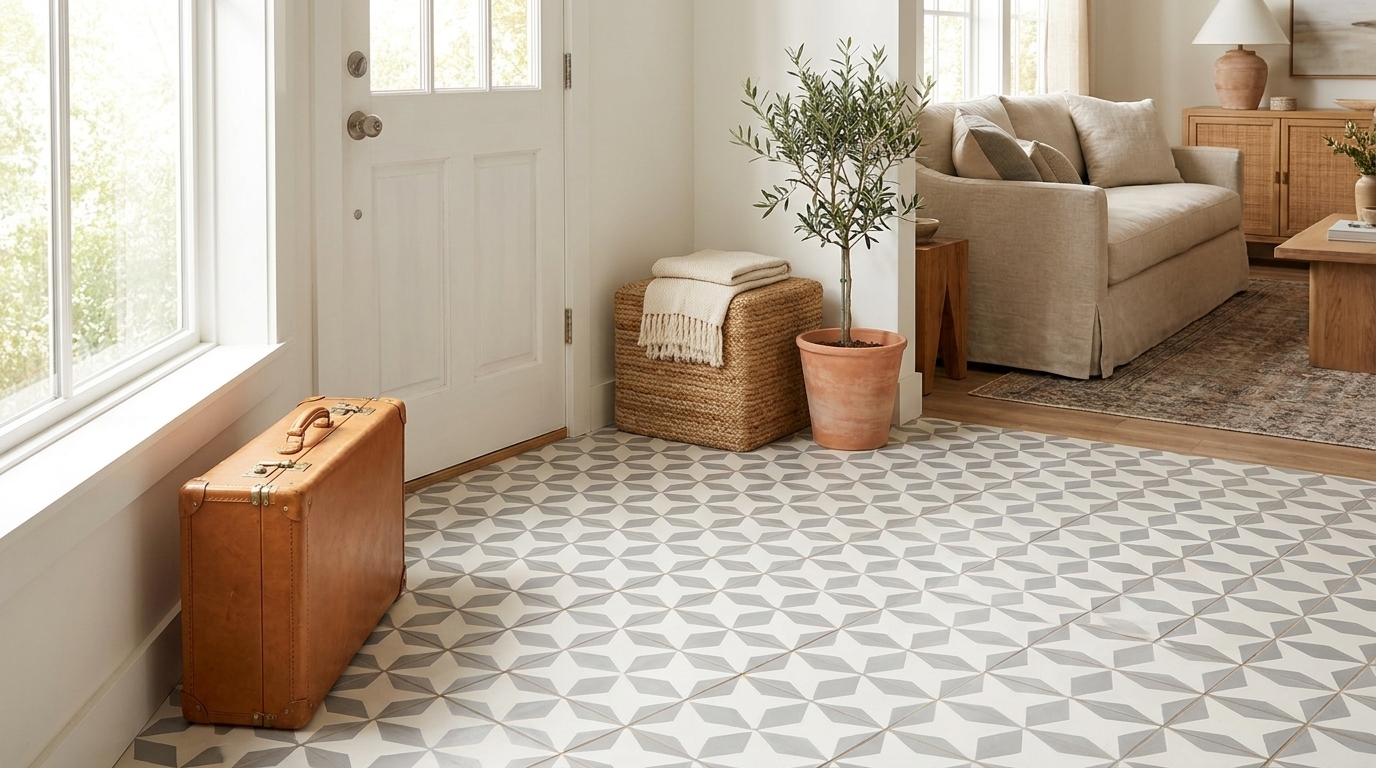
The best kitchen backsplashes aren’t just functional—they’re the centerpiece of the whole room. They use bold patterns, rich colors, and unique materials to say something about you. It’s time to think beyond simple wall protection and see your backsplash as the main canvas for your kitchen’s entire personality.
The Backsplash as Your Kitchen’s Centerpiece
The kitchen backsplash has officially moved past its humble job of guarding walls against pasta sauce and rogue splashes. Today, it’s a powerful design statement, a chance to anchor your kitchen’s entire look and feel. It’s the visual glue that connects your countertops to your cabinetry, making it the perfect spot to bring in the texture, color, and character your space is craving.
When you start thinking of your backsplash as a canvas, you can transform the heart of your home from just a workspace into a truly unforgettable room. This one element can set the mood for everything else. A wall of handmade cement tile can feel like a custom piece of art, while a seamless slab of natural stone makes a bold, sculptural statement.
To get started, decide what role you want your backsplash to play in your design story. Is it going to be:
- A Bold Focal Point? This is where you go all-in with eye-catching patterns, vibrant colors, or dramatic materials that grab attention and become the kitchen’s main event.
- A Harmonizing Element? Here, the backsplash acts as a connector. It might pull a subtle color from your countertops and make it the star, tying everything together quietly.
- A Textural Backdrop? Sometimes, it’s not about color but about feel. Materials like Zellige tile or rough-hewn stone add depth and warmth without overwhelming the room.
Why Your Backsplash Matters More Than Ever
In modern kitchen design, open-concept layouts have put the backsplash on full display. It’s no longer just a small strip of material behind the sink. Often, it stretches all the way to the ceiling or wraps around an entire wall, turning into a major architectural feature. This new prominence makes your choice of material and pattern more critical than ever for a cohesive look.
A well-chosen backsplash doesn’t just complete a kitchen; it defines it. It’s the design element that ties everything together, turning a collection of cabinets and appliances into a thoughtfully curated space.
This guide will walk you through the world of materials, from the artisanal charm of handmade cement tiles to the sleek elegance of natural stone. We’ll cover style directions, pattern choices, and the small details that make a huge difference. To keep your kitchen feeling current, it helps to keep an eye on the latest kitchen backsplash trends as you gather ideas. By the end, you’ll have all the inspiration you need to choose a backsplash that’s both beautiful and completely you.
Finding the Perfect Backsplash Material
Choosing a backsplash material is like picking the canvas for your kitchen painting. It sets the tone, defines the texture, and ultimately carries the whole room’s story. The material you land on is the foundation, influencing everything from the mood to your daily wipe-down routine.
This decision goes way beyond just color or pattern. Every material has its own personality. A handmade cement tile brings an authentic, artisanal soul to the room with its rich, velvety finish, while a sleek glass tile bounces light around, making the whole space feel bigger and brighter.
Getting a feel for these differences is the key to finding a match that fits both your design vision and your real-world needs. Let’s walk through the most popular options to help you find your perfect fit.
This little decision tree can help you figure out if your priority is pure design expression or everyday performance.

As the guide shows, whether you start with function or aesthetics will lead you down different paths for material and style.
The Artistic Charm of Cement and Zellige Tiles
Handmade tiles like cement and Zellige bring a story into your kitchen. There’s just a sense of soul to them. Cement tiles are known for their velvety matte surface and deeply saturated colors, which are actually pressed into the tile itself, not just glazed on top. This means the pattern literally cannot fade—it’s a durable work of art.
Zellige tiles, which come to us from Morocco, offer a different kind of handcrafted vibe. Their irregular, wavy surfaces and subtle color shifts catch the light in the most beautiful ways, creating a shimmering, dynamic effect. Both are perfect if you want a backsplash with real character and a touch of history.
A backsplash made from handmade tiles isn’t just a surface; it’s a statement of craftsmanship. The perfect imperfections and natural variations ensure that no two kitchens will ever look exactly the same, offering true individuality.
These materials are born to be focal points, whether it’s a stunning feature behind the stove or a full-wall installation. They look incredible next to simple, quiet cabinetry, letting the tile’s artistry really sing.
The Enduring Appeal of Ceramic and Porcelain
Ceramic and porcelain are the absolute workhorses of the backsplash world, and for good reason. They are incredibly versatile, seriously durable, and come in a nearly infinite variety of colors, shapes, and sizes. From classic subway tile to mind-bending mosaics, these materials can slide into any style you can dream up.
Porcelain is basically ceramic’s tougher cousin—it’s denser and less porous, making it exceptionally resistant to moisture and stains. That’s a huge plus in a busy kitchen. It’s a practical choice that doesn’t force you to compromise on style.
Just think about these benefits:
- Wide Design Variety: You can find them in countless finishes, including glossy, matte, and even textured looks that mimic other materials like wood or stone.
- Low Maintenance: Glazed ceramic and porcelain are non-porous and a breeze to wipe clean, easily handling common kitchen splatters.
- Budget-Friendly: While you can certainly find high-end artisan versions, both materials offer a massive range of price points to fit almost any budget.
To really elevate your kitchen’s aesthetic, think about how your backsplash works with the broader principles of selecting high-end home finishes.
The Bold Statement of Natural Stone Slabs
For a truly seamless and dramatic look, nothing beats a natural stone slab. When you extend your countertop material—like marble, granite, or quartzite—right up the wall, it creates a continuous, sculptural effect that feels both luxurious and modern. Plus, this move eliminates grout lines entirely, leaving you with a clean, uninterrupted surface that’s incredibly easy to maintain.
This look is blowing up among designers. The National Kitchen and Bath Association reports that natural quartzite is a top contender, with 61% of designers using it for full-height backsplashes. It’s a clear signal that the trend is shifting toward bold, cohesive statements that merge countertops and backsplashes into one stunning feature.
Marble offers that timeless, elegant look with its soft, sweeping veins, while granite gives you unmatched durability. Quartzite, another favorite, delivers the beauty of marble with even greater resilience against scratches and etching. It’s a fantastic choice for a high-impact kitchen that you don’t have to worry about.
Using Pattern and Scale to Make a Statement

A kitchen backsplash isn’t just a functional surface—it’s your chance to tell a story. The secret to making it a captivating focal point lies in the artful use of pattern and scale. The right combination can turn a simple wall into a stunning piece of art, defining the entire mood of your kitchen.
Think of pattern as the language of your design and scale as its volume. A delicate, small-scale pattern can introduce a whisper of texture, something that feels solid from a distance but reveals intricate detail up close. It’s like a finely woven fabric, adding depth and sophistication without overwhelming the space.
On the other hand, a large-scale motif makes a bold, confident statement. Imagine dramatic geometric shapes, flowing arabesques, or vibrant floral designs transforming your backsplash into the undisputed star of the room. This approach works beautifully when you want to inject a shot of energy and personality into an otherwise quiet, minimalist kitchen.
How Scale and Pattern Influence Space
The way you use pattern can actually reshape your kitchen. It’s a classic designer’s trick for manipulating perception, making a space feel more balanced, taller, or wider. The direction of the pattern has a surprisingly powerful effect on how we experience a room’s dimensions.
Consider these visual strategies:
- Vertical Patterns: Laying tiles in a vertical stack or choosing a pattern with strong upright lines naturally draws the eye upward. This is a brilliant way to make a low ceiling feel significantly higher, creating an illusion of grandeur and openness.
- Horizontal Layouts: Conversely, horizontal patterns or tiles laid in a classic running bond can make a narrow kitchen feel much wider. This layout guides the eye from side to side, visually stretching the walls and enhancing the sense of space.
A thoughtfully chosen pattern does more than just decorate; it actively shapes the architectural feel of your kitchen. By understanding how scale and direction work, you can correct spatial imbalances and create a more harmonious environment.
For example, classic subway tiles are the perfect canvas for exploring these ideas. A traditional offset pattern is timeless, of course, but stacking them vertically creates a crisp, modern look. Digging into different subway tile kitchen backsplash ideas for your kitchen shows just how versatile a simple shape can be when the pattern is applied with intention.
Finding the Right Balance
Great kitchen design is all about the conversation between its different elements. A bold, intricate backsplash pattern needs room to breathe, which is why it pairs best with simple, solid-colored cabinets and countertops. This lets the tile shine without having to compete for attention.
But what if you have a statement countertop with dramatic veining, like a beautiful slab of Calacatta marble? In that case, a more subdued backsplash is the perfect partner. A single-color tile with a subtle texture or a simple shape will complement the stone’s natural beauty instead of clashing with it.
Think about the relationship between your design elements:
- Star Player: If your backsplash has a large, dynamic pattern, let it be the main attraction. Keep other finishes quiet and supportive.
- Supporting Role: If your countertops or cabinets are the focal point, choose a backsplash that acts as a calming, cohesive backdrop.
Ultimately, the goal is to create a balanced visual hierarchy. Every kitchen needs a focal point, and pattern is one of the most effective tools for establishing one. By carefully considering the scale of your tile and the complexity of its design, you can craft a kitchen backsplash that is not just beautiful but perfectly suited to your space and style.
Creating Harmony with Color and Grout

Once you’ve locked in a material and pattern, the real artistry begins with color and grout. These are the details that give your backsplash its soul, turning a nice kitchen into one with a cohesive, intentional feel.
Think of your backsplash color as the emotional heartbeat of the room. It can be a vibrant splash of energy behind the stove, instantly drawing everyone’s eye. Or, it can be the quiet, unifying thread that pulls your countertops, cabinets, and hardware together. A common designer trick is to lift a subtle color from the countertop—like a soft gray vein in marble or a warm fleck in quartz—and make it the star of the show.
On the flip side, a quiet, neutral tile can be the perfect supporting actor. It graciously steps back, allowing dramatic cabinets or an incredible light fixture to claim the spotlight. The whole point is to create a beautiful sense of balance where every element feels like it belongs.
The Decisive Role of Grout
Grout is to tile what punctuation is to a sentence. It tells you how to read the individual pieces and understand the full story. It’s a seemingly small detail with an enormous impact, capable of either making a pattern sing or letting it fade into a seamless texture. The choice between contrasting and matching grout is one of the most critical you’ll make.
A contrasting grout—like a dark charcoal against a crisp white subway tile—boldly outlines each tile. This turns the grout lines into a design element all on their own, creating a graphic, modern look. It’s a fantastic way to emphasize the cool geometry of a hexagon or fish scale pattern, giving it an extra punch of energy.
Then there’s matching grout, which blends the tiles into a more unified, monolithic surface. This strategy is all about minimizing the grid and letting the tile’s own color, texture, or natural variations shine. If you’ve fallen for a beautiful handmade Zellige or a tile with a delicate, watercolor finish, matching grout ensures nothing distracts from its artistry.
Your grout choice is a decision between celebrating the pattern or celebrating the material. A bold contrast creates a dynamic grid, while a subtle blend creates a serene, flowing surface. Neither is right or wrong, but the effect is dramatically different.
Making the Right Grout Choice
Picking the perfect grout is a mix of artistic vision and practical thinking, and it’s a moment where testing a small sample can save you from a big surprise. For a really thorough breakdown, our guide on how to choose grout color for tile is packed with examples to help you lock in your decision.
Here are a few ways to think through your choice:
- For Geometric Patterns: Got a bold geometric tile? A contrasting grout will amplify its impact, making the pattern even more dynamic and eye-catching.
- For Natural Variations: With tiles that have a lot of color variation, like many handmade cement or Zellige tiles, a neutral grout that matches the tile’s mid-tone is often your best bet. It harmonizes with the tile instead of competing with it.
- For a Clean, Modern Look: A thin grout line in a color that matches the tile creates a crisp, contemporary feel. This approach works especially well with large-format tiles or minimalist stacked layouts.
Ultimately, by treating color and grout as essential design tools, you move beyond just installing a surface. You’re crafting a thoughtful, personalized feature that makes your whole kitchen come alive.
Expert Tips for a Professional Finish
A truly beautiful backsplash isn’t just about the tile you choose. It’s about the small, thoughtful decisions that create a polished, high-end result. These finishing details are what separate a standard job from a truly professional one, ensuring your investment looks incredible from every single angle.
The installation is where your design ideas come to life, so planning these final steps is absolutely crucial. Thinking through the details beforehand helps you communicate your vision clearly to your installer, avoiding any on-the-fly decisions that could compromise the final look.
Determining Your Backsplash Height
One of the most impactful layout decisions you’ll make is how high to take your tile. This choice dramatically influences the room’s sense of scale and luxury. There isn’t one “right” answer, but each option creates a distinct feel.
Here are the primary choices:
- Standard Height: Ending the tile right at the bottom of the upper cabinets is the traditional approach. It’s clean, cost-effective, and clearly defines the working area of your kitchen.
- Full Wall to the Ceiling: For a bold, dramatic statement, nothing beats extending the tile all the way to the ceiling. This technique makes ceilings feel higher and turns the entire wall into a stunning feature, especially popular behind floating shelves or in kitchens without upper cabinets.
Choosing to tile a full wall transforms the backsplash from a purely functional element into a major architectural feature. This approach is particularly effective with statement patterns, as it provides a larger canvas to showcase the tile’s artistry and character.
Consider the visual weight of your chosen tile. A vibrant, large-scale pattern often looks best when it has more space to breathe, making it a perfect candidate for a full-wall installation.
Handling Edges and Transitions
How a run of tile ends speaks volumes about the quality of the installation. A clean, deliberate edge looks intentional and polished; an unfinished one can make the whole project feel incomplete. Your two main options are typically a finishing piece or a metal edge.
Bullnose tile is a classic choice, featuring a rounded, finished edge that provides a soft, seamless transition from tile to wall. On the other hand, a sleek metal schluter strip offers a crisp, modern line that neatly caps the tile. This is an excellent choice for contemporary or minimalist designs.
Integrating Outlets and Obstacles
A truly professional finish means seamlessly incorporating obstacles like outlets, light switches, and window sills. Poorly planned cuts can disrupt a beautiful pattern and look jarring. Always discuss a layout plan with your installer that centers the pattern and ensures cuts around outlets are symmetrical and clean.
This level of detail is where experience truly shows. For a deeper look into the technical side of the process, exploring a comprehensive guide on how to tile a kitchen backsplash can provide valuable insights into the steps professionals take to achieve a perfect finish. Ultimately, these expert touches are what ensure your backsplash is a stunning success.
Bringing Your Custom Backsplash Vision to Life
Looking at kitchen backsplash ideas is one thing. But what if you could stop searching for the perfect tile and just… create it? That’s where bespoke tile comes in, turning your backsplash from a finishing touch into a true one-of-a-kind centerpiece that tells your story.
It’s a shift in mindset. Instead of hunting for a tile that matches your vision, you get to craft the vision from scratch. This process is all about closing the gap between the design in your head and the beautiful, tangible result in your home.
Become the Designer with Online Tools
The idea of designing your own tile might sound a little intimidating, but modern tools have made it incredibly simple and fun. You absolutely don’t need to be a professional designer to play with pattern and color anymore.
Interactive platforms like the Original Mission Tile Design Studio put the creative power right in your hands. Think of it as a digital workshop where you can flip through a huge library of patterns, apply a palette of colors, and instantly see your ideas come to life. Test out a few different combinations—maybe something subtle and serene, maybe something bold and graphic—until you land on a design that feels completely you.
This approach empowers you to:
- Experiment Freely: Swap colors and test patterns with zero commitment. It’s pure creative exploration.
- Visualize the Final Look: See an accurate digital rendering of your tile before a single one is made.
- Create a Unique Palette: Build a color scheme that perfectly pulls from your cabinetry, countertops, or even a favorite piece of art.
The Artistry of a Bespoke Tile
When you work with specialized artisans to create a custom tile, you’re investing in true craftsmanship. Each handmade cement tile carries a story, with the subtle variations and perfect imperfections that machine-made products just can’t replicate. The result is a surface with character, depth, and a soul that feels like it was made just for you.
A custom backsplash isn’t just a building material; it’s a commissioned piece of art for your home. It ensures that the most prominent feature in your kitchen is a true reflection of your vision, not just a product chosen from a catalog.
Whether you’re designing a pattern from the ground up or simply customizing the colors of an existing one, the final piece is guaranteed to be yours and yours alone. It’s the ultimate way to make sure your kitchen backsplash isn’t just following a trend, but setting a timeless tone that’s all about your personal style. This blend of your creativity and artisanal skill is what turns a good kitchen into an unforgettable one.
Common Questions About Kitchen Backsplashes
Jumping into the world of kitchen backsplash design can bring up a lot of questions. From balancing bold patterns with quiet countertops to figuring out which tile material is right for you, getting clear answers is the key to making a decision you’ll love for years.
Below, we’ll tackle some of the most common things homeowners and designers ask during the planning process. Think of it as a quick guide to help you move forward with confidence.
How Do I Choose Between a Bold Pattern and a Simple Tile?
The best choice here really comes down to creating a sense of balance with the other finishes in your kitchen. I like to think of a room’s design as a conversation—if one element is speaking loudly, the others should be a bit quieter to let it shine.
If your countertops and cabinets are fairly simple and solid-colored, a bold, patterned cement tile can become an incredible focal point without any competition. It injects energy and a ton of personality. On the flip side, if your countertops already have a lot of movement—like you see in many types of marble or granite—a simpler tile in a solid color or with a subtle texture will feel much more harmonious and less chaotic.
The key is to decide which element you want to be the star of the show. A kitchen with two competing focal points can feel visually overwhelming, so let either the backsplash or the countertop take the lead.
What Is the Difference Between Cement and Ceramic Tile?
The biggest difference is in how they’re made, which gives them a completely distinct look and feel.
Cement tiles are handmade by pressing pigments and cement together under high pressure, which means the color and pattern go all the way through the tile. This process creates that rich, matte finish with beautiful, natural variations that feel artisanal and authentic. It’s a look that just gets better with age.
Ceramic tiles, on the other hand, are typically made from clay, and the color is a glaze that’s fired onto the surface. This creates a more uniform and often glossy appearance. When it comes to maintenance, our cement tiles require sealing to protect their porous surface from stains. Glazed ceramic is non-porous right out of the box and generally wipes clean very easily.
Should I Try to Install a Backsplash Myself?
While a simple subway tile installation can be a great DIY project for someone with a bit of home improvement experience, complex patterns and specialty materials like handmade cement tiles are almost always best left to a professional. When it comes to getting that polished, high-end finish, precision is everything.
An experienced installer will make sure these critical steps are handled perfectly:
- Proper Surface Preparation: This guarantees the tile adheres correctly and will last for decades.
- Symmetrical Layout: They know how to center the pattern perfectly, especially in highly visible areas like behind the stove, so it looks intentional and balanced.
- Precise Cuts: This is what creates those clean, crisp lines around outlets, windows, and corners. No jagged edges or awkward gaps.
For a material like our cement tiles, which requires special handling and sealing, hiring a pro is a worthwhile investment. It protects your beautiful tile and guarantees a result that truly elevates your entire kitchen.
Ready to create a backsplash that’s uniquely yours? Explore the endless possibilities with Original Mission Tile. From our ready-to-ship collections to our custom Design Studio, we have everything you need to bring your vision to life.