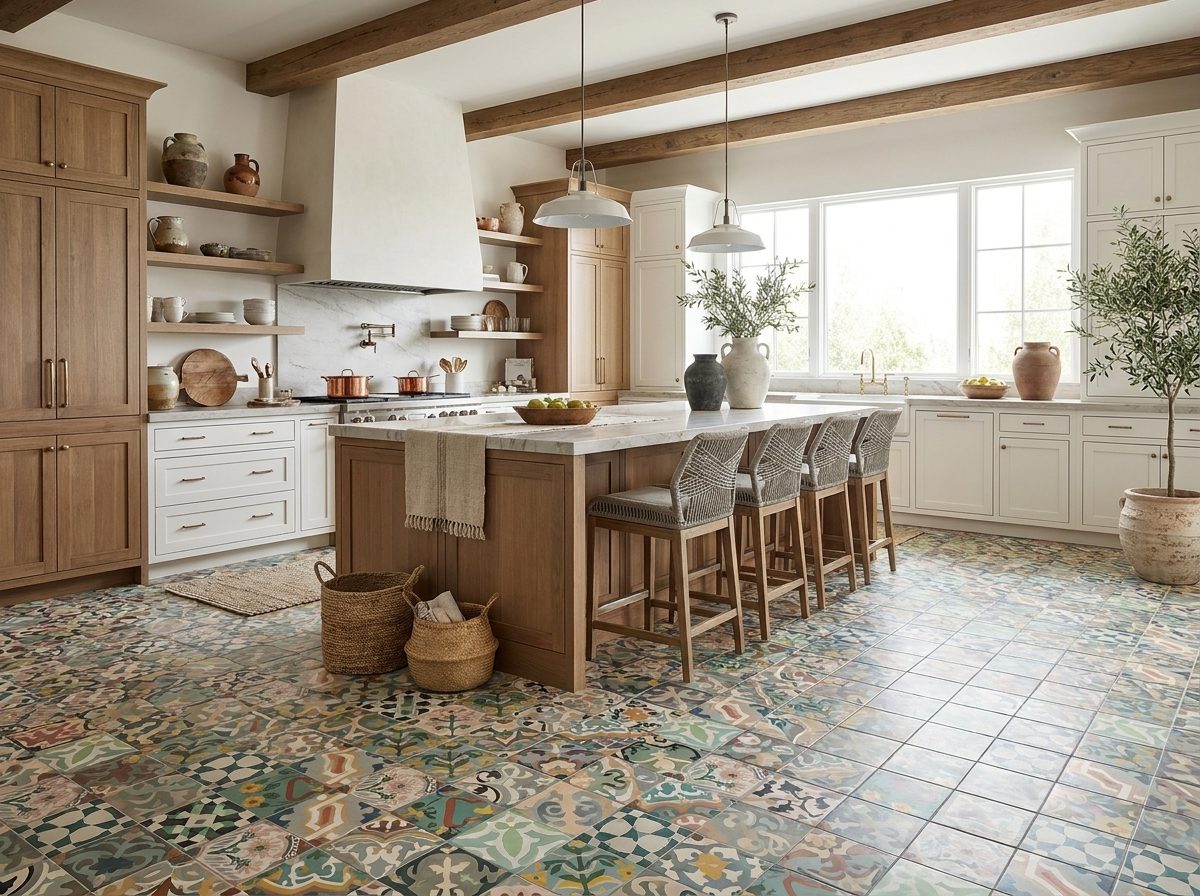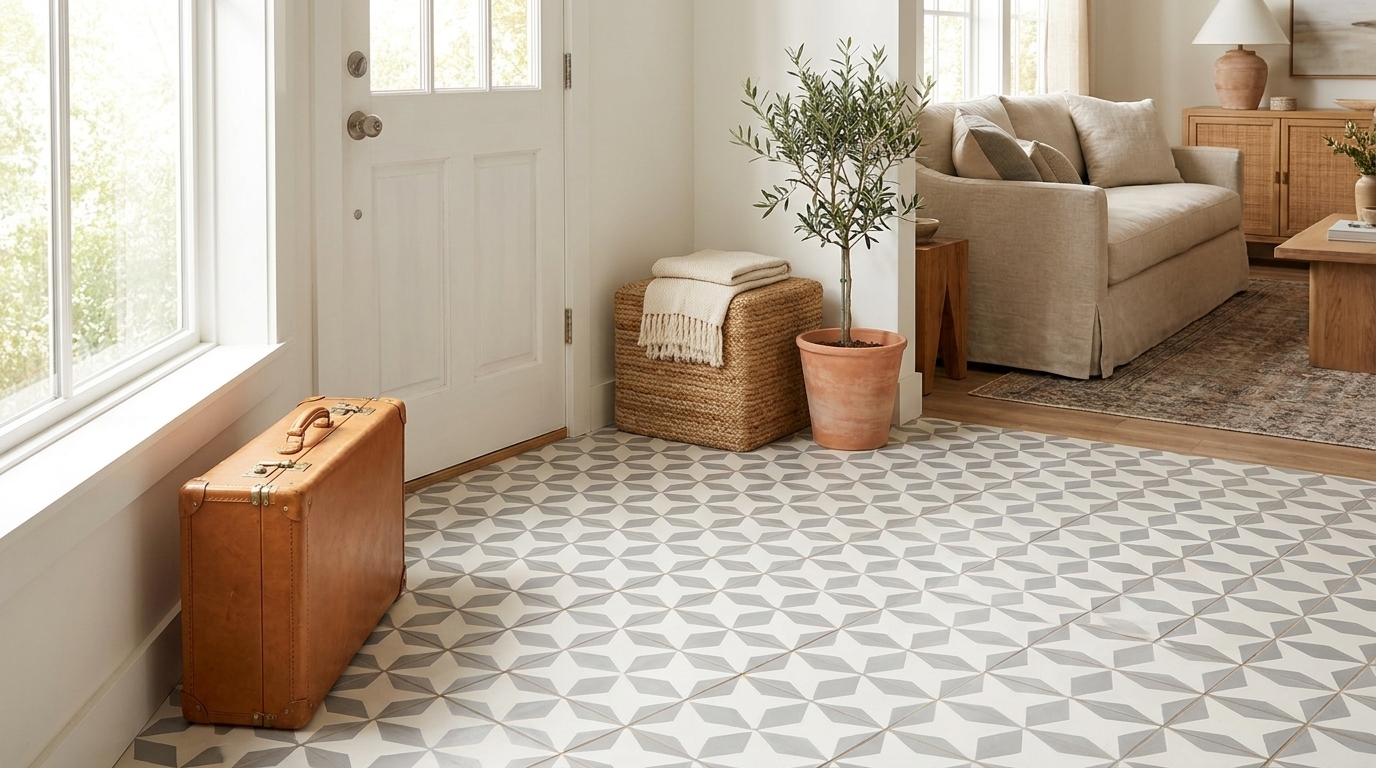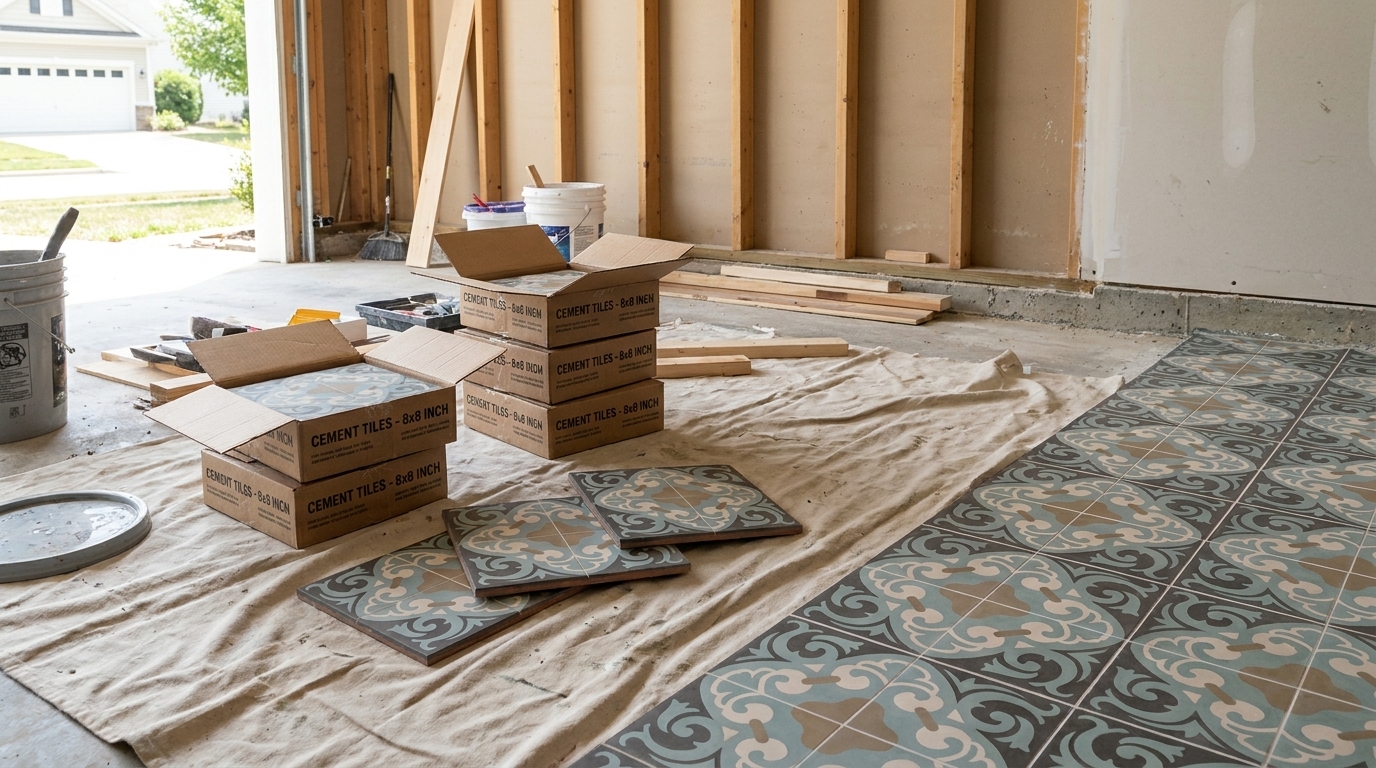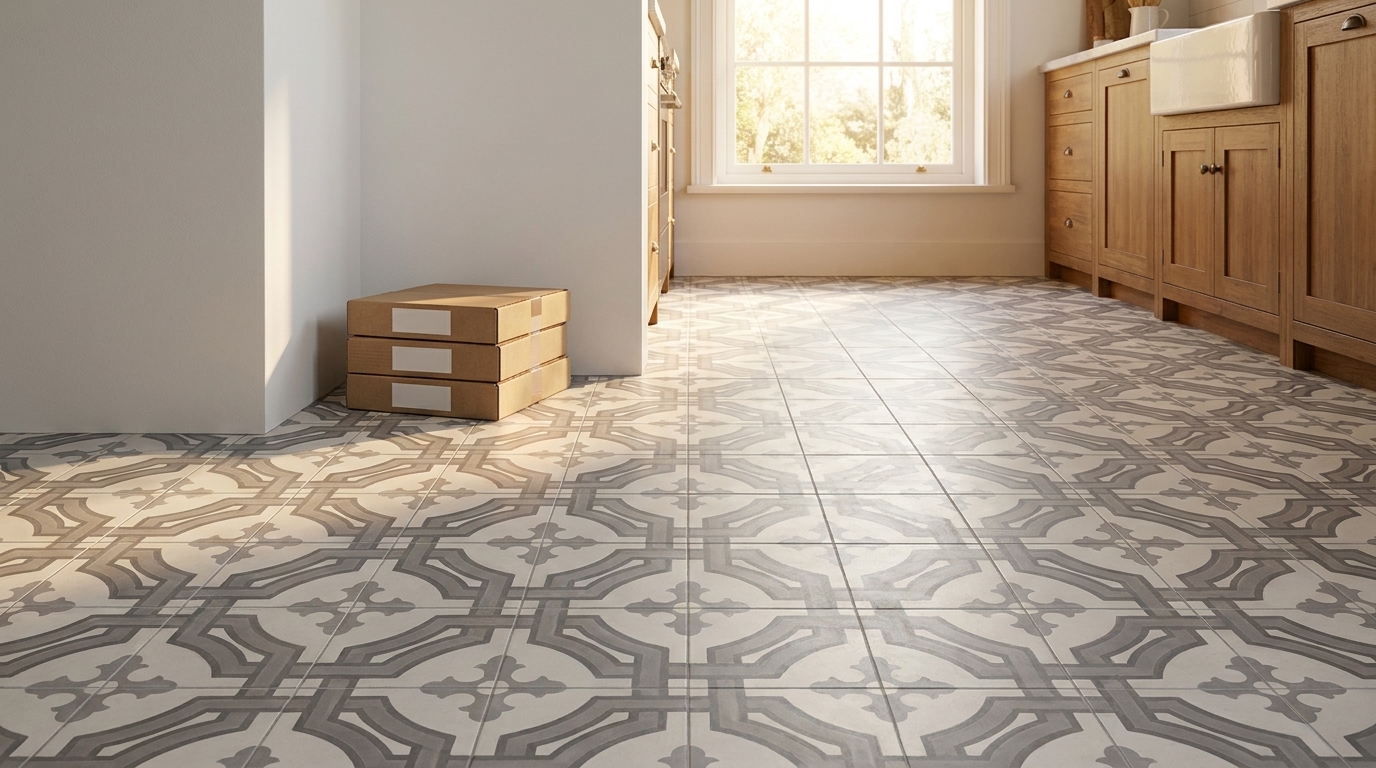
You found the perfect cement tile pattern, measured the room, and ordered exactly what the calculator said you’d need. Then the boxes arrived, and some tiles look noticeably lighter or darker than others. This is cement tile shade variation, and it’s normal. But if you don’t plan for it before you order, it can turn a beautiful floor into a patchy one.
Because handmade cement tiles are colored with natural mineral pigments and cured with water instead of fired in a kiln, no two production runs come out identical. That’s part of the charm. However, it also means ordering “just enough” tile is riskier than it looks. This guide explains what causes the variation, how to tell normal variation from a real defect, and how to order enough tile the first time so you never have to gamble on a reorder matching your original batch.
Why Handmade Cement Tile Always Shows Shade Variation
Cement tiles aren’t printed or glazed like porcelain. Instead, an artisan hand-pours natural mineral pigment into a metal mold, tops it with a layer of fine cement and then a coarser sand-and-cement backing, and presses the whole thing under thousands of pounds of hydraulic pressure. There’s no kiln involved. Instead, the tile cures slowly in a water bath and then dries over several days.
Every step in that process is done by hand, batch after batch. The pigment mix for one production run won’t be measured in exactly the same way as the next. Curing conditions shift with the weather, too, because humidity and temperature both affect how the color develops as the cement hardens. That’s why our factory in San Luis Potosí, Mexico, has made tiles the same traditional way since 1900, yet still tells customers to expect gentle shade shifts between runs.
Think of it the way a baker thinks about two batches of the same cookie recipe made on different days. The ingredients are the same, but the oven, the humidity, and the exact mixing time never repeat perfectly. The result still tastes right, but it’s never pixel-identical. Cement tile works the same way.
How Cement Tile Batch Variation Happens

A handful of specific factors drive the differences you’ll notice from one order to the next:
- Pigment ratio. Natural mineral pigments are hand-measured for each batch, so the exact tone can shift slightly run to run.
- Cement color. Portland cement itself has a natural color range depending on the raw materials used to make it.
- Curing conditions. Humidity and temperature during the water-bath cure change how color develops as the cement sets.
- Drying time and sun exposure. Tiles that dry a day or two longer, or under different light and airflow, can finish a shade lighter or darker.
- Hand application. Because pigment is poured by hand into each mold, even tiles from the same production day carry small, natural differences.
None of this means the tile is inconsistent quality. Instead, it means color is a living result of a handmade process, not a chemical formula that repeats identically every time. That’s the tradeoff for getting a tile that a machine simply can’t replicate.
Normal Variation vs. a Real Defect
So how do you know when what you’re seeing is expected, and when it’s a problem worth flagging? Cement tile is generally understood in the trade to sit in the “medium” range on a shade-variation scale, meaning you should expect noticeable but not extreme tonal shifts within an order.
Here’s a simple way to sort normal variation from a defect:
- Normal: subtle tone shifts between boxes, slight texture differences, small edge chips, or dust and shipping residue on arrival.
- Normal: minor thickness differences of a millimeter or so from tile to tile, since each piece is hand-pressed.
- Not normal: cracked tiles straight through the body, warping that keeps a tile from sitting flat, or a pattern that’s clearly misprinted or misaligned within the design itself.
Because installation is generally considered acceptance of the material, always inspect boxes before your installer starts setting tile. If something looks like true damage rather than expected variation, contact us through our request a quote page before a single tile goes down.
Blend Tiles From Every Box for a Seamless Look
The single most important installation step for any handmade cement tile is blending. Never install straight out of one box at a time. Instead, open three to five boxes at once and mix the tiles before you set a single one.
Here’s the practical routine most experienced installers follow:
- Open several boxes at the start of each day’s work, not just one.
- Lay tiles out on the floor or a flat surface near the install area, mixing pieces from every open box.
- Shuffle noticeably lighter or darker tiles so they scatter across the room instead of clustering in one corner.
- Keep pulling from multiple open boxes as you work, rather than finishing one box before opening the next.
This single habit is what makes shade variation read as rich, organic character instead of a patchwork mistake. Patterned designs like Harlequin Blue 01 hide variation more easily because the eye reads the pattern first. Solid or near-solid colors, such as Amalia II Gris 01, show tone shifts more plainly, so blending matters even more on those. For step-by-step setting instructions, our installation guidelines cover thinset, spacing, and curing in detail.
How to Calculate Enough Tile the First Time

Ordering enough tile on your first purchase is the real fix for shade variation anxiety. If your whole project ships from one production run, you never have to worry about matching a new batch later. Here’s how to get the math right.
First, measure your room’s length and width in feet, then multiply them to get square footage. For example, a 10-foot by 12-foot bathroom floor is 120 square feet. Next, add your overage. We recommend a minimum of 15% for cuts and breakage on any cement tile project, and more if you’re using a diagonal or herringbone layout.
120 sq ft x 1.15 = 138 sq ft to order.
Now divide by the coverage per box. Our standard 8×8 tiles ship 12 tiles per box, covering 5.17 square feet. So:
138 sq ft / 5.17 sq ft per box = about 27 boxes.
Always round up to the next full box. Ordering a partial box rarely saves money, and it leaves you short if your cuts run heavier than expected. Because in-stock patterns ship within days, you can browse our full in-stock cement tile collection and confirm exact coverage and pricing per box before you finalize your order.
One more note on samples. A $20 first sample (then $10 each additional, with free shipping) is the right way to check color and pattern before you commit. However, a sample can only show you the general tone of a pattern. It can’t guarantee that your bulk order will look tile-for-tile identical to that one sample piece, because the sample itself may come from a slightly different production run. Use it to confirm you love the design, not to predict every shade you’ll see in the box.
Order Everything—Including Future Phases—at Once
If your project has multiple phases, such as a kitchen floor now and a mudroom later, order all of it in one purchase whenever possible. A reorder placed months later may come from a different production run, and cement tile doesn’t carry a dye-lot number system the way some manufactured tiles do. That makes an exact match harder to guarantee after the fact.
The same logic applies to future repairs. Set aside one full extra box of your chosen pattern and store it somewhere dry and out of direct sunlight. Years from now, if a tile chips or cracks, you’ll have a matching piece on hand instead of hunting for a pattern that may have changed slightly since your original order.
For larger commercial or multi-room residential projects, this is where custom made tiles deserve a mention. Custom orders are made to order in about four to six weeks, all from a single production run built specifically for your project. That’s an advantage if consistency across a large square footage matters more than shipping speed. Browsing the installation gallery is a good way to see how blended variation actually looks across finished floors of different sizes.
Keep your receipt, the exact product name, your order date, and the number of boxes purchased in a project folder. That record is invaluable if you ever need to explain your original order to a future contractor, or to us, when requesting more tile down the road.
Frequently Asked Questions
Will my cement tile order look exactly like the photo on the website?
It will look very close, but not pixel-identical. Photos represent the pattern and general color family accurately. However, because pigments are hand-mixed for every production run, your actual boxes may run slightly lighter or darker than the reference photo. That’s why blending tiles from multiple boxes during installation matters so much.
Can I reorder more of the same tile later and expect a perfect match?
You can reorder, and it will usually be close. However, a later order is a different production run, so a completely seamless match isn’t guaranteed. That’s why we recommend ordering your full project quantity, plus 15% overage and a spare box, in one purchase from the start.
Does shade variation mean my tile is defective?
No. Gentle tone shifts between boxes are a normal, expected result of the handmade process. True defects look different: cracked tile bodies, warping that won’t sit flat, or clearly misaligned pattern printing. Inspect your order before installation and reach out through our contact page if you spot something that looks like real damage rather than natural variation.
How much extra tile should I order for a patterned versus a solid color design?
Both need at least 15% overage for cuts and breakage. However, solid or near-solid colors show shade variation more visibly, so many designers push overage slightly higher on those patterns to give the installer more tiles to choose from while blending. Patterned designs are more forgiving because the eye focuses on the design first.
See the tile in person before you commit
Photos only tell you half the story. Colors, texture and the handmade character of cement tile are best judged in your own light. Order a sample of any in-stock pattern for $20 (additional samples $10, free shipping) — or tell us about your project and we’ll help you narrow it down.
Browse in-stock cement tiles →
Talk to us about your project →