You've probably stood in a showroom or hotel lobby, looked down at a pale stone floor with a soft mirror finish, and thought, that's the one. Polished limestone has that effect. It looks calm, expensive, and refined, even before the furniture arrives.
The catch is that the finish that makes it look so refined also changes how it behaves underfoot. In real projects, that means the floor needs to be chosen for the right rooms, the right climate, and the right maintenance habits, not just for the mood board. Get that balance right, and polished limestone flooring can look elegant for decades. Get it wrong, and the first wet entryway or busy kitchen starts working against you.
Why Polished Limestone Flooring Captivates Designers
A client sees polished limestone once, usually in a luxury hotel lobby or a spread from a high-end interiors magazine, and the brief changes fast. The request is no longer “something light and natural,” it becomes “that exact floor, with the depth and glow.” That reaction makes sense, because polished stone has a visual softness that photographs beautifully and still feels composed in person.
The finish changes the way the stone reads
Polished limestone flooring is not just lighter or shinier than other stone floors. The polishing process pulls more color depth out of the body of the stone, so veining and tonal movement read more clearly. That's why the surface can feel both restrained and luxurious at the same time, especially in large-format installations where the pattern isn't fighting the room.
The appeal is also historical. Limestone is a sedimentary rock formed from accumulated marine remains over millions of years, and guidance commonly places its service life at 50 to 100+ years with proper sealing and maintenance, with many European floors surviving for centuries (DG Floors). That long-view quality matters in design, because clients often want a floor that feels established rather than trendy.
Practical rule: if a floor is meant to disappear into the architecture and make millwork, textiles, and art feel richer, polished limestone can do that better than many man-made surfaces.
The real question is not whether it looks good
It does. The better question is whether the room can support the finish. In a formal sitting room or a quiet suite, the answer may be yes. In a wet entry, busy family kitchen, or outdoor threshold, the same floor can become a liability.
That's why I always ask three things before specifying it, where water will land, how much grit will move through the space, and who will own the maintenance routine. Those answers tell you whether polished limestone is a lasting choice or just a beautiful first impression.
How Polished Limestone Is Made and Finished

At the core, limestone is a natural stone built from layers of marine material compressed over geologic time. That origin explains why two slabs from the same quarry can still look slightly different. The variation is part of the appeal, and it's also why slab selection matters so much in polished work.
The polishing process is mechanical, not decorative
The finish is created by grinding the stone with progressively finer abrasives until the surface becomes mirror-like. Think of it the way a cabinetmaker sands wood through finer and finer grits until it stops reading as rough and starts reading as reflective. On limestone, that process can usually reach about 800 grit or finer, which is the point where the floor starts to show that signature depth and sheen (Citadel Stone).
That final surface does two things at once. It tightens the look of the stone, and it makes the color and veining appear more saturated. In the right project, that's exactly why designers choose it.
Polished, honed, brushed, and tumbled are not interchangeable
A polished finish is the most reflective of the common limestone treatments. Honed limestone stops earlier in the abrasion sequence, so it reads softer and more matte. Brushed limestone keeps more surface texture, which changes the way light and traction behave. Tumbled limestone goes for an aged, weathered look that feels casual rather than refined.
For projects that need atmosphere without glare, honed or brushed limestone often makes more sense. For projects that need formal polish and visual richness, the reflective finish earns its place. The point is simple. You're not just choosing a color, you're choosing how the stone will interact with light, moisture, and daily wear.
Durability and Slip Resistance You Must Understand
A polished limestone floor can stop a room in its tracks, but the performance side deserves equal attention. Once the stone is ground to a mirror-like finish, it gives up some grip, especially when moisture is present. Clients often notice that only after the space is furnished and in daily use.
Wet traction is the trade-off
Cited wet COF values for polished limestone sit around 0.30 to 0.45, and one source reports about 0.22 wet after polishing. That is below the 0.42 wet COF threshold commonly referenced for pedestrian safety in ASTM C1028-based guidance. By contrast, an industry guide places brushed limestone at roughly 0.60 to 0.75 wet COF. Those figures come from Citadel Stone and Citadel Stone, and they show why finish selection matters as much as the stone itself.
The better question is whether the room can support the finish. Polished limestone belongs in low-moisture interior zones, or in spaces where entrance matting, housekeeping, and traffic patterns are tightly controlled. Without that control, the floor can still be beautiful and still feel wrong underfoot.
Wet stone does not forgive casual detailing. Good drainage, good mats, and clear housekeeping matter as much as the slab itself.
Performance depends on the room
Polishing also closes the stone surface, which makes it a weaker choice for exposed exterior floors and hard-wearing paths. Compared with honed or brushed limestone, the polished surface tends to lose ground in wet slip resistance, UV durability, and freeze-thaw resilience. That is why the finish belongs indoors more often than outside.
For project teams weighing broad flooring choices, compare tile and hardwood options to frame traffic, maintenance, and day-to-day use before committing to stone. If the brief calls for a safer wet-surface profile, an anti-slip tile specification guide is worth reviewing before the finish gets locked in.
| Finish Type | Wet COF Range | Best Applications | Slip Risk |
|---|---|---|---|
| Polished Limestone | 0.30 to 0.45 | Interior lobbies, formal rooms, decorative circulation areas | Higher when wet |
| Brushed Limestone | 0.60 to 0.75 | Areas needing more traction, transitional spaces | Lower when wet |
If the project needs outdoor resilience or a more forgiving wet surface, polished limestone is the wrong finish. Handmade cement tile often fills that gap better when pattern, durability, and slip resistance all need to work together.
Where to Specify Polished Limestone in Your Project
The safest places for polished limestone are the ones where you can protect the floor from constant water, tracked grit, and hard-use cleaning. That usually means formal interiors first, not thresholds, terraces, or splash-heavy work zones. In residential work, the finish can look exceptional in a main living room, a primary bedroom suite, or a gallery-like hall where the traffic is steady but not punishing.
Use the finish where the room can support it
In hospitality projects, polished limestone often works in lobbies and decorative circulation areas where the visual payoff matters and housekeeping can keep up. It can also work in private club settings and reception zones if the entry sequence is managed well. The surface reads as refined, which is why it still shows up in premium projects where first impressions carry weight.
That said, I would not put polished limestone in bathrooms where the shower overspray is constant, in kitchens where spills are routine, or near pool decks and exterior entries. Those are the spaces where the finish's weaknesses are most visible. If the project demands the look in a riskier zone, the rest of the detailing has to be exceptionally disciplined.
Pair it with controls, not wishful thinking
The best specification strategy is simple and unglamorous. Use entrance matting, place area rugs in landing zones, and keep the floor away from uncontrolled moisture. If the design needs continuity across adjoining rooms, you can still use polished limestone in the formal spaces and shift to a more grip-friendly material where the moisture load rises.
A practical filter helps. Ask whether the room gets wet shoes, food spills, cleaning water, or outdoor grit. If the answer is yes to more than one of those, polished limestone is probably the wrong finish there. If the answer is mostly no, the floor can feel serene and durable without asking for constant compromise.
Sealing and Maintenance Best Practices

If a client wants polished limestone, the maintenance plan has to be set before the stone is installed. This finish is a natural stone surface, so it depends on sealing and on cleaning products that respect the material. With those habits in place, the floor can support the long service life often associated with limestone, which is commonly described as lasting for decades when care is consistent. For projects weighing hardwearing alternatives, learning about concrete epoxy types can help if you're considering utility-heavy spaces.
Keep the routine simple and consistent
Daily care should stay plain and predictable. Dust mop or vacuum with a soft attachment, then clean with a stone-safe product rather than anything acidic or abrasive. Weekly attention should focus on the paths that get the most traffic, especially near entries and kitchen transitions, because that is where dulling and tracked grit usually show first.
Sealing follows the same practical logic. The interval depends on use and exposure, so a busy floor or one that sees regular moisture should be treated as part of the building's maintenance calendar instead of waiting for a stain to announce the problem. The goal is not a perfect surface every day, it is keeping the stone protected before wear starts to show through.
Protect the finish from bad habits
The wrong cleaner can flatten a polished surface quickly. Acidic products, bleach-heavy routines, and abrasive pads all shorten the life of the sheen. If a spill happens, blot it instead of scrubbing it around, then clean the area with a neutral stone cleaner.
I usually frame limestone care the same way I frame other porous natural materials. The logic used in testing granite for absorption applies here as well, the stone needs the right protection and the right cleaning chemistry to stay stable over time. For day-to-day upkeep, cleaning stone tiles is a useful reference.
Know when restoration is the better move
If the shine turns patchy, or the floor has developed etching and embedded wear, routine cleaning will not fix it. That is the point where a stone restoration professional should step in with mechanical refinishing. Polished limestone responds well to maintenance, but it does not respond well to neglect.
Polished Limestone Versus Cement Tile and Other Alternatives

If the brief is pure calm, polished limestone can be the right answer. If the brief includes pattern, stronger wet performance, or more tolerance for daily abuse, another material usually wins. That's why I compare polished limestone against the whole palette, not just against other stones.
Same family, different result
Honed limestone gives you the same material story with a softer, less reflective surface. It keeps more of the stone's natural character while reducing glare and easing the slip concern. If the client likes limestone but doesn't need the mirror effect, that's often the cleaner specification.
Marble sits in a similar luxury lane, but it carries a different visual temperament. Marble tends to read more formal and more dramatic, while polished limestone feels quieter and more architectural. The decision between them is less about which is “better” and more about which mood the room needs.
Porcelain tile is the low-maintenance foil to natural stone. It can be a smart pick when durability and easy care matter more than the complexity of a quarried surface. What it usually gives up is the depth and irregularity that make natural stone feel alive.
Where handmade cement tile makes more sense
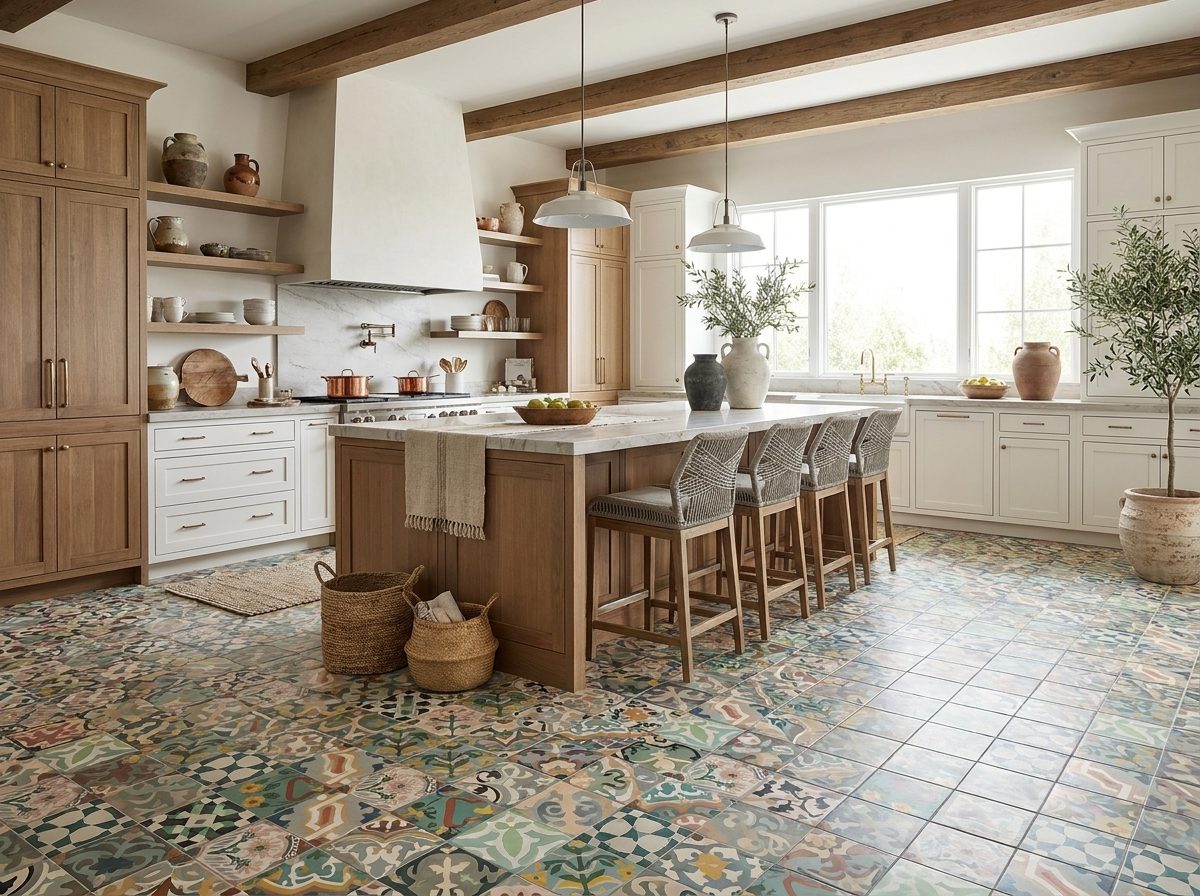
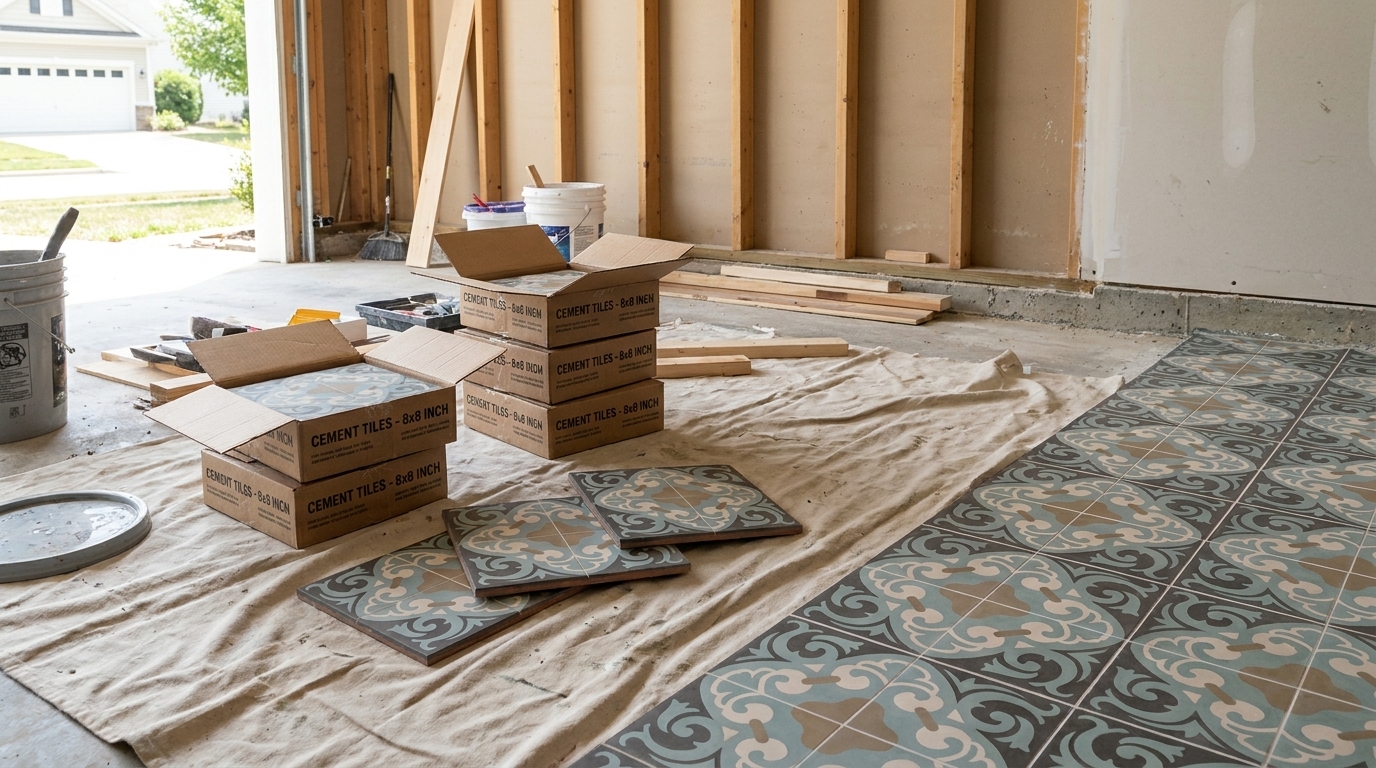
For projects that need custom patterns, stronger slip confidence, or a design language with more graphic energy, handmade cement tile is often the smarter move. It's especially useful in high-traffic interiors, wet zones, and spaces where the floor is supposed to carry visual interest instead of just supporting it. That's where an artisanal surface can outperform a polished stone finish from both a design and functional standpoint.
Design rule: if the floor has to do more than look elegant, especially in a room with water or heavy use, cement tile deserves a serious look.
This is where learn about concrete epoxy types can also help if you're weighing hardwearing alternatives for utility-heavy spaces. The right answer depends on whether the project needs texture, pattern, maintenance simplicity, or the prestige of stone.
Making Your Final Flooring Decision
The decision comes down to five questions. Does the room need a soft, reflective luxury finish? Can you keep moisture under control? Will the floor see heavy grit or repeated wet cleaning? Is the client willing to maintain natural stone properly? And does the project need pattern or traction more than it needs polish?
If the answers favor aesthetics, controlled moisture, and disciplined care, polished limestone flooring can be a strong specification. If the room is wet, busy, outdoors, or expected to do visual work through pattern, I'd pivot to a different finish or a different material altogether. For many projects, natural stone tile is still the right umbrella category, but the finish choice has to match the job.
A lot of disappointing floors come from treating every beautiful stone as if it behaves the same way. It doesn't. The best specification is the one that respects the finish, the use case, and the maintenance reality from day one.
If you're narrowing a flooring schedule and want a surface that balances character with long-term performance, talk with a tile specialist before you place the order. Bring samples into the actual light, test the slip risk in the room you're building, and compare polished limestone against the alternatives that better fit the space.
Original Mission Tile can help you choose a floor that fits the room instead of just the rendering. Visit Original Mission Tile to explore surfaces, request samples, and connect your design intent with a material that will hold up in real life.