Most foyer floors get judged on one question. Will they hold up? That's necessary, but it's incomplete. A foyer floor also sets the tone of the house, frames the threshold, and tells visitors whether the home leans refined, collected, formal, or relaxed.
That's why the best tile flooring ideas for foyer spaces don't start with trend boards. They start with material character. Tile has long been favored for foyers because entry floors need to handle foot traffic, moisture, frequent cleaning, and the visual job of making a strong first impression, as noted in this guide to selecting foyer tile. Handmade cement tile answers that brief in a more expressive way than most off-the-shelf surfaces can.
Its appeal isn't just pattern. The color is inlaid rather than printed on top, the finish is matte rather than shiny, and the surface has the subtle variation people often spend years trying to add back into over-specified interiors. If you're sorting through tile flooring ideas for foyer remodels and every option feels either too plain or too synthetic, cement tile is usually the missing middle. It's practical, but it still feels like design.
For a broader look at where interiors are heading, Vivid Skylights' guide to 2025 trends is a useful companion. For the foyer itself, these eight ideas focus on timeless layouts and formats that make handmade cement tile worth the investment.
1. Classic Geometric Patterns with Handmade Cement Tiles
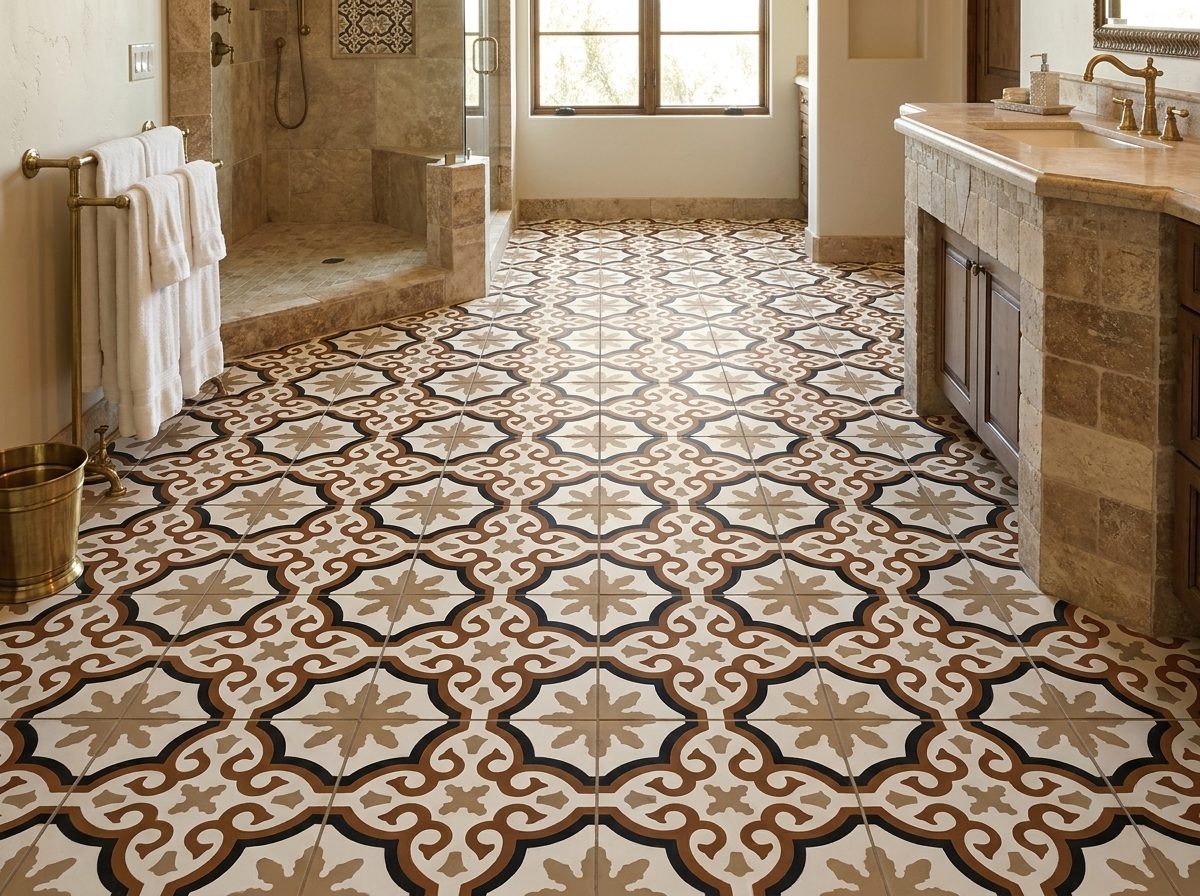
Geometric cement tile belongs in a foyer because it does two jobs at once. It handles traffic, and it establishes order. Stars, crosses, diamonds, and lattice motifs give an entry immediate structure, which is why they still feel right in Spanish Colonial houses, mission-inspired renovations, and newer homes that want architectural gravity from day one.
The strongest versions don't look busy. They look disciplined. A star-and-cross floor in a California-style entry reads completely differently from a loose bohemian patchwork, even if both use a similar palette. That's the advantage of handmade material. You can build the foyer around proportion, border width, and repeat, not just around color.

Getting the pattern scale right
In a compact foyer, a tightly organized geometric repeat usually works better than an oversized motif that gets cut off at every edge. In a larger vestibule, you have room for a border and field composition that feels formal and complete. That difference matters more than people think. A beautiful tile can still look unresolved if the room doesn't give the pattern enough space to read clearly.
For custom layouts, Original Mission Tile's encaustic tile collection gives you a useful starting point because the material language is already rooted in classic geometry.
Practical rule: Match the geometry to the architecture first, then choose color. Pattern mismatch is harder to fix than palette mismatch.
A few combinations consistently work:
- Spanish Colonial homes: Use warm neutrals with deep charcoal, faded blue, or muted terracotta.
- Mission-style entries: Choose disciplined repeats with a clear border rather than overly intricate fields.
- Modern homes with traditional references: Keep the palette restrained and let the geometry carry the design.
What doesn't work is forcing a highly ornate pattern into a foyer that already has strong millwork, dramatic wallpaper, and a statement stair runner. Cement tile has presence. It doesn't need competition.
2. Monochromatic Plain Color Tiles with Textural Depth
Not every foyer needs pattern. Some of the most convincing entries use a single plain color across the whole floor and let the tile's matte surface do the visual work. Handmade cement tile is especially good at this because a solid color still carries tonal movement. It never looks as flat as machine-perfect material.
This approach suits houses with strong architecture. If the front door is substantial, the casing is detailed, or the foyer opens to a sculptural stair, plain color tile gives the room calm without feeling empty. Soft gray, charcoal, terracotta, and creamy mineral tones all work well, but they create very different moods. Gray feels refined, terracotta feels grounded, and ivory shifts the foyer toward a Mediterranean or gallery-like atmosphere.
Where plain color beats pattern
Monochromatic foyers are often the smarter choice when adjoining rooms already have visual complexity. If the nearby living space has patterned rugs, figured stone, or ornate cabinetry, a plain cement floor creates relief. It also ages well. People rarely tire of a well-chosen solid floor the way they can tire of a pattern selected too quickly.
Industry guidance for entryways consistently recommends porcelain and ceramic because durability and moisture resistance matter in these high-traffic zones, and patterned and small-format options can add impact where needed, according to Builders Interiors on entryway flooring. Handmade cement tile enters the conversation from a different angle. You choose it for tactile depth, inlaid color, and a quieter kind of luxury.
A few practical choices make monochrome more successful:
- Grout tone: Match grout closely if you want the floor to read as a single plane.
- Format shift: Change the shape, not the color. Square, hex, or a brick-style layout can keep a plain floor interesting.
- Lighting: Use directional light or a statement pendant so the matte surface doesn't disappear.
What usually falls short is choosing a plain tile without considering the whole palette. A charcoal floor with bright white trim and no warm material nearby can feel severe. Cement tile looks best when the room includes wood, plaster, brass, linen, or another surface with similar depth.
3. Hexagonal Tile Layouts for Modern Geometric Appeal
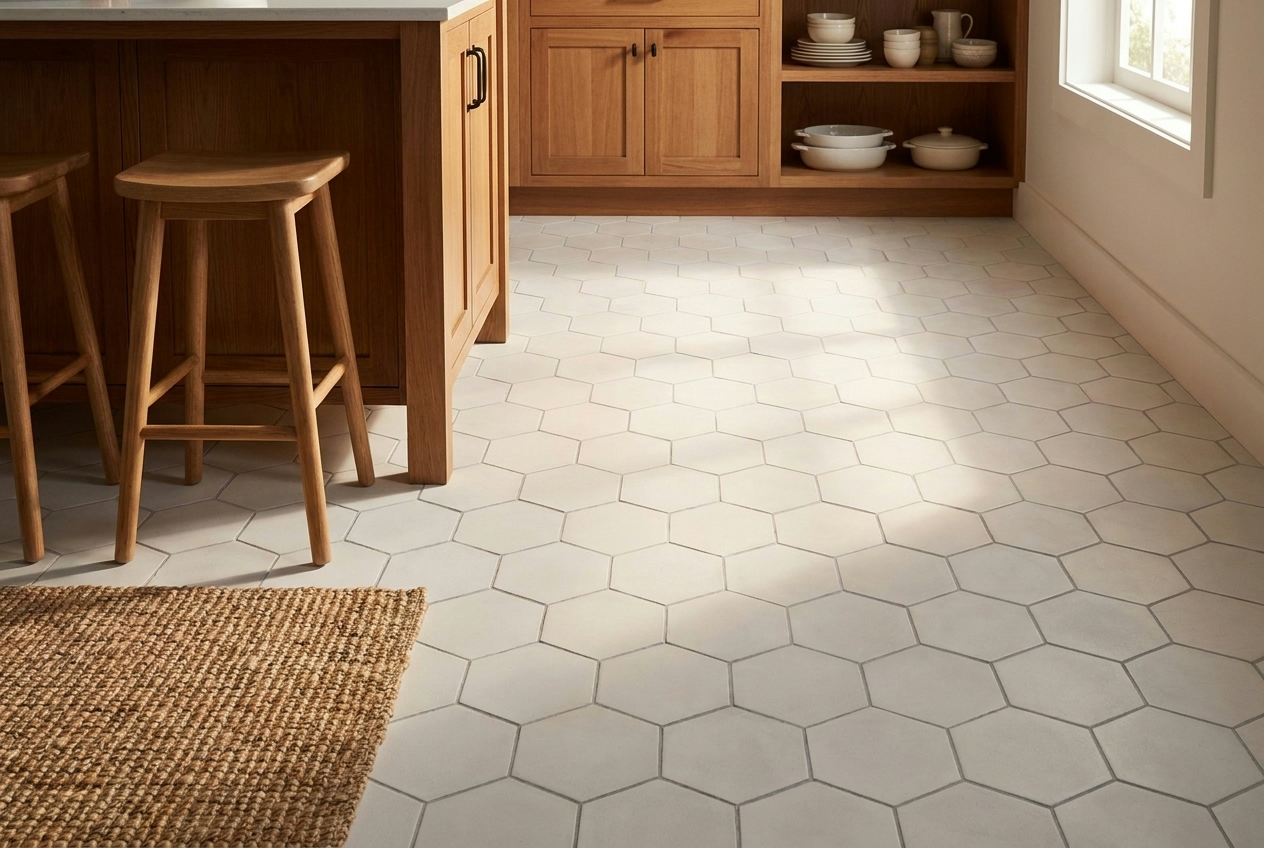
Hex tile is one of the few shapes that can feel old-world and current at the same time. In a foyer, that balance is useful. The floor gets a clear design move, but it doesn't become gimmicky. Handmade cement hexagons are especially convincing because their matte finish keeps the geometry from looking too slick.
The layout can stay simple. A single-color honeycomb field is often enough. If you want more movement, combine two or three related tones and let the pattern emerge through placement rather than ornament. I'd keep the palette tight. Too many colors can push a foyer into café territory when the goal is an entry that still feels residential.

Why hex works in contemporary foyers
Hexagons soften a room full of straight lines. In Brooklyn brownstones, they can modernize an entry without fighting original trim. In contemporary California homes, they add shape while staying quieter than a printed motif. In hospitality-style residential entries, they read intentional and custom even when the color story is minimal.
This is one place where mockups matter. Because the edges step differently than square tile, transitions at door thresholds and adjacent wood floors need planning before installation starts.
A hex floor succeeds when the perimeter looks deliberate. If the cuts feel accidental, the whole foyer feels less resolved.
Use these trade-offs to decide:
- Single-color hex: Best for modern spaces and smaller foyers that need shape without visual noise.
- Mixed-color hex: Better for larger entries where the floor can carry more composition.
- Contrasting grout: Sharpens the geometry, but also makes every joint more visible.
- Blended grout: Quieter and more forgiving, especially near the front door where dirt shows first.
What doesn't usually work is mixing too many design ideas at once. Hex tile already introduces rhythm. Pair it with simpler wall treatments and cleaner furnishings.
4. Patchwork Mixed-Pattern Designs for Eclectic Sophistication
Patchwork can be excellent in a foyer, but only when it's curated. The mistake is assuming “eclectic” means random. It doesn't. The best patchwork floors feel edited, with a clear color family and enough repetition that the eye can settle.
Handmade cement tile makes this style more convincing because each unit carries slight variation without losing the design intent. That's important in a patchwork floor. If every tile looks digitally identical, the result can feel printed rather than assembled. In an artist's loft, a Santa Fe-inspired home, or a boutique-hotel-style entry, that collected look is often the whole point.

How to keep patchwork from turning chaotic
Start with a narrow palette. If the tiles share a common ground color, the foyer will feel intentional even when the motifs vary. I'd also reserve the strongest contrast for one or two designs rather than every tile in the mix. That creates hierarchy.
A practical installation sequence helps:
- Choose the family first: Keep to a related palette such as black, cream, and clay, or blue-gray with off-white.
- Limit the count: Three to five patterns is usually enough for a foyer.
- Dry-lay the field: Preview the whole arrangement before setting tile, especially around the door swing and visible center line.
- Use solids as relief: A border or adjacent plain tile can keep the mixed field from feeling crowded.
Patchwork is ideal when the house already tells a layered story. It's less effective in very formal interiors where symmetry is the dominant language.
What tends to fail is overcommitting. A patchwork floor, patterned stair runner, bold wallpaper, and statement lighting can make a foyer feel compressed. Let one element lead. In this setup, the floor should be the lead.
5. Zellige-Inspired Moroccan Tiles for Exotic Elegance
Some foyer floors need a little romance. Zellige-inspired cement tile brings that through pattern and shape rather than shine. In a collected interior with carved wood, plaster walls, iron, or brass, this look adds depth fast. It's especially effective in desert homes, Mediterranean-inspired renovations, and entries where the front door opens directly into the main living area and the floor needs to establish mood immediately.
The key is restraint. Moroccan influence is easy to admire and easy to overdo. A foyer doesn't need every surface to reference the same idea. Often the best move is to let the floor carry the pattern while the rest of the space stays simple.
For shape and motif inspiration, Original Mission Tile's zellige-inspired collection shows how that language can be adapted in a more structured cement format. If you're balancing multiple prints in the room, this guide to incorporating patterns is a helpful design reference.
Best use cases for this style
A zellige-inspired foyer works when you want softness in the geometry. The motifs have movement, but they don't feel rigid. That makes them useful in homes that lean warm and layered rather than crisp and minimal.
Design note: Use this style as a statement field or inset, not as visual competition for every other finish in the entry.
A few practical pairings consistently help:
- With plaster or limewash walls: The matte tile surface feels naturally compatible.
- With brass or bronze hardware: The warmth reinforces the North African and Mediterranean references.
- With neutral grout: The pattern reads more clearly when grout doesn't interrupt it.
What doesn't work is shrinking a bold Moroccan pattern into a tiny foyer where most of the motif gets cut away. If the room is tight, choose a smaller repeat or use the tile as a framed zone just inside the threshold.
6. Terrazzo and Marble-Dust Aggregate Tiles for Luxe Sophistication
Some clients want the richness of terrazzo without a poured floor. Cement-based terrazzo and aggregate tiles can deliver that speckled, mineral depth in a format that feels more artisanal and easier to compose in a foyer layout. The effect is quieter than a bold motif but more animated than a plain color tile.
This style works particularly well in modern apartments, Art Deco-influenced interiors, and foyers that need a luxe note without becoming glossy. The visible aggregate catches the eye, but the matte cement surface keeps it grounded. That balance is what makes it suitable for an entry rather than just a lobby.
What to verify before you commit
Aggregate tile varies from batch to batch in a way that many individuals appreciate once they understand it. But you still need to review samples. The amount and scale of visible marble dust or aggregate can change the whole mood. Fine speckling feels refined. Larger fragments read more graphic.
If this is the direction, Original Mission Tile's cement terrazzo tile options are relevant because they connect terrazzo character to handmade cement construction.
Use a few rules to keep the floor elegant:
- Go lighter in smaller foyers: Pale aggregate mixes can reflect light and keep the entry from feeling heavy.
- Minimize visual clutter: Pair with simple baseboards, restrained wall color, and quieter hardware.
- Seal before use: Cement tile needs proper sealing in an entry where wet shoes and grit are routine.
- Think about temperature: Cement tile can feel pleasant in foyers where radiant heat is part of the floor build-up.
What often misses the mark is pairing a busy terrazzo-look floor with heavily veined stone on nearby walls or a loud wallpaper overhead. The aggregate already gives you movement. Let it be enough.
7. Fish Scale and Arabesque Formats for Sculptural Dimension
If your foyer needs a focal move, shape can do more than pattern. Fish scale and arabesque cement tiles bring curvature into a part of the house that's often dominated by rectangles. That shift alone can make an entry feel more designed.
These formats work best when you treat them as architecture rather than decoration. A fish scale floor in a single color creates rhythm through repetition and grout lines. An arabesque floor introduces a more historic silhouette that can feel equally at home in a modern Mediterranean house or a hospitality-driven residential project.
Use shape as the statement
In most foyers, I'd avoid combining a highly sculptural format with an equally complex printed design. The shape already creates the effect. Single-color installations usually look stronger and age better because the eye reads form, shadow, and edge rather than a motif fighting for attention.
This is also where lighting matters. The matte surface of handmade cement tile responds well to angled natural light and warm overhead fixtures. That helps reveal the contour of the layout even though the floor itself remains flat.
A few situations where this style shines:
- Modern Mediterranean homes: Curved formats echo arches, niches, and softened plaster forms.
- Contemporary gallery-like entries: A monochrome fish scale floor can feel almost graphic from above.
- Hospitality-inspired foyers: Arabesque shapes add memorability without requiring a loud color story.
Installation is a significant trade-off. Curved interlocking formats demand a setter who understands alignment, spacing, and clean transitions at walls and thresholds. A mediocre installation will flatten the effect immediately.
Curved formats are less forgiving than squares. This isn't the place to improvise layout on installation day.
8. Brass-Accented Tiles and Mixed-Metal Details for Contemporary Luxury
Brass-accented cement tile is the most jewelry-like option in a foyer. Used well, it adds precision, warmth, and a custom note that standard flooring rarely achieves. Used badly, it can feel theatrical. The difference is placement.
A brass detail is strongest when it behaves like an inlay or border rather than a constant motif across the whole room. Think of it the way you'd think about trim on fine clothing. It sharpens the line, but it shouldn't overwhelm the garment. In a foyer, that might mean a brass-accented perimeter, a subtle geometric insert, or a small focal zone just inside the door.
Where brass belongs and where it doesn't
This look fits contemporary luxury homes, retail-style residential entries, and hospitality projects where material contrast is part of the brand language. Matte cement paired with metal creates an appealing tension. The floor stays grounded, but the brass catches light and signals care.
Large-format tile and pattern shifts are often recommended to make an entry feel more expansive while maintaining low maintenance and smoother flow into adjacent spaces, as noted in American Olean's entryway patterning guidance. With brass-accented cement tile, that same principle still applies. Keep the surrounding field disciplined so the accent has room to matter.
A few best practices help:
- Coordinate metal finishes: Match or intentionally complement the brass with door hardware, sconces, and mirror frames.
- Decide on patina early: Some owners want a maintained brightness. Others prefer natural aging.
- Use neutral companion tile: Let plain cement fields support the metal rather than competing with it.
What usually doesn't work is saturating the whole foyer in metallic detail. A little brass reads custom. Too much reads costume.
Foyer Tile Ideas, 8-Point Comparison
| Tile Style | Implementation Complexity 🔄 | Resource Requirements ⚡ | Expected Outcomes 📊⭐ | Ideal Use Cases 💡 | Key Advantages ⭐ |
|---|---|---|---|---|---|
| Classic Geometric Patterns with Handmade Cement Tiles | Moderate–High, precise layout and professional sealing | Moderate, custom sizes, artisanal production, longer lead times | ⭐ Timeless, high‑durability visual interest; strong foyer focal 📊 | Formal or high‑traffic entries, traditional & transitional homes | ⭐ Artisanal character; colors penetrate tile depth; long lifespan |
| Monochromatic Plain Color Tiles with Textural Depth | Low–Moderate, straightforward install; minimal pattern alignment | Moderate, wide color options, easier inventory management ⚡ | ⭐ Calm, versatile backdrop; emphasizes architecture 📊 | Minimalist, contemporary, or versatile residential foyers | ⭐ Timeless versatility; subtle texture without busy pattern |
| Hexagonal Tile Layouts for Modern Geometric Appeal | High, complex layout, careful transition planning | Moderate–High, custom cuts, skilled installer, grout planning ⚡ | ⭐ Dynamic, modern movement; strong architectural interest 📊 | Statement entries, contemporary homes, commercial spaces | ⭐ Unique geometry; versatile mosaics and color mixes |
| Patchwork Mixed‑Pattern Designs for Eclectic Sophistication | High, requires careful coordination and layout planning | High, multiple patterns, higher material cost, design time ⚡ | ⭐ Highly personalized, camouflages wear; curated eclectic impact 📊 | Eclectic residences, boutique hotels, artistic interiors | ⭐ One‑of‑a‑kind visual narrative; flexible for additions |
| Zellige‑Inspired Moroccan Tiles for Exotic Elegance | High, precise pattern alignment and sealing required | High, premium materials, experienced installer, sealing | ⭐ Bold exotic aesthetic with durable performance 📊 | Luxury statements, accent areas, globally inspired interiors | ⭐ Moroccan look with improved durability over traditional zellige |
| Terrazzo & Marble‑Dust Aggregate Tiles for Luxe Sophistication | Moderate, verify samples; proper sealing recommended | High, premium aggregates, custom batching, testing ⚡ | ⭐ Luxurious terrazzo‑like appearance; hides minor dirt 📊 | High‑end lobbies, upscale residences, contemporary foyers | ⭐ Terrazzo aesthetic with handmade uniqueness and durability |
| Fish Scale & Arabesque Formats for Sculptural Dimension | High, 3D installation complexity; grout strategy important | High, specialized labor, careful handling of curved edges | ⭐ Sculptural, tactile depth; changing light enhances form 📊 | Focal foyer features, hospitality, gallery and museum entries | ⭐ Three‑dimensional impact; architectural statement |
| Brass‑Accented Tiles & Mixed‑Metal Details for Contemporary Luxury | High, delicate inlay installation and protection | Very High, metal materials, precision manufacturing, care ⚡ | ⭐ Jewelry‑like luxury; memorable, reflective accents 📊 | Luxury homes, five‑star hotels, high‑end retail entries | ⭐ Distinctive metallic highlights; patina develops character |
From Idea to Installation Create Your Foyer
A foyer floor has to do more than survive daily use. It has to introduce the house properly. That's why the best tile flooring ideas for foyer spaces usually come down to one decision. Do you want the floor to disappear into the architecture, or do you want it to declare the architecture?
Handmade cement tile gives you both paths. A plain monochromatic field can quiet a busy entry and let millwork, lighting, or the front door lead. A geometric pattern, patchwork arrangement, fish scale format, or brass-accented inset can turn the floor into the main event. The material stays consistent, but the expression changes completely depending on shape, color, and layout.
That flexibility matters because entryways aren't generic rooms. Some are compact vestibules with a direct sightline into the house. Some are formal foyers that need a border and a center. Some are open-plan thresholds where the floor has to signal arrival without creating visual interruption. Handmade cement tile is well suited to those differences because it combines inlaid color, a matte surface, and the option to customize rather than settle.
There's also a practical reason this material remains compelling. Entryways are some of the hardest-working floors in a home. Design guidance continues to emphasize tile for these spaces because they combine concentrated foot traffic, moisture exposure, frequent cleaning, and the need for a visually strong layout. That's also why pattern selection and scale matter as much as material selection. A foyer floor needs to look good on day one, but it also needs to keep making sense after years of use.
If you're narrowing options, start by asking three questions. Does the tile fit the architecture? Does the scale fit the room? Does the finish fit the way the house is used? Those questions usually eliminate trendy choices fast.
For additional inspiration on sophisticated interiors, this piece on premium materials and craftsmanship is worth a read. When you're ready to move from mood board to layout, it helps to work with a manufacturer that offers both stock patterns and custom development. Original Mission Tile is one option in that category, especially if you want a foyer floor that feels rooted in tradition but customized for the project.
If you're ready to turn these foyer ideas into a real layout, explore Original Mission Tile for in-stock handmade cement tiles, custom pattern development, and design support that can help you shape an entrance with lasting character.