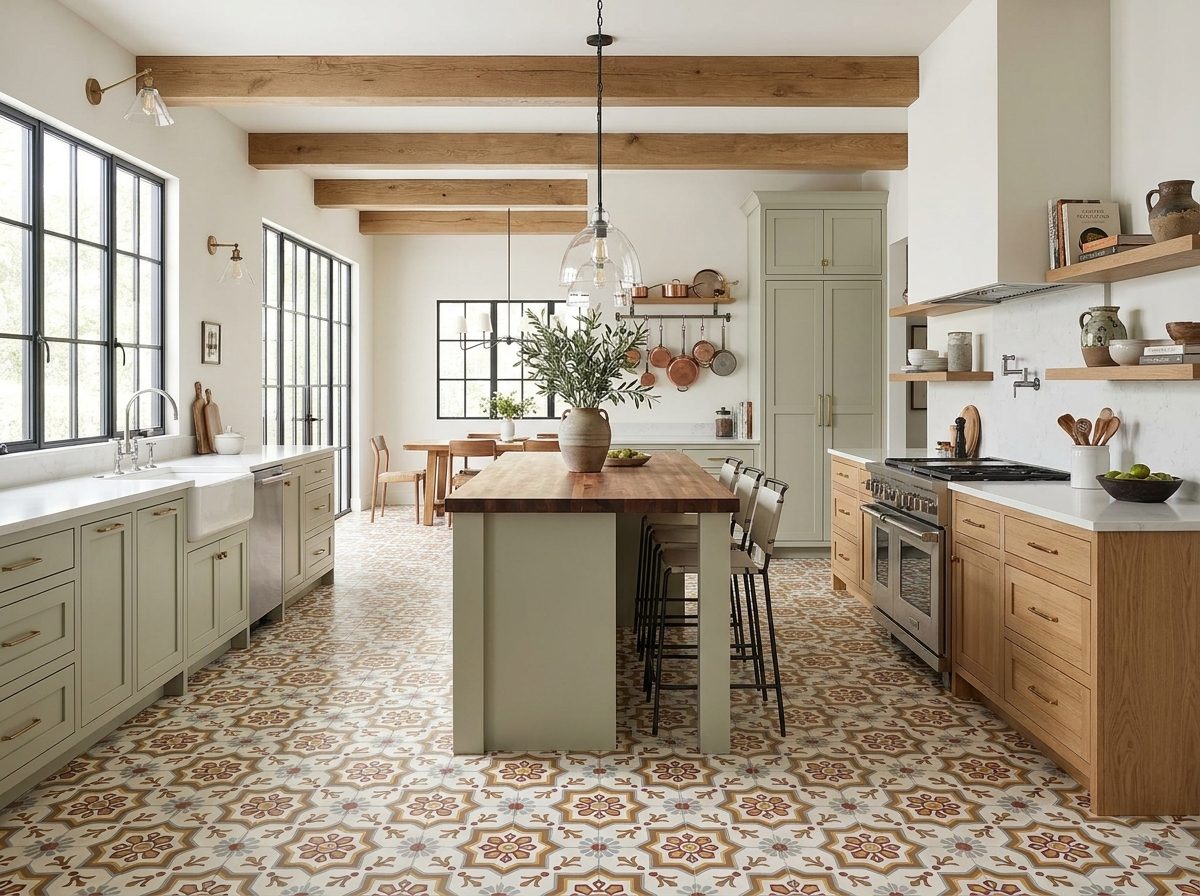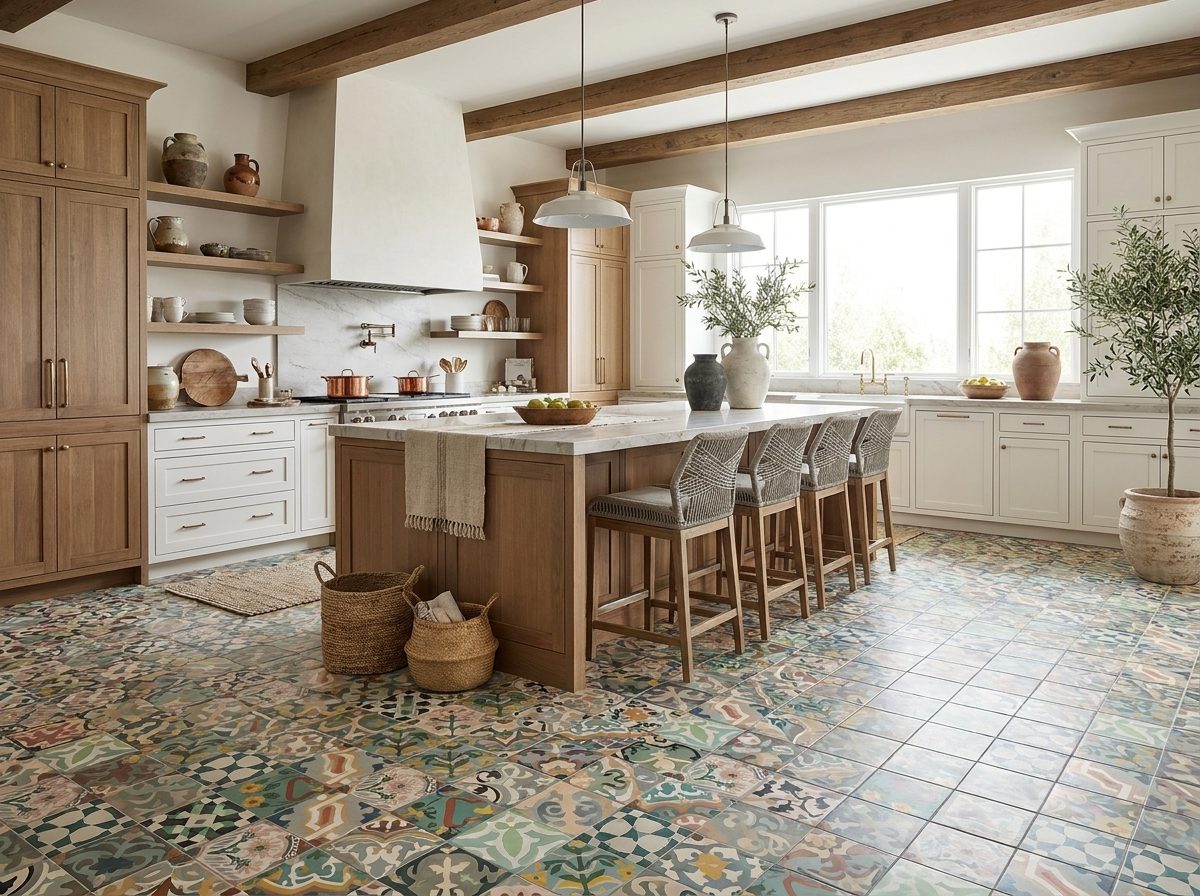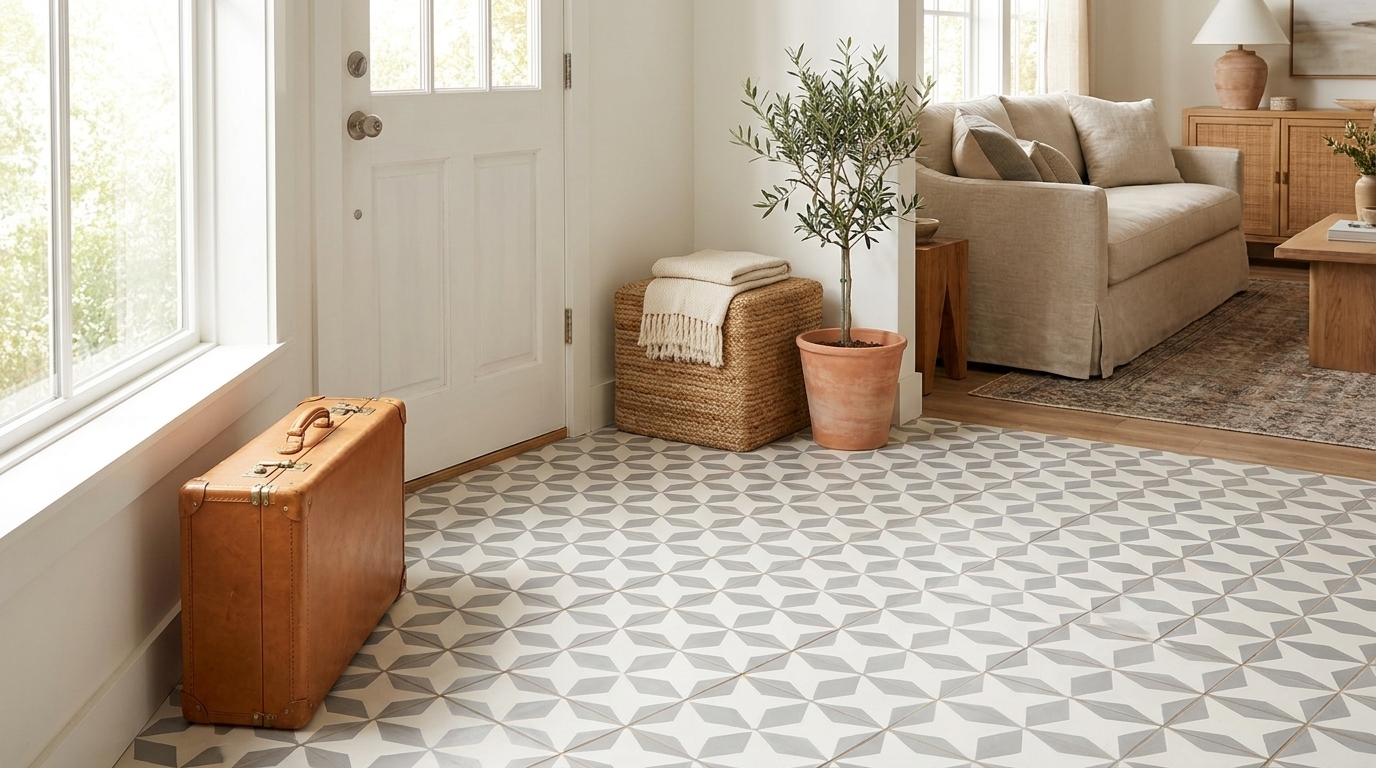
Your bathroom floor is so much more than just a surface to walk on; it’s the design foundation of your personal retreat. The very best bathroom flooring ideas manage to perfectly blend beautiful aesthetics with serious durability and water resistance. Materials like porcelain, handmade cement tile, and luxury vinyl are what set the tone for the entire space.
Choosing the Right Foundation for Your Bathroom
Transforming a bathroom really does start from the ground up. The flooring you choose will dictate both the style and the long-term performance of the room, making it a critical decision that balances practical needs against your creative vision. A bathroom is a tough environment—high moisture, high traffic—so your floor has to be a fortress against water, spills, and daily wear.
This challenge has pushed flooring technology and design forward, moving us way beyond purely functional choices. Today’s options are incredibly diverse, allowing your floor to become a powerful expression of personal style. Whether you’re drawn to the artisanal character of handmade cement tiles or the sleek performance of modern porcelain, there’s a perfect material waiting to anchor your design.
Navigating Your Flooring Options
Making an informed choice can feel overwhelming, but it gets a lot clearer once you understand the core strengths of each material. Think of it as choosing the right tool for the job—each one has unique benefits.
To simplify the process, here are the key factors you’ll want to consider:
- Water Resistance: How well does the material stop water from seeping through to the subfloor? Porcelain and vinyl are the champions here, while materials like cement tile need proper sealing to perform at their best.
- Durability and Maintenance: Can the floor handle dropped items, constant foot traffic, and cleaning products? It’s worth thinking about how much effort you’re willing to put into upkeep.
- Aesthetics and Style: Does the material align with the look you’re going for? Whether it’s a rustic farmhouse, a modern spa, or a classic traditional bathroom, your floor should fit right in.
- Budget: Costs vary widely, from budget-friendly vinyl to premium natural stone. Just remember to factor in installation costs to get an accurate total.
The demand for better bathroom flooring is driving huge growth in home renovation. The global bathroom flooring market was valued at USD 12.5 billion in 2024 and is projected to hit USD 20.3 billion by 2034. This surge is fueled by homeowners like you seeking both beauty and bulletproof functionality. You can explore more about these market trends and their impact on residential remodeling.
A great bathroom floor doesn’t just resist water; it actively contributes to the room’s atmosphere. It’s the visual anchor that ties everything together, from the vanity to the fixtures, creating a cohesive and inviting sanctuary.
To help you compare your options quickly, we’ve put together this handy at-a-glance table. It breaks down the most popular choices so you can easily see which material might be the best fit for your project’s goals and style.
Bathroom Flooring Options at a Glance
| Material | Best For | Average Cost (per sq ft) | Pros | Cons |
|---|---|---|---|---|
| Porcelain Tile | Floors, showers, high-traffic areas | $3 – $30 | Extremely durable, waterproof, low maintenance, huge variety of looks | Can be cold underfoot, grout lines require cleaning |
| Cement Tile | Feature floors and walls, bold patterns | $12 – $35 | Rich, deep colors, handmade character, customizable patterns | Porous and requires sealing, needs pH-neutral cleaners |
| Natural Stone | Luxury spa-like bathrooms | $8 – $50+ | Unique veining and natural beauty, high-end feel | Porous (needs sealing), can be expensive, may require special care |
| Luxury Vinyl Tile (LVT) | Budget-conscious projects, DIY installs | $2 – $10 | 100% waterproof, comfortable underfoot, easy to install and clean | Can be punctured by sharp objects, may not add as much resale value |
| Terrazzo | Modern and mid-century designs | $15 – $70 | Highly durable, unique speckled look, can be seamless | Can be expensive and heavy, requires professional installation |
Each of these materials brings something unique to the table. Porcelain is the practical workhorse, cement tile offers artisanal charm, and LVT provides an unbeatable combination of price and performance. Your choice will come down to balancing your aesthetic vision with the practical demands of your space.
Exploring the Best Materials for Bathroom Floors
Choosing the right material for your bathroom floor is a bit like casting the lead in a play—this single choice really sets the tone for the entire space. Every option brings its own personality, strengths, and specific care routine to the role. Moving beyond just looks and diving into the details is how you land a floor that truly works with your life.
We’ll walk through the titans of the bathroom flooring world, from the handcrafted charm of cement tile to the nearly indestructible nature of porcelain. We’ll also look at luxury vinyl tile (LVT)—the great imitator—and natural stone, the ultimate symbol of opulence.
Porcelain and Ceramic: The Workhorses of Bathroom Flooring
When you need that perfect blend of durability, water resistance, and design flexibility, porcelain and ceramic tiles are the undisputed champs. Think of them as the reliable, all-terrain vehicles of flooring. They can handle pretty much anything a busy bathroom throws at them, from constant splashes and spills to heavy foot traffic.
Porcelain, in particular, has an absorption rate of less than 0.5%, which makes it virtually waterproof. It gets this density from being fired at higher temperatures with finer clay than ceramic, resulting in a tile that’s tougher and more resistant to stains. Ceramic is its slightly more budget-friendly cousin, still incredibly durable and available in endless colors and patterns.
- Pros: Exceptionally durable, waterproof, a breeze to clean, and available in a huge array of styles, including convincing wood and stone looks.
- Cons: Can feel cold underfoot without radiant heating, and grout lines need regular cleaning to prevent mildew and staining.
The flowchart below can help you map your priorities for style, durability, and budget to see which material might be the best fit for you.

As the guide shows, your final decision often comes down to what you value most—whether that’s the custom artistry of cement tile or the practical resilience of porcelain.
Handmade Cement Tile: The Artisan’s Choice
If you’re looking for a floor with some real soul and character, handmade cement tile is the answer. Unlike mass-produced tiles, each one is a piece of art, crafted by artisans using a centuries-old hydraulic press method. The color isn’t just a glaze on the surface; it’s embedded deep within the tile itself.
This means that as the tile wears over the years, the pattern stays just as vibrant. Its naturally matte, non-slip surface is also a huge practical advantage in a wet environment. From classic encaustic patterns to bold geometric designs, cement tile offers a level of customization that’s hard to match, letting you create a truly one-of-a-kind bathroom floor. For more guidance, check out our guide on how to choose the right bathroom tiles for your project.
Cement tile doesn’t just cover a floor; it tells a story. The subtle variations in color and texture give it a warmth and depth that manufactured materials can’t replicate, making the floor the centerpiece of the room.
Luxury Vinyl Tile: The Versatile Chameleon
Luxury vinyl tile (LVT) has completely changed the game for bathroom flooring. Forget the sheet vinyl of decades past. Modern LVT is a highly engineered product that can convincingly mimic almost any material, from rustic hardwood to elegant marble, at a fraction of the cost.
Its greatest strength is that it’s 100% waterproof, making it an ideal choice for bathrooms, laundry rooms, and basements. LVT is also softer and warmer underfoot than tile, offering a more comfortable surface. For spaces that need to stand up to a lot, considering highly durable and beautiful choices, much like pet-friendly flooring options, is essential for longevity and style. The main drawback? LVT may not add as much resale value to your home compared to authentic tile or stone.
- Pros: Completely waterproof, affordable, comfortable underfoot, and simple to install, making it a great DIY project.
- Cons: Can be dented or scratched by sharp objects and lacks the premium feel and longevity of tile or natural stone.
Natural Stone: The Statement of Luxury
For the ultimate in elegance and a direct connection to the natural world, nothing beats natural stone. Materials like marble, travertine, slate, and granite bring an unparalleled sense of luxury and unique beauty to a bathroom. Each slab or tile has distinct veining and coloration, ensuring that no two floors are ever exactly alike.
Of course, this luxury comes with a bit of responsibility. Most natural stones are porous and have to be sealed regularly to protect against water damage and staining. They also tend to be on the higher end of the price spectrum and can be susceptible to scratching. Still, a well-cared-for stone floor is a timeless investment that adds significant value and a true spa-like quality to your home.
The Unique Appeal of Handmade Cement Tiles
When you’re looking for bathroom flooring that does more than just get the job done, handmade cement tiles are in a league of their own. Forget mass-produced options. Each cement tile is a small piece of art, carrying a character and soul that machine-made materials just can’t touch. They bring a real sense of history and craftsmanship right into your home.
This one-of-a-kind quality comes from a traditional process that’s barely changed in over a century. Artisans pour a mix of cement, sand, and mineral pigments into a mold. Then, it’s hydraulically pressed—not fired in a kiln like ceramic. This method creates a tile with incredible depth and a signature silky, matte finish that feels amazing underfoot.

Color That Lasts a Lifetime
The real magic of this process is what’s known as through-body color. Think of it like this: a radish is red only on its skin, but a carrot’s orange color runs all the way through. Cement tiles are like the carrot. The pigmented layer is incredibly thick, making up the top portion of the tile itself.
This means the pattern isn’t just a surface-level glaze waiting to be scratched. As your floor sees foot traffic and life happens over the decades, the vibrant design will never fade or chip away. It’s this built-in longevity that makes cement tile a truly smart investment for a hardworking space like a bathroom.
Perfectly Suited for Wet Environments
Beyond their beauty, cement tiles have some practical tricks up their sleeve that make them perfect for bathrooms. Their natural matte finish provides inherent slip resistance, a crucial safety feature in a room prone to splashes and steam. Once properly sealed, these tiles create a seriously durable and water-resistant surface.
It’s a common myth that cement tiles are high-maintenance. The reality? A quality initial seal and routine cleaning with a pH-neutral cleaner are all it takes to protect their beauty for years. This simple care routine keeps them resilient against stains and moisture.
This blend of safety and durability makes them a worry-free choice for shower floors, the main bathroom floor, and even stunning accent walls.
Unmatched Design Versatility
The design possibilities with handmade cement tiles are practically endless, letting you create a bathroom floor that’s a true reflection of you. Whether your style is classic, bohemian, or sleek and modern, there’s a cement tile to match.
The range of options is incredible:
- Classic Formats: Timeless 8×8 squares with intricate encaustic patterns can create a stunning visual “rug” effect on your floor.
- Modern Shapes: Think elegant hexagons, striking arabesques, and playful fish scales that add geometric interest and a contemporary edge.
- Textured Looks: Options inspired by the rustic charm of Zellige or the earthy feel of terracotta bring warmth and texture into the space.
- Fully Custom Designs: For a truly one-of-a-kind bathroom, you can create your own patterns and colorways, guaranteeing your space is unlike any other.
This incredible versatility is why designers and homeowners keep coming back to cement tiles when they want to make a statement. They offer a unique chance to infuse personality and bespoke artistry into a room. To dig deeper, you can read more about the timeless beauty of handmade cement tiles and see how they can completely transform a space.
Ultimately, choosing cement tile is about more than just picking a floor; it’s about investing in a durable, functional piece of art that will define your bathroom for generations.
Creative Tile Patterns and Layout Ideas
Once you’ve landed on the perfect material for your bathroom floor, the real artistry begins. The tile pattern you choose is more than just a finishing touch; it’s a powerful design tool that can completely alter the character and perceived size of your space. This is where you move beyond a simple grid and start infusing your personality into the room.
Think of it like an artist’s brushstroke. Your tile setter uses patterns to guide the eye, create a mood, and build atmosphere. Classic arrangements like herringbone or basketweave can instantly elevate simple rectangular tiles, adding a layer of texture and movement that draws you in. These timeless patterns introduce a sense of craftsmanship that turns a functional floor into a true design statement.

Classic Patterns With a Modern Twist
Some tile patterns have been around for centuries for a reason—they just work. But that doesn’t mean they have to feel dated. By applying these classic layouts in fresh ways, you can get a look that feels both sophisticated and completely current.
- Herringbone: This classic V-shaped pattern creates a feeling of movement and direction, making narrow rooms feel wider. Use it with oversized rectangular tiles for a bold, modern statement, or stick with smaller tiles for a more delicate, traditional texture.
- Basketweave: Achieved by alternating pairs of horizontal and vertical tiles, this layout adds intricate detail without overwhelming the eye. It’s an excellent choice for adding character to a smaller bathroom or powder room.
- Offset (or Running Bond): This is the familiar “brick” pattern, a subtle classic. You can give it an update by using a one-third offset instead of the standard one-half. The result is a staggered effect that feels more dynamic and contemporary.
Your tile pattern is your secret weapon for manipulating space. A diagonal layout can make a small, square bathroom feel larger by drawing the eye along the longest lines, while a bold, large-scale pattern can ground a spacious master bath, making it feel more intimate.
Making a Statement With Creative Layouts
Ready to move beyond the classics? You can use tile to create unique focal points and solve design challenges. These techniques treat the floor as a canvas, defining and enhancing the entire room.
A popular approach is creating a tile “rug” with patterned cement tiles. By framing a section of bold, decorative tiles with a border of simpler, solid-colored tiles, you can anchor a freestanding tub or define the vanity area. It’s a trick that adds a high-end, custom feel without committing to an entire patterned floor.
Another powerful technique is to extend your floor tile up a wall—often the one behind the vanity or inside the shower. This seamless transition creates a clean, cohesive look that makes the room feel taller and more unified.
How Tile Patterns Impact Your Bathroom’s Look and Feel
Choosing the right pattern is all about understanding its visual effect. This table breaks down how different layouts can influence the perception of your bathroom, helping you make a strategic design choice.
| Pattern Name | Visual Effect | Best for Bathroom Size | Style Association |
|---|---|---|---|
| Herringbone | Creates movement and a sense of width | Small to medium | Classic, Transitional, Modern |
| Grid (Straight Lay) | Clean, simple, and emphasizes the tile shape | Any size | Modern, Minimalist |
| Diagonal | Makes the room feel larger and more open | Small | Traditional, Formal |
| Basketweave | Adds intricate detail and texture | Small to medium | Traditional, Farmhouse, Vintage |
| Hexagon | Creates a dynamic, honeycomb-like pattern | Any size | Modern, Mid-Century, Eclectic |
Whether you opt for the subtle elegance of a classic pattern or the bold drama of a custom design, the right arrangement is your opportunity to add that final layer of personal style. It’s what ensures your bathroom flooring is as beautiful as it is functional.
Practical Steps for a Flawless Installation
Choosing a beautiful floor is only half the battle. A flawless installation is what makes that investment last a lifetime, separating a stunning, durable bathroom from one that fails way too soon.
Think of it like the foundation of a house—it isn’t glamorous, but it’s absolutely critical. The real work begins long before the first tile ever comes out of the box, starting with the layer right underneath it all: your subfloor.
Preparing Your Subfloor for Success
Your subfloor has to be perfectly clean, level, and structurally solid. Any dips, cracks, or lingering moisture will come back to haunt you, causing cracked tiles or warped planks down the road. You have to tackle these issues first.
For tile installations, this often means putting down a cement backer board over the wood subfloor. It creates a stable, water-resistant surface that gives the tile adhesive something solid to grab onto. It’s also the time to consider adding extra protection against water damage. You can find helpful guides on moisture barrier solutions to see what your project might need.
Waterproofing and Sealing Key Areas
In a bathroom, water is the constant enemy, so proper waterproofing is non-negotiable. This is especially true for porous materials like our handmade cement tiles. While porcelain is virtually waterproof on its own, anything with even a little porosity needs a protective seal.
The most crucial step for materials like cement tile is applying a high-quality penetrating sealer before you grout. This simple step prevents the grout’s pigments from staining the tile’s face and creates your first line of defense against moisture.
After the grout is in, a final topcoat sealer gets applied to both the tile and the grout lines. This locks out water, dirt, and stains for good, making your floor so much easier to clean for years to come.
For a step-by-step walkthrough, check out our complete guide on how to properly install your tile.
Choosing Grout and Long-Term Care
Grout does more than just fill the gaps between tiles; it adds structural stability and is a key part of the final look. When you’re picking one out, think about both color and type:
- Unsanded Grout: Best for tight grout lines (1/8 inch or less). It won’t scratch delicate surfaces.
- Sanded Grout: Perfect for wider grout lines. The sand gives it extra strength to prevent cracking.
- Epoxy Grout: This is the premium option. It’s stain-proof and completely waterproof, making it a fantastic choice for wet zones like shower floors.
Once your floor is installed and sealed, keeping it beautiful is easy. Just be sure to use a pH-neutral cleaner for materials like cement tile or natural stone. Acidic or harsh chemicals can etch the surface and strip away the sealer. With regular sweeping and gentle mopping, your floor will look pristine for decades.
It’s no surprise that the global flooring market, valued at $463.13 billion, is shifting toward materials that are both sustainable and durable. In Europe, ceramic tiles hold over a 55% market share, a trend driven by strict performance and safety standards. This shows a growing demand worldwide for bathroom flooring that delivers on both beauty and resilience.
Making It Real: From Idea to Installed Floor
You’ve explored the materials, weighed the pros and cons, and mentally laid out a dozen different patterns. Now for the fun part: turning those bathroom flooring ideas into a finished room you’ll love walking into every day.
The whole process really boils down to the core principles we’ve walked through together. It starts with choosing a material that fits your life—one that balances authentic beauty with the realities of a wet, high-traffic space. From there, it’s all about the artistry of pattern and layout, which is where you get to inject personality and really shape the feel of the room. Finally, it all comes together with great installation, making sure your new floor is built to last.
This is where the vision starts to become tangible, and we’re here to help you get it right.
Your Project, Your Timeline
Whether you need tile yesterday or you’re crafting something completely from scratch, there’s a path that fits your project.
- In-Stock Collections: For projects on a tight timeline that can’t compromise on style, our in-stock collections offer hundreds of classic and modern patterns ready to ship.
- Custom Design Studio: If your vision is one-of-a-kind, our Design Studio is your playground. Pick your own colors and motifs to create a tile that is yours and yours alone.
The best bathroom designs happen at the intersection of inspiration and information. When you feel confident about your material, pattern, and installation plan, a renovation shifts from stressful to genuinely exciting.
We’re firm believers that the best way to make a final decision is to see and feel the tile for yourself. There’s just no substitute for experiencing the silky, matte finish of a handmade cement tile or seeing how the colors shift in your home’s unique light.
So, go ahead and take that next step. Browse our project gallery for a fresh dose of inspiration, order a few samples to compare your top contenders, or connect directly with our design team for one-on-one guidance. Your dream bathroom is absolutely within reach, and we have the tools and expertise to help you build it from the ground up.
A Few Final Questions, Answered
As you get closer to choosing your bathroom flooring, a few last questions always seem to pop up. Here are some quick, straightforward answers to help you lock in your decision with total confidence.
What Is the Most Durable and Waterproof Flooring for a Bathroom?
For pure, brute-force water resistance, porcelain tile is the undisputed champ. Its clay is fired at higher temperatures, making it incredibly dense and non-porous. With a water absorption rate of less than 0.5%, it’s practically bulletproof in wet zones like shower floors and tub surrounds.
That said, you don’t have to sacrifice style for performance. Properly sealed handmade cement tiles offer incredible longevity in bathrooms. Because the color runs all the way through the tile (it’s not just printed on top), the pattern won’t fade from foot traffic. Plus, its natural matte finish offers great slip resistance right out of the box. While materials like luxury vinyl are waterproof, tile generally delivers far superior long-term value and character.
Are Patterned Tiles a Passing Trend for Bathrooms?
Not at all. While certain ultra-bold or quirky patterns might feel trendy for a season, patterned tile itself is a design classic that simply never goes away.
Think about it: classic geometric, encaustic, and floral motifs have been grounding beautiful interiors for centuries. The trick to a lasting look is to choose a pattern that feels connected to your home’s architecture and your personal style. When it feels like you, it will always feel right. Heritage brands are a great place to look for patterns that have already passed the test of time.
Is Cement Tile Difficult to Maintain in a Bathroom?
The maintenance for cement tile is simple, but it is important. The single most critical step is sealing the tiles properly right after they’re installed. This is what creates the protective barrier against water and stains.
Once that’s done, daily cleaning is a breeze—just use a pH-neutral cleaner. You’ll want to avoid harsh, acidic chemicals (like vinegar or bleach-heavy sprays), as they can etch the surface over time. Depending on how much use the bathroom gets, you might need to re-seal the floor every few years. It’s a simple weekend task that keeps the gorgeous matte finish looking its best for decades.
Ready to bring your vision to life? At Original Mission Tile, we blend heritage craftsmanship with modern design possibilities.
Explore our in-stock collections for quick inspiration or work with our design team to create a completely custom tile that’s all your own.