The Patterns, Materials, and Styles Redefining Interior Design
The floors beneath your feet are about to become the most talked-about feature in every room — and if you’re still playing it safe with beige, you’re already behind.
Every few years, a design shift happens that changes the way we think about a space from the ground up — literally. In 2026, that shift is arriving with force, and it’s being led by a generation of designers, architects, and homeowners who have grown bored with safe, predictable surfaces and are demanding something more: more pattern, more craft, more history, more soul.
The floor tile trends defining interior design in 2026 are not about chasing novelty. They’re about returning to something deeper — to the handmade, the regional, the time-tested. To materials like encaustic cement tiles that have decorated the floors of Moroccan riads, Spanish haciendas, and Mediterranean villas for centuries. To patterns so richly geometric they seem to contain entire worlds. To colors pulled from the earth, the sea, and the desert rather than a corporate color forecast.
Whether you’re an interior designer mapping out a client’s dream kitchen, an architect specifying materials for a boutique hotel lobby, or a homeowner who has spent years looking at a boring floor and finally deciding to do something about it — this is the floor tile trend guide you’ve been waiting for. Let’s get into 2026.

Why 2026 Is the Year of the Statement Floor
The interior design pendulum has swung decisively away from the minimalist, all-white, texture-free aesthetic that dominated the last decade. Homeowners and commercial clients alike are seeking warmth, personality, and spaces that feel genuinely individual rather than assembled from a catalog.
Simultaneously, there is a growing cultural appetite for sustainability, craft, and material authenticity. People want to know how their spaces were made and by whom. They want surfaces that age beautifully rather than ones that simply degrade. They want design choices that have a story behind them.
All of these forces converge on one material above all others: handmade cement tiles. Artisan-made, infinitely customizable, naturally durable, and rooted in centuries of global craft tradition, cement tiles are not just participating in the 2026 design moment — they are defining it.
The 7 Biggest Floor Tile Trends for 2026
1. Maximalist Pattern Returns — Boldly and Unapologetically
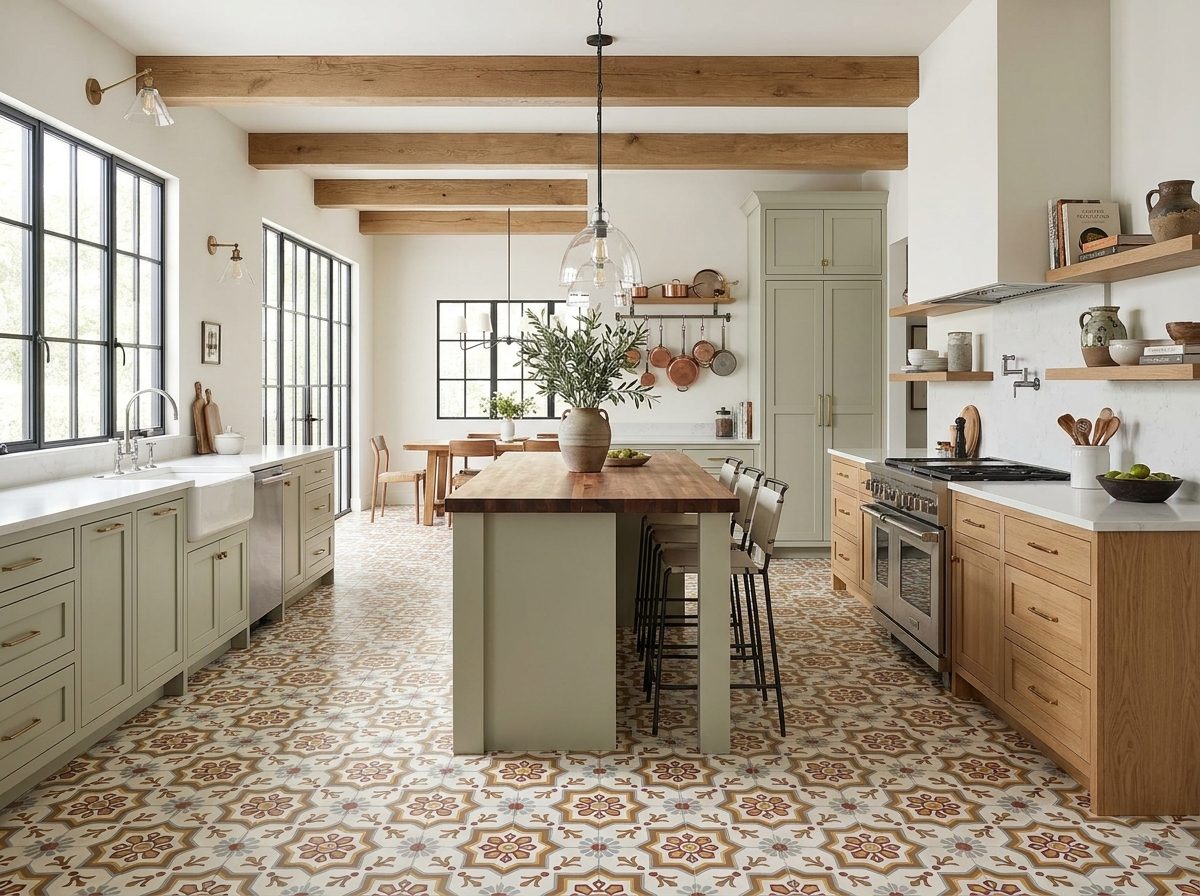
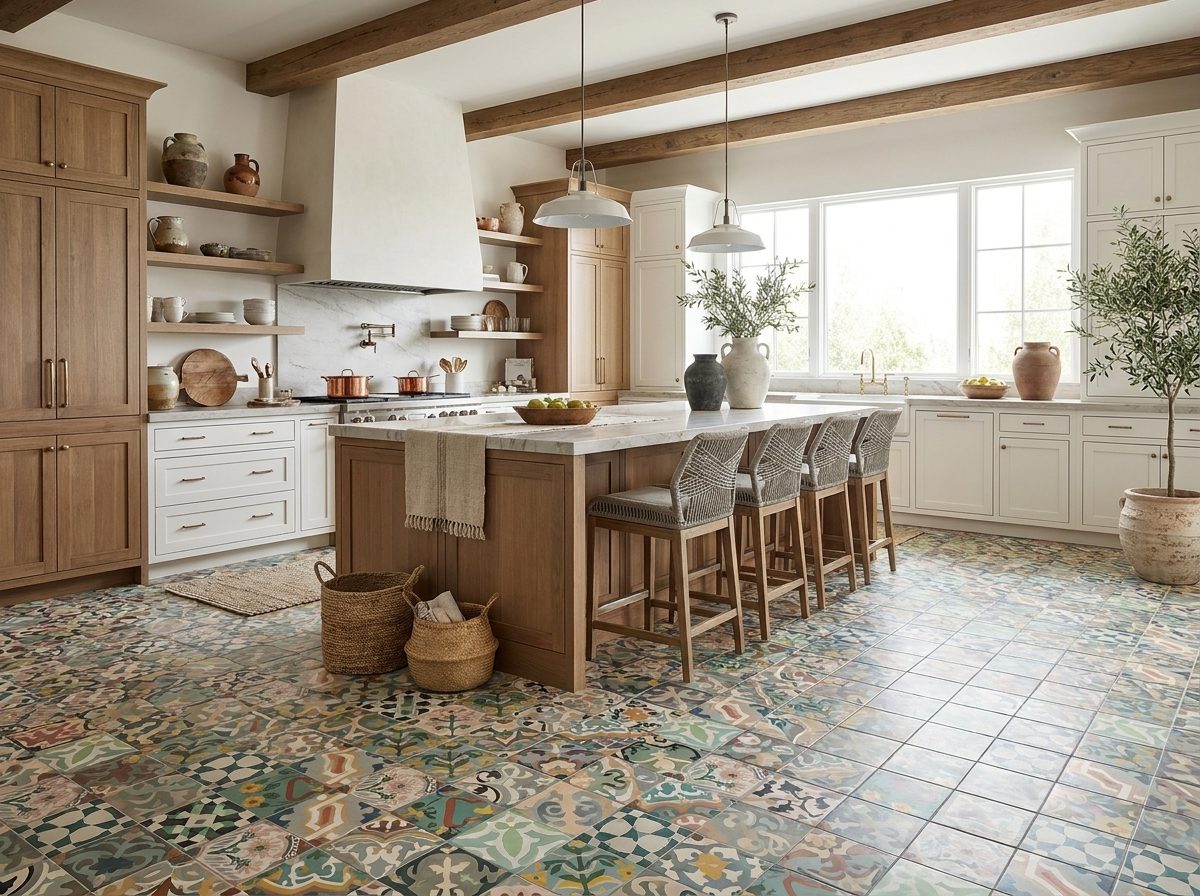
The single most defining floor tile trend of 2026 is the full, confident return of maximalist pattern. After years of restraint, designers are embracing intricate patterned floor tiles with a clarity and commitment that feels like a collective exhale.
The leading patterns in this movement are rooted in global craft traditions: Moroccan star tiles, Mediterranean geometric compositions, Spanish-style encaustic borders, and the layered arabesque patterns of North African tile-making. These are not surface-level trend adoptions — they are deep design references being reinterpreted for contemporary interiors with modern color palettes and precise material quality.
Patterned cement tiles are at the forefront of this shift because no other material delivers this level of visual complexity with the same depth, warmth, and handmade character. A geometric encaustic cement tile floor in a kitchen or entryway doesn’t just decorate the space — it anchors it, defines it, and gives it an identity that lasts for decades.
2. Earthy and Saturated Color Palettes
The color story of 2026 floor tile design is earthy, warm, and saturated. Think deep terracotta, sun-bleached sienna, dusty sage, aged indigo, warm charcoal, and oxidized copper. These are colors pulled from natural landscapes — the Sahara, the Aegean, the high desert of the American Southwest — and they bring an organic vitality to interior floors that cool grays and whites simply cannot.
Terracotta tiles are experiencing a particularly strong revival, appearing not just in their traditional warm-red form but in expanded, nuanced color families that include blush, amber, rust, and chocolate. Spanish-style tiles in terracotta-family tones are among the most-requested patterns at Original Mission Tile as designers and homeowners lean into this warmth-first design philosophy.
3. Moroccan and Mediterranean Tile Everywhere
If one regional design tradition is owning the 2026 interior design conversation, it’s the intersection of Moroccan and Mediterranean aesthetics. Moroccan tiles — with their intricate geometric patterning, rich color contrasts, and meditative visual complexity — are appearing in kitchens, bathrooms, entryways, and commercial spaces with a frequency and confidence that signals a genuine, enduring trend rather than a passing moment.
Mediterranean tiles, with their warmer, more coastal color palette of blue, white, terracotta, and ochre, are the softer counterpart in this movement — equally pattern-forward but with an airy, sun-drenched quality that works beautifully in bathrooms, outdoor spaces, and hospitality interiors.
Both traditions are perfectly embodied in handmade encaustic cement tiles, where the pigment depth and hand-pressed surface authentically honor the original craft techniques from which these patterns emerged.
4. Terrazzo’s Evolved Comeback
Terrazzo tile had its initial design revival several years ago, but the 2026 version is more sophisticated, more refined, and more deeply integrated into broader interior design strategies. Designers are using terrazzo-look cement tiles not as a statement piece but as a sophisticated neutral — a ground-level material that adds visual interest without demanding attention.
The new terrazzo palette leans warmer and more organic than the cool, speckled iterations of recent years. Creamy whites with warm aggregate tones, deep charcoals with amber flecks, and pale sage with rose inclusions are among the color combinations driving this evolved terrazzo moment.
5. Indoor-Outdoor Continuity
One of the most significant design moves of 2026 is the intentional blurring of the boundary between interior and exterior spaces. Designers are specifying the same tile — or closely coordinated tile families — for indoor floors and outdoor patio tiles, creating a visual and material flow that makes spaces feel larger, more cohesive, and architecturally intentional.
Cement tiles are uniquely positioned for this application. Properly sealed for outdoor use, they perform well on covered patios, loggia floors, courtyard surfaces, and outdoor dining areas while maintaining the exact visual language of the interior. For residential clients extending living spaces outdoors and for hospitality designers creating seamless indoor-outdoor environments, this is one of the most powerful tools in the 2026 tile toolkit.
6. Custom and Personalized Tile Design
The democratization of custom manufacturing is changing what homeowners and commercial clients expect from their tile choices. In 2026, the most design-forward interiors are featuring tiles that were made specifically for the space — custom colors matched to a paint palette, reproduced historical patterns sourced from vintage photographs, brand-specific designs for commercial environments.
Original Mission Tile’s custom cement tile manufacturing makes this level of personalization accessible to designers, architects, and homeowners across the US. The ability to reproduce virtually any pattern or color means that the floor of your imagination doesn’t have to remain imaginary.
7. The Modern-Artisan Fusion
Perhaps the most nuanced trend of 2026 is the fusion of modern, minimal architecture with artisan, craft-forward materials. Clean-lined spaces with polished concrete walls, steel-frame windows, and minimal furniture are being grounded by handmade cement tile floors that introduce warmth, history, and tactile richness without disrupting the architectural purity of the space.
This pairing — modern shell, artisan soul — is being executed brilliantly in residential renovations and commercial interiors alike, and it represents the most enduring design intelligence of the moment: that craftsmanship and contemporary design are not in tension but in conversation.
Ready to see which patterns are leading the trend conversation? Explore our full cement tile collection and find your 2026 direction.

Room-by-Room: Applying 2026 Tile Trends
Kitchen Backsplash Tiles and Floors
The 2026 kitchen is pattern-forward and warmth-first. Kitchen backsplash tiles in bold Moroccan or Mediterranean patterns — deep blue and white, warm terracotta and cream, sage and ivory — are replacing the all-white standard with something far more personal and permanent. Kitchen floors in geometric patterned cement tiles, particularly in warm earth tones, anchor the room with the visual weight that open-plan living spaces require.
Bathroom Tiles
The bathroom is where 2026’s trend maximalism is playing out most freely. Full-floor coverage in encaustic cement tiles — Moroccan stars, hexagonal patterns, bold geometric compositions — is creating bathrooms that feel like destination spaces rather than functional necessities. Shower wall tiles in coordinating cement patterns extend the design language from floor to ceiling, creating spa-level environments in residential bathrooms.
Entryways and Hallways
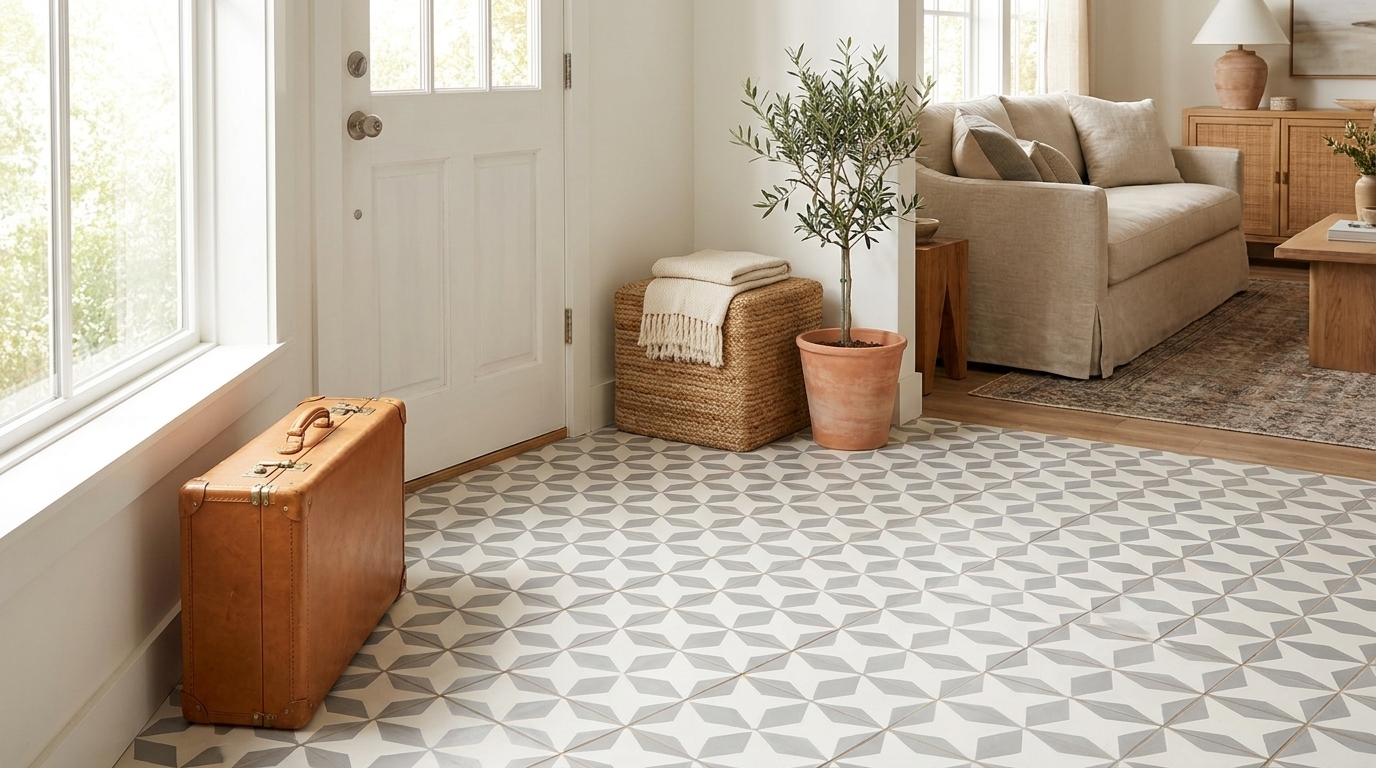
The entry sets the tone for everything that follows, and 2026’s most impressive entries are making their intentions clear from the first step: patterned floor tiles in Spanish-style or Mediterranean designs that announce, unambiguously, that this is a home with a design point of view.
Outdoor Patios and Courtyards
Outdoor spaces are receiving the same design attention as interiors in 2026, with outdoor patio tiles in cement serving as the connective tissue between inside and outside. Terracotta tones, Mediterranean blues, and geometric patterns create outdoor rooms that feel as intentional and considered as any interior space.
Commercial Floor Tile Trends for 2026
Restaurant Tile Design
Restaurants in 2026 are using floor tile as a primary brand communication tool. Restaurant tile design is moving decisively toward pattern, craft, and authenticity — handmade cement tile floors that signal quality, care, and a distinct culinary and cultural identity. Custom logo tiles and brand-color patterned floors are increasingly specified for high-profile openings, and commercial floor tiles in cement are being chosen for their ability to handle high traffic while aging beautifully.
Hotel Lobby Tiles
The boutique hotel segment continues to lead in design innovation, and hotel lobby tiles in 2026 are making bold, unmistakable statements. Grand-scale Moroccan pattern medallions, seamless terrazzo fields, and custom encaustic designs that reference the hotel’s location and heritage are the defining moves of this year’s most celebrated hotel openings.
Hospitality, Spas, and Wellness
Spas and wellness facilities are embracing the meditative quality of patterned cement tiles — the visual rhythm of a repeating geometric pattern has a genuinely calming effect that designers are intentionally harnessing. Mediterranean and Moroccan tile references dominate this segment, creating environments that feel ancient, grounded, and deeply restorative.
The Case for Cement Tile Over Ceramic in 2026
In any cement tile vs ceramic tile comparison, the conversation ultimately comes down to what you want your floor to do. Ceramic and porcelain tiles offer ease of maintenance and consistency. But decorative cement tiles offer something ceramic fundamentally cannot: depth, soul, and the unmistakable quality of a material made by human hands from natural ingredients.
In a design moment defined by authenticity, craft, and material honesty, that distinction matters more than ever. The through-body color and pattern of cement tiles means they age with grace, developing patina rather than revealing a blank ceramic body at areas of wear. The natural variation between tiles creates a floor that looks organic and alive rather than mechanically perfect.
For 2026 design projects where the floor is meant to be a feature — and in most of the best projects, it is — cement tile is the clear choice.
Installation and Maintenance for 2026 Tile Projects
Sealing: Your Most Important Investment
Every cement tile installation begins and ends with proper sealing. Apply a penetrating sealer before grouting and a topcoat sealer in high-traffic commercial or kitchen areas. Reapply sealer annually in heavy-use spaces. This single step determines the long-term performance and beauty of the installation more than any other factor.
Cleaning Protocols
Daily and weekly cleaning with pH-neutral cleaners and warm water protects the sealer and maintains the tile’s natural surface. In commercial environments — restaurants, hotels, wellness spaces — establish a cleaning protocol that avoids acidic, bleach-based, or abrasive products.
Professional Installation Recommendations
Cement tile requires an experienced installer familiar with the material’s specific requirements: white polymer-modified thin-set, tight grout joints (1/16″ to 1/8″), and careful subfloor preparation. Always dry-lay patterned tiles before setting to confirm pattern alignment and orientation.

Mistakes to Avoid in Your 2026 Tile Project
Assuming uniform production. Handmade tiles vary naturally between batches. Order your full project quantity from a single production run and blend from multiple boxes during installation for a naturally balanced floor.
Skipping the sealer before grouting. Unsealed cement tile absorbs grout color instantly and permanently. Never begin grouting without first applying a penetrating sealer.
Choosing pattern without a scale drawing. Intricate Moroccan or Mediterranean patterns need to be laid out relative to the room’s actual dimensions before ordering. A pattern that reads beautifully in a large space may overwhelm a small bathroom — or vice versa.
Under-ordering. Always order 10–15% extra over your calculated square footage to account for cuts, pattern matching, and future repairs.
Using the wrong adhesive. Gray thin-set mortars can bleed through lighter-colored cement tiles. Always use white polymer-modified thin-set for cement tile installation.
Frequently Asked Questions About 2026 Floor Tile Trends
1. What are the biggest floor tile trends for 2026? The dominant trends are maximalist patterned floor tiles, earthy and saturated color palettes, Moroccan and Mediterranean tile designs, evolved terrazzo, indoor-outdoor continuity, custom tile personalization, and the modern-artisan fusion aesthetic.
2. Are patterned cement tiles too bold for everyday residential use? Not at all. Scale, color palette, and context determine how bold a patterned floor reads in a space. Our design team can help you find the right pattern intensity for your specific room and aesthetic.
3. How do I choose between Moroccan tiles and Mediterranean tiles for my project? Moroccan tiles tend toward intricate geometry and higher contrast; Mediterranean tiles lean warmer and more coastal. The right choice depends on your color palette, regional influences, and the overall mood of the space. Talk to a tile specialist for personalized recommendations.
4. Can cement tiles handle high-traffic commercial applications? Absolutely. Properly sealed cement tiles are among the most durable commercial floor tiles available, performing well in restaurants, hotel lobbies, retail environments, and other high-traffic spaces while aging more beautifully than any ceramic or porcelain alternative.
5. Are terracotta tiles and cement tiles the same thing? No. Terracotta tiles are fired clay tiles, while cement tiles are made from cement, marble powder, and natural pigments without kiln firing. However, cement tiles are frequently produced in terracotta-inspired color palettes and can achieve a similar warm, earthy aesthetic.
6. How do I start a custom tile project for a commercial space? Contact our team with your project details — square footage, color references, design inspiration, and timeline. Our custom manufacturing process can reproduce virtually any pattern or color. Request a custom tile consultation to get started.
7. What’s the best way to try before committing to a full order? Order samples of any pattern that interests you. Seeing and handling the actual tile in your own lighting and alongside your existing finishes is the most reliable way to make a confident design decision.
8. How long do handmade cement tiles last compared to ceramic tiles? Handmade cement tiles, when properly installed and maintained, last for decades — often 50 to 100 years or more. Many vintage cement tile floors from the early 20th century are still in service today, a longevity that no ceramic tile can match.

2026 Is the Year Your Floor Becomes Your Best Design Decision
The floors of 2026’s most memorable interiors are not afterthoughts. They are the starting point — the material decision from which every other design choice radiates outward. They are patterned, handmade, warm, and deeply specific to the vision of the space they inhabit.
Handmade cement tiles are the material of this moment: durable enough for the most demanding commercial applications, beautiful enough for the most ambitious residential projects, and flexible enough to express every design direction from Moroccan maximalism to modern minimalism.
The floor beneath your feet has always had more potential than you’ve been giving it. In 2026, it’s time to give it the attention — and the material — it deserves.
See Trend Tiles — explore the patterns defining interior design in 2026.
Order Samples — experience the quality and color before you commit.
Talk to a Tile Specialist — get expert guidance on patterns, custom design, and commercial specifications.