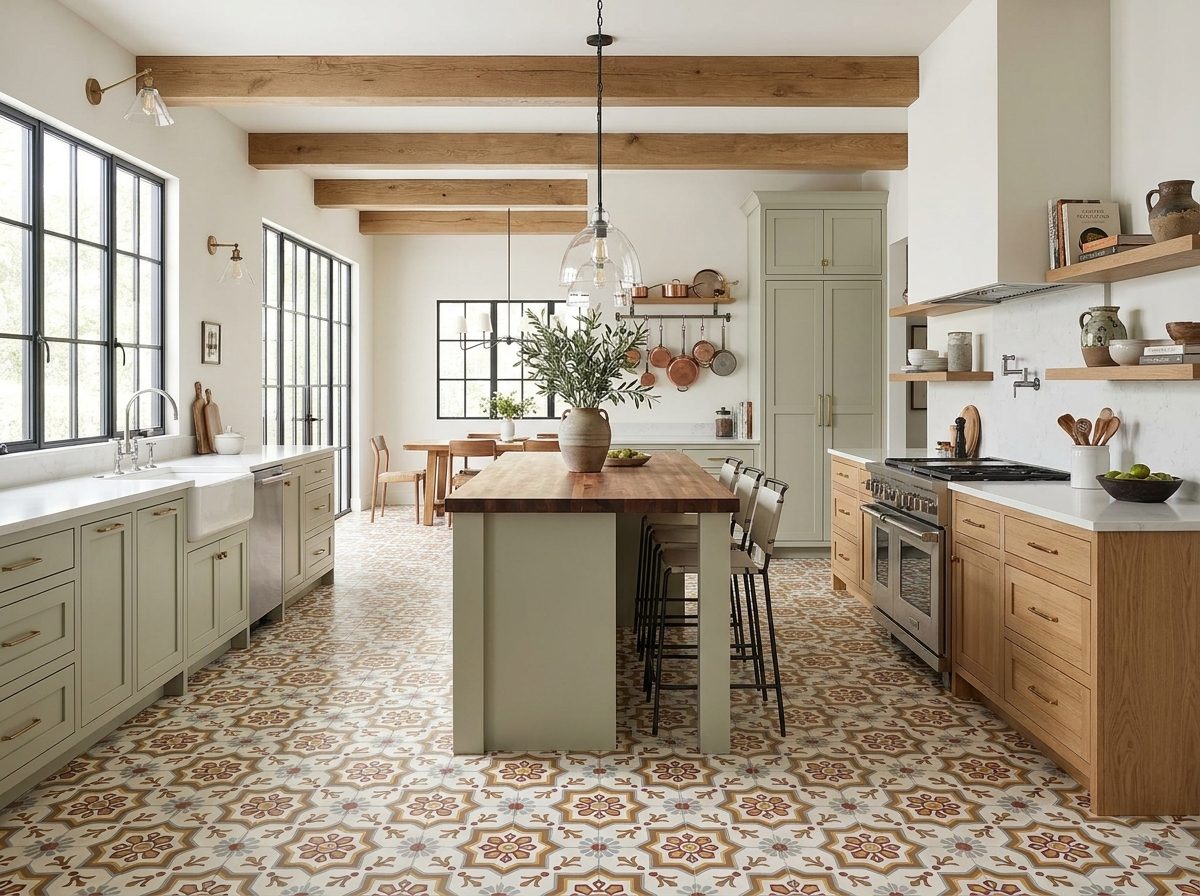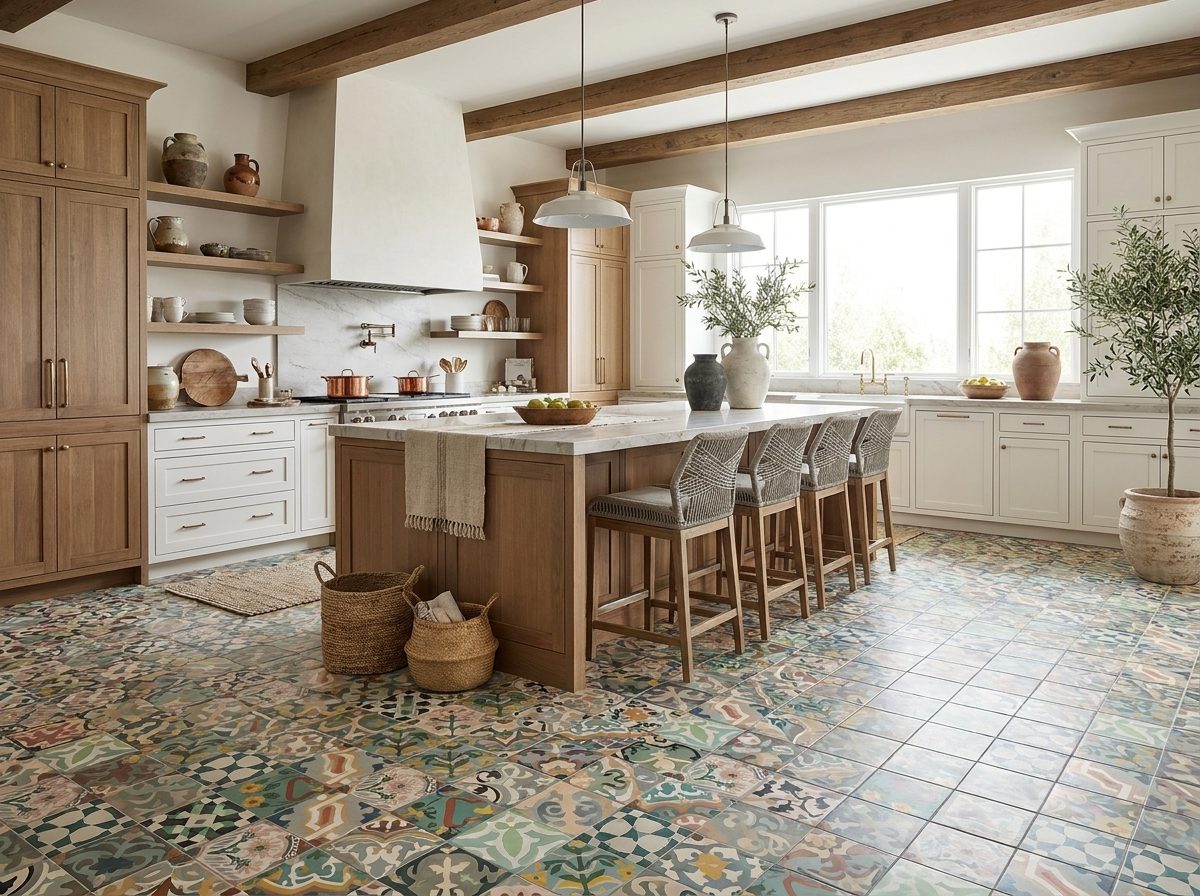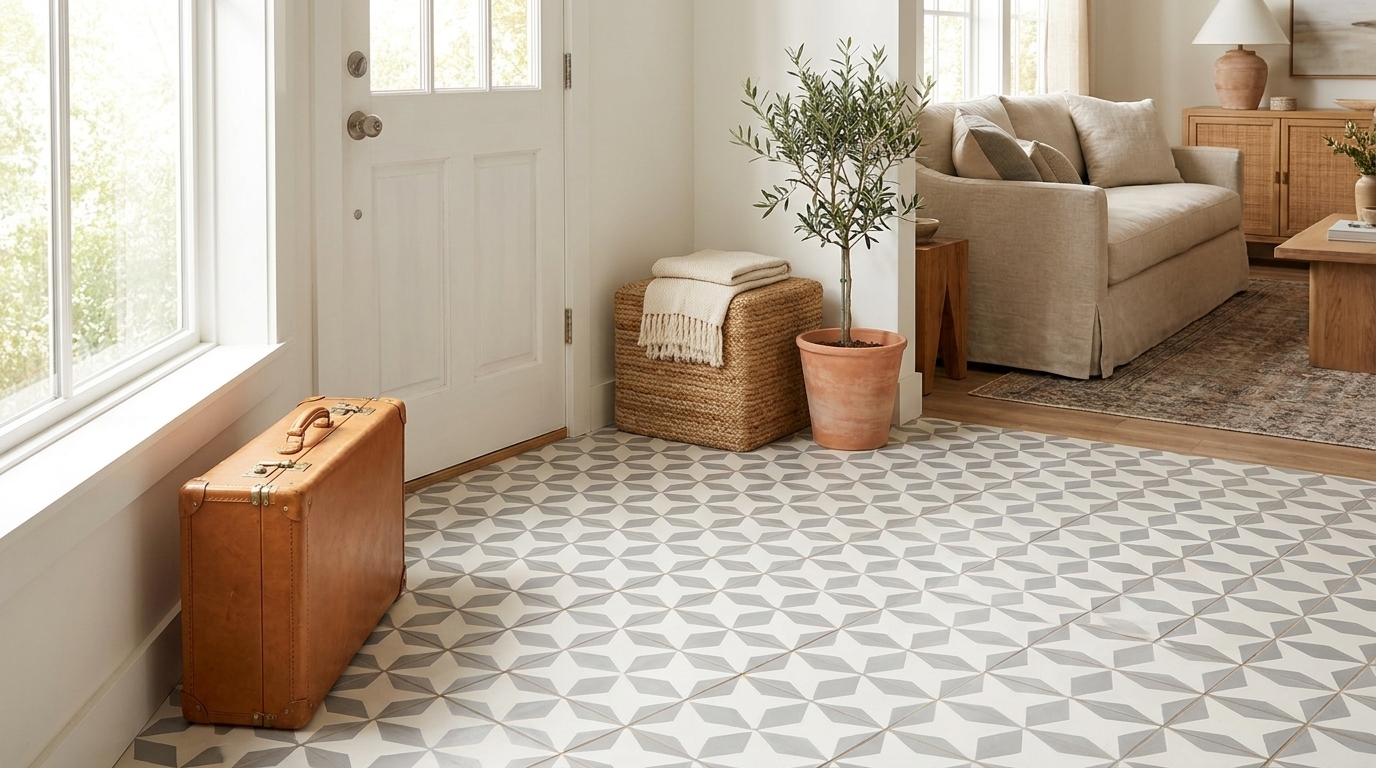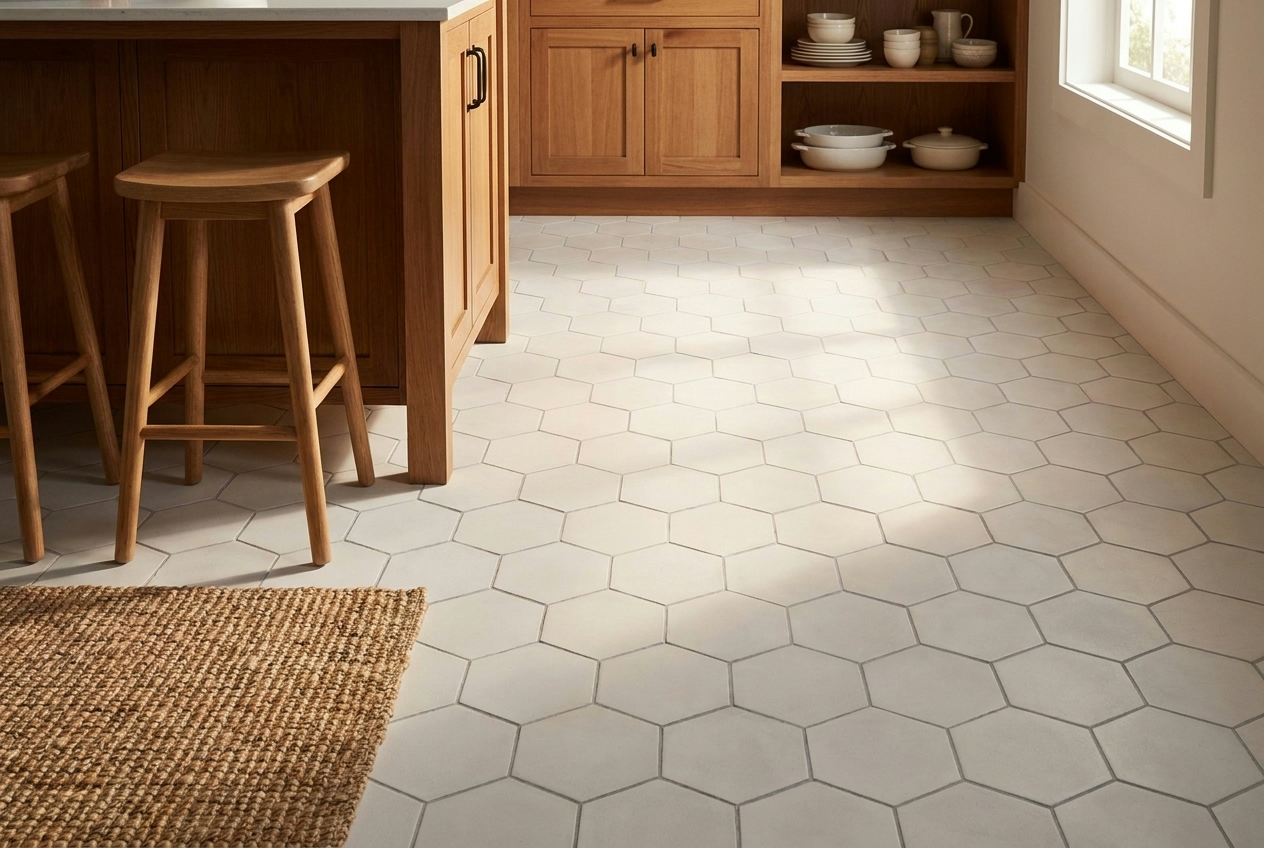
Six sides, endless personality. Hexagon cement tiles have spent the last two seasons quietly taking over kitchens, entries, and bathroom floors — and unlike most viral shapes, this one has a century of history to back it up. The honeycomb was flooring Parisian bistros and Mexican haciendas long before it was flooring Pinterest boards.
At Original Mission Tile, our hexagons are hand-pressed the traditional way: solid mineral pigment, matte surface, made to outlive trends. This guide covers sizes, layouts, color strategies, and the practical math of planning a hex floor.
Why the Hexagon Works
- Geometry with softness. Six sides read more organic than a grid — structure without severity.
- More edges, more texture. Extra grout lines per square foot give visual rhythm and real-world traction.
- Scales in every direction. A hex field flows around corners and islands more gracefully than squares, with no dominant sight line.
- Solid through and through. Hand-pressed pigment means wear becomes patina, never a breach in a printed surface.

Sizes and What They Say
- 8″ hexagons — the versatile classic: calm enough for large floors, detailed enough for small rooms. Figure ~2.6 tiles per square foot.
- Smaller hexes — more joints, more grip, more mosaic energy: shower floors and vintage bathrooms love them.
- Mixing scales — a small-hex shower pan beside an 8″ hex main floor keeps the language consistent and the function tuned.
Five Layout Strategies
- The solid field — one color, edge to edge: the confident modern classic.
- The random blend — two or three tones shuffled 70/20/10 for a hand-scattered effect.
- The fade — color concentrating at one wall and dissolving across the room: the statement gradient.
- The flower cluster — six dark hexes ringing a light one (or vice versa), repeated sparsely across a neutral field.
- The rug zone — a colored hex “carpet” under the dining table, framed by neutral hexes.

Colors That Love Six Sides
Terracotta and warm clay tones lead the season (our data agrees — terracotta drives more product traffic than any other family). White and cream hexes make the timeless bright kitchen. Deep greens and navies turn the honeycomb moody and modern. And two-tone blends — sand with white, gray with charcoal — give you texture that hides real life beautifully.
Planning Math and Practical Notes
- Waste factor: hex perimeters mean angled cuts — order 15% extra, from one production lot.
- Grout choice: matching grout melts the field together; contrasting grout draws every hexagon. Both classic — decide with samples.
- Layout from the center of the room’s main view, never from a corner.
- Seal like any cement tile: penetrating sealer at install, refreshed on schedule — details in our installation guidelines.

Hexagon Cement Tile FAQ
Are hexagon tiles harder to install?
The field lays like any tile; the perimeter takes angled cuts and a patient installer. Any experienced setter handles it — just budget the 15% waste and a little extra labor time.
Do hexagons make a room look bigger or smaller?
The multidirectional pattern tends to expand — there’s no long sight line to measure the room against. Light colors amplify the effect.
How many hexagon tiles do I need?
For 8″ hexes, about 2.6 per square foot plus 15%. Send us your measurements and we’ll confirm boxes and borders — our team checks quantity math daily.
Can I get custom hexagon colors?
Yes — any color in our palette or matched to yours, through the Design Studio.
The Takeaway
Hexagon cement tiles are what happens when a hundred-year-old shape meets a hand-pressed material built to last another hundred: geometry that flatters every room, colors that carry any style, and a floor that reads designed from the doorway. Choose your size, pick a layout strategy, order the extra 15% — and let six sides do the talking.
Ready to go hex? Browse in-stock tiles, explore the project gallery, or contact our design team for samples and layout help.