You're probably looking at a sample board, or a row of showroom panels, trying to decide whether slate is the right kind of commitment for your project. It's easy to fall for it. A good slate floor has gravity. It can make a kitchen feel anchored, an entry feel established, and a bath feel carved out of the building rather than merely decorated.
That appeal is real. So are the trade-offs.
Natural slate floor tiles reward people who like honest materials and don't mind respecting what the material asks in return. They can handle hard use, they age with dignity, and they bring visual depth that manufactured surfaces rarely fake convincingly. But they also demand good installation, disciplined sealing, and a realistic understanding of how stone behaves when daily life gets messy, wet, and occasionally careless.
The Enduring Appeal of Natural Slate Floors
A slate floor changes the mood of a room before you add a single piece of furniture. The surface catches light unevenly. The edges feel less machine-made. Even in a tightly edited interior, it brings a grounded, elemental quality that many polished materials can't.
That's why designers keep returning to it for kitchens, mudrooms, garden rooms, wine spaces, spa baths, and commercial interiors that need character without visual noise. Slate doesn't rely on pattern to make an impression. It relies on variation, depth, and texture.
Why it still feels timeless
Part of slate's appeal is that it never looks newly invented. It feels established because it is. Natural slate floor tiles are made from a microcrystalline, fine-grained metamorphic rock formed roughly 400 million to 550 million years ago from sedimentary silt altered by pressure and heat, according to the Slate Association's overview of slate geology and color. That long geologic history shows up in the material itself. Every tile carries natural layering, tonal movement, and small irregularities that read as authenticity rather than defect.
Slate works best when the room doesn't fight it. Let the floor be the textured, geological element and keep the surrounding materials confident but restrained.
The best slate interiors understand that restraint. Painted millwork, warm timber, plaster, unlacquered brass, dark steel, and linen all pair well because they don't try to flatten the stone's natural complexity.
Beauty is only the first question
Many buying decisions go wrong when people choose slate for how it looks in a dry showroom under even lighting, then discover later that living with stone is different from admiring stone.
A successful slate project depends on more than color preference. Finish matters. Installation matters. Sealing matters even more than most homeowners are told. In wet areas, the details become technical very quickly. And if you want a floor that still performs years from now, those details can't be treated as optional.
Understanding the Language of Slate Finishes Types and Colors
Natural slate floor tiles aren't one uniform product category. They're a family of surfaces with different textures, calibrations, and visual personalities. If you don't know the language, it's easy to compare the wrong products and end up disappointed.
At the material level, slate is ancient compressed geology made architectural. Because it formed under heat and pressure, it splits along natural planes. That's what gives slate its layered look and the tactile face people recognize immediately.

Finishes that change both feel and function
The finish affects more than appearance. It changes how the floor feels underfoot, how it catches dirt, and how it performs in wet conditions.
| Finish | What it feels like | Where it tends to work best |
|---|---|---|
| Natural cleft | Textured, split, uneven | Entryways, mudrooms, rustic kitchens, some baths |
| Honed | Smooth, matte, flatter | Contemporary interiors, formal kitchens, cleaner-lined baths |
| Brushed | Softened texture with some grip | Transitional spaces that want texture without a rugged feel |
A natural cleft slate is the most commonly envisioned. It has relief, movement, and shadow. Think of it as the linen jacket of stone. Not slick, not formal, and more interesting because of the irregularity. It's often the most forgiving visually because dust and minor daily debris disappear into the texture.
A honed slate reads as more refined. The face is smoother and more matte, so the color becomes more legible and the room feels more controlled. It's often a better fit for modern interiors, but it can show more of everyday residue because there's less texture to disguise it.
Types and calibration matter in the field
Not all slate behaves identically once the installer opens the crates. Some products are more consistent in thickness, while others require much more adjustment during setting. Typical technical specs for natural slate floor tiles include thickness in the 8 to 12 mm range, with lengths commonly ranging from 10 inches to 24 inches, as outlined in this slate specification and care guide.
That matters because flatter, more uniform pieces are easier to install cleanly. Less variation in thickness usually means less fighting at the mortar bed.
For a broader material context, it helps to compare slate with other natural stone tile options. The showroom language can overlap, but the installation behavior and surface expectations don't.
Color is where slate becomes personal
Slate can run deep charcoal, soft gray, green, purple, rusted multicolor, and mixed tonal blends. Those shifts come from mineral content and natural formation, which is why no two shipments ever feel perfectly identical.
A few practical buying rules help:
- Black and charcoal slate suits sharper architecture and strong contrast.
- Gray slate is the easiest bridge material. It works with oak, walnut, white paint, black steel, and limewashed walls.
- Green and purple slate can be beautiful, but they need a client who wants visible color in the floor.
- Multicolor slate carries the most personality. It also asks the most discipline from the rest of the room.
If you dislike visible tonal variation, slate probably isn't your material. The variation is the point.
Real-World Durability and Suitability
Slate has earned its reputation because it holds up in places where softer finishes quickly look tired. That reputation is mostly deserved. But “durable” needs translation into daily life, not marketing language.
Natural slate floor tiles have a dense, nonporous composition that resists cracking, chipping, scratching, and chemical degradation, making them well suited to high-traffic residential and commercial use, according to this review of slate tile properties and usage. In practice, that means slate usually performs well where people come in with grit on shoes, pets move fast across the floor, and water shows up regularly.
Where slate earns its keep
Slate is especially convincing in rooms that need real working surfaces.
- Entryways and mudrooms benefit from the stone's toughness and visual forgiveness. Dirt doesn't announce itself the way it does on glossy floors.
- Kitchens are a natural fit if the household cooks often and wants a floor that can take traffic without feeling precious.
- Bathrooms and shower-adjacent zones can work well if the installation and sealing are handled correctly.
- Commercial settings such as tasting rooms, boutique retail, and hospitality spaces often use slate because it has presence without fragility.
Pet owners usually appreciate the material for the same reason restaurant operators do. It doesn't wilt under repeated use. Claws, chair movement, and constant foot traffic are less alarming on slate than on many decorative surfaces.
The trade-offs that matter at home
The same hardness that makes slate durable also makes it unforgiving. Drop a wine glass or a ceramic bowl and the object usually loses that fight. If you have a house full of heavy cast iron cookware, children who treat countertops like launch sites, or elderly occupants who need a softer-feeling surface, that hardness should be part of the conversation.
Slate can also feel cool underfoot. Some clients love that in warm climates. Others hate it by the second winter morning.
A useful rule is to think in opposites:
| If you want | Slate is often | Why |
|---|---|---|
| A floor that shrugs off traffic | Strong | Dense stone handles wear well |
| A soft, cushioned walking surface | Not ideal | Hardness is part of the material |
| A wet-area floor with texture | Often suitable | Surface grip can be beneficial |
| A perfectly uniform appearance | Risky choice | Variation is natural and visible |
Wet rooms need more than confidence
Many projects get over-simplified. People hear that slate is appropriate for wet zones and stop asking questions. They shouldn't.
Bathrooms, shower rooms, and spa-style spaces need finish selection, drainage, grout planning, and sealing discipline. If you're still evaluating surface behavior in those rooms, this roundup of expert advice on shower floor choices is a useful comparison point because it frames slip, maintenance, and comfort together rather than isolating only one variable.
A slate floor can handle hard use. A badly planned wet area can still fail around it.
The material is durable. The assembly has to be durable too.
Installation Substrates and Setting Materials
Slate installation is where elegant intent either becomes a long-lasting floor or a very expensive lesson. This is not a casual weekend tile job. Natural stone shows every shortcut.
The first issue is the substrate. Slate needs a floor that is flat, stable, and properly prepared. If the base moves, dips, or telegraphs stress, the finished surface will show it. Stone doesn't hide structural indecision.
Start with the floor below the floor
Installers should inspect the subfloor before a single tile is laid. That includes checking for level changes, deflection concerns, moisture issues, and any transitions that will affect finished height. With slate, minor inconsistencies can become major visual problems because the tile itself may already have natural variation.

A crack-isolation or waterproofing layer is often part of the conversation, especially in bathrooms, entries, and projects over substrates that need extra protection. The exact assembly depends on the site conditions and the setting system being specified.
Why labor runs higher than many clients expect
Slate is heavy, dense, and not especially forgiving during cutting. Typical slate floor tile installation requires specialized cutting tools, and professional labor often falls in the range of $10 to $15 per square foot, as noted in this installation-focused slate guide. That labor cost reflects the significant work involved. Stone needs experienced handling, careful layout, and constant adjustment.
An installer may be dealing with:
- Irregular grain direction that changes how the tile cuts.
- Thickness variation that affects lippage control.
- Edge character that requires judgment, not just spacing.
- Weight and density that slow the pace compared with lighter factory tile.
For readers vetting the process in more detail, a dedicated stone tile installation guide is useful background before speaking with contractors.
Setting materials and field decisions
Thin-set choice, trowel size, back-buttering habits, grout selection, movement accommodation, and sequencing all matter. A skilled installer will dry-lay enough material to balance tone and texture before final setting. That's especially important with multicolor slate or lots supplied from different pallets.
Practical rule: If the bid treats slate like standard commodity ceramic, the bid is probably missing labor.
The best slate floors don't happen because the tile was expensive. They happen because someone respected the substrate, the setting materials, and the pace the work required.
The Critical Guide to Sealing and Maintenance
Most slate advice collapses into one sentence: seal it. That's not enough. In wet or high-moisture areas, vague sealing advice is one of the main reasons a handsome floor turns into a maintenance problem.
The detail that gets missed is timing. Pre-installation sealing and post-installation sealing aren't the same task, and they shouldn't be treated as one.
The dual-seal approach that people skip
A key problem in common slate guidance is the failure to distinguish between those two stages. According to this Rubi article on natural slate floor tiles, 40% of natural stone floor failures in high-moisture markets stem from improper timing of the final sealer application, especially when it's applied before grout has fully cured. That can trap moisture and contribute to mold beneath the tile.
That's the issue many homeowners never hear about. They're told to seal the floor, but not how the sequence should work.
A disciplined approach usually looks like this:
- Seal individual tiles before installation with the appropriate penetrating product if the slate and application call for it.
- Install and grout the floor without rushing the cure period.
- Wait until grout is fully cured before any final sealer goes on.
- Apply the final sealer as a separate step, not as an afterthought tacked onto grouting day.
This matters most in bathrooms, shower-adjacent floors, mudrooms, and hospitality projects where moisture and cleaning cycles are constant.
Bacterial risk is part of the conversation now
There's also a less comfortable topic that deserves direct treatment. A 2026 Reddit discussion raised concerns about a “slate controversy,” with users questioning whether porous or imperfectly sealed slate could harbor bacteria such as Legionella or E. coli if sealing fails in damp conditions, as discussed in this Reddit thread about natural slate tile safety. It isn't a reason to panic, but it is a reason to stop repeating the lazy phrase that slate is labeled “safe for wet areas” with no qualification.
Poorly sealed stone in a damp environment is not the same thing as properly detailed stone in a damp environment.
In bathrooms, “stone is fine” isn't a specification. The sealer sequence, grout cure, drainage, and cleaning regime are the specification.
What maintenance actually looks like
Day-to-day care is straightforward if you keep it consistent. Routine cleaning generally works best with neutral detergents rather than acidic cleaners. Some slate care guidance also notes that periodic steam cleaning and a thin layer of slate oil can help refresh luster and provide some surface protection, as described in earlier material specifications.
For clients building a housekeeping plan, these specialized cleaning provisions are a helpful reference point because slate performs best when the cleaning team uses products suited to stone rather than generic harsh chemicals.
A practical maintenance rhythm includes:
- Dry debris removal first so grit doesn't abrade the surface during mopping.
- Neutral stone-safe cleaners instead of vinegar, bleach, or acidic bathroom sprays.
- Periodic deep cleaning before any resealing cycle.
- Inspection of wet zones where sealer fatigue, soap residue, or standing water can create trouble early.
For additional stone-specific care habits, a focused guide on cleaning stone tiles is worth keeping on hand.
Slate Floor Costs Design Examples and Pairings
Slate sits in the premium end of the flooring conversation, and that position is reinforced by demand. The global slate market was valued at USD 1.15 billion in 2026 and is projected to reach USD 1.78 billion by 2035, according to this global slate market report. That doesn't tell you what your kitchen will cost, but it does confirm that slate remains a significant and in-demand material across residential and commercial design.

Where the money goes
The honest budgeting mistake is focusing only on the tile. With slate, installation is a major cost driver because layout, cutting, leveling, and sealing all take skill. The labor figure cited earlier should already tell you this isn't a bargain-basement surface.
The cost conversation usually breaks into three categories:
- Material quality and origin affect visual consistency, color range, and calibration.
- Installation complexity rises in smaller rooms, wet rooms, and spaces with many cuts or transitions.
- Finishing and aftercare add cost if the project requires a disciplined sealing schedule and long-term maintenance plan.
A large open room with a relatively straightforward layout is one thing. A primary bath with thresholds, drains, niches, and fixture penetrations is another.
Pairings that make slate look intentional
Slate is most persuasive when the rest of the room lets it breathe. It doesn't need loud companions.
For a warmer interior, pair it with rift or quartered oak, walnut cabinetry, plaster walls, and aged brass. For a sharper look, use charcoal or gray slate with off-white millwork, dark steel, and simple slab-front joinery. In old-house renovations, slate can bridge beautifully between timber, painted cabinetry, and limewashed masonry.
A few combinations consistently work well:
| Slate mood | Strong companion materials |
|---|---|
| Rustic and layered | Oak, soapstone, unlacquered brass, plaster |
| Modern and restrained | White walls, black steel, matte cabinetry |
| Old-world and tailored | Walnut, antique bronze, handmade plaster, linen |
If you want a visual walk-through of how slate reads once installed, this project video is a useful reference.
The best rooms don't treat slate as an accent. They let it be the foundation.
Common Pitfalls and Recommended Floor Tile Alternatives
Slate isn't wrong when it's demanding. It's wrong when the buyer expects it to behave like a low-maintenance synthetic floor. Most disappointment comes from mismatched expectations, not from the material itself.
The common failure points are consistent. People underestimate installation complexity. They accept vague sealing instructions. They assume all slate is equally suitable for wet areas. They forget that hard stone feels hard every day, not just on specification sheets.

When slate becomes the wrong answer
Slate can be the wrong fit if the client wants any of the following:
- Strict visual uniformity because natural variation will always be part of the floor.
- Minimal technical upkeep because sealing and cleaning discipline matter.
- Softness underfoot because stone won't provide it.
- A forgiving DIY install because slate rarely rewards improvisation.
The bacterial concern mentioned earlier is also part of this checkpoint. The 2026 Reddit discussion didn't prove that slate is hazardous as a material. It did highlight a useful truth: once people start asking whether imperfectly sealed stone can hold bacteria, you're no longer talking only about style. You're talking about maintenance tolerance and risk management.
Slate versus handmade cement tile
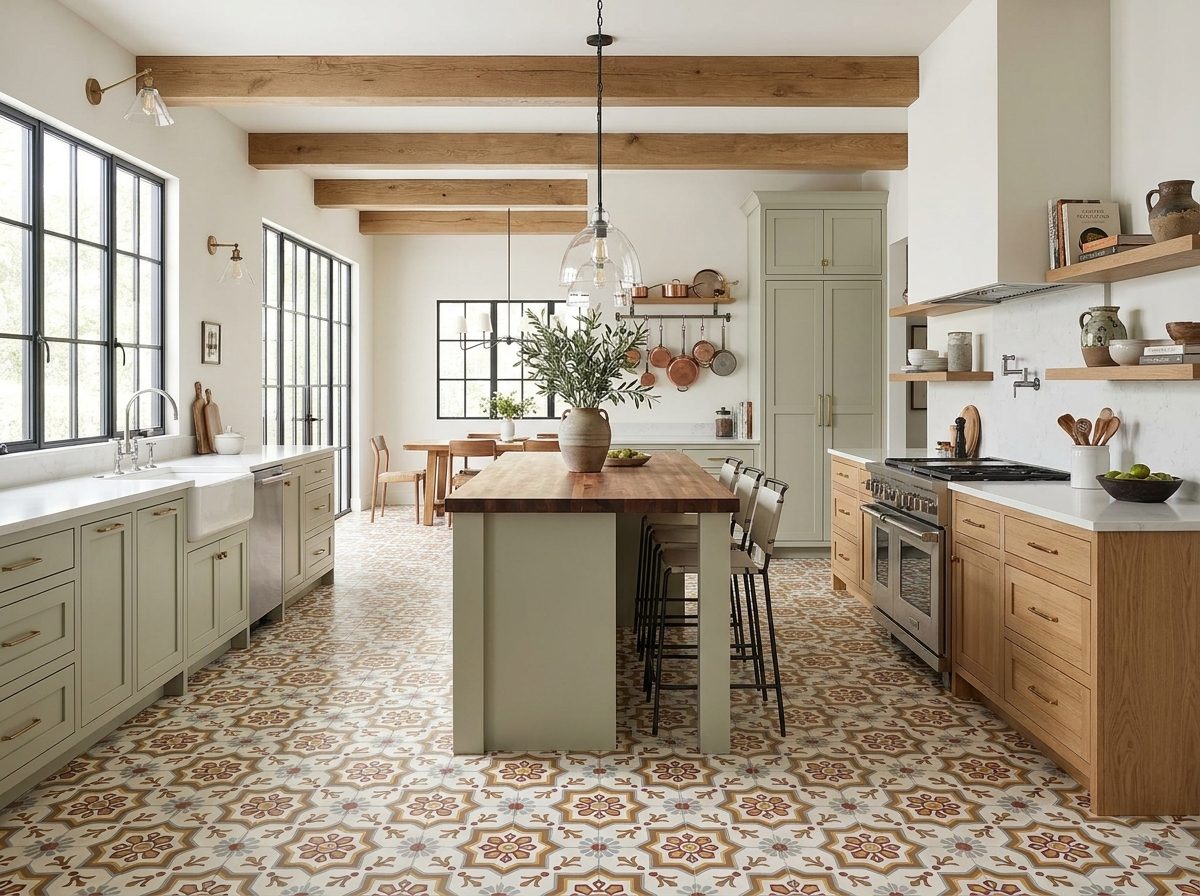
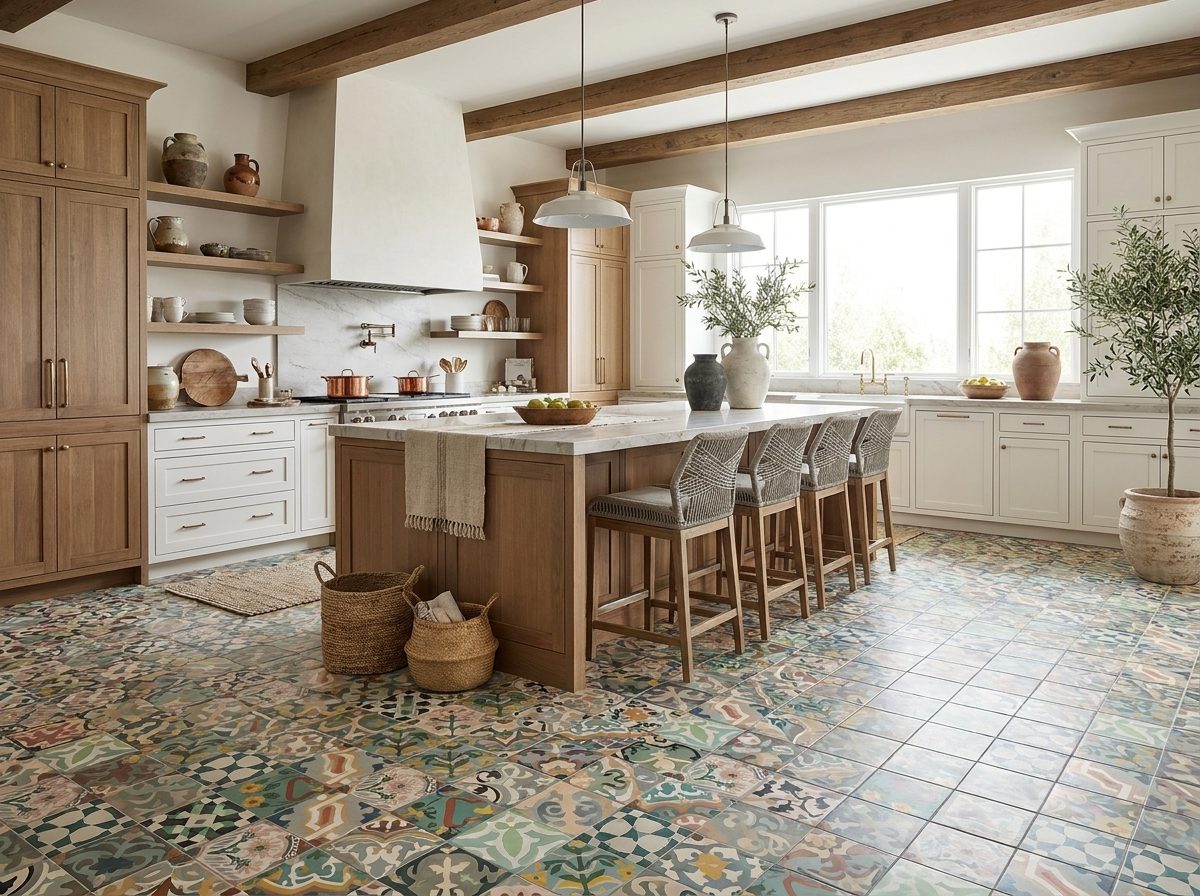
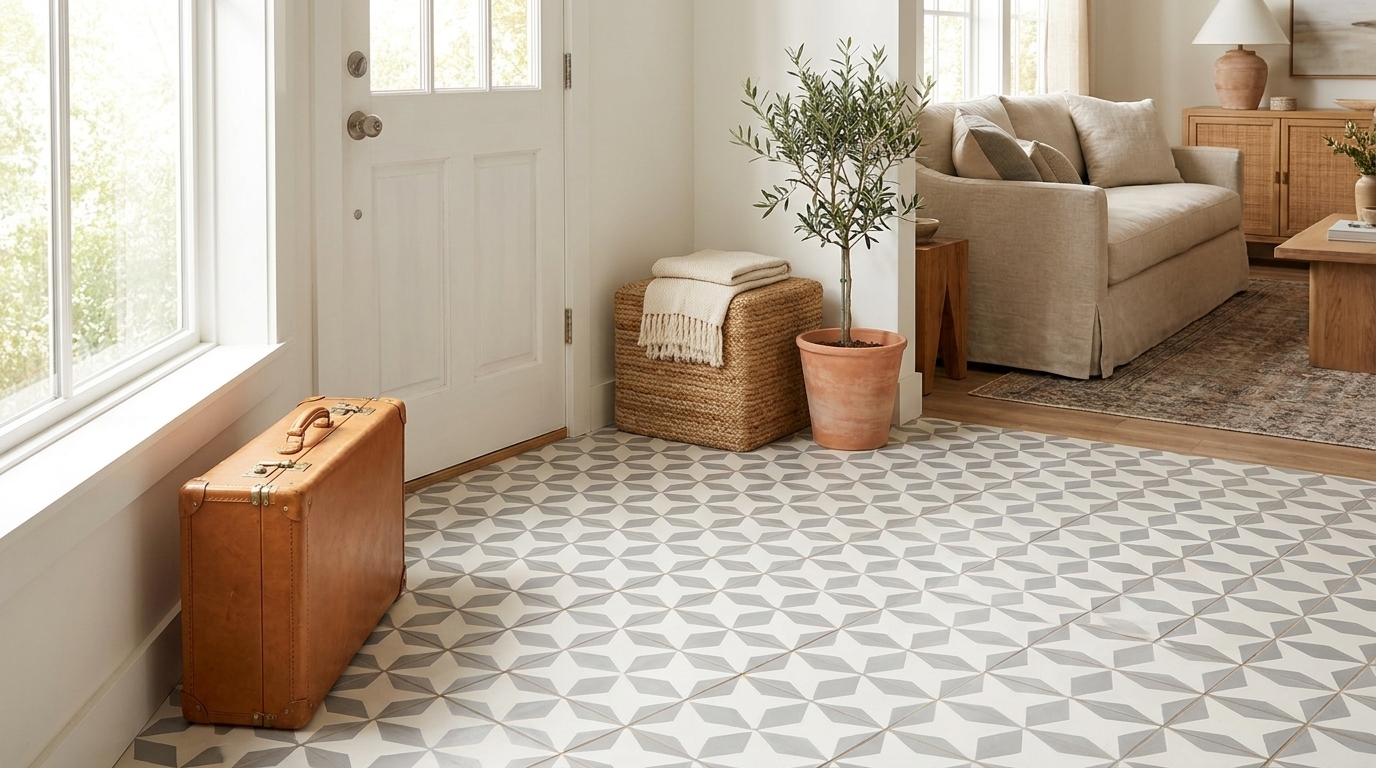
For clients who love character but want a different balance of performance and appearance, handmade cement tile is often the most compelling alternative.
Slate offers geological variation. Cement tile offers designed variation. That's the core difference.
Here's the practical comparison:
| Priority | Slate | Handmade cement tile |
|---|---|---|
| Surface character | Layered, natural, textured | Silky, matte, more controlled |
| Pattern potential | Driven by nature | Driven by design and inlaid motifs |
| Color expression | Earth-led, mineral variation | Can be bold, graphic, or historically patterned |
| Feel underfoot | Hard, stony, sometimes cool | Still firm, but often reads visually softer |
| Maintenance logic | Sealing protects stone and wet-area performance | Sealing protects the cement surface and preserves appearance |
Slate tends to suit projects that want restraint, tonal depth, and a sense of nature. Handmade cement tile suits projects that want pattern, rhythm, heritage detail, or a custom graphic language.
Choose slate when you want nature to author the surface. Choose handmade cement tile when you want the design team to author it.
Neither material is maintenance-free. They ask for different kinds of care and reward different visual priorities.
Other alternatives worth considering
If the client likes the idea of slate but not the obligations, the practical substitutes are usually porcelain, ceramic, polished concrete, engineered wood, or luxury vinyl in secondary settings. Each gives something up and gains something else.
Porcelain often wins on predictability. Engineered wood wins on warmth. Polished concrete wins on monolithic simplicity. But none of them give the exact geological depth that good slate delivers.
That's why the right decision usually comes down to one question: do you want a floor that behaves like a precise product, or a floor that behaves like a natural material?
If your project is leaning away from stone and toward something with more pattern control, heritage character, and custom design potential, Original Mission Tile is worth exploring. Their handmade cement tiles offer a very different but equally design-forward path, especially for architects, interior designers, and homeowners who want statement floors with artisanal depth rather than geological texture.