You're probably at the point where the showroom samples are on the counter, the contractor has asked for a decision, and the question is no longer “what looks good?” It's “what still works five, ten, or twenty years from now without turning into an expensive regret?” That's where tile flooring vs vinyl stops being a style preference and becomes a lifecycle decision about cost, comfort, moisture, maintenance, and how long you want the floor to keep paying you back.
| Cost Factor | Tile Flooring | Vinyl Flooring |
|---|---|---|
| Upfront Price | Higher initial investment, often $7 to $27 per square foot installed | Lower initial investment, often $3.50 to $12 per square foot installed |
| Long-Term Value | Stronger lifecycle value because it can last decades longer | Lower initial cost, but shorter replacement cycle |
| Lifespan | Often 50 to 75+ years when properly installed | Often 15 to 25 years |
| Moisture Use | Excellent in wet areas | Very water-resistant, with rigid-core options described as 100% waterproof |
| Comfort | Harder and cooler underfoot | Warmer and softer underfoot |
| Installation | More complex, more labor-intensive | Faster, simpler, less disruptive |
Choosing Between Tile Flooring and Vinyl for Your Project
A homeowner calls after tearing out old laminate in a kitchen that floods every time a dishwasher leaks. A designer has a hospitality client who wants a floor that reads upscale, stands up to daily cleaning, and won't need to be replaced before the next renovation cycle. In both cases, the same question comes up, but the right answer isn't the same.
The decision starts with use case, not aesthetics. Tile tends to win where permanence, heat resistance, and a premium surface matter most. Vinyl tends to win where speed, lower upfront spend, and a warmer feel matter more, especially in renovation work where downtime is a problem.
Market reality shapes the choice too. In the U.S. installed-flooring market, vinyl held a 32.4% share in 2023, while ceramic tile held 28% (Statista market shares). That doesn't just reflect taste. It affects contractor familiarity, product availability, and pricing pressure across the trade.
Practical rule: if the project needs the floor to survive the longest with the fewest replacements, tile usually belongs on the short list. If the project needs faster installation and lower upfront cost, vinyl often makes more sense.
That market split also explains why vinyl has become the default in many budget-sensitive remodels, while tile remains a major but more specialized segment. Contractors see more vinyl jobs, which keeps install systems familiar and supply easy to source. Tile still holds its place, but buyers usually choose it deliberately, not by default.
A smart choice here is less about picking a “winner” and more about deciding what kind of failure you can live with. Vinyl fails on lifespan first. Tile can fail on cost and install complexity first. The rest of the guide is about making that trade-off with open eyes.
Understanding Tile and Vinyl Flooring Fundamentals

Tile and vinyl are built on different assumptions. One is a mineral-based surface meant to stay in place for a very long time. The other is a manufactured flooring system designed to balance appearance, comfort, and installation speed.
What tile is
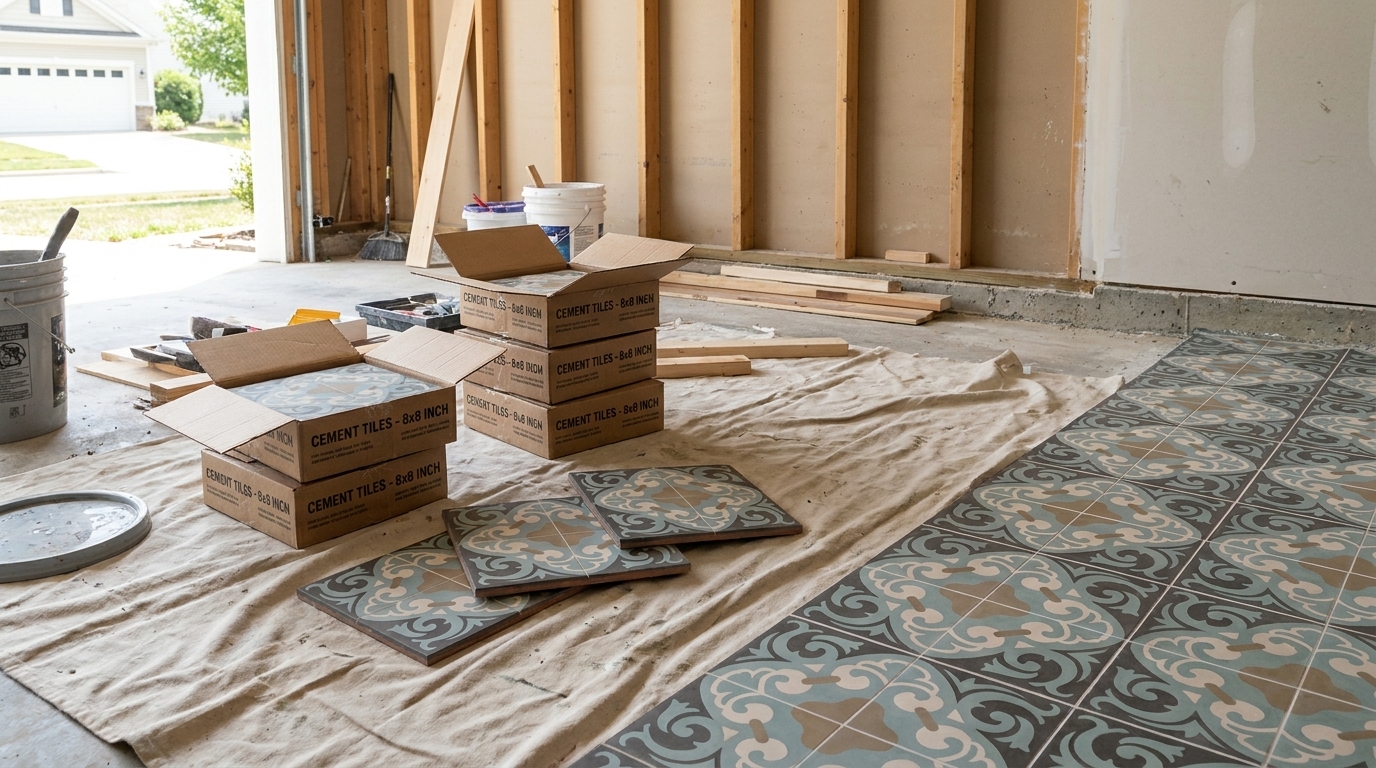
Ceramic and porcelain tile are made from clay and other natural raw materials, then fired or pressed into dense surfaces. That process gives tile its reputation for scratch resistance, heat stability, and long service life. Original Mission Tile's handmade cement tiles follow a different path, using cement, sand, marble dust, and natural mineral pigments in a hydraulic-press process rather than glazing or firing. The result is an inlaid color surface with a matte look that designers often specify for custom floors and feature areas.
For readers comparing product categories across a project, the Growth 4 Trades flooring guide is a useful example of how installers think about sourcing, grading, and supplier reliability before they ever price a job.
What vinyl is
Modern vinyl flooring is a layered synthetic product. Luxury vinyl plank, or LVP, and luxury vinyl tile, or LVT, use a printed design layer under a transparent wear layer. Rigid-core products such as SPC add a dense stone-plastic core for stability. That structure is why vinyl can mimic wood, stone, or tile visuals while staying easier to install and more forgiving underfoot.
Vinyl's appeal comes from how it is built. It is made for quick installation, strong moisture tolerance, and broad visual flexibility. Tile's appeal comes from material permanence, especially when the project needs a floor that stays serviceable for decades.
Tile and vinyl can both work in kitchens, bathrooms, and busy interiors, but they solve different problems. Tile solves longevity. Vinyl solves convenience.
That difference shows up in the field. Tile behaves like a building material, so it rewards careful planning around substrate prep, grout lines, and repair access. Vinyl behaves like a manufactured system, so it is easier to replace in sections and easier to live with during installation. For homeowners, that affects maintenance, indoor air quality considerations, and how the floor feels years after move-in. For designers, it changes how much weight to give sustainability goals, especially when comparing long-lasting mineral products with synthetic ones that may be replaced sooner.
A practical flooring choice starts with that trade-off. If the project needs a floor that can stay in service through heavy use, tile deserves attention. If the project needs faster turnaround, softer footfall, and lower installation disruption, vinyl usually fits better.
Comparing Upfront Costs and Long-Term Value

Most homeowners start with installed price, and that is a reasonable place to begin. Market comparisons place vinyl at roughly $3.50 to $12 per square foot installed and tile at roughly $7 to $27, which is why vinyl often lands 40% to 60% lower upfront. On a 500-square-foot project, that difference can translate into savings of $1,850 to $7,750 (Statista market shares and cost context).
That lower entry cost is a big reason vinyl keeps winning bids. In a remodel budget, less money tied up in flooring can leave room for cabinets, lighting, trim, or appliances. For a homeowner trying to keep a project moving, that budget flexibility can determine whether the work happens now or gets pushed out.
Upfront price is only part of the value equation
A floor's real cost shows up over time. Tile usually costs more to buy and install, but properly installed ceramic or porcelain tile is commonly expected to last 50 to 75+ years, while vinyl is typically rated around 15 to 25 years or sometimes 10 to 20 years in product guides (DG Floors comparison). In practical terms, a tile floor can outlast two or three vinyl replacement cycles.
That gap changes the math. If a floor needs replacement sooner, the owner pays again for demolition, labor, material, disposal, and the disruption that comes with shutting down the space. In a house, that means noise and scheduling headaches. In a commercial or multifamily property, it can mean lost use, vacancy pressure, and more coordination with tenants or operations.
Budget logic: the cheapest floor today is not always the cheapest floor over the life of the building.
For kitchen projects, a practical estimate helps keep the discussion grounded. The budget for kitchen remodel flooring resource is useful when you want to compare the floor against the rest of the renovation instead of treating it as a standalone line item.
Where long-term value shifts
Vinyl makes sense when the ownership horizon is shorter, when disruption has to stay low, or when the space is likely to be remodeled again before the flooring reaches the end of its useful life. Tile starts to pull ahead when the owner wants fewer replacement cycles, higher wear resistance, and a floor that still looks intentional after cabinets, paint, and fixtures change around it.
A close look at tile versus luxury vinyl plank shows how those trade-offs play out in real projects, especially where design expectations and maintenance needs pull in different directions. Tile usually supports a longer service life and a stronger sustainability case because it is replaced less often. Vinyl can still be the better fit where speed, lower initial spend, and easier installation matter more than long service life. The right choice depends on how long the floor needs to stay acceptable, not just how it looks on day one.
| Cost Factor | Tile Flooring | Vinyl Flooring |
|---|---|---|
| Installed price | Higher | Lower |
| Replacement cycle | Fewer replacements over time | More likely to need replacement sooner |
| Repair cost | Higher if tile or grout failure is involved | Lower for small area replacement |
| Downtime | Longer during install and repairs | Shorter and less disruptive |
| Lifecycle value | Strong when longevity matters | Strong when upfront budget matters most |
Evaluating Durability and Lifespan Performance
A floor doesn't earn its keep in the first month. It earns its keep after years of chair legs, dropped pans, pet traffic, standing water, and sunlight.
Lifespan is only part of the durability question
Properly installed ceramic or porcelain tile is often chosen for the way it holds up under years of wear. Vinyl has a shorter service window in most projects, but that does not make it a weak material. The central question is how each floor behaves once daily use starts leaving marks, dents, and maintenance demands behind.
Tile's advantage comes from its mineral body and dense surface. It resists long-term abrasion well, handles heavy use, and stays structurally steady in rooms that get constant traffic. Vinyl's advantage shows up in a different way, because it can be easier to replace in sections and less disruptive to live with during a repair.
Moisture changes the durability picture
Rigid-core SPC vinyl is often described as 100% waterproof, with a limestone-polymer core that does not absorb moisture. That makes it a practical choice for bathrooms, kitchens, basements, and laundry rooms where spills and damp conditions are part of normal use. Tile is also well suited to wet spaces, but the performance conversation shifts toward grout, substrate prep, and installation quality.
Tile can still be the more durable choice in moisture-prone rooms because the material itself stays stable and does not swell. Vinyl offers a different kind of protection, since it can tolerate surface water without the worry of swelling that affects many other flooring types, provided the seams and edges are installed correctly.
Installation matters more than marketing claims. A premium product on a bad subfloor still fails early.
Scratch resistance, impact, and repair methods
Tile generally stands up better to scratches than vinyl. Its hard surface resists most daily abrasion, which is useful in homes with pets, rolling chairs, and frequent foot traffic. The trade-off is impact. A dropped heavy object can crack a tile if the force is concentrated, and repairs usually require removing and replacing the damaged piece, then dealing with grout and color match.
Vinyl is easier to patch in some cases, and a damaged plank or tile can sometimes be swapped out without touching the whole floor. The softer surface, though, is more vulnerable to furniture dents, gouges, and point loads, especially when the wear layer is thin or the underlayment is not doing enough work. That makes vinyl a more forgiving material for quick repairs, but not always the better one for hard-use environments.
For a closer product-by-product comparison, the cement tile vs luxury vinyl plank comparison is useful when the project needs a spec-level decision.
The practical takeaway is straightforward. Tile is the stronger choice for scratch resistance and long-term surface stability. Vinyl makes more sense when water exposure, easier spot repair, and lower disruption during maintenance matter more than absolute hardness. In both cases, the install determines how much of the material's performance you get.
Design Flexibility and Living Comfort Tradeoffs
A floor has to work visually and physically. A beautiful room that feels harsh underfoot still gets rugs added to it. A comfortable room that looks generic often gets remodeled sooner than expected.
Design range looks different in each material
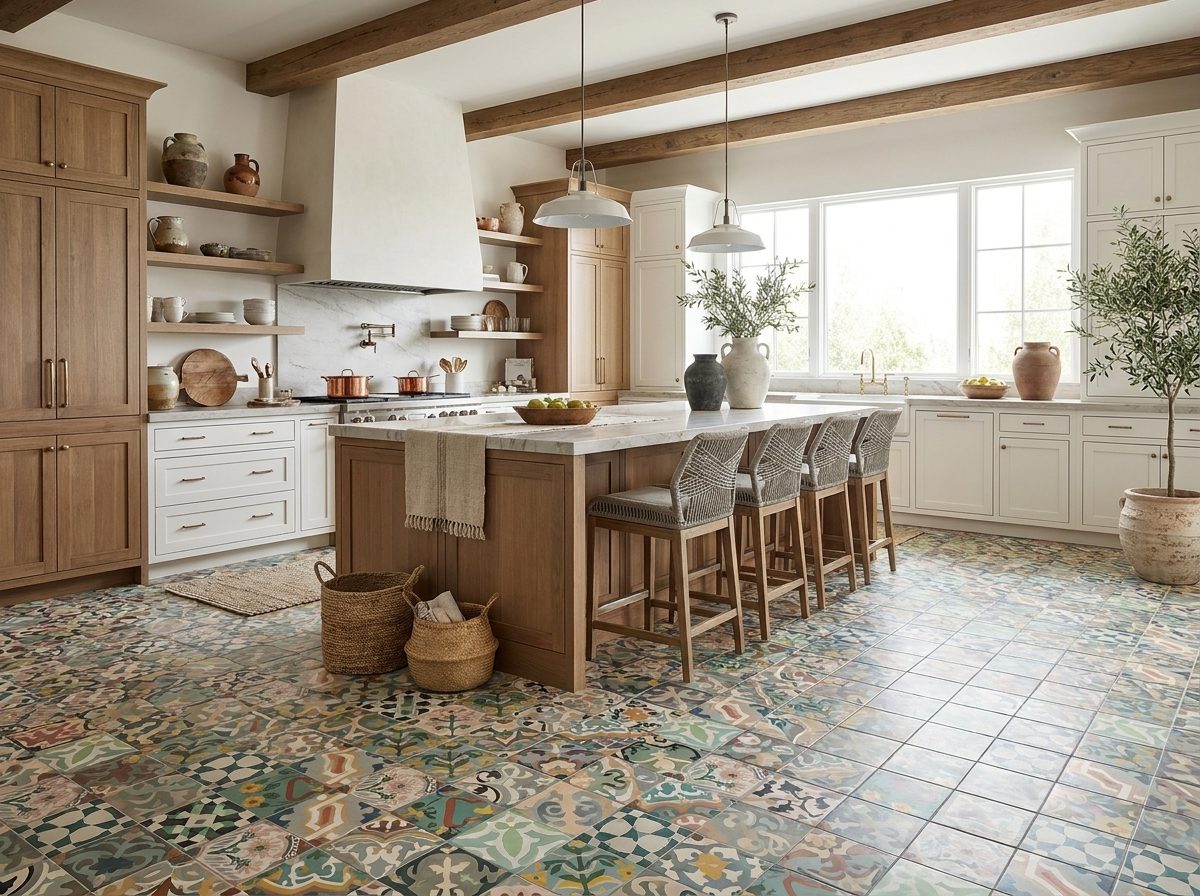
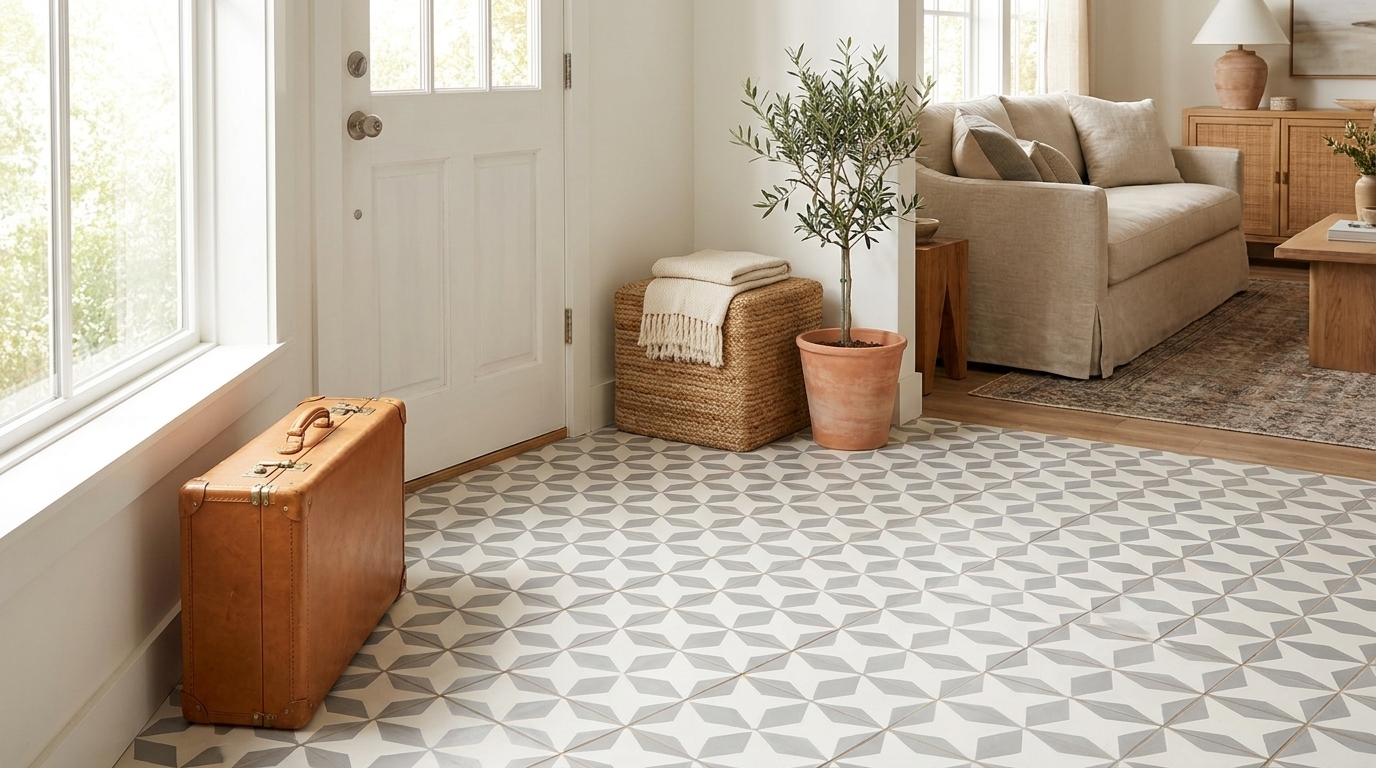
Tile offers a broader sense of permanence and craftsmanship. Cement tiles can be made in heritage formats like hexagon, arabesque, and star-and-cross, and they can carry custom color palettes or patterns that read architectural rather than decorative. That's one reason designers still turn to tile when the floor is supposed to become part of the room's identity.
Vinyl takes a different route. Its value is photographic realism, wood-look visuals, and design consistency across large areas. It can imitate stone or plank floors convincingly from a distance, and it's often chosen when the look should be clean and familiar rather than expressive.
Comfort, acoustics, and day-to-day livability
Vinyl is usually warmer underfoot and quieter in daily use. Its softer surface absorbs some sound and feels easier on bare feet and joints. Tile is harder, cooler, and more reflective acoustically, which some people love in hot climates and others dislike in bedrooms or living rooms.
That comfort difference matters in real homes. Families often accept tile in kitchens and baths, then prefer something softer in adjoining living spaces. In commercial spaces, the sound and feel of the floor can change how long people want to stay.
The indoor air question also belongs here. Tile is mineral-based and chemically inert, while vinyl is polymer-based and can raise concerns about VOCs, especially with cheaper products. For projects where indoor air quality is a priority, the low VOC building materials resource is relevant because it connects flooring decisions to broader material selection.
Heat systems and room conditions
Radiant heat and direct sun can influence performance. Vinyl is often presented as the warmer, more comfortable surface, but it can be a poor fit where extreme heat exposure is constant. Tile, by contrast, handles heat very well and works naturally with floors that need stable thermal performance.
If a room gets strong sun, frequent heat, or you want a floor that feels built into the house rather than laid on top of it, tile usually makes more sense.
The trade-off is not style versus function. It's expression versus ease. Tile brings visual depth, material presence, and long-term confidence. Vinyl brings comfort, acoustic softness, and a more forgiving daily feel. Many projects need both moods in different rooms.
Room by Room Recommendations and Use Cases

The best flooring choice gets clearer when you stop arguing in generalities and start looking at the room itself.
Where tile is usually the stronger choice
Bathrooms are tile territory for most long-term projects. Constant humidity, splashes, and steam put a premium on durable, stable surfaces. Kitchens also lean toward tile when the space sees heavy cooking, dropped cookware, or hot equipment near the floor. Entryways and mudrooms are another strong fit because they collect grit, moisture, and repeated traffic.
Commercial hospitality settings often favor tile in visible, high-wear areas because the floor has to keep looking intentional through deep cleaning and frequent use. Outdoor or semi-exposed applications also tend to point back toward tile, provided the specific product and installation method suit the environment.
For kitchen planning, the best kitchen flooring options page is a relevant reference when you're deciding whether the kitchen should prioritize longevity, moisture tolerance, or easier replacement.
Where vinyl is often the better fit
Vinyl does well in bedrooms, family rooms, basements, and other spaces where comfort and speed matter more than multi-decade lifespan. It's also practical in projects where the owner wants a cleaner install with less mess and less disruption. Basements especially benefit from vinyl's moisture tolerance and installation flexibility.
In rental units and multi-unit renovations, vinyl often makes sense because turnover schedules can be tight and the owner may prefer a floor that is easy to refresh later. That doesn't make it the universal answer, but it does make it the operationally sensible one in a lot of projects.
A simple way to decide room by room
- Choose tile for wet zones: Bathrooms, laundry rooms, and kitchens usually justify tile when the owner wants longevity.
- Choose vinyl for comfort zones: Bedrooms and living areas often benefit from vinyl's warmer, quieter surface.
- Match the floor to traffic: Heavier use and more wear point toward tile. Moderate use and faster turnaround point toward vinyl.
- Match the floor to the timeline: Long hold periods favor tile. Shorter ownership windows often favor vinyl.
The right room-by-room mix is often not an either-or choice. Many projects use tile where performance matters most and vinyl where comfort and budget matter more. That hybrid strategy is usually more realistic than forcing one material to solve every problem.
Making Your Final Flooring Decision

The cleanest way to decide is to rank your priorities before you look at samples. If longevity, resale confidence, heat resistance, and premium feel matter most, tile is usually the stronger investment. If lower upfront cost, faster installation, and a softer underfoot feel matter most, vinyl often makes the better practical choice.
The biggest mistake is choosing from the showroom alone. A floor has to survive the room it lives in, not just the photo on the display board. That means thinking about moisture, sun, traffic, maintenance, and how long you plan to keep the space in its current form.
If the project is a forever-home kitchen, a primary bath, or a commercial space that needs a long replacement cycle, tile deserves serious weight. If the project is a budget-conscious remodel, a quick turnaround, or a comfort-first living area, vinyl is hard to ignore.
The most useful next step is to compare real samples in the actual room, under the actual light, next to the actual cabinetry or paint. Then bring in an installer who understands substrate prep, grout, transitions, and moisture conditions. The material matters, but the installation decides whether the promise holds.
Original Mission Tile offers handmade cement tile, custom patterns, and installation guidance that fit projects where tile performance and design flexibility both matter. If you're weighing tile flooring vs vinyl for a kitchen, bath, or hospitality space, visit Original Mission Tile to review tile options, project resources, and trade support before you lock in your flooring plan.