Your laundry room and mudroom take more abuse than almost any other room in the house. Muck boots, wet dog paws, dropped detergent bottles, and dragged-in gravel all land on that floor first. A cement tile laundry room or mudroom can handle all of it, but only if you choose the right pattern, color, and finish before you order a single box. Get it wrong and you’ll spend years staring at every scuff. Get it right, and the floor becomes the hardest-working, best-looking surface in the house.
Cement tile is not glazed ceramic. It’s pigment mixed into a dense cement layer that runs through the top few millimeters of the tile, so scratches and wear don’t expose a different color underneath. That’s exactly why cement tile has survived a century of foot traffic in homes across Mexico and the American Southwest. Below, we’ll walk through the color choices, sealing steps, layout tricks, and order math that make a mudroom floor actually work for mud.
Why Cement Tile Works for Mud, Grit, and Wet Boots
Mudrooms need a floor that can take direct impact. A dropped cast-iron skillet, a boot heel with a rock stuck in the tread, a dragged dog crate: cement tile shrugs off all of it because the color goes all the way through the wear layer. Compare that to a printed vinyl plank or a thin ceramic glaze, where a deep scratch reveals a different color underneath.
Grit is the other enemy. Sand and gravel act like sandpaper under shoes, and over years that grinds down a soft floor. Cement tile is dense and cured for weeks before it ships, which gives it real resistance to that kind of abrasive wear. It won’t scratch-proof itself forever, but it hides the wear it does get, because the pigment doesn’t stop at the surface.
Cement tile does have one real tradeoff: it’s porous, more like natural stone than glazed ceramic. That means sealing matters more here than in almost any other room. We’ll cover exactly how to do that later, because skipping this step is the single most common mistake homeowners make.
Choosing Colors and Patterns That Hide Mud and Wear

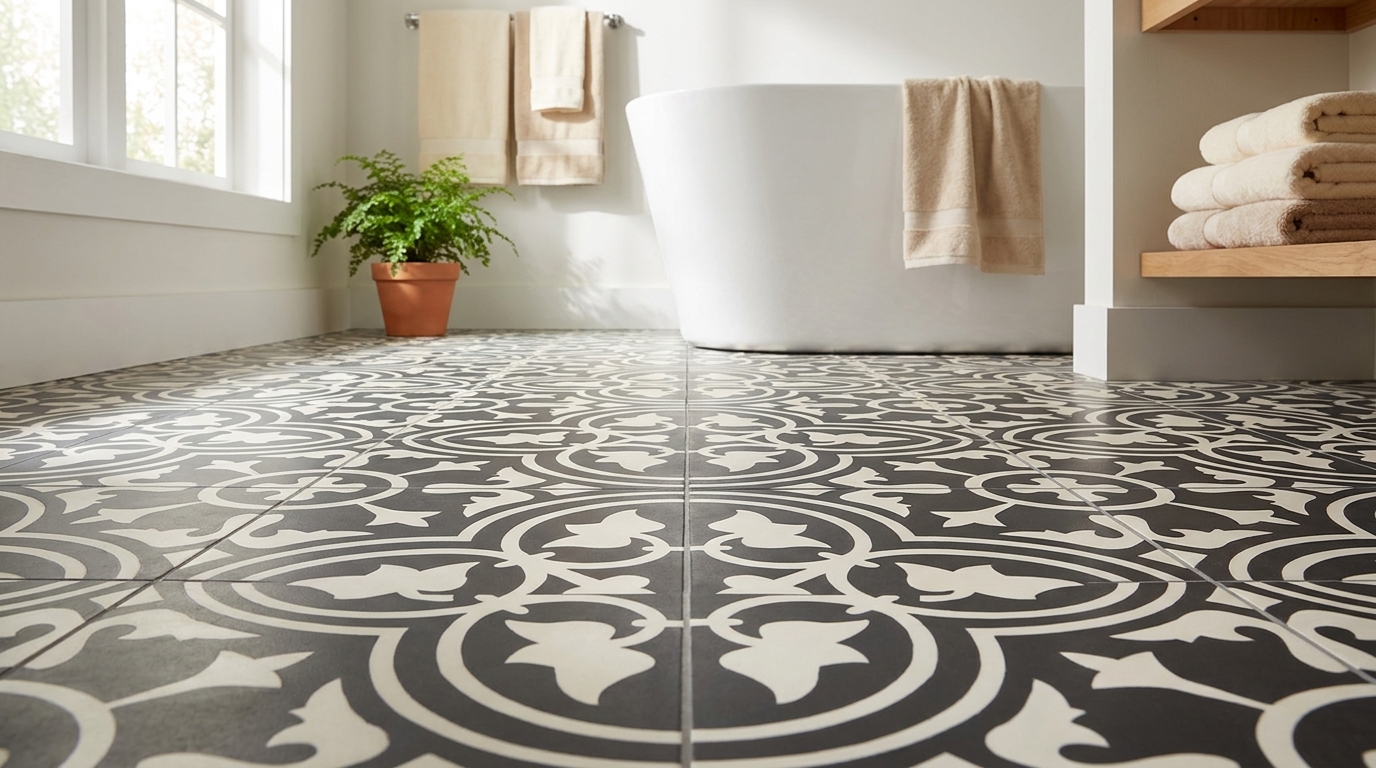
Color choice matters more in a mudroom than anywhere else in the house. White or pale gray floors look great in photos, but they show every muddy paw print by dinnertime. Instead, lean dark and lean busy.
Charcoal, black, and deep navy hide dust, dirt, and salt stains far better than light tones. Liverpool Black 01 and Zebra Charcoal 03 both use bold, high-contrast patterns that camouflage the exact kind of scuffing a mudroom generates. A busy geometric print does the same visual trick a patterned rug does in a living room: it distracts the eye from small marks instead of highlighting them.
If your laundry room is a smaller, enclosed space rather than a wide-open mud entry, consider a smaller-format tile for texture. S-108 Navy 4×4 reads almost like a woven mat once it’s grouted, and its deep navy tone performs the same hiding trick as charcoal or black. For a run of tile along a bench or boot bay, the narrow proportions of Brick S-324 Charcoal 4×8 create a subtle brick-look border that reads intentional, not accidental.
One tradeoff worth knowing: very dark solid colors, with no pattern at all, actually show dust and lint more than a print does, because there’s nothing to break up the eye. That’s why most mudroom floors that age well combine a dark base color with some kind of repeating motif.
Sealing and Prepping Cement Tile for a Mudroom Floor
Because cement tile is porous, sealing is not optional in a room that sees standing water, muddy runoff, and detergent drips. Plan on a penetrating sealer applied before grouting and again after grouting, then a topical or enhancing sealer once the floor is fully cured.
Here’s a practical sealing sequence for a mudroom or laundry floor:
- Pre-seal the tile before grout goes down, so grout haze and pigment don’t stain the porous surface.
- Grout with a sanded or unsanded grout suited to the joint width, then wipe promptly, because cement tile is far less forgiving of grout haze than ceramic.
- Post-seal after grout cures, typically with two coats, letting each coat dry fully before the next.
- Re-seal every 1 to 3 years in a high-traffic mudroom, more often near an exterior door where water and salt track in constantly.
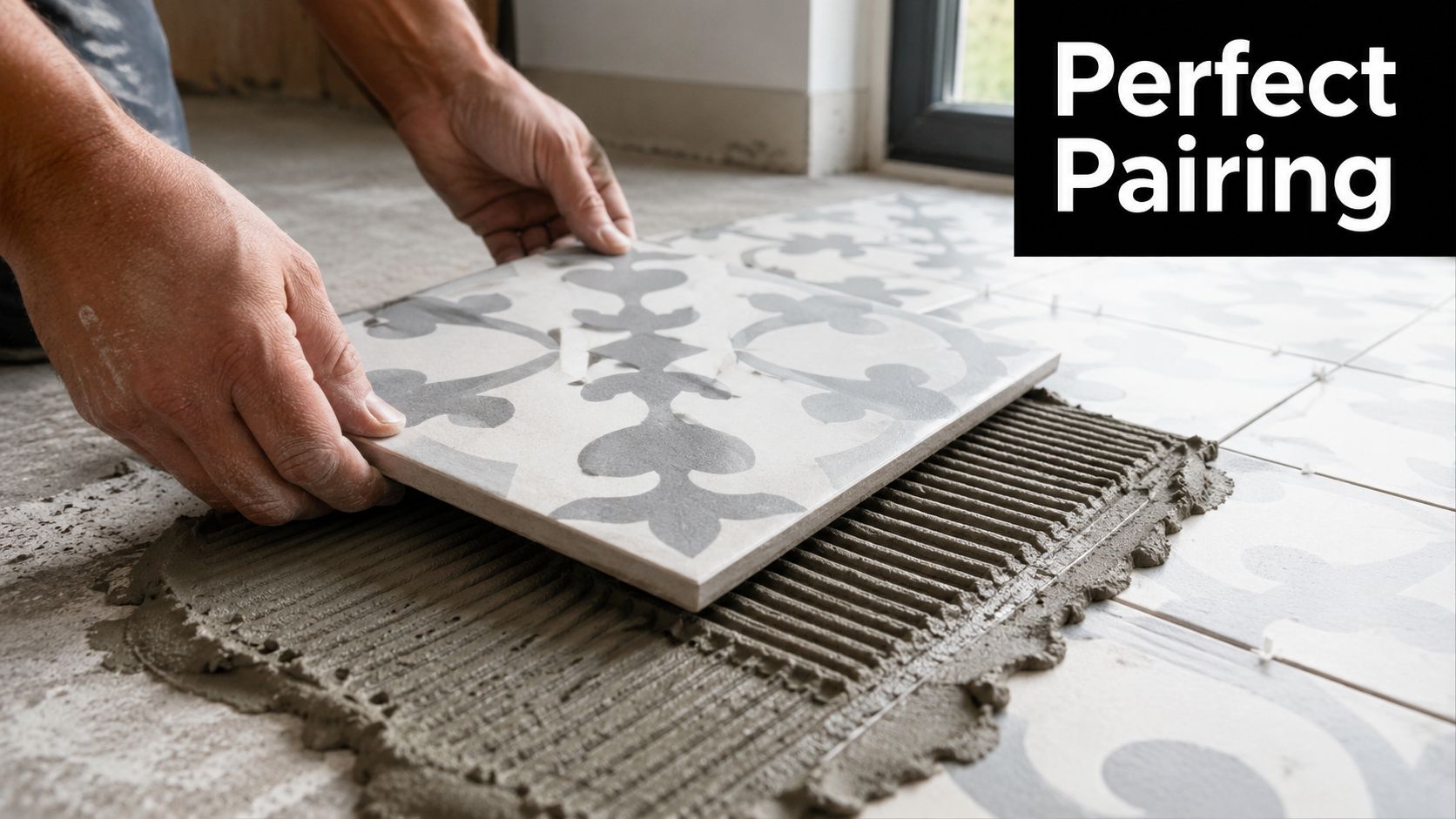
Full details on joint width, thinset, and cure times are in our installation guidelines, and it’s worth reading them before your installer starts, not after. A sealed cement tile floor sheds water and detergent spills instead of absorbing them, which is exactly what you need under a washing machine that occasionally overflows.
Layout and Installation Tips for High-Traffic Entry Floors

Layout decisions made now save headaches later. First, think about transitions. A mudroom floor usually meets carpet, hardwood, or an exterior threshold, and that seam is where dirt and water pool if it’s not planned correctly. Set the cement tile slightly lower than adjacent flooring, or use a proper transition strip, so runoff doesn’t seep under neighboring materials.
Second, consider traffic flow. If boots come off at a bench, that specific zone takes the heaviest wear and the most grit. Some designers use a contrasting tile, like FS-324 Charcoal 8×8, to visually mark that boot-removal zone while keeping a lighter pattern in the rest of the room. That way the floor tells you where to stand, and the heaviest-wear tile is also the one best suited to hide it.
Third, don’t skip the mat. Even the toughest cement tile floor benefits from a heavy-duty scraper mat at the exterior door. It catches the bulk of the gravel and mud before it ever touches the tile, extending the life of your sealer and cutting down on how often you need to mop.
Finally, check your subfloor. Cement tile needs a flat, stable substrate, and a mudroom near an exterior wall sometimes has moisture or leveling issues that a living room floor doesn’t. Address that before installation, not after tile is already down.
Sizing Your Order: Boxes, Overage, and Samples
Getting the math right avoids a second shipment mid-project. A standard 8×8 box covers 5.17 square feet and holds 12 tiles. Measure your mudroom or laundry room’s square footage, then add 15% for cuts, breakage, and future repairs. That overage matters even more in a mudroom, because this is the room most likely to need a tile replaced someday after a dropped tool or a shifted appliance.
Before you commit to a full order, get a physical sample. Cement tile color and texture can shift slightly under different lighting, and a laundry room with a small window looks nothing like a showroom under bright lights. Samples run $20 for the first tile and $10 for each additional one, with free shipping, and you can order them from any in-stock product page.
If none of the 300-plus in-stock patterns fit your exact vision, custom made cement tiles are an option too, made to order in roughly 4 to 6 weeks. That’s a longer wait than the days-long turnaround on in-stock patterns, so plan your renovation timeline accordingly if you go custom.
Living with Cement Tile: Daily and Seasonal Maintenance
Once the floor is sealed, day-to-day care is simple. Sweep or vacuum regularly to remove grit before it gets ground in underfoot, and mop with a pH-neutral cleaner instead of anything acidic like vinegar, which can etch the surface over time. Standing water should be wiped up promptly, especially near the washer, because prolonged moisture is the one thing that stresses even a well-sealed cement floor.
Salt is a particular concern in winter climates. If your mudroom is the first stop after a snowy driveway, rinse the floor more frequently during that season to keep salt from sitting on the sealer for days at a time. A quick mop after each storm takes less effort than restoring a dulled finish in spring.
For deeper cleaning schedules, product recommendations, and instructions on refreshing the sealer, our full maintenance and cleaning guide covers the specifics room by room. It’s worth bookmarking, because a mudroom floor typically needs attention more often than tile anywhere else in the house.
If you want to see how other homeowners have handled pattern, color, and layout in real mudrooms and laundry rooms, browse our installation gallery for ideas before you finalize your own plan. And if you’re still narrowing down a palette, you can also browse by color to compare dark tones side by side.
Frequently Asked Questions
Is cement tile too porous for a mudroom?
No, but it does need proper sealing. Because cement tile is porous, a penetrating sealer before and after grouting, plus periodic resealing, is what makes it hold up to standing water, mud, and detergent spills. Skip that step and you’ll see staining much sooner.
What’s the best color for hiding mud and dirt on a cement tile floor?
Charcoal, black, and navy tones hide dirt best, especially when paired with a patterned design instead of a solid color. A busy print, like the ones on Liverpool Black 01 or Zebra Charcoal 03, breaks up the eye so small scuffs and dust don’t stand out the way they would on a plain, pale floor.
How many boxes of cement tile do I need for a mudroom?
Measure the square footage, then divide by 5.17 to get the number of boxes for standard 8×8 tile, since each box covers 5.17 square feet across 12 tiles. Add 15% on top of that for cuts, waste, and future repairs, which matters even more in a high-traffic entry room.
Can I install cement tile myself, or do I need a professional?
Cement tile can be installed by an experienced DIYer, but the sealing steps and grout handling are less forgiving than with ceramic. If you’re not comfortable pre-sealing before grout or working quickly to avoid haze, hiring a tile setter familiar with cement tile is the safer route. Either way, review our installation guidelines in full before starting, and reach out through our contact page if you have project-specific questions.
See the tile in person before you commit
Photos only tell you half the story. Colors, texture and the handmade character of cement tile are best judged in your own light. Order a sample of any in-stock pattern for $20 (additional samples $10, free shipping) — or tell us about your project and we’ll help you narrow it down.
Browse in-stock cement tiles →
Talk to us about your project →