Interior Design Trends 2026
Interior design in 2026 is moving in two directions at once—and that’s exactly what makes it exciting.
On one side, we’re seeing a clear demand for warmth, personality, and “real” materials that age beautifully. On the other, clients still want spaces that feel calm, functional, and easy to live with (or operate, in commercial projects). The result is a new sweet spot: expressive design that’s grounded—spaces that look curated, not chaotic.
Here’s the open loop many designers and homeowners are wrestling with right now: How do you follow 2026’s Interior Design Trends without building something that looks dated in two years? The answer, more often than not, comes down to choosing architectural finishes that carry long-term value—especially floors and walls. That’s why cement tiles and encaustic cement tiles are having such a strong moment: they deliver pattern, texture, and authenticity with timeless appeal.
In this guide, we’ll break down the most important Interior Design Trends shaping 2026—from color and material choices to hospitality-driven layouts—then show how to apply those trends room-by-room using handmade cement tiles, patterned floor tiles, and custom designs.

The 8 Biggest Interior Design Trends of 2026 (and Why Tiles Matter More Than Ever)
1) Personality-Driven Pattern Is Back (But More Strategic)
2026 is embracing bold pattern again—stripes, strong geometry, and statement surfaces—especially in spaces where mood matters (entries, powder rooms, bars, boutique hospitality). Mainstream home publications are calling out the return of graphic elements like stripes and playful forms.
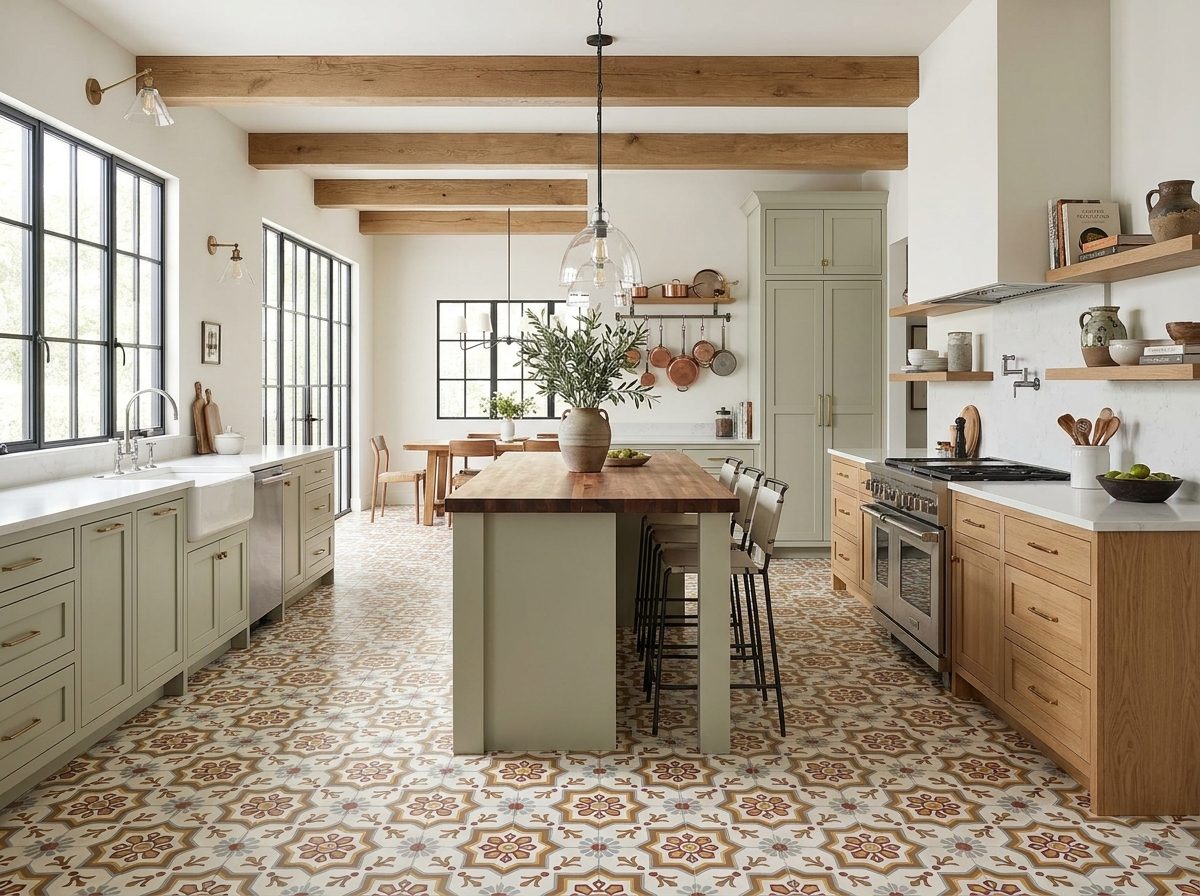
How tile fits: Patterned surfaces are easiest to “get right” when they’re architectural, not just decorative. Patterned cement tiles make pattern feel built into the home, not added after the fact—especially in entryways, kitchen floors, and feature walls.
See Trend Tiles: Cement Tiles In Stock
2) Curves, Soft Geometry, and “Quiet Sculptural” Details
Rounded forms—arches, niches, curved furniture—continue into 2026 as a response to hard minimalism. You’ll see this in lighting, furniture, and decorative shapes.
How tile fits: Pair soft architecture with controlled geometry underfoot. A classic move is a “tile rug” layout: a framed pattern that anchors curved sofas or rounded dining arrangements without overwhelming the space.
3) Material Honesty: Finishes That Patina Well
Hospitality and high-end residential design are leaning into materials that look better with time—honed stone, natural pigments, surfaces that can be maintained and renewed rather than replaced.
How tile fits: Handmade cement tiles naturally support this “material honesty” trend because they have depth and character. They’re not trying to look perfect; they’re trying to look authentic.
4) Earthy Warmth + “Braver Color”
Color in 2026 is moving away from lifeless neutrals toward warmer earth tones and expressive hues—umbers, ochres, greens, blues, and richer reds.
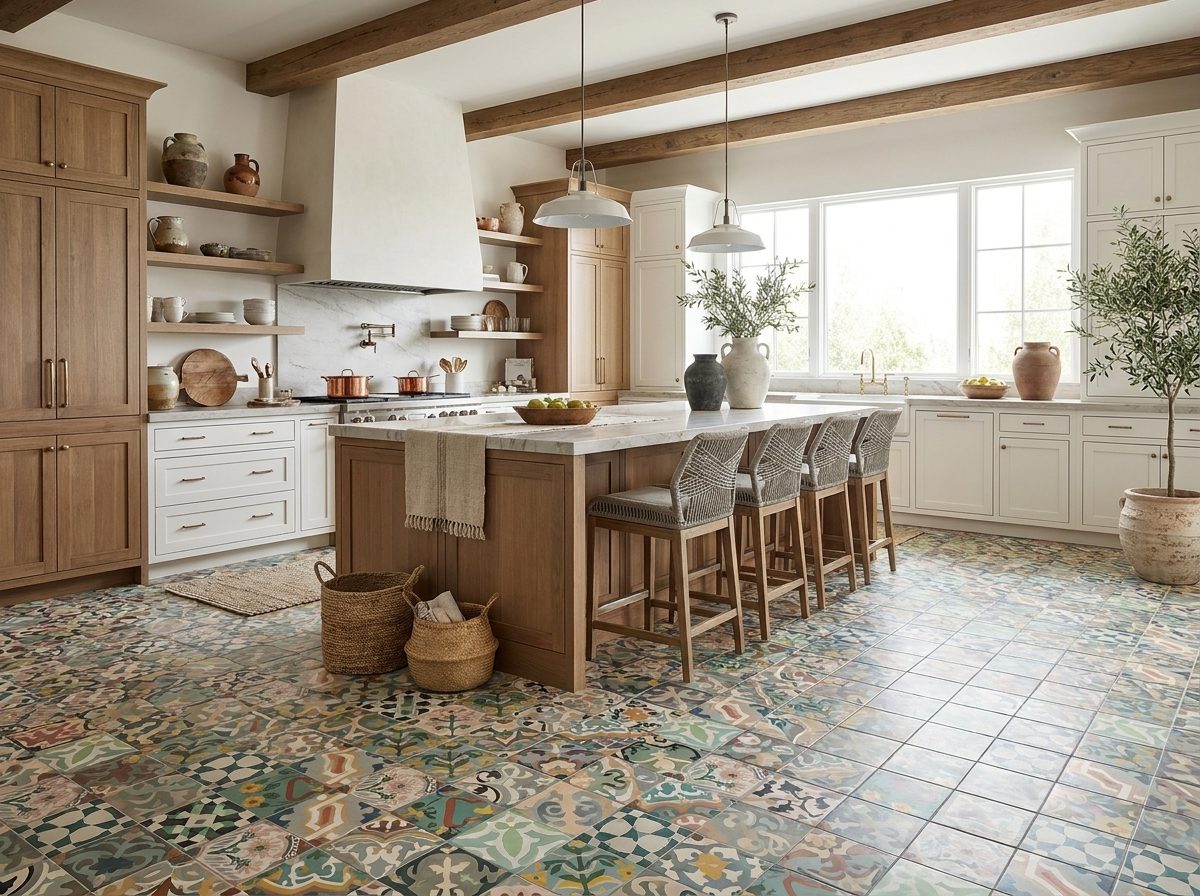
How tile fits: Patterned floors are one of the easiest ways to introduce richer color without painting entire rooms. Use the floor as your color anchor, then keep walls and millwork calmer.
To build palettes with control, start here: Cement Tile Color Palette
5) Terracotta and Terrazzo Are Still Strong—But More Refined
Terracotta warmth and terrazzo texture continue to show up in 2026, often paired with plaster-like walls and tactile surfaces.
How tile fits: Cement tiles can bridge both worlds:
- choose terracotta-adjacent tones for Mediterranean/Spanish-style warmth
- use clean geometry to pair with terrazzo tile in adjacent zones (like kitchens or lobbies)
6) Indoor-Outdoor Living as a Design Standard
In warm climates and modern builds, patios and courtyards aren’t bonus space anymore—they’re core space. Designers are treating outdoor areas with the same material seriousness as interiors (lighting, surfaces, zoning).
How tile fits: Outdoor patio tiles in patterned cement can create continuity from kitchen → patio → courtyard. It’s one of the most “expensive-looking” moves you can make when done correctly.
Browse options here: Cement Tiles In Stock
7) Experience-Driven Hospitality Design Influencing Homes
Hotels and restaurants are prioritizing immersive, memorable environments, and that mentality is spilling into residential design: layered texture, sensory materials, and “moments” that photograph well.
How tile fits: The quickest way to create a “boutique” moment in a home is through a statement tile application:
- entry tile rug
- powder room floor + vanity wall pairing
- kitchen backsplash focal zone
- patio feature floor for entertaining
8) Customization and Brand-Specific Design (Even in Residential)
Custom is no longer reserved for luxury-only budgets. In hospitality, customization is directly tied to differentiation and brand identity.
How tile fits: Custom patterns, custom colorways, and even custom logo tiles can turn surfaces into a signature. This matters for boutique hotels, restaurants, and multi-location brands—but also for homeowners who want “one of one.”
Start here: Custom Tiles and visualize concepts in the Design Studio

Benefits of Cement Tiles in 2026 Interiors
If you want one material that aligns with multiple 2026 trends at once—pattern, authenticity, warmth, and customization—cement tile is it.
Durability
With correct installation and sealing, cement tiles are a proven option in high-traffic areas: entries, kitchens, hallways, and many hospitality settings.
Handmade quality
The subtle variation of handmade cement tiles adds depth that flat, printed surfaces can’t replicate—especially under warm lighting.
Sustainability and long life
Design is shifting toward materials that last and can be maintained. Cement tile supports that long-life mindset when care is planned correctly.
Style versatility
Cement tiles can deliver:
- Moroccan tiles energy (geometry, rhythm)
- Mediterranean tiles softness (sun-washed palettes)
- Spanish-style tiles warmth (heritage motifs)
- modern black-and-white minimalism
- vintage “tile rug” layouts
- contemporary tonal patterning
Order Samples: Start with In-Stock Cement Tiles
Applications by Room: How to Use 2026 Trends with Cement Tiles
Bathrooms
2026 bathrooms lean tactile and sensory—honed finishes, texture, and warmth.
Use bathroom tiles to create boutique energy:
- patterned floor + calm wall tile
- vanity wall feature
- niche accents (especially in warm neutrals and greens)
Kitchens
Kitchens in 2026 are about warmth + personality—less sterile, more lived-in. Use:
- patterned cement tile floors with a calmer perimeter
- kitchen backsplash tiles behind a range or coffee zone for a “signature moment”
Showers
For shower wall tiles, cement tile can be used in design-forward projects when waterproofing, sealing, and maintenance are planned properly. Align installer approach with the Installation Guidelines and set care expectations with Cement Tile Maintenance.
Entryways
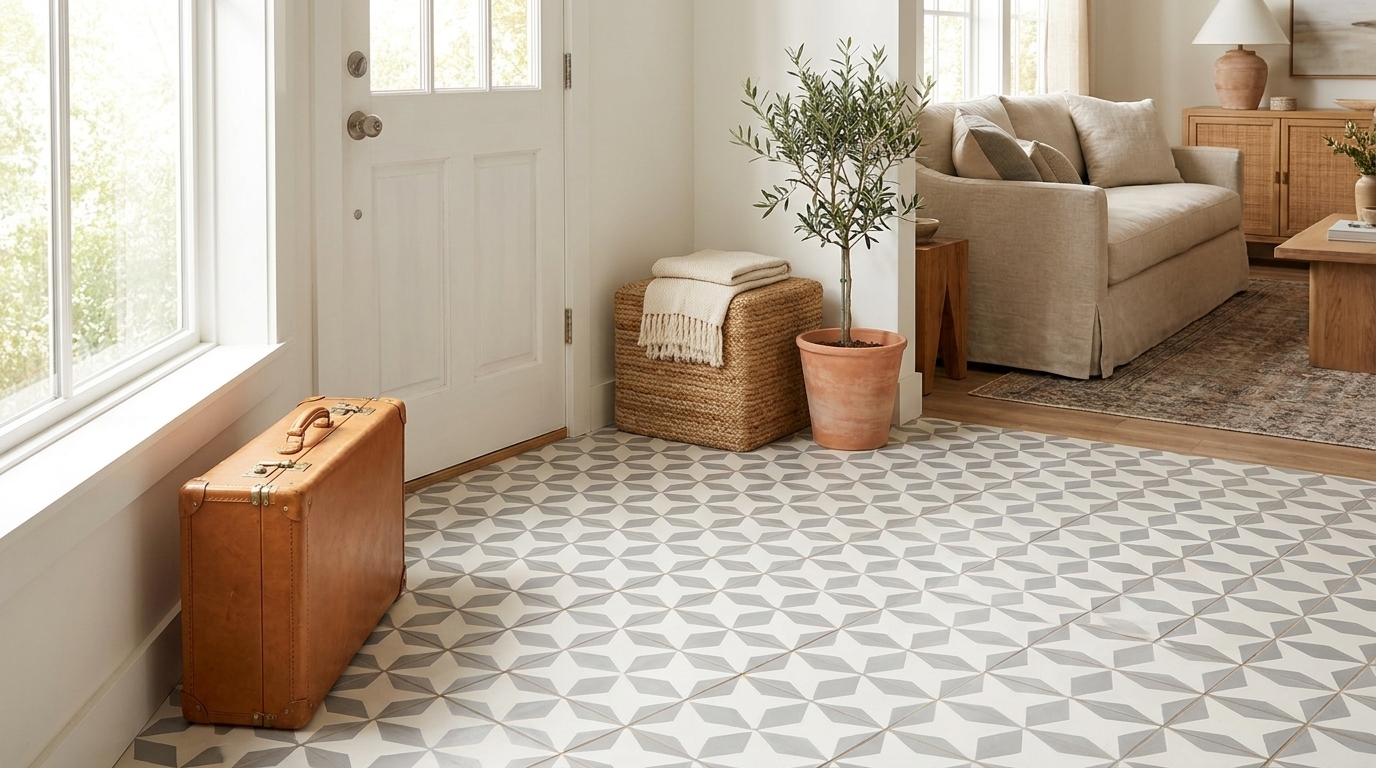
A patterned entry is one of the most timeless European-influenced moves (and it aligns perfectly with 2026’s pattern comeback). Use a framed “tile rug” layout with a border so the space reads intentional.
Patios
Bring the interior outdoors with outdoor patio tiles that echo your interior palette. Mid-tone patterns hide outdoor dust better than high-contrast whites. For color planning, use the Cement Tile Color Palette.
Commercial spaces
For commercial floor tiles, 2026 trends prioritize experience and durability:
- restaurant tile design that defines zones (bar vs dining)
- hotel lobby tiles that create first-impression identity and photo moments
Talk to a Tile Specialist: Contact Us

Installation & Maintenance: How to Make Trend-Forward Tile Look Good Long-Term
Cement tile succeeds when it’s treated as its own material—not as “just another tile.”
Sealing and installation fundamentals
Use the brand’s Cement Tile Installation Guidelines to align on:
- proper substrate prep
- blending tiles from multiple boxes (prevents patchiness)
- sealing steps before/after grout
- cure time and cleaning protocols
Cleaning and ongoing care
Most cement tile care plans favor:
- grit control (sweep/vacuum)
- pH-neutral cleaners
- quick spill cleanup in kitchens and commercial spaces
Set expectations early using Cement Tile Maintenance
Mistakes to Avoid When Following 2026 Interior Design Trends
- Over-trending: using too many “hot” elements at once (pattern + bold color + maximal decor). Choose one hero moment per zone.
- Wrong scale: small patterns in huge rooms can feel busy; oversized patterns can overwhelm small spaces. Sample and view from 10–20 feet away.
- Ignoring variation: handmade material variation is normal—blend tiles during installation.
- Sealing errors: skipping pre-seal, inconsistent application, or using harsh cleaners that degrade sealers.
- No layout plan: borders, thresholds, and transitions are what make patterned floors look premium.
- Treating cement like ceramic: cement tile has its own best practices—follow the Installation Guidelines.

FAQs: Interior Design Trends 2026
1) What are the biggest Interior Design Trends in 2026?
Key trends include a return to pattern, warmer and braver color palettes, tactile materials that patina well, refined terracotta/terrazzo looks, indoor-outdoor living, and experience-driven spaces influenced by hospitality.
2) Are patterned floors in style in 2026?
Yes. Pattern is returning in a more strategic way—used as an architectural “moment” in entries, bathrooms, kitchens, and hospitality spaces.
3) What tile styles are trending for 2026?
Design media and tile-focused sources highlight texture-forward surfaces, playful patterns, plaster-like looks, and refreshed classic patterns like checkerboards and handcrafted looks.
4) Are cement tiles still popular in 2026?
Yes—especially for projects that want authenticity, handcrafted character, and customization. Cement tiles align with the broader trend toward material honesty and patina-friendly surfaces.
5) Cement tile vs ceramic tile—what should I choose?
In the cement tile vs ceramic tile comparison, cement often wins for artisanal depth and customization, while ceramic/porcelain often wins for lower absorption and simplified maintenance in some zones. Many projects use both strategically. Learn more: Cement Tiles vs Ceramic Tiles
6) Can cement tiles be used in showers?
Cement can be used as shower wall tiles in many design-forward projects when waterproofing, sealing, and maintenance are planned correctly. Start with the Installation Guidelines and Maintenance Guide.
7) What’s trending for restaurant and hotel interiors in 2026?
Hospitality design in 2026 emphasizes immersive guest experiences, customization, and durable materials that still feel residential and warm.
8) How do I create a custom tile look that matches 2026 trends?
Choose a style direction (Mediterranean, Moroccan, Spanish-style, modern), build a palette, and design a signature pattern for one hero zone. Start with Custom Tiles and visualize options in the Design Studio.