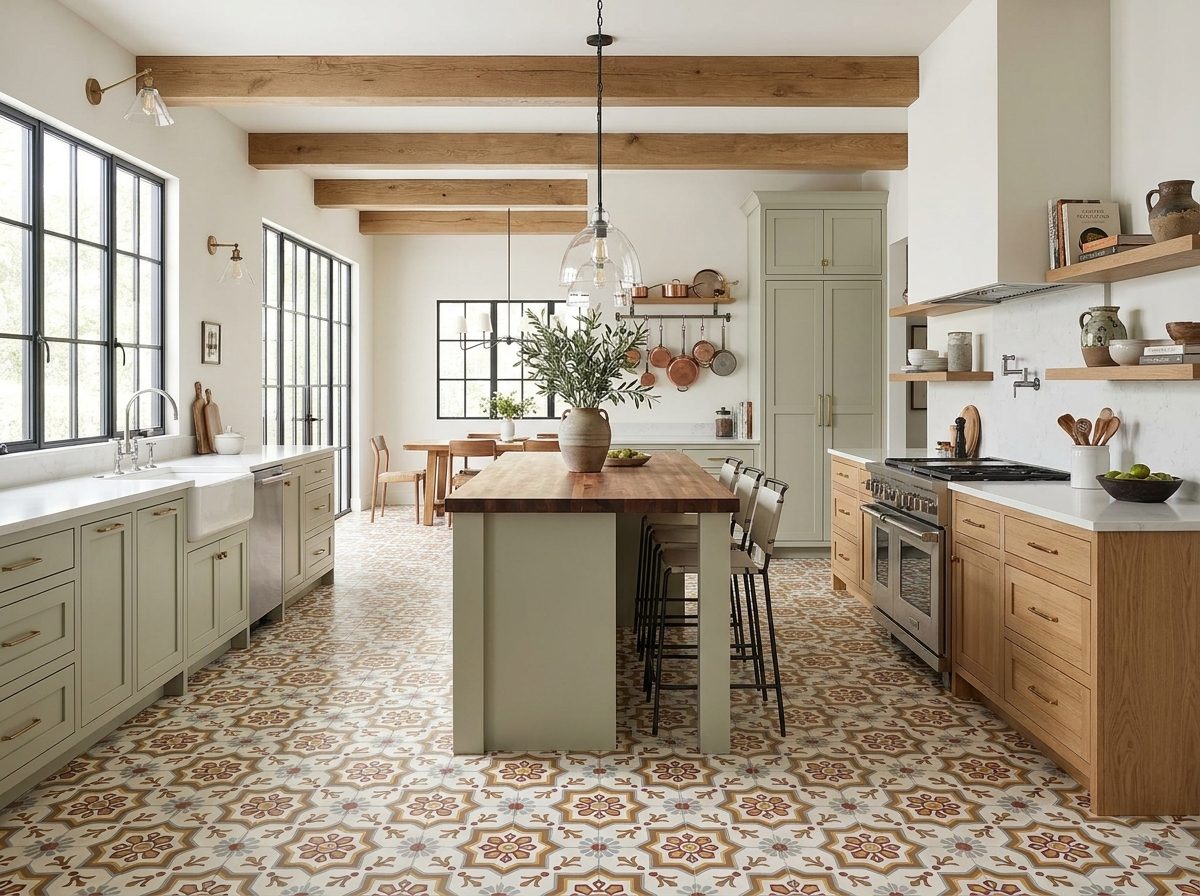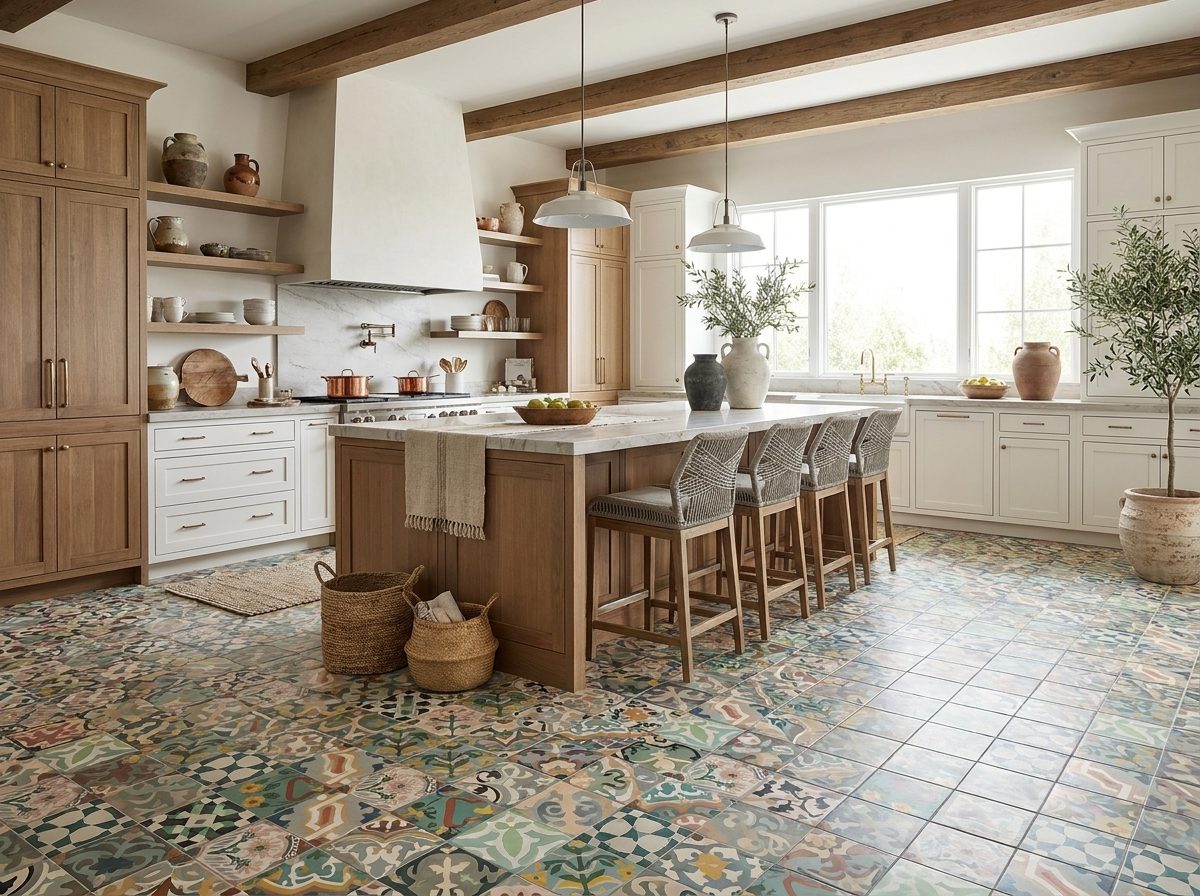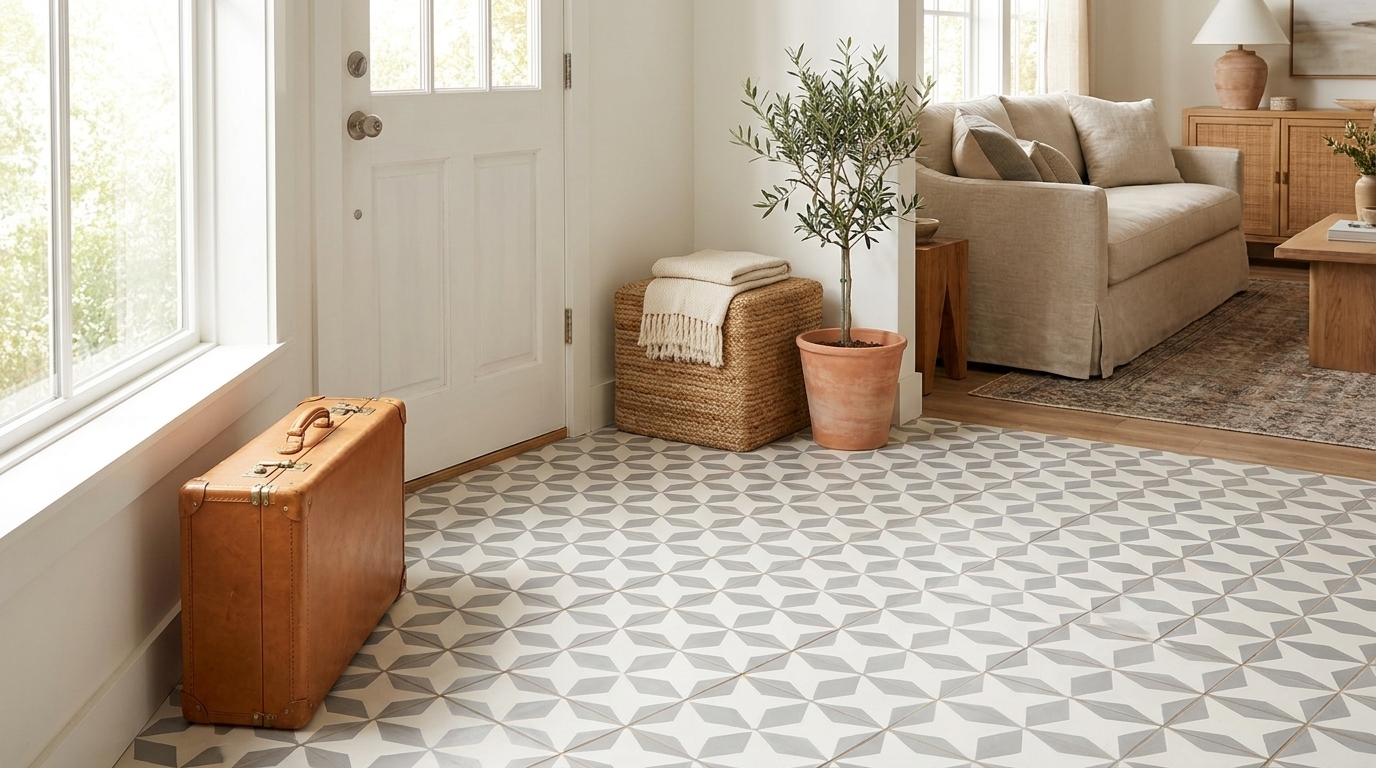
Mission tiles are handmade cement tiles prized for their matte finish, incredible durability, and vibrant, inlaid patterns. Unlike ceramic tiles, their color comes from a thick layer of pigmented cement, not a surface glaze. This means the design never fades with wear.
What Exactly Are Mission Tiles?

When you see Mission tiles, you’re looking at a piece of art born from a century-old tradition. Often called encaustic cement tiles, they are completely different from mass-produced ceramic or porcelain. Their defining trait is how the color and pattern are built right into the tile.
Think of it this way: a ceramic tile’s pattern is like a painting on a canvas—the color is a thin layer sitting on top. A Mission tile’s pattern is more like a block of layered sandstone. The color is a thick, solid part of the tile itself, usually about 1/8 inch deep. This is why even after decades of foot traffic, the design stays as crisp and vibrant as the day it was installed.
The Ingredients and Process
The magic of Mission tiles comes down to simple, natural materials and a time-honored production method. Each tile is carefully crafted from just a few key components.
- Portland Cement: This is the backbone, giving the tiles the strength and integrity they’re famous for.
- Fine Sand and Marble Dust: Mixed with cement, these create the durable base layers of the tile.
- Natural Mineral Pigments: These fine powders are blended with white Portland cement and water to create the vivid, earthy colors that form the patterns.
The process itself is a true hands-on art. An artisan pours the pigmented cement mixture into a patterned metal mold, called a trepa, which forms the visible design layer. After that, layers of dry cement and sand are added for reinforcement before the whole thing is compacted under thousands of pounds of pressure in a hydraulic press.
This hydraulic pressing method fuses the layers together without needing a high-temperature kiln. This not only creates an incredibly dense and durable tile but also makes it a more eco-conscious choice by using significantly less energy during production.
As you learn more about what Mission tiles are, it’s interesting to see how they fit into broader trends and new home decor options available today.
Why This Matters for Your Space
Understanding this handmade process explains the unique soul of Mission tiles. The subtle variations in color and texture from one tile to the next aren’t defects; they’re the signature of an authentic, handcrafted product.
This character infuses floors and walls with a sense of history and personality that machine-made materials just can’t replicate. Their built-in durability and timeless look make them a lasting investment in any design project.
The Rich Heritage and Enduring Appeal of Mission Tiles
To really get Mission tiles, you have to know their story. It’s a story woven through architectural history, artistic movements, and a deep respect for hands-on craftsmanship. These aren’t just floor coverings; they’re a direct link to a time when beauty and utility were one and the same. Their entire legacy is built on a foundation of character that machine-made products just can’t touch.
The story kicks off in the late 19th century, but things really took off during the Arts and Crafts movement. This was a design philosophy that championed handmade goods over industrial mass production, celebrating the skill of individual artisans and the honesty of natural materials. Mission tiles were the perfect fit.
An American Icon Is Born
As the Arts and Crafts movement found its footing in the United States, so did the demand for materials that spoke its language. These iconic handmade cement tiles, with their gorgeous inlaid patterns, have been a favorite of architects since the early 1900s. It’s a perfect match for the heritage craftsmanship of companies like Original Mission Tile, which has been making them the traditional way since 1900.
Historically, the tiles exploded in popularity between 1910 and 1920, becoming a signature feature in bungalows and mission-style homes. This was especially true in California, where architectural surveys show that over 70% of surviving Craftsman architecture from that era features these distinctive tile floors. You can explore more insights into the enduring cement tile market to see how this legacy continues today.
This deep connection to a specific architectural era gives Mission tiles a powerful sense of place and time. They bring a feeling of warmth, authenticity, and lasting style that still resonates with designers and homeowners.
The enduring appeal of Mission tiles lies in their ability to tell a story. Each tile carries the subtle imprint of its maker, offering a tangible connection to a rich tradition of craftsmanship that has remained largely unchanged for over a century.
The Modern Renaissance of a Classic Material
Fast forward to today, and Mission tiles are having a major moment—again. In an age where so many of us are looking for authenticity and sustainable choices, these tiles check all the boxes. Their blend of vintage charm and modern design flexibility makes them a go-to for a whole new generation.
So, why are they so popular right now? It boils down to a few key things:
- A Hunger for Authenticity: Homeowners and designers are turning away from generic, mass-produced materials. They want unique, handcrafted products with a real story.
- Sustainability Matters: Made from natural materials and cured without being fired in a kiln, the production process for Mission tiles uses way less energy than ceramic or porcelain manufacturing.
- Unmatched Design Flexibility: While their roots are in history, the design possibilities are endless. Today’s artisans are constantly creating new patterns, shapes, and color palettes, opening the door to complete customization.
- Proven Durability: In a world of disposable goods, the sheer longevity of Mission tiles is a huge draw. The fact that they can last for generations makes them a smart and sustainable investment.
This mix of historical weight and modern relevance is what makes Mission tiles so compelling. They offer a unique chance to give any space—from a historic renovation to a brand-new contemporary build—a sense of soul and lasting character. Their story isn’t just about the past; it’s one that continues to be written in beautiful, durable patterns across floors and walls all over the world.
A Look Inside The Art of Making Mission Tiles
Beyond their striking looks and deep history, the real soul of Mission tiles is in how they’re made. Each one is the result of a careful, hands-on process that’s stayed true to its roots for over a century, blending artistry with time-tested engineering. This isn’t mass production; it’s a craft that demands patience, skill, and an intimate feel for the materials.
The journey of every single tile begins not with clay or fire, but with color. Artisans carefully hand-mix natural mineral pigments with white cement and water, creating a thick, liquid color layer. This is the very lifeblood of the tile’s pattern.
This vibrant mix is then poured into a custom-made metal mold, what we call a trepa. Think of the trepa as a stencil, with compartments that define the intricate lines and shapes of the final design. Each color goes in separately, requiring a steady hand to keep the lines crisp and clean.
Building The Tile Layer by Layer
Once the colorful face is complete, the tile’s body is built up in distinct stages to guarantee strength and durability.
- The Pigment Layer: This is the initial, hand-poured layer of colored cement that forms the visible pattern. At about 1/8 inch thick, it’s the reason the design on Mission tiles can never fade or wear away. The color is the tile.
- The Absorption Layer: Next, a fine mix of Portland cement and sand is carefully sprinkled over the wet pigment. This layer acts like a bridge, drawing moisture from the color and bonding it to the tile’s core.
- The Body Layer: Finally, a thicker, coarser blend of cement and sand fills the mold completely. This forms the structural base, giving the tile its core strength.

This timeline traces the tile’s enduring legacy, showing how it has adapted from a historic building material to a cornerstone of contemporary creative projects.
The Power of The Hydraulic Press
With all layers in place, the mold heads to a hydraulic press. This is where the magic happens. Immense pressure—often thousands of pounds per square inch—is applied.
This extreme force fuses the separate layers of cement and sand into a single, incredibly dense tile. There’s no kiln, no glazing, and no firing involved. The tile’s strength comes purely from the hydraulic pressure and the natural chemical reaction of the curing cement.
This fire-free method is what makes Mission tile an eco-friendly choice. By skipping the high-temperature kilns, the process uses far less energy than ceramic and porcelain production, resulting in a much smaller carbon footprint.
After pressing, each tile is gently removed from its mold and taken to a curing room. Here, they are submerged in water baths and then left to air-dry for several weeks. This slow, natural curing process is what allows the cement to reach its maximum hardness and durability.
The final result is more than just a floor covering. It’s a piece of functional art, with subtle variations in color and texture that tell the story of its handmade origin. Understanding this process gives you a much deeper appreciation for the skill, history, and artistry embedded in every single Mission tile.
Exploring The Diverse World of Mission Tile Designs

While the classic 8×8 square tile is where the story of Mission tile begins, today’s design world has exploded with an incredible variety of shapes, textures, and specialty formats. Thanks to the versatility of handmade cement, we’re moving way beyond traditional patterns to meet the demands of modern aesthetics.
This isn’t just about adding new options; it’s about reimagining what a tile can be. It’s about giving designers and homeowners the tools to create spaces that feel deeply personal, not just beautiful.
Beyond The Square: Contemporary Formats
The traditional square is timeless, but today’s collections are packed with dynamic geometric options that can completely shift the energy of a room. These shapes are a fantastic way to create movement, texture, and visual interest on both floors and walls.
Some of the most popular formats we see designers using are:
- Hexagons: Perfect for that playful, honeycomb effect, hexagons bring a modern-yet-classic feel to floors and backsplashes. Use a single color for subtle texture or mix them up for a bold, graphic statement.
- Arabesques: With their elegant, curved lines, arabesque tiles add a touch of worldly sophistication. The interlocking shapes create a soft, flowing pattern that works beautifully in entryways and bathrooms.
- Fish Scales: Also known as scallops, these tiles create a stunning, organic pattern that evokes the movement of water. They’re a go-to for feature walls and shower surrounds.
- 3D Patterns: These tiles are all about playing with light and shadow, adding literal depth and dimension to a surface. Their sculptural quality can turn a simple wall into a captivating focal point.
The global cement tiles market, currently valued at USD 34.9 billion, is projected to hit USD 54.3 billion by 2031. Mission styles hold a commanding 28% share of this market, driven by booming construction in regions like Asia-Pacific, which commands over 40% of consumption. This growth is fueled by a 12% yearly increase in commercial projects seeking durable, customizable surfaces—where zellige-inspired and fish-scale options are specified for 22% more projects than standard ceramics.
The real magic of these varied formats is how they transform a surface. A hexagonal floor feels different underfoot and to the eye than a square one. A 3D wall interacts with light in a way a flat surface simply can’t. Shape becomes an active, living element in your design.
To help you visualize how these shapes work in different spaces, we put together a quick guide.
Mission Tile Formats and Common Applications
This table breaks down the most popular Mission tile formats and where they shine brightest, giving you a starting point for your next project.
| Tile Format | Common Sizes | Best For | Design Style |
|---|---|---|---|
| Square | 8″x8″, 6″x6″ | Floors, Walls, Backsplashes | Traditional, Modern, Farmhouse |
| Hexagon | 6″, 8″, 10″ | Bathroom Floors, Backsplashes | Contemporary, Mid-Century Modern |
| Arabesque | Varies | Entryways, Bathroom Feature Walls | Moroccan, Eclectic, Luxe |
| Fish Scale | 6″x6″, 8″x8″ | Shower Walls, Powder Rooms, Bar Backs | Coastal, Art Deco, Bohemian |
| 3D & Sculptural | Varies | Feature Walls, Fireplace Surrounds | Modern, Minimalist, Architectural |
Whether you’re aiming for a classic grid or a dramatic, textured wall, the right format can make all the difference in bringing your vision to life.
Specialty Products and Custom Creations
Beyond the standard formats, a new wave of specialty products is pushing the creative envelope even further. These are the details that allow for truly one-of-a-kind architectural statements.
Consider these game-changing options:
- Architectural Breeze Blocks: These structural, decorative blocks create stunning screen walls that let light and air flow through while providing privacy and a strong visual punch.
- Zellige-Inspired Cement: Love the rustic charm of Moroccan clay tiles? These cement versions give you that same rich color variation and handmade feel but with the superior durability of cement.
- Elegant Brass Inlays: For a touch of luxury, we can embed thin brass strips directly into the cement tile. This creates stunning geometric patterns that catch the light and add a sophisticated metallic accent.
Of course, the ultimate expression of creativity is full customization. Because our Mission tiles are handmade, we can bring just about any vision to life. Working with our design studio, you can create entirely new patterns, develop a custom color palette that perfectly matches your brand or decor, or even combine different shapes for a truly bespoke installation. For a dose of inspiration, you can browse a wide variety of cement tiles and design styles to see what’s possible.
This power to personalize is what makes Mission tiles such a compelling choice for anyone who refuses to settle for the ordinary. It’s an invitation to become the artist, using floors and walls as your canvas to create something lasting and uniquely yours.
Installation and Maintenance for Lasting Beauty
When you choose authentic Mission tiles, you’re not just picking a floor covering; you’re bringing a piece of handmade history into your home. To make sure that beauty lasts for decades, proper installation and care are non-negotiable. Cement tiles aren’t like standard ceramic, and they do require specific handling—but with a skilled installer and the right know-how, the process is straightforward.
Think of an unsealed Mission tile like a beautiful pair of raw leather shoes. They’re incredibly durable, but you wouldn’t walk through a puddle without protecting them first. Sealing is that essential protective layer.
The Foundation: Proper Installation
A stunning tile job is built on what you don’t see. The success of your project hinges on meticulous prep work and using materials specifically designed for porous cement tile. Rushing these foundational steps is the fastest way to run into problems down the road, so it’s crucial that you or your contractor get this part right.
Here are the key steps for a flawless install:
- Subfloor Preparation: Your surface must be perfectly level, clean, and completely stable. Any flex or unevenness in the subfloor can cause tiles to crack over time. You can learn more about why this base is so critical in our guide to underlayment for tile floors.
- Adhesive Choice: Insist on a high-quality, white thin-set mortar. Using a standard grey thin-set can bleed through and discolor lighter-colored tiles, permanently clouding their vibrant pigments.
- Grouting and Cleaning: A sanded grout is generally the best choice. The key is to work in small, manageable sections, cleaning any excess grout off the tile surface immediately with a damp sponge. If you let it sit, it can stain the porous surface.
Pro Tip: Sealing the tiles before you grout will save you a world of trouble. This pre-seal makes grout cleanup infinitely easier and stops the grout’s color from seeping into the tile, keeping the final look crisp and clean.
The Critical Role of Sealing
Because they aren’t fired in a kiln, Mission tiles are naturally porous. It’s part of what gives them their soft, matte finish, but it also means they can absorb liquids. Spills like red wine, oil, or even standing water can lead to stains if the tile is left unprotected. Sealing creates an invisible barrier that repels moisture and grime.
For the best protection, we recommend a high-quality penetrating sealer made for natural stone or cement. The final coats of sealer should be applied after installation is complete but before the floor sees any real traffic. Depending on wear and tear, you’ll want to reapply the sealant every 2 to 5 years to maintain that protective shield.
Long-Term Care and Cleaning
Once your tiles are installed and sealed, keeping them beautiful is surprisingly simple. The golden rule is to avoid harsh, acidic, or abrasive cleaners at all costs. Products with vinegar, lemon juice, or ammonia will strip the sealer right off and can even etch the tile’s surface, causing permanent damage.
Instead, stick to a gentle routine:
- Regular Sweeping: Use a soft-bristle broom or a vacuum (with the beater bar off) to pick up the fine grit and dirt that can act like sandpaper underfoot.
- Gentle Mopping: Clean your floors with a pH-neutral cleaner mixed with warm water. This type of cleaner lifts dirt effectively without harming the tile or its protective sealer.
- Immediate Spill Cleanup: Blot spills as soon as you see them. Thanks to the sealer, you have a grace period to clean up before any liquid has a chance to soak in.
By following these straightforward steps, you’ll ensure your beautiful Mission tiles don’t just look amazing on day one but continue to build character and charm in your home for years to come.
Why Designers and Architects Choose Mission Tiles
Design professionals live at the intersection of art and engineering, constantly balancing a client’s vision with the realities of physics and foot traffic. When specifying materials for high-end homes, bustling hotels, or flagship retail stores, every choice has to perform on multiple levels. Mission tiles have become a go-to for this reason—they offer a rare combination of soulful character and brute strength that mass-produced options just can’t replicate.
This isn’t just about picking a pretty pattern. It’s about solving real-world design problems. An architect laying out a hotel lobby needs a floor that can handle a relentless stream of luggage wheels and footfalls for decades without fading. An interior designer crafting a new restaurant concept needs to create an unforgettable, brand-defining atmosphere. Mission tiles answer both calls with confidence.
Unmatched Durability for High-Traffic Spaces
The secret to their toughness lies in the handmade process. The color layer isn’t a thin glaze painted on top; it’s a thick, pigmented layer of cement that forms an integral part of the tile itself. You simply cannot wear the pattern off. This makes them an obvious and elegant solution for the most demanding commercial environments.
- Hospitality: Hotel lobbies, restaurant dining rooms, and bar floors take a beating. Mission tiles embrace this, developing a rich, beautiful patina over time instead of just wearing out.
- Retail: In a boutique or showroom, the floor is a massive part of the brand experience. These tiles deliver a custom, high-end look that’s tough enough for commercial traffic.
- Public Spaces: Museums, transit hubs, and civic buildings benefit from the tile’s longevity and low-maintenance profile, which translates into lower replacement and upkeep costs over the long haul.
We take a closer look at how these tiles perform in the real world in our guide to high-traffic commercial flooring.
Limitless Customization and Brand Identity
For a designer, the ability to create something truly bespoke is the ultimate tool. Mission tiles offer a level of customization that you just can’t find on a shelf. Through our trade program and design studio, professionals can develop entirely new patterns, dial in exact brand colors, and create a signature look that belongs to one project and one project only.
This is where Mission tiles stop being a building material and start becoming a storytelling tool. A custom floor can echo a company’s logo, a unique color palette can reinforce brand guidelines, and a handcrafted surface subtly communicates a commitment to quality and authenticity.
This capability is a game-changer in a competitive market where standing out is everything. It’s a key reason the Asia-Pacific region, making up 42% of the global market, continues to see such strong growth—projected at 8.2% into 2025. With the global cement tile market expected to hit $47.56 billion by 2029, it’s clear that durability and design flexibility are driving major urban housing and commercial developments worldwide.
Aesthetic Versatility and Sustainable Character
Finally, these tiles have a unique ability to bridge styles and eras. They can feel perfectly at home in a meticulous historic restoration or serve as the main artistic statement in a stark, modern space. The natural, matte finish and the subtle tonal variations from tile to tile provide a tactile warmth and depth that machine-made materials just can’t touch.
On top of that, their production process is inherently eco-conscious. Made with natural materials and cured without kiln firing, they align with the growing demand for sustainable building practices. This allows architects and designers to specify a product that is not only beautiful and durable but also environmentally responsible—ticking every box for clients who value both style and substance.
Your Mission Tile Questions, Answered
Choosing a handmade tile always brings up a few practical questions. It’s a smart part of the design process. Here are some of the most common things people ask about Mission tiles, with clear answers to help you move forward with confidence.
How Do Mission Tiles Hold Up in High-Traffic Areas?
Amazingly well. In fact, they’re a go-to for busy commercial and residential spaces like entryways, kitchens, and hallways for a reason. Because the color layer is a thick, integral part of the tile—not just a printed-on glaze—the pattern will not wear off with foot traffic. Instead, they just get better with age, developing a beautiful, natural patina over time.
Can I Use Mission Tiles in Wet Areas Like Bathrooms and Showers?
Absolutely. When they’re properly installed and sealed, Mission tiles are fantastic in wet environments. The secret is using a high-quality penetrating sealer, which creates a protective barrier that stops moisture from soaking in. This is a non-negotiable step for shower floors, walls, and bathroom floors to prevent water spots and keep them looking great for years.
Think of sealing as the final, essential step in the tile’s journey. It’s what ensures your cement tile repels water and stains, preserving its signature matte finish. A properly sealed Mission tile installation is every bit as practical as it is beautiful.
Are Mission Tiles Slippery When They’re Wet?
This is one of the best features of Mission tiles. Their natural matte finish gives them an inherent slip resistance that you just don’t get with glossy glazed ceramic or porcelain. It’s why designers and architects so often specify them for bathroom floors, patios, and pool surrounds. You get a safe, secure footing without having to sacrifice a bit of style.
Ready to bring the timeless artistry of handmade cement tile to your project? Explore our in-stock collections or start creating your own custom patterns with Original Mission Tile.