You have narrowed your handmade tile search to two finalists: zellige tile and cement tile. Both are made by hand. Both carry real history. And both cost more than a mass-produced ceramic. But they are not interchangeable. Pick the wrong one, and you could end up with a backsplash that crazes in year two, or a floor that never quite looks the way you pictured. This guide compares zellige tile vs cement tile on material, performance, and cost. That way, you can match the right handmade tile to the right room.
Two Different Materials, Two Different Crafts
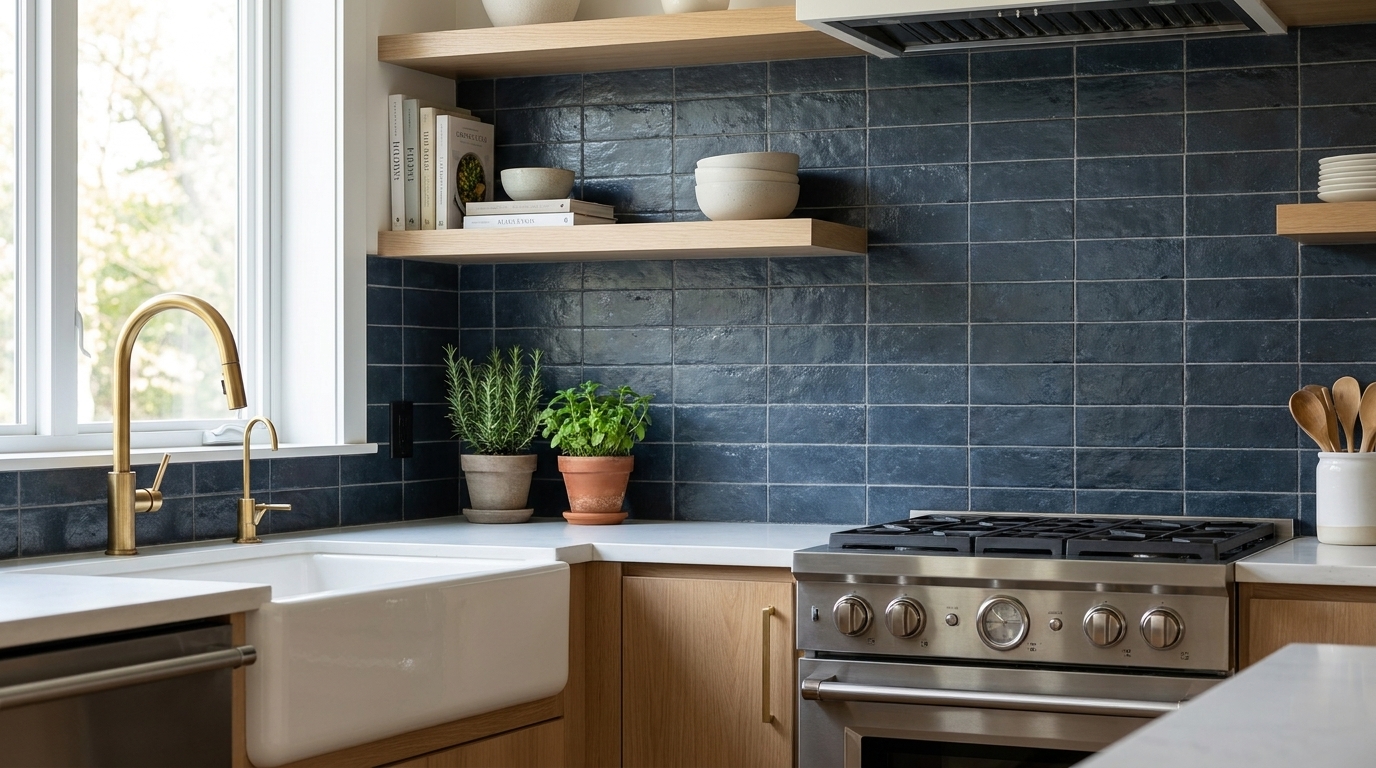
Zellige starts as raw clay from the Fez region of Morocco. Artisans hand-mold each tile, then fire it in a kiln. Next, they dip it in glaze and fire it a second time. The result is a glassy, glossy surface full of small pits, waves, and color shifts. No two tiles match exactly, because the glaze pools differently on every piece.
Cement tile starts from a different mix entirely. Makers blend portland cement, fine sand, marble dust, and mineral pigment. Instead of firing, they pour the pigment into a metal mold. Then they back it with a sand-cement layer and press it under thousands of pounds of hydraulic pressure. The tile cures in water for weeks. No kiln is involved at any point.
Original Mission Tile has made cement tile this way since 1900. Our factory sits in San Luis Potosí, Mexico, and we still use the same hydraulic press method today. That single distinction explains most of the performance gap between the two materials, from color depth to how each one handles water.
Look and Feel: Glossy Movement vs. Matte Pattern
Zellige’s glaze catches light. Because the surface is uneven, a wall of zellige shimmers as you move past it. That movement is the whole appeal. It works best on a smaller wall area, like a shower niche or a backsplash. In a tight space, the light play stays visible instead of getting lost.
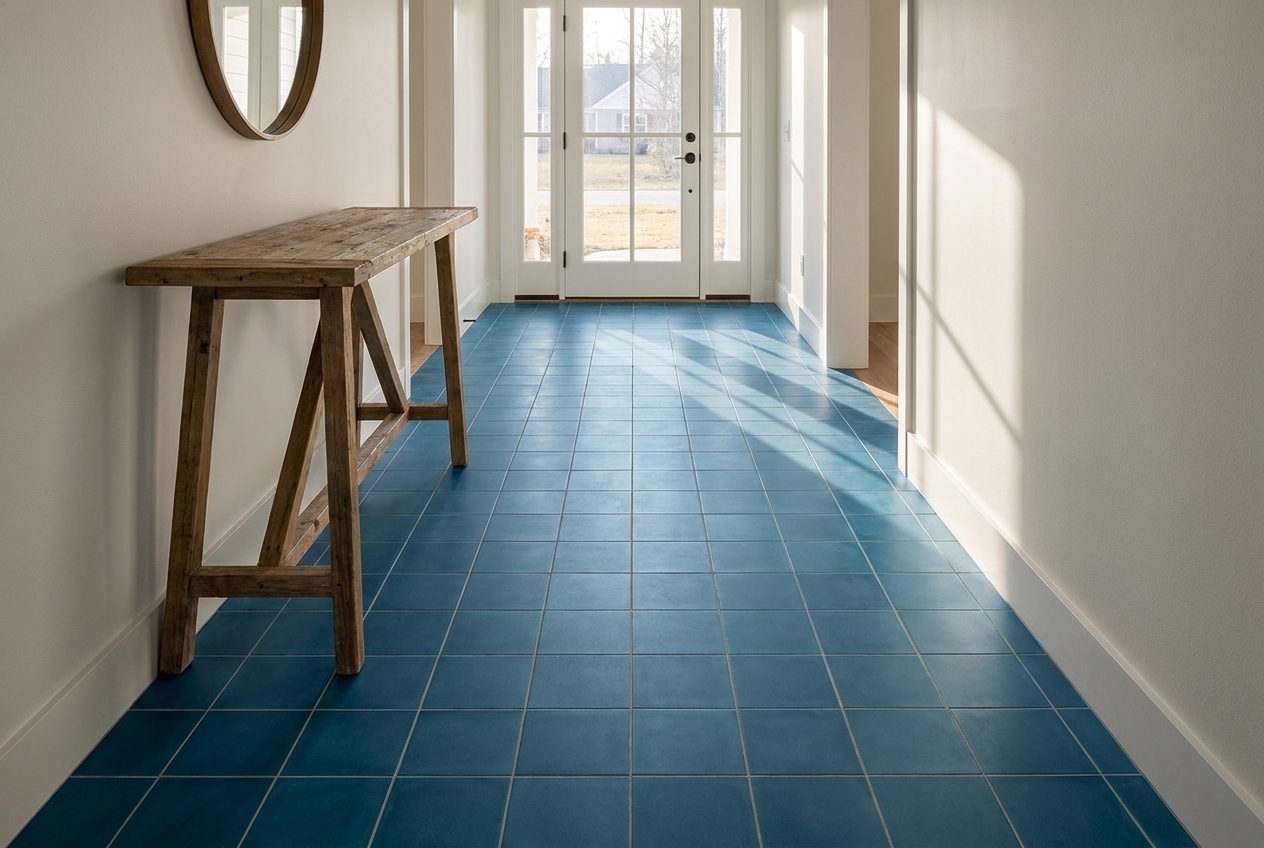
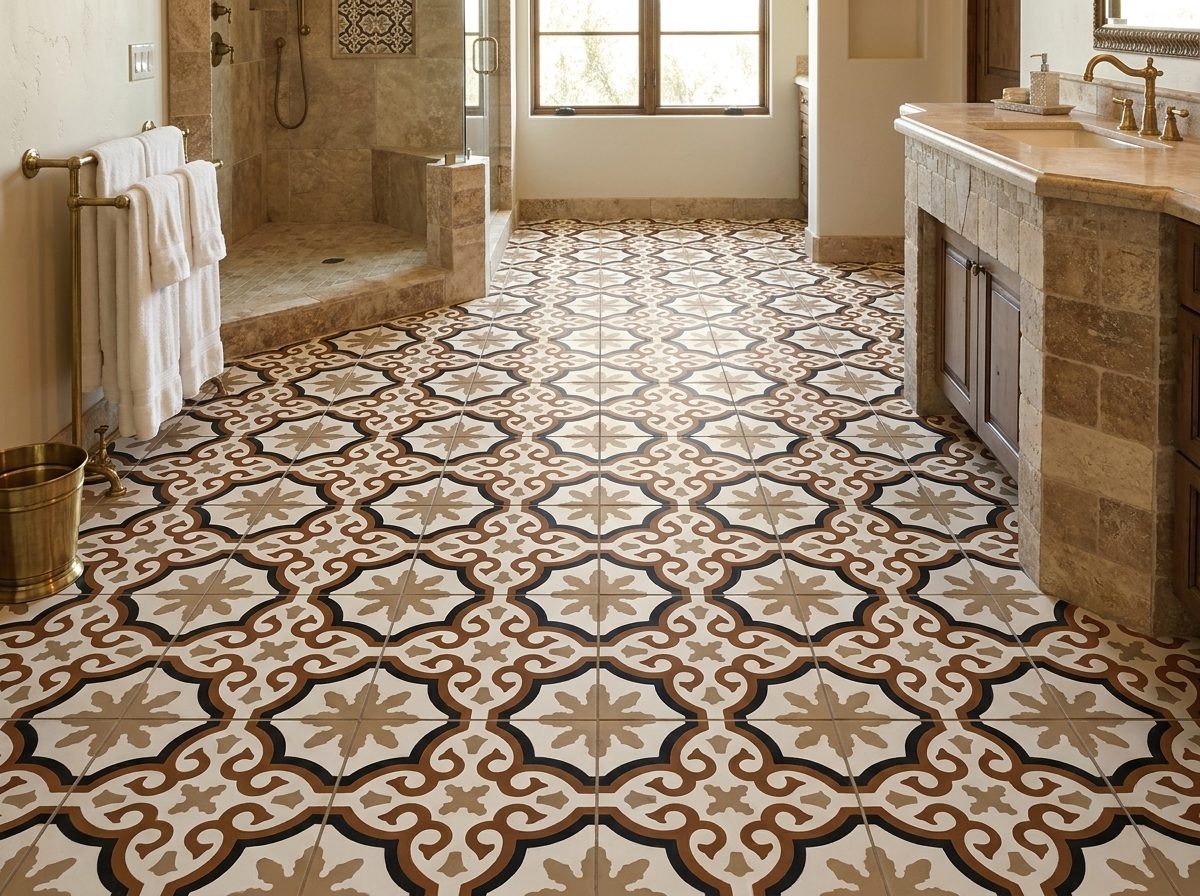
Cement tile does the opposite job well. The pigment sits flush in the surface. That gives it a matte finish, and the pattern reads clearly from across a room. That makes it the better choice when the design itself is the point, not the shimmer. A geometric layout like Rombos Gris 02 or a bold hex like Hex-918 Oxford Gray stays crisp underfoot, instead of dissolving into glare.
Color range is another split. Zellige is typically sold as solid, single-color tiles. You build the pattern by mixing colors across the field. Cement tile works differently, because the pattern is printed inside each 8×8 piece before it ships. A single tile can carry two, three, or more colors at once. So if you want an intricate motif without laying dozens of small pieces, cement tile gets you there faster.
Performance: Where Water Absorption Actually Matters

This is the section most articles skip. It is also the one that should drive your decision. Glazed zellige is a non-vitreous tile, meaning its water absorption rate runs high, often in the 15 to 23 percent range. That is fine on a vertical, low-moisture wall. It becomes a real liability anywhere water sits or freezes.
Because of that absorption rate, zellige is not rated for exterior use in freeze-thaw climates. Manufacturers also caution against shower floors or steam-heavy enclosures without careful detailing. If moisture gets behind the glaze and then freezes, the tile can crack from the inside out.
Cement tile behaves differently, because it is dense and cured, not fired and glazed. It handles floors, walls, and covered outdoor spaces without that same freeze-thaw restriction. It still needs a sealer to resist staining, however, just like natural stone does. That is why you will see cement tile on entryway floors and patios, roles that fall outside zellige’s comfort zone.
In practice, the best projects often use both materials in one room. Each one covers the job it does well. Zellige takes the shower wall or backsplash. Cement tile takes the floor. That way, you get the shimmer where it counts and the durability where you actually need it.
Installation: What Your Contractor Needs to Know
Zellige’s irregular thickness means a wider setting bed. It also means more back-buttering to fill hollows behind each tile. Expect some lippage, where one tile edge sits slightly higher than its neighbor. Installers who work with zellige regularly treat that as part of the look, not a flaw to fight.
Cement tile installs closer to standard tile practice, though it has its own rules. The pigment layer sits near the surface. Because of that, cement tile should never meet acid-based cleaners, and sanded grout should never be dragged across its face. Both tiles reward experienced hands, but for different reasons. Zellige needs care for its unevenness. Cement tile needs care for its softer, more porous surface before sealing.
Before either tile goes down, follow a clear set of installation guidelines. For cement tile specifically, that means sealing before grouting. It also means using a low-moisture setting method and letting the tile cure before foot traffic. Skipping any of those steps is the most common cause of early staining. It is rarely a flaw in the tile itself.
Cost, Lead Time, and Where the Tile Comes From

Authentic Moroccan zellige usually travels a longer import chain. It moves from small workshops in Fez, through distributors, before it reaches a US supplier. Lead times can stretch. And because each batch is hand-glazed, color matching across a large order takes patience.
Cement tile sourcing looks different at Original Mission Tile. In-stock patterns ship from our Laredo, TX warehouse within days. That is possible because the inventory already exists in the sizes and colors shown on the site. Want a pattern, color, or size that is not in stock? Our custom-made tiles are produced to order in about four to six weeks, at the same San Luis Potosí factory.
For an 8×8 cement tile, one box covers 5.17 square feet and holds 12 tiles. We recommend ordering 15 percent over your measured square footage. That extra covers cuts, breakage, and future repairs. The rule applies whether you choose from our in-stock collection or a custom-made design.
Neither tile is cheap, and that is the point. Both are handmade, and handmade takes time and skilled labor. Side by side, though, cement tile usually gives you a more predictable price. It also gives you a faster path from order to install, simply because the supply chain is shorter.
Maintenance: What Daily Life Actually Looks Like
Glazed zellige is easy to wipe down day to day, since the glaze resists most stains. However, the grout joints and any exposed unglazed edges still need pH-neutral cleaning, the same as other porous tile. Harsh acidic cleaners can dull the glaze over time.
Cement tile needs a bit more attention early on. It should be sealed after installation, then resealed periodically based on traffic. Once sealed, cleanup stays simple: sweep, then mop with a pH-neutral cleaner. Never use vinegar, bleach, or ammonia-based products. They eat into the cured cement surface over time. Our full maintenance and cleaning guide walks through the resealing schedule step by step.
Both tiles reward a homeowner who follows the care instructions. Neither one is truly “no maintenance.” That said, cement tile’s sealer step is a known, controllable variable. Zellige’s main risk, moisture behind an aging glaze, is harder to see coming.
Want the Zellige Look Without the Zellige Restrictions?
Maybe the shimmer of zellige is what drew you in. But your project needs floor performance, or freeze-thaw durability. A zellige-inspired cement tile can bridge that gap. Our ZE-108 Brick Navy Zellige uses the same elongated brick shape and layered color that made the original style famous. However, it is pressed cement, not glazed clay. That means it can go on a floor, handle a covered patio, and skip the freeze-thaw warning label entirely.
It is a good example of why “handmade” does not have to mean one material and one set of rules. Instead, you can borrow the aesthetic while choosing the performance profile that actually fits your room. Browse more options by tone in our color-sorted collection. Or look through the installation gallery to see how designers pair the two looks in real projects.
Frequently Asked Questions
Can I use zellige tile on a shower floor?
Most manufacturers advise against it. Zellige absorbs more water than floor-rated porcelain or cement tile. Standing water on a horizontal surface is a tougher test than water running down a wall. So if you love the look, use it on the shower walls instead. Choose a denser, floor-rated tile for the pan.
Is cement tile as durable as zellige for a busy kitchen?
Yes, and in a high-traffic kitchen it often performs better. Cement tile is dense. It cures for weeks before it ships. Once properly sealed, it resists daily wear well. Zellige holds up fine on a backsplash away from foot traffic, but it is rarely specified for kitchen floors.
Which tile costs more, zellige or cement tile?
Pricing varies by supplier and pattern for both. Cement tile pricing tends to be more predictable, because the supply chain is shorter and inventory is on hand. Ordering samples first is the cheapest way to compare finish and color in your own light. Samples run $20 for the first one and $10 for each additional sample, before you commit to a full order.
Can zellige and cement tile be used in the same room?
Absolutely, and it is a common professional move. Many designers put zellige on a feature wall or backsplash. Then they use cement tile on the floor, letting each material do the job it is built for. Matching a warm or cool undertone between the two keeps the room feeling intentional, instead of mismatched.
See the tile in person before you commit
Photos only tell you half the story. Colors, texture and the handmade character of cement tile are best judged in your own light. Order a sample of any in-stock pattern for $20 (additional samples $10, free shipping) — or tell us about your project and we’ll help you narrow it down.
Browse in-stock cement tiles →
Talk to us about your project →