Welcome to the new era of kitchen design, where the 2026 kitchen tile trends are all about surfaces with soul. We’re seeing a move away from generic, mass-produced finishes and a return to materials with character—think handmade cement tile, textured backsplashes, and colors that feel both warm and confident.
It’s about bringing a human touch back into the heart of the home.
Soulful Surfaces Are Defining Kitchens in 2026

The biggest shift we’re seeing for 2026 is a turn towards surfaces that tell a story. Both designers and homeowners are looking past sterile, uniform finishes and embracing tiles that have personality, texture, and a sense of craftsmanship. It’s like choosing a hand-thrown ceramic mug over a factory-made one; the small imperfections are what make it special.
This is about more than just looks—it’s about how a space feels. A kitchen should be an inviting, comfortable room, and your tile choices play a massive part in setting that mood. The goal is to create a backdrop that feels both classic and totally personal, reflecting your taste instead of a temporary trend from a catalog.
Key Themes for the Year Ahead
The kitchen tile trends for 2026 are all guided by a few core ideas that connect our desire for beautiful spaces with the realities of everyday life. Think of these themes as a roadmap for creating a kitchen that’s stylish but also genuinely you.
You’ll see these concepts woven into all the specific trends we’ll be exploring:
- A Return to Rich Color: We’re finally moving beyond the safe zones of endless gray and bright white. Kitchens are embracing warmer, complex earth tones and even some bold, saturated hues.
- The Rise of Tactile Surfaces: Smooth, glossy tiles are making way for textured, dimensional, and matte finishes. These are surfaces that invite touch and play with light in interesting ways.
- A Focus on Personalized Spaces: Customization is everything. There’s a huge interest in unique patterns and bespoke colorways that let you express your individual style.
The most important trend right now is the shift from mass-produced perfection to artisanal soul. We’re seeing a deep appreciation for materials like handmade cement tile, where slight variations in color and texture are seen as marks of authenticity, not flaws.
This guide will walk you through each of these ideas with practical tips and inspiration for your own kitchen. Whether you’re planning a full renovation or just a simple backsplash update, these insights will help you choose tiles that bring character and lasting style to your home.
To see how these kitchen-specific ideas fit into the bigger picture of home design, you can also explore the broader 2026 interior design trends. For now, let’s get into how to make these kitchen trends work for you.
The Artisan Revival and Rise of Customization
More than any single color or shape, the biggest kitchen tile trend for 2026 is a shift in mindset. We’re moving away from mass-produced, off-the-shelf looks and embracing something far more personal. Think of it like commissioning a custom piece of art versus buying a print; that’s how we’re approaching kitchens now.
It’s about creating a space that feels like it belongs to you and no one else. Forget just following a trend—this is about setting your own personal style standard. The focus is shifting to materials with a soul, patterns with history, and colors that tell your story.
From Blueprint to Backsplash
Customization used to be a high-end luxury, but now it’s becoming a really exciting and accessible part of the design process. Homeowners and designers are stepping into the role of an artist, creating one-of-a-kind tile installations that become the heart of the kitchen.
This is where tools like the Original Mission Tile Design Studio come in, letting you get your hands dirty with the creative process. You can play with hundreds of colors and patterns to create a tile that is truly and completely yours.
- Custom Colorways: Imagine finding a classic pattern you love, then recoloring it to perfectly match a piece of art or the exact shade of your new cabinetry. That’s how a tile becomes a personal statement.
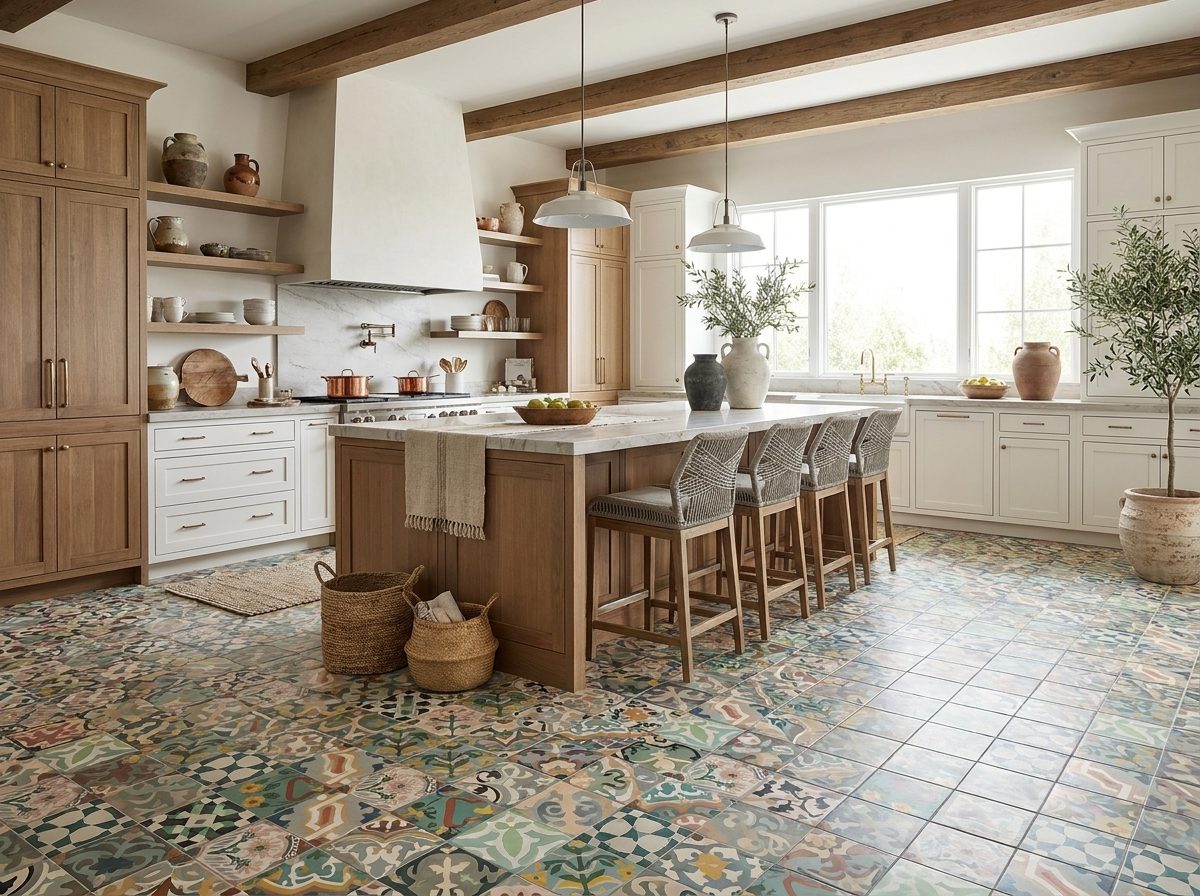
- Unique Patterns: You can also go beyond the catalog by creating a totally new motif or a custom patchwork of different designs. It’s a surefire way to guarantee your kitchen backsplash or floor is unlike any other.
The global tile market is feeling this shift in a big way. The market is valued at a massive $300.77 billion in 2026 and is expected to hit $475.17 billion by 2032. Much of that growth comes from kitchen renovations, where more and more designers and homeowners are choosing handmade cement tiles for their character. In fact, heritage makers like us at Original Mission Tile have seen a 25% increase in specification orders from architects since 2024, all wanting that authentic, inlaid color that machine-made tiles just can’t fake. You can dig into more of the numbers in this comprehensive market analysis.
Making Customization Work for You
The thought of a fully custom kitchen can sound intimidating and expensive, but it’s more achievable than you think. The secret is to use a “high-low” approach: blend a few high-impact custom tiles with more affordable field tiles. This gives you a luxurious, designer look without the high-end price tag for the entire room.
Think of your custom tiles as the “jewelry” of the kitchen. A little goes a long way.
Pro Tip: Use your custom patterned tile in a high-visibility spot, like the backsplash behind the stove or as a “tile rug” inlay on the floor. Frame it with simpler, single-color field tiles to balance the design and your budget.
For instance, you could design a stunning, colorful 8×8 cement tile pattern for a feature wall behind your open shelves. Then, for the rest of the kitchen floor, use a coordinating solid color tile. This method doesn’t just save money; it creates a powerful focal point that prevents the design from feeling too busy. It’s a smart strategy for getting that personal, artisan look that truly defines 2026 kitchen design.
Embracing Dimensional Shapes and Tactile Textures

Kitchen tile for 2026 is moving beyond just sight. Flat, glossy surfaces are giving way to tile that you want to reach out and touch, adding a whole new layer of depth, shadow, and architectural personality to kitchen walls.
Think of it like the difference between a framed photo and a sculpture. A photo is beautiful, but a sculpture plays with light, casting shadows that shift throughout the day. That’s exactly what dimensional and tactile tiles do for a kitchen. They turn a simple wall into a living, dynamic feature.
From Flat to Fluted
The real magic of texture is how it adds sophistication without needing loud colors or busy patterns. It’s a quiet hero. A simple monochromatic kitchen, for example, goes from plain to stunning just by using a tile with a 3D profile. These surfaces create a subtle, organic energy that feels both modern and warm.
This is a huge part of the 2026 kitchen tile trends movement—a shift toward character and depth. It’s a much more grown-up way to create visual interest.
Look for these popular tactile styles:
- 3D Tiles: These have raised geometric or organic patterns that literally pop off the wall, creating incredible shadow lines that change with the light.
- Fluted and Reeded Profiles: For a more linear and refined look, these vertical grooves add an elegant, almost architectural feel to a space.
- Zellige-Inspired Surfaces: While not technically 3D, their inherent surface ripples, gentle waves, and color variations give them a handmade, tactile quality that feels anything but flat.
A textured tile backsplash creates a ‘living wall’—a surface that shifts and changes as the light moves across the room. It adds a layer of quiet luxury and ensures your kitchen never feels static or one-dimensional.
Practical Ways to Use Textured Tile
While the look is incredible, you have to be smart about where you put it. The same grooves and reliefs that make these tiles beautiful can become a trap for dust or splatters if you’re not careful.
For that reason, textured tiles are perfect for high-impact, low-mess areas. The front of a kitchen island is an ideal spot for a dramatic fluted tile—it’s a major focal point that won’t get hit with cooking grease. Likewise, a feature wall away from the prep zone can handle a bold 3D pattern without any maintenance headaches.
But what if you’ve fallen in love with the look for a backsplash? It’s totally doable with the right strategy.
Tips for Using Textured Tile Behind a Cooktop:
- Seal It Properly: This is non-negotiable. A high-quality penetrating sealer fills the tiny pores in the tile and grout, preventing food and grease from sticking and making cleanup surprisingly simple.
- Choose Your Texture Wisely: A tile with soft, wide undulations will be much easier to wipe down than one with sharp, deep grooves. Think smooth waves over intricate carvings.
- Consider a Hybrid Approach: For a bulletproof solution, place a smooth, flat slab of stone or metal directly behind the stove. Then, frame it with your favorite textured tile. You get all the style with zero stress.
Exploring the different wall tile patterns available will help you strike that perfect balance between texture and practicality. In the end, this trend is about bringing a layer of craftsmanship and depth into your kitchen that makes it feel custom, thoughtful, and anything but ordinary.
Exploring the New Earth-Toned Palettes
For a long time, “neutral” in the kitchen meant a predictable cycle of gray, bright white, and flat beige. While those have their place, the most exciting shift in the 2026 kitchen tile trends is watching the definition of neutral evolve. We’re moving away from colors that feel sterile and are instead embracing the rich, complex hues found in nature.
Think of it as trading a cool, clinical backdrop for one that feels grounded, warm, and alive. This isn’t about shouting with color; it’s about a sophisticated, earthy palette that brings a sense of calm and character right into the heart of the home. It’s biophilic design in practice—fulfilling our need to connect with the natural world indoors.
From Beige to Biophilic
The new earth-toned palette is all about warmth and depth. These are colors with a story, pulled from landscapes, soil, and botanicals. They have a softer, more organic feel than the crisp neutrals that dominated the last decade, and they make a kitchen feel instantly more welcoming.
The key players in this grounded color story include:
- Terracotta: The original earth tone. It brings an ancient, sun-baked warmth that feels both rustic and incredibly chic, especially in a velvety matte finish.
- Sage Green: A soft, gray-green that reads as a calming neutral. It pairs beautifully with natural wood tones and brass hardware, creating a serene, garden-like feel.
- Ochre and Mustard: These golden, earthy yellows add a dose of sunshine without being overwhelming. They’re perfect for bringing warmth to kitchens that lack great natural light.
- Muted Desert Pinks: Forget bubblegum. Think dusty, clay-like pinks with brown undertones that evoke a desert sunset. They offer a subtle warmth that is surprisingly versatile.
The real power of these new earth tones lies in their ability to act as a foundation. They can either ground a space, letting a bold pattern take center stage, or stand on their own to create a serene, monochromatic look.
How to Use Earth Tones in Your Kitchen
Bringing these colors into your kitchen is less about a complete overhaul and more about smart, strategic moves. The finish you choose is just as important as the color. A handmade cement tile, for example, has a chalky, velvety surface that absorbs light rather than reflecting it. This deepens earthy hues and creates a soft, organic look that feels anything but mass-produced.
When pairing these colors, it’s all about balance. A full wall of rich terracotta brick tiles from Original Mission Tile makes a stunning, warm focal point. To keep it from feeling too heavy, pair it with creamy off-white cabinets and a light-colored countertop. That contrast lets the terracotta be the star without swallowing the room.
Likewise, a backsplash of sage green cement tiles can beautifully soften dark wood or black cabinetry. For a more curated approach, try a custom patchwork of several earth tones—ochre, sage, and desert pink—to create a look that feels uniquely personal.
Ultimately, this trend is about making your kitchen feel like a sanctuary. By choosing tiles in these complex new neutrals, you’re building a space that’s not just stylish for 2026 but also has a timeless connection to the natural world.
2026 Kitchen Tile Trend At-a-Glance
For a quick reference, here’s a breakdown of the top trends shaping kitchens in 2026, including the earth-toned palette we just explored. This table summarizes the key characteristics and best applications for each look.
| Trend | Key Characteristics | Best For | Original Mission Tile Example |
|---|---|---|---|
| New Earth Tones | Terracotta, sage, ochre, desert pink; matte, velvety finishes. | Creating warm, grounded, and inviting kitchen backsplashes and floors. | Solid Color Cement Tiles in Clay, Mustard, or Sage. |
| Zellige-Style Sheen | Rippled surfaces, high-gloss, subtle color variation. | Backsplashes that need to reflect light and add a handcrafted feel. | N/A (Focus on cement tile strengths). |
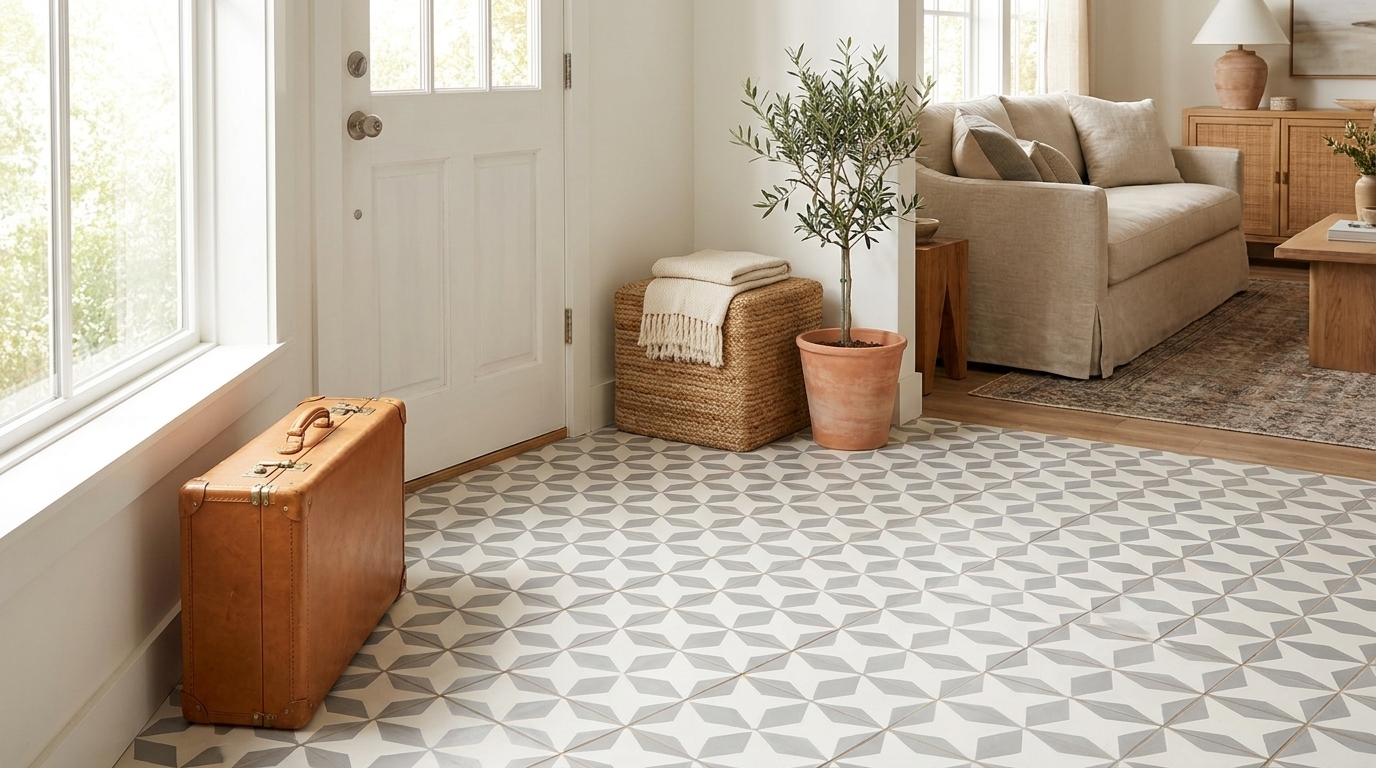
| Restrained Patterns | Tone-on-tone geometrics, “tile rugs,” and borders. | Defining zones like islands or breakfast nooks without overwhelming the space. | Moderna Collection for subtle geometrics. |
| Matte Finishes | Soft, velvety, non-reflective surfaces. | Kitchen floors, as they hide dust and feel soft underfoot. | All our handmade cement tiles feature a signature matte finish. |
These trends show a clear move towards kitchens that feel personal, textural, and connected to natural materials. They offer a flexible toolkit for creating spaces that are both beautiful and built to last.
The Floor Is the New Fifth Wall
For way too long, the kitchen floor was just a functional afterthought—something you walked on, not something you designed. That’s all changing in 2026. The floor is stepping up to become the new “fifth wall,” a foundational canvas for bold patterns and personal style that anchors the entire room.
This shift is all about materials that deliver both incredible resilience and knockout beauty. Handmade cement tile is a natural fit. It has the artistic soul for a statement floor and the toughness to handle the reality of a high-traffic, high-impact kitchen. It’s a look built to last.
From Footnote to Focal Point
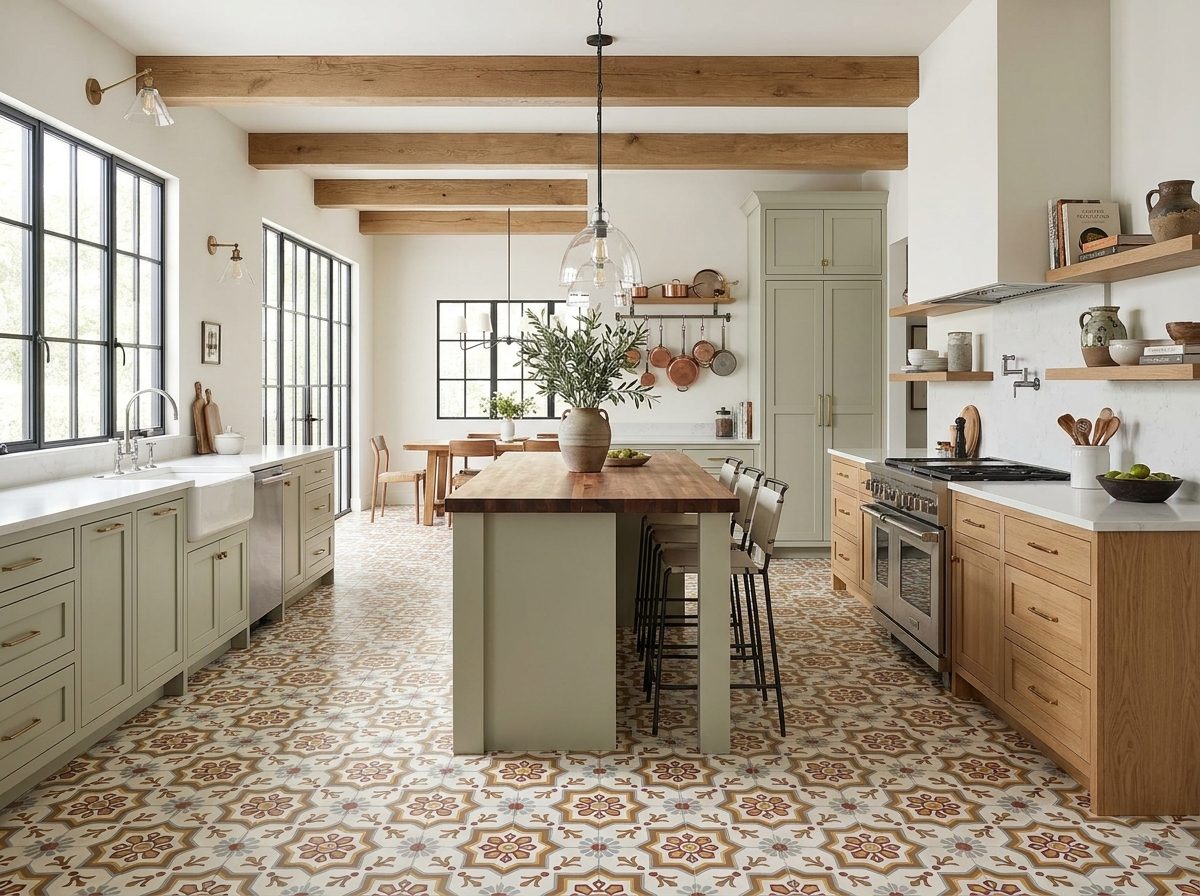
The kitchen floor is no longer just a surface; it’s a key part of the design story. The 2026 kitchen tile trends are all about using patterned floors to ground the space, add character, and set the tone. Think of it as laying down a permanent, artful rug that’s tough enough for daily life.
This approach is especially powerful in open-concept homes, where a decorative floor can create a visual boundary for the kitchen without needing walls. It’s a stylish and intentional way to define your space.
- Classic 8×8 Motifs: Bold, repeating patterns in this traditional format give you a timeless look with endless chances to create a custom color story.
- Elegant Layouts: Shapes like star-and-cross or hexagons create pattern through their form, adding geometric interest that can be as subtle or as dramatic as you want.
- Modern Terrazzo: With its playful, confetti-like feel, terrazzo cement tile introduces color and texture in a way that feels both fun and sophisticated.
These new neutral colors pair beautifully with decorative floors, creating a cohesive and warm design.

Earthy tones like Terracotta, Sage, and Desert Pink can stand on their own or act as coordinating solids for a patterned floor, pulling the whole look together.
Balancing Pattern Scale and Room Size
Picking the right decorative floor is a bit of a balancing act. The key is to match the scale of the pattern to the size of your kitchen. A huge, sprawling pattern can easily overwhelm a small galley kitchen, while a tiny, intricate motif might get lost in a big, open room.
Design Insight: In a smaller kitchen, try a medium-scale pattern with lower contrast. It creates a sense of movement without making the room feel busy. For larger kitchens, you have the freedom to go bold with large-format patterns or intricate, high-contrast designs.
A recent Original Mission Tile project shows this perfectly. A client with a compact kitchen chose our “Alhambra” pattern in a soft blue-and-white colorway. The repeating motif added huge character without visually shrinking the space, anchoring the white cabinetry and making the whole room feel more intentional.
The Durability That Makes It All Possible
This entire trend hinges on the incredible resilience of materials like handmade cement tile. These tiles aren’t just a pretty face; their durability is central to their appeal. Market data shows floor tiles command 48.22% of the ceramic tile sector, but the real story is the pivot to patterned cement, which offers beauty and brawn. For more data, you can check out this detailed market intelligence report.
In commercial spaces like hotel restaurants, specifications for slip-resistant handmade cement tiles are up by 30%. This is thanks to a craft that uses marble dust and pigments, creating unmatched wear resistance that often outlasts porcelain by 2x in heavy-use areas.
This move toward decorative, durable flooring lets you make the floor the star of your kitchen. It’s a confident design choice that blends historic artistry with modern performance, creating a space that’s beautiful not just for 2026, but for decades to come.
Your Practical Guide to Implementing These Trends
Turning inspiration photos into a kitchen you can actually live in—that’s where the real design work starts. The 2026 kitchen tile trends are all about creating spaces with personality, but getting it right takes a bit of planning. This guide will help you translate those exciting ideas into a beautiful, functional reality.
Think of it less like following a recipe and more like being the chef. Your job is to pick the right ingredients and combine them so the final dish is balanced, not chaotic. It all begins with a clear-eyed look at your space and what you want to achieve.
Assess and Prioritize Your Space
Before you get attached to a specific tile, take stock of your kitchen’s permanent fixtures. What isn’t changing? Note your cabinet color, the material of your countertops, and how much natural light the room gets. These are the foundations that will guide your tile choices.
Next, you need to pick your “hero”—the one feature that will be the star of the show. This is the single most important rule to avoid a design that feels too busy or overwhelming.
- The Statement Floor: If you’ve fallen for a bold, patterned cement tile floor, let it shine. Your backsplash should then play a supporting role. Think about a simple, neutral tile with a subtle texture; it adds depth without competing for attention.
- The Feature Backsplash: When a vibrant, custom-patterned backsplash is your main event, the floor needs to step back. Ground the design with a large-format tile in a solid, coordinating color.
This “one hero” approach is the secret to mixing trends like a pro. It gives the eye a clear focal point and makes the entire design feel intentional and sophisticated. When making your selections, finding the best backsplash tile for kitchen can be the single most impactful decision you make.
Key Takeaway: Every great design has a clear hierarchy. Let one element—like a patterned floor or a stunning backsplash—be the star, and use other surfaces to support it. This creates balance and prevents visual overload.
Budgeting for Lasting Beauty
Handmade cement tile is an investment in both art and durability. When you budget for it, you’re not just buying a surface covering; you’re buying a long-term asset. While the initial cost per square foot can be more than mass-produced porcelain, its incredible longevity and the fact that it can be repaired offer serious value over time.
Here’s how to make it work for your budget:
- Use It Strategically: You don’t have to cover every inch in a premium tile. A high-impact backsplash behind the range or a “tile rug” inlay under the island gives you a huge design return for a fraction of the cost of a full installation.
- Mix with Field Tile: This is a classic designer move. Pair our special patterned tiles from Original Mission Tile with our more affordable solid-color field tiles. You get a completely custom look while keeping the costs manageable.
Maintaining Your Handmade Tile
One of the best things about handmade cement tile is the way it ages, developing a rich, unique patina over the years. With the right care, which is surprisingly simple, your tile will last for generations.
Sealing is the most critical step. Because the tile is naturally porous, a high-quality penetrating sealer is essential to protect it from stains and moisture. Your installer should handle this during installation.
For day-to-day care, just use a pH-neutral cleaner. Stay away from harsh, acidic chemicals that can damage the surface. Our guide on the best tile for a kitchen backsplash offers more in-depth maintenance tips to keep your tile looking beautiful for decades. With these practical steps, you can confidently bring the soulful, character-rich surfaces of 2026 into your own home.
Kitchen Tile FAQs (The 2026 Edition)
Diving into the 2026 kitchen tile trends is exciting, but it’s smart to have a few practical questions. Getting clear, honest answers is the best way to move from inspiration to installation with confidence. Here are the questions we hear most often.
Are Patterned Cement Tiles Too Trendy for a Forever Kitchen?
It’s a great question. The patterns making waves in 2026 aren’t flash-in-the-pan graphics; they’re deeply rooted in centuries of architectural history. Think of them less as a “trend” and more as a classic element that’s having a well-deserved moment.
The secret to making it timeless is balance. When you choose a classic pattern but customize it with colors that speak to your home’s palette, it becomes a personal, integrated feature. Pair a statement floor with quieter cabinetry and countertops, and the tile feels intentional and permanent, not like a fleeting design choice.
How Does Handmade Cement Tile Cost Compare to Porcelain?
On paper, handmade cement tile often has a higher upfront cost per square foot than mass-produced porcelain. The real story, though, is in the lifetime value. Cement tiles are incredibly durable and have a unique advantage: they can be refinished over the decades, just like a hardwood floor.
This longevity, paired with the immense character and resale value they add, makes cement tile a powerful long-term investment. If you’re working with a tighter budget, consider using it as a high-impact accent—think of a backsplash or a “tile rug” under an island. You get all the custom-made charm without the cost of a full floor.
Can I Use Textured Tiles Behind My Stove?
Yes, you can—as long as you plan for it. The beautiful, dimensional grooves on a 3D or fluted tile can become a trap for grease and splatters. To make cleanup a breeze, using a high-quality penetrating sealer is non-negotiable. This one step makes the surface far easier to wipe down.
For a completely worry-free zone, many designers now use a hybrid approach. They’ll install a simple, flat slab of stone or metal directly behind the cooktop and then surround it with gorgeous textured tile. This gives you all the visual punch of the texture without the maintenance headache in the most-used cooking area.
What Is the Best Way to Combine Multiple Tile Trends?
The key to successfully mixing trends is to create a clear design hierarchy. You need one “hero” to be the star of the show. This is what keeps a kitchen feeling layered and sophisticated, not chaotic.
Follow this simple guideline:
- If your floor is the hero: Did you fall for a bold, patterned cement tile? Great. Let it shine by keeping your backsplash simple. A solid-colored tile in a neutral hue, maybe with a subtle texture, will add depth without competing.
- If your backsplash is the hero: Is a vibrant, custom-colored backsplash your main event? Perfect. Let your floor play a supporting role. A simple, large-format tile in a solid, coordinating color will ground the space beautifully.
Of course, before you can truly integrate these incredible tile trends, a solid plan is essential. For an expert-led guide on getting your foundation right, check out this excellent resource on how to plan your kitchen layout. A strong layout ensures every single element, especially your tile, works together in perfect harmony.
Ready to bring the authentic beauty of handmade tile into your kitchen? Explore the endless possibilities with Original Mission Tile. From timeless patterns to custom designs, we have the perfect tile to tell your story. Discover our collections today!