You're probably comparing a few surfaces right now and trying to answer a simple question, does cobble stone tile feel timeless and durable in the real world, or does it just look good in photos? That's the right question to ask, because “cobble” isn't one product, it's a design category with very different material paths, installation needs, and maintenance habits.
Used well, it can give an entryway, patio, shower wall, or feature surface a grounded, handmade look that feels more architectural than trendy. Used poorly, it can become a slippery, hard-to-clean, or badly installed problem. The key is knowing which cobble family you're shopping for, what it's made from, and where the system belongs.

Why Cobble Stone Tile Deserves a Second Look
A homeowner can hear cobble stone tile and picture one thing, old streets made from rounded stone. That image is part of the story, but it is not the whole category. Buyers usually run into three families, natural cobblestone-format stone tiles, cobble-pattern porcelain, and cobble-inspired handmade cement tiles. The idea works like shaker in cabinets, a design language, not a single material, one factory, or one price point.
That distinction matters because the word “cobble” carries more than one buying decision. A natural stone cobble-format tile feels weighty, irregular, and textured underfoot. A porcelain version usually gives you a tighter, more uniform body with a printed look. A handmade cement version gives you a softer, matte surface and inlaid color that reads more artisanal than photographic.
The visual idea comes from rounded, irregular stone silhouettes that have long been used on streets, courtyards, and old-world thresholds. That look translates indoors because it softens hard architectural lines. In a modern home, a cobble surface can warm up a cold slab floor, anchor a foyer, or give a powder room more texture without adding fussy ornament.
How to tell cobble from nearby looks
Cobble is easy to confuse with pebble, river rock, or flagstone, but those surfaces do not read the same. Pebble and river rock tend to feel smaller and more naturally rounded, while flagstone is flatter and more fractured in profile. Cobble sits in the middle, with a sense of mass and rhythm that makes it useful when you want pattern without obvious repetition.
Practical rule: if the surface needs to feel historic, grounded, and slightly irregular, cobble is usually the right vocabulary. If you want a smooth graphic field, look elsewhere.
The category is also more relevant than many buyers assume because cobblestone remains a meaningful stone-paving segment, not just a museum piece. One market estimate places the global cobblestone market at USD 7.4 billion in 2022 and projects it to USD 10.8 billion by 2030, with a 4.9% CAGR from 2022 to 2030 (Stone Curators). Historic records also show how concentrated the tradition became in New York, with more than 700 surviving structures across 25 counties and roughly 90% within 75 miles of Rochester, New York, depending on the catalog summary (Cobblestone Museum).
How Cobble Stone Tiles Are Made
The making method tells you almost everything you need to know about the finished surface. A natural cobblestone-format tile starts as stone pulled from a quarry, then split, tumbled, or calibrated into a usable shape. That process keeps the edge character and surface irregularity that give the material its old-street look. It also means the piece will never feel machine-perfect, which is exactly why many designers choose it.
A porcelain cobble-pattern tile is different. It uses digital printing to recreate the look, sometimes with through-body color or layered surface effects, so the pattern feels more controlled and often thinner. That can make sense when you want the visual rhythm of cobble without the mass of real stone. The tradeoff is tactile depth. The surface can look convincing, but it won't feel like split stone.
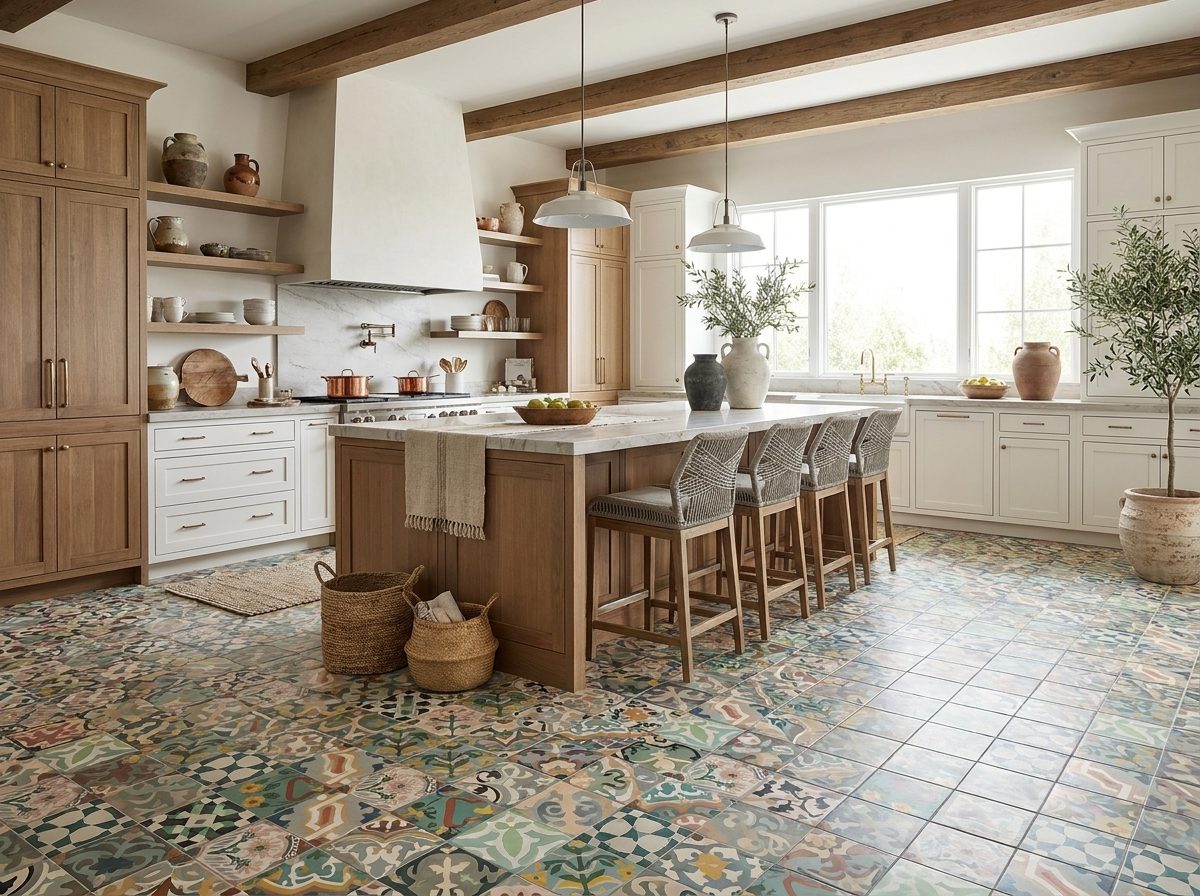
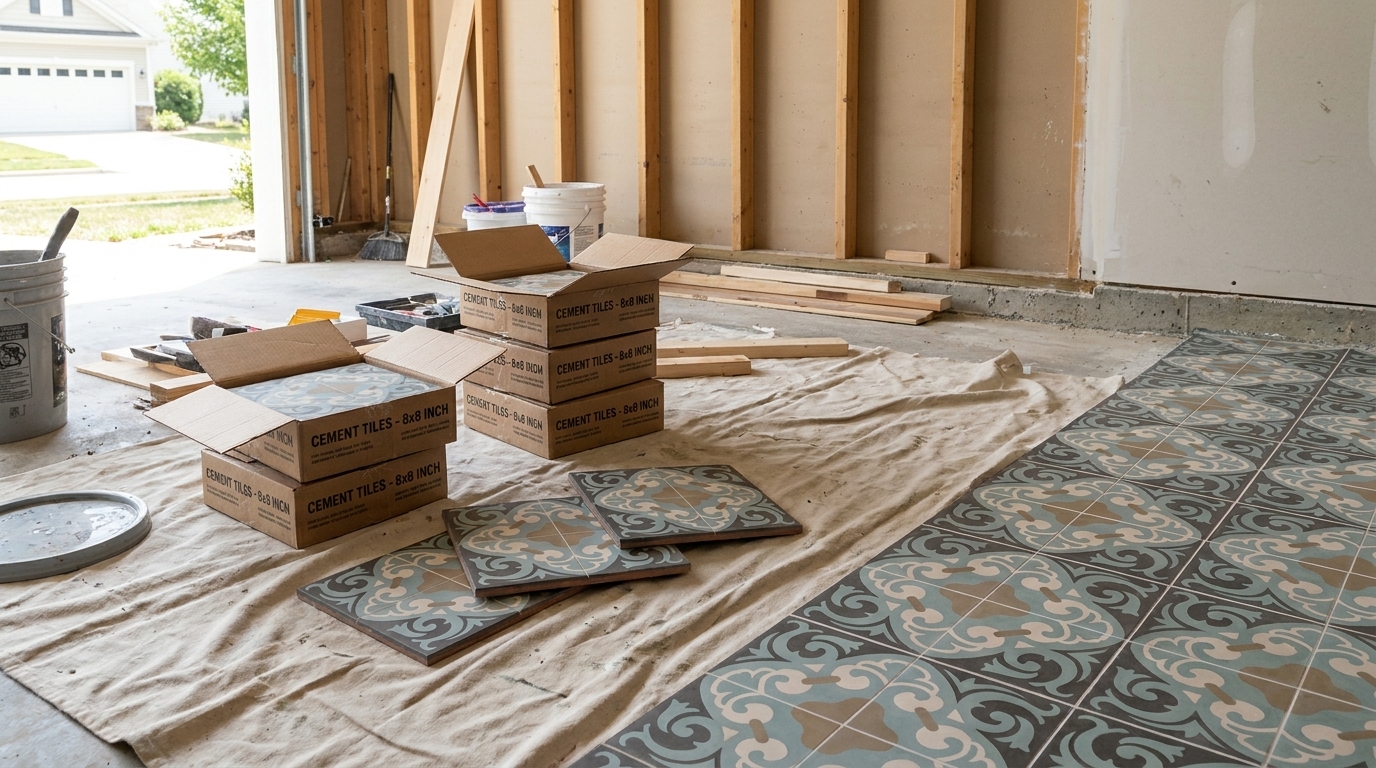
Handmade cement cobble-inspired tile sits in another lane. Artisans make it by hydraulic press, layering cement, sand, marble dust, and natural mineral pigments into a mold without clay, glazing, or firing. The color sits in the body near the top surface, so it has an inlaid look rather than a printed one. That gives it a soft, matte finish that many clients like for interiors because it doesn't read glossy or synthetic.
What the buyer actually feels
Different manufacturing methods change the experience in your hand and underfoot. Natural stone usually brings more variation at the edge. Porcelain tends to feel more precise and predictable. Handmade cement lands between those two, with visible craft and a quieter sheen.
Design takeaway: choose the method first, then the look. If the room needs texture and irregularity, natural stone fits. If it needs a consistent cobble effect with easier sizing, porcelain may fit better. If it needs handmade character, cement belongs in the conversation.
There's also a practical side to all of this. Thickness, surface bite, and color depth all come from the process, not just the pattern. A buyer who understands how the tile is made can read a sample correctly instead of judging it by face alone.
Where Cobble Stone Tile Works Best
The best room for cobble stone tile depends on whether the surface is carrying foot traffic, wall weight, water, or weather. That's why the same look can work beautifully in one place and feel wrong in another. A cobble floor can be perfect in a mudroom or lobby because the texture disguises wear, but the same piece on a fragile wall may feel too heavy visually.

Floors, walls, outdoors, and wet zones
On floors, cobble works best in entryways, kitchens, mudrooms, and hospitality lobbies, especially where the goal is to hide dirt and add grip. On walls, it can be striking on a fireplace surround, accent wall, or shower niche, where the tactile surface becomes a feature instead of a maintenance burden. In outdoor areas, the distinction between true cobblestone paving and cobble-pattern tile matters a lot, because patios and porches need the right base and drainage strategy. In wet zones, the issue is not just appearance, it's texture, grout behavior, and how much water the system has to manage.
For outdoor design thinking, the Firm Foundations installation guide is useful because it shows how much the base matters under load, even when the top surface looks simple. That same logic applies to cobble surfaces.
One common misconception is that a rugged-looking tile is automatically the right choice for every surface that gets wet. It isn't. A cobble surface can be beautiful in a shower or pool-adjacent setting, but the detail work, slope, and grout choices need to be deliberate. If the surface is going to be cleaned often, a flatter field tile can sometimes be the better answer.
For outdoor patio planning, the right comparison is often between visual texture and installation complexity. A helpful reference point is this outdoor patio tile guide, because it keeps the conversation focused on use, not just style.
A cobble look is strongest when the room can support its visual weight. If the space already has a lot of pattern, a flatter tile may carry the design more cleanly.
The simplest way to sort the choices is to ask what the surface must do. If it has to hold up under shoes, wheels, water, or weather, pick the format that matches that job, not just the image.
The Performance Numbers Behind a Good Cobble Tile
Spec sheets matter because cobble stone tile is only as good as its performance in the exact zone you're using it in. For exterior or high-traffic settings, natural cobbles can reach 136.51 MPa compressive strength, 0.20–0.89% water absorption, and 13.1–15.7 MPa flexural strength (Natural Stone Tiles Ltd). Those numbers matter because compressive strength helps resist crushing, low absorption helps against freeze-related damage, and flexural strength helps the tile survive bending stresses from uneven support.
If you're comparing product sheets, don't stop at appearance. A surface can look durable and still fail if it absorbs too much water or if the base moves underneath it. Freeze-prone climates punish porous stone first, since water inside the body expands when it freezes and can accelerate microcracking and edge spalling. That's why absorption is often more important than raw strength in cold weather.
Thickness and load path
For tile-format cobblestone products, thickness and installation method often decide success before the face pattern does. One commercial specification lists 60 mm thickness, a no-slump concrete mix compacted under extreme pressure and high-frequency vibration, average compressive strength greater than 8,000 psi, and maximum water absorption of 5% while meeting ASTM C936 and freeze-thaw testing requirements per ASTM C67 (Keystone Hardscapes technical sheet). That's the kind of information a contractor can use.
For a practical buyer, the takeaway is not to memorize the test names. It's to ask whether the product's thickness, density, and absorption match the load and climate. If the application is high-traffic, the base system needs to carry the weight, not the face finish.
A clear spec sheet is worth more than a pretty sample when weather and movement are in play. If you want to compare the role of water resistance in more detail, the water absorption guide is a helpful companion.
Rule of thumb: if a cobble product is being used where water, frost, or vehicles are involved, start with the spec sheet, not the showroom display.
Installing Cobble Stone Tile the Right Way
Installation is where a lot of cobble projects succeed or fail. A good-looking product can still loosen, crack, or hold water if the base is wrong. Independent guidance on cobblestone installation says the bedding layer should be about 25 mm thick with no voids, joints are often 7–10 mm, pedestrian traffic may need about 2 days before use, and vehicle traffic may need 2–3 weeks (Better Exteriors installation guidelines). Those timelines matter because the surface has to gain stability before it sees real load.
Rigid mortared systems and flexible compacted systems are not interchangeable. A mortared system makes more sense for high-traffic interiors and facades where movement needs to be controlled. A flexible system is more common outdoors, where the base, compaction, and edge restraint do the heavy lifting. If the substrate fails, loose stones and cracked joints show up quickly.
Drainage and base behavior
Drainage is the part most homeowners underestimate. Cobble pavements typically need open joints filled with gravel or coarse sand, shoulders made from gravel or crushed stone, and a defined cross fall so water moves away properly. One technical specification for irregular cobble paving says shoulders should not be less than 30 cm wide and that at least 1/4 to 1/3 of each stone should be bedded firmly (SEACAP cobble paving paper). That's a reminder that the surface only performs as well as the structure below it.
If you're hiring a contractor, the Modern Yard Landscapes paver services page is a useful example of the kind of installation conversation to have. Ask about substrate preparation, compaction, edge restraint, and drainage before you talk about color.
The most common failure mode is simple. The base moves, voids open up, and the stones lose support. Once that happens, no amount of sealing fixes the problem.

Design Ideas That Make Cobble Stone Tile Sing
A good cobble stone tile scheme starts by deciding what role the surface should play. If the floor is the main event, the surrounding materials need to stay quiet. If the tile is there to support the room, then texture, color, and pattern can carry more weight without making the space feel crowded. That is why cobble stone tile works best as a design category, not as a single look you apply everywhere.
The distinction matters. True cobblestone-format natural stone brings irregular character, while cobble-inspired handmade cement tiles, including the kind made by Original Mission Tile, give you a more controlled surface with the same old-world feeling. A kitchen, entry, or bath may call for one approach over the other, depending on whether you want raw variation or a more predictable pattern underfoot.
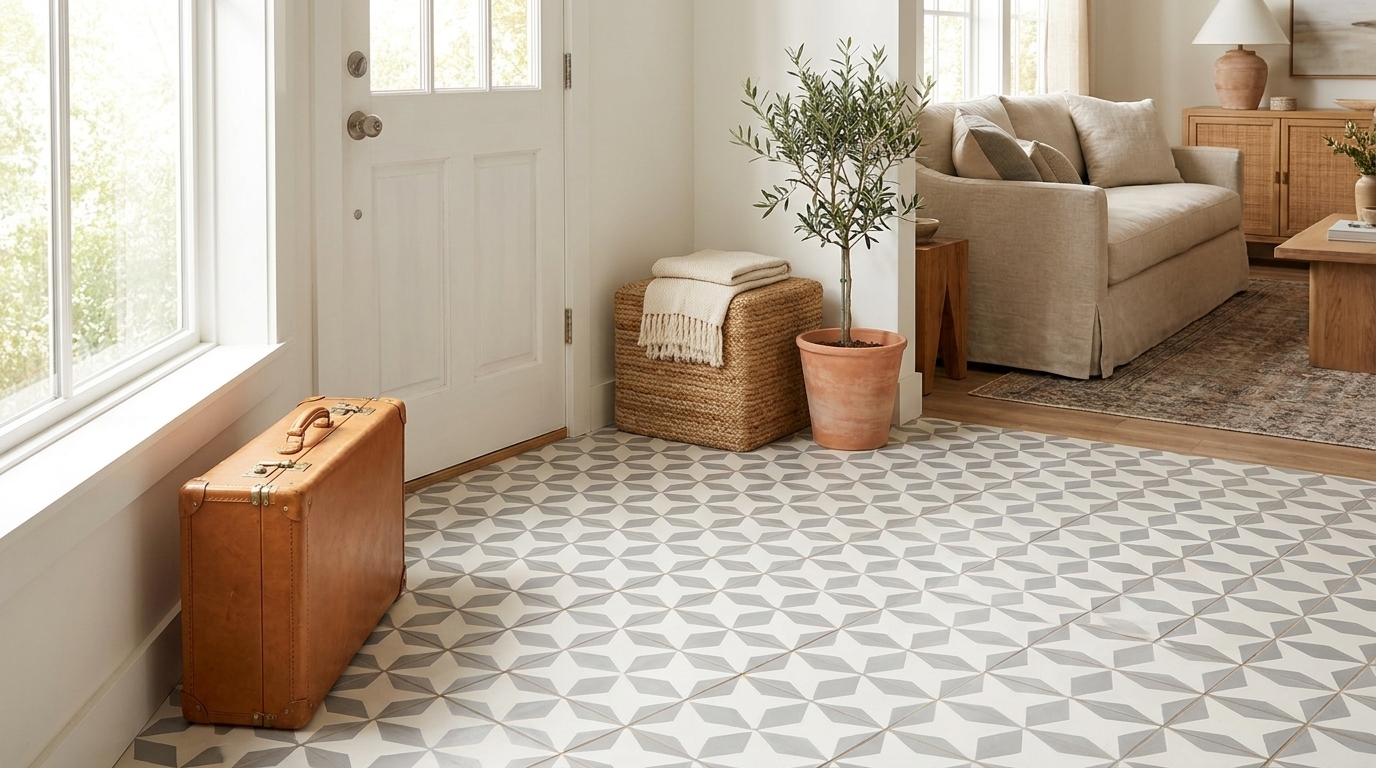
A simple pairing often works best. A cobble-look floor with smooth zellige-inspired walls lets the floor carry the rhythm while the wall reflects light and stays out of the way. The result feels layered without becoming busy, which is usually where the best rooms land.
A monochrome cobble field with a single patterned border can also help define the space. It gives the eye a place to stop, so the floor feels planned rather than ornate. If warmth is the goal, neutral cobble tones work well with terracotta accents or a touch of brass, because those materials add a slightly industrial edge without wiping out the handmade character.
Choosing scale and contrast
Scale changes the mood quickly. A smaller cobble pattern reads as fine texture in a compact room, while a broader field gives an open plan space more architectural weight. The same tile can feel rustic, formal, or minimal depending on what sits next to it.
For broader layout ideas, the pro paving garden design tips page is a useful planning reference because it keeps attention on flow, edges, and transitions instead of treating the surface as a standalone choice.
A showroom conversation goes better when you bring pairings, not vague adjectives. Try these combinations:
- Cobble floor with plain wall tile for a calm, grounded entry.
- Neutral cobble with one patterned inset for a focal zone like a powder room.
- Warm cobble with metallic accents for kitchens or hospitality spaces that need polish.
- Smaller cobble units with larger smooth field tile nearby to create a visual pause.
Design note: when cobble is the star, let one other material support it instead of competing with it.
That balance keeps the room from feeling themed. It also helps the cobble texture read as a deliberate choice rather than something added at the end.
For a practical care reference that matches these material choices, the stone tile cleaning guide is useful because it keeps the focus on maintenance habits rather than harsh shortcuts.
Cleaning and Maintaining Cobble Stone Tile
Maintenance starts on day one, not after the first stain. For natural stone and cement surfaces, sealing early is usually part of a good care plan, because these materials are more vulnerable to moisture and staining than glazed finishes. After that, the simplest routine is also the best one, dry sweep, then use a pH-neutral cleaner when the floor needs wet cleaning. Harsh cleaners can etch both cement and natural stone, which means the surface can lose its finish long before it loses its structure.
Spills need different responses depending on what landed on the tile. Oil, wine, and rust all behave differently, so the safe habit is to blot quickly and avoid scrubbing with anything abrasive. If a stain sits too long, it becomes a restoration job instead of a cleaning task. That's true for interiors, and it's even more important outdoors where weather can push residue deeper into joints and pores.
For a practical care reference, the cleaning stone tiles guide is useful because it keeps the focus on maintenance habits rather than harsh shortcuts.
Interior versus exterior upkeep
Interior cobble stone tile usually needs attention to sealing, routine cleaning, and stain response. Exterior cobble paving adds another layer, joint material, weeds, and pressure washing habits all start to matter. A maintenance crew should also check drainage, because standing water can turn a surface problem into a substrate problem.
Keep the cleaning method gentler than the stone you're trying to preserve.
That rule sounds basic, but it prevents a lot of expensive damage. If the finish is matte or textured, aggressive scrubbing can change the look unevenly. If the surface is installed in a traffic zone, regular maintenance matters more than heroic deep cleaning once a year.
When you're buying, lock down the specs before you place the order. Ask about thickness, format, finish such as tumbled, honed, pillowed, or matte, the slip rating for the intended application, edge style, expected color variation, lead time, and minimum order quantities. If you're a trade buyer, custom design through a studio and a dedicated trade program can help you control the exact look. If you're a homeowner, patchworks and ready-to-ship inventory are usually the faster route when the project has a deadline.
Cobble Stone Tile Questions Buyers Ask Most
The first question people ask is whether cobble stone tile belongs in a shower or other wet area. It can, but only when the surface texture, grout choice, and installation method are appropriate. A cobble look that feels great underfoot can still be annoying to clean if the joints are too aggressive or the surface is too uneven for daily water use.
The second question is cold weather. Can it go outdoors in a freeze-prone climate? Yes, if the product, thickness, absorption, and base system are selected correctly. That's why the earlier spec discussion matters. Low absorption helps most in freeze-thaw conditions, but the install has to support drainage and movement too.
The third question is how cobble stone tile compares to cobblestone pavers. The answer is that pavers are usually the better fit for true load-bearing exterior paving, while tile-format cobble works better when the surface is part of an interior floor, wall, or a managed exterior system. The name sounds similar, but the structure behind it is different.
The fourth question is lifespan. With proper maintenance, a good cobble surface can serve for a long time, but there isn't a single universal number to promise. Longevity depends on the material family, the base, the exposure, and how well the cleaning and sealing plan is followed. That's why the best decision framework is to match the product family to the application, match the spec to the climate and traffic, install it as a system, and plan maintenance from the start.
Cobble stone tile fits neatly into 2026's broader shift toward tactile, handmade, and grounded surfaces. Buyers want more than a flat, sterile finish. They want texture that feels intentional and durable enough to justify the effort.
If you're weighing cobble stone tile for a real project, start with the material family and the room, then choose the finish and installation logic to match. Original Mission Tile offers handmade cement tile options, custom design support, and a strong reference point for cobble-inspired surfaces that need warmth and character. Visit Original Mission Tile if you want to compare patterns, finishes, and custom directions with a team that works in this design language every day.