You're standing in a showroom with two limestone samples in your hand, one lighter, one warmer, both beautiful in very different ways. The surface looks calm and expensive, but your head keeps going to the same questions, stains, scratches, slippery spills, and whether this floor will still look right after the first year, not just on install day.
That hesitation is healthy. A limestone tile floor can be one of the most rewarding surfaces in a home or hospitality space, but only when the stone choice, substrate prep, grout, moisture control, and maintenance plan are treated as one decision. When those pieces don't line up, the problems show up later as lippage, picture-framing, efflorescence, and etching, all of which are much harder to live with than a sample board suggests.
Why Limestone Tile Floors Reward Careful Planning
The most common mistake with limestone is treating it like a finish you buy after the room is built. It works better when you treat it like a system, because the stone, the slab, the grout, and the cleaning routine all affect how the floor ages.
That matters because limestone isn't a high-gloss, hard-shelled surface that hides bad decisions. It's a natural material that rewards restraint, patience, and good installation work. If you want the warm, quiet look limestone gives a room, you also have to accept that the details underneath the tile matter just as much as the color on top.
Practical rule: the stone rarely fails first, the installation does.
A useful way to think about limestone is to compare it with a well-made hardwood floor. Hardwood doesn't look best when it's perfect forever, it looks best when it wears in an even, intentional way. Limestone has a similar appeal, except the “wearing in” needs to be controlled through substrate flatness, moisture management, and the right finish, or the aging process turns messy instead of elegant.
Designers often recommend natural stone because it gives a room depth that manufactured materials can't fully mimic. If you're looking for a broader natural-stone perspective, natural stone design by R E and is a useful read alongside flooring decisions. For interior-specific planning, the bathroom application notes at Original Mission Tile's limestone bathroom tiles page also help when you're comparing room-by-room use.
The rest of the decision is simple to state, even if it's not simple to execute. Choose limestone when you want character, matte softness, and a floor that can develop patina. Choose the rest of the system carefully, or you'll end up paying for beauty with avoidable maintenance and avoidable repairs.
What Limestone Is and Why It Has Lasted
Limestone is a sedimentary stone, which means it forms over time from material that settles, compresses, and hardens. That slow formation is part of why it feels grounded and calm underfoot, and why its colors usually stay in a soft range of creams, grays, taupes, and warm neutrals rather than loud, saturated tones.

Why the surface reads differently than other stone
Limestone usually feels warmer than polished stone because it doesn't rely on a mirror finish to look refined. The visual effect is closer to a quiet textile than a shiny shell, which is why so many designers use it in rooms where they want softness instead of drama.
That long history is not a marketing invention. Limestone flooring can be traced to modern Israel as far back as 7000 BCE, limestone from Nile Valley deposits was later used in the Great Pyramid of Giza, built with around 2.3 million limestone blocks circa 2560 BCE, and by around 300 BCE the Romans had improved lime-based production for building work. By around 10 CE, they were using limestone cement as a base core and filler for road building, which tells you something important about the material's service life and practicality. The history of limestone makes the point clearly, this is a stone that stayed useful across civilizations because it was durable enough to matter and manageable enough to keep using.
A material survives in architecture when people can live with it, repair it, and keep it in service.
That's why limestone still feels relevant today, not dated. It sits in the overlap between beauty and usability, which is also why it asks for better planning than many people expect. If you understand that from the beginning, you can make it work for a floor rather than just admire it as a sample.
Performance Numbers Translated for Real Homes
The technical data on limestone becomes much easier to understand once you translate it into daily life. The most useful starting point is hardness, because it explains why limestone needs more care than granite and why grit matters so much.
Hardness, water, and what they mean underfoot
Limestone is typically specified at Mohs hardness 3–4, which means it's soft enough to scratch and etch more easily than harder stones. In practical terms, sand on a shoe sole acts like fine sandpaper, and a dropped object can leave a visible mark more readily than it would on a denser surface. By contrast, granite is usually harder, so it tolerates abuse better, but that doesn't make limestone wrong, it just means the room has to match the material.
Water absorption tells a different part of the story. Dense limestone ranges can show water absorption below 1%, while more porous varieties may exceed 5%, which is why sealers matter so much for stain resistance and moisture management. Sealers don't make limestone invincible, they just slow down how fast spills and moisture penetrate.
Practical rule: if a stone is more open to moisture, your cleaning speed matters as much as your product choice.
The install specs matter too, even if they're not glamorous. Limestone tile technical sheets commonly target break strength ≥250 N and DCOF ≥0.42 for wet interior walking surfaces, because those numbers help define whether the tile can handle point loads and still feel safe when wet. Tight dimensional tolerances also matter, including warpage 0.75%, wedging 1.0% max, and thickness variation 1.5% max. In plain language, those tolerances are part of the reason a floor can look flat instead of bumpy once it's installed.
| Specification | Typical Value | What It Means in Practice |
|---|---|---|
| Mohs hardness | 3–4 | Easier to scratch and etch than harder stone, so grit control matters |
| Water absorption, dense ranges | Below 1% | Better stain resistance and less moisture uptake |
| Water absorption, porous ranges | Above 5% | More vulnerable to staining and moisture-related problems |
| Break strength | ≥250 N | Better resistance to cracking under point loads |
| DCOF for wet interiors | ≥0.42 | A safer target for walking surfaces when wet |
| Warpage | 0.75% | Helps the finished floor stay visually flat |
| Wedging | 1.0% max | Reduces uneven edges and lippage risk |
| Thickness variation | 1.5% max | Makes installation more predictable |
The takeaway is straightforward. Limestone can perform well, but its success depends on installation discipline and realistic expectations, not wishful thinking.
Limestone Compared to Porcelain, Travertine, and Cement Tile
When clients compare flooring options, limestone usually sits in the middle of a bigger design conversation. It looks softer and more natural than porcelain, more restrained than patterned cement tile, and less rustic than filled travertine.

The trade-offs become clearer by room
Porcelain is usually the safer choice when you want low maintenance, especially in wet areas or homes that get a lot of dirt and traffic. It can mimic stone visually, but it doesn't offer the same natural variation or the same tactile softness. Limestone gives you depth and authenticity, but you give up some convenience.
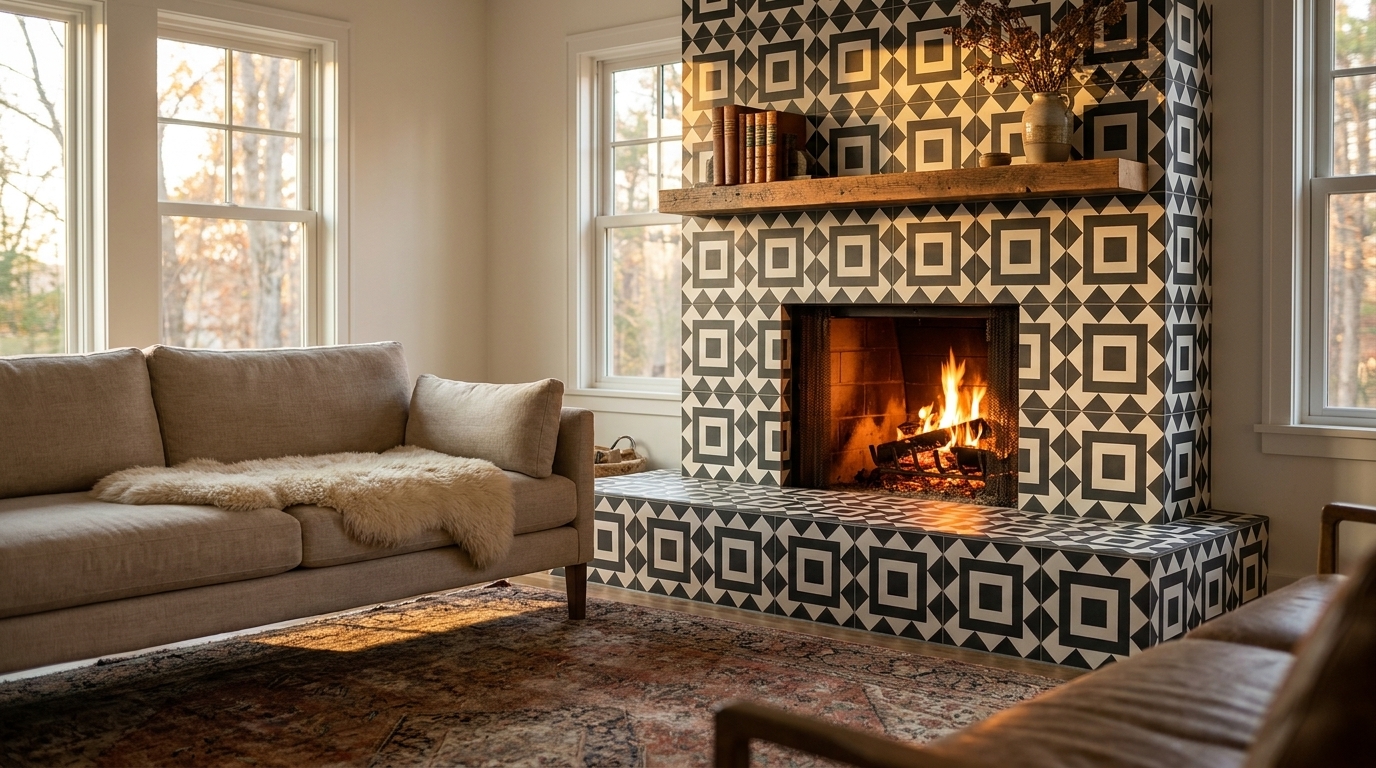
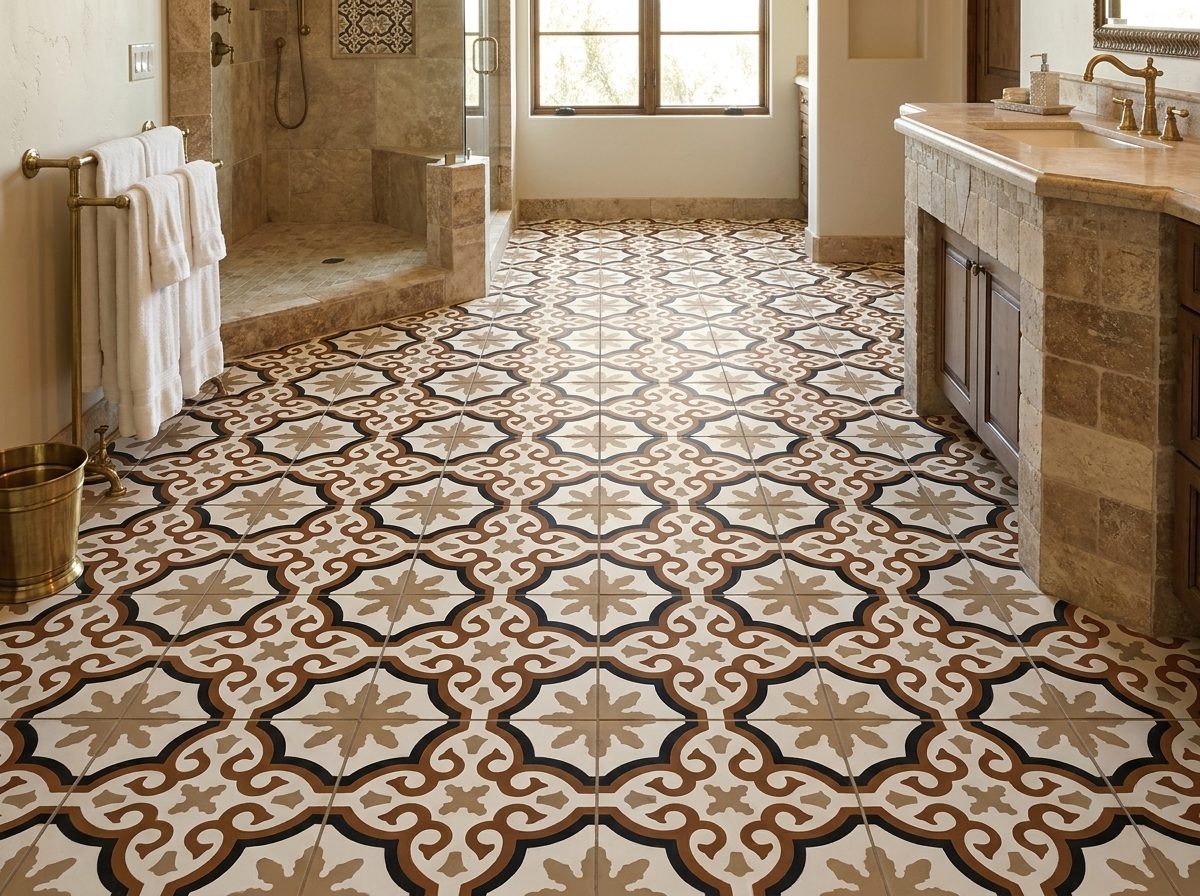
Travertine sits closer to limestone in the natural-stone family, but it usually brings more visible voids, more filling, and a more textured, historic look. Cement tile, including handmade options from makers like Original Mission Tile's floor tile collection guide, plays a different role altogether, because it's chosen for pattern, color, and craft-forward expression rather than stone-like restraint.
A quick comparison helps:
- Limestone: softer visual field, natural variation, more maintenance, strong architectural warmth.
- Porcelain: consistent look, higher tolerance for wet use, easier routine care.
- Travertine: rustic texture, more open character, more visible filling and void management.
- Cement tile: strong pattern language, matte finish, design-led appearance, different upkeep profile.
The price context also explains why limestone sits in a premium segment. A 2013 industry report estimated stone flooring's average manufacturer selling price at $4.03 per square foot, compared with $1.10 per square foot for ceramic tile. USGS flooring and stone market data show why natural stone usually occupies a different part of the budget than ceramic or standard tile.
The simplest way to decide is to match material to the room's behavior. If the room needs total forgiveness, porcelain usually wins. If the room needs character and you're prepared to care for it, limestone earns its place.
Installation Decisions That Make or Break the Floor
A limestone floor can look right on day one and still age badly if the structure beneath it is off. Homeowners usually notice the stone first, but the part that controls the result is the layer below it.

The floor starts with the slab, not the stone. If the substrate has humps, low spots, or movement, the tile edges can sit at different heights and create lippage, the small step between adjoining pieces that catches both light and feet. A flat, stable base is what lets limestone read as a calm surface instead of a floor full of tiny interruptions.
Moisture needs its own conversation. Concrete slabs, crawl spaces, and below-grade rooms can move vapor upward long after the tile is set, and that movement can lead to discoloration, bond problems, and surface changes that show up after the room looks finished. Pale limestone shows these issues quickly because its softer color leaves less room for error.
Grout and setting materials matter too. Limestone can develop picture-framing, where moisture from grout darkens the edges of each tile and leaves a halo, and once that staining reaches through the stone it is described as virtually impossible to correct. Efflorescence can add another layer of trouble, since salts moving to the surface leave a pale film or haze that competes with the stone's natural look.
A clean installation plan usually answers a few plain questions before the first tile is set:
- Has the slab been moisture tested?
- What flatness tolerance is being targeted before tile goes down?
- How will the installer control lippage at transitions and large-format edges?
- Which grout color and grout type reduce the risk of edge staining on pale stone?
- Will a membrane or uncoupling mat be used where movement or moisture is a concern?
An installer should be able to explain those choices in simple terms, because the decisions are made before the floor goes in, not after. The stone tile installation guide is a useful contractor-facing reference for that planning stage, and the conversation should happen before anyone orders material. That is also where the rough edges of the project become visible, including whether a floor needs a membrane, tighter prep, or a different grout strategy. For homeowners who are also comparing finish options, anti slip sealer options in Ottawa can help frame how surface treatment affects traction in real use.
If the installer cannot explain substrate prep and moisture control clearly, the project is not ready.
Sealing Schedules and Everyday Maintenance That Work
Sealing is a maintenance schedule, not a one-time ritual. That difference matters because a sealed limestone floor is still a floor made from a porous stone, so the goal is to slow absorption and buy time, not remove risk.

What the routine looks like
For most interior limestone, penetrating or impregnating sealers are the usual starting point. They help reduce stain uptake without leaving a plastic-looking film on the surface, which matters if you want the stone to keep its natural character instead of reading as coated.
Re-sealing does not follow one universal calendar. Traffic, cleaning habits, and how quickly the stone absorbs moisture all change the timing, so one floor may need attention sooner than another. A foyer that gets wet shoes and tracked-in grit will behave differently from a guest bath that sees light use.
A practical routine is easier to follow than a complicated one:
- Dust mop regularly so grit does not scratch the surface like sandpaper.
- Use a pH-neutral stone cleaner for damp mopping, not an acidic or harsh all-purpose product.
- Wipe acidic spills quickly, especially wine, vinegar, and citrus.
- Use felt pads under furniture so chair and table legs do not grind into the stone.
- Place walk-off mats at entries to catch grit before it spreads.
These habits matter because limestone usually does not fail from one missed cleaning. Problems build when residue, grit, and moisture stay on the surface long enough to leave a mark or dull the finish. A floor in a busy entry can stay beautiful for years if the routine is consistent, but it can also start looking tired if people treat it like a wipe-anything surface.
Sealer also deserves the right expectation. It does not make stone stain-proof, and it does not stop etching from acidic spills. It slows penetration, which gives you time to clean up a spill before it becomes part of the floor. If you are comparing finish and traction choices for entry areas, anti slip sealer options in Ottawa can help frame how surface treatment affects daily use.
Where Limestone Shines and Where It Struggles
A limestone foyer can feel calm and expensive in a way few other floors can. The stone's muted finish makes a strong first impression without asking for attention, which is why it fits entries, galleries, formal living rooms, and other spaces where the floor supports the architecture instead of competing with it.
The room matters as much as the stone. A sunlit foyer usually does better with honed limestone because the softer sheen cuts glare and hides daily dust more effectively than a polished surface. In a primary bath, limestone can work if the room has proper slope, ventilation, and an owner who accepts that standing water is hard on stone. In a hotel lobby or restaurant dining room, the material can still hold up, but only if the specification includes training, matting, and a clear cleaning routine so staff are not guessing under pressure.
Some rooms ask more of the floor than limestone is comfortable giving. A busy family kitchen puts the stone in contact with dropped utensils, acidic spills, grit, and constant foot traffic, so the room can make the material feel more demanding than it is worth if the household wants a carefree surface. Homes with kids, pets, and sand on shoes are often happier with a floor that tolerates rougher treatment.
Finish choice changes the experience in a very direct way. Honed finish suits everyday interiors because it keeps the look quiet and reduces visual glare. Polished finish tends to be more delicate in real use, and it often shows wear sooner. Tumbled finish fits a more relaxed, aged character and gives the floor more texture underfoot.
The hard cases are not mysteries. If a room has heavy chair movement, wet shoes, or frequent food prep, limestone can still be used, but it stops being the low-risk option. That is not a defect in the material. It is a sign that the room and the stone are asking for different kinds of care.
Year one is easy to admire. Year fifteen depends on whether the space was set up to help the limestone age slowly instead of taking repeated abuse.
Choosing Limestone With Eyes Open
Limestone is the right call when you want a floor with warmth, softness, and visible natural character, and you're willing to protect that look with planning. It's a strong choice when patina feels like a feature, not a defect, and when the room isn't going to punish the stone every day with grit, standing moisture, or careless cleaning products.
The best projects usually share the same conditions. The owner accepts a planned sealing and cleaning routine, the installer is willing to document substrate flatness and moisture status, and the room itself gives the floor a fair chance to age slowly rather than get abused immediately. If you don't want to think about maintenance, or you need the most forgiving surface possible, porcelain usually makes more sense. If you want bold pattern and color, cement tile offers a different design language. If you want a more rustic, filled stone look, travertine is a separate conversation.
Three concrete next steps make the decision clearer. First, order full-size samples and live with them in the actual room for several days. Second, ask the installer for a moisture test and flatness reading before you sign anything. Third, decide now how the floor will be cleaned for the next ten years, because the routine matters as much as the tile.
If you're weighing limestone against handmade tile or other architectural surfaces, Original Mission Tile can help you compare materials, request samples, and plan installation details for a room that needs to look right in year one and year fifteen. Visit Original Mission Tile to explore options, review product guidance, and start a flooring plan that fits your space and your maintenance expectations.